


Primary sourceArtifactc. 1070s-1100
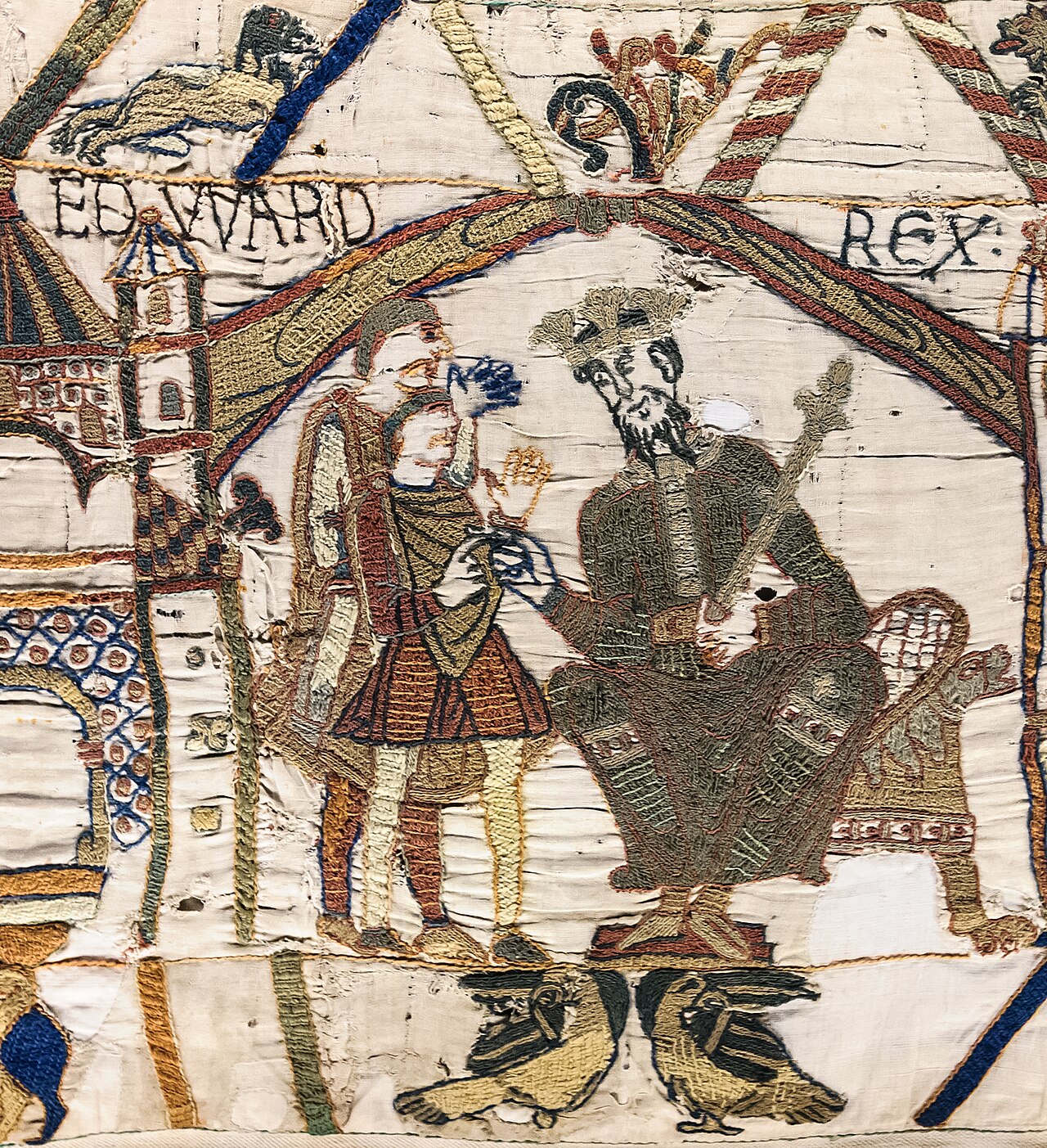
Bayeux Tapestry
c. 1070s-1100
A near-contemporary embroidered narrative of the Norman Conquest, showing William as duke and conqueror, including his dramatic helmet-lifting moment at Hastings.
Shows William as duke, war-leader and claimant, portraying his conquest of England from a viewpoint favourable to him.
About this source
What it is
An embroidered cloth, about 70 metres long, made with wool thread on linen. It tells the story of the events leading to the Norman conquest of England and the Battle of Hastings in 1066. It is thought to have been made in England in the decades after the events, and is usually kept at the Bayeux Tapestry Museum in Normandy, France.
Why it matters
The tapestry is believed to have been commissioned by Bishop Odo of Bayeux, William's half-brother, who appears in it four times. It presents the conquest from a viewpoint very favourable to William, which is why many historians think of it as propaganda meant to justify his rule to the English nobility. Even so, it is an extraordinary record of 11th-century clothing, ships, buildings and daily life.
Look closer
- Why might Odo have wanted this story told in this particular way?
- What does the tapestry choose to show in detail, and what might it be leaving out?
- How does showing William lifting his helmet at Hastings serve a political purpose?
This artifact is part of the curated material that grounds the AI version of William the Conqueror on Humy.ai — when students ask about related events, the AI can quote it and cite it.
More William the Conqueror sources
Browse all 95 →
Ready when you are
Start chatting with William the Conqueror now.
20 messages free · No credit card · Available in 50+ languages.