


Primary sourceArtifactc. 1078-1100
White Tower
c. 1078-1100
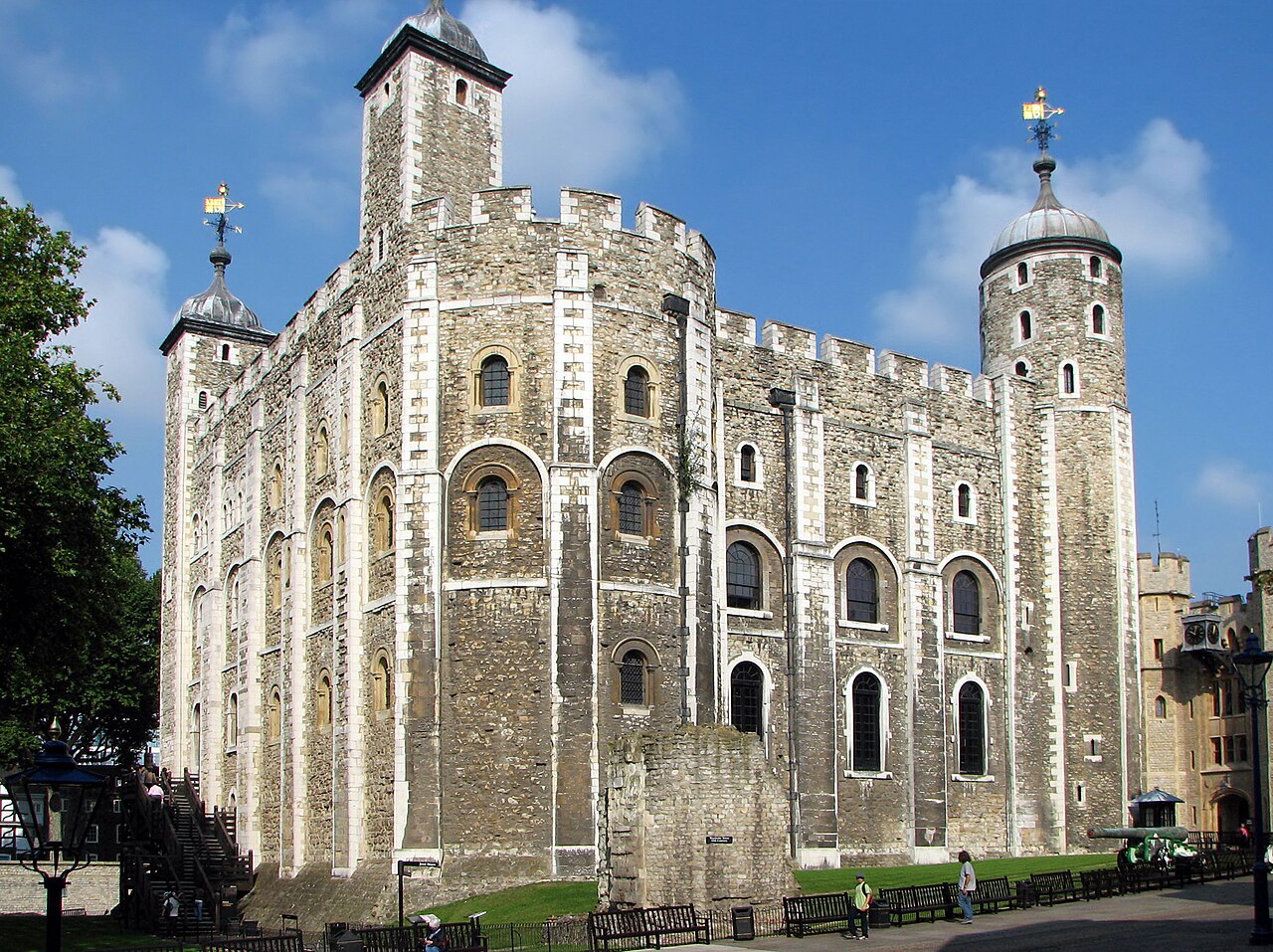
The great stone keep William began building around 1078 in London to display and secure his new royal power.
The stone keep William commissioned to overawe London and symbolise his new royal power.
About this source
What it is
A former royal residence and keep at the Tower of London, built by William the Conqueror in the early 1080s and later extended. It provided accommodation for the king and housed a chapel, and is today part of the Tower of London, home to the Royal Armouries collection.
Why it matters
In Norman architecture, a keep like this was a symbol of a lord's power. William began the original timber fortification in 1066 and started the stone White Tower not long after, a visible statement of Norman control over London and England. It remained militarily important and was later used as a residence, treasury and prison by his successors.
Look closer
- Why would a new king want to build such a huge stone tower so soon after conquering a country?
- What does the location, in the heart of London, tell us about William's priorities?
- How did later kings change or add to the building, and what does that say about its continuing importance?
This artifact is part of the curated material that grounds the AI version of William the Conqueror on Humy.ai — when students ask about related events, the AI can quote it and cite it.
More William the Conqueror sources
Browse all 95 →
Ready when you are
Start chatting with William the Conqueror now.
20 messages free · No credit card · Available in 50+ languages.