


Primary sourcePainting1819–1820
Visionary Heads
William Blake · 1819–1820
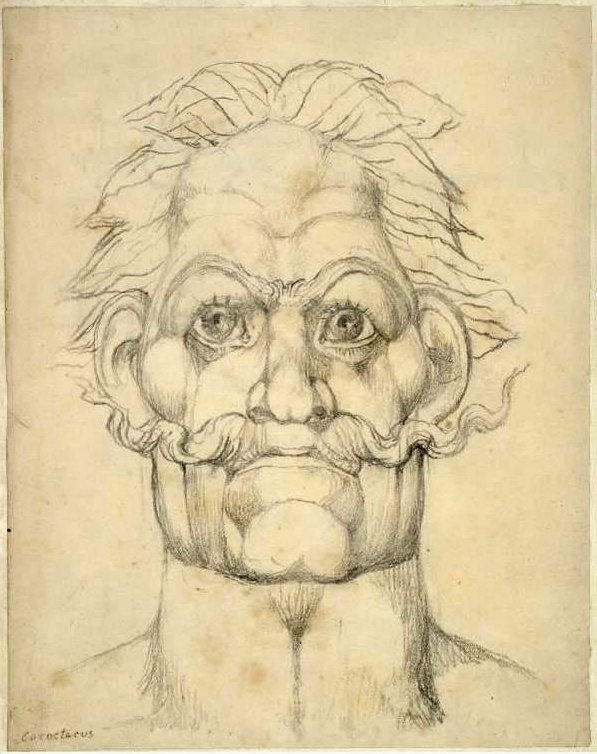
A series of black chalk and pencil drawings by William Blake, made after 1818 at the request of John Varley, showing figures from history and myth that Blake said appeared to him in visions.
Blake drew these heads himself during sessions with Varley, and they document his claimed visions and his unusual working methods.
About this source
What it is
The Visionary Heads are a series of black chalk and pencil drawings made by William Blake after 1818. They are contained in three sketchbooks, and loose leaves suggest that a fourth existed. The sitters include historical and mythical figures such as Socrates, Julius Caesar, Boadicea, Merlin and John Milton. Blake drew them at the request of the watercolour artist and astrologer John Varley.
Why it matters
Blake said that these figures appeared to him in visions while Varley watched. Varley believed the visions came from the spirit world of astrology and used them in his Treatise on Zodiacal Physiognomy. The sessions often took place late at night, and contemporary accounts of them were published. The drawings show how Blake's strong belief in visions shaped his art, and how Varley's interest in astrology and the occult shaped the sessions.
Look closer
- What features does the artist emphasise in each head, and how do they suggest a character or a mood?
- How could you tell a drawing made from a real sitter from one made from a vision?
- Who would have witnessed these sessions, and how might that have affected what Blake drew?
This painting is part of the curated material that grounds the AI version of William Blake on Humy.ai — when students ask about related events, the AI can quote it and cite it.
More William Blake sources
Browse all 86 →
Ready when you are
Start chatting with William Blake now.
20 messages free · No credit card · Available in 50+ languages.