


Primary sourceArtifactcirca 1805
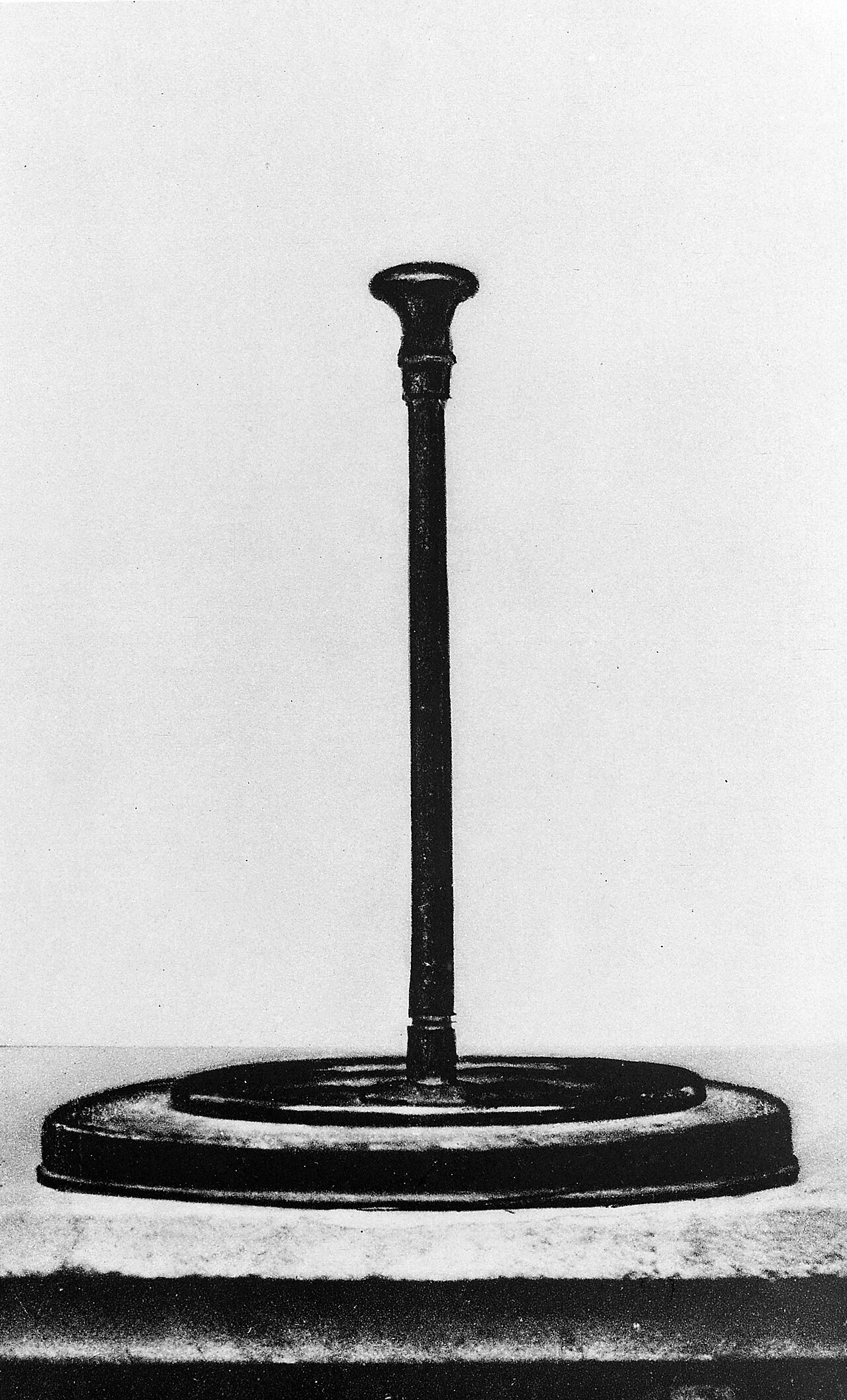
Voltaic Pile
circa 1805
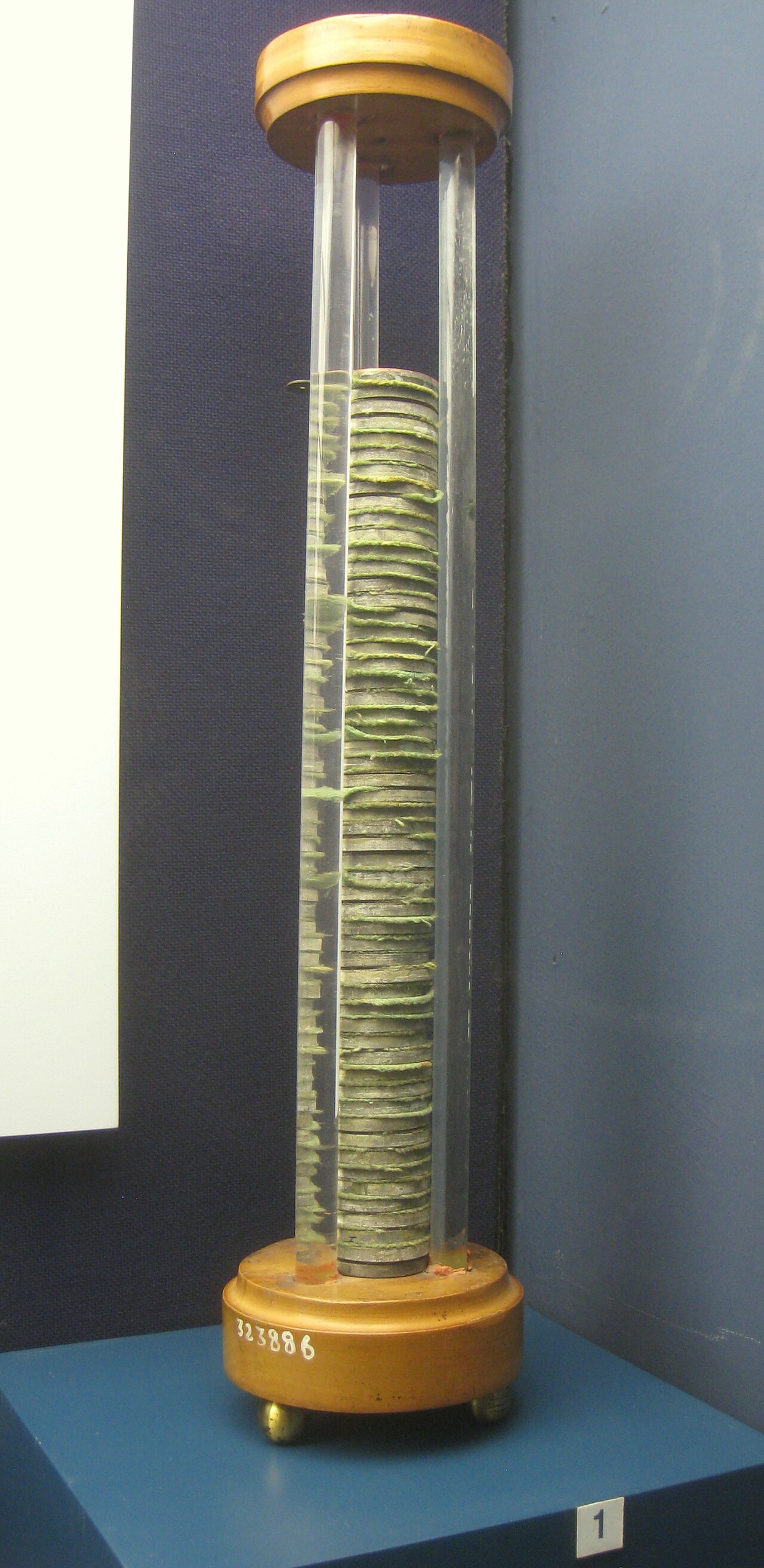
An early example of the battery Volta invented, made within a few years of his discovery, now displayed in a museum collection.
An early working example of the battery Volta invented, built within a few years of his original discovery.
About this source
What it is
This is a tall voltaic pile from around 1805, built from a stack of metal discs separated by cloth layers, mounted on a wooden base with brass feet. It is held in the collection of the National Museum of American History in Washington, DC, and came from Canisius College.
Why it matters
The voltaic pile was the first device able to produce a steady electric current, invented by Alessandro Volta. This early example shows how quickly his invention spread and was built by others soon after he announced it, changing how scientists could study and use electricity.
Look closer
- What materials can you identify in the stack, and why might different metals be needed?
- Why do you think museums keep early copies of important inventions like this one?
- What does the object's construction suggest about the tools and materials available at the time?
This artifact is part of the curated material that grounds the AI version of Alessandro Volta on Humy.ai — when students ask about related events, the AI can quote it and cite it.
More Alessandro Volta sources
Browse all 98 →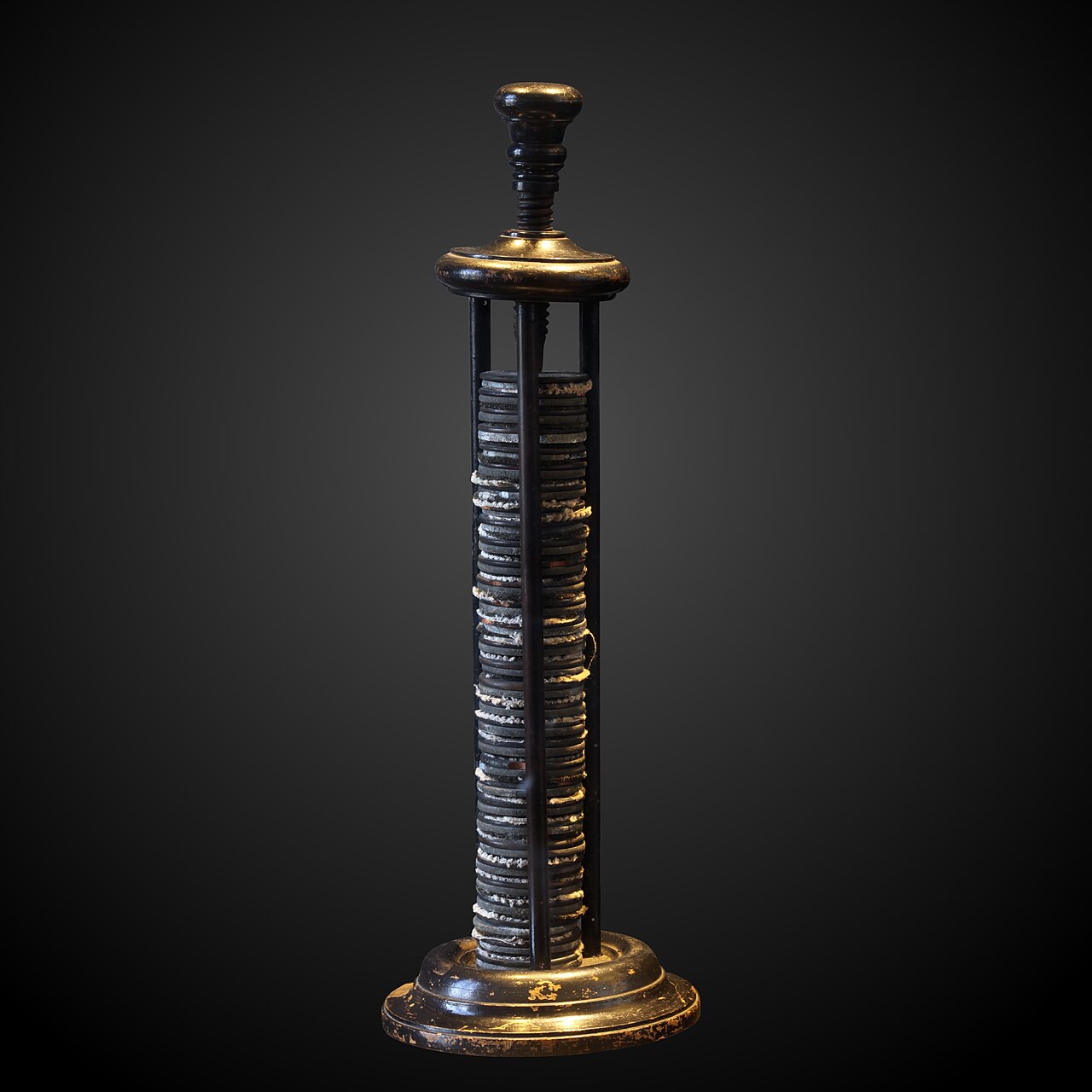 Artifact
Secondary source
Voltaic Pile
Alessandro Volta · 1800
 Document
Primary source
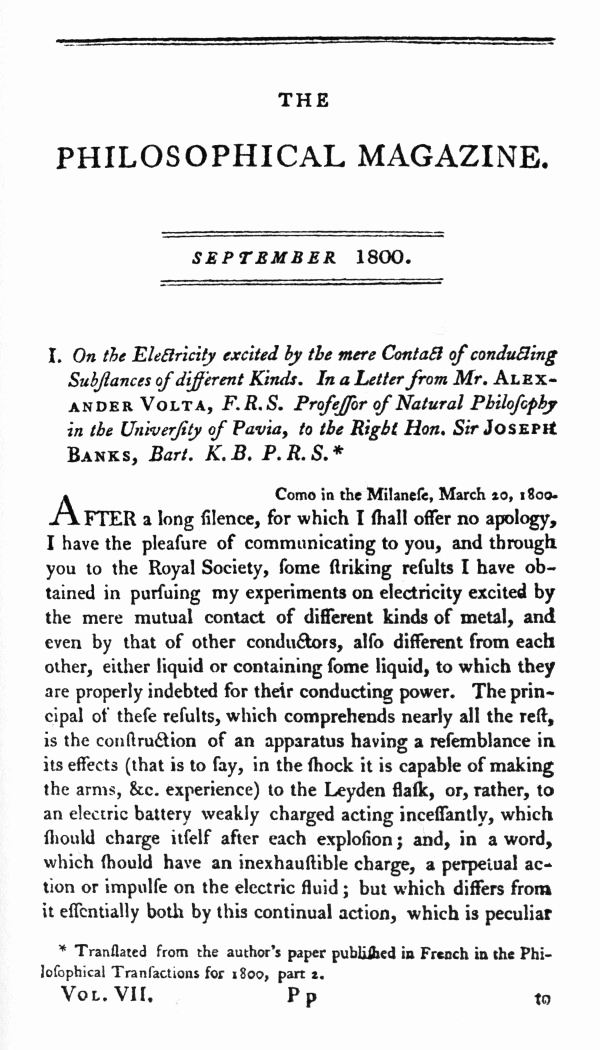
On the Electricity Excited by the Mere Contact of Conducting Substances of Different Kinds
Alessandro Volta · September 1800
ArtifactPrimary source
Voltaic Pile Given to the Saussure Family
Alessandro Volta · 1801
 Letter
Primary source
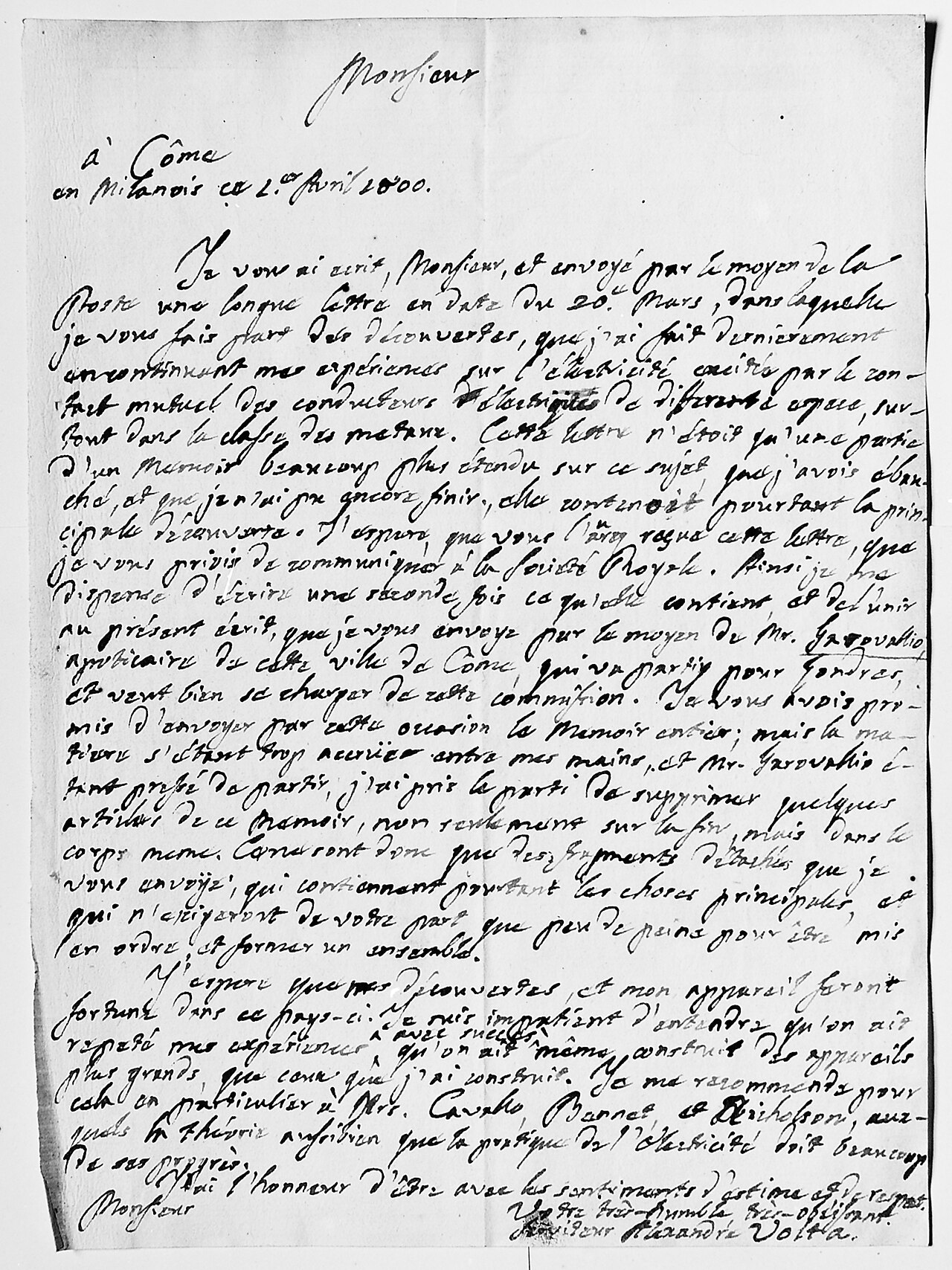
Letter from Volta to Joseph Banks, 1 April 1800
Alessandro Volta · 1 April 1800

Free account
Browse every Alessandro Volta source
Sign up free →
Ready when you are
Start chatting with Alessandro Volta now.
20 messages free · No credit card · Available in 50+ languages.