


Primary sourceArtifactc. 1870 (claimed); recorded 1926
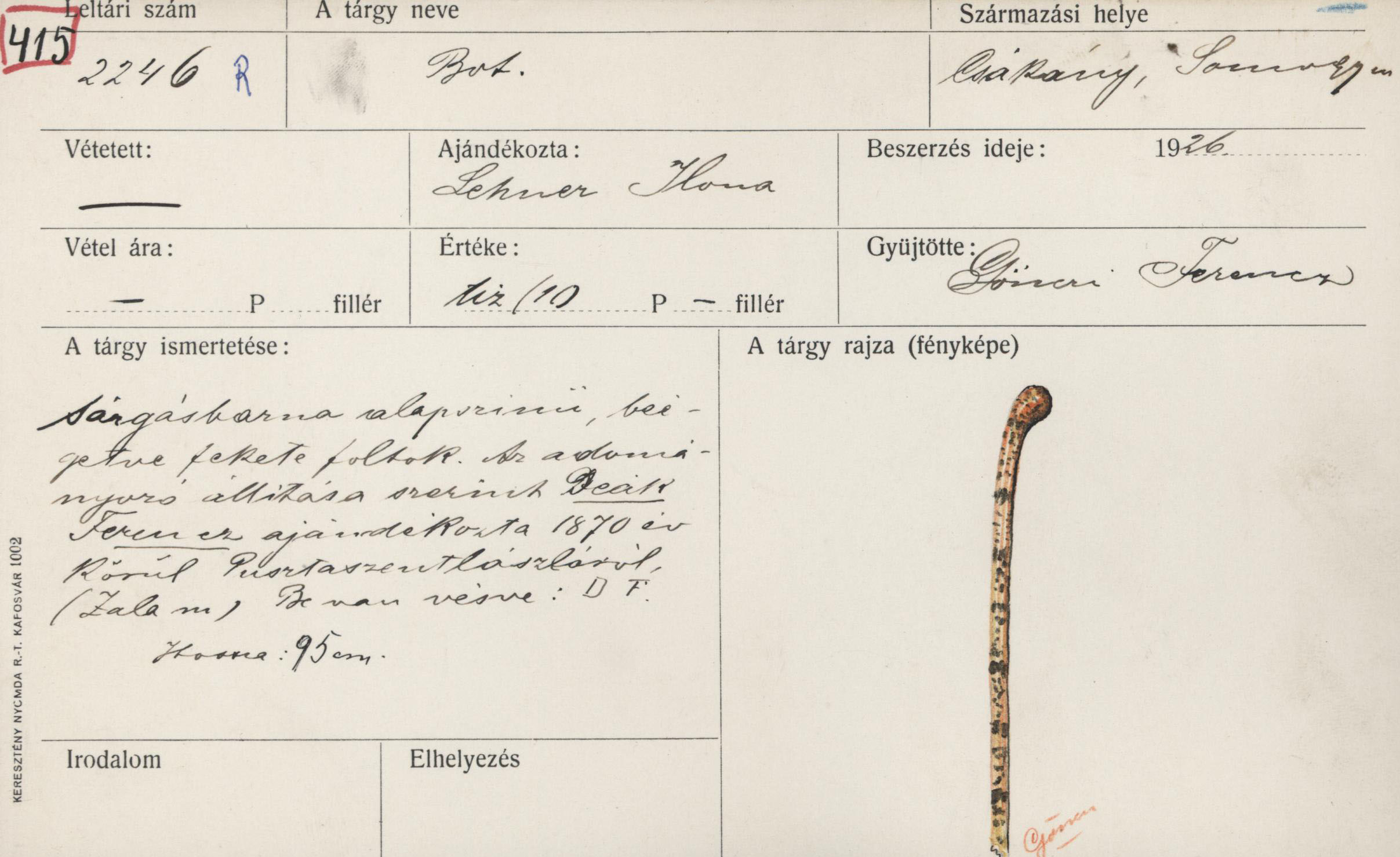
Walking Stick Said to Be a Gift from Ferenc Deák
c. 1870 (claimed); recorded 1926
A museum-held walking stick claimed by its donor to have been a gift from Ferenc Deák around 1870, though the attribution is unverified.
This cane is claimed, though unverified, to have been a personal gift from Deák.
About this source
What it is
This is a museum inventory card and photograph of a walking stick ('bot') held by the Rippl-Rónai Municipal Museum in Kaposvár, Hungary. The card describes a black-dyed cane with a curved handle, about 95 cm long, engraved with the initials 'D. F.'. According to the donor, Lehner Ilona, the cane was given by Ferenc Deák around 1870 in Pusztaszentlászló, Zala County.
Why it matters
Objects like this show how personal items became linked to famous political figures through family stories and donations, even when the connection cannot be fully verified. It raises questions about how museums handle claims about an object's history.
Look closer
- Why does the museum record note that the story comes from the donor's claim rather than from solid proof?
- What would help confirm whether this cane really belonged to Deák?
- Why might families want to preserve objects said to be linked to famous people?
This artifact is part of the curated material that grounds the AI version of Ferenc Deák on Humy.ai — when students ask about related events, the AI can quote it and cite it.
More Ferenc Deák sources
Browse all 90 →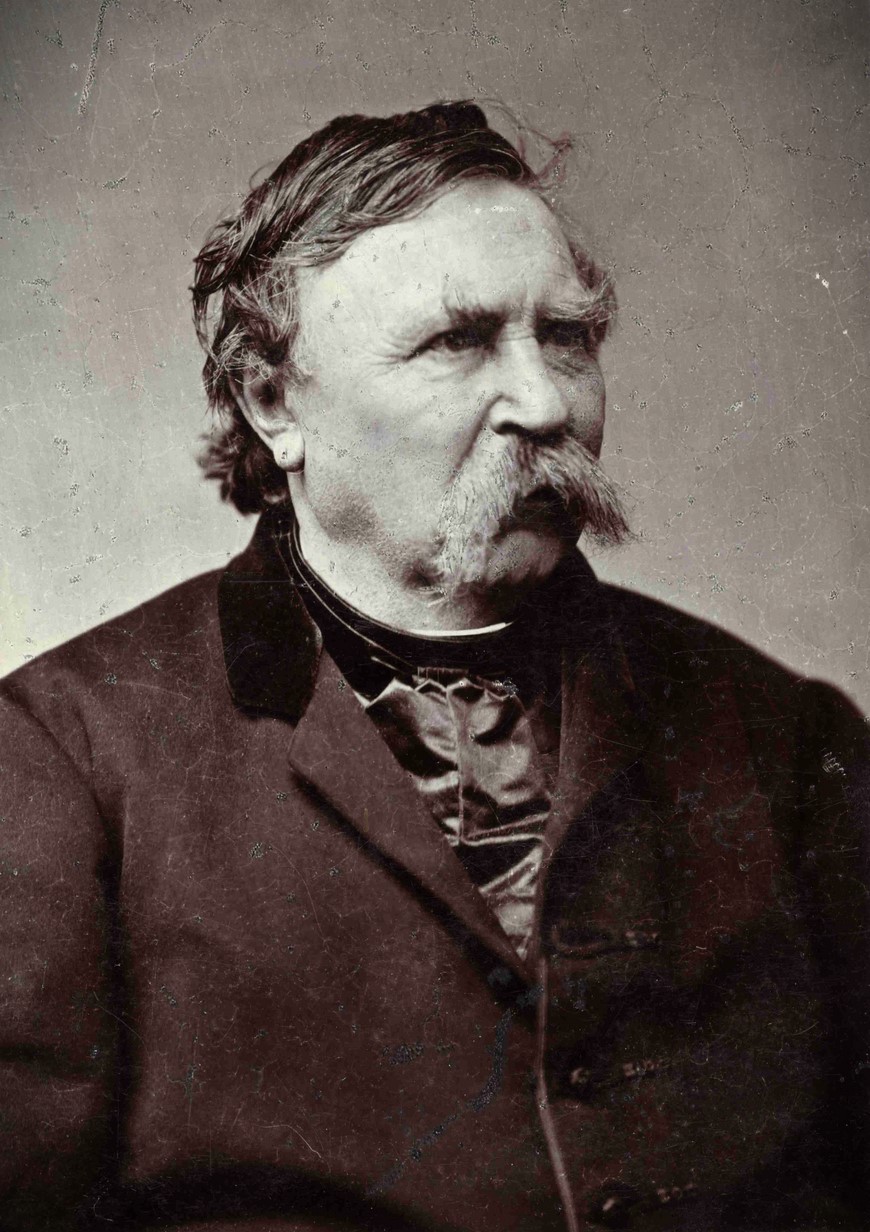 Photograph
Primary source
Portrait of Ferenc Deák
 Document
Primary source
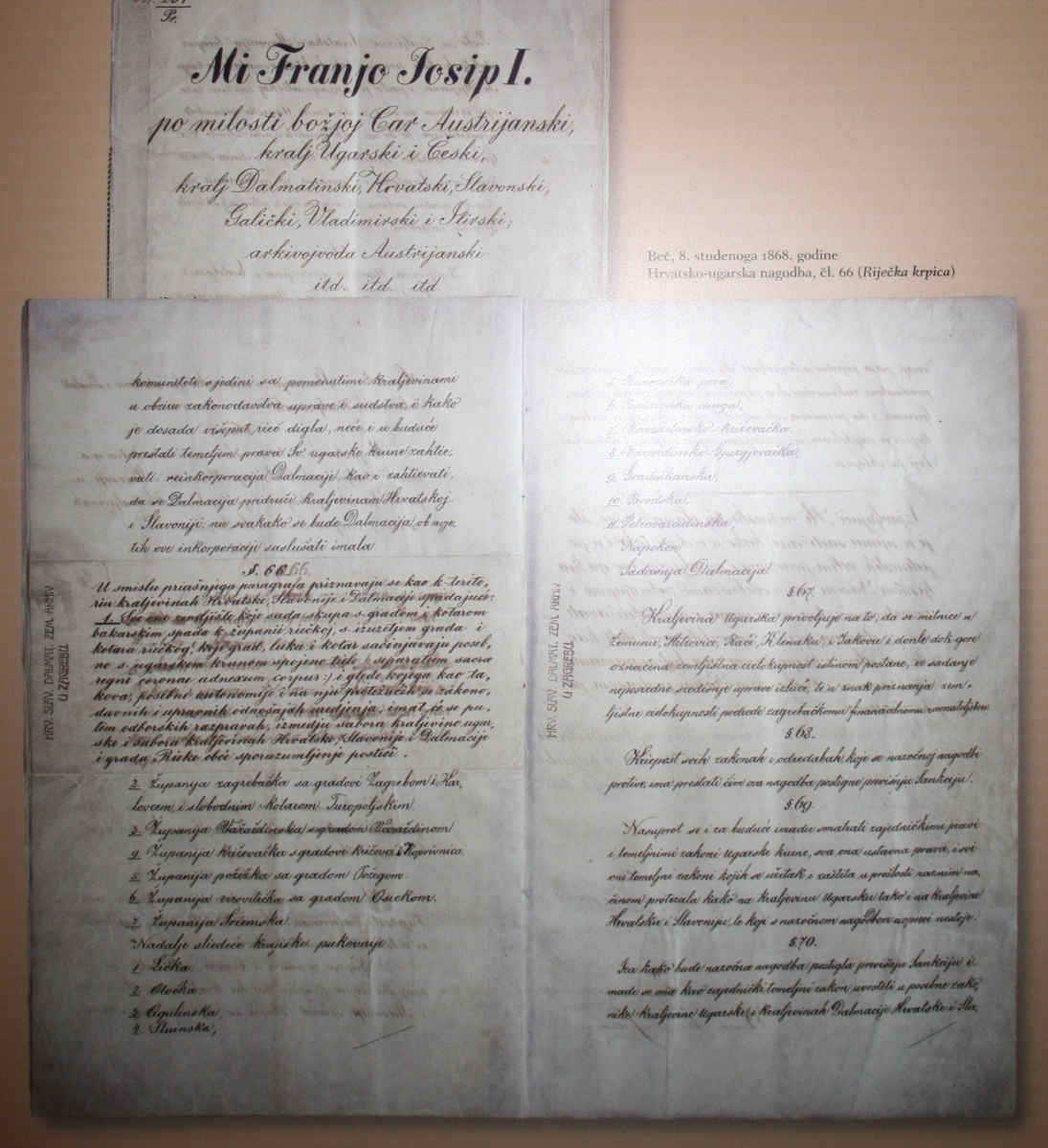
Croatian–Hungarian Settlement
1868
 Painting
Secondary source
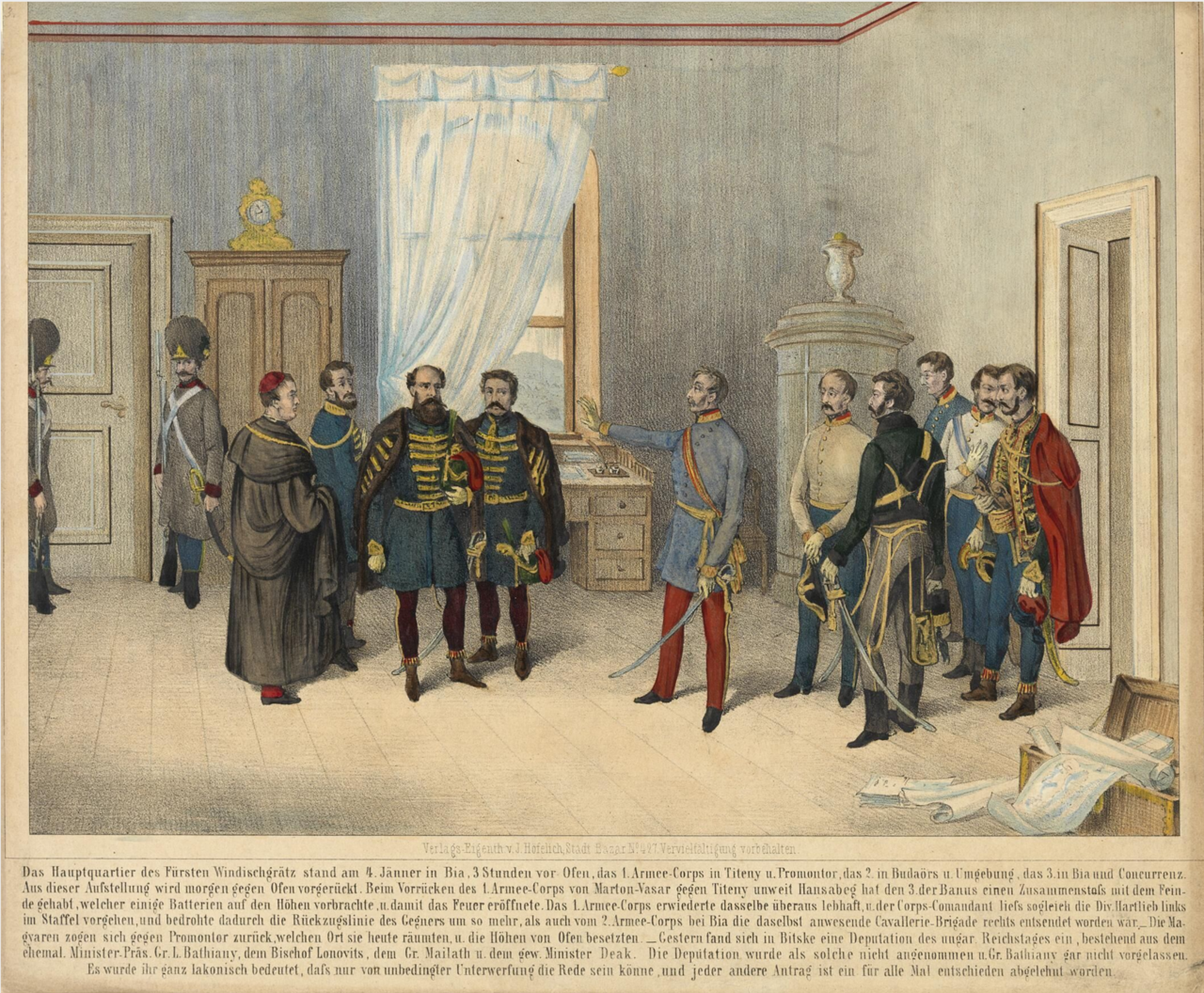
Windischgrätz Refuses to Talk to the Hungarian Parliamentary Delegation
Vinzenz Katzler · 1849 (depicted); print later
 Painting
Secondary source
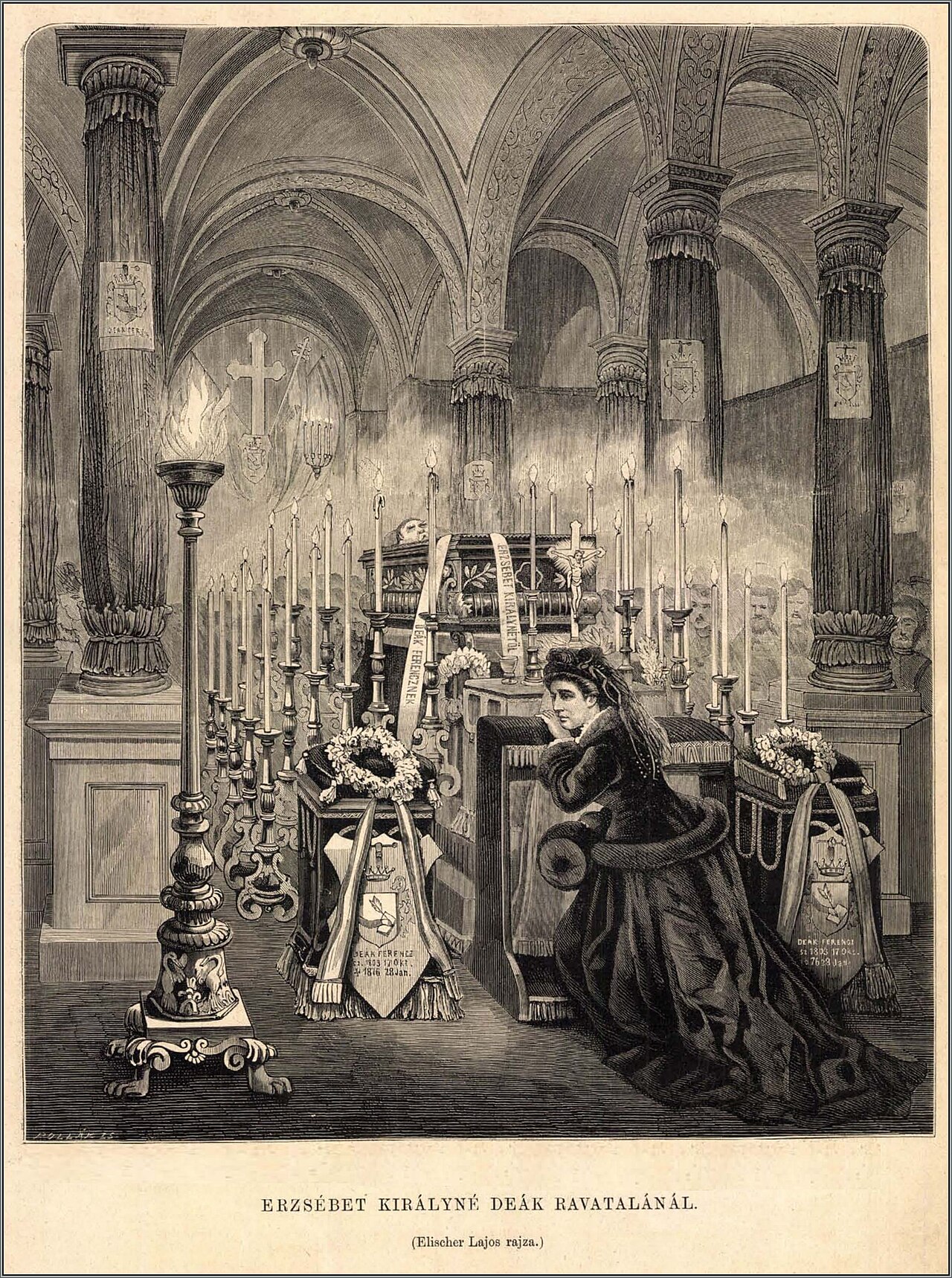
Erzsébet királyné Deák ravatalánál
Lajos Elischer · 1876
Free account
Read every Ferenc Deák source
Sign up free →
Ready when you are
Start chatting with Ferenc Deák now.
20 messages free · No credit card · Available in 50+ languages.