


Primary sourcePainting1836
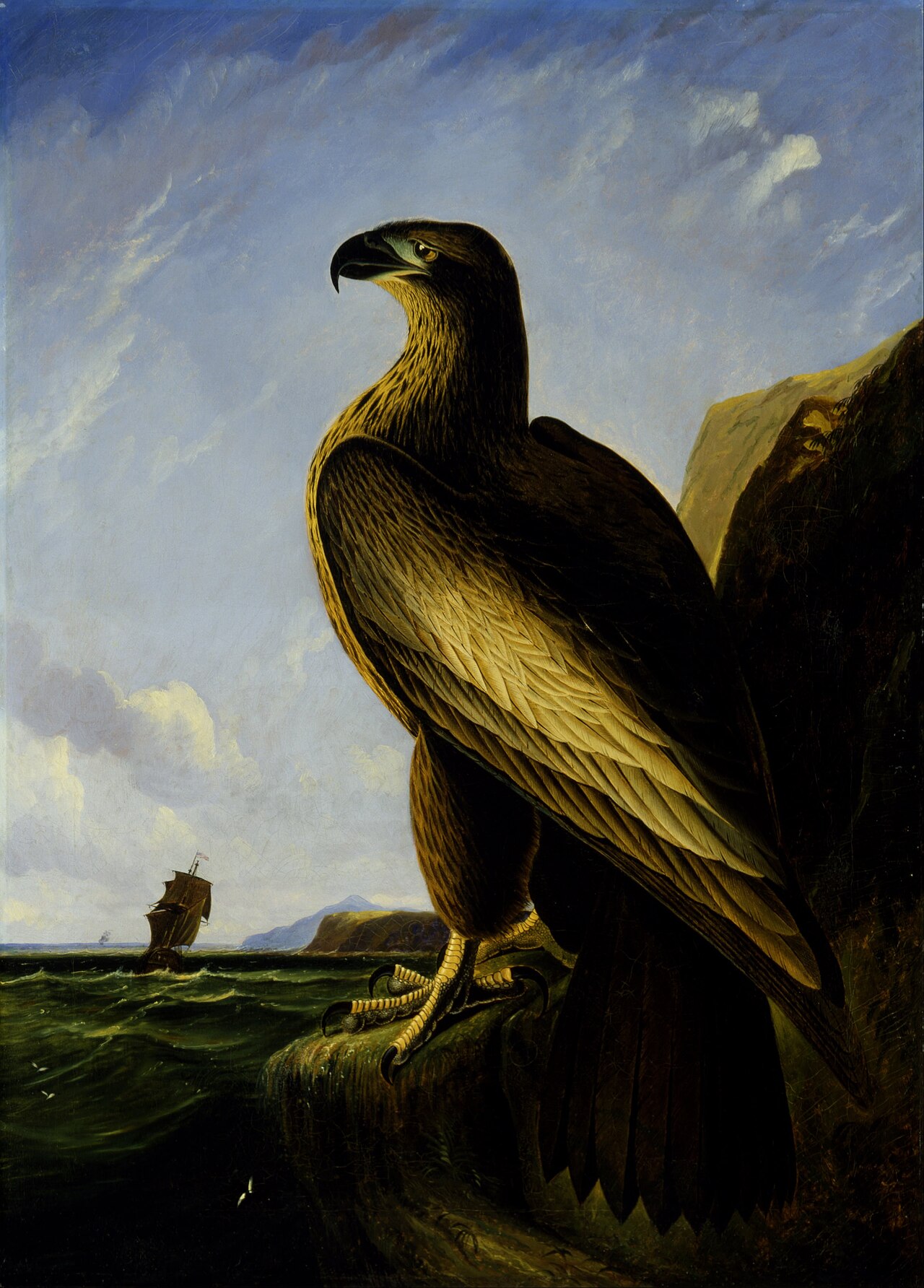
Washington Sea Eagle
John James Audubon · 1836
Audubon's 1836 painting of a supposed new eagle species, now considered an example of his scientific misconduct.
Audubon painted this work, which is now a key example of his scientific misconduct involving a fabricated species claim.
About this source
What it is
Painted by John James Audubon in 1836, this work depicts a large eagle he claimed was a new species, perched on a rocky outcrop with a ship and cliff in the background. It is held by the Smithsonian American Art Museum.
Why it matters
This painting is now understood to be based on a plagiarized image and fabricated data, making it an important case study in the history of scientific misconduct. It complicates Audubon's legacy as a celebrated naturalist, showing that his record included questionable claims as well as genuine discoveries.
Look closer
- Why might a scientist in Audubon's time have been tempted to claim a new species discovery?
- What details in the painting might have made it convincing to viewers at the time?
- How does knowing the background of this painting change the way you look at it?
This painting is part of the curated material that grounds the AI version of John James Audubon on Humy.ai — when students ask about related events, the AI can quote it and cite it.
More John James Audubon sources
Meet the AI John James Audubon →
Ready when you are
Start chatting with John James Audubon now.
20 messages free · No credit card · Available in 50+ languages.