


Primary sourcePainting18th century
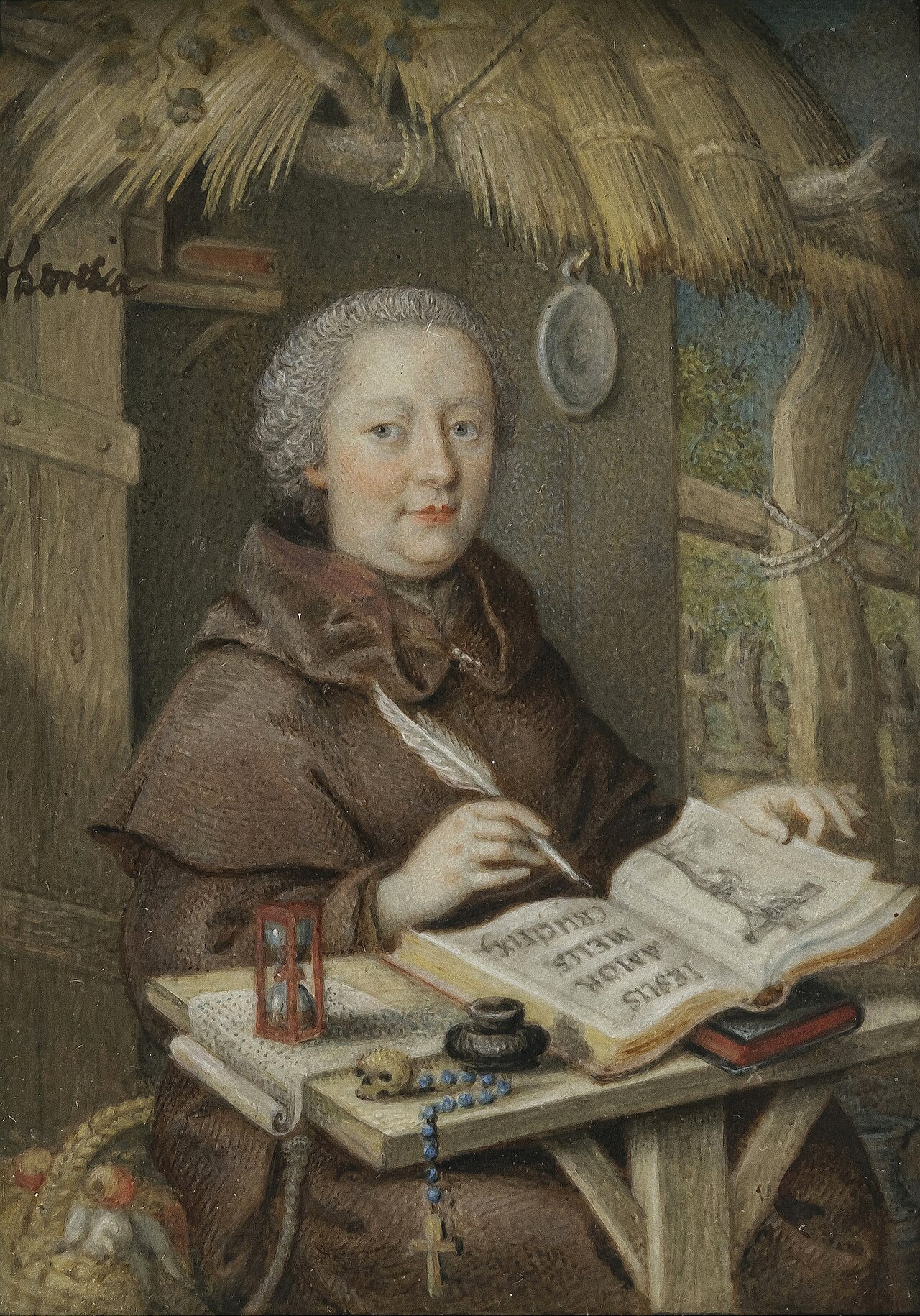
Watercolour of Archduchess Maria Theresa dressed as a hermit
18th century
A small watercolour on vellum showing Maria Theresa in the brown habit of a Franciscan tertiary, seated as a hermit at a writing table. It is linked to her through its inscription and the portrait's subject.
Shows Maria Theresa in a private devotional role, probably made during her lifetime by someone in her family.
About this source
What it is
This is a small watercolour, partly heightened with white, painted on vellum and measuring about 10.5 by 7.9 cm. It shows Archduchess Maria Theresa dressed as a hermit. The image shows a woman with grey curled hair in a brown hooded habit, seated at a wooden table in a rustic thatched hut, holding a quill over an open book inscribed 'Jesus Amor Meus Crucifixus'. An hourglass, ink pot, skull and blue rosary lie beside her, and the name 'Theresia' is written at upper left. The creator is unknown; it may have been a family member. The catalogue dates it to the 18th century, probably around 1750. A later hand wrote on the back of the mount that she painted it herself in the habit of the Franciscan Third Order. It comes from the estate of Dr. Alexander Eugen Duke of Württemberg (1933-2024).
Why it matters
The picture shows Maria Theresa in a private, pious role rather than as a ruler. Its later inscription claims she made it herself, but that claim comes from a later hand and cannot be confirmed from the facts alone. It reveals how the empress's household presented her religious devotion.
Look closer
- What objects around the figure suggest a life of prayer and reflection, and what might the hourglass and skull mean?
- Who wrote the words on the back of the mount, and why might they have added the claim that she painted it herself?
- What does this small, private image leave out about her public role as ruler?
This painting is part of the curated material that grounds the AI version of Maria Theresa on Humy.ai — when students ask about related events, the AI can quote it and cite it.
More Maria Theresa sources
Browse all 96 →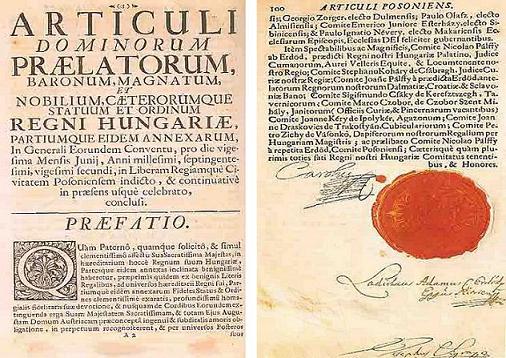 Document
Primary source
Pragmatic Sanction of 1713
Charles VI, Holy Roman Emperor · 1713
 Speech
Primary source
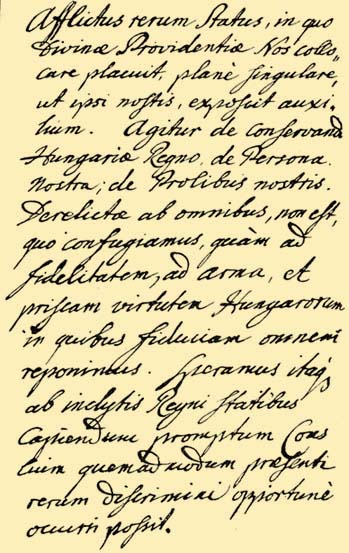
Address to the Hungarian Diet at Pressburg
Maria Theresa · 11 September 1741
 Artifact
Primary source
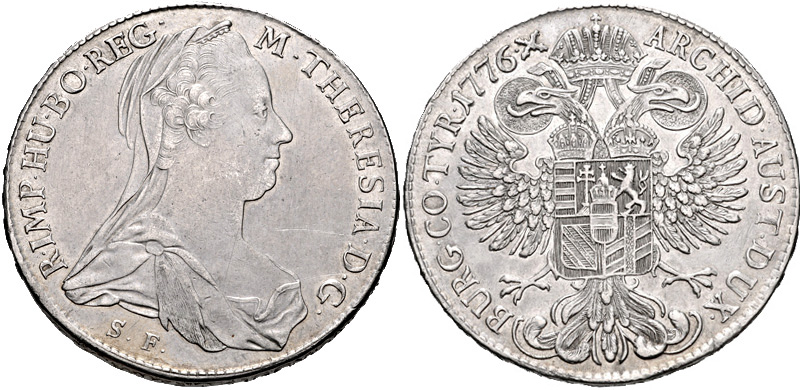
Maria Theresa Thaler
first minted 1741, this example dated 1780 (struck 1776)
 Painting
Primary source
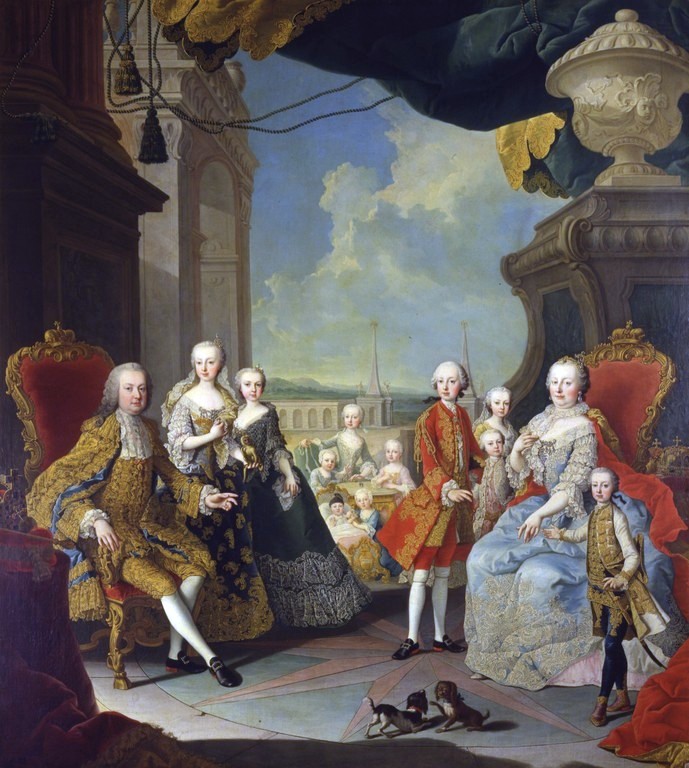
Franz Stephan and Maria Theresa Surrounded by Their Family
Martin van Meytens · 1754
Free account
Read every Maria Theresa source
Sign up free →
Ready when you are
Start chatting with Maria Theresa now.
20 messages free · No credit card · Available in 50+ languages.