


Primary sourceDocument1964
Wesberry v. Sanders
Hugo Black · 1964
The 1964 Supreme Court ruling requiring roughly equal population in House districts, written by Justice Hugo Black.
Black wrote the majority opinion establishing 'one person, one vote' for congressional districts.
About this source
What it is
This document is the Supreme Court's 1964 decision in Wesberry v. Sanders, which held that congressional districts must be approximately equal in population. The majority opinion was written by Justice Hugo Black.
Why it matters
The ruling established the principle of 'one person, one vote' for the House of Representatives, part of a series of cases that reshaped American democracy by making legislative districts fairer. It shows Black's belief that the Constitution's text, properly read, demanded equal representation.
Look closer
- Why might unequal district sizes matter for how fairly people are represented?
- How did Black use the history of the Constitutional Convention to support his argument?
- What did the dissenting justice, John Marshall Harlan II, argue instead?
This document is part of the curated material that grounds the AI version of Hugo Black on Humy.ai — when students ask about related events, the AI can quote it and cite it.
More Hugo Black sources
Meet the AI Hugo Black →Primary source
New York Times Co. v. United States
1971
Primary source
Tinker v. Des Moines Independent Community School District
Abe Fortas · 1969
Primary source
Youngstown Sheet & Tube Co. v. Sawyer
Hugo Black · 1952
Primary source
Everson v. Board of Education
Hugo Black · 1947
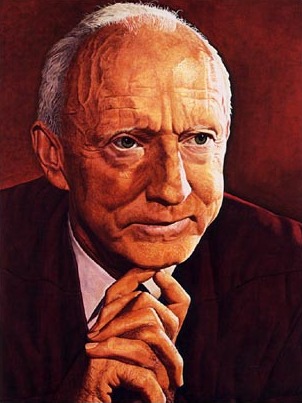 Painting
Secondary source
Hugo Black
John Black
Ready when you are
Start chatting with Hugo Black now.
20 messages free · No credit card · Available in 50+ languages.