


Primary sourceArtifact1928
West End Blues
Louis Armstrong and His Hot Five · 1928
Armstrong's 1928 recording with his Hot Five, famous for its unaccompanied opening trumpet cadenza, is seen as a landmark moment for jazz as a soloist's art.
Armstrong's trumpet playing and scat vocal on this 1928 recording made it one of jazz's defining early statements.
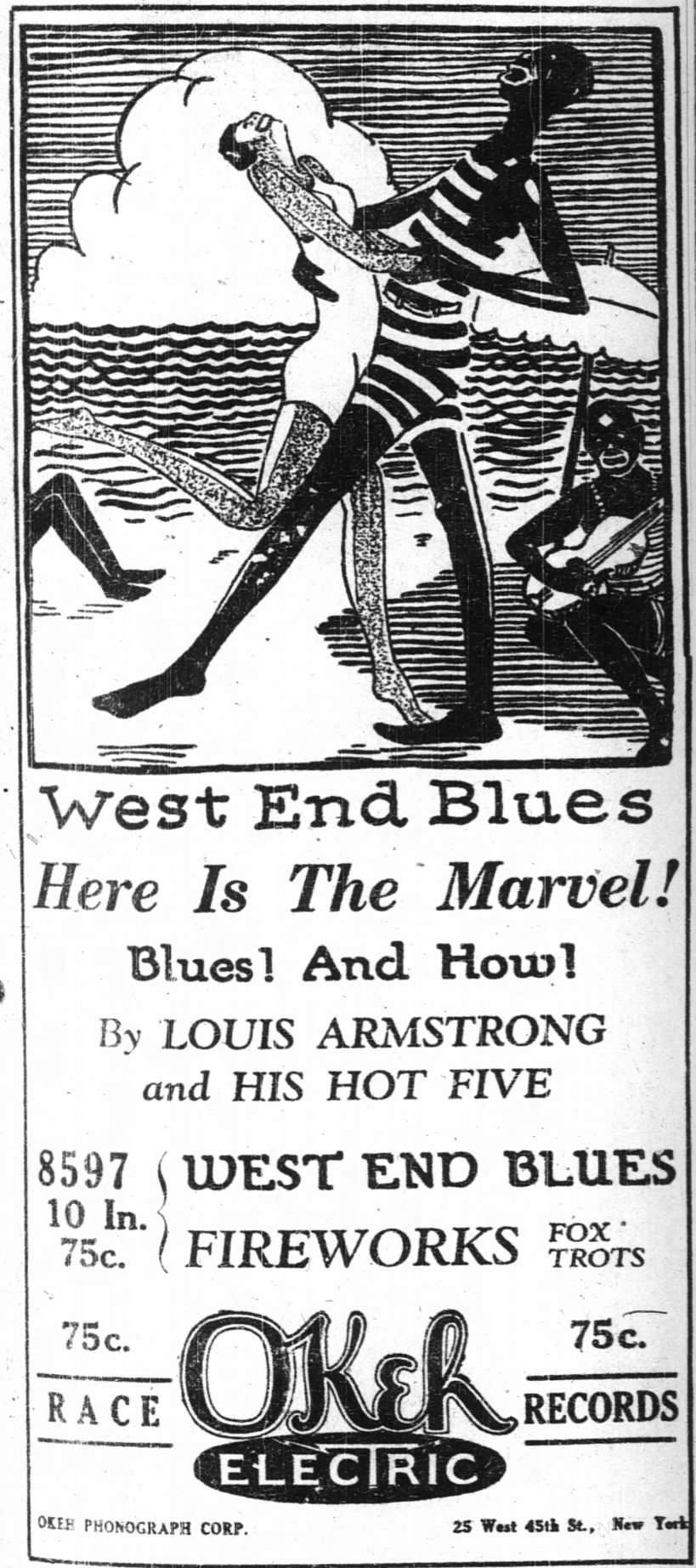
About this source
What it is
"West End Blues" was written by Joe "King" Oliver and first recorded by his band in 1928. The best-known version was recorded on June 28, 1928 by Louis Armstrong and His Hot Five, with pianist Earl Hines, clarinetist Jimmy Strong, trombonist Fred Robinson, banjoist Mancy Carr and drummer Zutty Singleton.
Why it matters
Armstrong's unaccompanied opening cadenza and his scat vocal duet with the clarinet are among the most celebrated moments in early jazz recordings. Writers have argued this record showed that jazz could stand alongside any other serious music, and it helped make the improvising soloist the centre of the music. The record was later inducted into the Grammy Hall of Fame.
Look closer
- What does the opening cadenza, played with no backing, tell you about Armstrong's confidence as a performer?
- Why might later listeners, like Billie Holiday, have remembered this record as their first encounter with scat singing?
- The advertisement for this record used racist caricature imagery aimed at Black audiences — what does that tell you about the music industry of the 1920s?
This artifact is part of the curated material that grounds the AI version of Louis Armstrong on Humy.ai — when students ask about related events, the AI can quote it and cite it.
More Louis Armstrong sources
Meet the AI Louis Armstrong →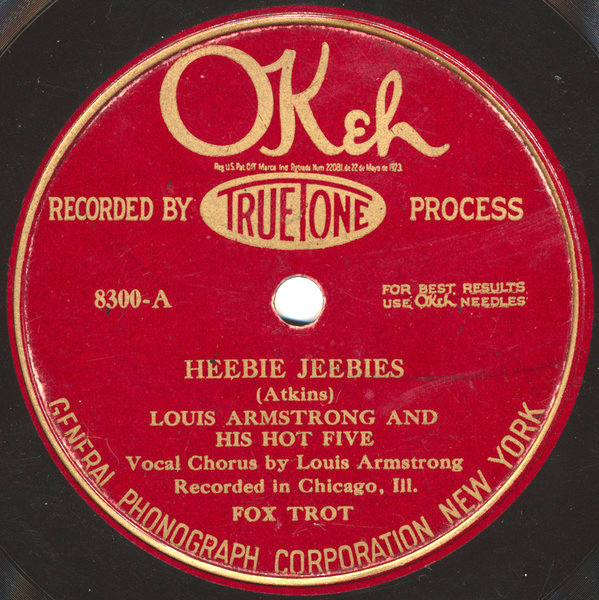 Artifact
Primary source
Heebie Jeebies
Louis Armstrong and His Hot Five · 1926
Primary source
Dippermouth Blues
King Oliver's Creole Jazz Band · 1923
 Artifact
Primary source
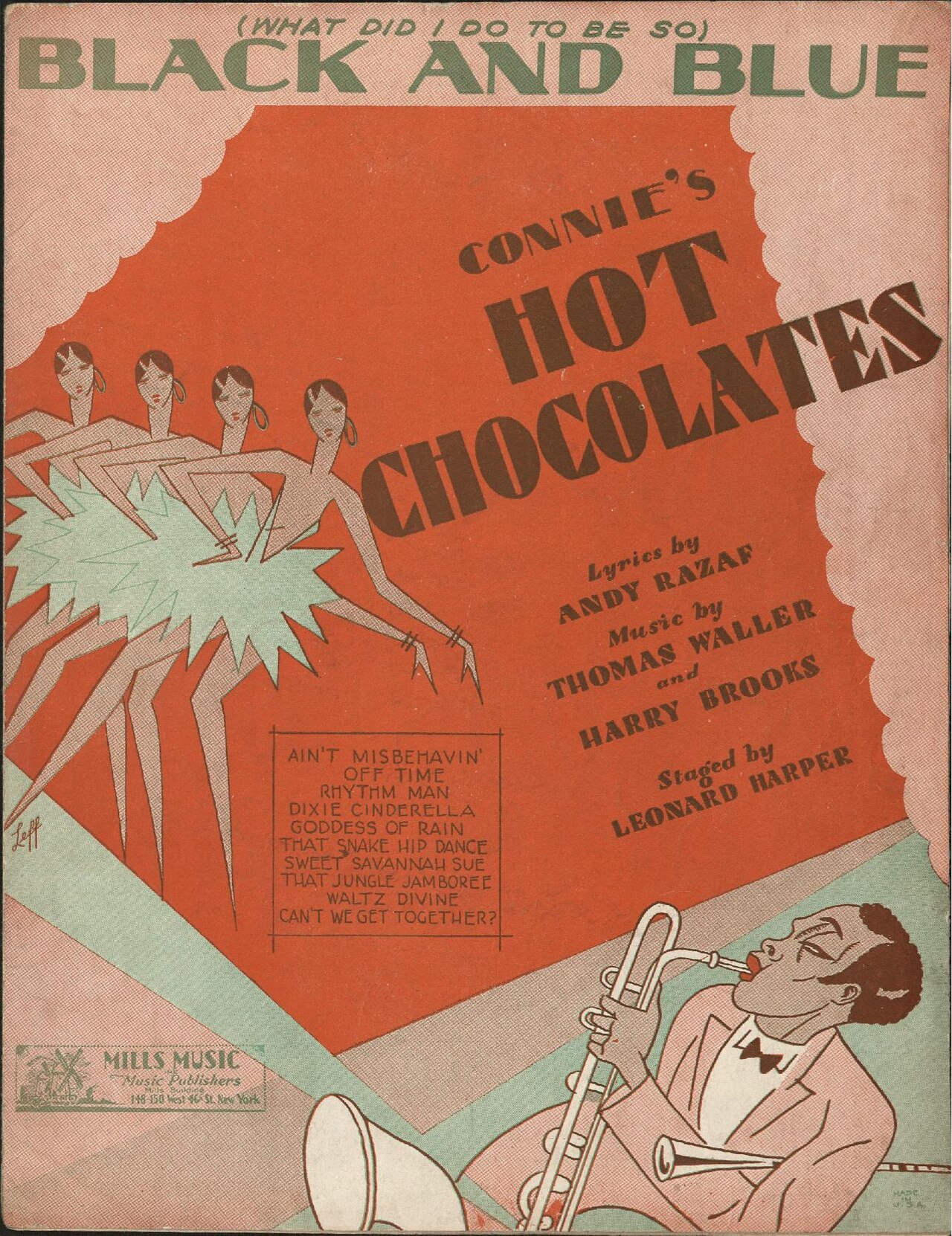
(What Did I Do to Be So) Black and Blue
Fats Waller, Harry Brooks, Andy Razaf · 1929
 Artifact
Primary source
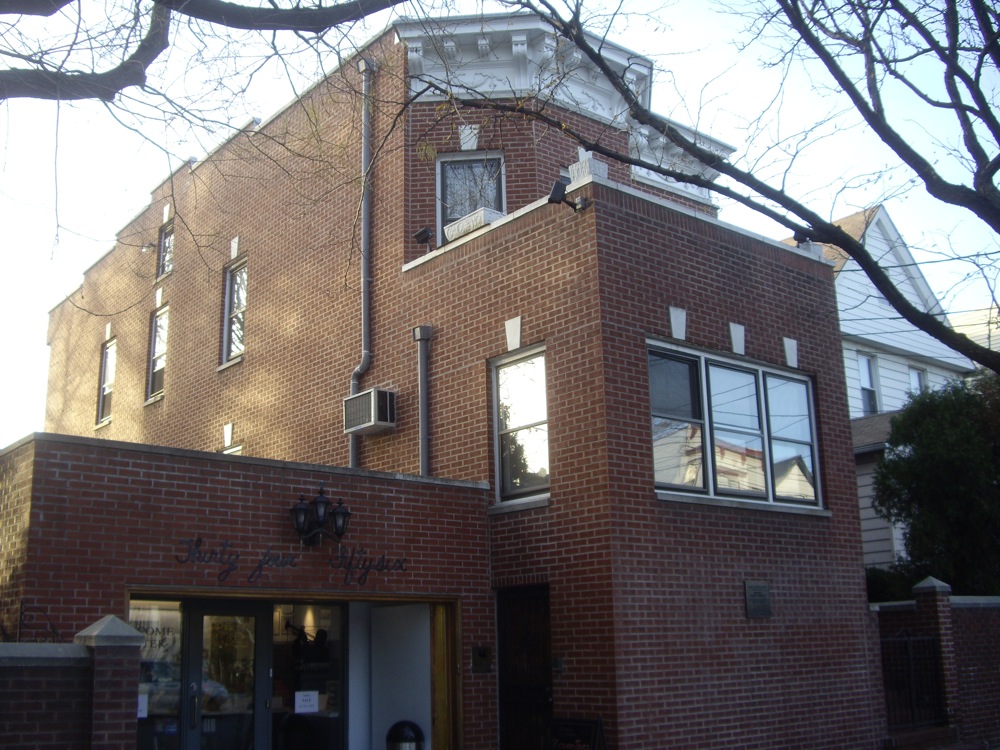
Louis Armstrong House
Robert W. Johnson (architect) · 1910 (built); home of Armstrong 1943-1971
 Photograph
Primary source
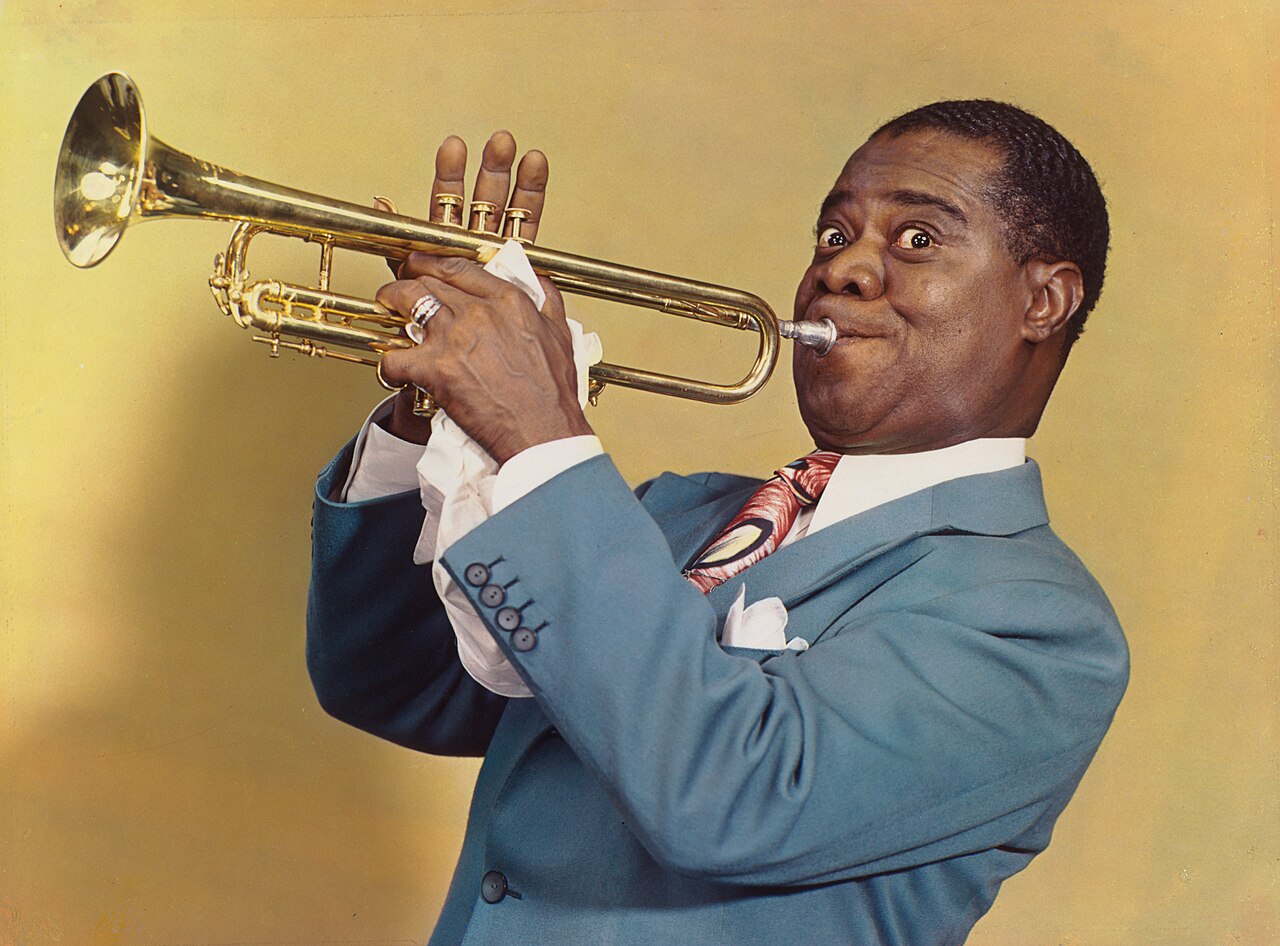
Louis Armstrong, by Harry Warnecke and Gus Schoenbaechler
Harry Warnecke and Gus Schoenbaechler · 1947
Ready when you are
Start chatting with Louis Armstrong now.
20 messages free · No credit card · Available in 50+ languages.