


Primary sourcePainting1851
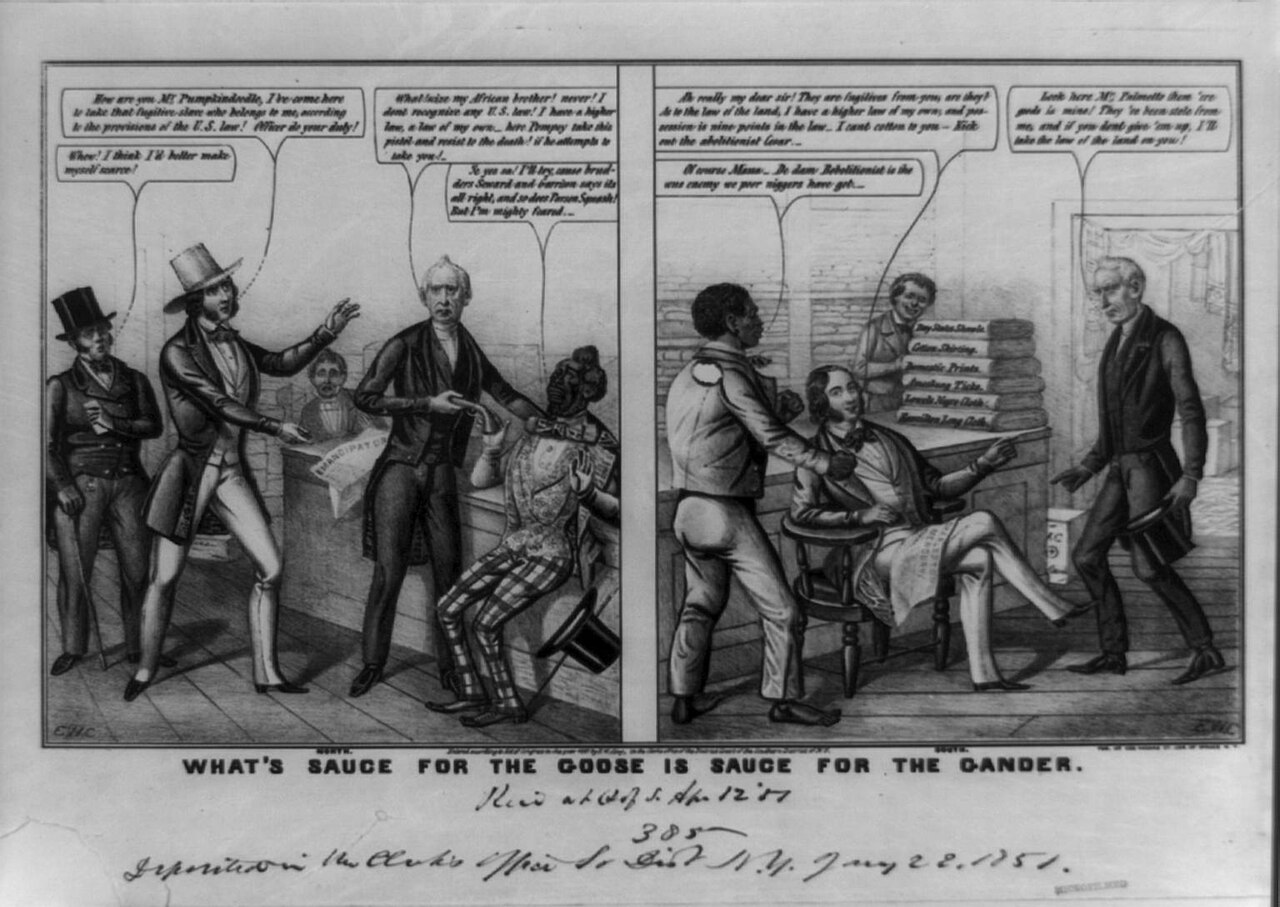
What's Sauce for the Goose is Sauce for the Gander
Edward Williams Clay · 1851
An 1851 pro-slavery cartoon supporting the Fugitive Slave Act, the law that endangered Harriet Jacobs in the North.
Represents the pro-slavery defense of the Fugitive Slave Act, the very law that threatened Jacobs's freedom in New York.
About this source
What it is
This is a two-panel lithograph by Edward Williams Clay from 1851, supporting the Fugitive Slave Act of 1850. It shows a Black man being seized and restrained, framed as a debate between a Southern slaveholder and a Northerner over stolen 'goods.'
Why it matters
The Fugitive Slave Act allowed enslavers to pursue and capture people who had escaped slavery, even in free states, and was sometimes used to kidnap free Black people. Harriet Jacobs lived under exactly this threat while hiding in New York. This cartoon shows how the law was defended by its supporters using racist caricature.
Look closer
- How does the cartoon use racist caricature to make its argument seem reasonable?
- Whose point of view is centered in this cartoon, and whose is missing?
This painting is part of the curated material that grounds the AI version of Harriet Jacobs on Humy.ai — when students ask about related events, the AI can quote it and cite it.
More Harriet Jacobs sources
Meet the AI Harriet Jacobs →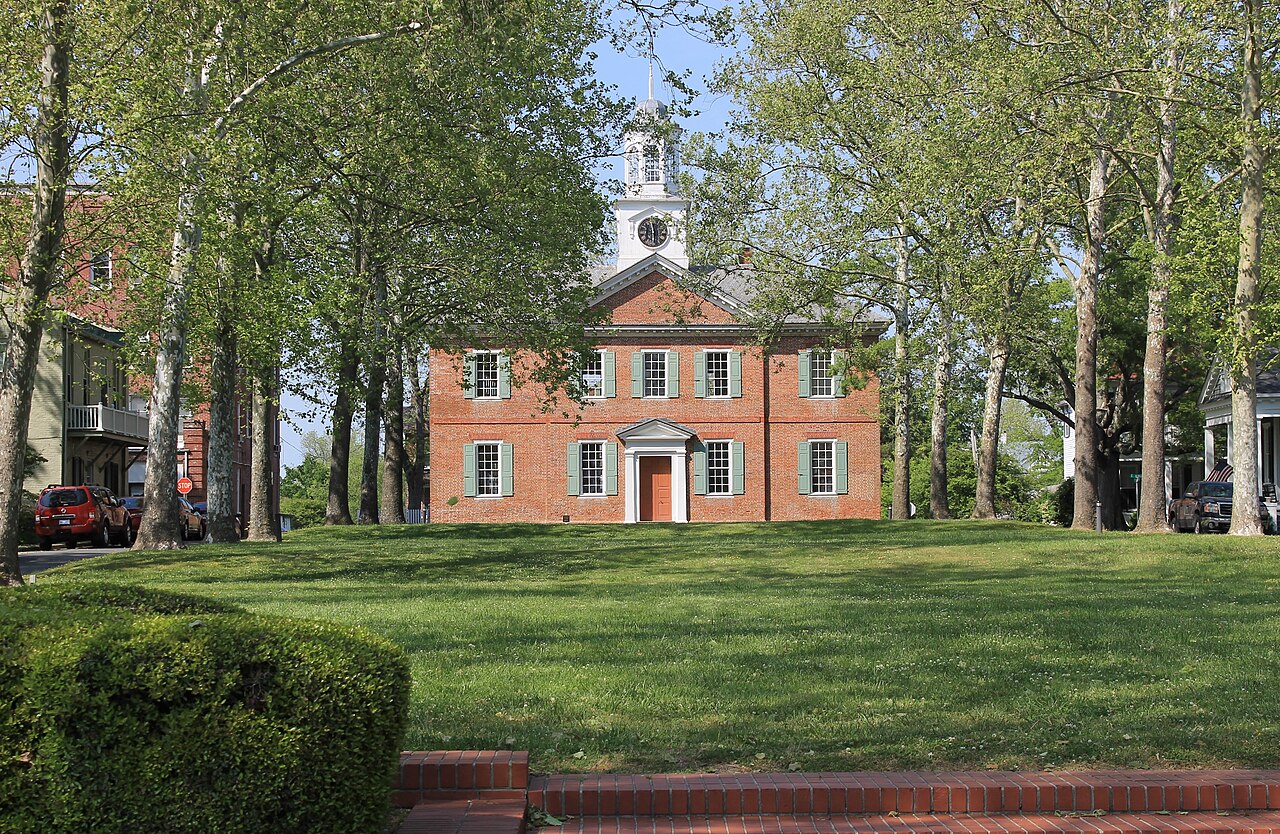 Artifact
Secondary source
Chowan County Courthouse
1767
 Book
Primary source
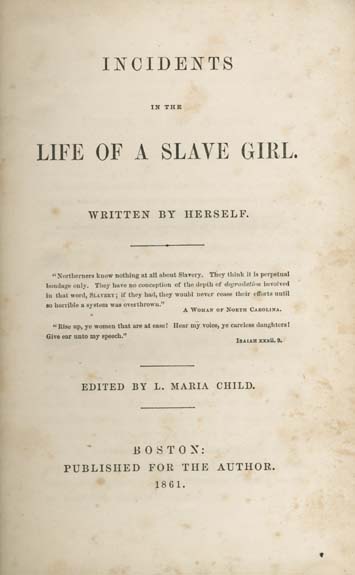
Incidents in the Life of a Slave Girl
Harriet Jacobs · 1861
 Photograph
Primary source
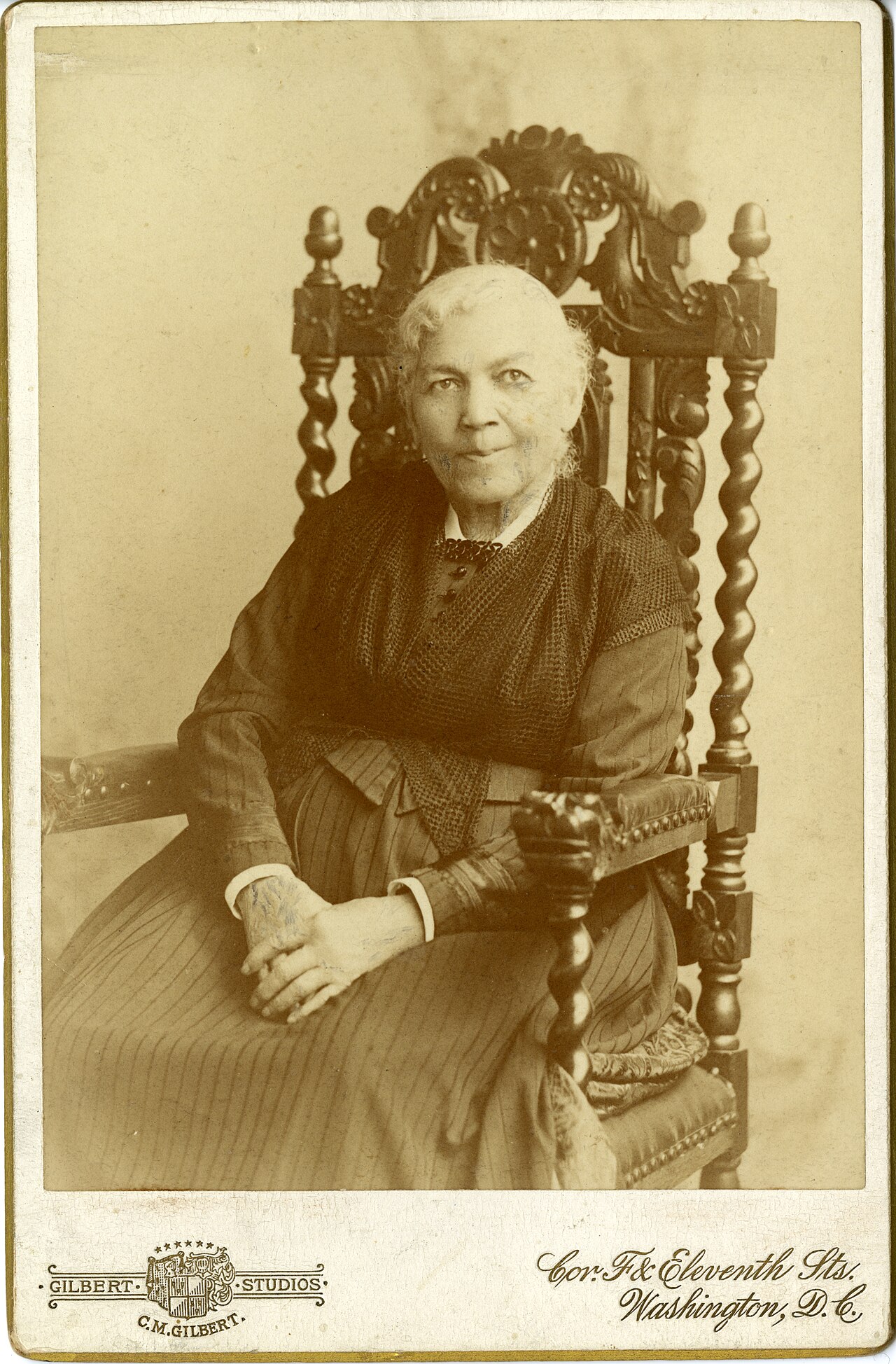
Gilbert Studios Photograph of Harriet Jacobs
Gilbert Studios (C. M. Gilbert)
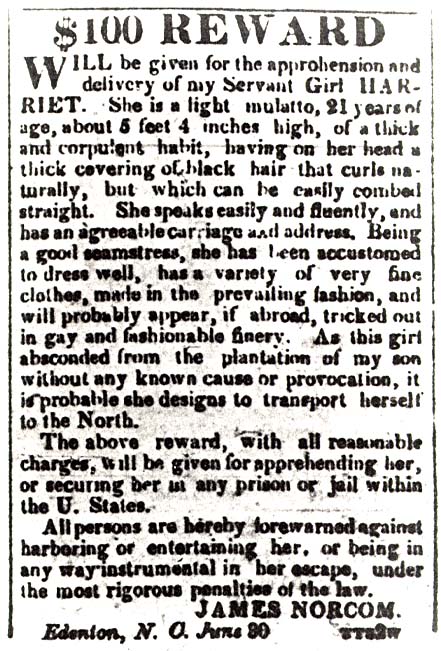 Newspaper article
Primary source
$100 Reward Advertisement for Harriet Jacobs
James Norcom · 30 June 1835
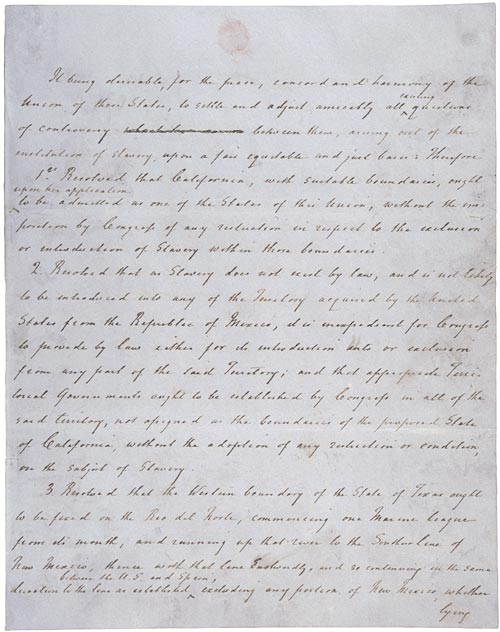 Document
Primary source
Compromise of 1850
Henry Clay · 29 January 1850 (resolutions); statutes enacted September 1850
Ready when you are
Start chatting with Harriet Jacobs now.
20 messages free · No credit card · Available in 50+ languages.