


Primary sourceBook1865
When Lilacs Last in the Dooryard Bloom'd
Walt Whitman · 1865
Whitman's long free-verse elegy for Lincoln and the Civil War dead, written in 1865 and later folded into Leaves of Grass.
Whitman's major elegy for Lincoln, written from personal grief and shown in its first printed form.
About this source
What it is
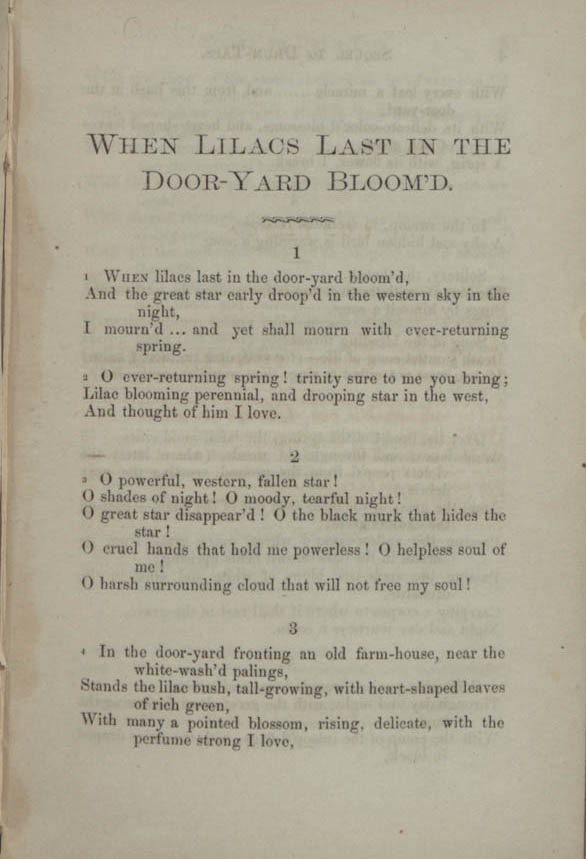
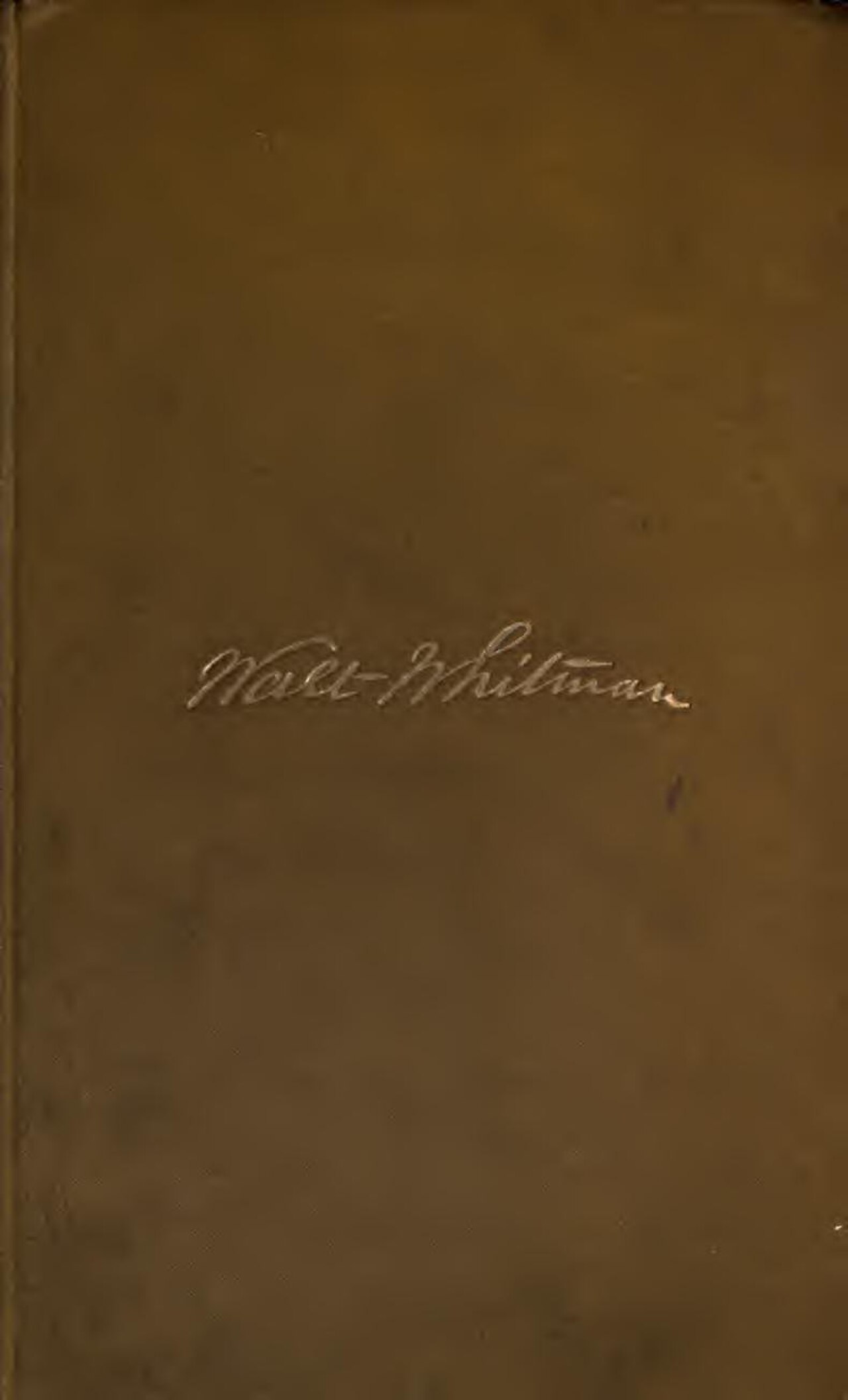
"When Lilacs Last in the Dooryard Bloom'd" is a 206-line free-verse elegy written by Walt Whitman in the summer of 1865, after the assassination of President Abraham Lincoln. It was first published that autumn in Sequel to Drum-Taps, and the image shown is a scan of that first printing. It was absorbed into Leaves of Grass from its fourth edition in 1867.
Why it matters
Whitman never names Lincoln or describes his death directly. Instead he uses lilacs, a star and a bird as symbols, following the tradition of the pastoral elegy while also evoking the pity of the just-ended Civil War. Whitman, who worked in Washington during the war and admired Lincoln without ever meeting him, wrote the poem out of personal grief, recalling that lilacs were blooming when he heard the news.
Look closer
- Why might Whitman avoid naming Lincoln directly in a poem written in his memory?
- What effect do the natural images of lilacs, a star and a bird create compared to a direct description of death?
- How does seeing the poem's original printed page differ from reading it in a modern book?
This book is part of the curated material that grounds the AI version of Walt Whitman on Humy.ai — when students ask about related events, the AI can quote it and cite it.
More Walt Whitman sources
Browse all 96 →Primary source
Leaves of Grass
Walt Whitman · 1855
Primary source
Song of Myself
Walt Whitman · 1855
 Book
Secondary source
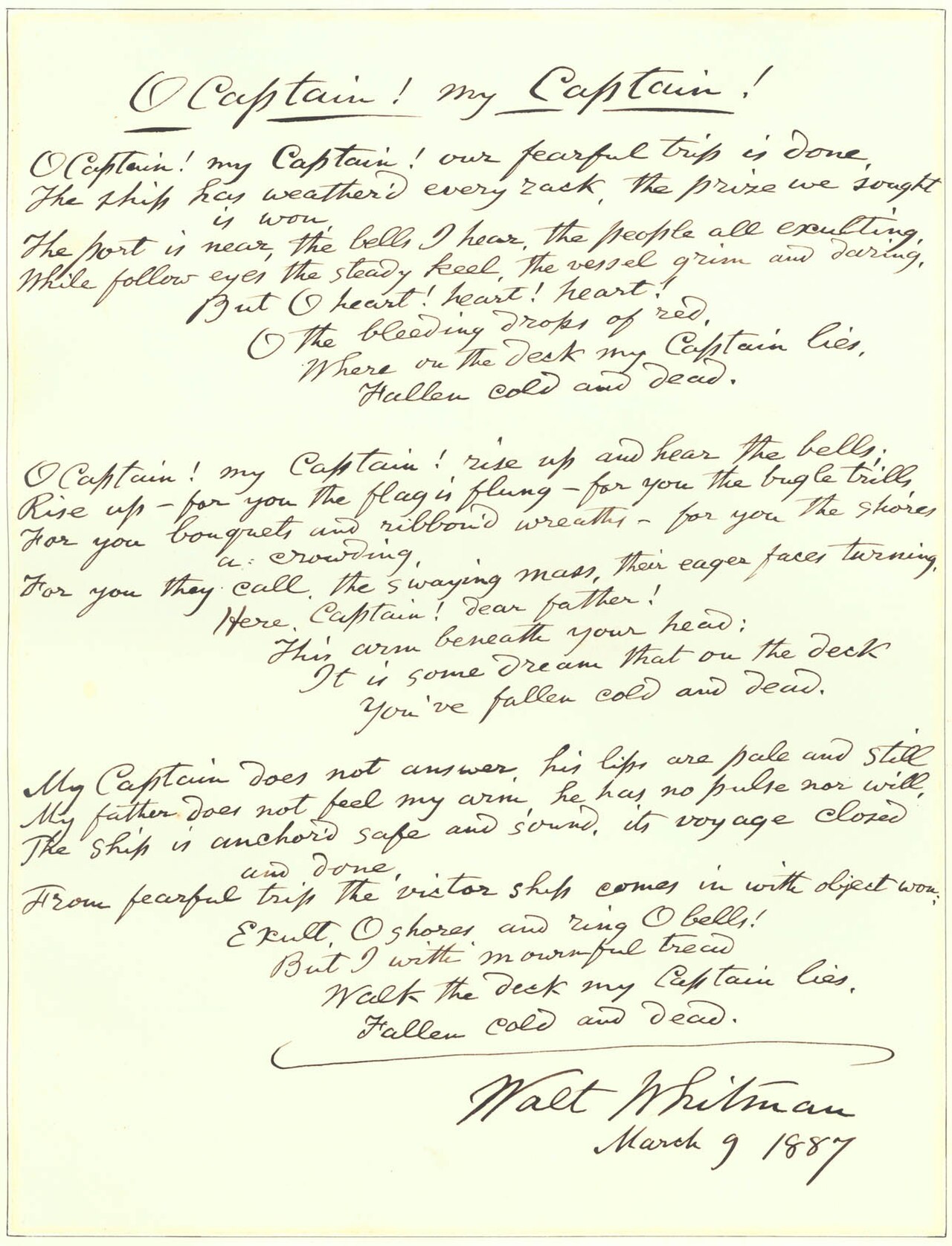
O Captain! My Captain!
Walt Whitman · 1865 (manuscript shown dated 1887)
 Letter
Primary source
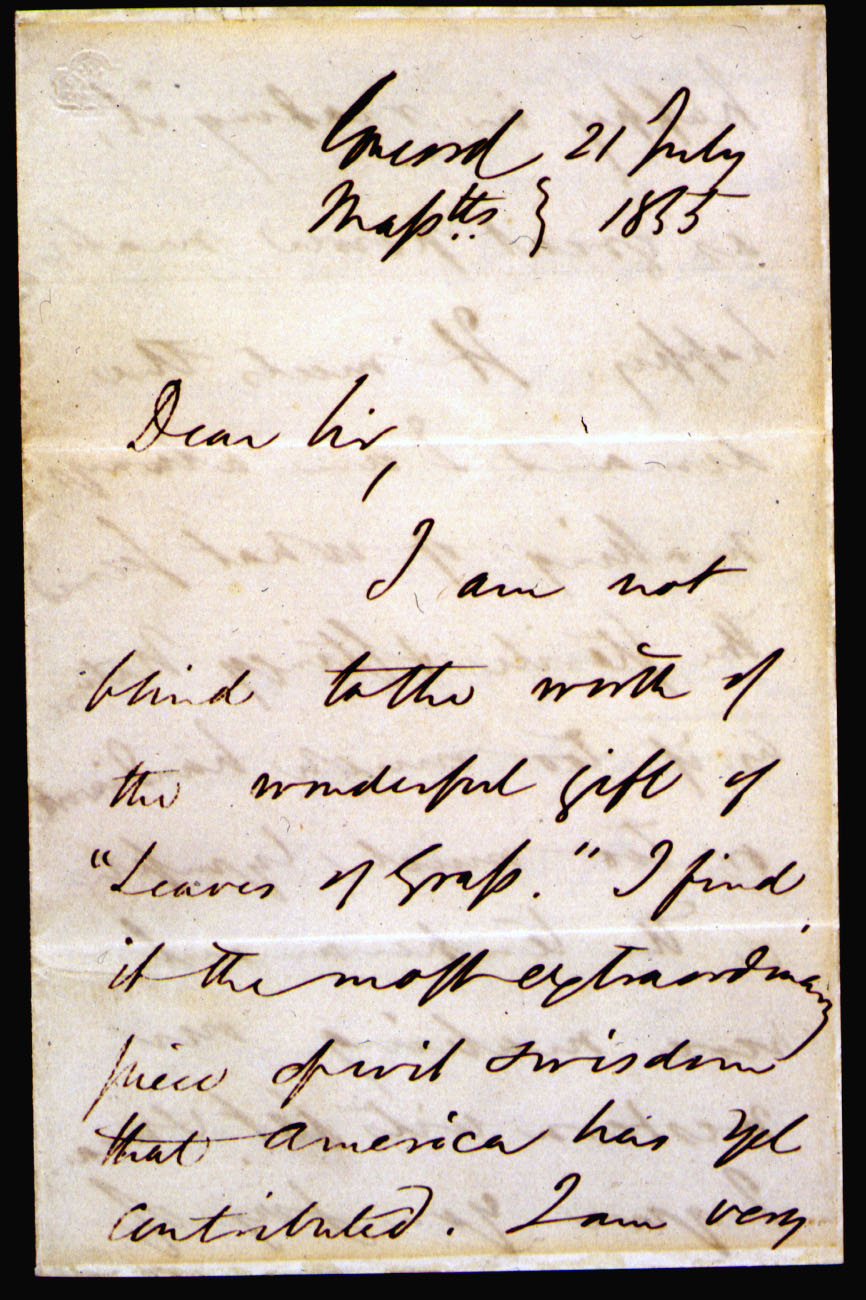
Emerson's Letter to Whitman
Ralph Waldo Emerson · 21 July 1855
Free account
Browse every Walt Whitman source
Sign up free →
Ready when you are
Start chatting with Walt Whitman now.
20 messages free · No credit card · Available in 50+ languages.