


Primary sourcePainting1845
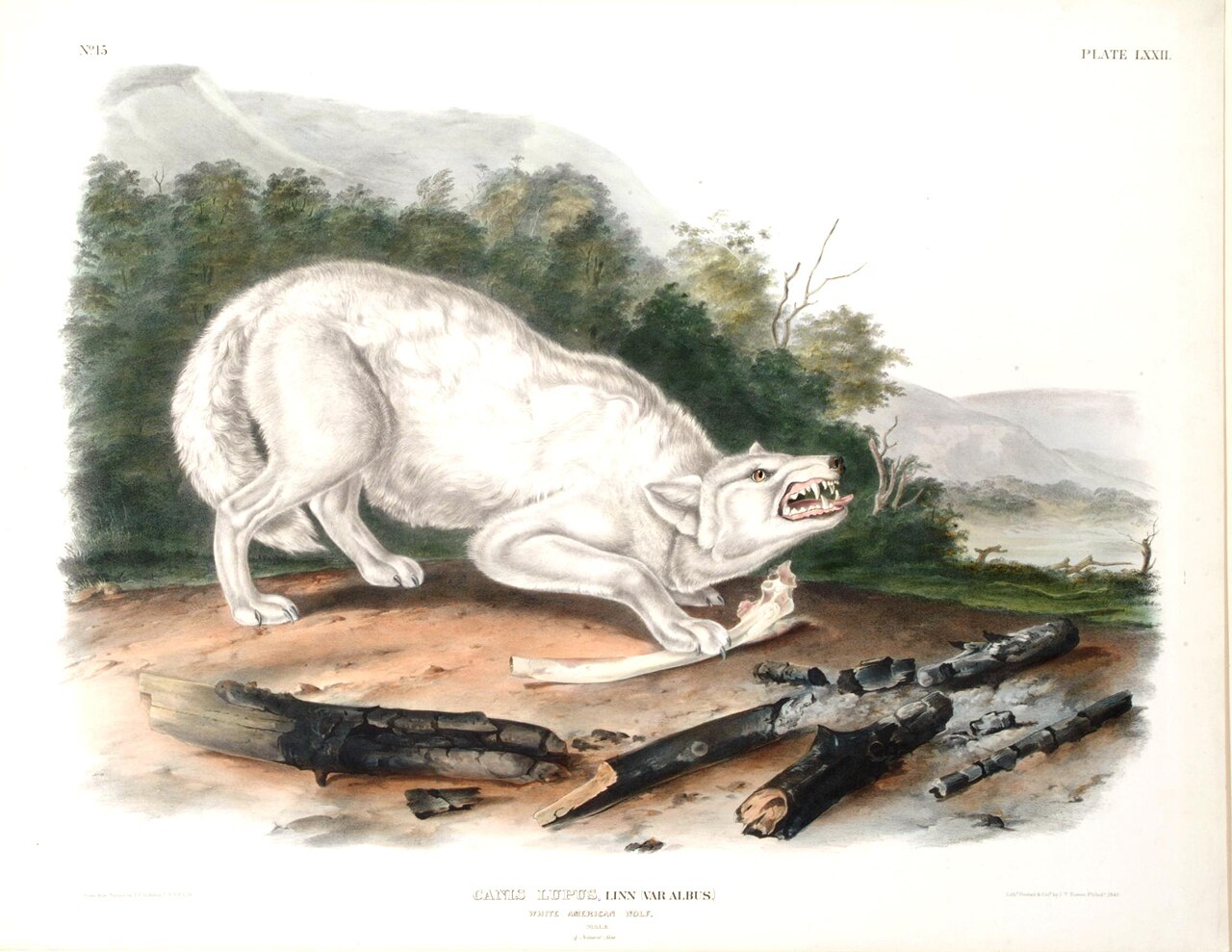
White American Wolf
John James Audubon · 1845
A hand-colored lithograph of a white American wolf, made by Audubon in 1845 for his studies of American mammals.
This later plate shows Audubon's work beyond birds, extending his wildlife studies to American mammals.
About this source
What it is
This hand-colored lithograph, Plate LXXII, shows a white American wolf snarling while gnawing a bone near burnt logs, with forest and hills in the background. It was created by John James Audubon in 1845 as part of his later work on American mammals, Viviparous Quadrupeds of North America.
Why it matters
After his success with birds, Audubon turned to illustrating mammals, continuing his project of documenting North American wildlife through detailed, dramatic images. This plate shows his extension of the same careful observation and artistic style to a very different kind of animal.
Look closer
- What mood does the pose and setting of the wolf create?
- How is this image similar to or different from Audubon's bird plates?
- What might the burnt logs and bare ground suggest about the scene Audubon chose to depict?
This painting is part of the curated material that grounds the AI version of John James Audubon on Humy.ai — when students ask about related events, the AI can quote it and cite it.
More John James Audubon sources
Meet the AI John James Audubon →
Ready when you are
Start chatting with John James Audubon now.
20 messages free · No credit card · Available in 50+ languages.