


Primary sourcePainting1938
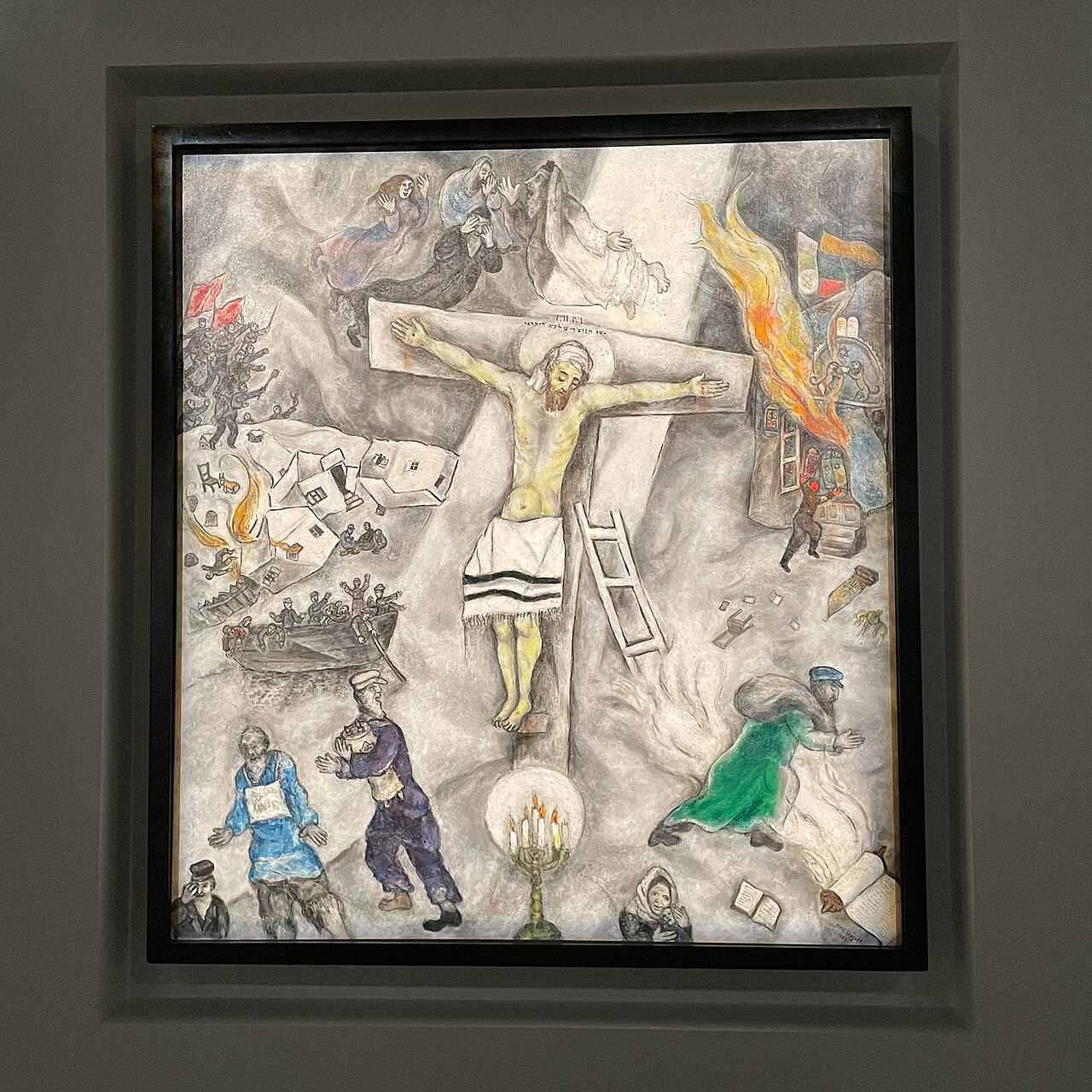
White Crucifixion
Marc Chagall · 1938
A 1938 painting by Marc Chagall showing Christ as a Jewish martyr amid scenes of Nazi persecution.
Chagall created this painting as a direct response to Nazi persecution of Jews, reflecting his own Jewish identity.
About this source
What it is
This painting was made by Marc Chagall in 1938 while he lived in Paris. It is now part of the permanent collection of the Art Institute of Chicago.
Why it matters
Chagall painted it in response to Kristallnacht, the violent Nazi attacks on Jews in Germany in November 1938. The painting shows Jesus crucified while wearing a Jewish prayer shawl, surrounded by burning synagogues and fleeing refugees. It is unusual because Chagall used the crucifixion, a Christian image sometimes associated with Jewish oppression, to represent Jewish suffering instead. The painting reveals how Chagall responded as an artist to the dangers facing Jewish communities in Europe at the time.
Look closer
- Why do you think Chagall chose to drain the painting of the bright colors common in his other works?
- What symbols can you find that connect Jewish identity to the crucifixion scene?
- Chagall painted over a swastika and a sign reading
This painting is part of the curated material that grounds the AI version of Marc Chagall on Humy.ai — when students ask about related events, the AI can quote it and cite it.
More Marc Chagall sources
Browse all 98 →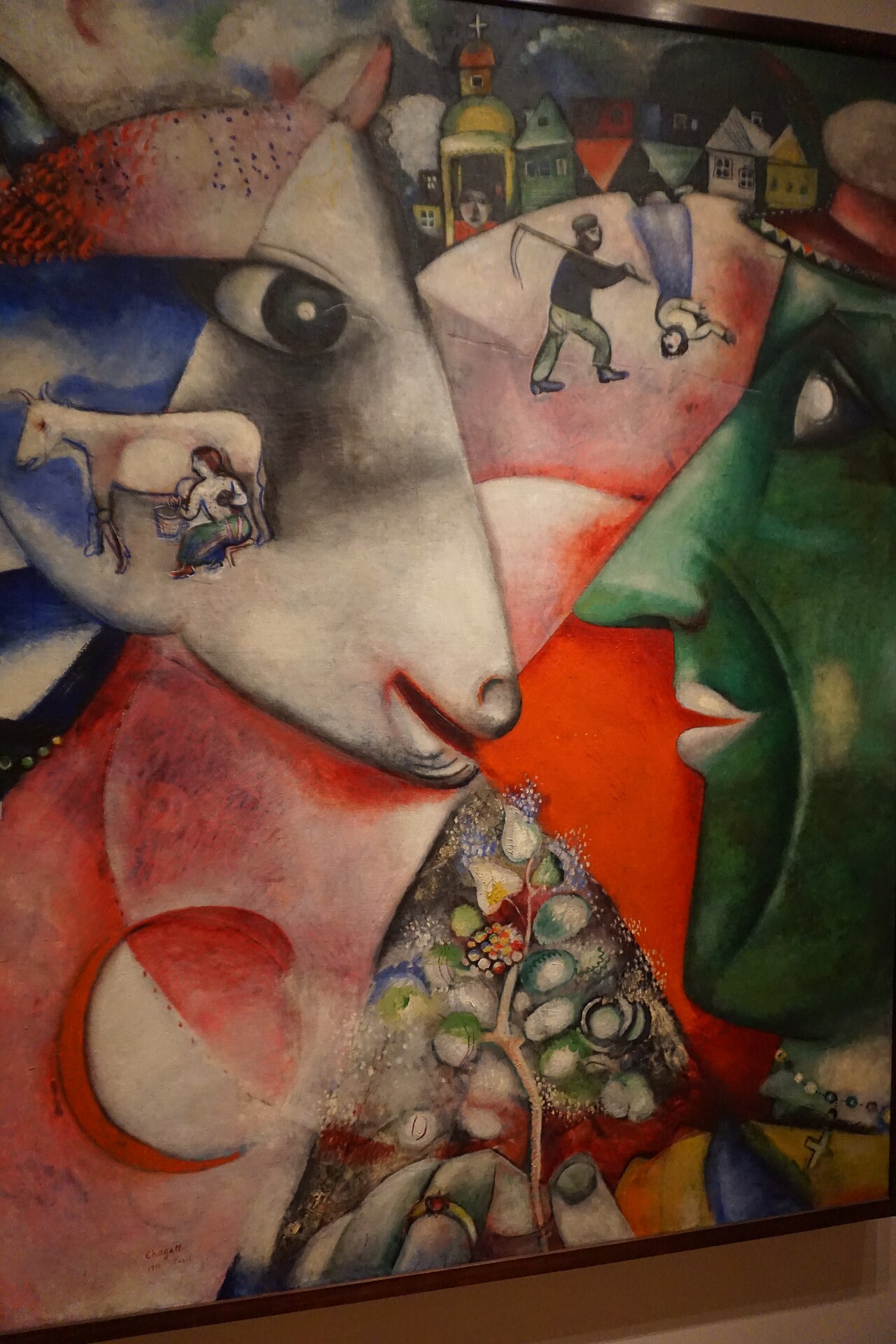 Painting
Primary source
I and the Village
Marc Chagall · 1911
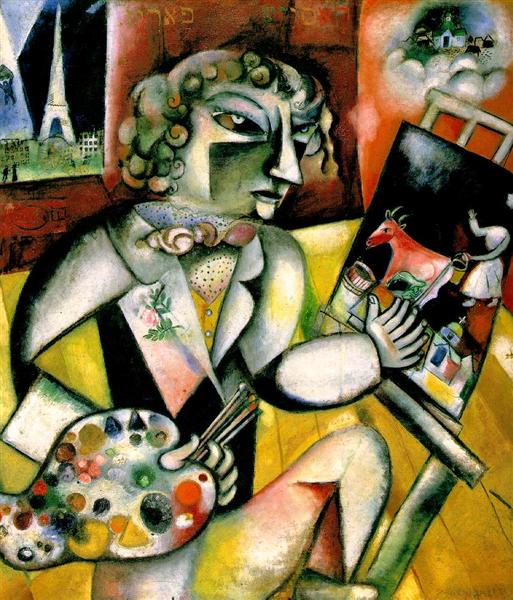 Painting
Primary source
Self-Portrait with Seven Fingers
Marc Chagall · 1913
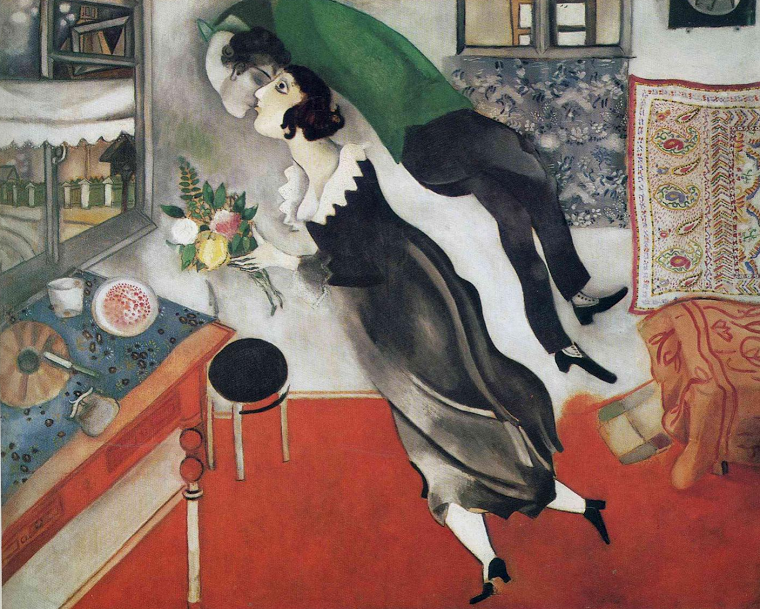 Painting
Primary source
Birthday
Marc Chagall · 1915
 Artifact
Primary source
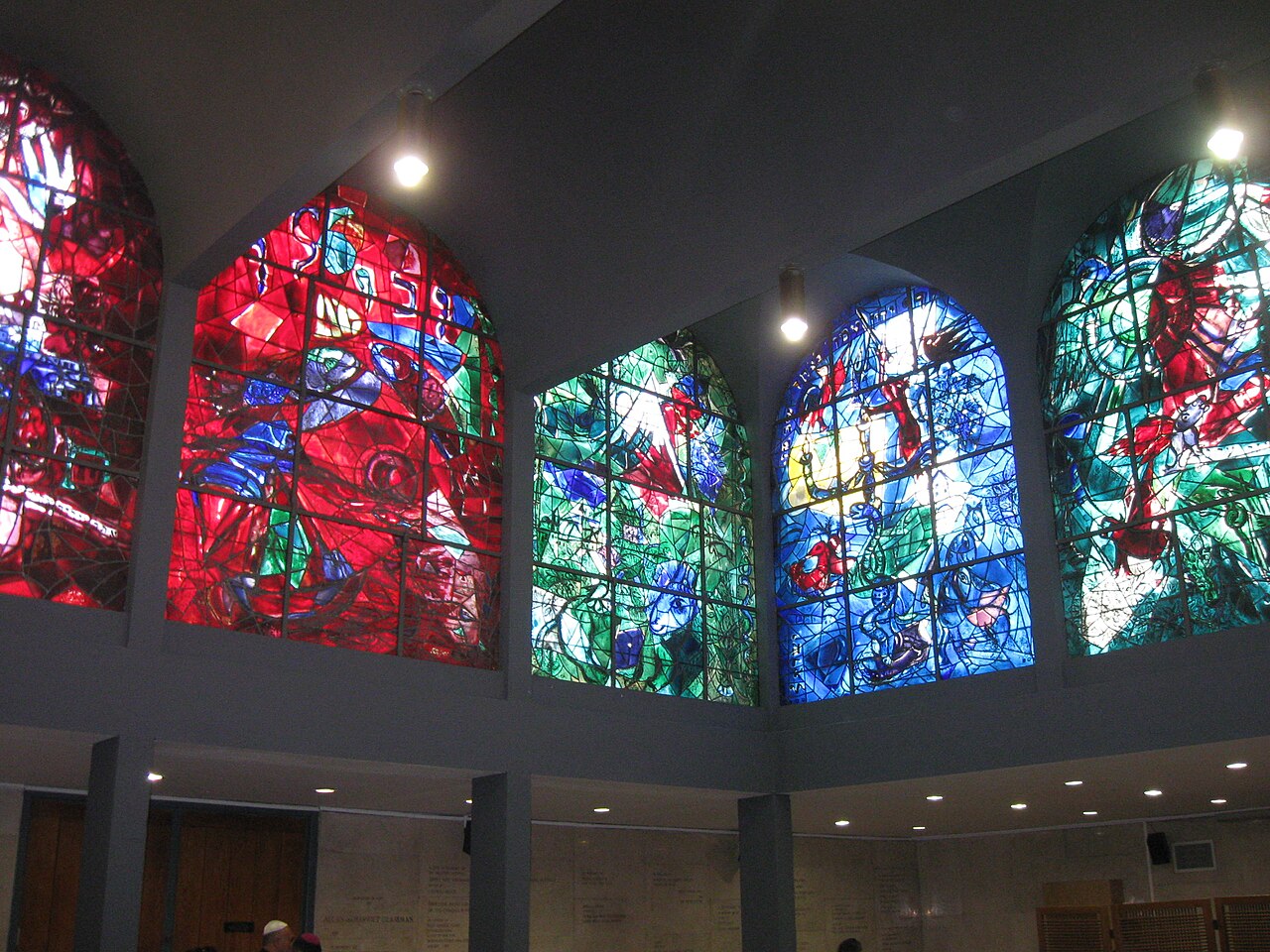
Chagall Windows
Marc Chagall · 1962
Free account
Read every Marc Chagall source
Sign up free →
Ready when you are
Start chatting with Marc Chagall now.
20 messages free · No credit card · Available in 50+ languages.