


Primary sourcePainting1905
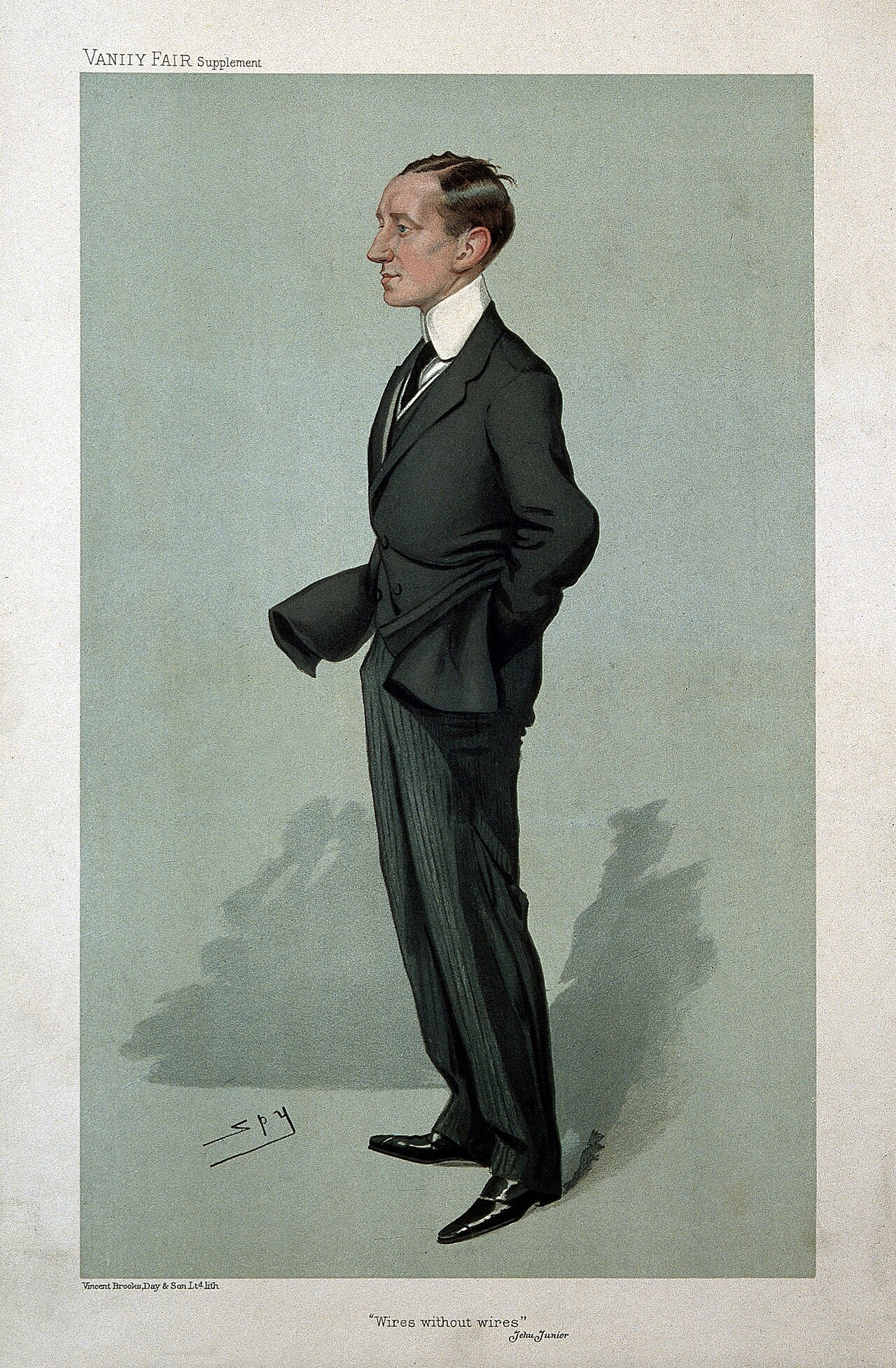
Wires Without Wires
Leslie Ward (Spy) · 1905
A 1905 Vanity Fair caricature of Marconi, showing him as a celebrated public figure in Edwardian Britain.
This caricature of Marconi himself shows how he was portrayed as a celebrity in Edwardian popular culture.
About this source
What it is
This is a colour lithograph caricature of Guglielmo Marconi, made in 1905 by the artist known as Spy (Leslie Ward) for Vanity Fair magazine. It shows Marconi standing in profile in formal dress, under the caption 'Wires without wires'.
Why it matters
Vanity Fair regularly published caricatures of well-known figures of the day, and Marconi's inclusion shows how famous he had become as the inventor of wireless telegraphy. The playful caption references his best-known achievement, showing how his work was understood and talked about by the public of his time.
Look closer
- Why do you think the magazine chose to depict Marconi this way, rather than with his equipment?
- What does the caption 'Wires without wires' suggest about how ordinary people understood his invention?
- What does the inclusion of a scientist among Vanity Fair's usual subjects of politicians and socialites tell us about his fame?
This painting is part of the curated material that grounds the AI version of Guglielmo Marconi on Humy.ai — when students ask about related events, the AI can quote it and cite it.
More Guglielmo Marconi sources
Browse all 92 →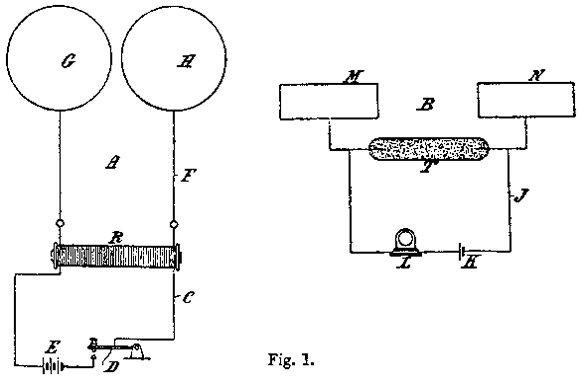 Document
Primary source
1896 Marconi Patent
Guglielmo Marconi · 1896
 Artifact
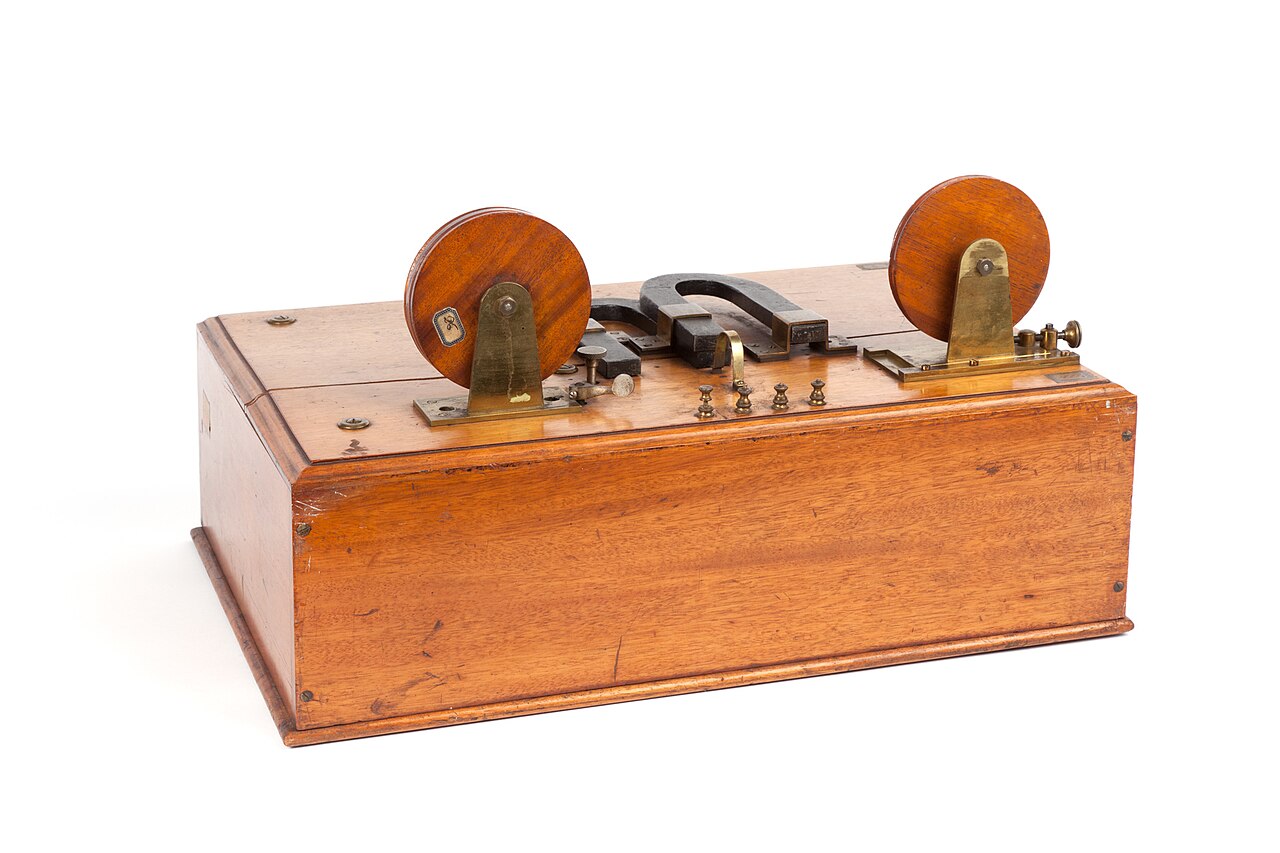
Primary source
Marconi Magnetic Detector (1902)
Guglielmo Marconi · 1902
 Artifact
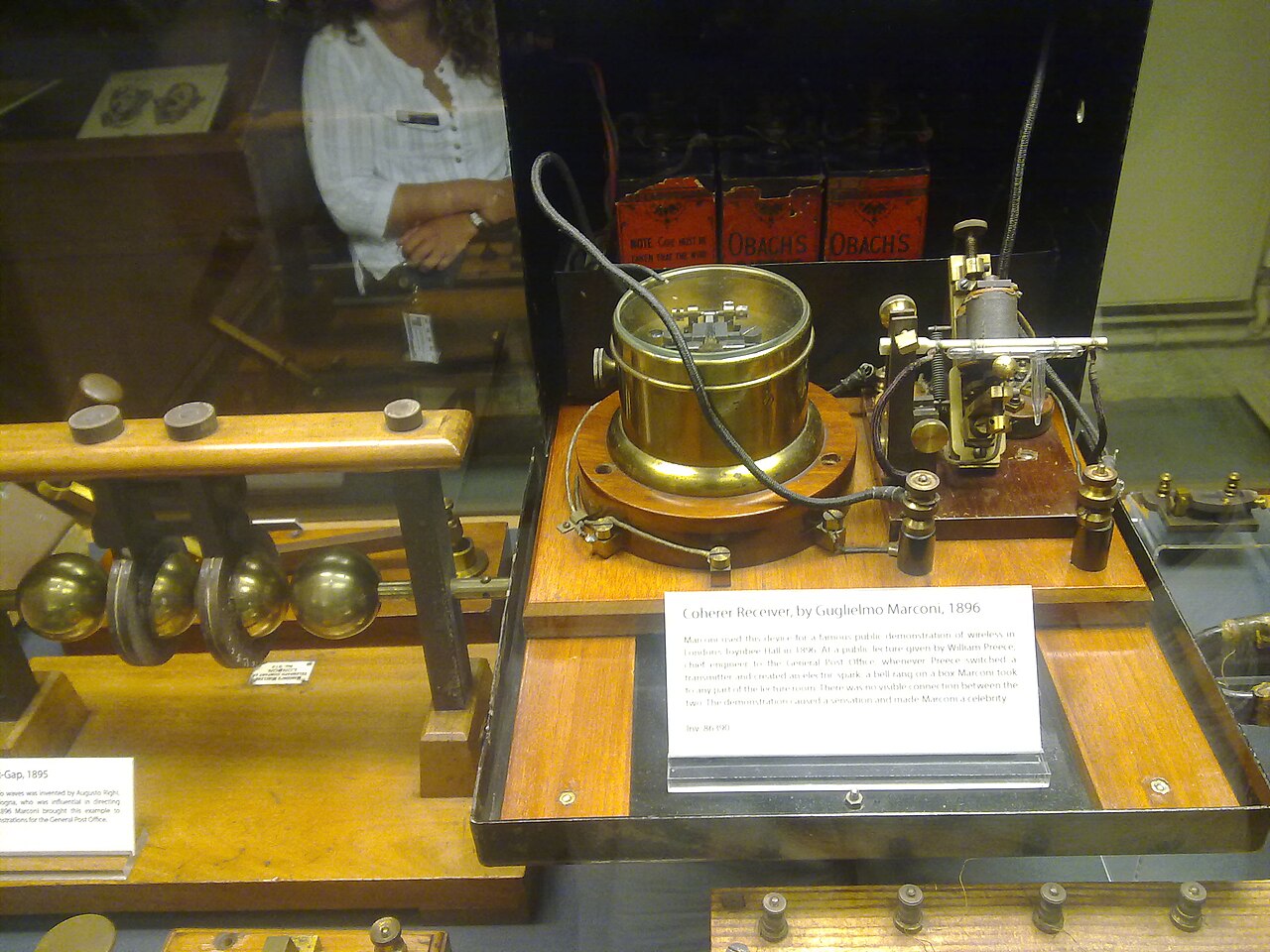
Primary source
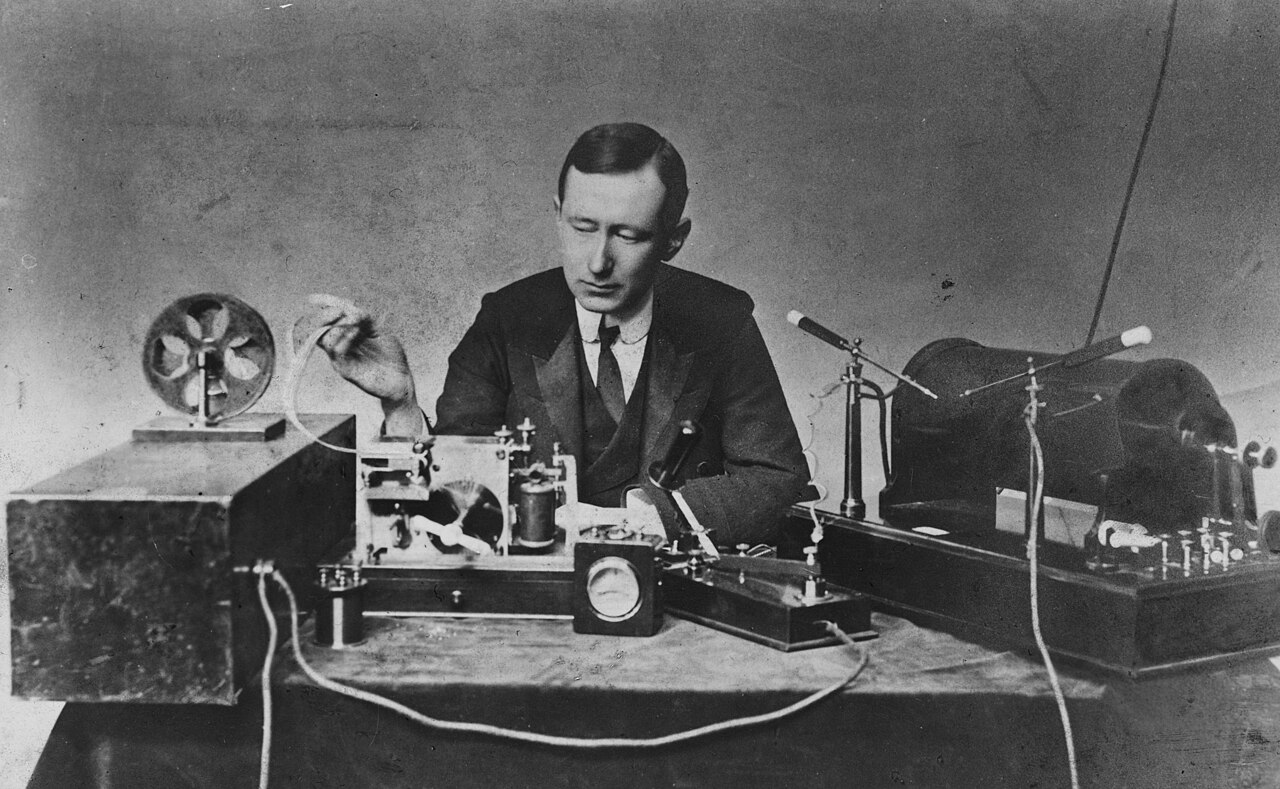
Marconi's Coherer Receiver
Guglielmo Marconi · 1896
 Photograph
Primary source
Marconi with Wireless Apparatus, 1901
Published on LIFE · 1901
Free account
Read every Guglielmo Marconi source
Sign up free →
Ready when you are
Start chatting with Guglielmo Marconi now.
20 messages free · No credit card · Available in 50+ languages.