


Primary sourceDocument1949
Wolf v. Colorado Concurrence
Hugo Black · 1949
Hugo Black's concurring opinion on whether the Fourth Amendment's protection against unreasonable searches applies to the states.
Black's concurrence reflects his developing view on applying Fourth Amendment protections to the states.
About this source
What it is
This is a concurring opinion by Justice Hugo Black in Wolf v. Colorado (1949), a Supreme Court case about whether evidence obtained through an unreasonable search and seizure by state officers could be used in state court.
Why it matters
Black agreed that the Fourth Amendment applies to the states, but he explained he based this view on his dissent in an earlier case, Adamson v. California, rather than agreeing with the Court's exact reasoning. He also distinguished between the Fourth Amendment itself and the separate, judge-made exclusionary rule. The opinion shows his careful, textualist approach to applying the Bill of Rights to state governments.
Look closer
- Why does Black agree with the outcome but not fully with the Court's reasoning?
- What is the difference he draws between a constitutional right and a judicially created rule?
- How does this opinion connect to his broader views on applying the Bill of Rights to the states?
This document is part of the curated material that grounds the AI version of Hugo Black on Humy.ai — when students ask about related events, the AI can quote it and cite it.
More Hugo Black sources
Meet the AI Hugo Black →Primary source
New York Times Co. v. United States
1971
Primary source
Tinker v. Des Moines Independent Community School District
Abe Fortas · 1969
Primary source
Youngstown Sheet & Tube Co. v. Sawyer
Hugo Black · 1952
Primary source
Everson v. Board of Education
Hugo Black · 1947
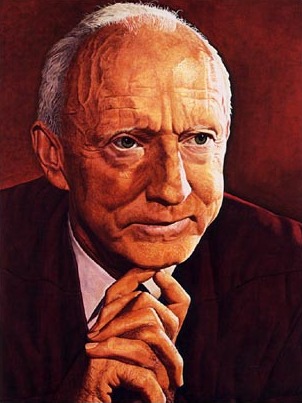 Painting
Secondary source
Hugo Black
John Black
Ready when you are
Start chatting with Hugo Black now.
20 messages free · No credit card · Available in 50+ languages.