


Primary sourcePaintingc. 1803-1804
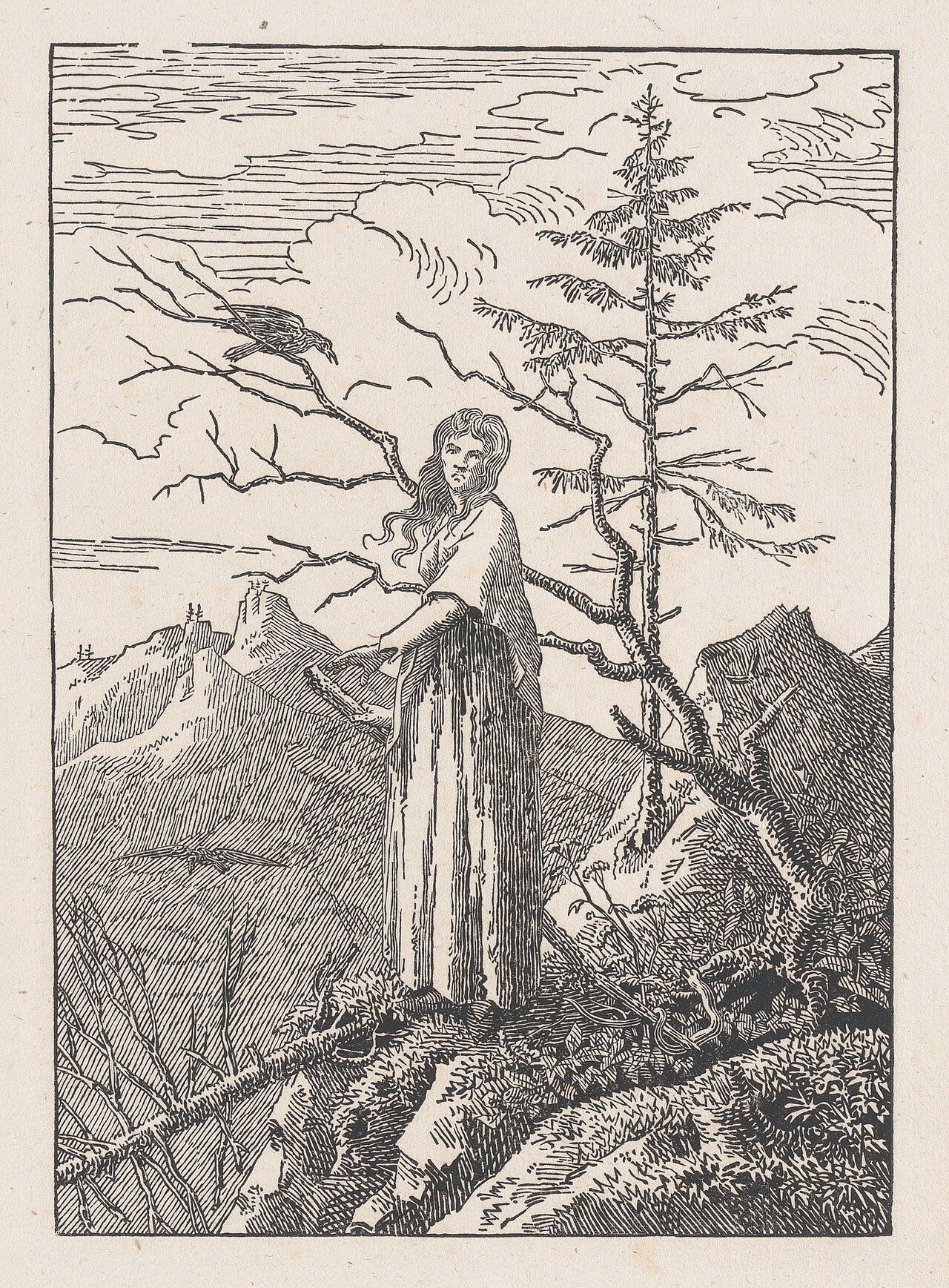
Woman with a Raven at an Abyss
Caspar David Friedrich · c. 1803-1804
A woodcut print designed by Caspar David Friedrich and cut by his brother, showing a grieving woman on a cliff with a raven and a dead tree.
Designed by Friedrich and cut by his brother, this early print shows his use of symbolic, emotional imagery.
About this source
What it is
A print designed by Caspar David Friedrich around 1803-04 and cut into a woodblock by his brother Christian Friedrich, a carpenter. It is held in the Kupferstichkabinett, Berlin.
Why it matters
The image shows a distressed woman standing at the edge of a cliff with a raven and a dead tree beside her, symbols of death and hopelessness. It may have been inspired by a popular fairy tale of the time about an abandoned wife. The print shows how Friedrich worked early in his career, collaborating with his brother to turn his drawings into prints, and how he used nature symbolically rather than realistically to express feelings of loss and isolation.
Look closer
- What mood does the raven and the bare, twisted tree create in this image?
- Why might Friedrich have worked with his brother rather than cutting the woodblock himself?
- What story do you think this image is trying to tell, and what is left unclear?
This painting is part of the curated material that grounds the AI version of Caspar David Friedrich on Humy.ai — when students ask about related events, the AI can quote it and cite it.
More Caspar David Friedrich sources
Browse all 89 →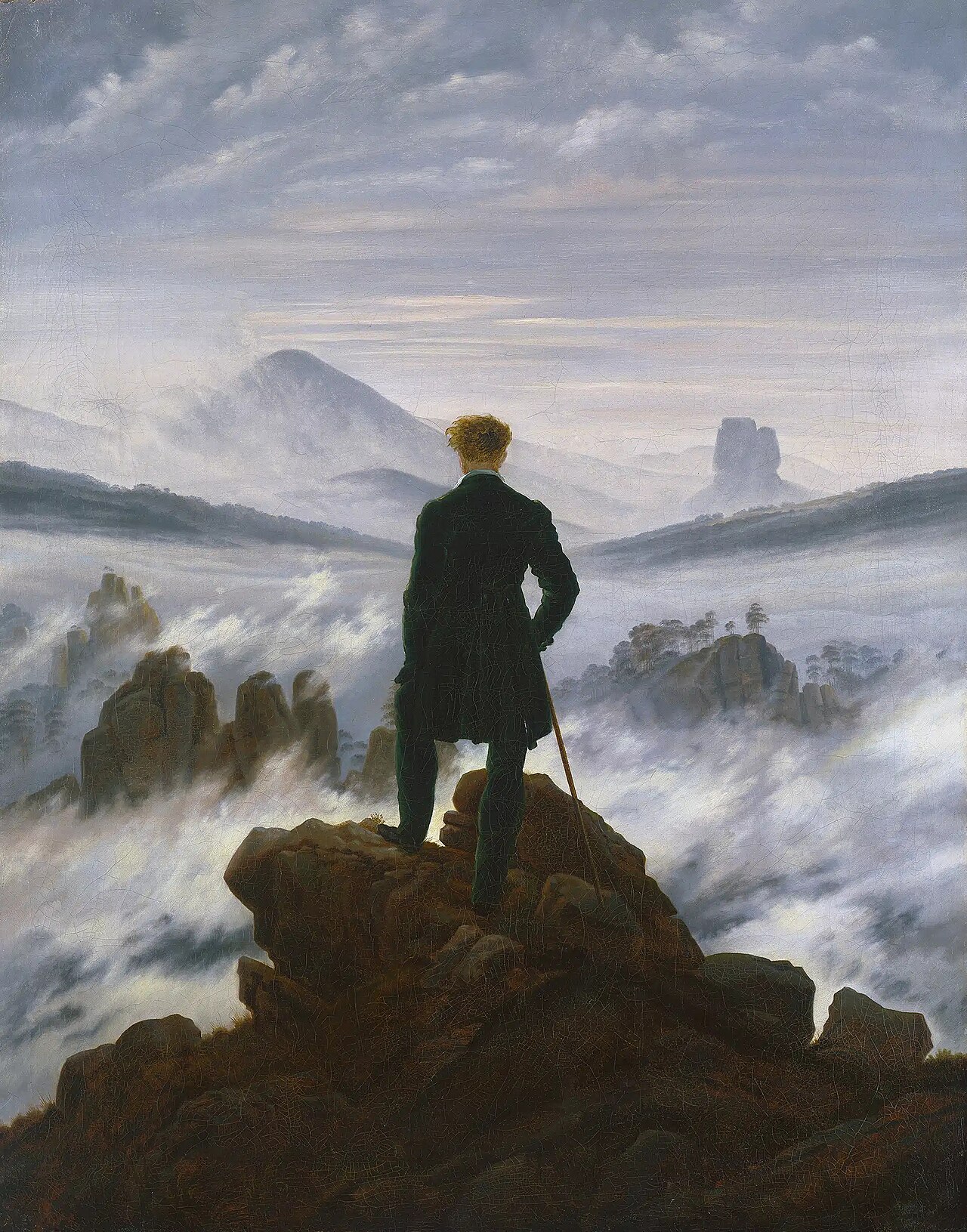 Painting
Primary source
Wanderer above the Sea of Fog
Caspar David Friedrich · 1818
 Painting
Primary source
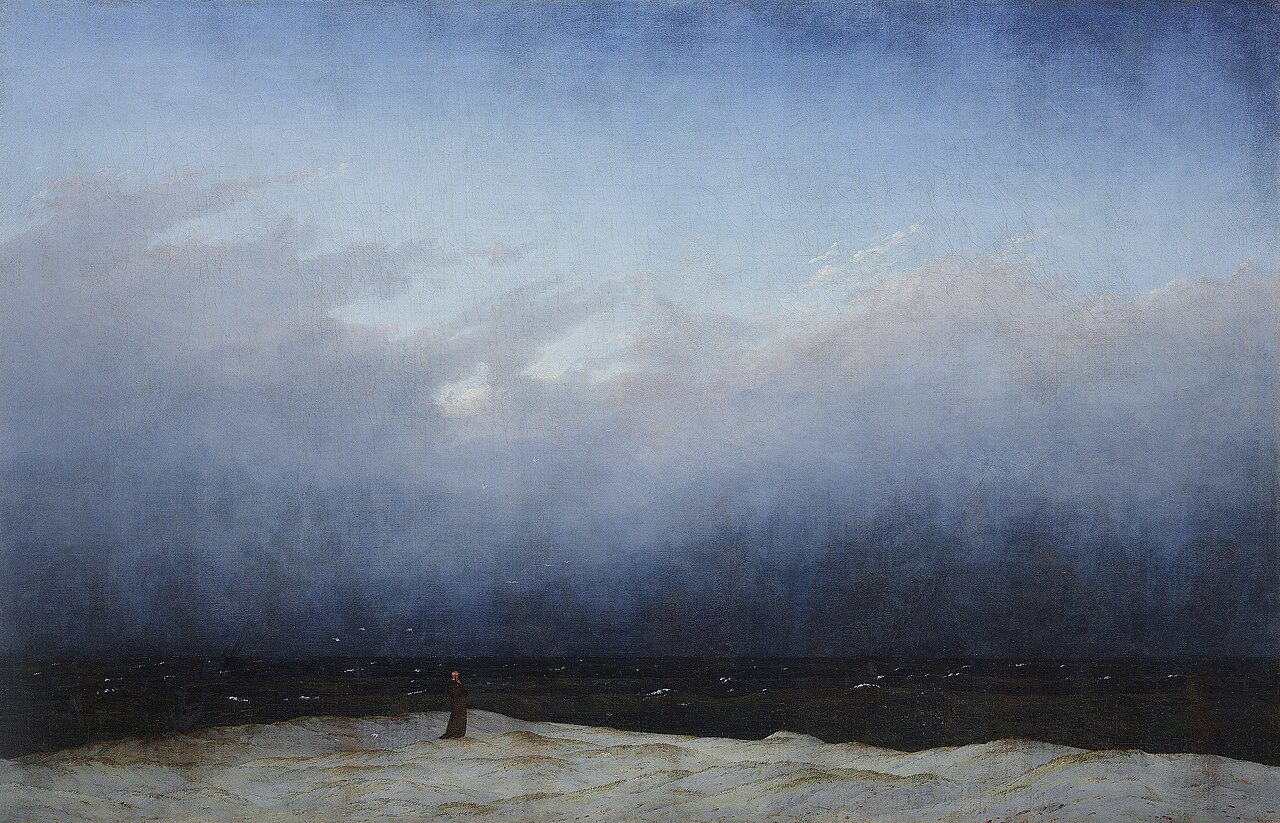
The Monk by the Sea
Caspar David Friedrich · c. 1808-1810
 Painting
Primary source
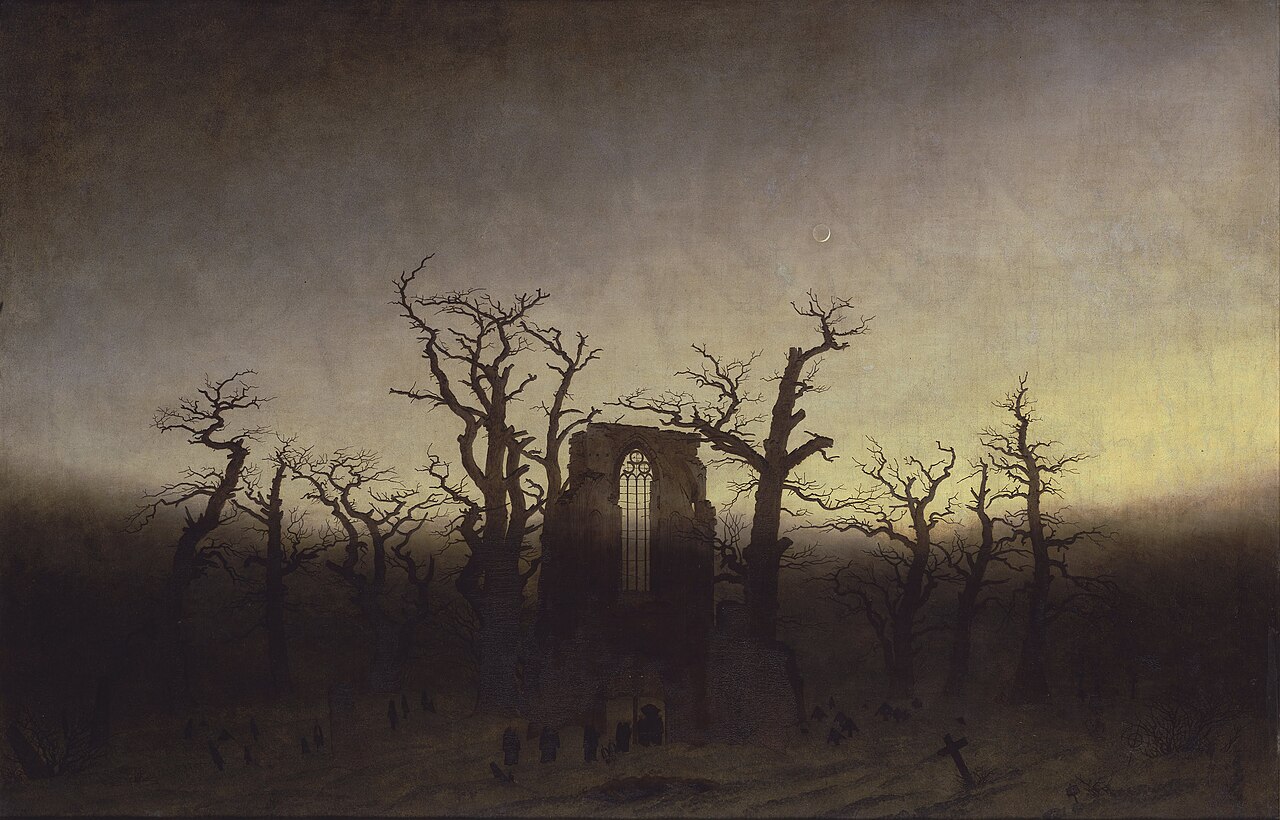
The Abbey in the Oakwood
Caspar David Friedrich · c. 1809-1810
 Painting
Primary source
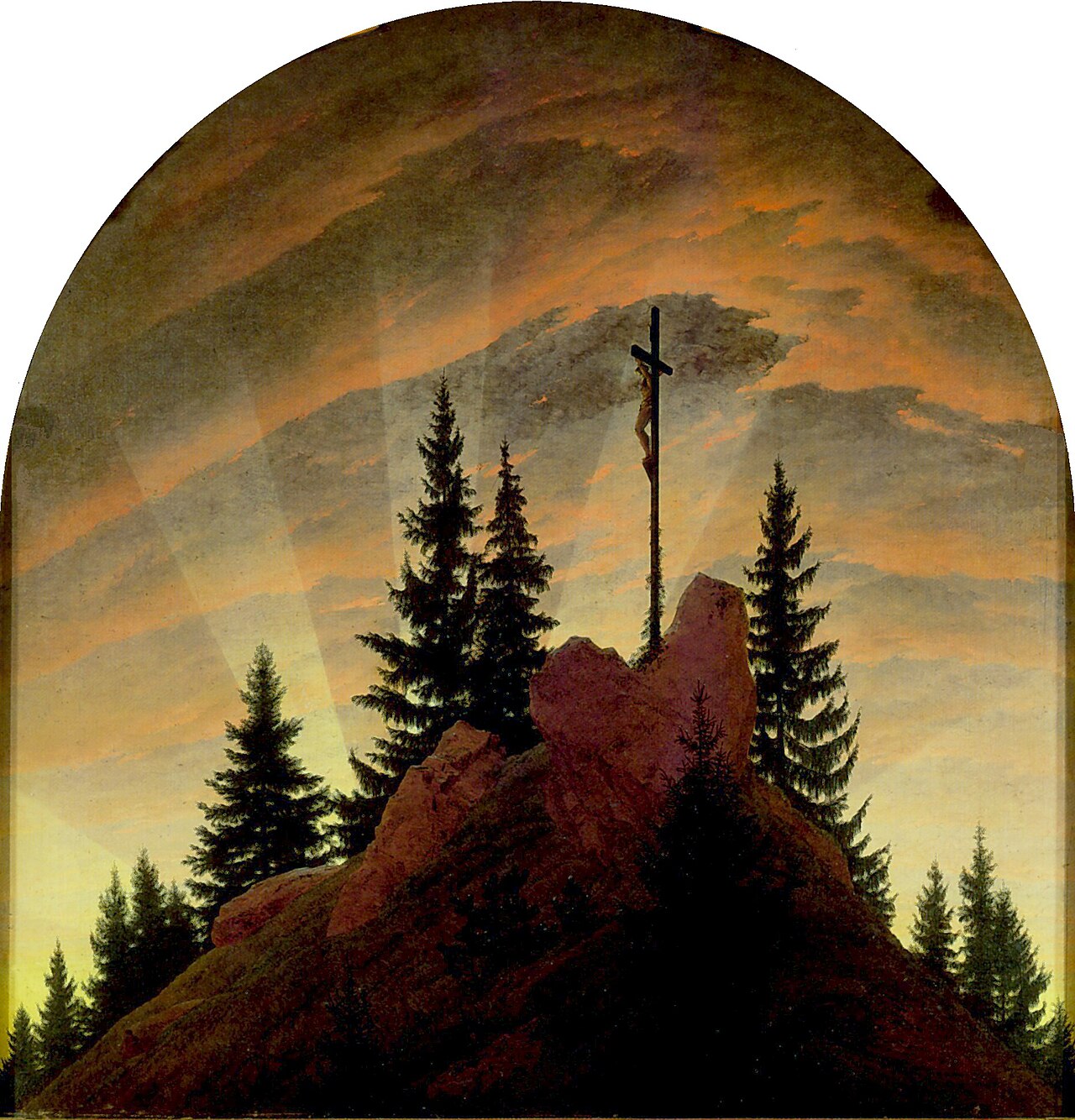
Cross in the Mountains (Tetschen Altar)
Caspar David Friedrich · c. 1807-1808
Free account
Read every Caspar David Friedrich source
Sign up free →
Ready when you are
Start chatting with Caspar David Friedrich now.
20 messages free · No credit card · Available in 50+ languages.