


Secondary sourcePainting1483 (chronicle); depicts events of 1415
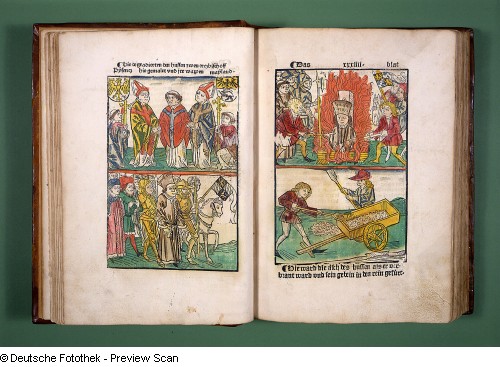
Woodcut of Hus's Arrest and Burning
Ulrich Reichenthal (chronicler); Columna-Meister (woodcut) · 1483 (chronicle); depicts events of 1415
A coloured woodcut from Ulrich Reichenthal's chronicle of the Council of Constance, showing Hus's arrest, imprisonment and burning.
Illustrates Hus's arrest, imprisonment and burning as told in the chronicle of the Council of Constance.
About this source
What it is
This hand-coloured woodcut comes from Ulrich Reichenthal's chronicle of the Council of Constance, printed in Augsburg in 1483. It shows a sequence of scenes: Hus's capture, his imprisonment in chains, his burning at the stake, and his ashes being tipped into the Rhine.
Why it matters
The Council of Constance, where church leaders tried and condemned Hus, is the subject of Reichenthal's chronicle. This woodcut, made decades after the event, shows how the story of Hus's trial and execution was retold and illustrated for later readers, shaping how people pictured the Council's actions.
Look closer
- Why does the chronicle show multiple scenes together, from arrest to the disposal of ashes?
- What does showing the ashes being tipped into the river suggest about how his enemies wanted his memory treated?
- How might a printed chronicle made decades later differ from an eyewitness account?
This painting is part of the curated material that grounds the AI version of Jan Hus on Humy.ai — when students ask about related events, the AI can quote it and cite it.
More Jan Hus sources
Meet the AI Jan Hus →Primary source
Appeal to Jesus Christ
Jan Hus · 1412
Primary source
Safe Conduct to John Huss
Sigismund
 Document
Primary source
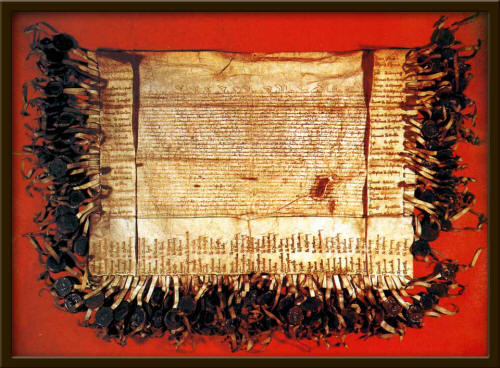
Letter of Complaint Against the Burning of Jan Hus
1415
 Artifact
Primary source
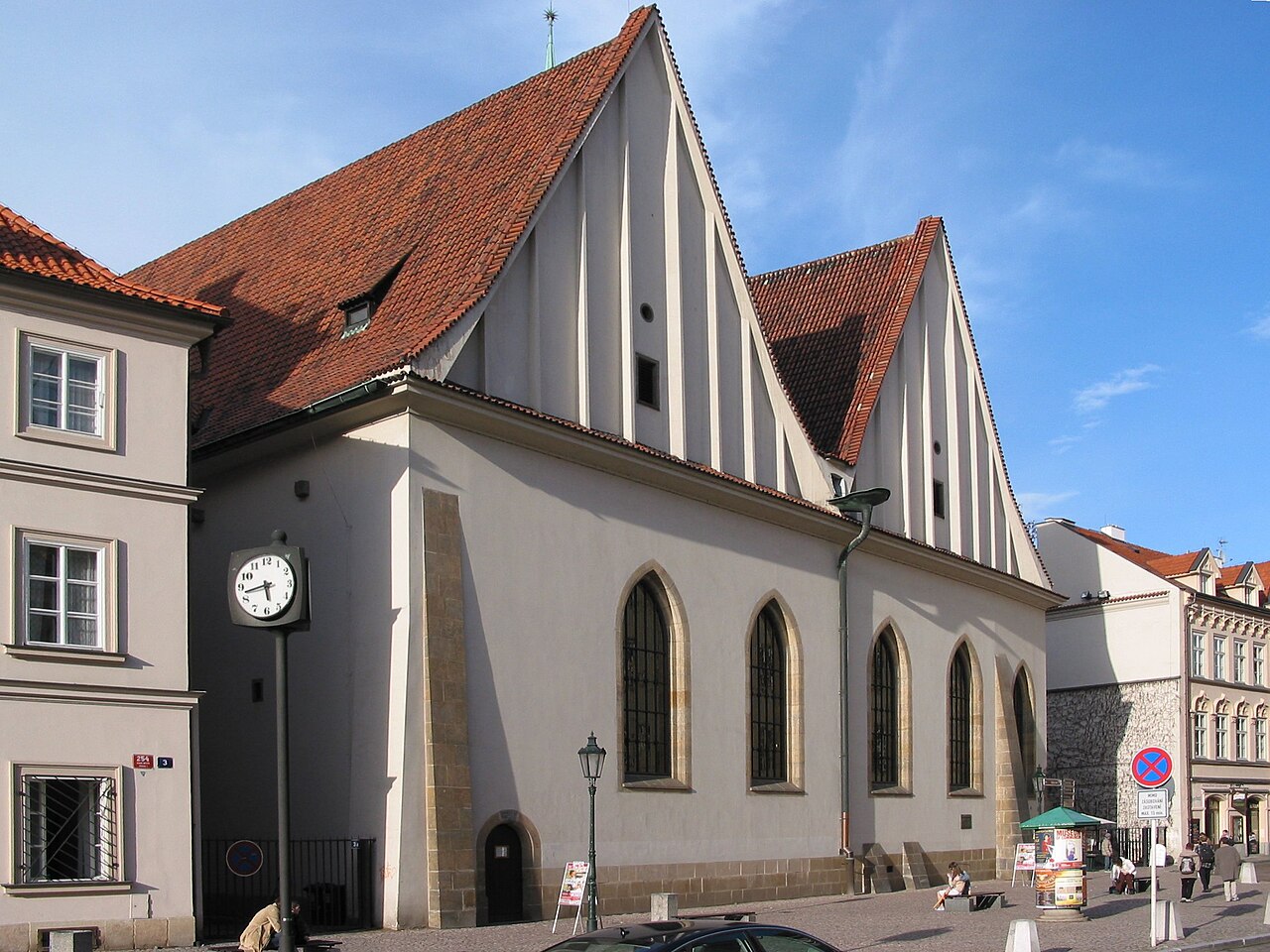
Bethlehem Chapel
founded 1391
 Document
Primary source
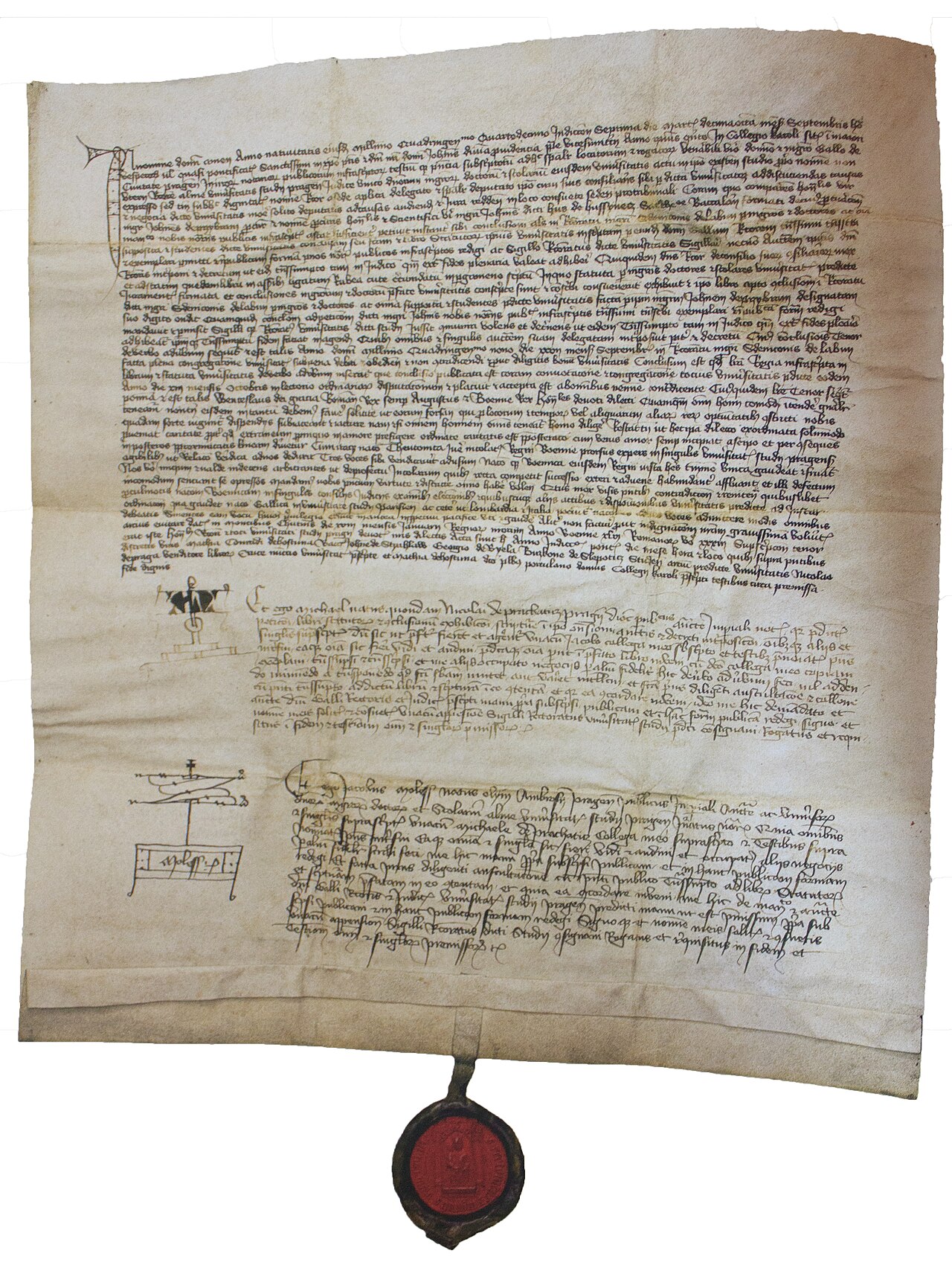
Decree of Kutná Hora
Wenceslaus IV of Bohemia · 18 January 1409
Ready when you are
Start chatting with Jan Hus now.
20 messages free · No credit card · Available in 50+ languages.