


Secondary sourceSculpture1491
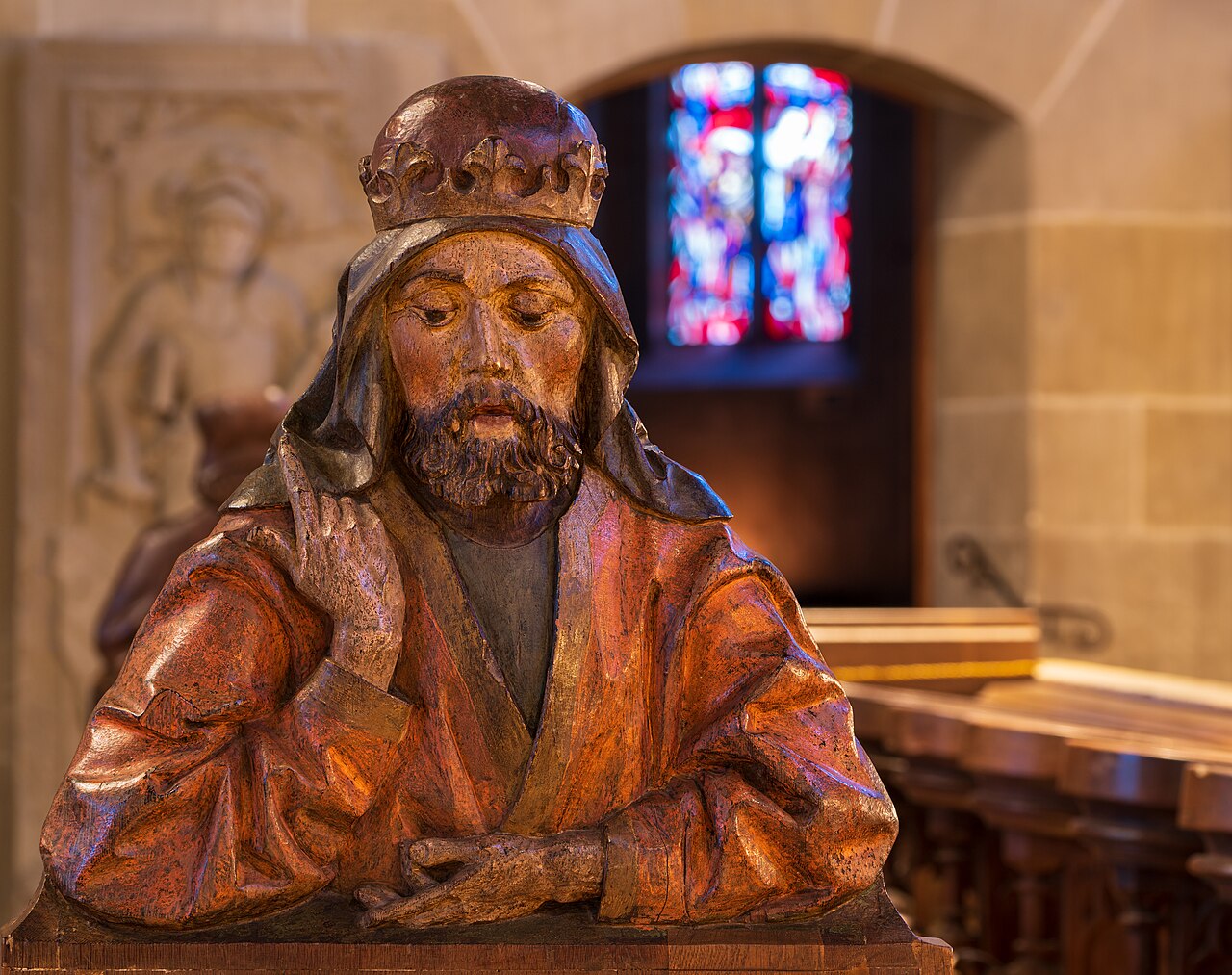
Wooden bust of King David, choir stalls, Tübingen
1491
A carved and painted wooden bust of David from the choir stalls of St. George's Collegiate Church in Tübingen, dated 1491. It is a later artistic image of the king.
Shows how David was carved and displayed in a German church, as one of the biblical kings honoured in its choir stalls.
About this source
What it is
This is a carved and painted wooden bust of a bearded man wearing a crown and a draped headcloth, with one hand raised to his face. It comes from the choir stalls of St. George's Collegiate Church in Tübingen, Germany, which are dated to 1491. The carver is not named in the facts. The photograph was taken in 2020 and is credited to Roman Eisele.
Why it matters
Church furnishings like these show how late medieval Germans pictured David, the king who was also seen as a figure of faith. The bust was made to be seen in a church, so it reflects the religious setting in which people learned about biblical kings.
Look closer
- What does the raised hand and downcast eyes suggest about the mood of the figure?
- Why might a church include a carved king in its choir stalls?
- What can we not know about the carver from this object alone, and how might we find out?
This sculpture is part of the curated material that grounds the AI version of David on Humy.ai — when students ask about related events, the AI can quote it and cite it.


Ready when you are
Start chatting with David now.
20 messages free · No credit card · Available in 50+ languages.