


Secondary sourceSculpture17th century
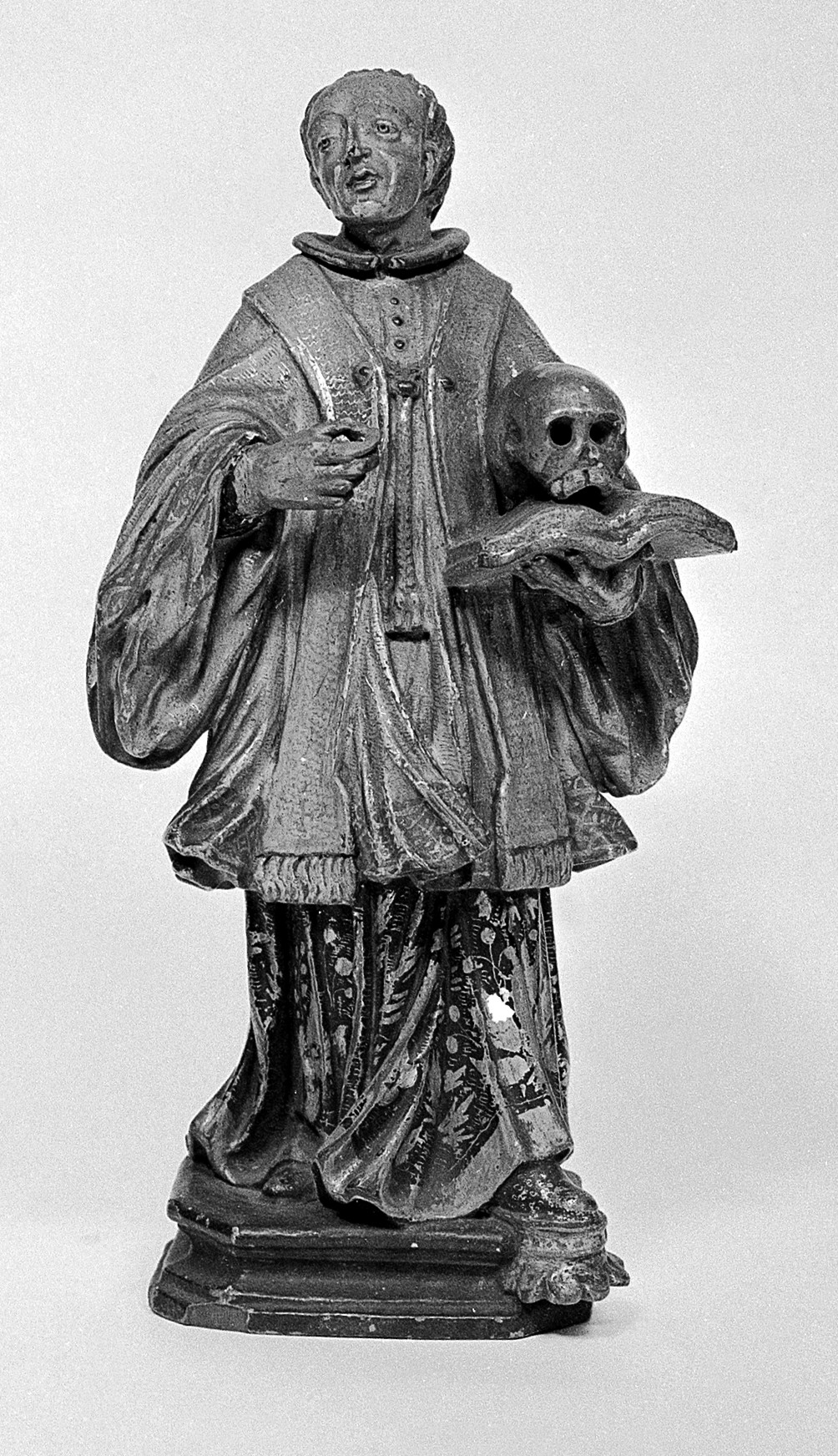
Wooden sculpture of St Francis Xavier with skull, crucifix and crab
17th century
A carved wooden figure of a clergyman with a skull on an open book, identified as a possible sculpture of Xavier with his usual attributes, including a crab. The identification is uncertain.
A wooden sculpture of Xavier with his usual attributes, showing how he was shown in devotional art.
About this source
What it is
This is a carved wooden figure of a clergyman in a long cassock and cape, standing on a stepped plinth. In his left hand he holds an open book with a skull resting on it. His right hand is missing, and the record says a crucifix was probably held there, now broken off. A crab lies under his right foot. The record describes it as a sculpture of Xavier, but the identification is marked with a question mark. It is held in the Wellcome Collection, and the photograph is black and white.
Why it matters
The skull, crucifix and crab were used to identify Xavier in art. The crab is linked to a story that he was rescued from a dangerous situation at sea. The record dates the figure to the 17th century in its title but gives a 16th-century date in its description, so students should note the uncertainty. Objects like this show how Xavier was honored in Catholic devotion long after he died.
Look closer
- Which objects in the figure are the attributes of the saint, and what does each one suggest?
- How does the missing right hand change the way you read the figure today?
- Why might a museum record hesitate to name the figure, and what evidence would help settle it?
This sculpture is part of the curated material that grounds the AI version of Francis Xavier on Humy.ai — when students ask about related events, the AI can quote it and cite it.
More Francis Xavier sources
Browse all 85 →


Ready when you are
Start chatting with Francis Xavier now.
20 messages free · No credit card · Available in 50+ languages.