


Primary sourceArtifact1838
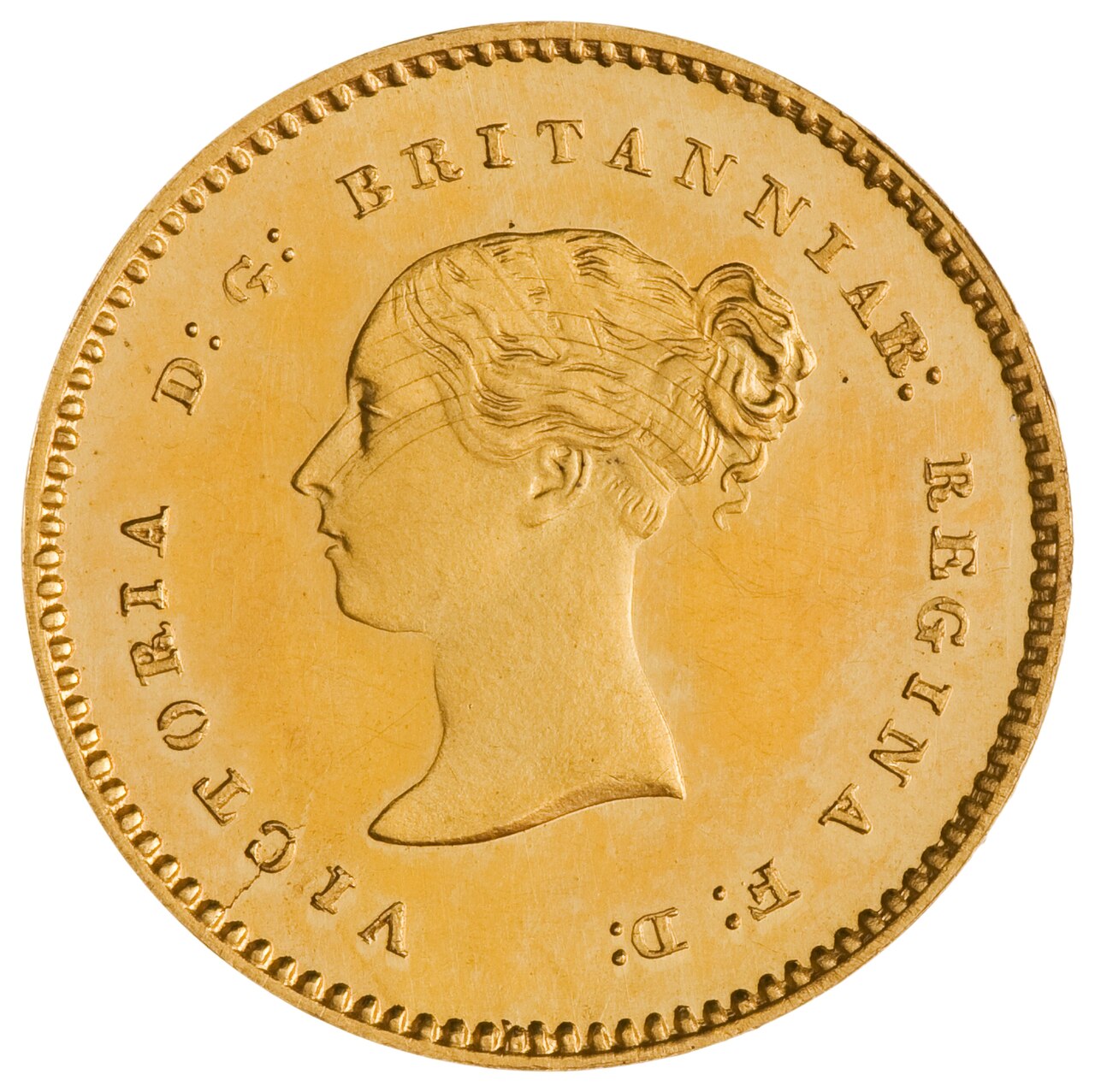
Young Head coinage
William Wyon · 1838
British coins with William Wyon's portrait of the young queen, first used in 1838 and kept on some coins until 1887.
Shows how Victoria's youthful image was first presented on British coins after her accession in 1837.
About this source
What it is
The Young Head coinage is a series of British coins with an obverse bust of Queen Victoria designed by William Wyon. The bust was first used in 1838, when Victoria was still a teenager. This gold coin is a pattern struck in 1853, and it shows the young queen in left-facing profile with her hair in a bun. The inscription reads VICTORIA D G BRITANNIAR REGINA F D.
Why it matters
Wyon's young portrait became one of Victoria's favourite images, so it stayed on some coins long after she no longer looked like it. The bust was replaced on the penny and its fractions in the 1860s and was finally superseded by the Jubilee coinage in 1887. The coinage shows how the new queen was presented to the public, and how the Royal Mint, its engravers and the French-born Merlen worked together.
Look closer
- How does the young queen's hairstyle and profile differ from the later Jubilee coinage?
- Why might a monarch prefer an image of herself as a young woman?
- What does the coin leave out about the rivalry and delays behind its production?
This artifact is part of the curated material that grounds the AI version of Queen Victoria on Humy.ai — when students ask about related events, the AI can quote it and cite it.
More Queen Victoria sources
Meet the AI Queen Victoria → Letter
Primary source
The Letters of Queen Victoria, vol. 2
Victoria · 1908
Primary source
Proclamation to the Princes, Chiefs and People of India
Victoria / British Government · 1 November 1858
 Artifact
Primary source
Penny Black
Charles Heath and Frederick Heath (engravers), after Henry Corbould · 1840
 Painting
Primary source
The Coronation of Queen Victoria in Westminster Abbey
George Hayter · 1838-1839
 Painting
Primary source
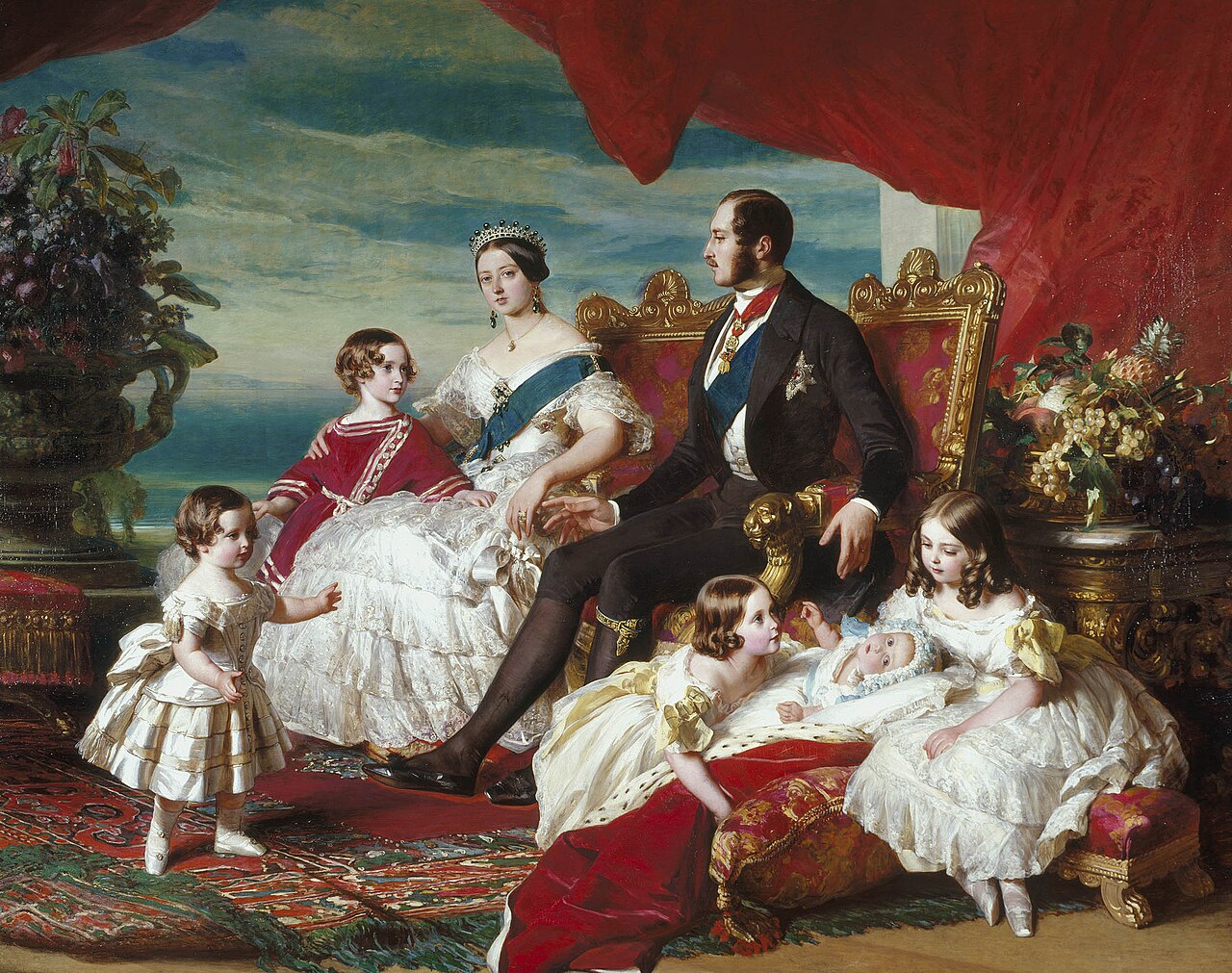
The Royal Family in 1846
Franz Xaver Winterhalter · 1846-1847
Ready when you are
Start chatting with Queen Victoria now.
20 messages free · No credit card · Available in 50+ languages.