


Primary sourceArtifact1277 (Zhiyuan 14th year)
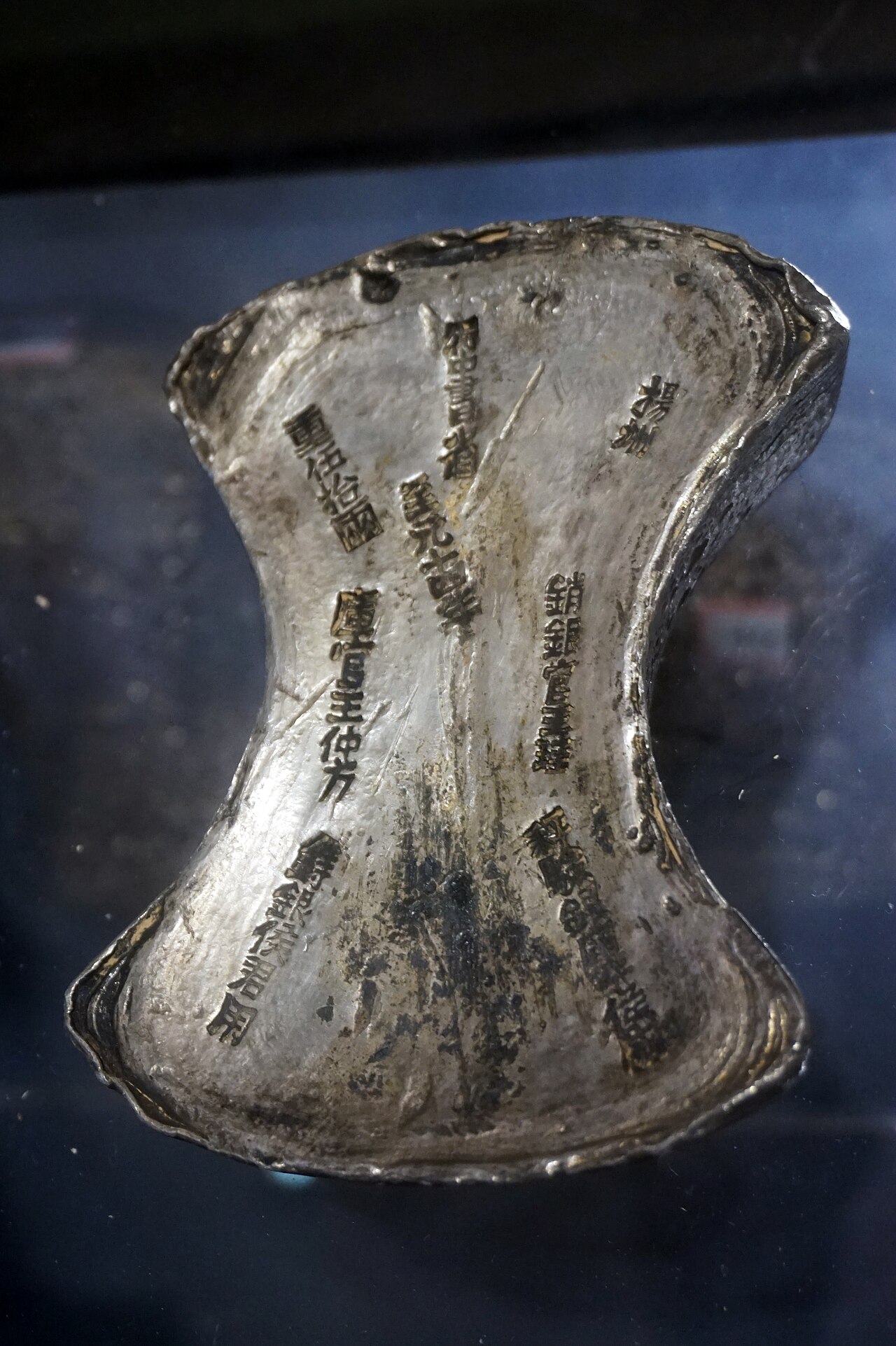
Yuan Dynasty Silver Ingot (1277)
1277 (Zhiyuan 14th year)
A 50-liang silver ingot minted at Yangzhou in 1277, during Kublai Khan's Zhiyuan era, showing how his government issued currency.
Minted during Kublai Khan's Zhiyuan era, this ingot is physical evidence of currency issued under his rule.
About this source
What it is
This is a silver ingot, shaped with a narrow waist like an hourglass, cast in the city of Yangzhou in the year 1277. That year falls within the Zhiyuan era, the reign name used by Kublai Khan. Stamped Chinese characters on its surface record the officials responsible for refining, testing, weighing and casting the silver. It is now held by the China Taxation Museum.
Why it matters
Objects like this show how Kublai Khan's government organized its finances. Each ingot names the officials who checked and produced it, showing a careful bureaucracy of silver refiners, inspectors and casting officers working under the Yuan state. This helps historians understand how the Mongol rulers of China managed money and trade.
Look closer
- What do the stamped characters tell us about who was responsible for making this ingot trustworthy?
- Why might a government want several officials to check the same piece of silver?
- What does this object tell us about trade and taxation under Kublai Khan, beyond what a written history might say?
This artifact is part of the curated material that grounds the AI version of Kublai Khan on Humy.ai — when students ask about related events, the AI can quote it and cite it.
More Kublai Khan sources
Browse all 57 → Painting
Secondary source
Portrait of Kublai Khan
Circle of Anige
 Book
Secondary source
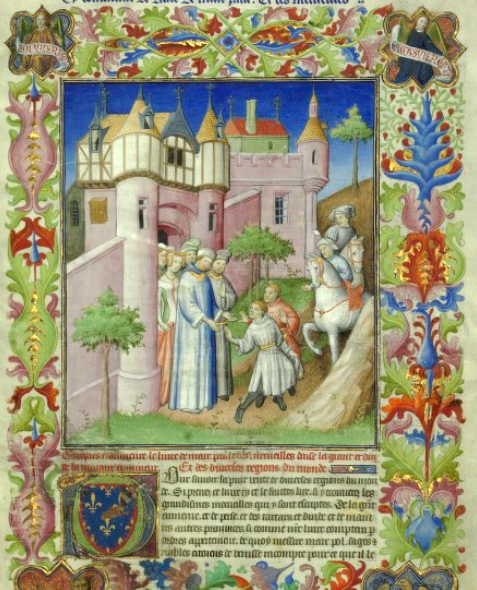
The Travels of Marco Polo
Rustichello da Pisa · 1298
 Painting
Primary source
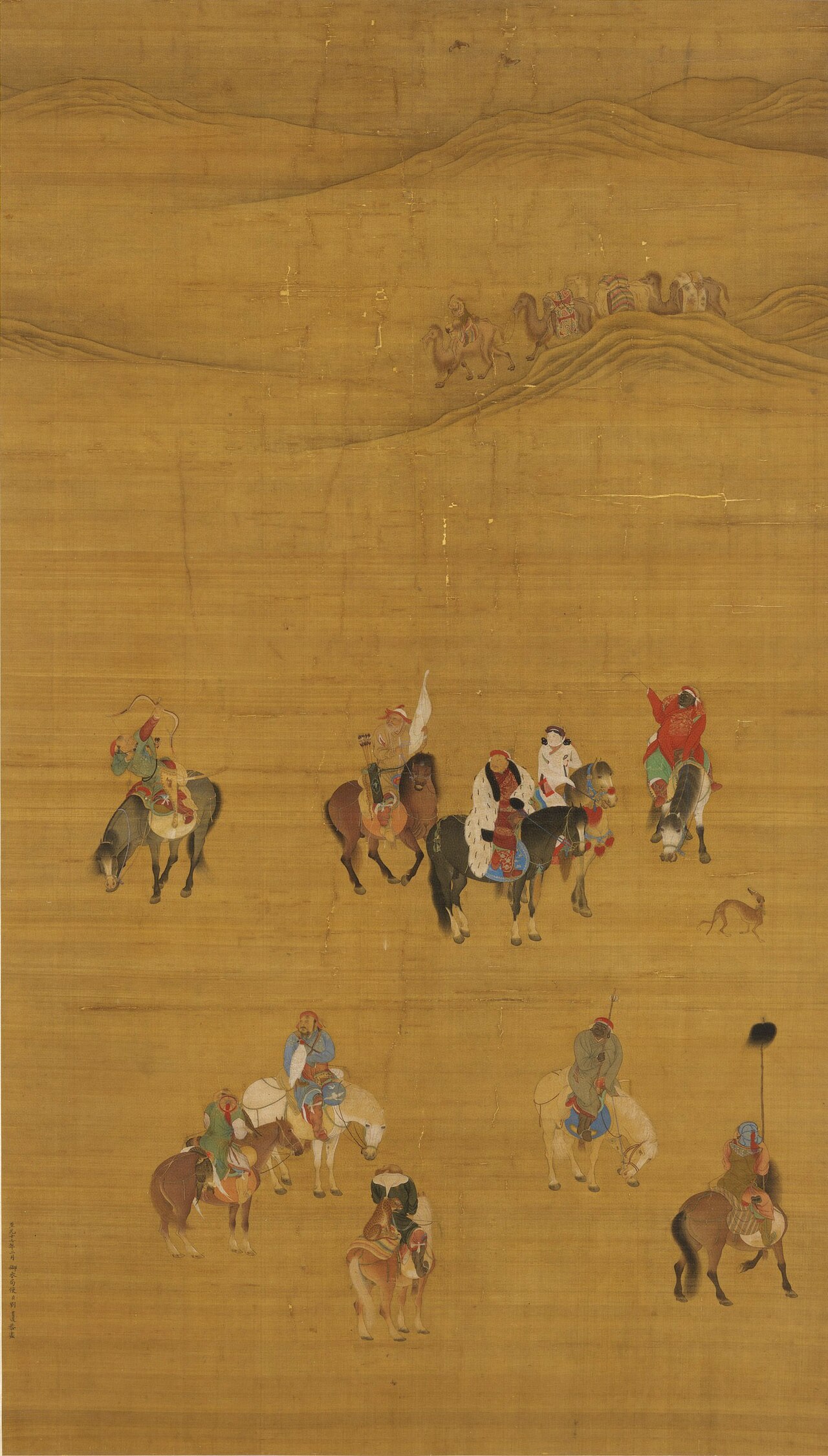
Khubilai Khan on the Hunt
Liu Guandao · 1280
 Letter
Primary source
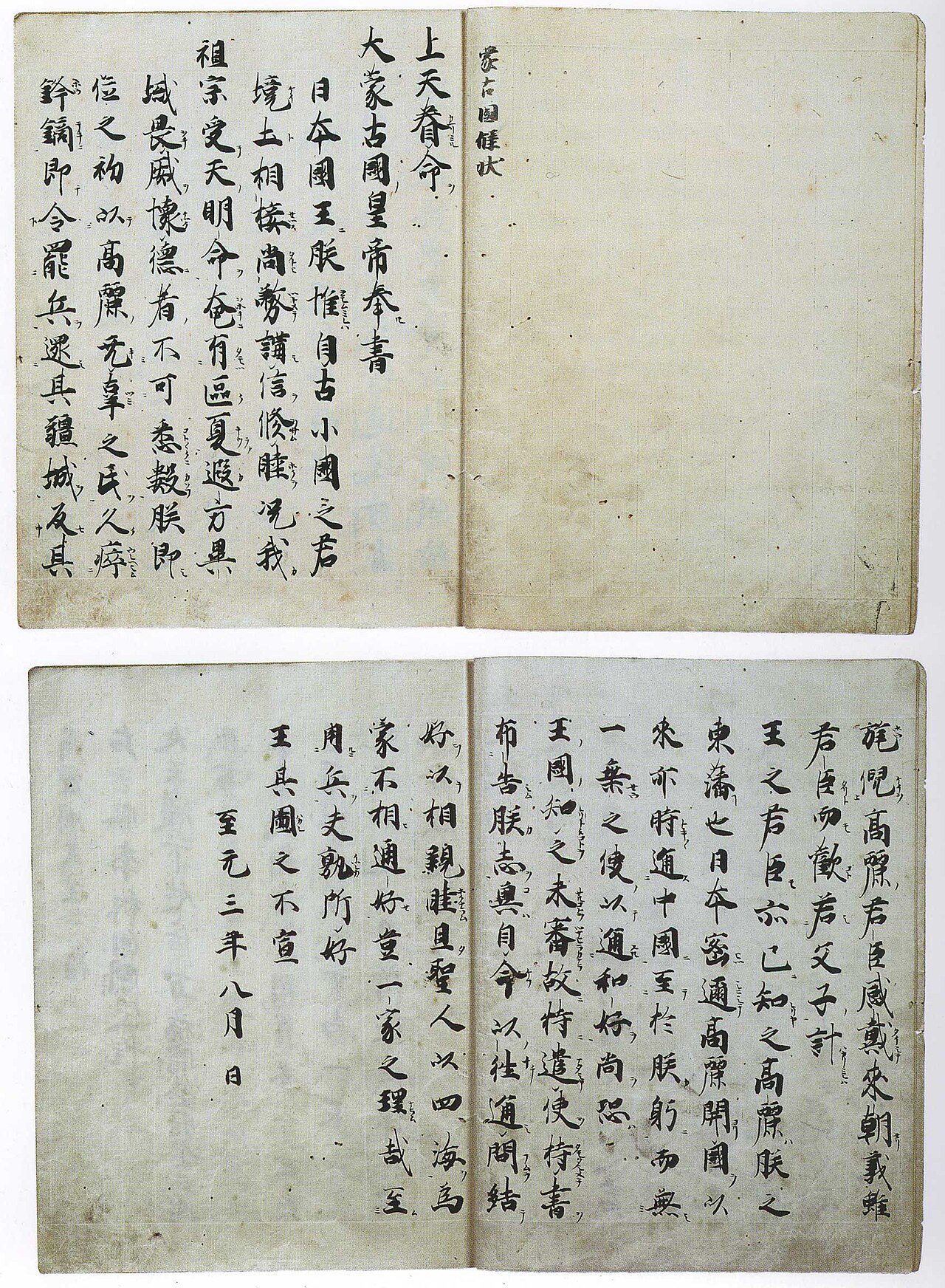
1266 Letter to Japan
Kublai Khan · 8th month, 1266
Free account
Browse every Kublai Khan source
Sign up free →
Ready when you are
Start chatting with Kublai Khan now.
20 messages free · No credit card · Available in 50+ languages.