


Primary sourceBook1758
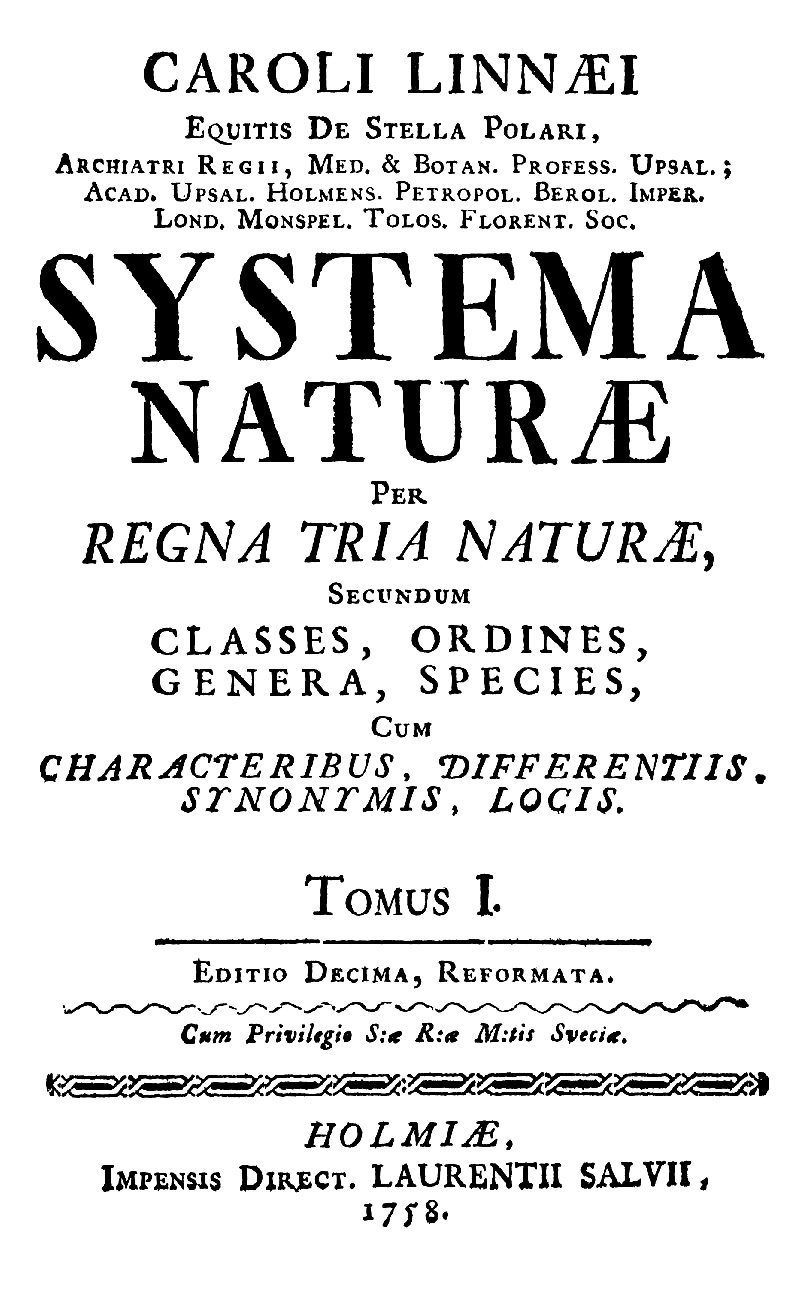
10th edition of Systema Naturae
Carl Linnaeus · 1758
Linnaeus's 1758 edition that first applied two-part names to animals and is the official starting point of zoological naming.
This is Linnaeus's own 1758 work that fixed the naming rules still used for animals today.
About this source
What it is
This is the 10th edition of Systema Naturae, written by Carl Linnaeus and published in two volumes in 1758 and 1759 by Lars Salvius in Stockholm. It is in Latin and lists animals grouped into classes such as Mammalia, Aves, Amphibia, Pisces, Insecta and Vermes.
Why it matters
This edition was the first to consistently give every animal a two-part Latin name, a system Linnaeus had already used for plants. Because of this, scientists today treat 1 January 1758 as the official starting point for naming animals: names published before that date don't count under the rules. The edition also placed humans among the primates, and later editions added descriptions of human varieties that modern scientific societies recognise as having reinforced racist stereotypes.
Look closer
- Why would scientists need to agree on a single
This book is part of the curated material that grounds the AI version of Carl Linnaeus on Humy.ai — when students ask about related events, the AI can quote it and cite it.
More Carl Linnaeus sources
Browse all 98 →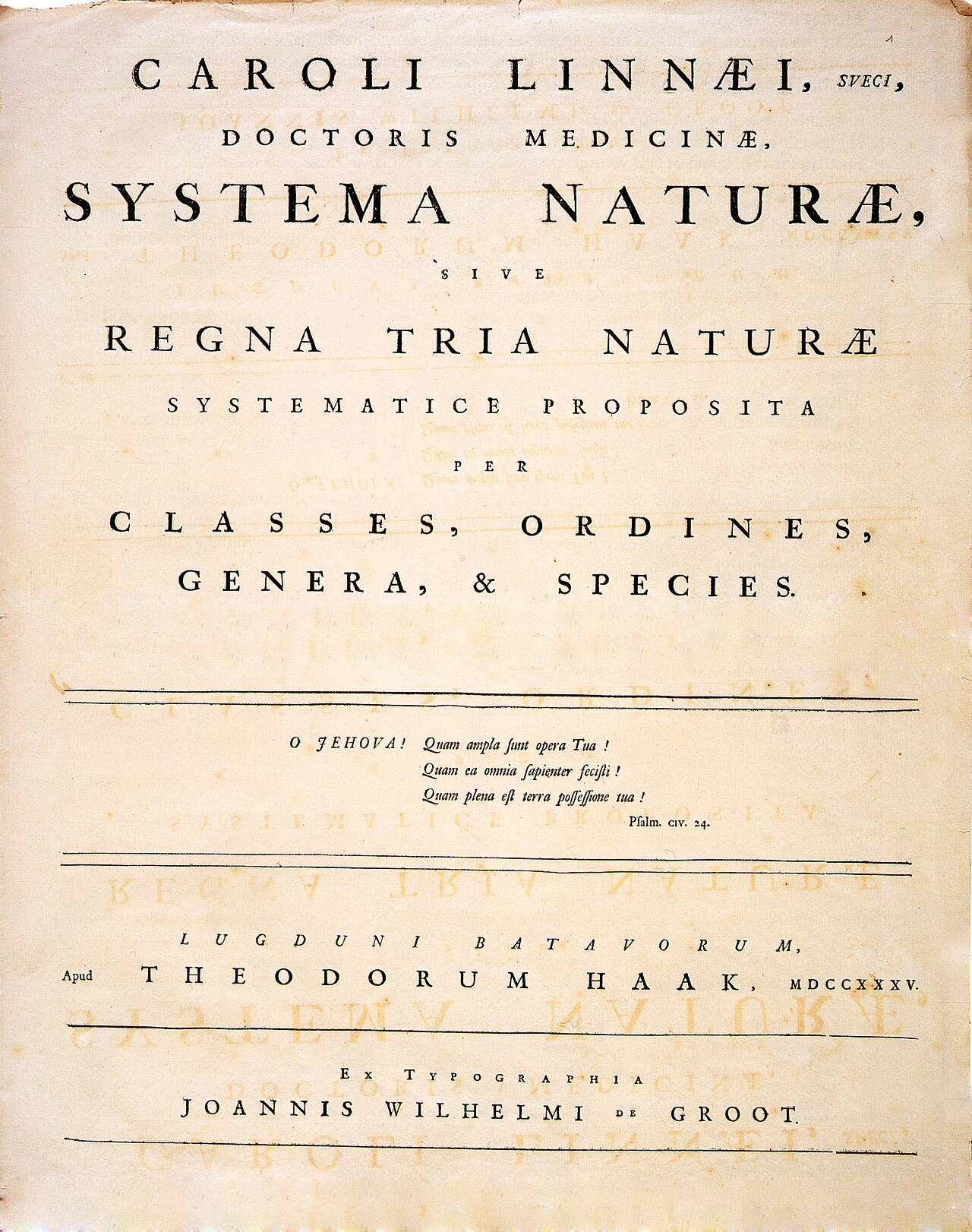 Book
Primary source
Systema Naturae
Carl Linnaeus · 1735
 Book
Primary source
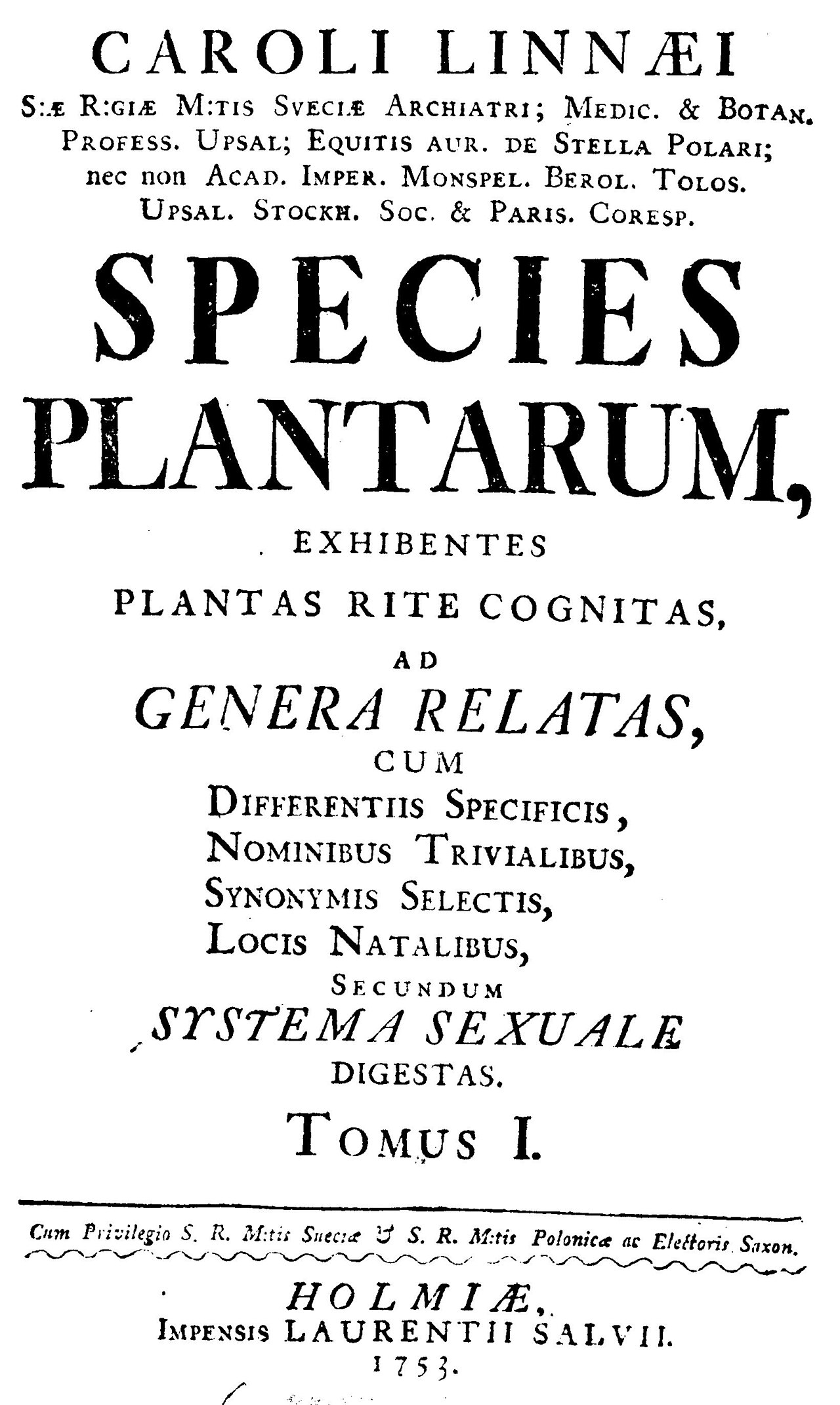
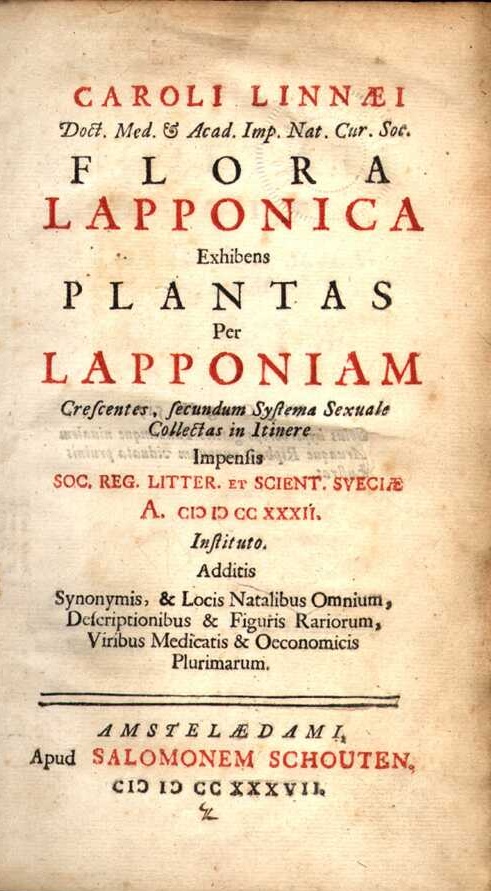
Species Plantarum
Carl Linnaeus · 1753
 Painting
Primary source
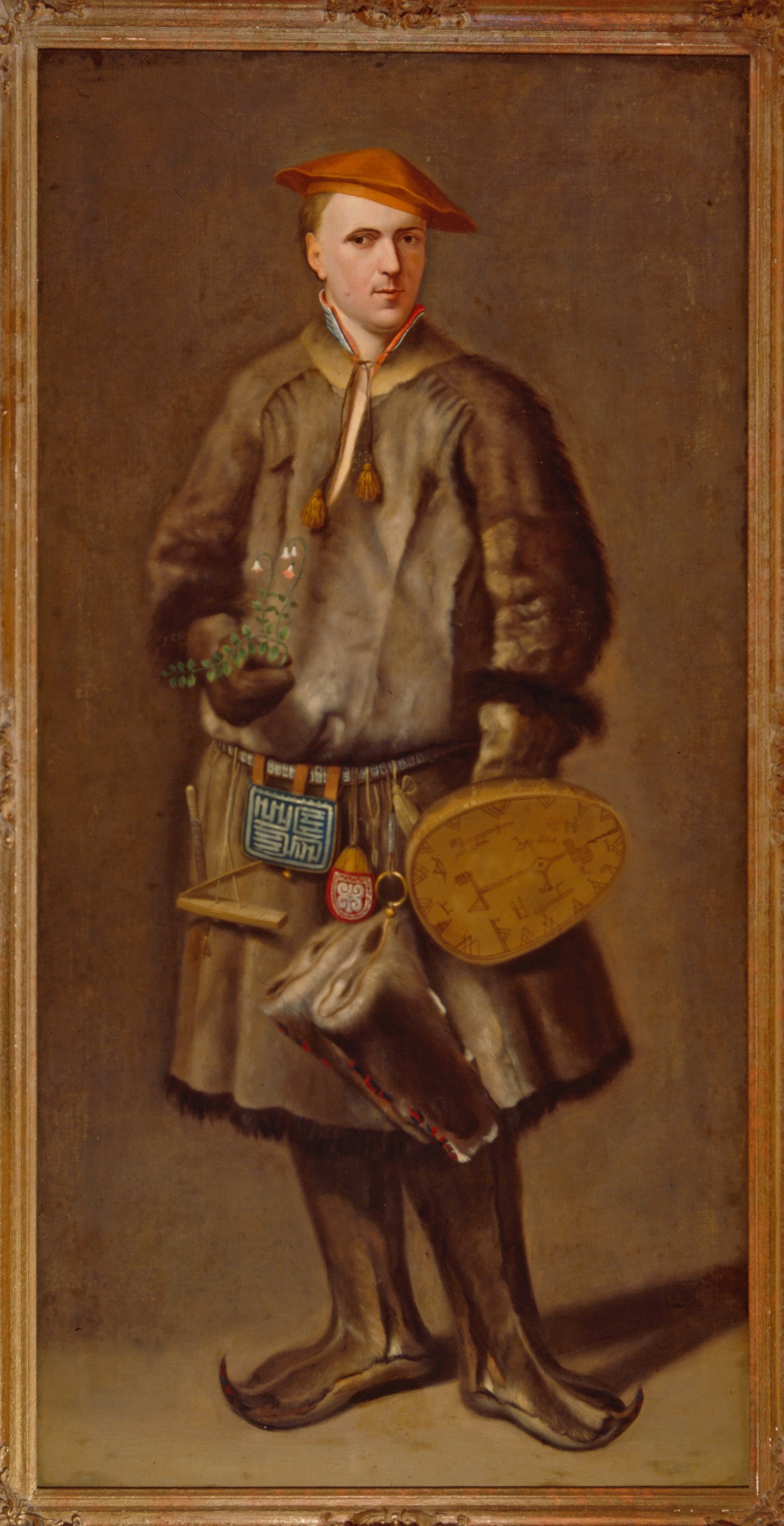
Linnaeus in his Lapland Dress
Martin Hoffman · 1737
 Painting
Primary source
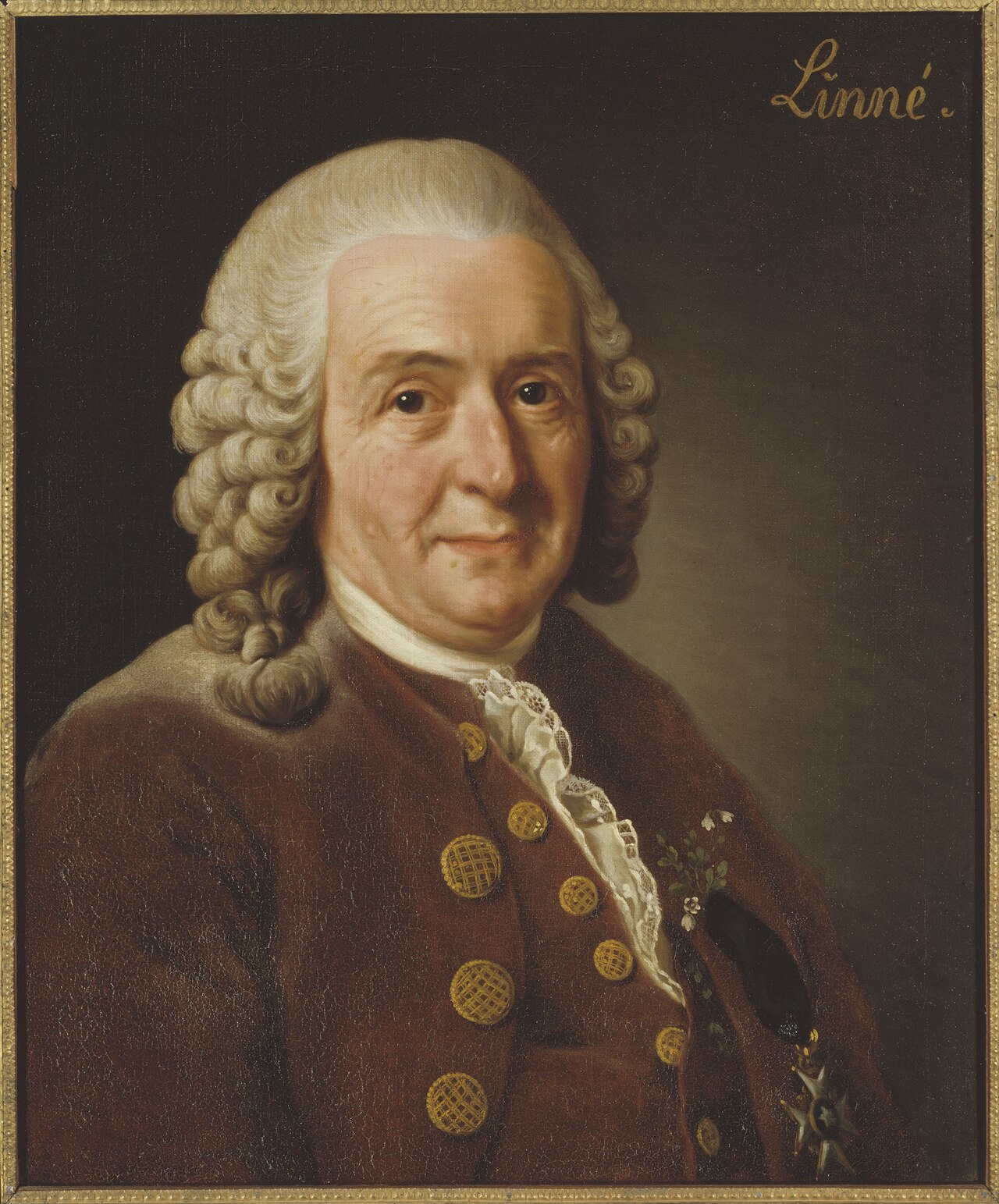
Portrait of Carl Linnaeus, 1707-1778
Alexander Roslin · 1775
Free account
Read every Carl Linnaeus source
Sign up free →
Ready when you are
Start chatting with Carl Linnaeus now.
20 messages free · No credit card · Available in 50+ languages.