


Secondary sourceBook1453
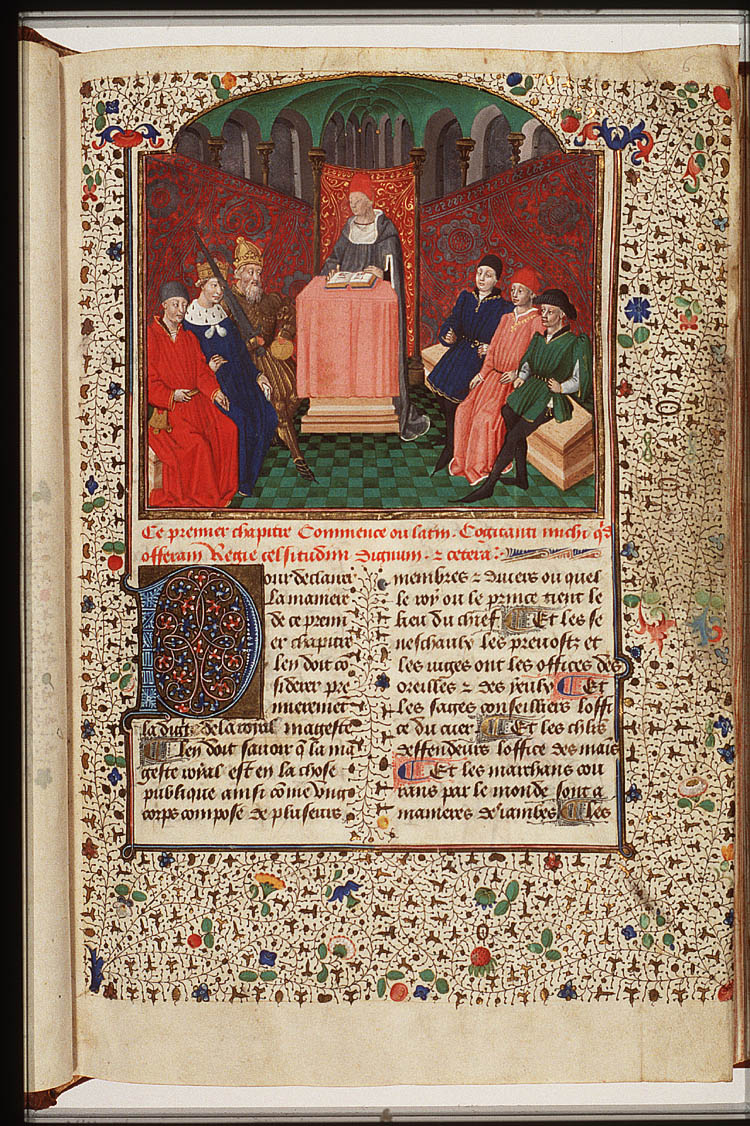
A lecturer reading Information des Princes to an emperor and nobles
1453
An illuminated manuscript page from 1453 showing a lecture on a text attributed to Thomas Aquinas before an emperor, a king, a chancellor and nobles.
Shows a lecture on a text attributed to Aquinas to royal and noble listeners, reflecting how his name was used about 180 years after his death.
About this source
What it is
This is an illuminated manuscript page dated 1453 and held by the KB, National Library of the Netherlands. Above the text, a painted scene shows a robed lecturer seated at a draped table reading from an open book, before a red canopy. On the left sit a crowned emperor, a king with a sword, and a chancellor in a red robe. On the right sit three nobles in blue, red and green on wooden benches. Red rubric headings and two columns of black gothic text with decorated initial letters appear below.
Why it matters
The scene shows a lecture on a text attributed to Thomas Aquinas, the Dominican friar and philosopher who died in 1274. Since the page dates from 1453, it does not show Aquinas himself. It shows that his name was used to present advice to rulers and their councillors, and it reveals how learned texts were read aloud and discussed at the courts of the period.
Look closer
- Who is reading, and who is listening? How are the emperor, king and nobles arranged in the picture?
- Why might an artist show a text being read aloud to powerful people?
- What does the picture leave out, and how could you find out whether the text really came from Aquinas?
This book is part of the curated material that grounds the AI version of Saint Thomas Aquinas on Humy.ai — when students ask about related events, the AI can quote it and cite it.
More Saint Thomas Aquinas sources
Meet the AI Saint Thomas Aquinas →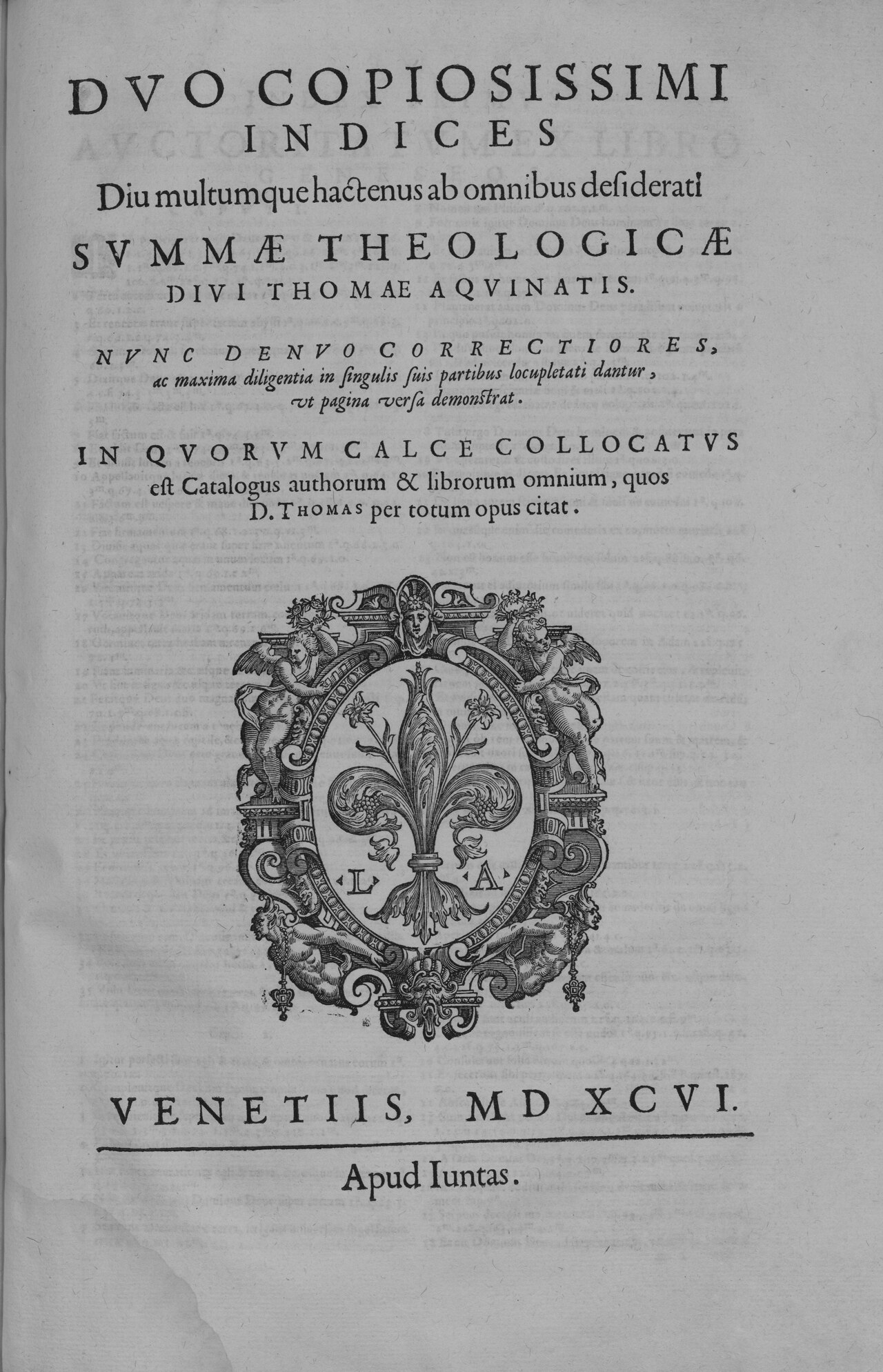 Book
Primary source
Summa Theologica
Thomas Aquinas · 1274
 Painting
Secondary source
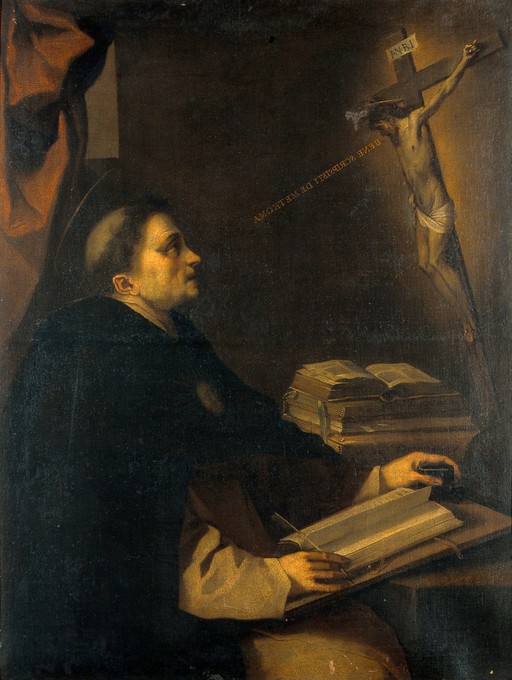
St Thomas Aquinas, 17th-century Italian oil painting
17th century
Primary source
Pange Lingua Gloriosi Corporis Mysterium
Thomas Aquinas · 1263
 Painting
Secondary source
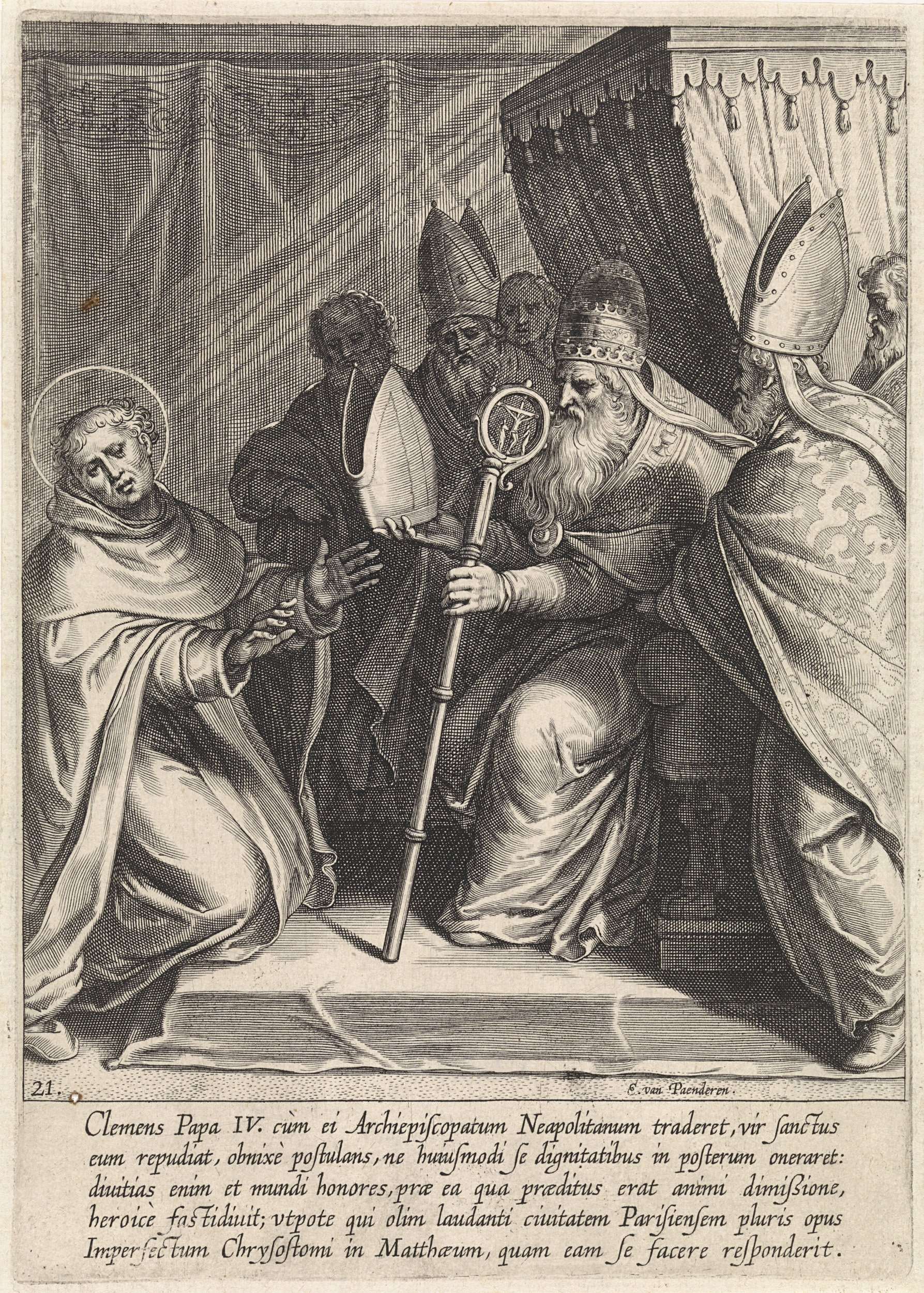
Thomas Aquinas Refuses the Archbishopric of Naples
1610
 Painting
Secondary source
Triumph of Saint Thomas Aquinas
Lippo Memmi · 1340
Ready when you are
Start chatting with Saint Thomas Aquinas now.
20 messages free · No credit card · Available in 50+ languages.