


Primary sourceDocument1630 (later reprint)
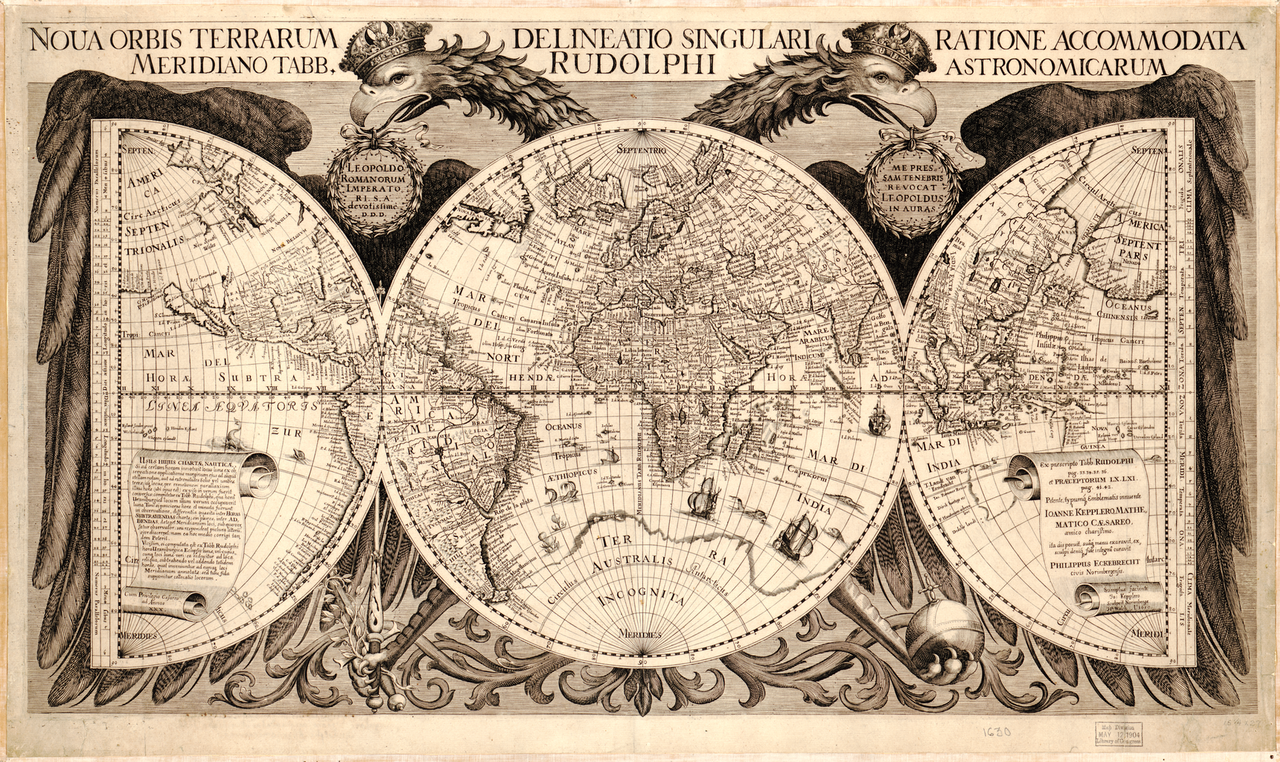
A Modern Depiction of the World by Philippus Eckebrecht
Philippus Eckebrecht · 1630 (later reprint)
A world map made from Kepler's astronomical data, linking his Rudolphine Tables to geography and imperial politics.
This map was made using Kepler's astronomical calculations, showing his data applied to geography and imperial politics.
About this source
What it is
This engraved double-hemisphere world map, titled Nova Orbis Terrarum, was made by Philippus Eckebrecht, a citizen of Nuremberg, using calculations produced by Johannes Kepler. Though dated 1630, it appears to be a later reprinting dedicated to Emperor Leopold I, who did not take the throne until decades later.
Why it matters
Kepler commissioned the map to apply his newly calculated, highly accurate longitude and latitude data, first published in his Rudolphine Tables in 1627, to geography. The map's central meridian runs through the island where Kepler's mentor Tycho Brahe had his observatory, and whose data Kepler relied on to finish his own tables after succeeding Brahe as Imperial Mathematician under Rudolf II. Framed by the double-headed eagle of the Holy Roman Empire, the map shows how 17th-century science was used to serve political and imperial purposes.
Look closer
- Why do you think the mapmaker placed Europe directly over the body of the imperial eagle?
- What does the dedication to a later emperor tell you about how and when this copy of the map was actually printed?
- How does this map connect pure astronomy to practical uses like navigation and politics?
This document is part of the curated material that grounds the AI version of Johannes Kepler on Humy.ai — when students ask about related events, the AI can quote it and cite it.
More Johannes Kepler sources
Meet the AI Johannes Kepler →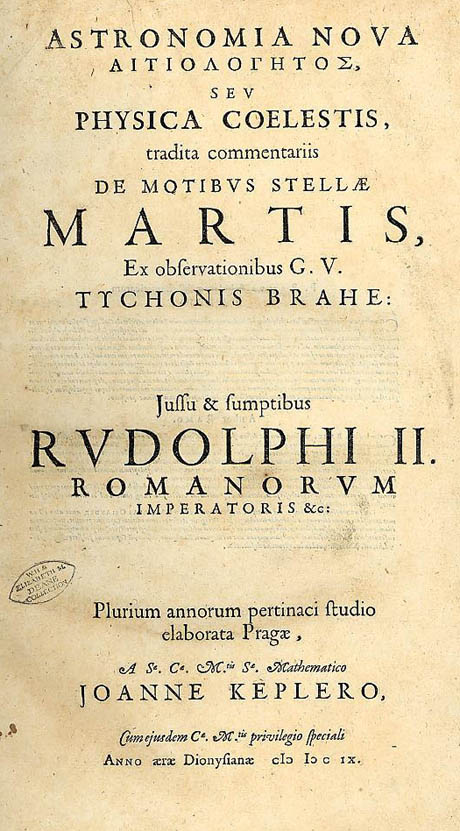 Book
Secondary source
Astronomia Nova
Johannes Kepler · 1609
 Book
Primary source
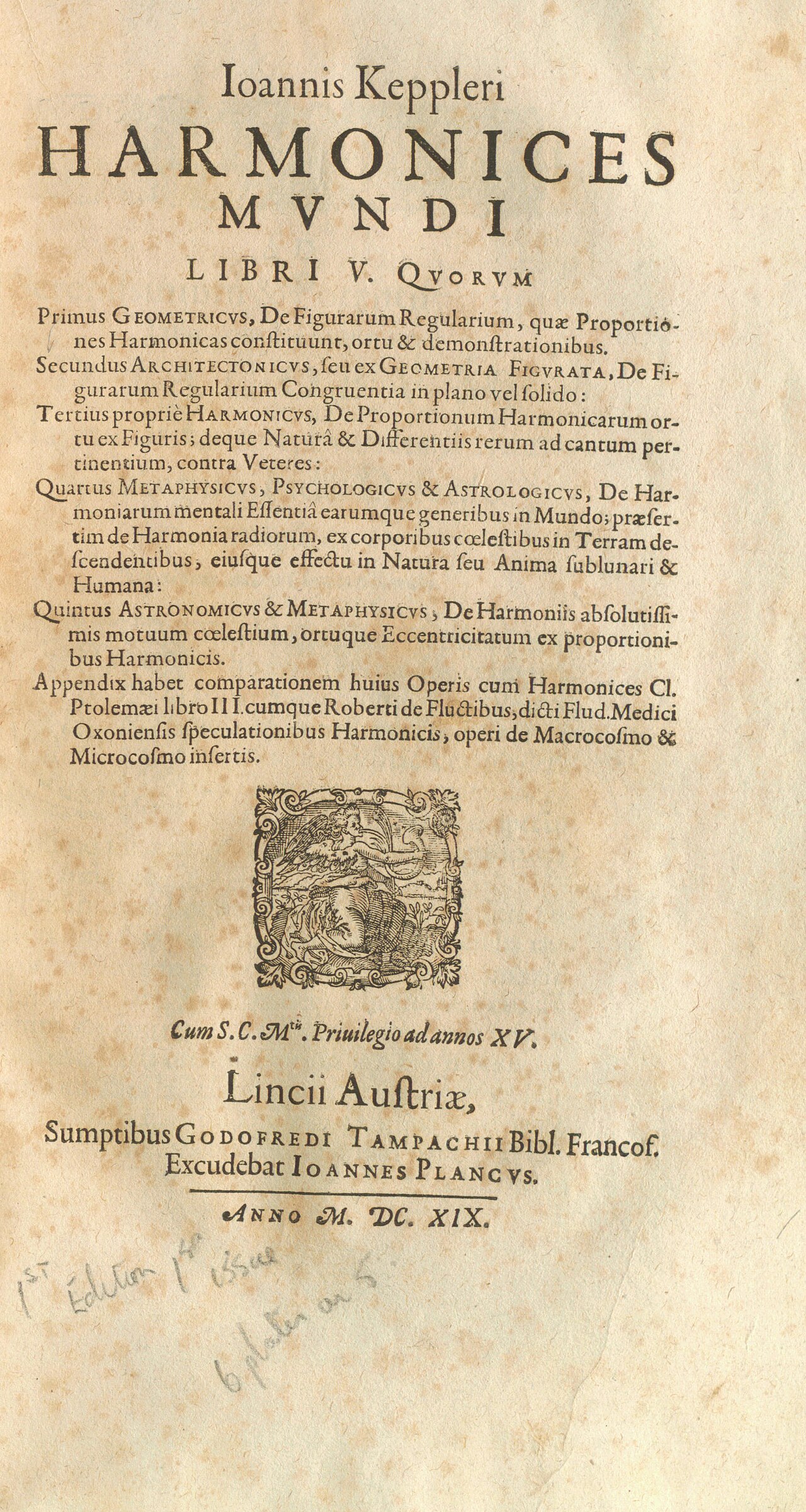
Harmonices Mundi
Johannes Kepler · 1619
 Book
Secondary source
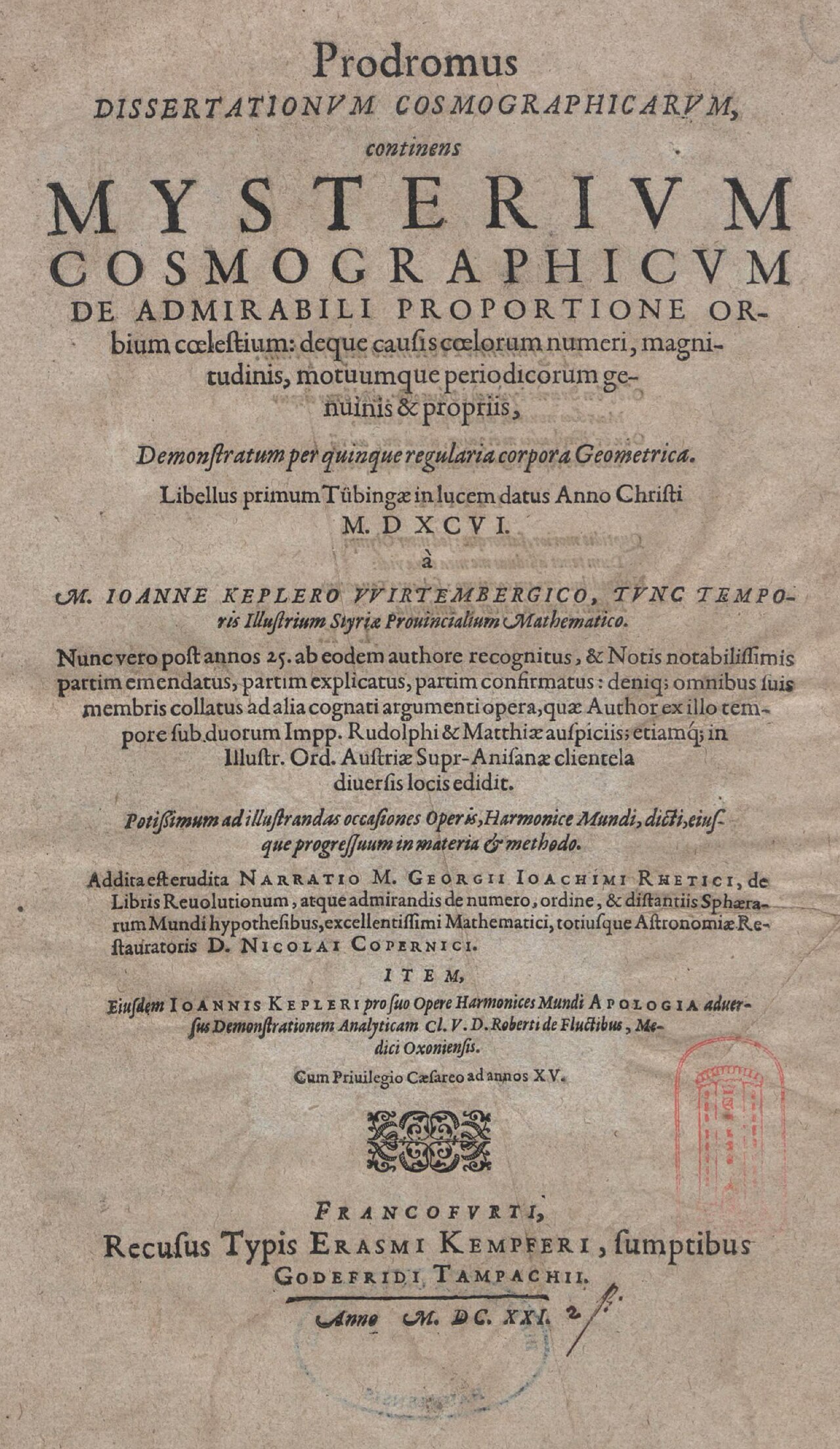
Mysterium Cosmographicum
Johannes Kepler · 1596 (2nd edition 1621)
Secondary source
The Martyrs of Science: Galileo, Tycho Brahe and Kepler
David Brewster
 Book
Secondary source
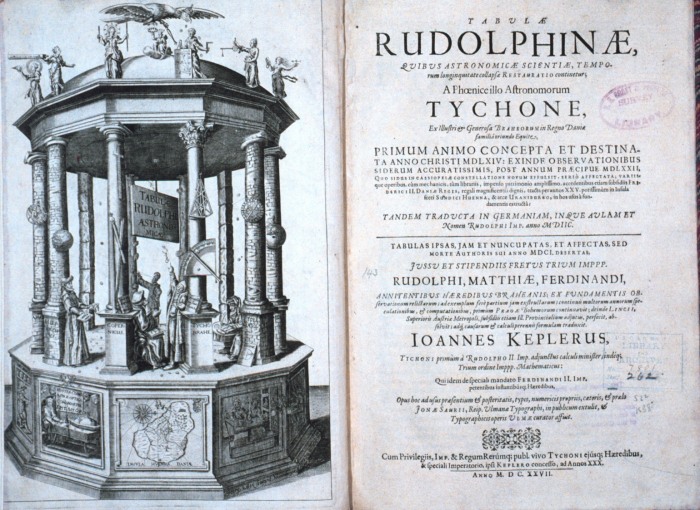
Rudolphine Tables
Johannes Kepler · 1627
Ready when you are
Start chatting with Johannes Kepler now.
20 messages free · No credit card · Available in 50+ languages.