


Secondary sourcePainting16th century
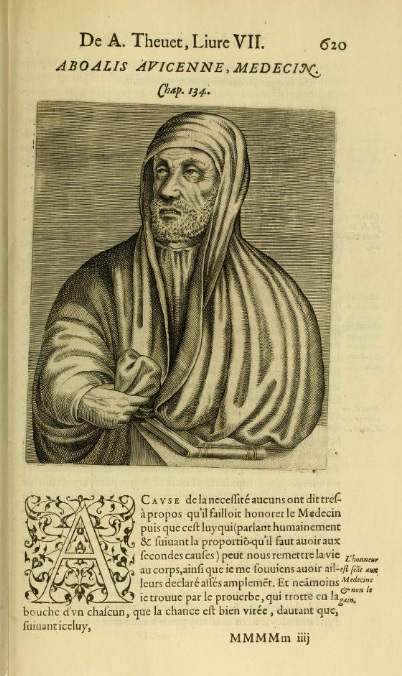
Aboali Avicenne, Medecin
André Thevet · 16th century
An imagined 16th-century French engraved portrait of Avicenna from André Thevet's book of portraits of famous men.
This imagined portrait shows how Renaissance France pictured Avicenna centuries after his death.
About this source
What it is
This engraving appears in André Thevet's 'Les vrais pourtraits et vies des hommes illustres' ('True portraits and lives of illustrious men'), a 16th-century French book of biographical portraits. It shows an imagined likeness of Avicenna, labelled 'Aboali Avicenne, Medecin' and accompanied by a French-language chapter about his life.
Why it matters
No portrait of Avicenna was made during his own lifetime, so artists like Thevet had to invent what he looked like. This image reveals more about how Renaissance Europeans imagined a famous foreign scholar of the past than about Avicenna's actual appearance. It is a good example of how reputations and images of historical figures are shaped long after they lived.
Look closer
- What clues in the clothing and pose tell you this is an imagined, not a real-life, portrait?
- Why might Thevet have included Avicenna among 'illustrious men' from Greek, Latin and other cultures?
- What does the title 'Medecin' (physician) tell you about how Avicenna was remembered?
This painting is part of the curated material that grounds the AI version of Avicenna on Humy.ai — when students ask about related events, the AI can quote it and cite it.
More Avicenna sources
Meet the AI Avicenna →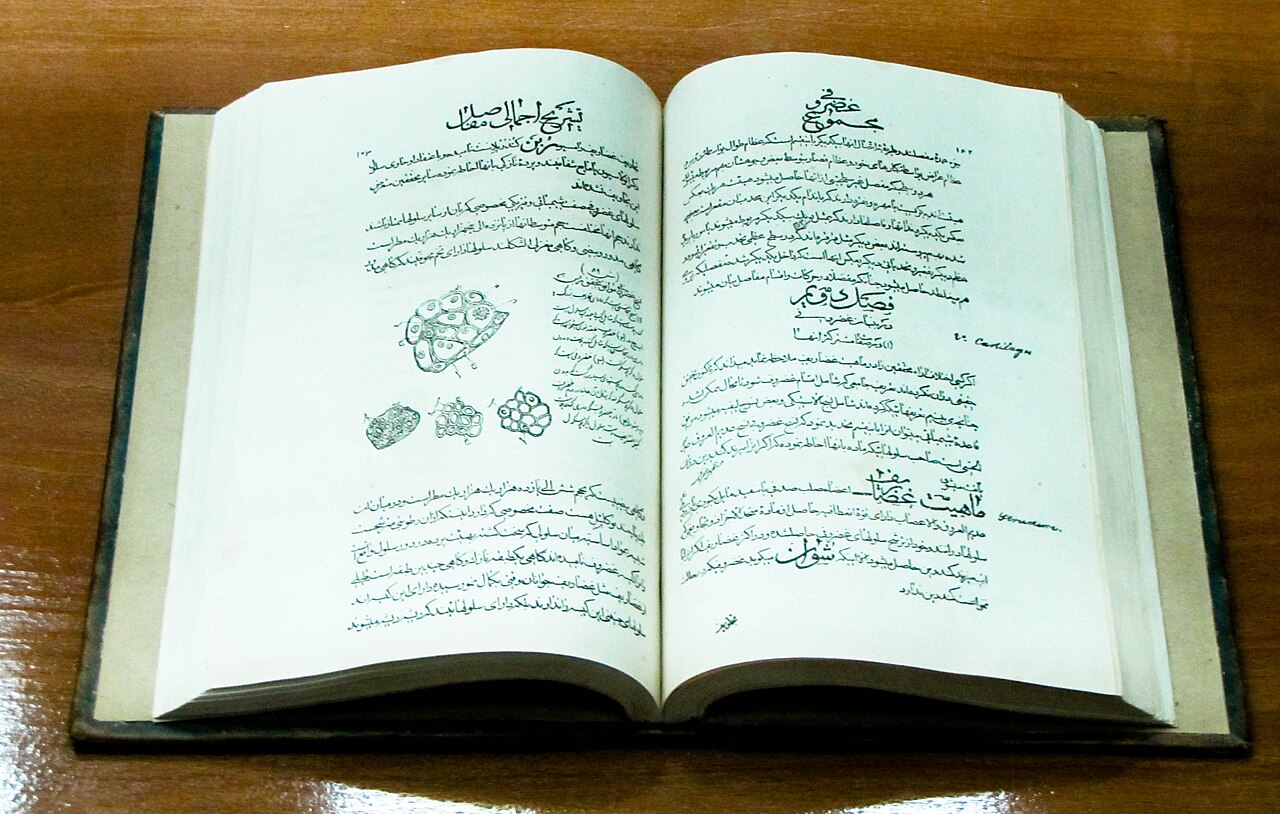 Book
Secondary source
Canon of Medicine
Avicenna · 1025
 Book
Primary source
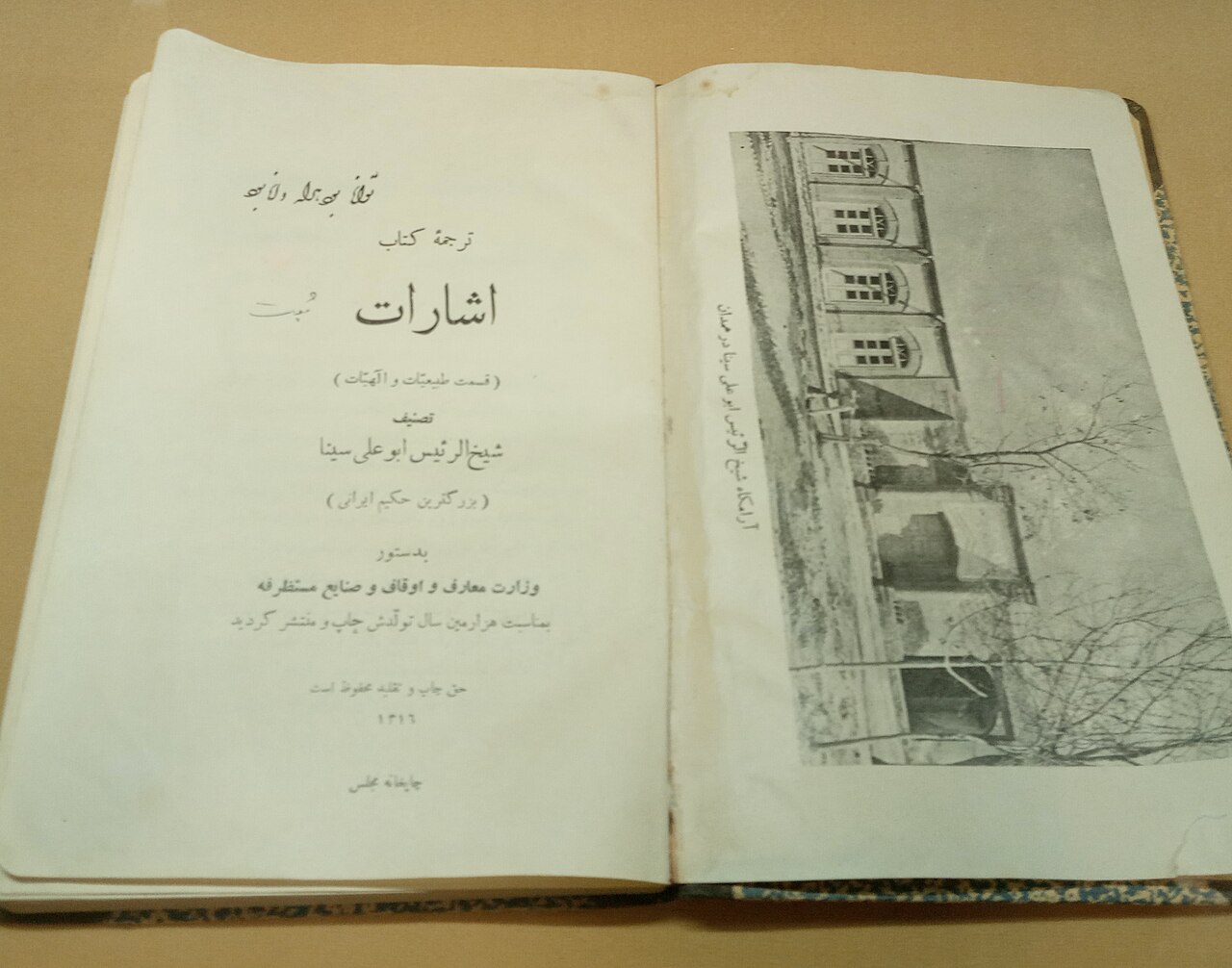
Al-Isharat wa al-Tanbihat
Avicenna
Secondary source
Commentary on Anatomy in Avicenna's Canon
Ibn al-Nafis · 13th century
 Painting
Secondary source
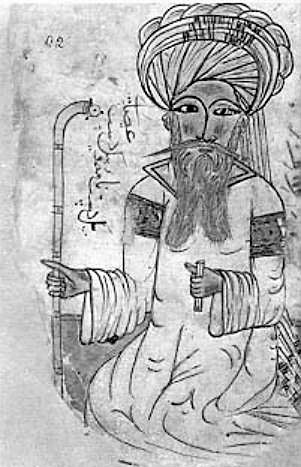
Avicenna (Subtilties of Truth manuscript image)
Beckwith · 1271
 Painting
Secondary source
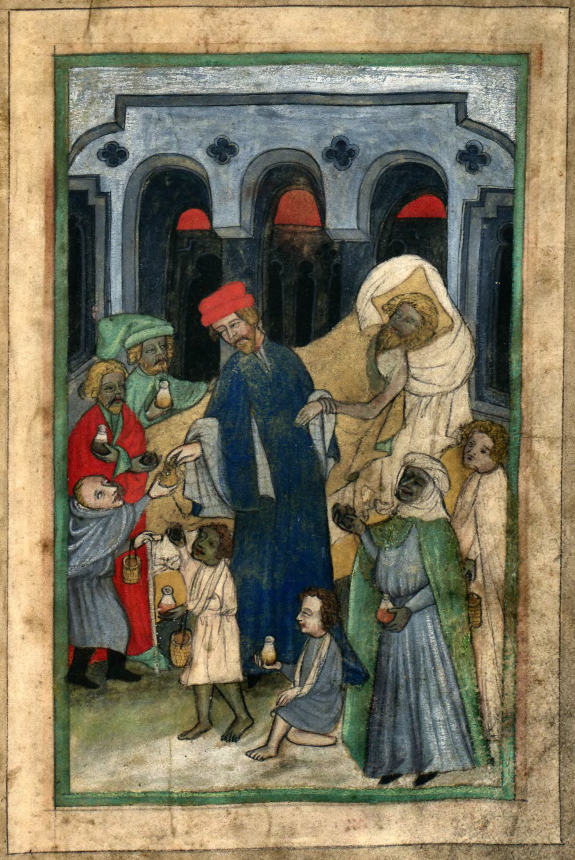
Avicenna at the Sickbed
Walenty z Pilzna · c. 1479-1480
Ready when you are
Start chatting with Avicenna now.
20 messages free · No credit card · Available in 50+ languages.