
Portrait of Avicenna

AI Historical Figure

Avicenna

Influential Persian polymath known for his contributions to medicine and philosophy.

Chat with Avicenna via text or voice — in 42 languages, drawing on a curated biography and 73 historical sources. Available 24/7.

Start chatting with Avicenna20 messages free · No credit card
Lived
980–1037
From
IranUzbekistan
Known for
PhilosophyScience & medicine
Avicenna

Avicenna

Online · responds in seconds

Hello — I'm Avicenna. Influential Persian polymath known for his contributions to medicine and philosophy. What would you like to ask me?

20 messages free · No credit card · Powered by Humy.ai

Live preview · Switch between 42 languages above · Send a message to continue in the app

Multilingual

Talk to Avicenna in 42 languages

Ask Avicenna questions in any language below, and the rest of Humy's app speaks it too. Pick yours to open the chat in that language.

Also in German (Austria), German (Switzerland), English (UK), English (Australia), English (Canada).

The sources behind this AI

73 sources · 43 books · 16 paintings · 7 artifacts · 5 documents · 2 sculptures

Avicenna doesn’t improvise from thin air. The AI is grounded in 73 curated historical sources students can inspect. Open any of them to see what informs the conversation.

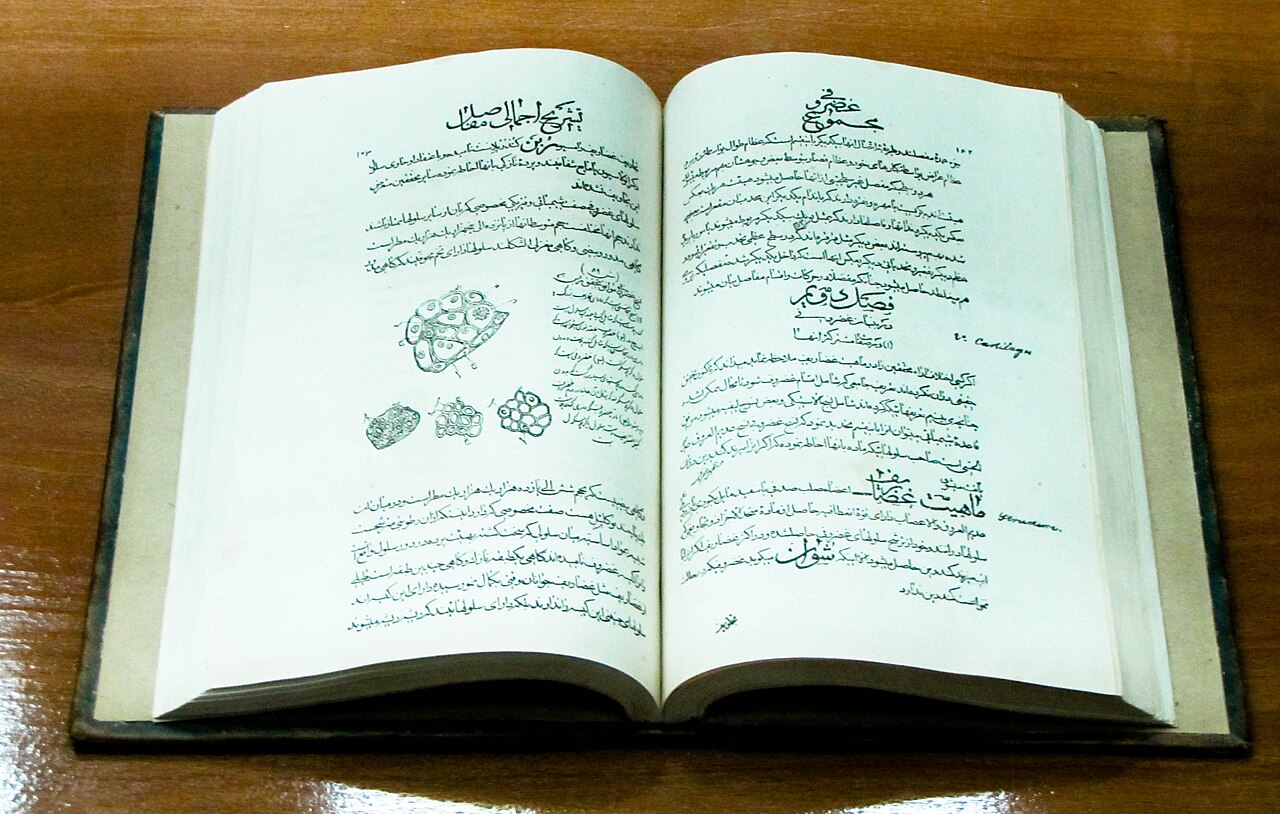
An open bound book on a wooden table, showing two pages of handwritten Arabic-script manuscript text in dark ink, with small diagrams of round, clustered shapes on the left page and marginal notes on the right page.Book

Secondary source

Canon of Medicine

Avicenna · 1025

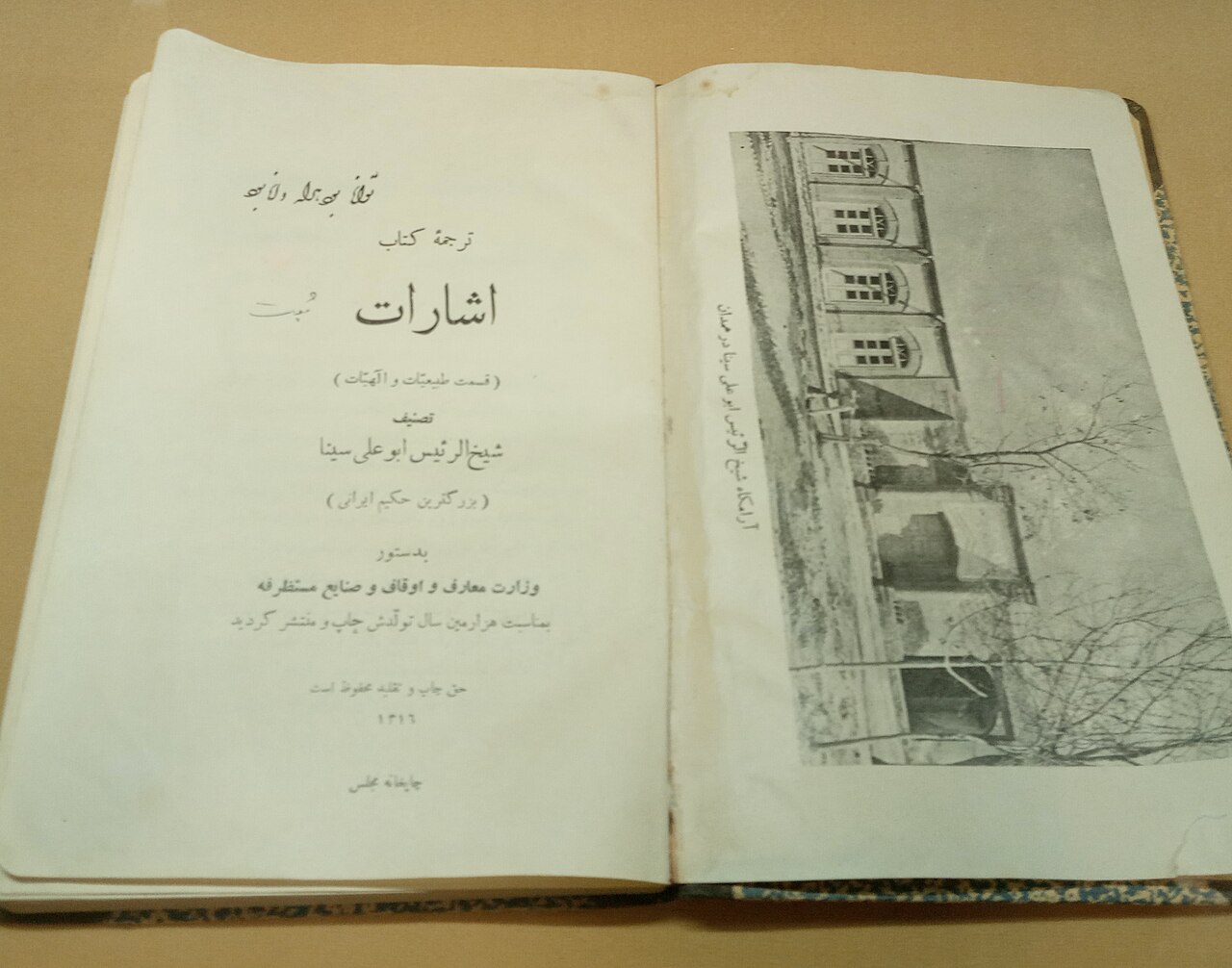
Open book on a tan surface showing a Persian-language title page reading 'Isharat' with the author's name Sheikh al-Ra'is Abu Ali Sina (Avicenna) and a printed photograph of a building on the facing right page. Printed on aged paper.Book

Primary source

Al-Isharat wa al-Tanbihat

Avicenna

Book

Secondary source

Commentary on Anatomy in Avicenna's Canon

Ibn al-Nafis · 13th century

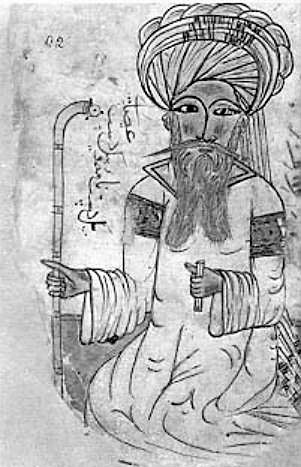
Grayscale drawing of a bearded man in a tall wrapped turban and long robe, holding a long curved stick in one hand and a small object in the other. Faded Arabic script and the number 82 appear at top left.Painting

Secondary source

Avicenna (Subtilties of Truth manuscript image)

Beckwith · 1271

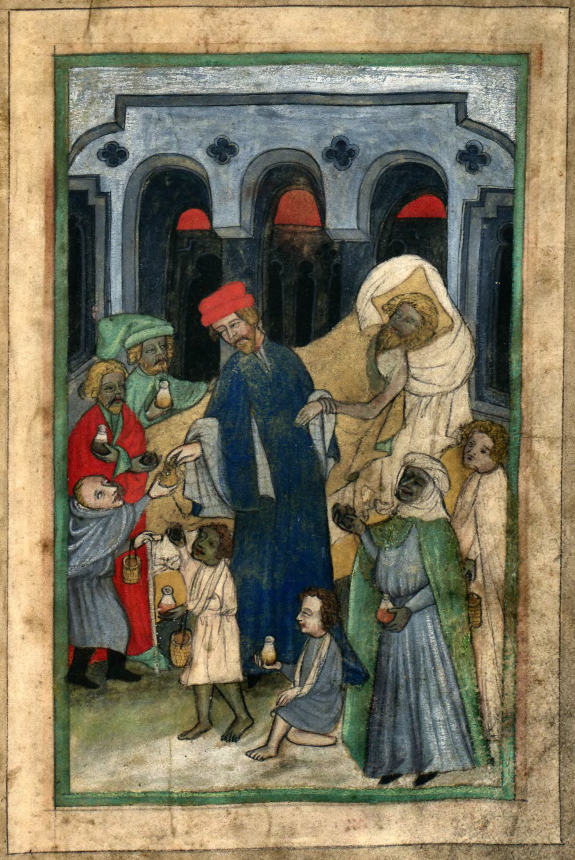
Medieval painting in a green-bordered frame. A bearded man in a blue robe and red cap stands centre. Around him, sick figures in white and blue robes hold flasks, and attendants in red and green stand at left. Blue arcades with red arches sit behind.Painting

Secondary source

Avicenna at the Sickbed

Walenty z Pilzna · c. 1479-1480

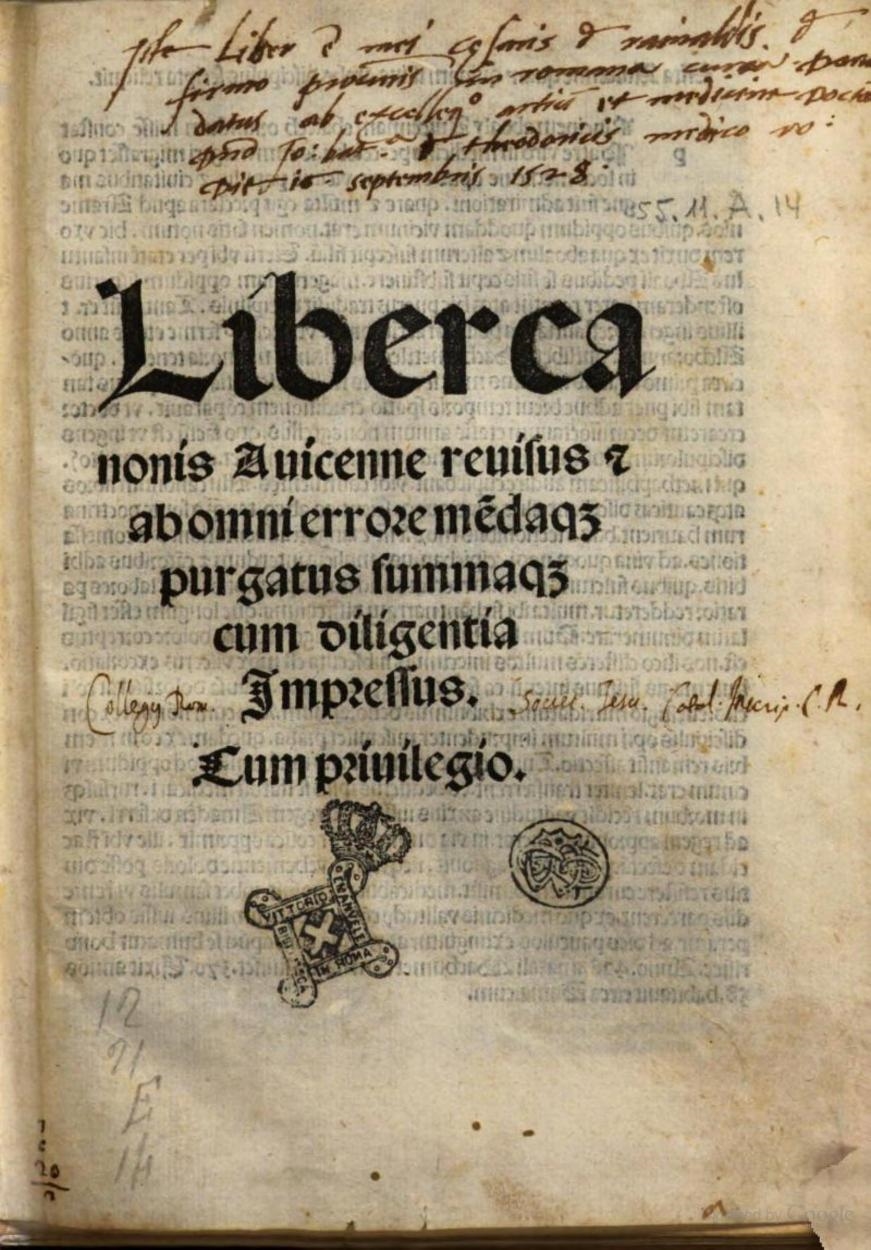
Title page of an early printed book in black letter type. Large decorated heading 'Liber Canonis Avicenne' with smaller text below and a printer's device in the lower center. Handwritten notes in brown ink appear at the top and margins. Aged yellowed paper.Book

Secondary source

Canon Venice 1507 Title Page

Avicenna · 1507

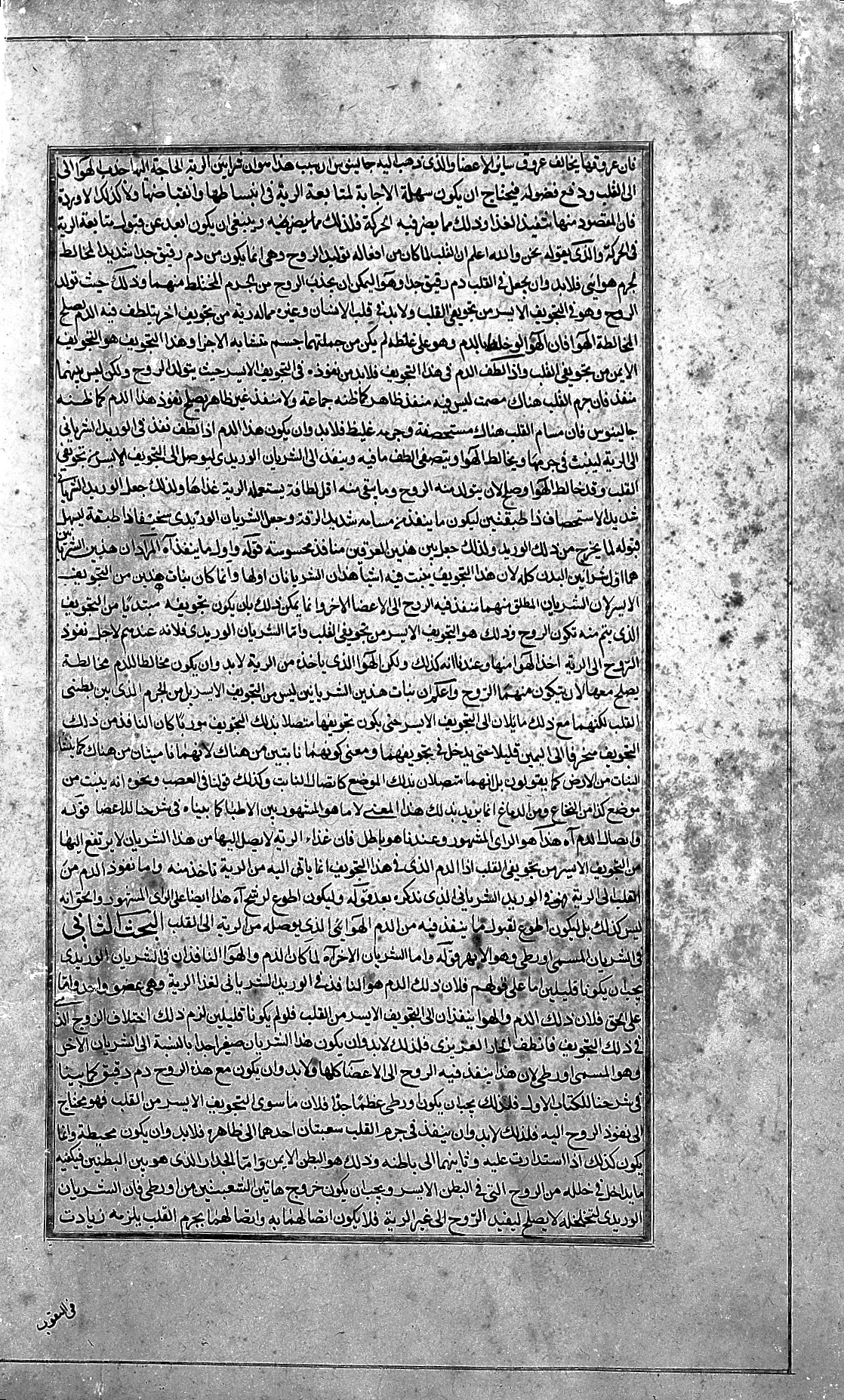
Scan of a page of handwritten Arabic manuscript in black ink on aged, mottled paper, with a ruled text block of dense right-to-left script in many lines and a small marginal note at the lower left.Book

Secondary source

Ibn al-Nafis's Commentary on Avicenna's Canon

Ibn al-Nafis

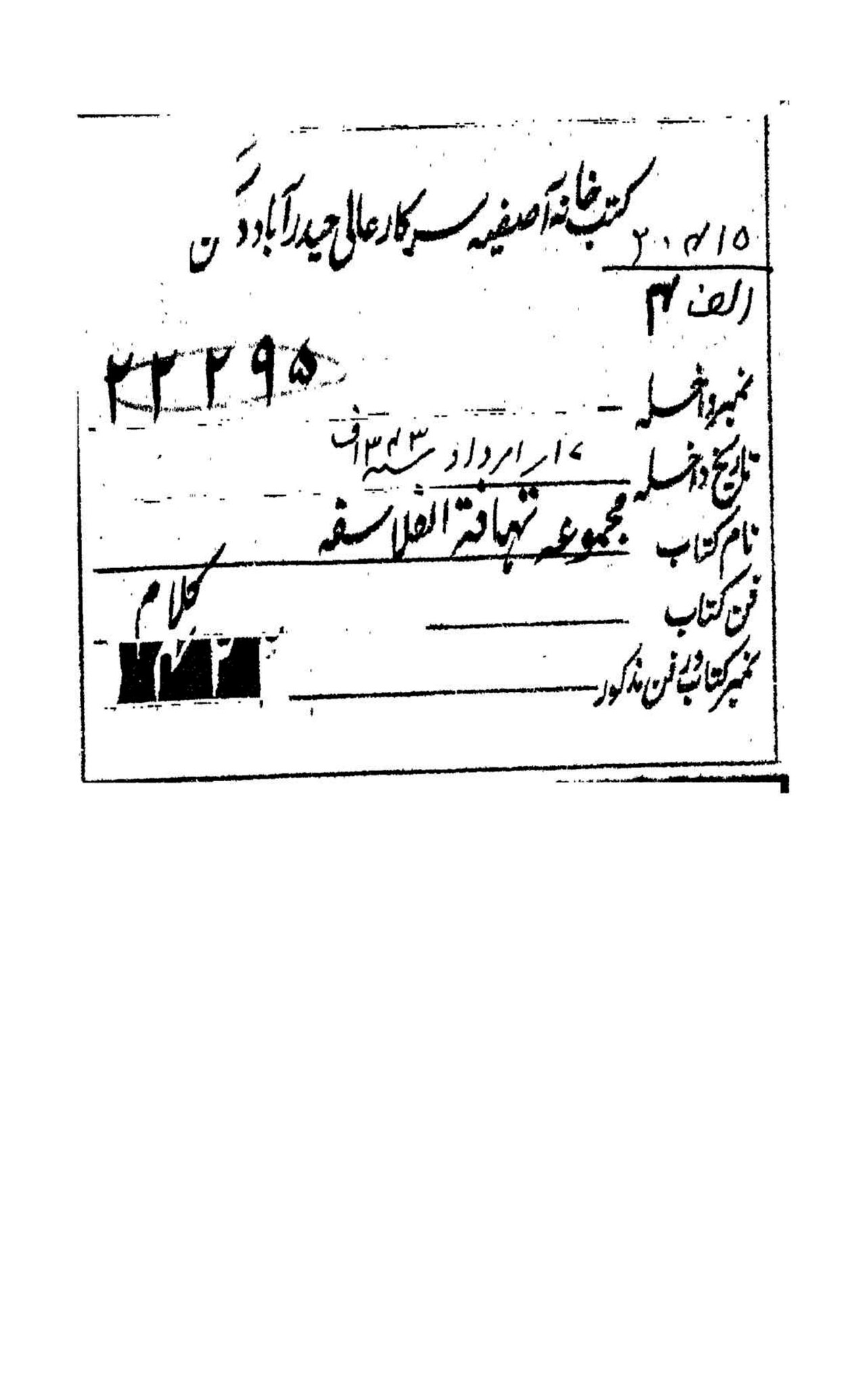
Scanned library catalogue card in Urdu script from the Asafiya Library, Hyderabad, with stamp number 22295, marked with a Urdu title reading Majmua Tahafut al-Falasifa, and a classification field. The card is a record for the work, not the book itself.Book

Secondary source

The Incoherence of the Philosophers

Al-Ghazali · 1095

Book

Secondary source

Divine Comedy, Inferno Canto IV

Dante Alighieri · c. 1308-1320

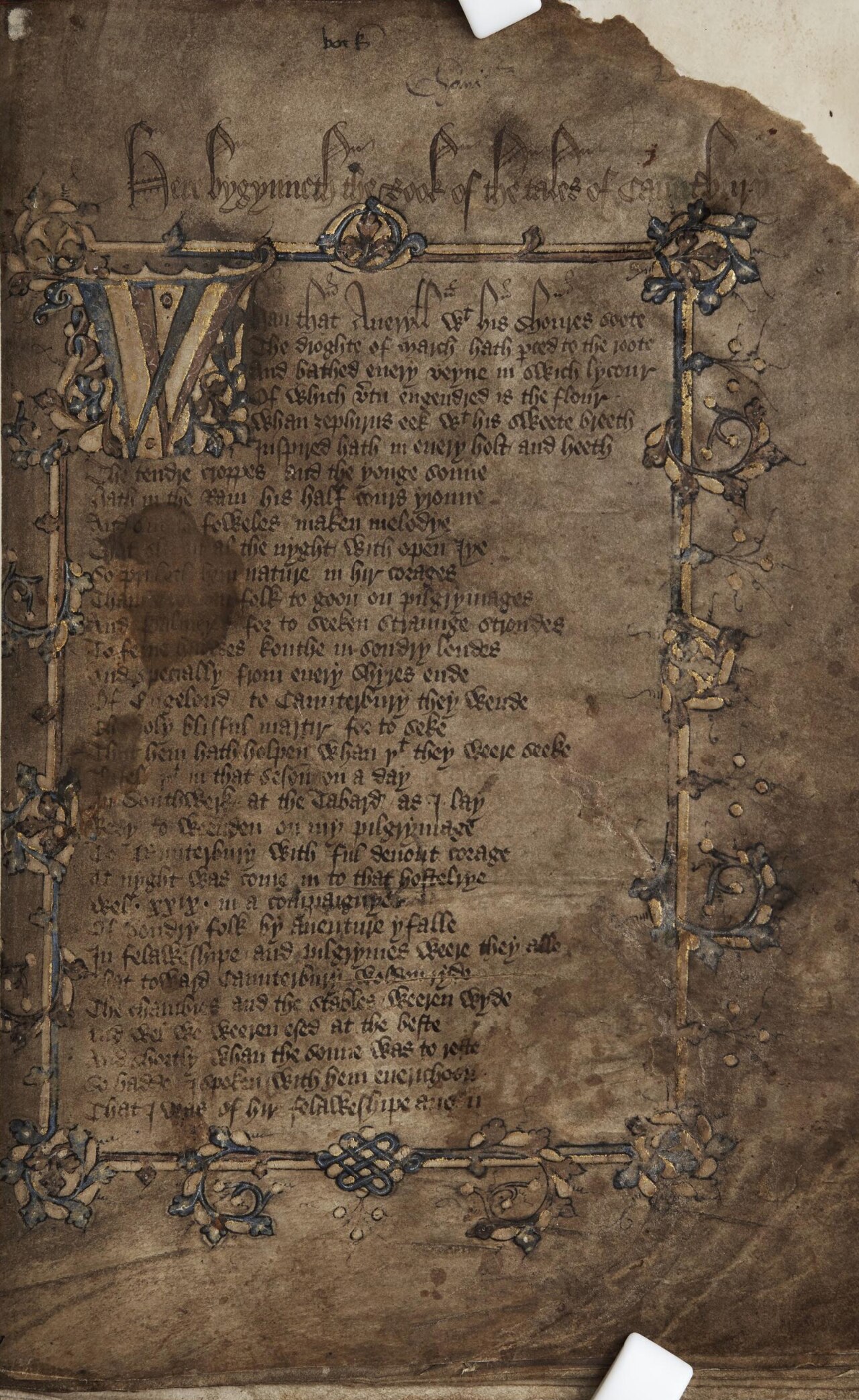
Manuscript leaf in brown ink on aged parchment, with a large decorated gold and blue illuminated initial W at left and an opening line in black gothic script across the top. Text in two columns of handwritten Middle English lines, with a decorative vine-and-foliage border in gold and blue around the page, and a stain on the left side.Book

Secondary source

General Prologue

Geoffrey Chaucer · 1389

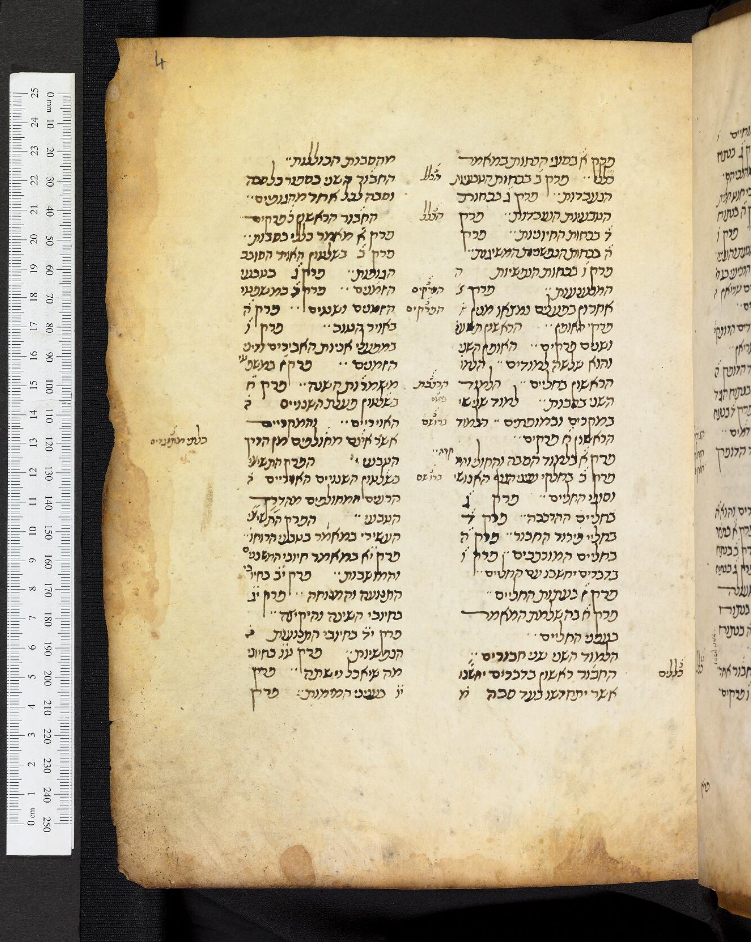
Manuscript page in Hebrew script on aged yellowed parchment, with a scale ruler on the left edge and a partial adjacent page at the right. Dense columns of handwritten brown ink text with marginal annotations.Book

Primary source

Hebrew Manuscript of the Canon (Books I, V)

Avicenna

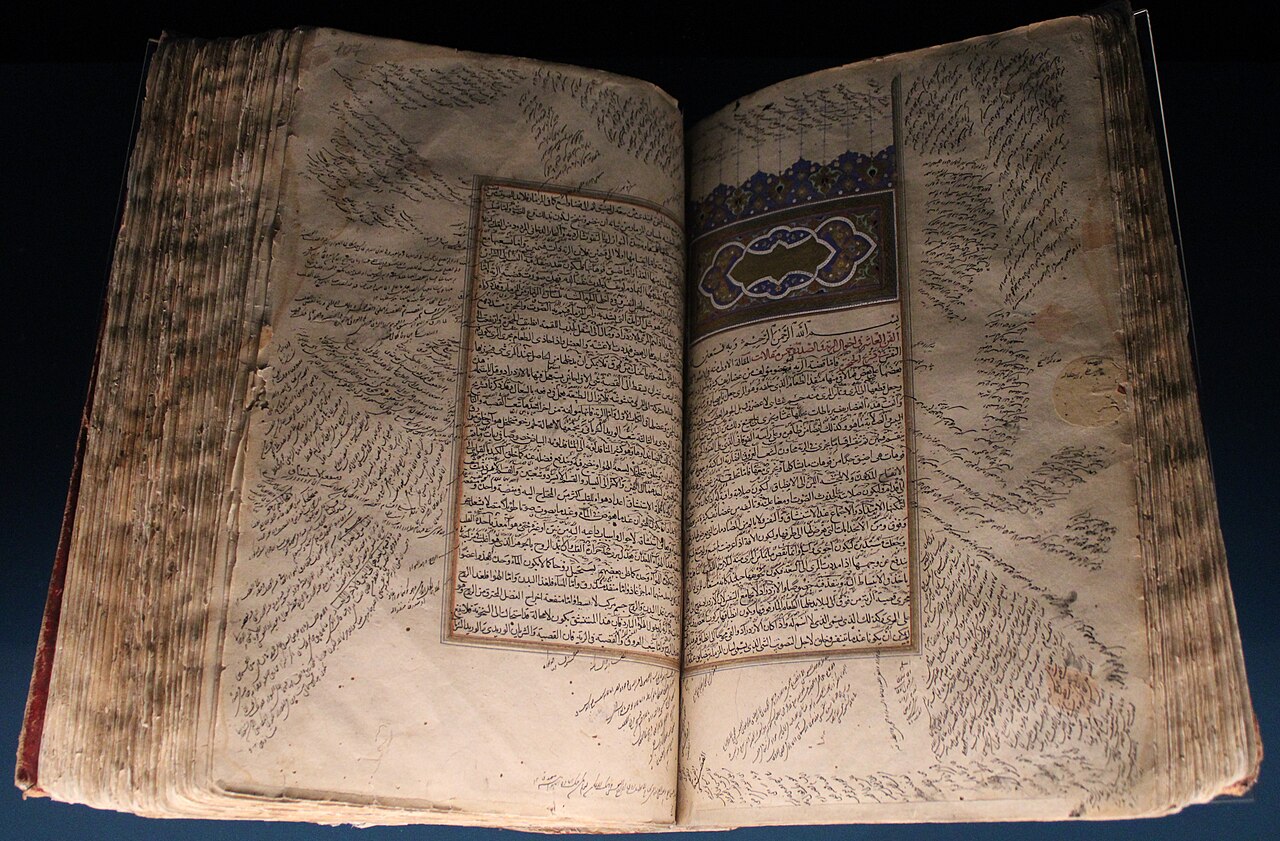
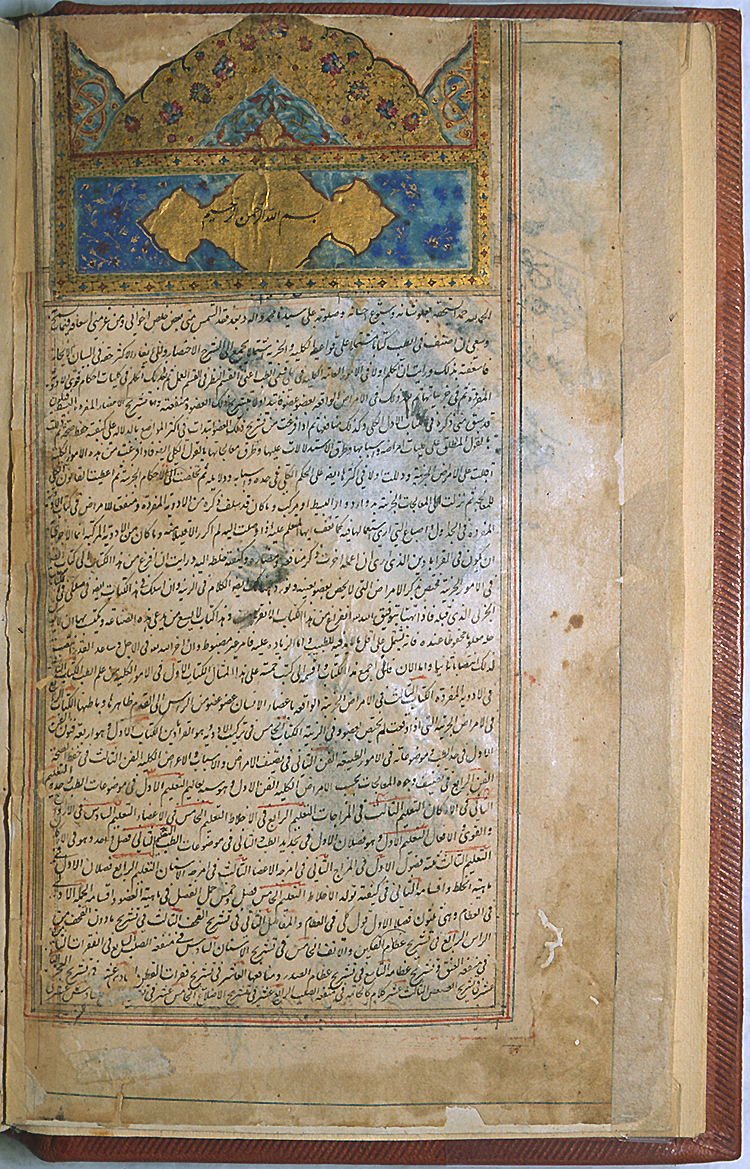
An open old manuscript book displayed against a dark background. Pages of handwritten Arabic-script text in brown ink fill both sides, with a central text block framed by ruled borders and a decorative blue-and-gold illuminated panel at the top of the right page.Book

Primary source

Manuscript of Ibn Sina (Tashkent 2118)

Avicenna · 14th century

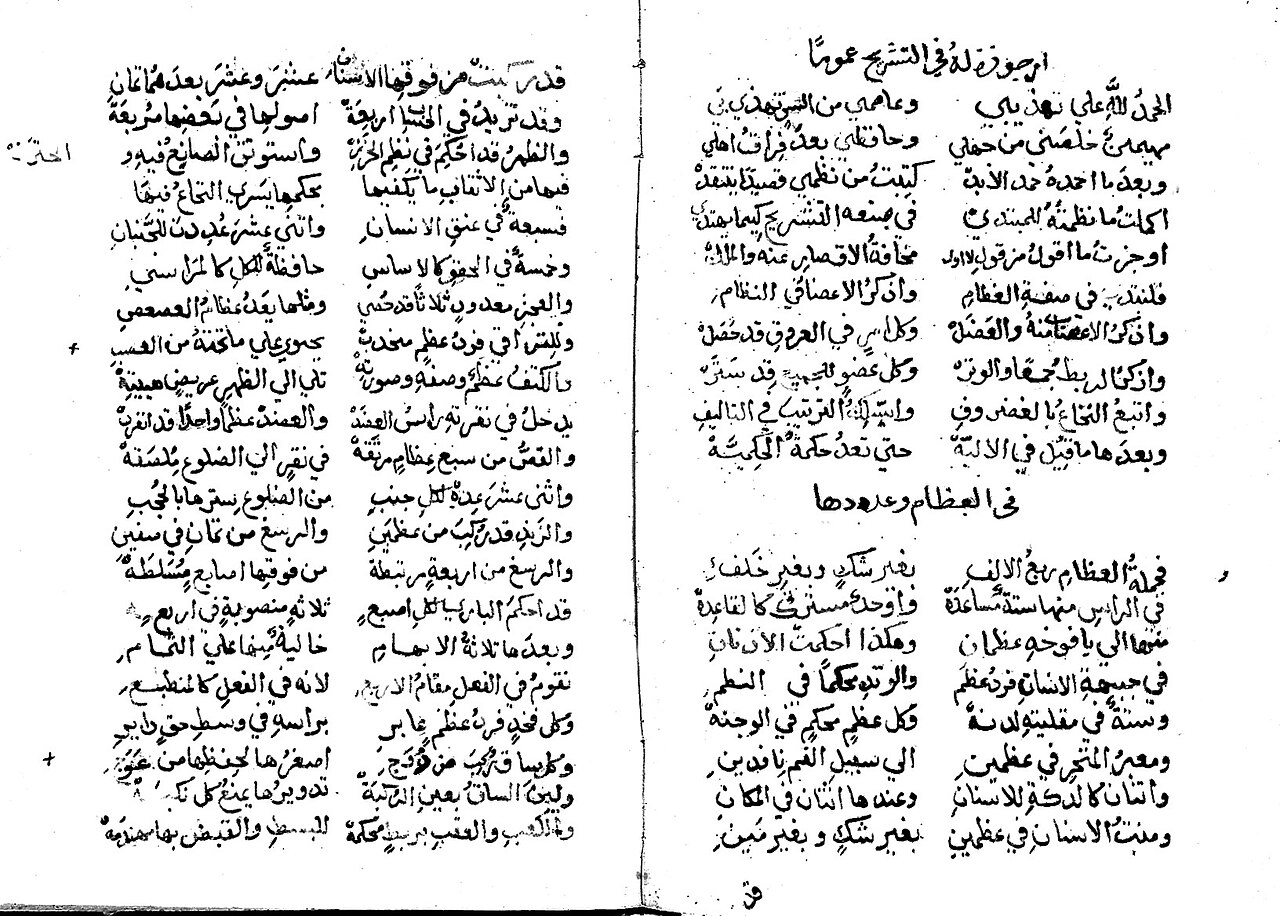
Two facing pages of a handwritten Arabic manuscript in black ink on cream paper, written in columns of verse. The right page has a heading and a section title reading about bones. The left page is a dense block of Arabic verse lines. Faint marginal marks appear at the edges. The pages show the poem on general anatomy.Book

Primary source

Poem on General Anatomy

Avicenna

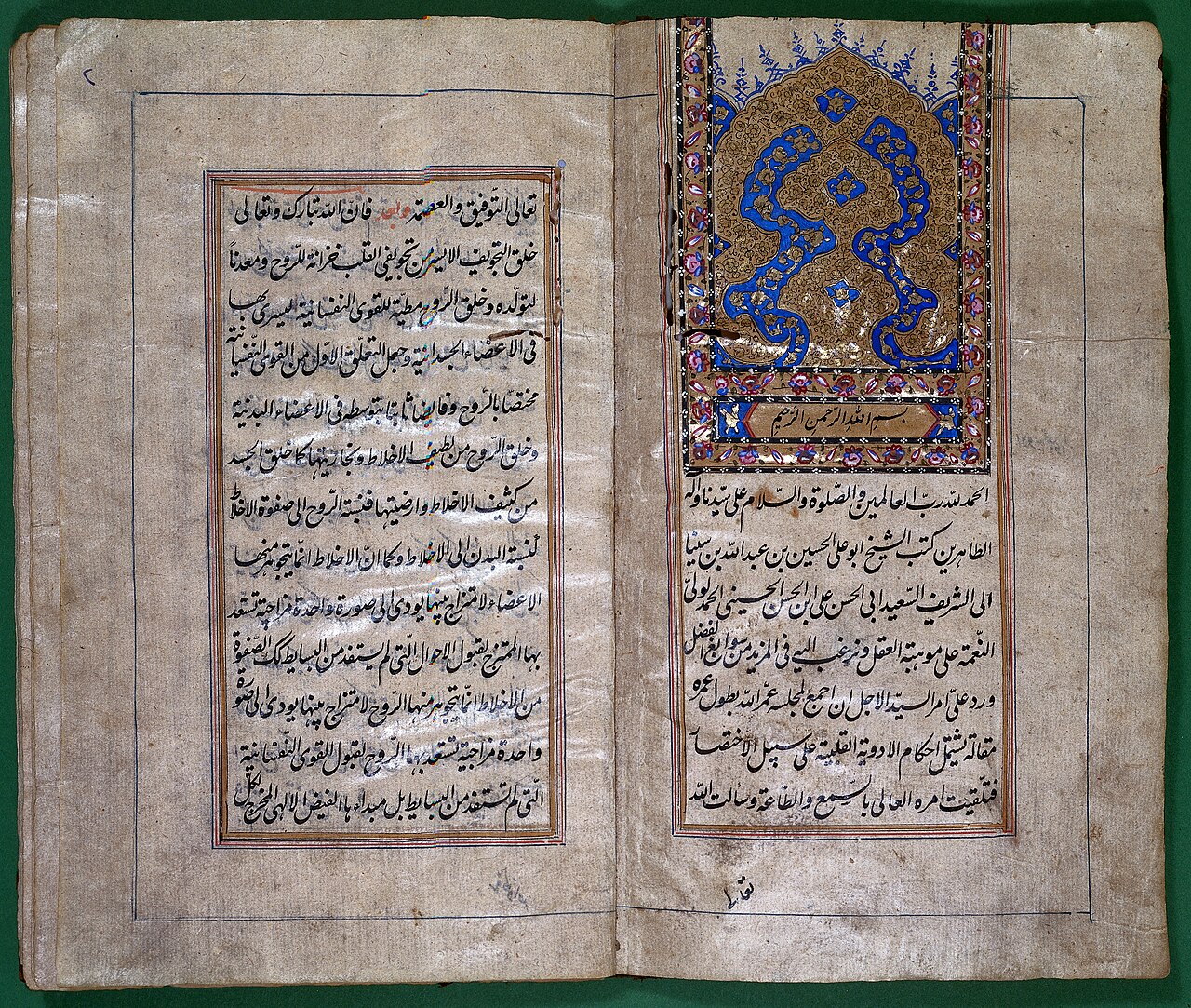
Open manuscript spread in Arabic script on aged paper. Left page has black calligraphic text within a red and gold ruled frame. Right page has an illuminated gold and blue arabesque frontispiece above a red-framed heading, with more text below.Book

Primary source

Rules About Medicines of the Heart

Avicenna

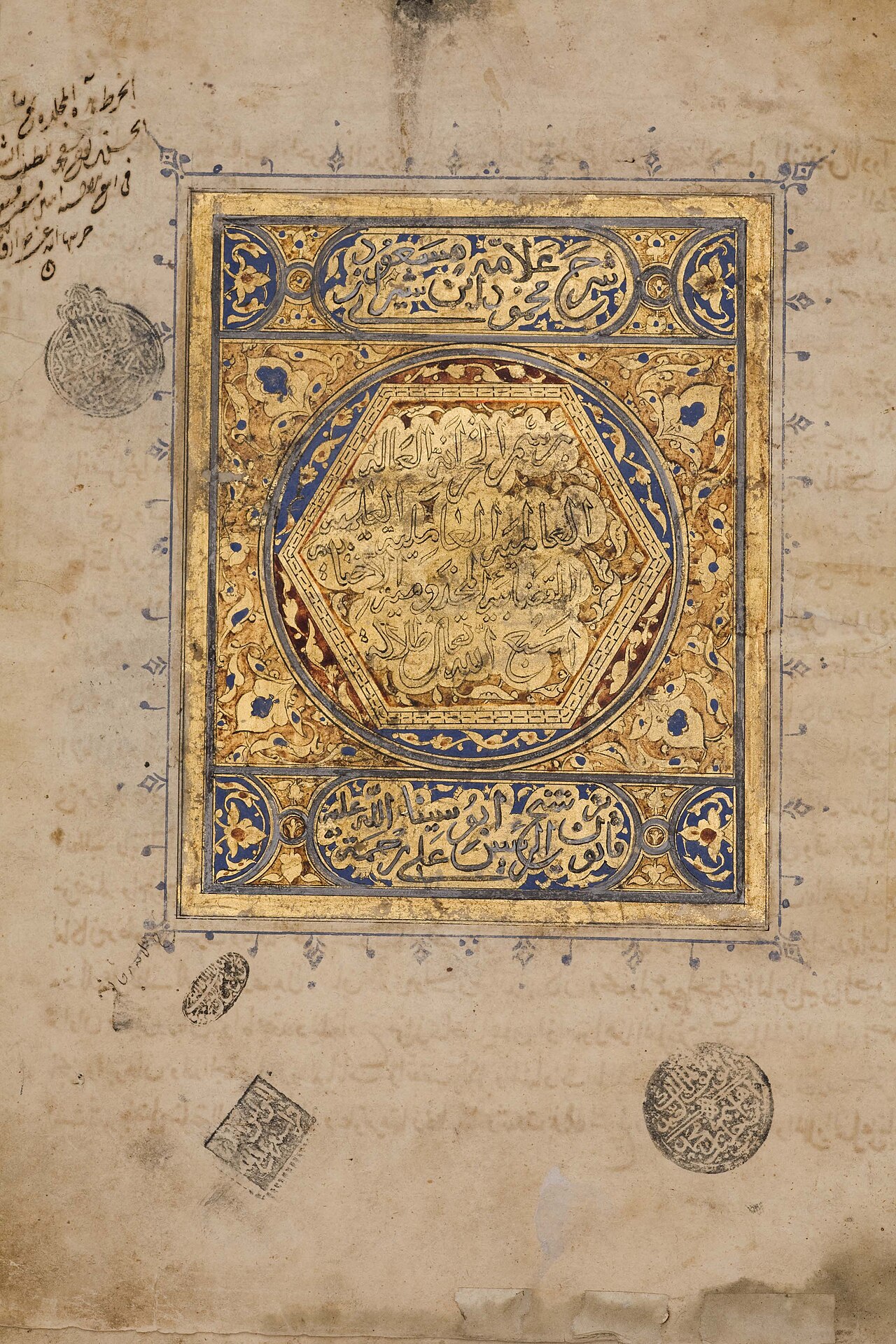
Illuminated manuscript page in Arabic script on aged paper. A gilded and blue-decorated frame surrounds a central hexagonal panel with a circular medallion of calligraphy, with additional calligraphic cartouches at top and bottom. Dark seal impressions and marginal notes appear on the surrounding paper.Book

Secondary source

Sharh Qanun ibn Sina

Qutb al-Din Mahmud Shirazi

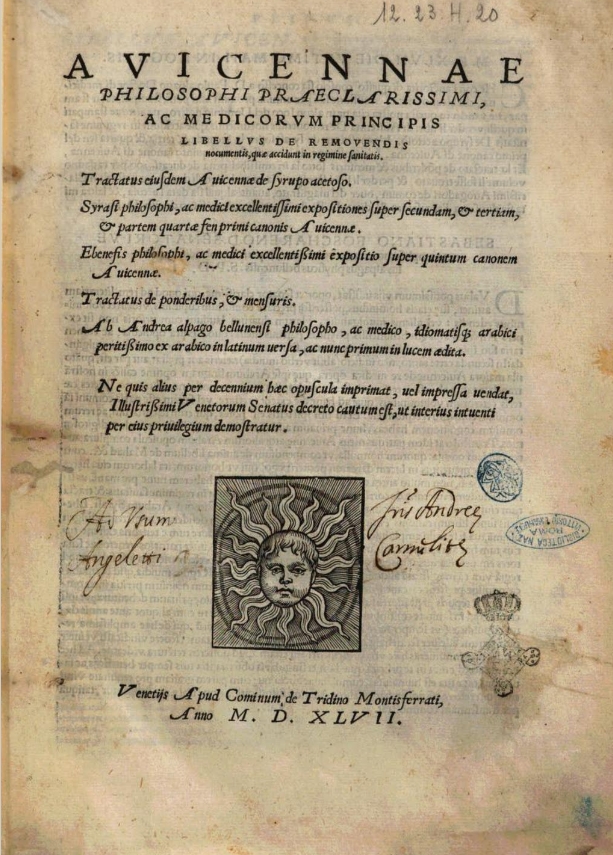
Title page of a 1547 Latin printed book attributed to Avicenna, with a central woodcut of a sun-like face surrounded by rays. Handwritten annotations and a library stamp appear on the page; text reads Venetiis apud Comminum de Tridino Montisferrati, Anno MDXLVII.Book

Secondary source

Avicennae aliorumque opera ab Andrea Alpago Latine versa

Andreas Alpagus · 1547

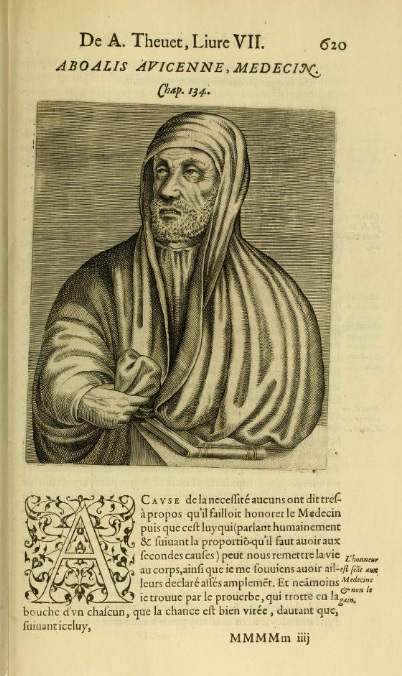
Page from a 16th-century French book showing an engraved portrait of Avicenna wearing a turban and robe, with a book in his hand. Above is the running head 'De A. Theuet, Liure VII. 620' and the caption 'ABOALI AVICENNE, MEDECIN, Chap. 134.' Below is a decorative initial 'A' and printed French text.Painting

Secondary source

Aboali Avicenne, Medecin

André Thevet · 16th century

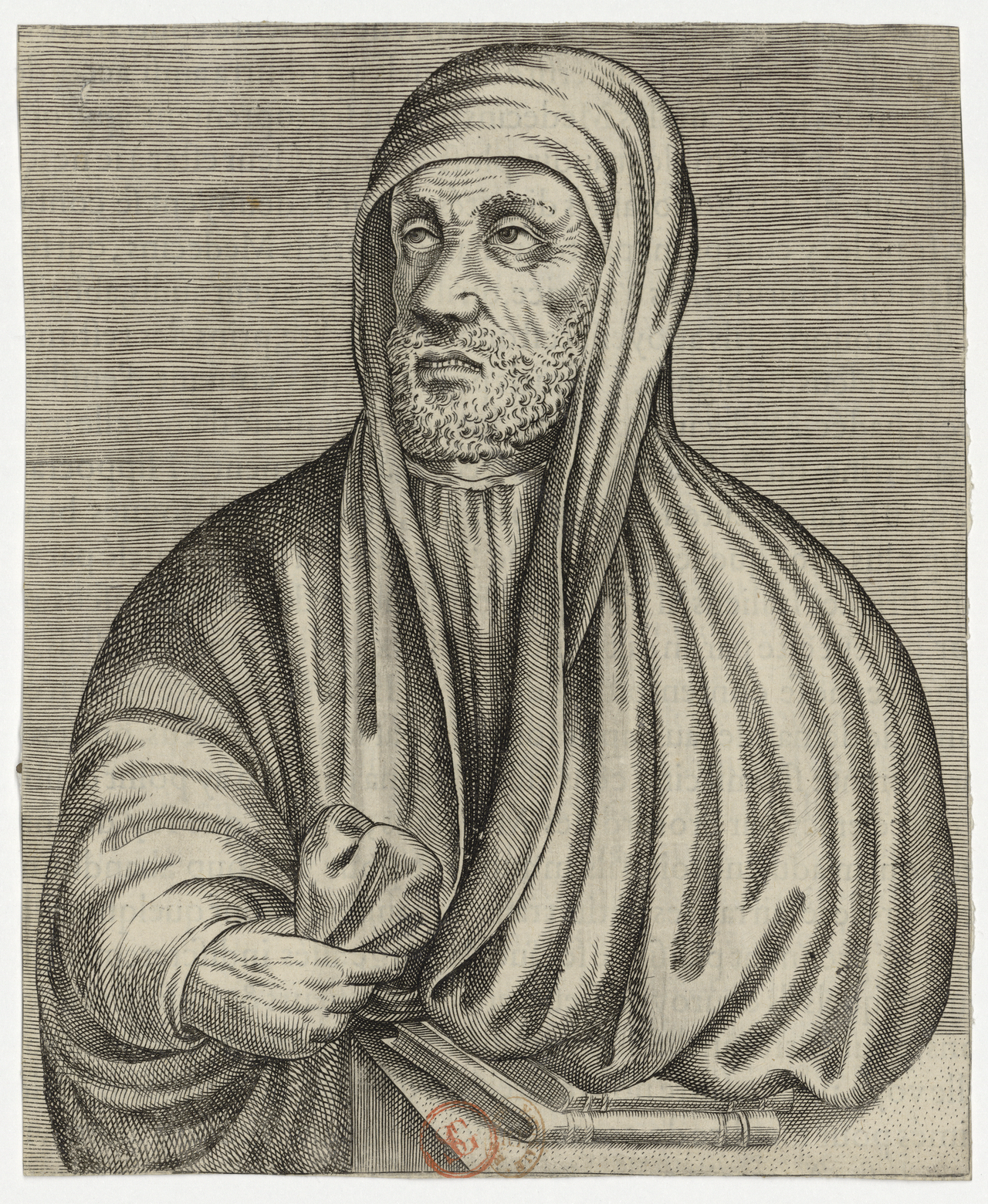
Engraved print of a bearded older man wearing a draped head covering and robe, with his hand resting on a cloth fold; a red seal mark sits at the lower left, with a book or tube at the bottom.Painting

Secondary source

Avicenne (engraved portrait)

1601

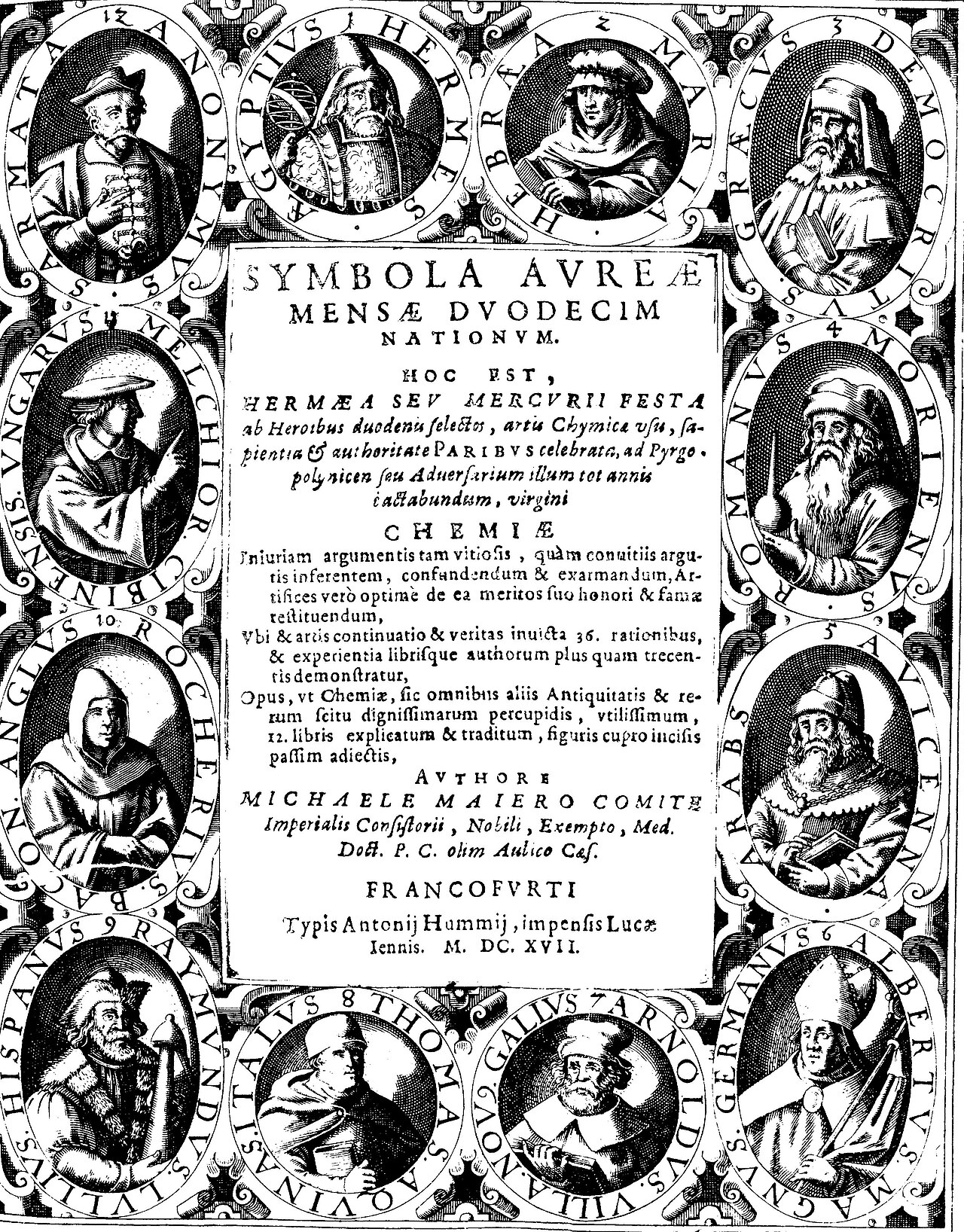
Title page of Symbola Aureae Mensae Duodecim Nationum, 1617, an engraved frontispiece with twelve oval portraits of alchemists around a central block of printed text naming Michael Maier as author and Frankfurt as place of printing.Book

Secondary source

Symbola Aureae Mensae Duodecim Nationum

Michael Maier · 1617

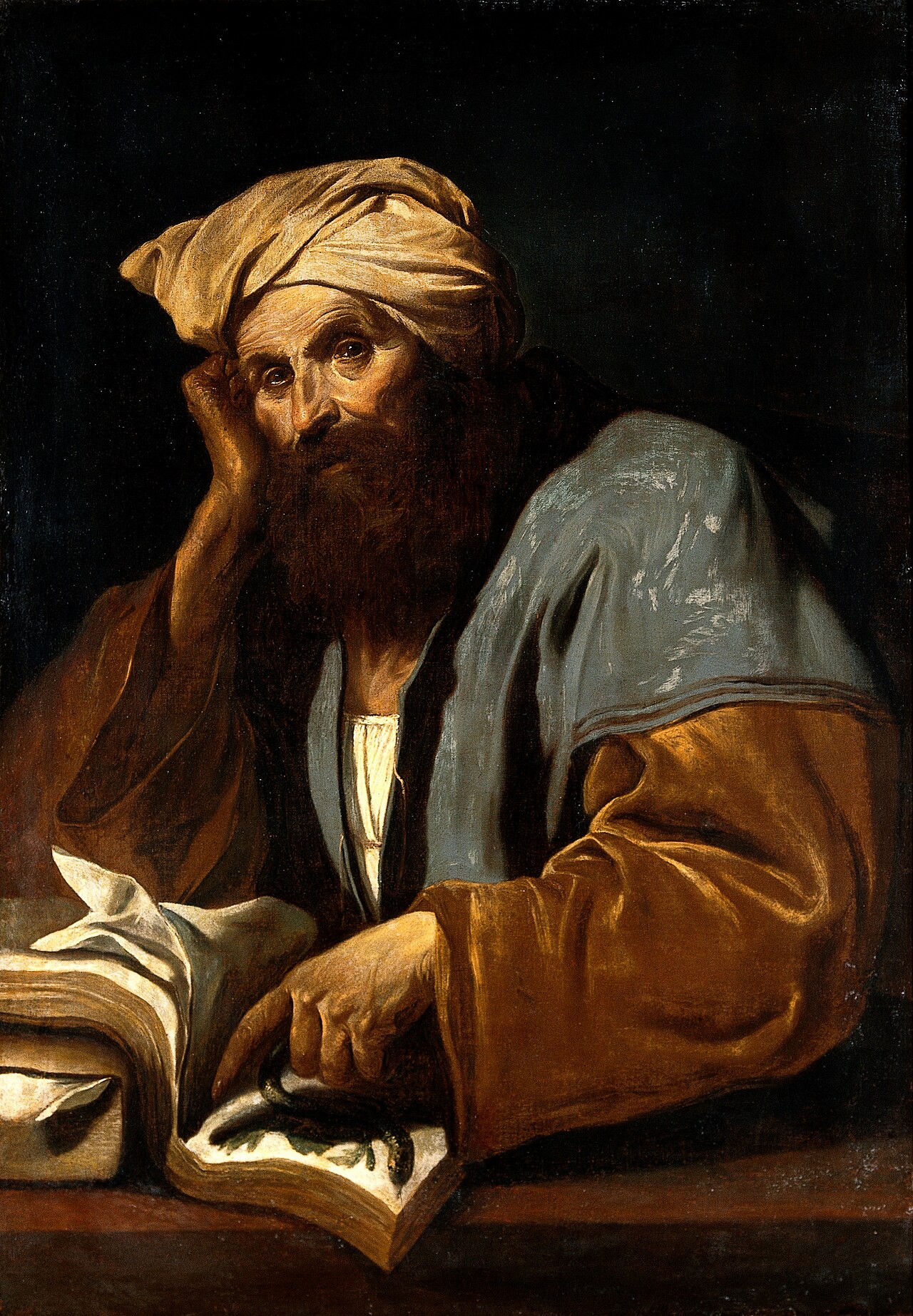
Oil painting of a bearded older man in a light-colored turban, resting his head on one hand and gazing upward. He wears a brown robe and a blue-grey cloak, and leans on a table with an open book and a sheet of paper. Dark background.Painting

Secondary source

A Man of Learning (Avicenna?)

unknown Neapolitan painter · 17th century

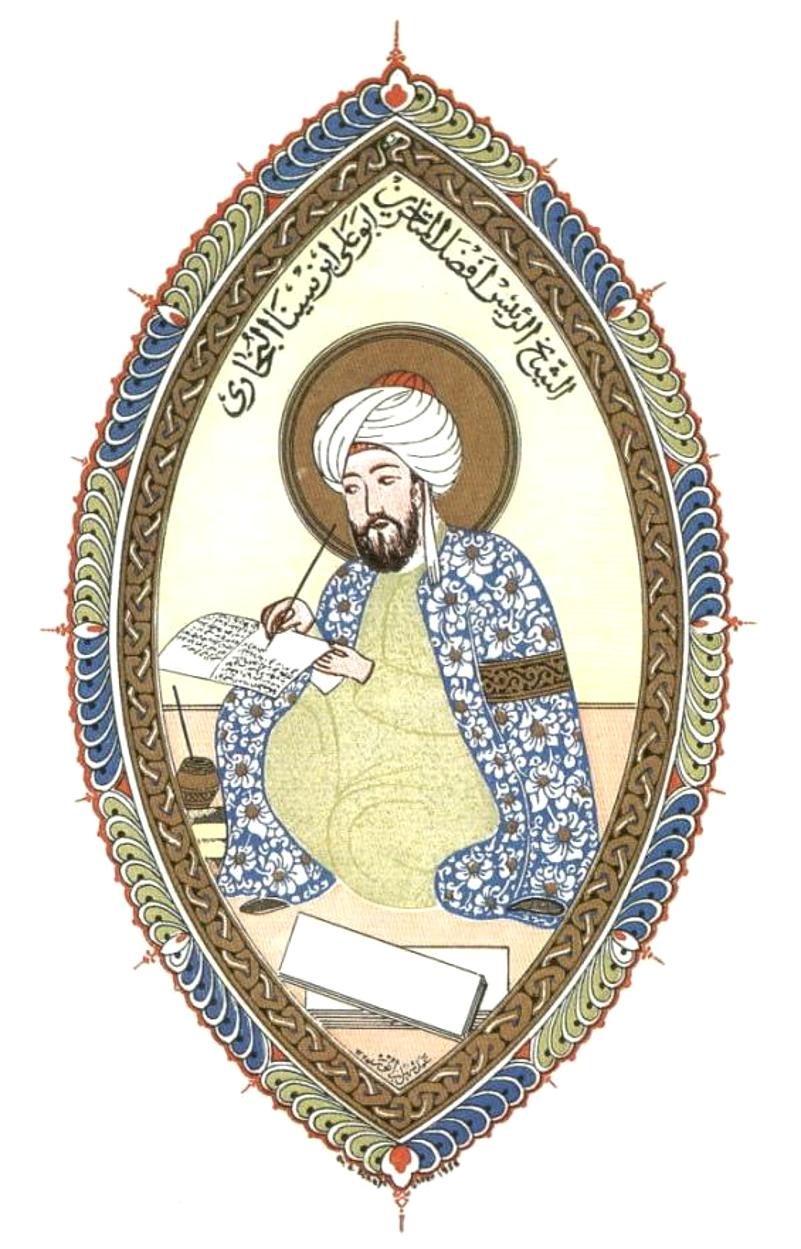
Colored illustration of a bearded man in a white turban and blue floral robe seated at a desk, writing with a pen on an open book, inside an ornate oval frame with Arabic inscription above. A halo surrounds his head.Painting

Secondary source

Avicenna Miniature Portrait

Unknown author

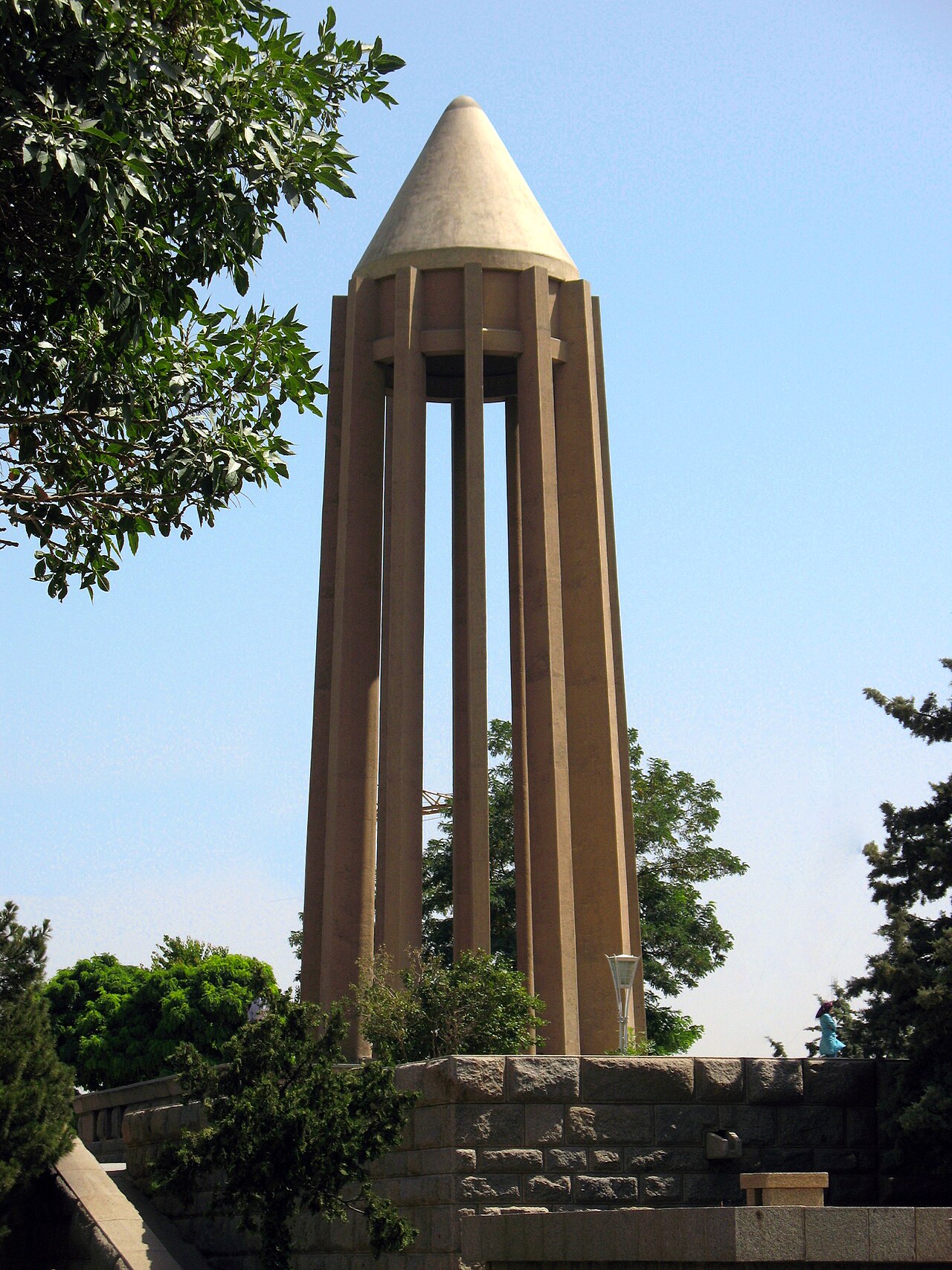
A tall, slender tan stone monument with a conical cap, supported by many vertical columns forming an open tower, set on a stone wall under a clear blue sky with trees around it.Artifact

Secondary source

Grave of Avicenna

1950s rebuilding, over an 11th-century grave

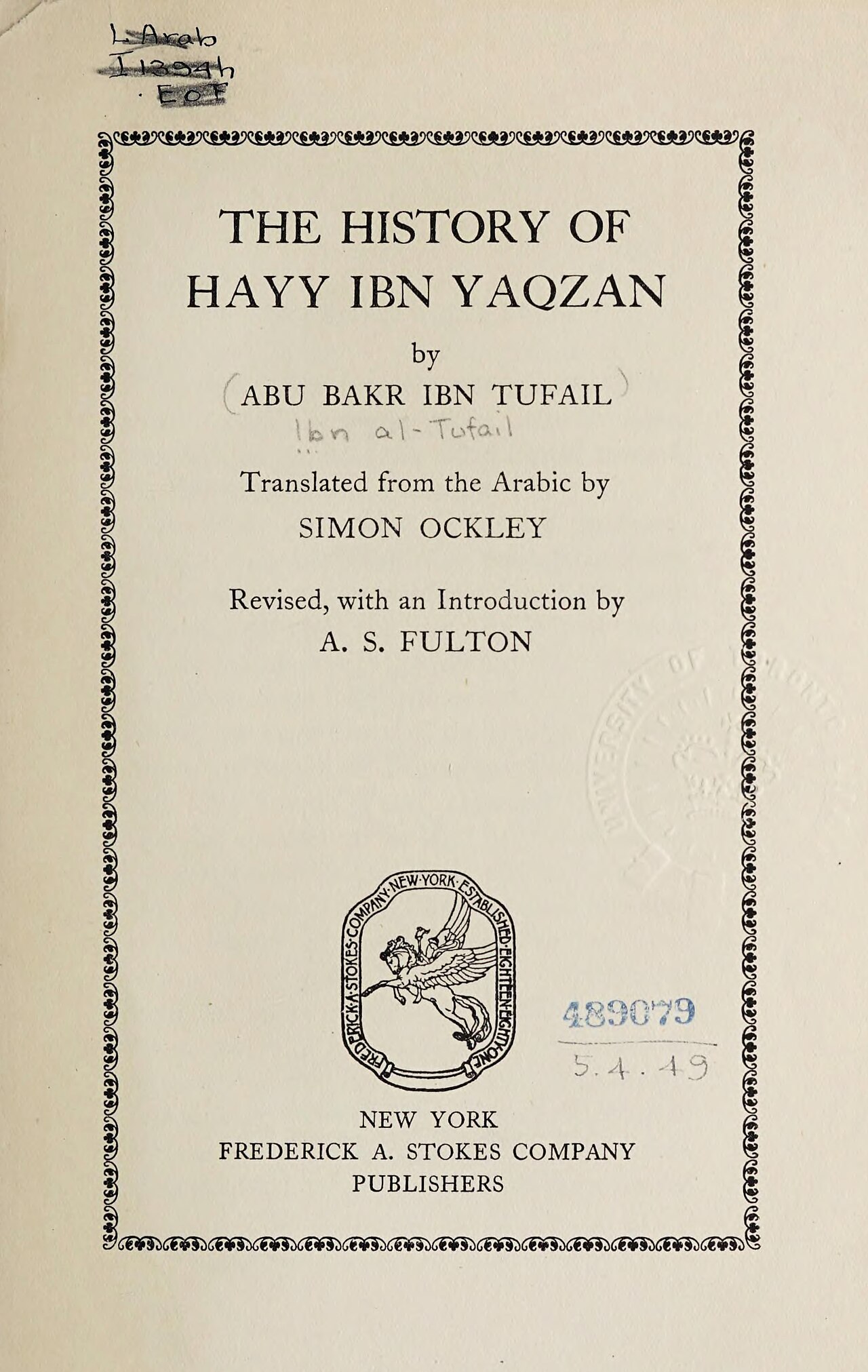
Title page of 'The History of Hayy Ibn Yaqzan' by Abu Bakr Ibn Tufail, translated by Simon Ockley, revised with an introduction by A. S. Fulton. Publisher's device of a winged horse with 'Frederick A. Stokes Company, established eighteen sixty-something' around it, and 'New York, Frederick A. Stokes Company, Publishers' printed below. Library stamps and handwritten call numbers appear in the corners.Book

Secondary source

Hayy ibn Yaqdhan

Ibn Tufail · early 12th century (this edition later)

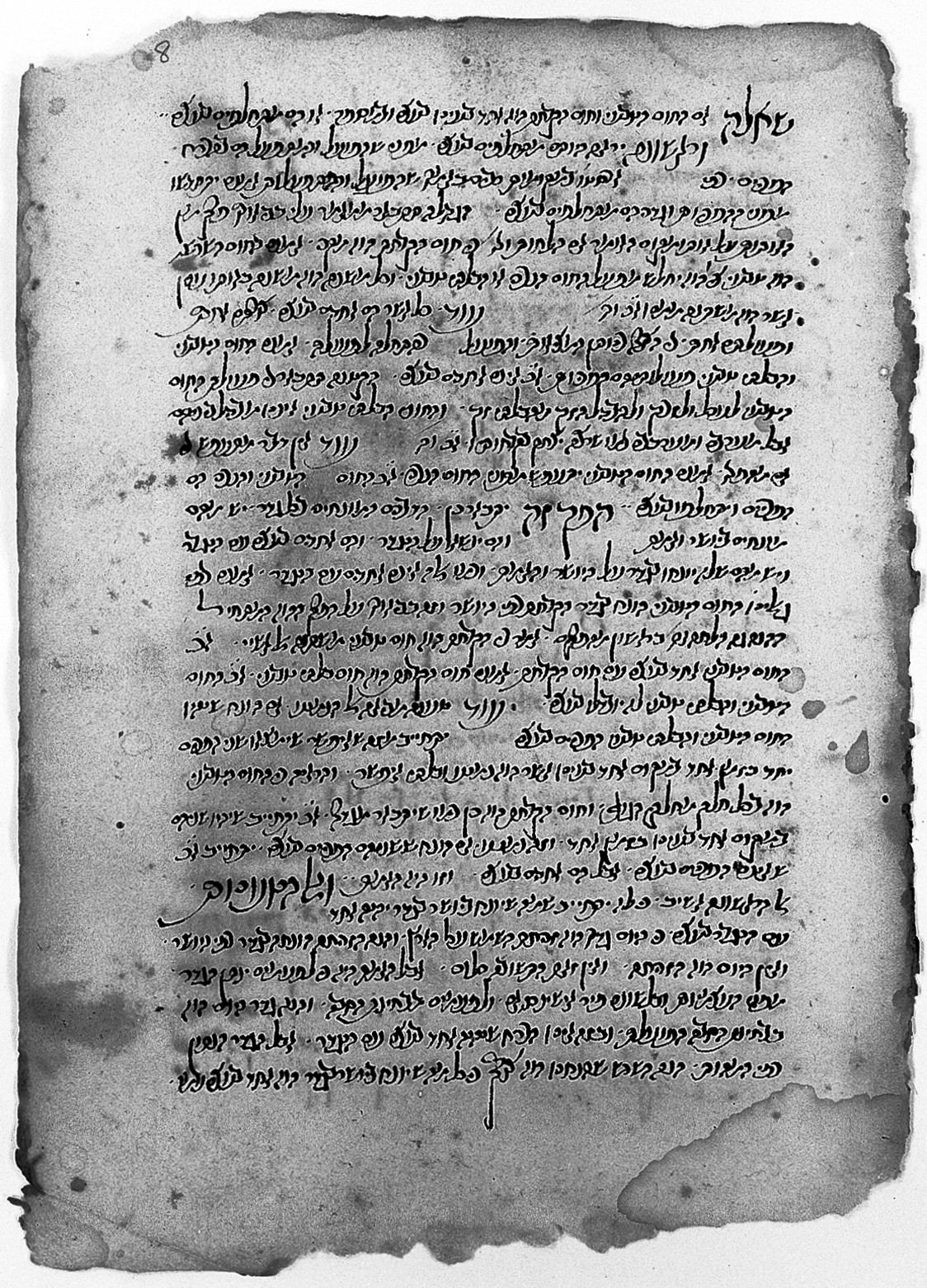
Black-and-white scan of a handwritten manuscript page, folio 8, in Hebrew script with dark ink on aged, browned paper with torn and stained edges. Dense lines of cursive text fill the page.Document

Secondary source

Text from Questions on fever, quoting Avicenna and Galen

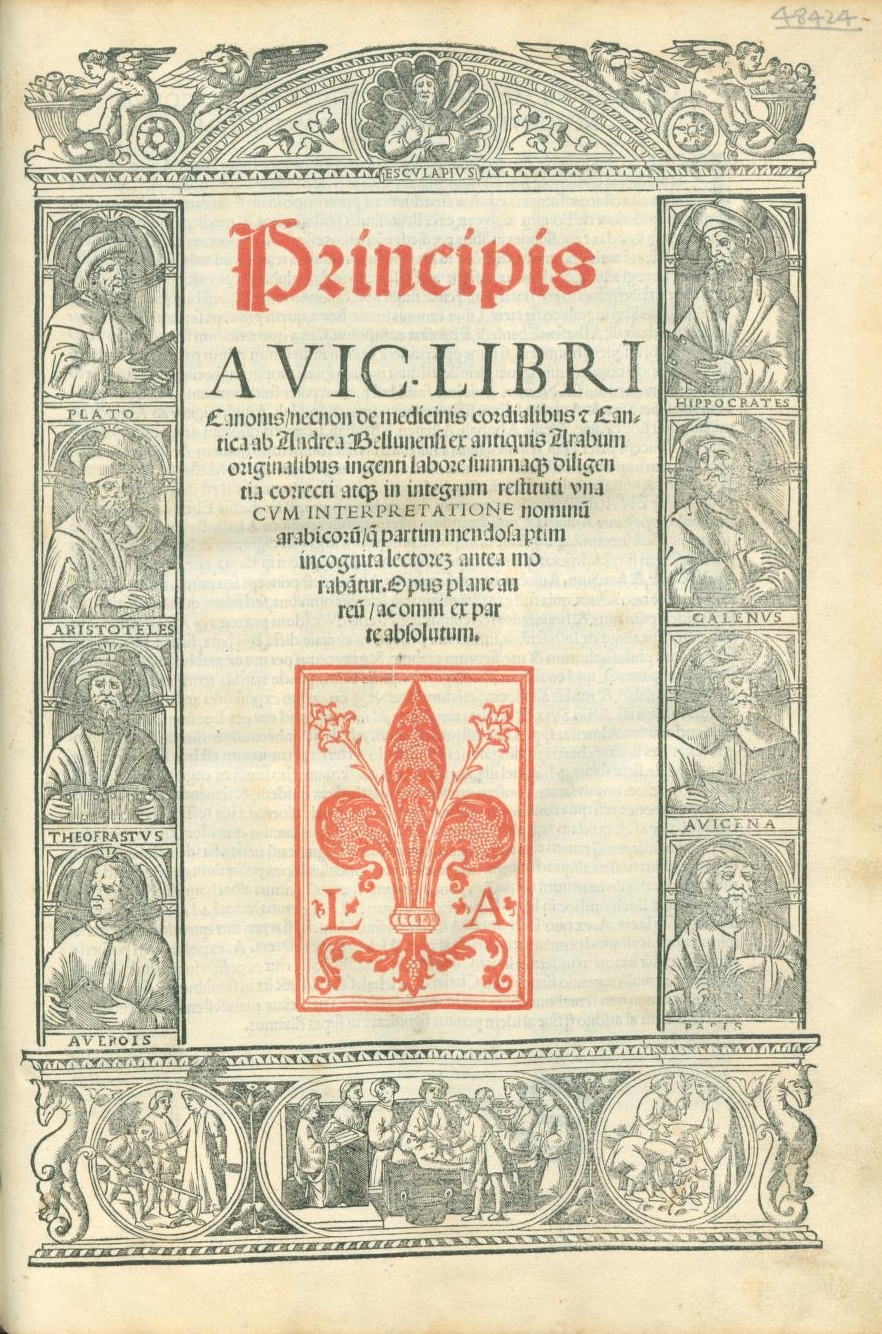
Title page of a printed book in red and black type, headed 'Principis Avic. Libri Canonis' with a woodcut border of portrait medallions labeled Plato, Hippocrates, Aristoteles, Galenus, Theophrastus, Avicena, and Averois, a red fleur-de-lis emblem, and decorative roundels below.Book

Primary source

Canon Venice 1527 Title Page

Avicenna · 1527

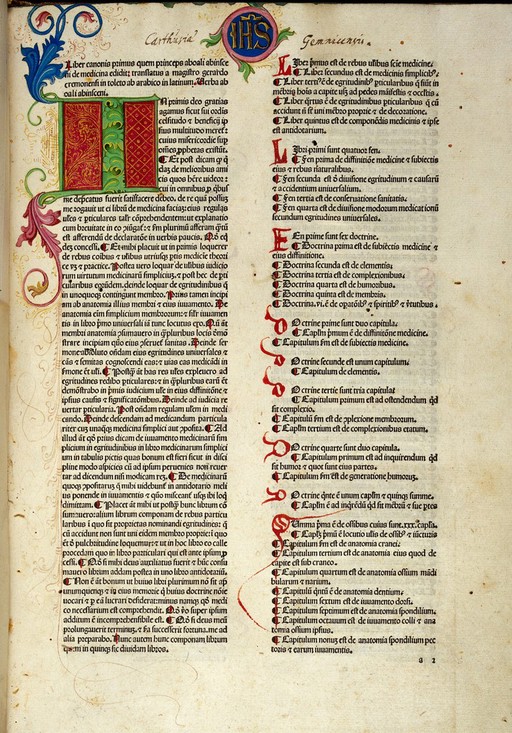
Printed page of an early Latin book with dense black-letter text in two columns, decorated with red and blue initials, painted floral and foliate borders in green and gold, and a red-and-blue panel with a monogram at the top. Red and blue paragraph markers and chapter headings appear throughout, and a page number is printed at the bottom right.Book

Primary source

Canon of Medicine, Books I-V, Padua 1479 (Wellcome copy)

Avicenna · 1479

Book

Secondary source

A Compendium on the Soul

Avicenna

Page of an early printed Latin book with two columns of black-letter text, decorated initials in red, blue and green, and a painted illuminated letter with gold patterns at the start. Handwritten annotations appear at the top and a page number is at the bottom right.Book

Secondary source

Canon Libri I-V

Avicenna · 1479

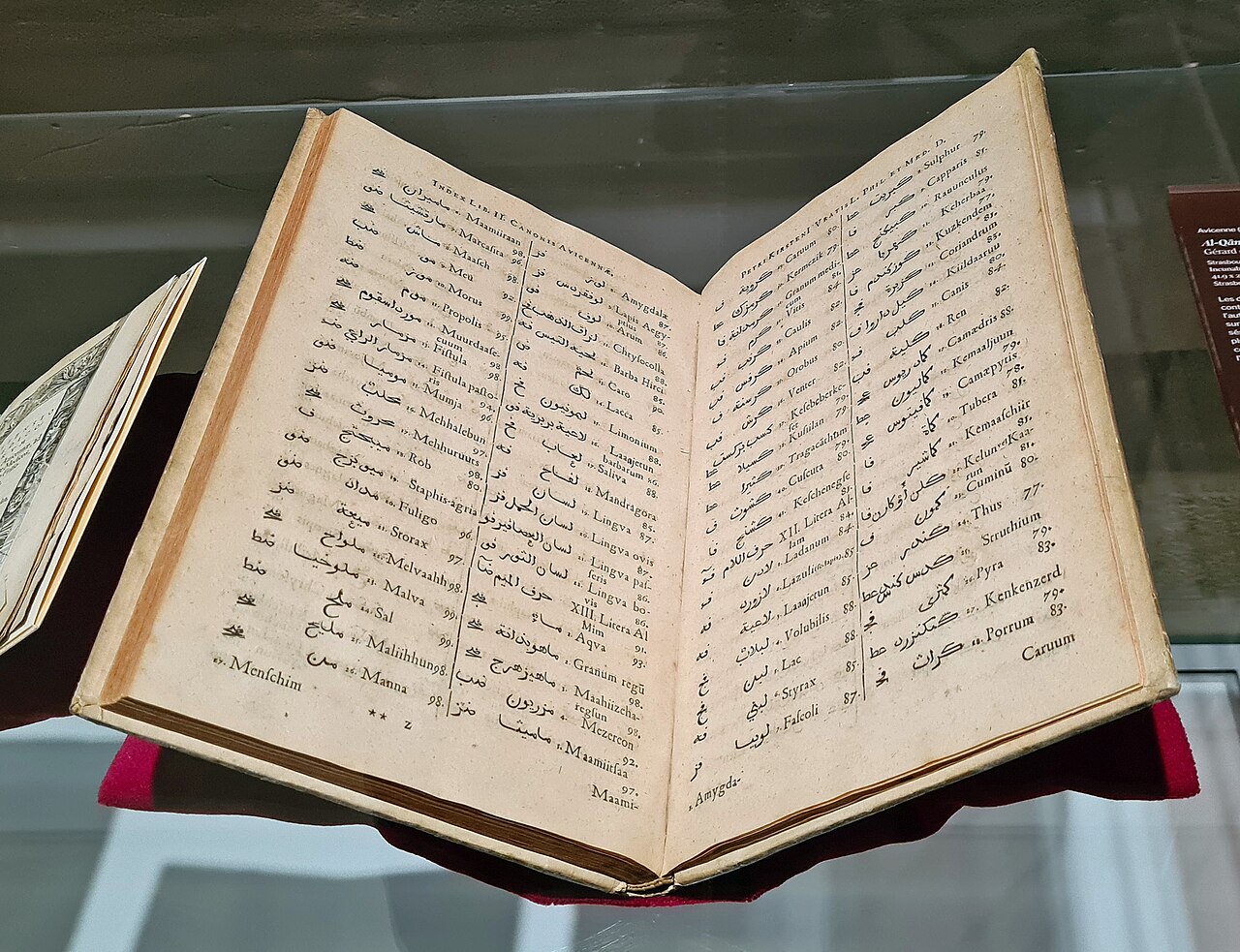
Open book in a glass display case, showing two pages of a bilingual index with Latin headings and columns of Arabic terms beside Latin entries. The pages are cream-colored with dark print, and a red velvet cloth lies beneath the book. A partly visible book sits open on the left and a museum label is at the right edge.Book

Primary source

Canon of Medicine, Book II (Bilingual Latin-Arabic Edition)

Avicenna · 1609

Photograph of the dark brown leather cover of a bound volume, with worn edges, scuffs, and light mottled stains across the front board. No text or title is visible on the cover.Book

Primary source

Al-Qanun fi al-tibb (Canon of Medicine), Arabic Manuscript

Avicenna · 1645 or 1646

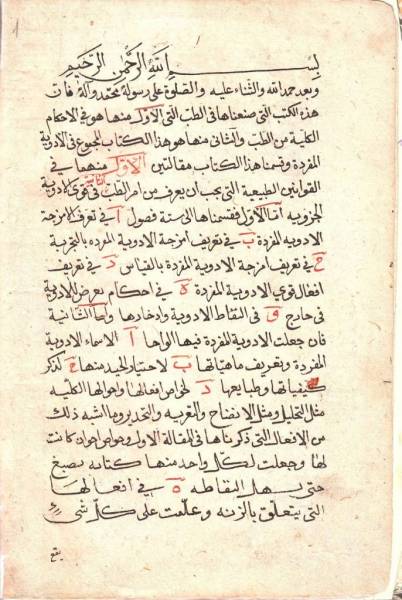
Scanned page of an old handwritten Arabic manuscript on aged, yellowish paper. Black ink script with red ink headings and marginal markers fills the page, with an opening invocation in larger script at the top. A small mark appears at the bottom left.Document

Secondary source

Page from an Early Copy of Avicenna's Canon, Book II

Unknown author · 1143

AvicenneBook

Secondary source

Avicenne

Baron Carra de Vaux · 1900

Avicennas Bearbeitung der aristotelischen MetaphysikBook

Secondary source

Avicennas Bearbeitung der aristotelischen Metaphysik

Constantin Sauter · 1912

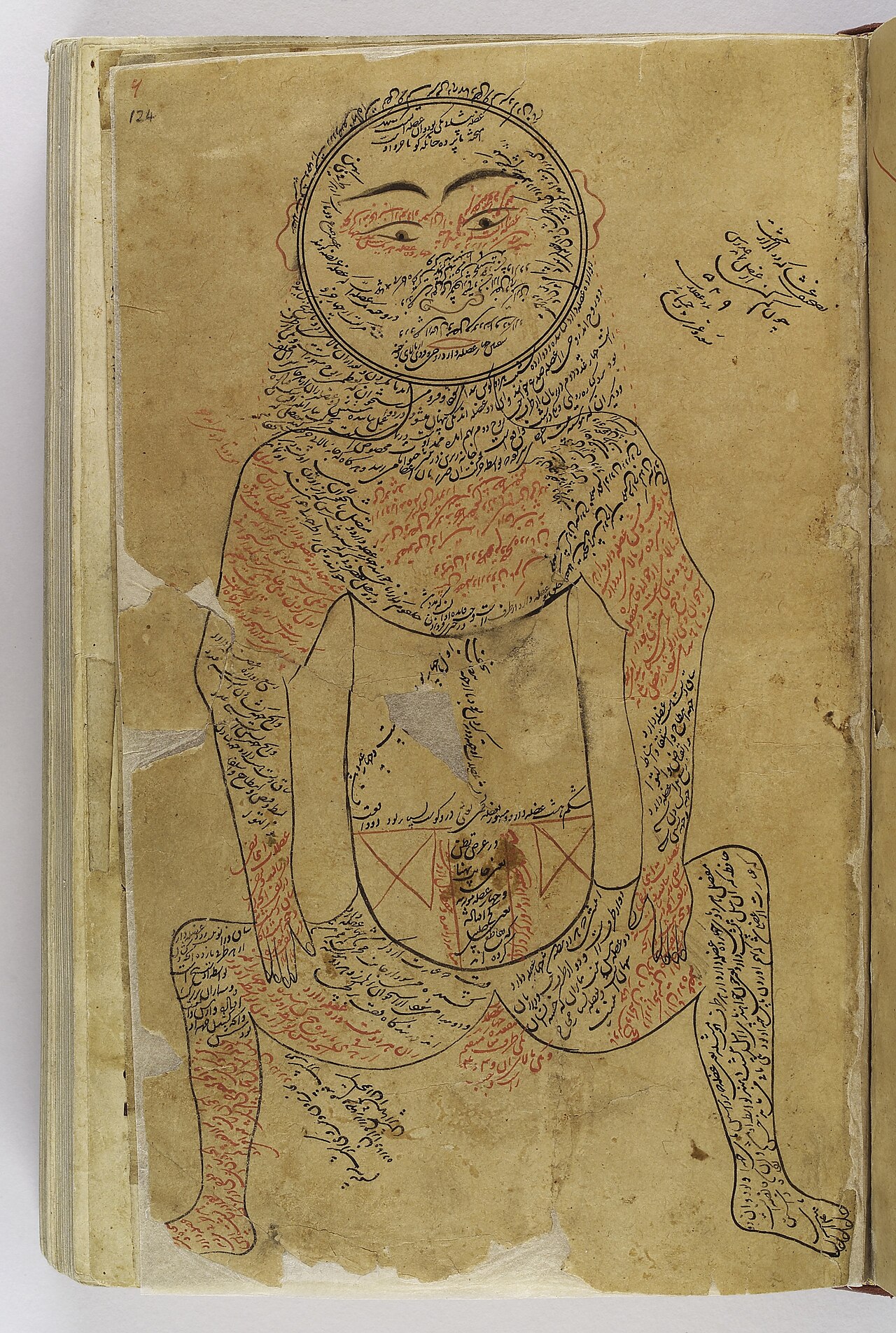
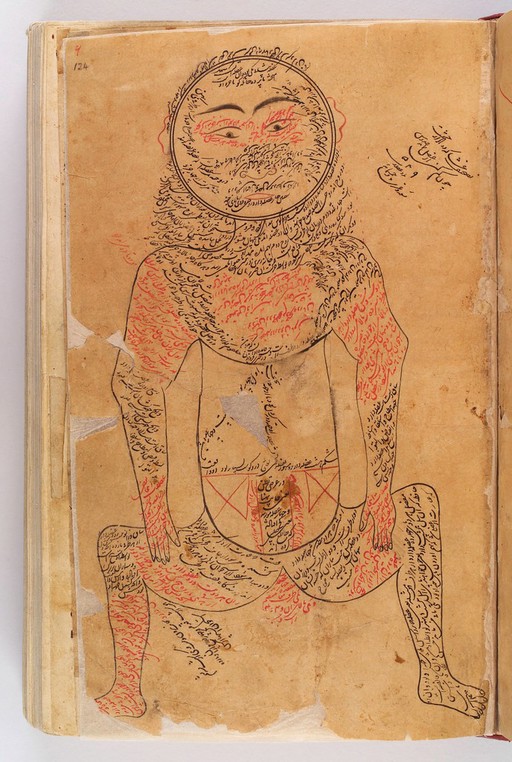
Manuscript page with ink and red-ink Arabic/Persian script, showing a seated, outlined human figure with a large round head and face, with text written over the body. Page number 124 is at the upper left.Artifact

Primary source

Muscular System Illustration from the Canon of Medicine

Avicenna

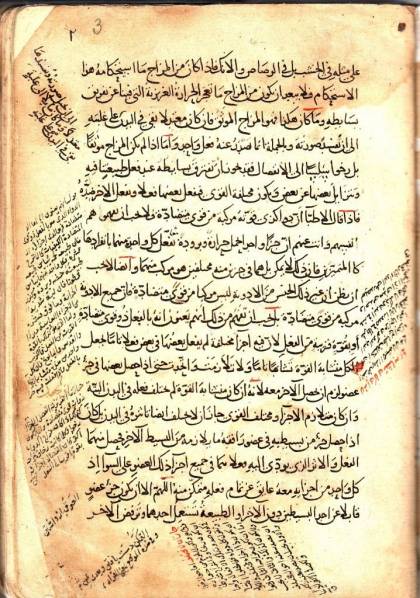
Scan of a handwritten Arabic manuscript page on aged, yellowed paper with brown stains and tears. Dense black ink script runs in lines across the page, with red ink marks and a page number at the top. Marginal notes appear along the edges.Document

Secondary source

Early Manuscript of the Canon of Medicine, Book II

Abu Ali Ibn Sina · 1030

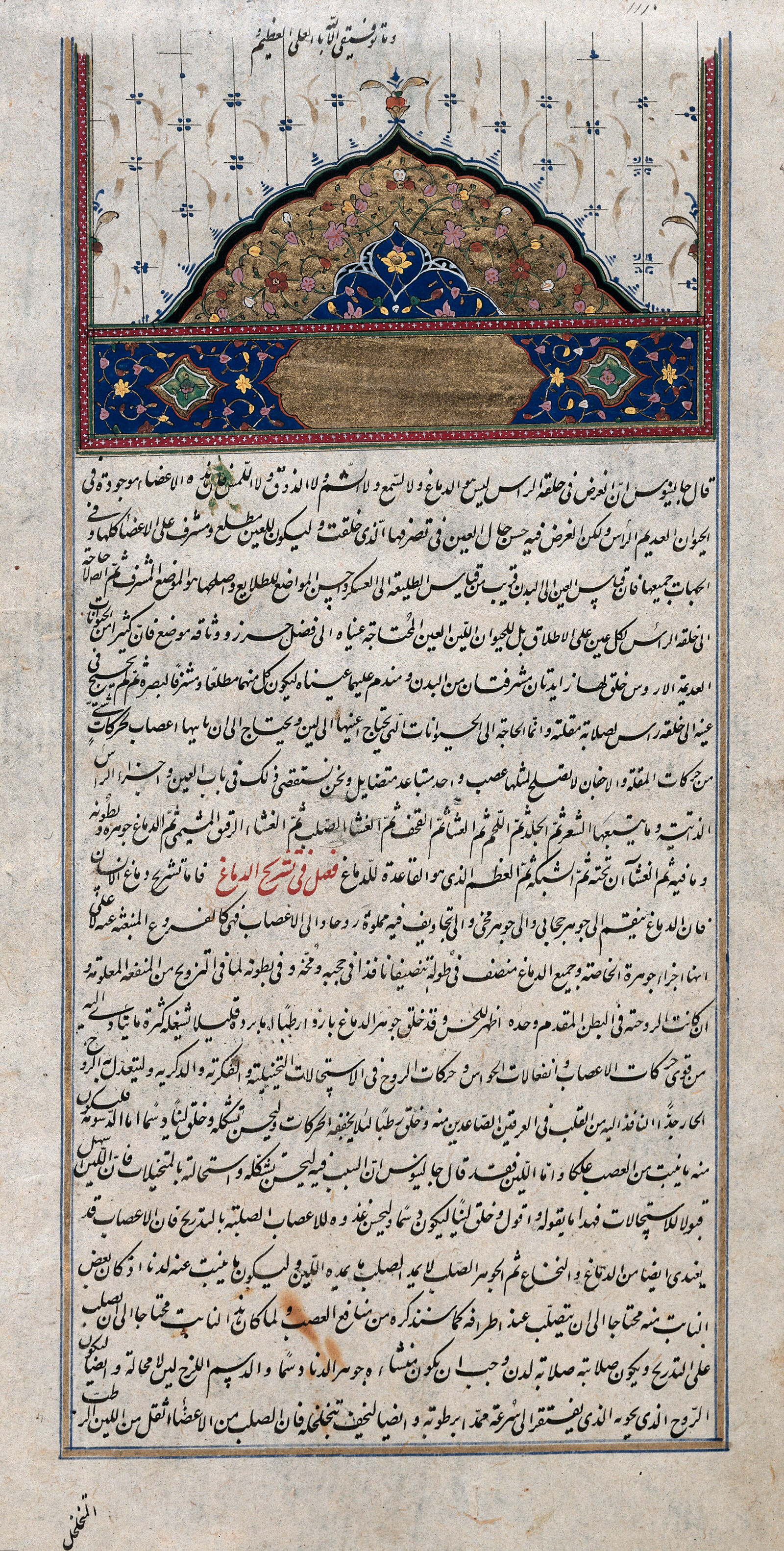
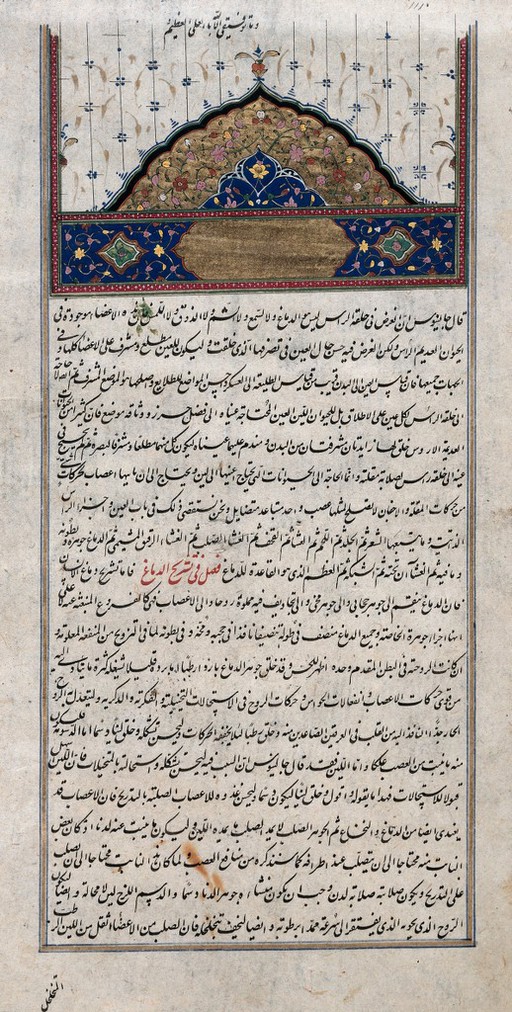
Manuscript page in Arabic script with an illuminated arched frame at top in gold, blue, green and red, with floral motifs. Below the frame are several lines of black handwritten text in Arabic, with a red-ink heading about the brain. Page number appears at top right.Book

Secondary source

Canon of Medicine, Third Book, Isfahan Manuscript

1632

Document

Secondary source

Avicenna Entry, Encyclopaedia Britannica, 9th Edition

1878

Document

Secondary source

Avicenna Entry, Encyclopaedia Britannica, 11th Edition

1911

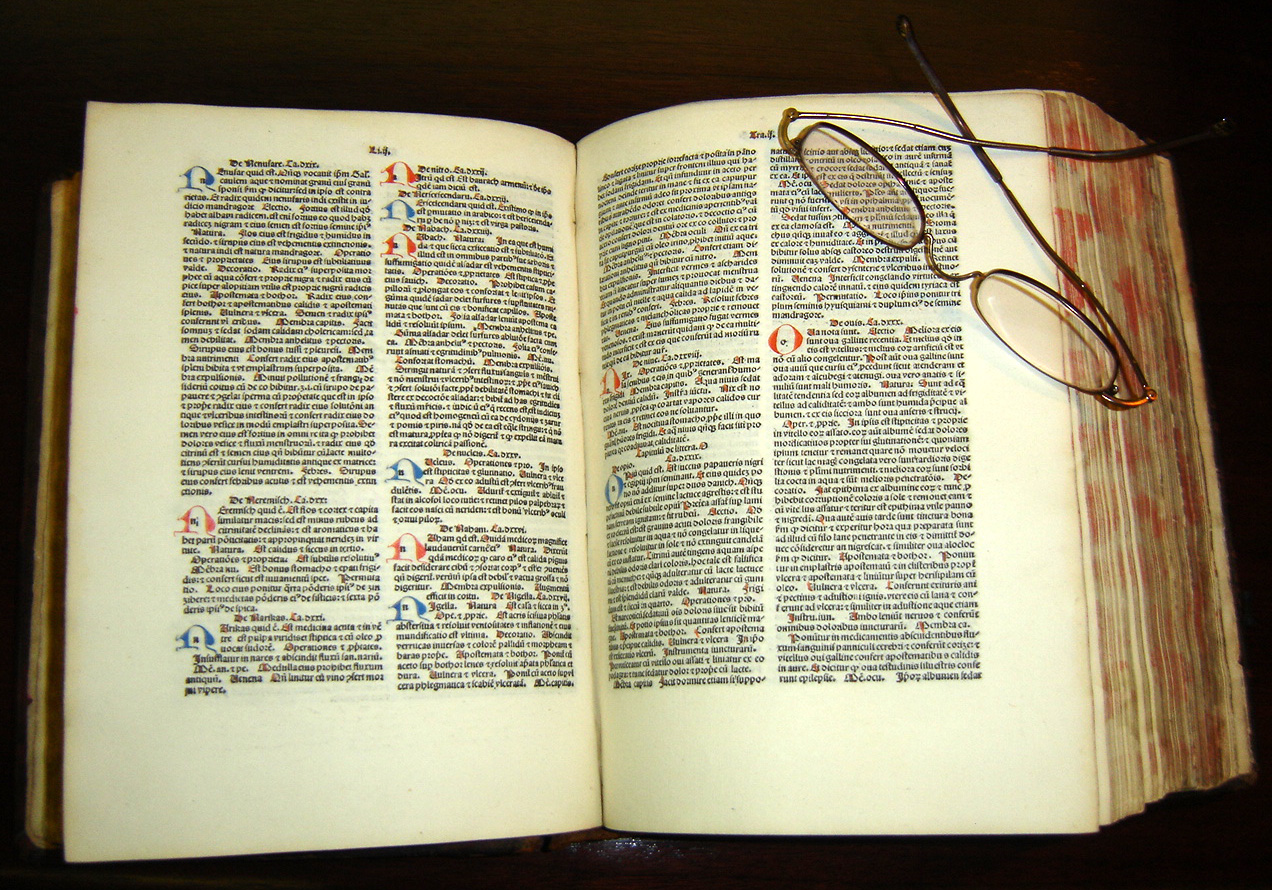
An open early printed book with two pages of dense Latin text in columns, decorated red and blue initial letters, and a pair of wire-framed eyeglasses resting across the top right of the pages.Book

Primary source

Canon of Medicine, Latin Printed Edition

1484

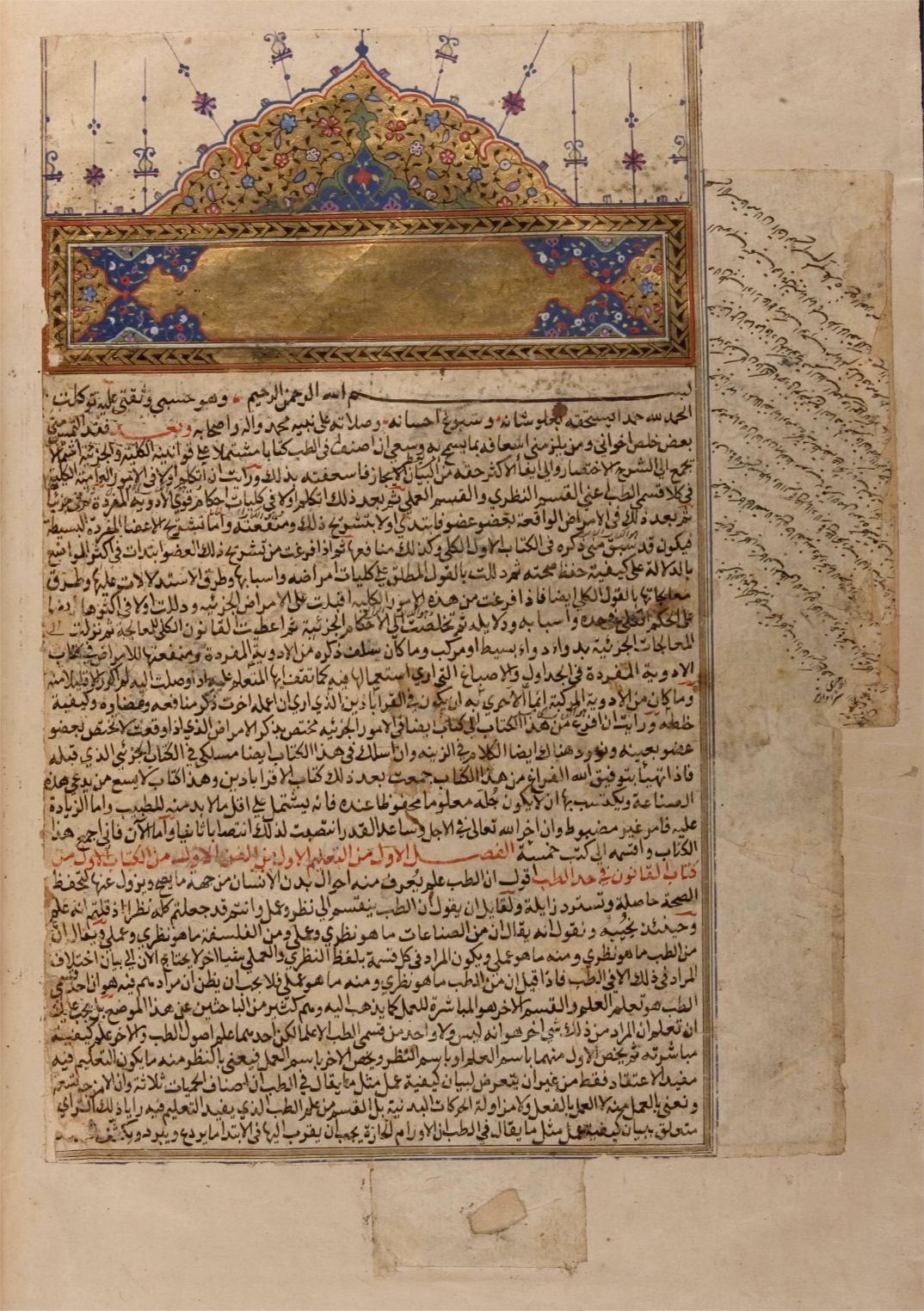
Scan of an illuminated manuscript page in Arabic script. At the top is a gold and blue arched illuminated frontispiece with floral motifs and a blank gilded cartouche below it. Beneath is a dense block of handwritten black and red Arabic text, with a torn paper flap at the right edge and a small repaired patch at the bottom.Book

Secondary source

Opening Page of a Copy of Avicenna's Canon

1597-98 (1006 H.)

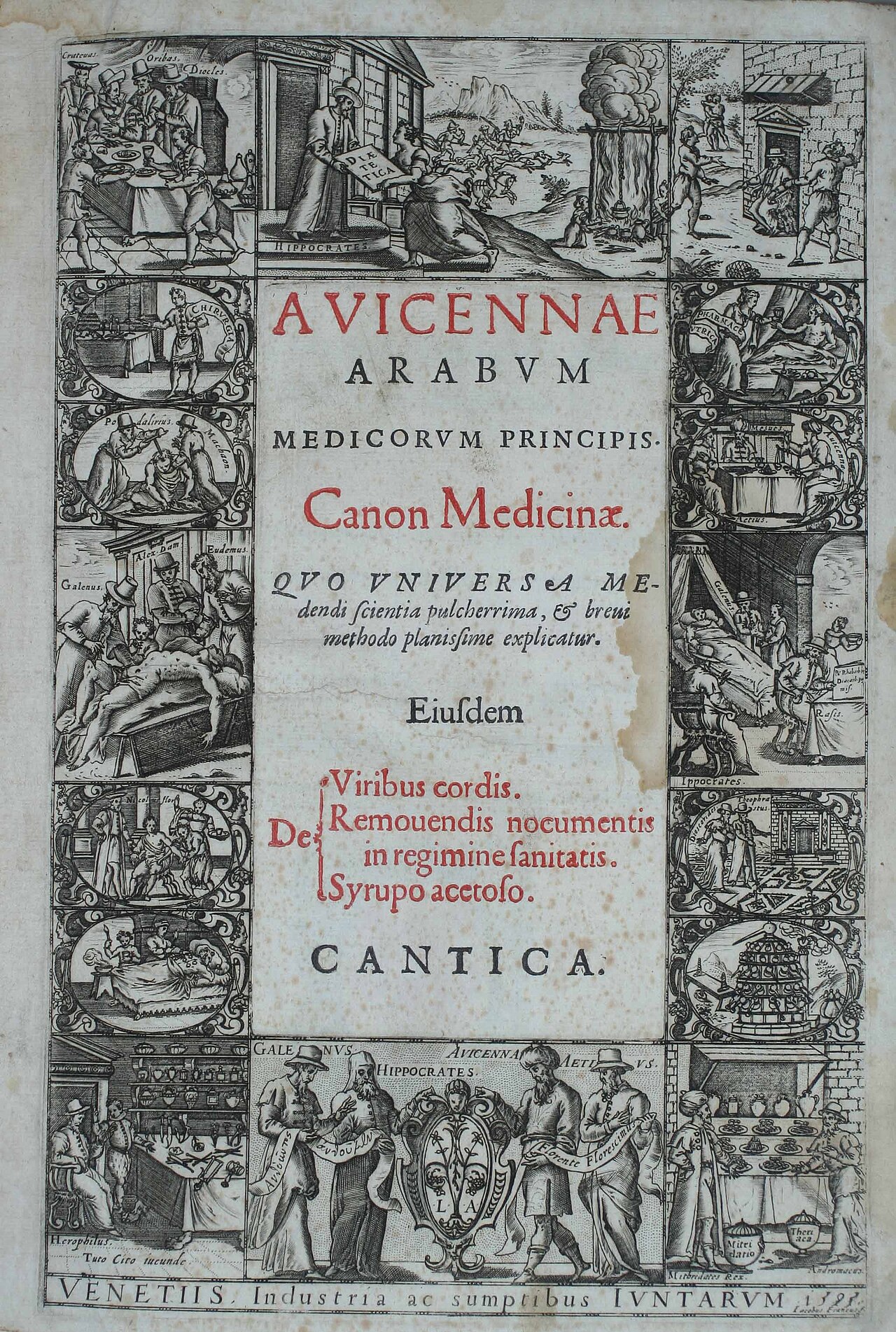
Title page of a Venice edition of Avicenna's Canon of Medicine. Central text in red and black type with the title Avicennae Arabum Medicorum Principis, Canon Medicinae. Border of engraved medical scenes and portrait medallions of physicians, with Venetiis 1608 imprint at the bottom.Book

Primary source

Title Page of the Latin Canon of Medicine, Venice Edition

1608

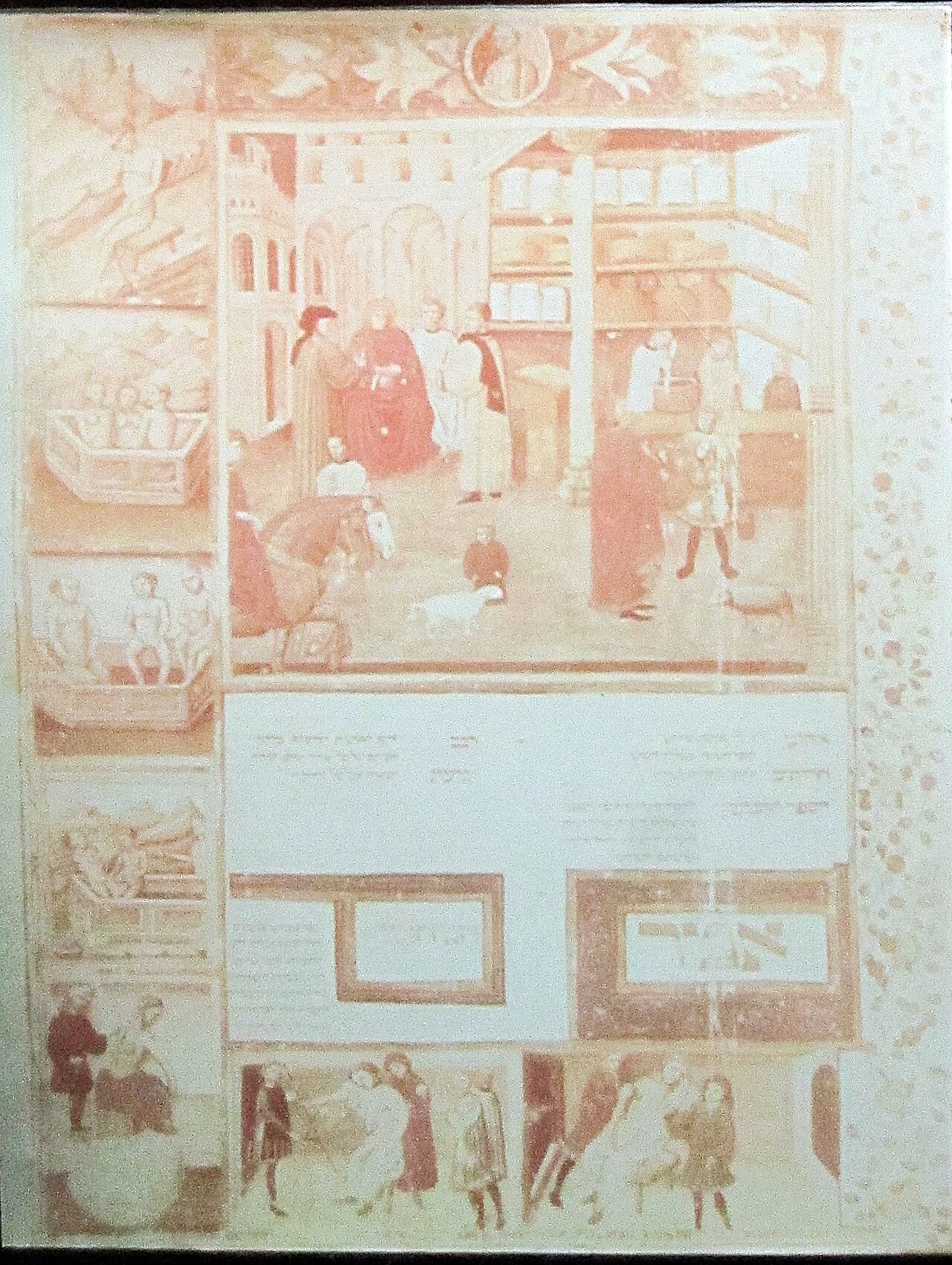
Reddish-toned reproduction of a manuscript page with a large framed miniature of a medieval pharmacy scene: figures in robes at a shop counter with shelves of jars, a patient or customer, and a dog. Smaller vignettes below and along the left edge show people at work, and text panels are in the center.Book

Secondary source

Canon of Avicenna Manuscript with Pharmacy Scene

Unknown · 15th century

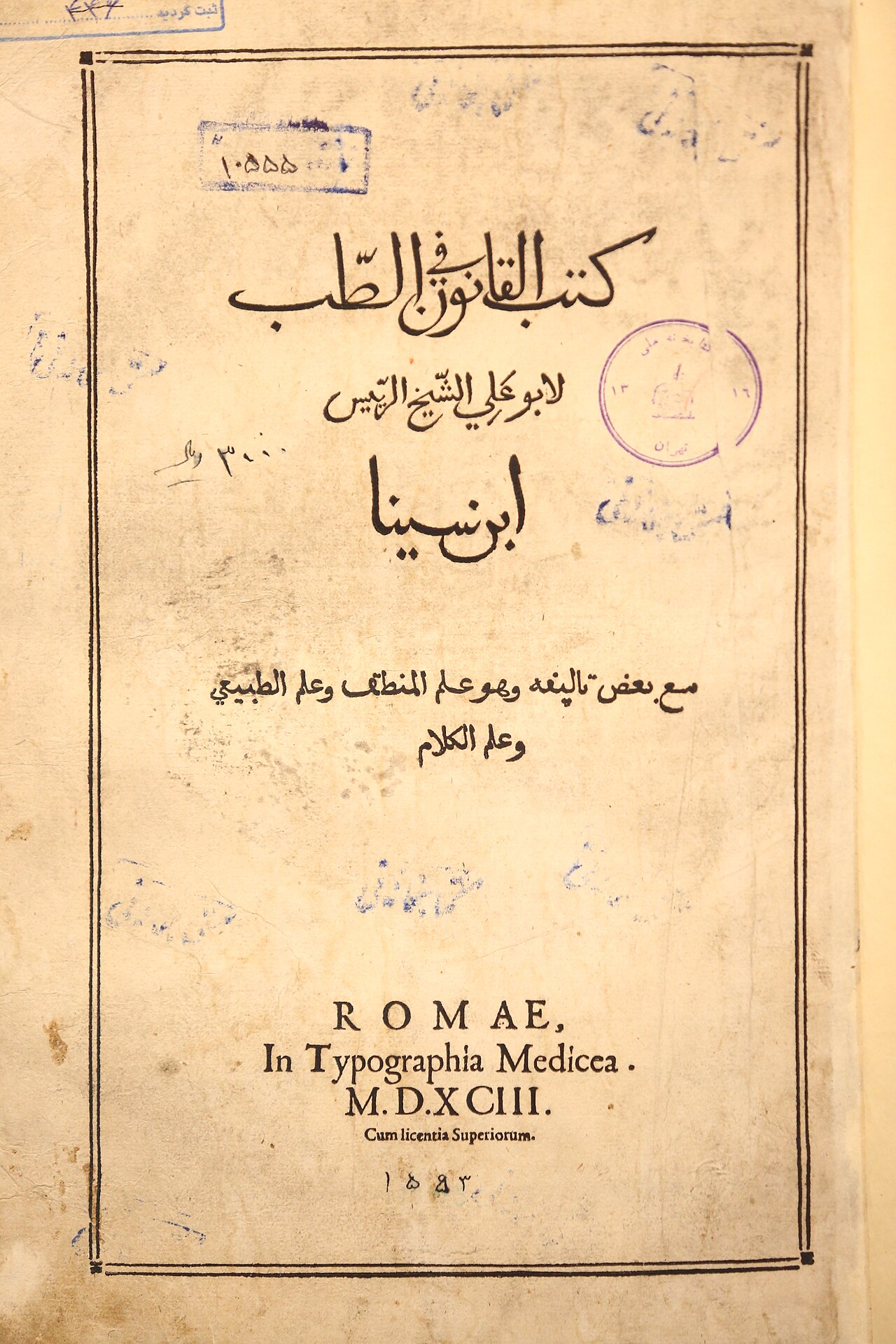
Title page of an early printed edition of Avicenna's Canon of Medicine, in Arabic script with a Latin imprint reading 'ROMAE, In Typographhia Medicea, M.D.XCIII' (1593). Arabic title reads Kitab al-Qanun fi al-Tibb, by Abu Ali al-Shaykh al-Ra'is Ibn Sina, with a Latin note and library stamps and handwritten numbers.Book

Primary source

Canon of Medicine, Rome Edition

Avicenna · 1593

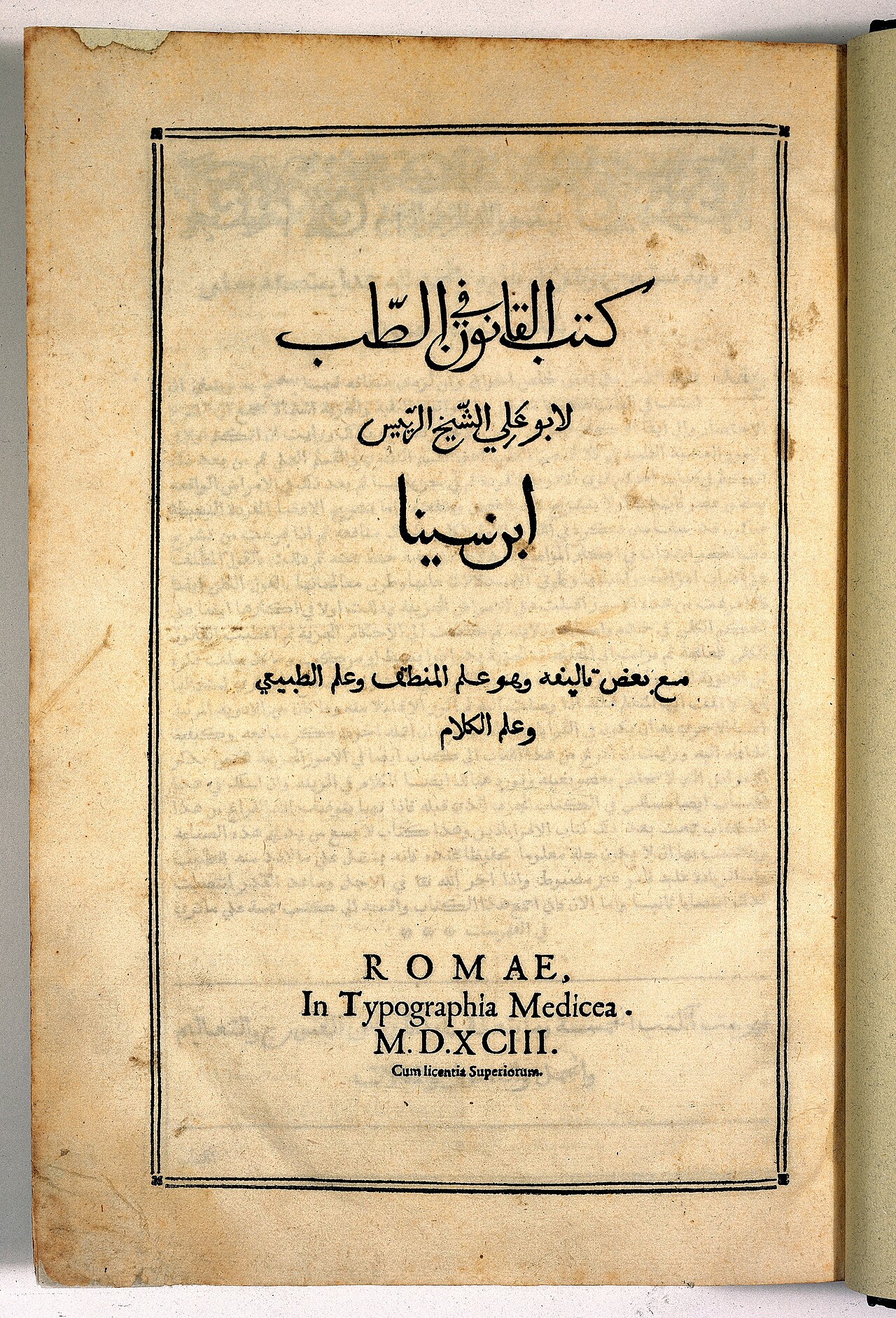
Scan of the title page of an early printed book, with Arabic script in black ink and a double-ruled border. The Arabic title reads Kitab al-Qanun fi al-Tibb, followed by the name Ibn Sina. Below is Latin text reading ROMAE, In Typographia Medicea, M.D.XCIII, Cum licentia Superiorum. The page is yellowed with faint show-through text from the reverse.Book

Primary source

Title Page of Avicenna's Canon

Avicenna · 1593

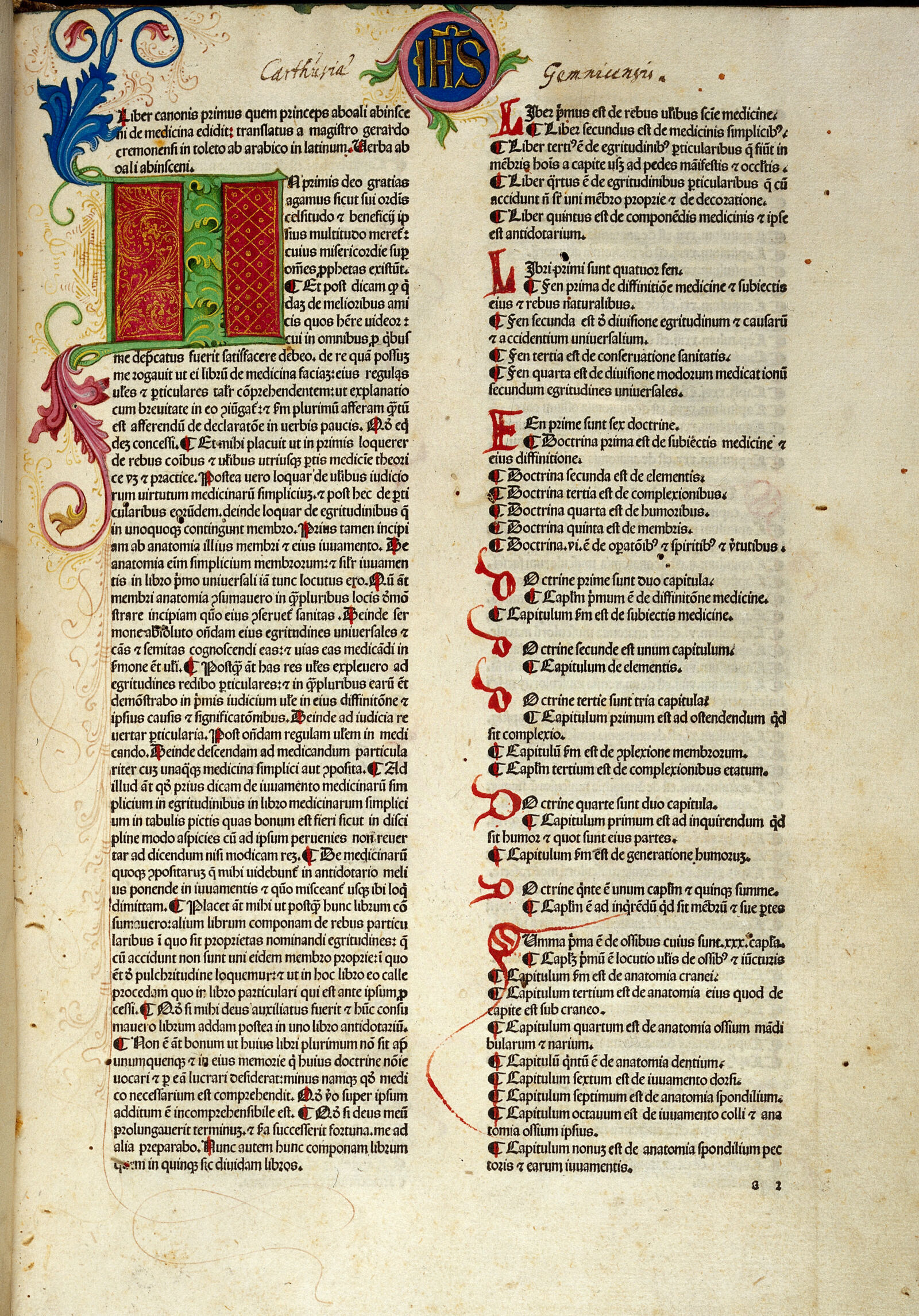
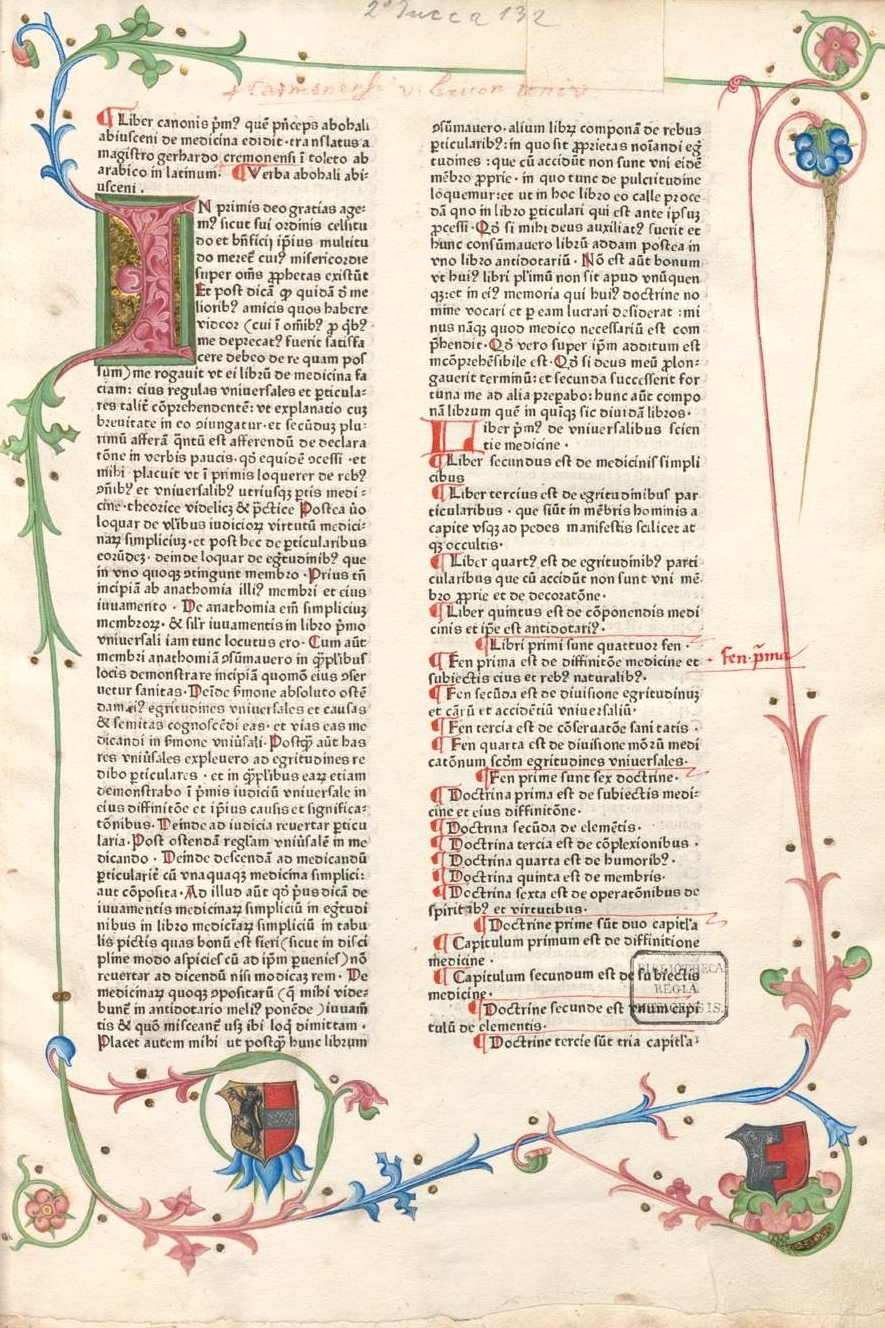
Manuscript page of a printed incunabulum, folio 1 recto, with two columns of Latin text in black type, red rubrics and paragraph marks, a large pink and green decorated initial letter at the top left, painted floral and vine borders in green, blue and red, and two coats of arms at the bottom. Handwritten annotations appear in red at the top.Book

Primary source

Canon Book I, Strasbourg Incunabulum, Folio 1r

Avicenna; translated by Gerard of Cremona · before 1473

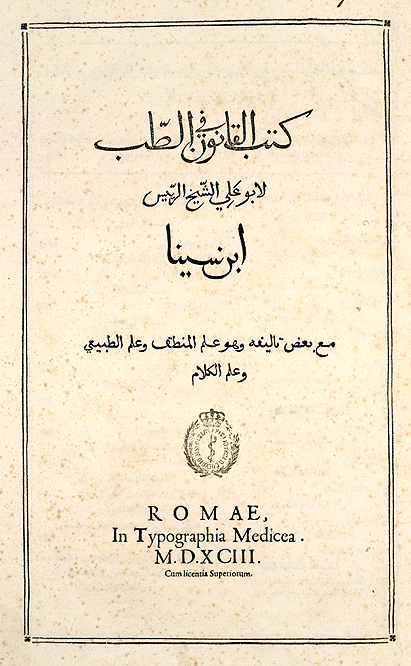
Title page of an early printed book in Arabic and Latin. Arabic calligraphy at top reads Kitab al-Qanun fi al-Tibb, then Abu Ali al-Husayn Ibn Sina. Below is a line of Arabic text, a small crowned emblem, and Latin text reading Romae, In Typographia Medicea, MDXCIII, with a small line stating Cum licentia Superiorum. Thin decorative border surrounds the page.Book

Primary source

Canon Medicinae, 1593 Edition, Complutense Library

Avicenna · 1593

Manuscript page of Arabic text in black and red ink, with an illuminated gold, blue, and floral headpiece with arched top at upper left of the text block, and red marginal notes on the right. Brown leather binding edge visible at right.Book

Secondary source

Illuminated Opening of Book IV of Avicenna's Canon

Avicenna · c. early 15th century

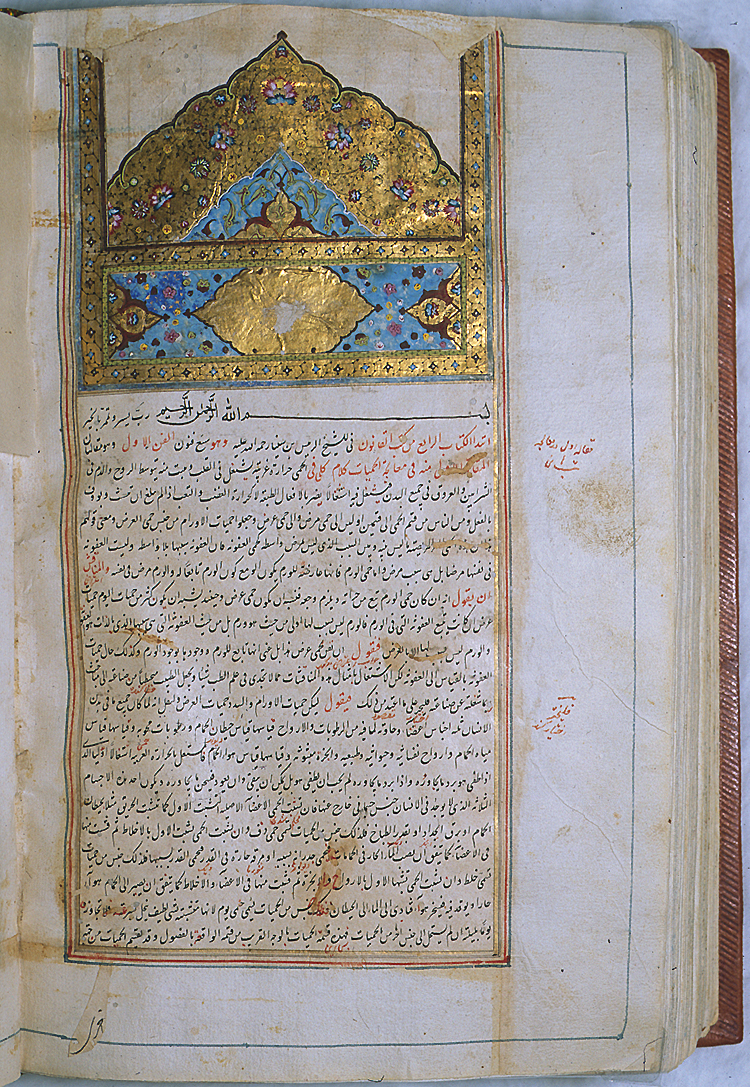
Scanned manuscript page of Arabic text in black and red ink, with an illuminated arched frame at the top decorated with floral and geometric motifs in blue, gold, green and pink, and a gold panel above the text block.Book

Secondary source

Canon of Medicine, Isfahan Manuscript (Book Three Opening)

1632

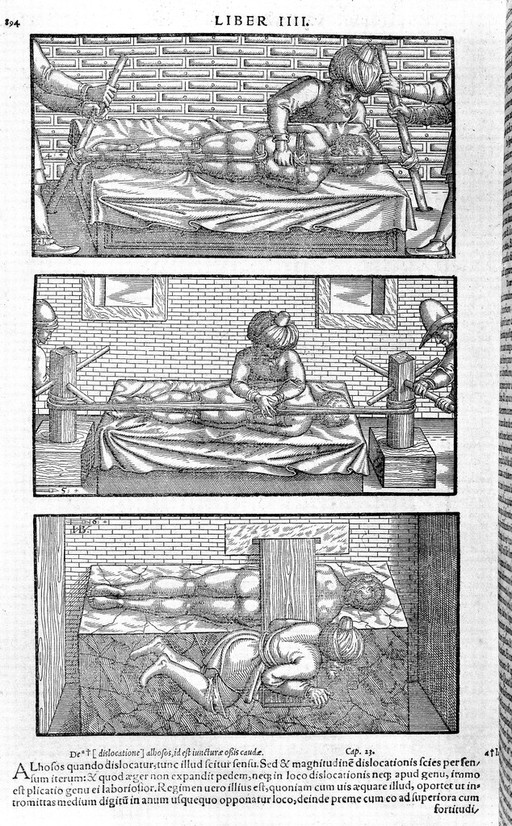
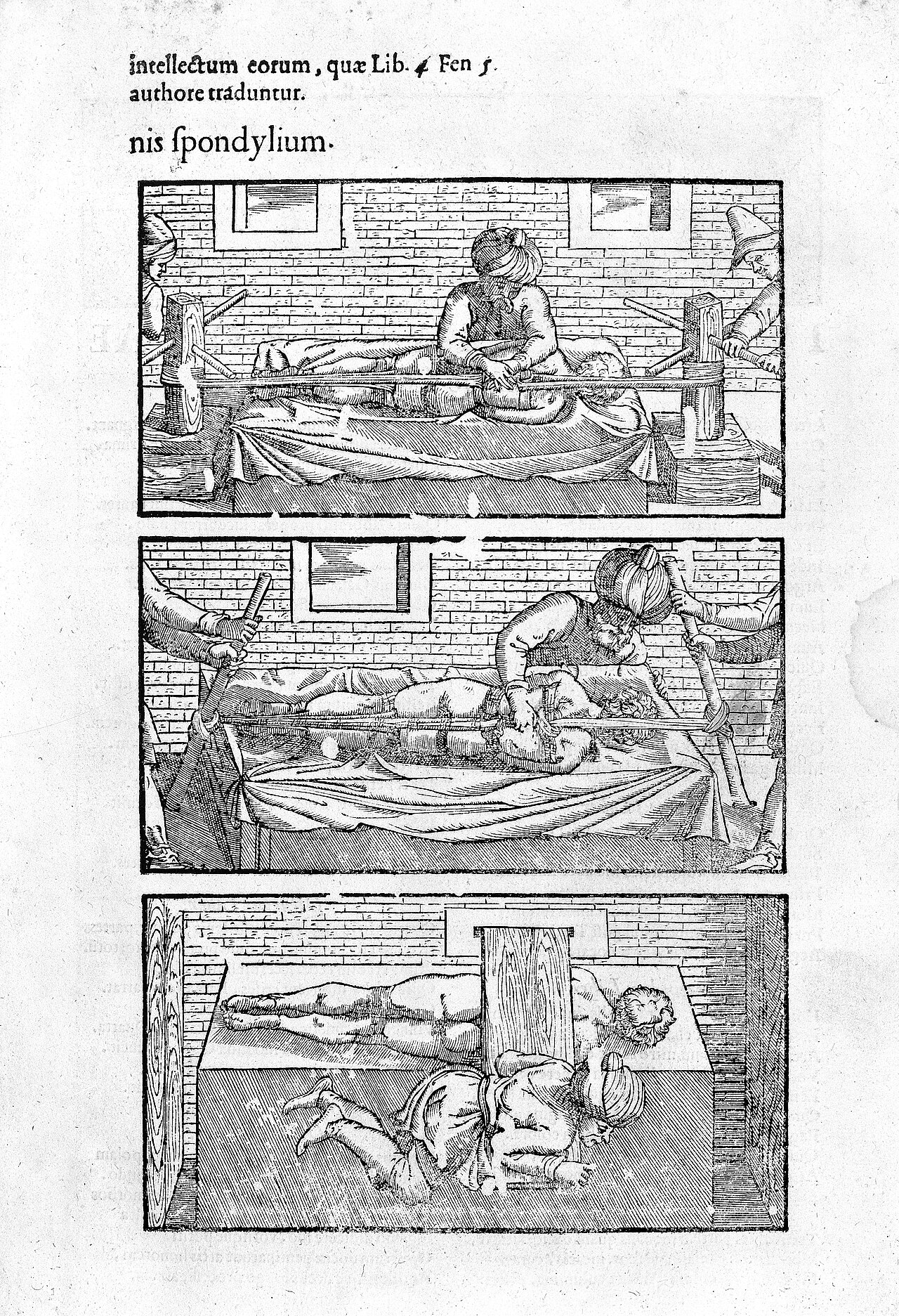
Printed book page headed LIBER IIII with three woodcut panels. Top: a bearded man lies on a bed, restrained with straps while two attendants hold poles. Middle: a seated figure on a draped bed, bound to a wooden frame. Bottom: a figure lies prone on a bed beside a wooden board. Latin text is below.Artifact

Secondary source

Illustrations of Cupping, Dislocation and Massage from the Liber Canonis

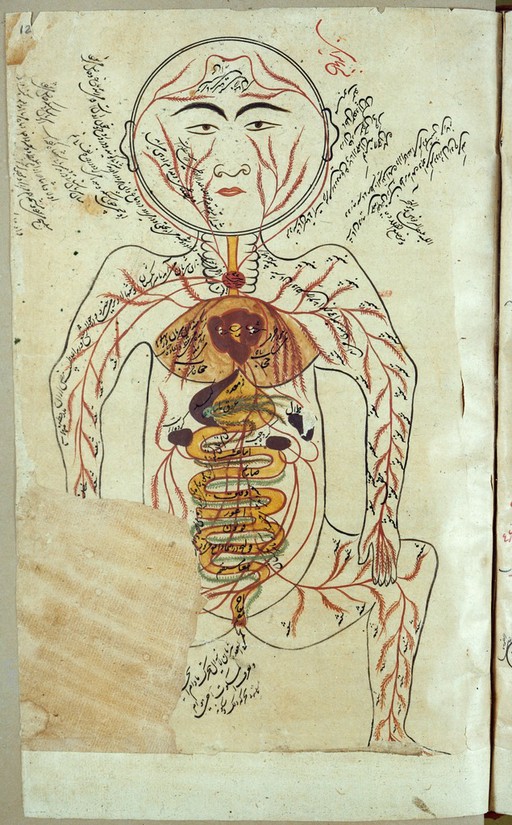
Hand-painted manuscript anatomy diagram of a standing human figure with a round head outline. Red branching arteries run through the arms, torso and legs. The intestines are drawn in yellow and green coils with Arabic-script annotations around the figure. A large heart-like organ sits in the chest. Brownish stain covers part of the lower left page.Artifact

Secondary source

Arteries and Viscera Diagram from the Canon of Medicine

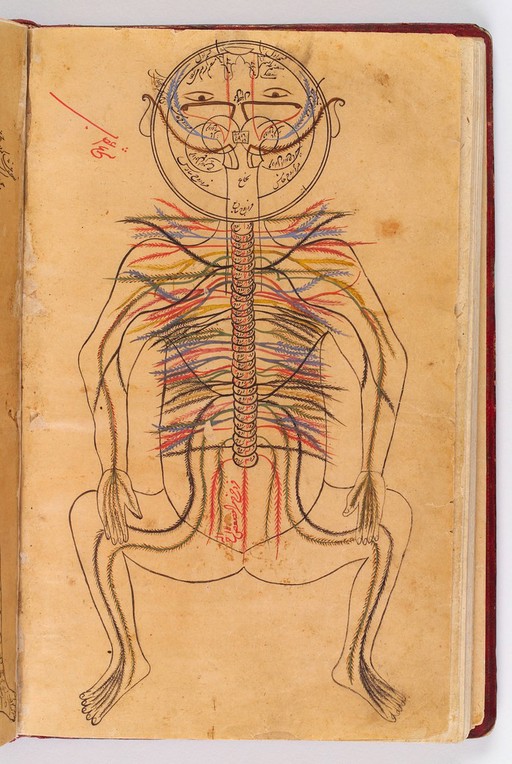
Manuscript page with a hand-drawn anatomical diagram of a seated human figure in ink and colored pencil. A circular head contains Arabic script and eyes, with a spinal column down the center. Red, blue, yellow and green lines branch from the spine to the limbs, showing the nerves. Red Arabic numeral marks appear at the upper left. The page is on aged, yellowed paper bound into a red-edged book.Artifact

Secondary source

Nervous System Diagram from the Canon of Medicine

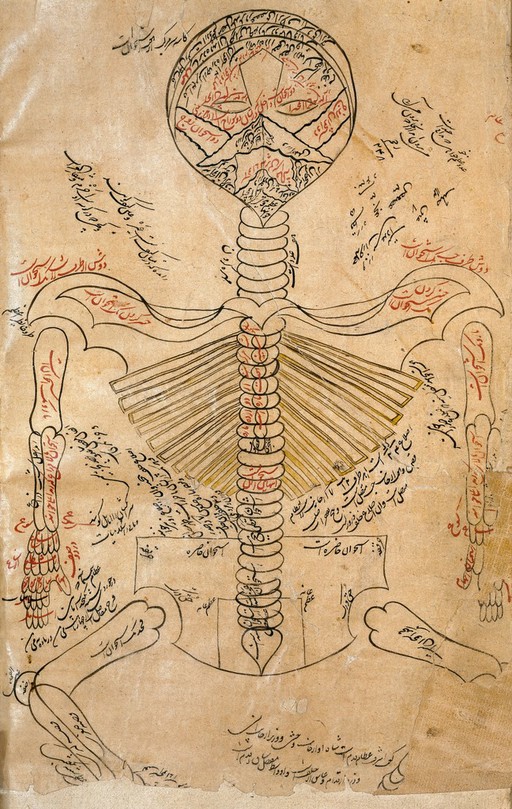
Hand-drawn manuscript page showing a skeleton diagram in brown ink on aged parchment. A skull-like cranium at top with a spine and ribs, arms and legs outlined. Red and black Arabic or Persian script annotations surround the figure, with some handwritten notes in the lower area.Artifact

Secondary source

Skeleton System Diagram from the Canon of Medicine

Manuscript page with a hand-drawn figure of a standing human body, rendered in brown ink with red lines and dense Arabic script covering the body. The head is a circle with eyes, and the page has a page number at top left.Artifact

Secondary source

Muscular System Diagram from the Canon of Medicine

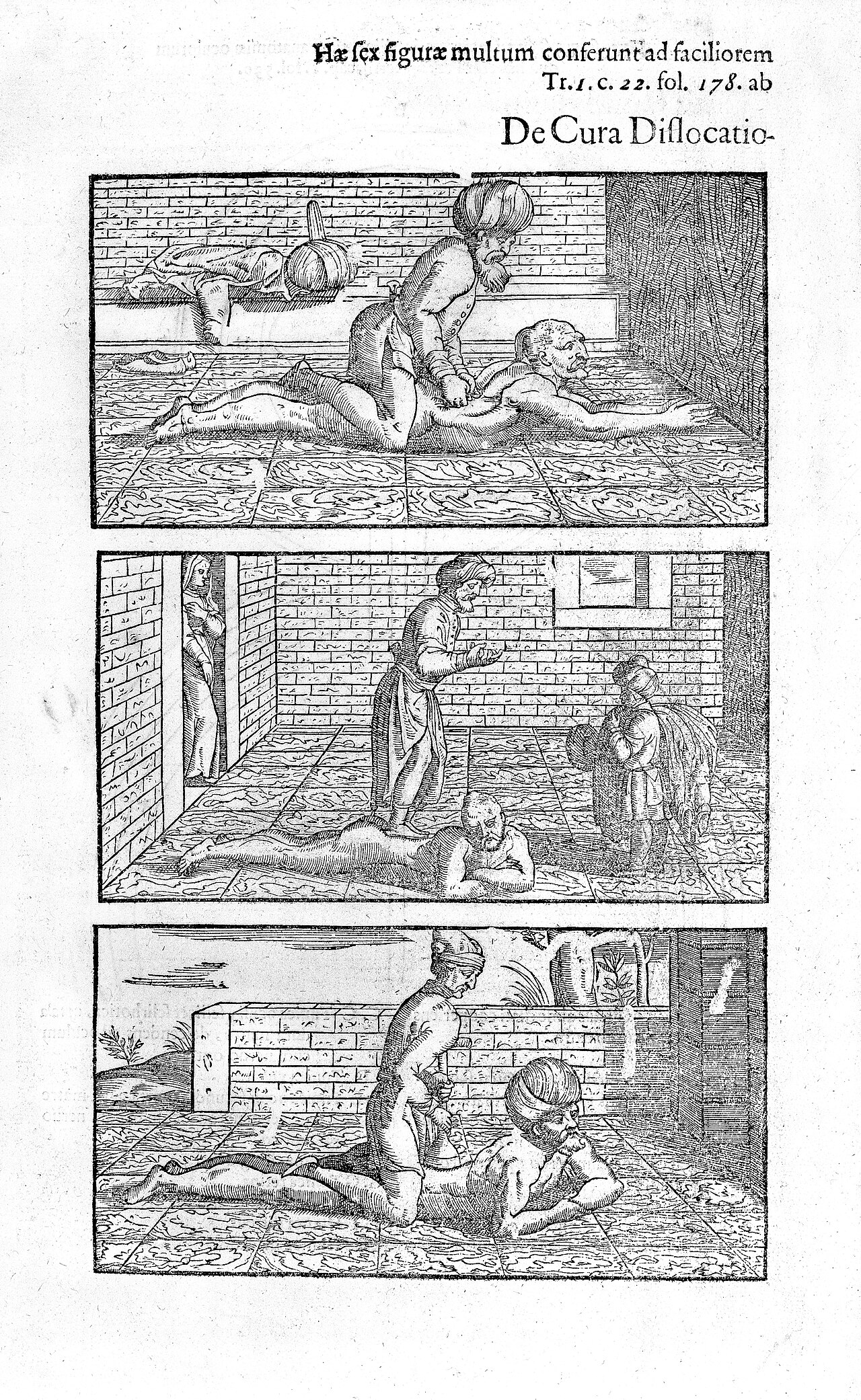
Woodcut print of three stacked panels from a 16th-century medical book showing treatments for joint dislocation. Top panel: a patient lies prone on a tiled floor while a bearded practitioner in a turban presses on the patient's leg; a second figure stands above. Middle panel: a standing practitioner gestures toward a naked patient lying face down while a robed attendant watches. Bottom panel: a turbaned practitioner kneels over a patient lying prone and applies pressure to the leg. Printed Latin header reads 'De Cura Dislocatio'.Painting

Secondary source

De Cura Dislocatio

Woodcut page with three framed panels showing a patient treated for spinal dislocation. Top: a patient lies face down on a cloth-draped board while two men pull on cords at each end. Middle: a patient is stretched on a board with a bar across the body as two men pull. Bottom: a patient lies on a board beside an upright wooden post. Latin heading text is at the top.Painting

Secondary source

Luxation: nis Spondylium

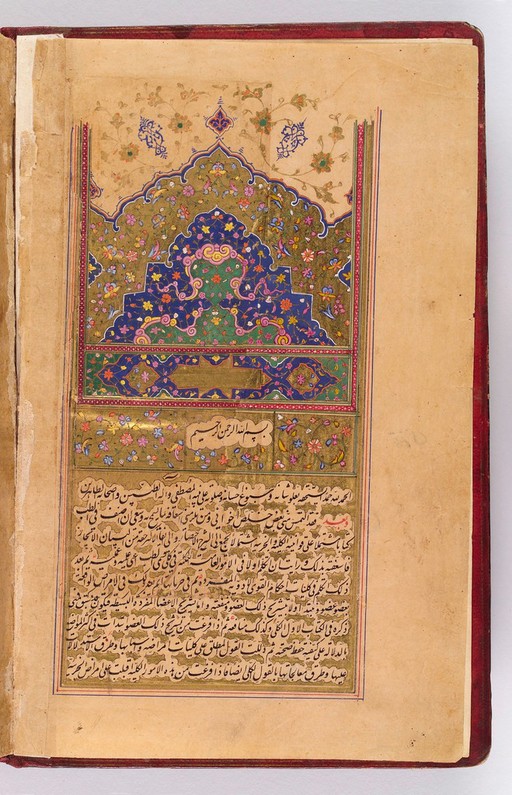
Illuminated manuscript page with an ornate gold-and-floral painted arch frame at top, a blue and green patterned panel, and an illuminated title band above several columns of Arabic calligraphy in black ink on tan paper.Book

Secondary source

Text and Painting Page from Avicenna's Canon

1632

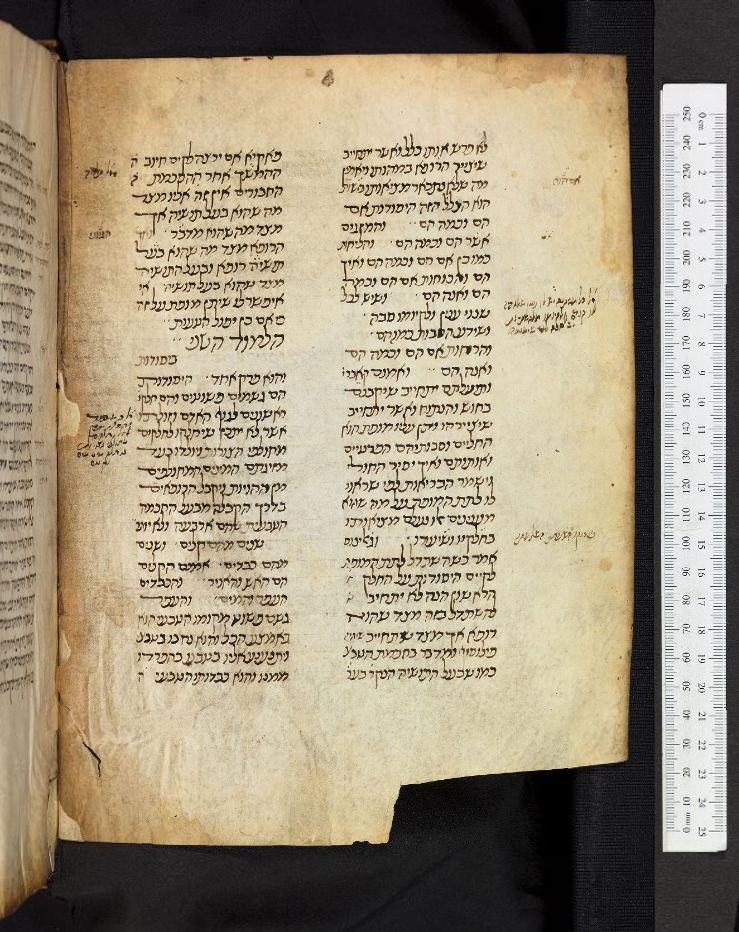
Photograph of a manuscript leaf on dark background with a ruler along the right edge. Handwritten Hebrew text in two columns in brown ink on aged, yellowed parchment. Marginal notes are visible, and a neighboring page is partly visible at the left.Book

Secondary source

Hebrew Manuscript Copy of Avicenna's Canon, Folio 9r

Avicenna · between 1276 and 1325

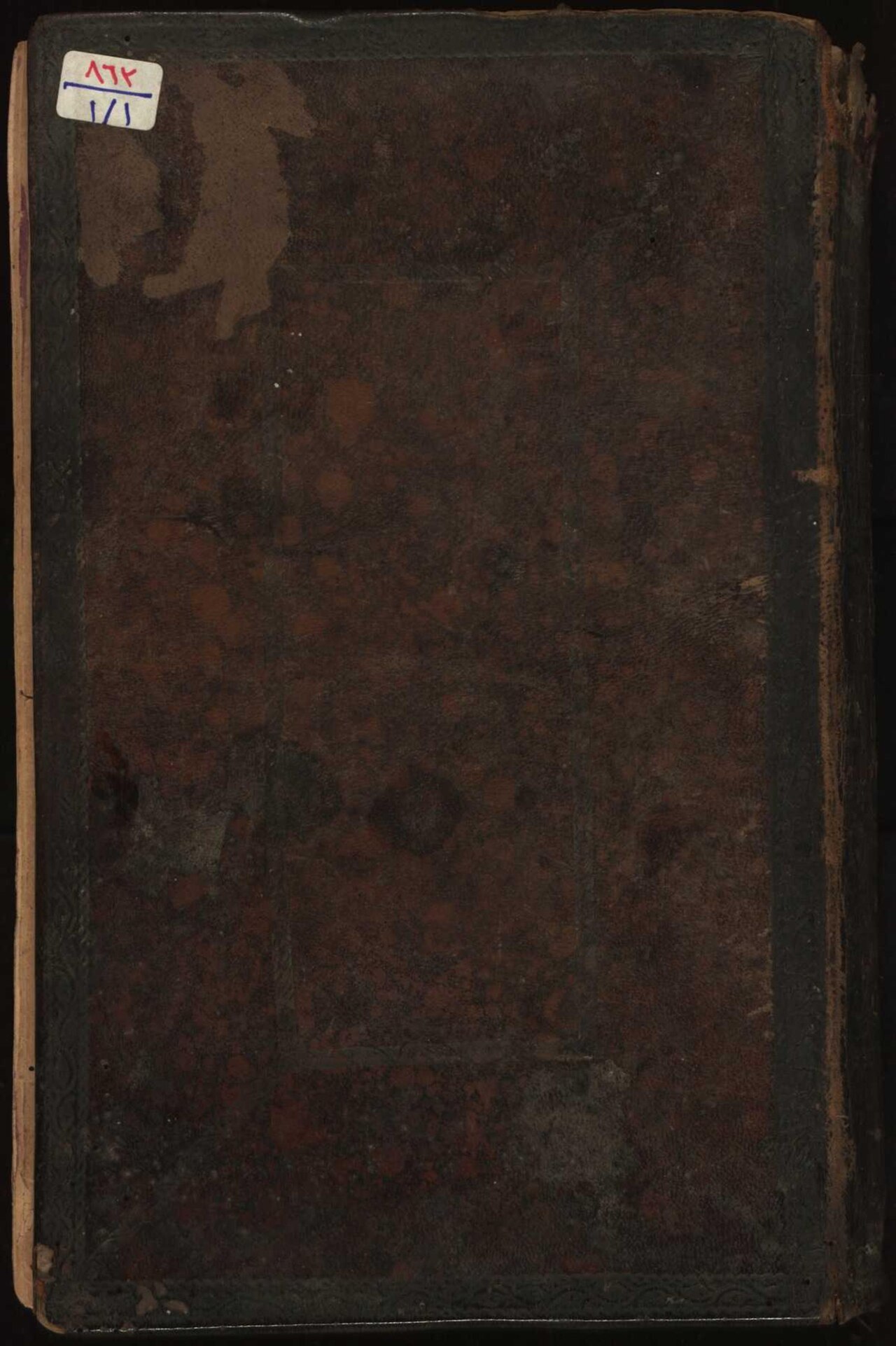
Front cover of a dark brown leather-bound manuscript volume with a blind-tooled border, a worn central panel, and a paper call-number label reading ۱۷٤ and 1/1 in the upper left corner.Book

Secondary source

Canon of Medicine: Chapter on Compound Remedies

Avicenna · between 1688 and 1689

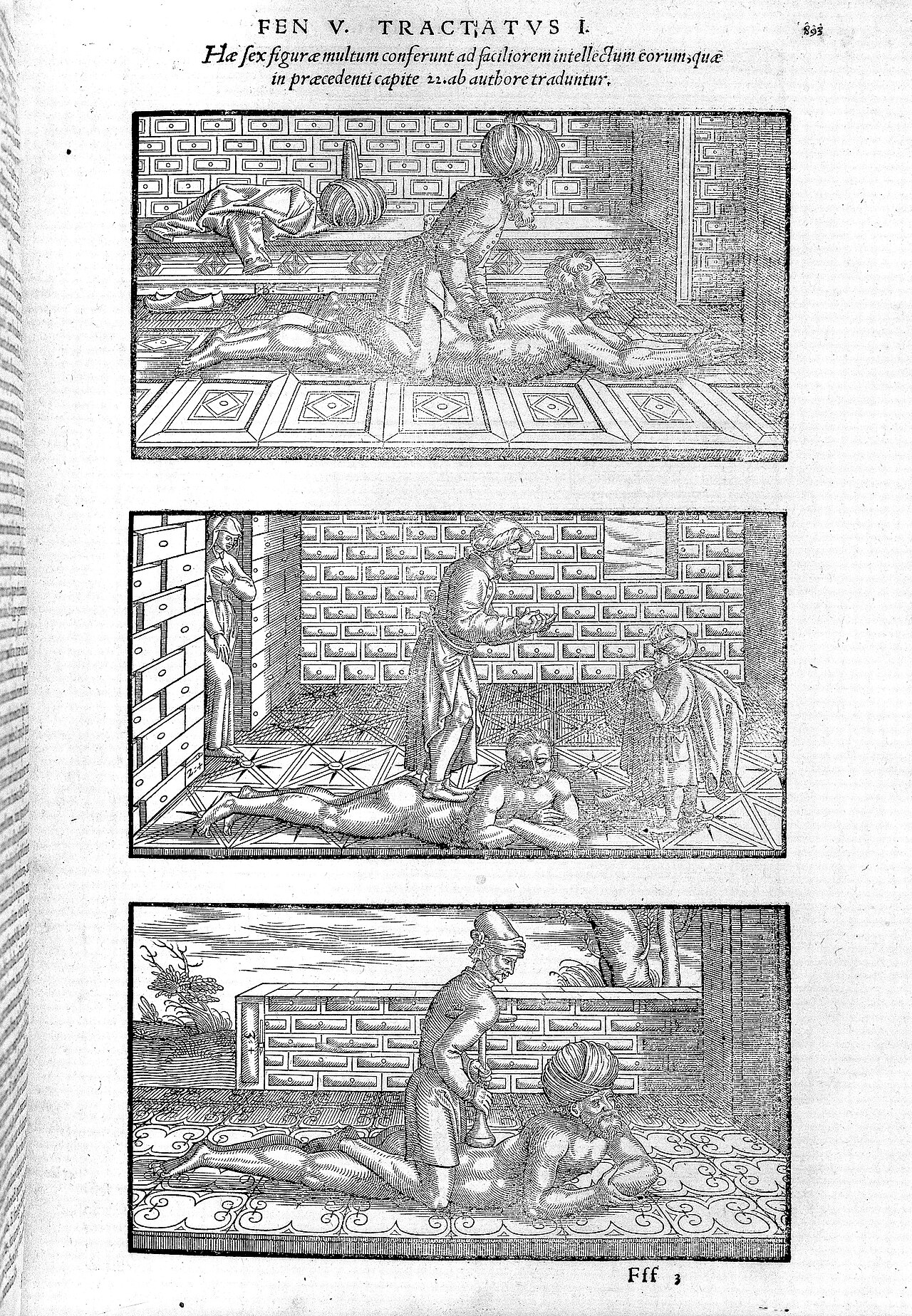
Printed book page with a running header 'FEN V. TRACTATUS I' and three framed woodcut panels showing men in tiled rooms performing massage on reclining men. Figures wear loincloths or are partly nude; one attendant kneels and one stands with a cloth.Painting

Secondary source

Illustrations of Massage from Liber Canonis

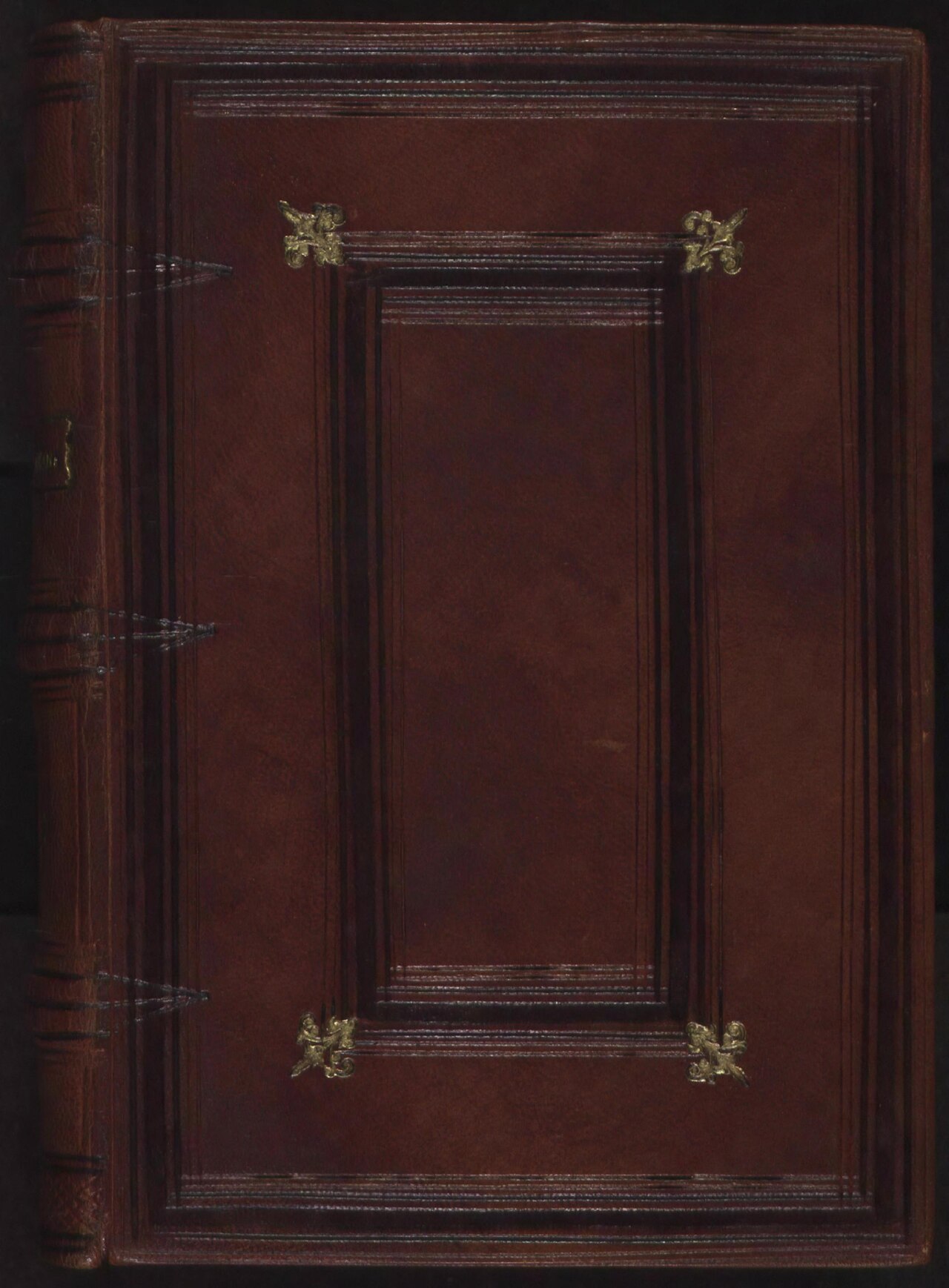
Front cover of a brown leather-bound book with blind-tooled panel borders, a rectangular central panel, four gilt metal corner ornaments, and three raised bands on the spine with a small gold label.Book

Primary source

Flowers of Avicenna

Avicenna · 1508

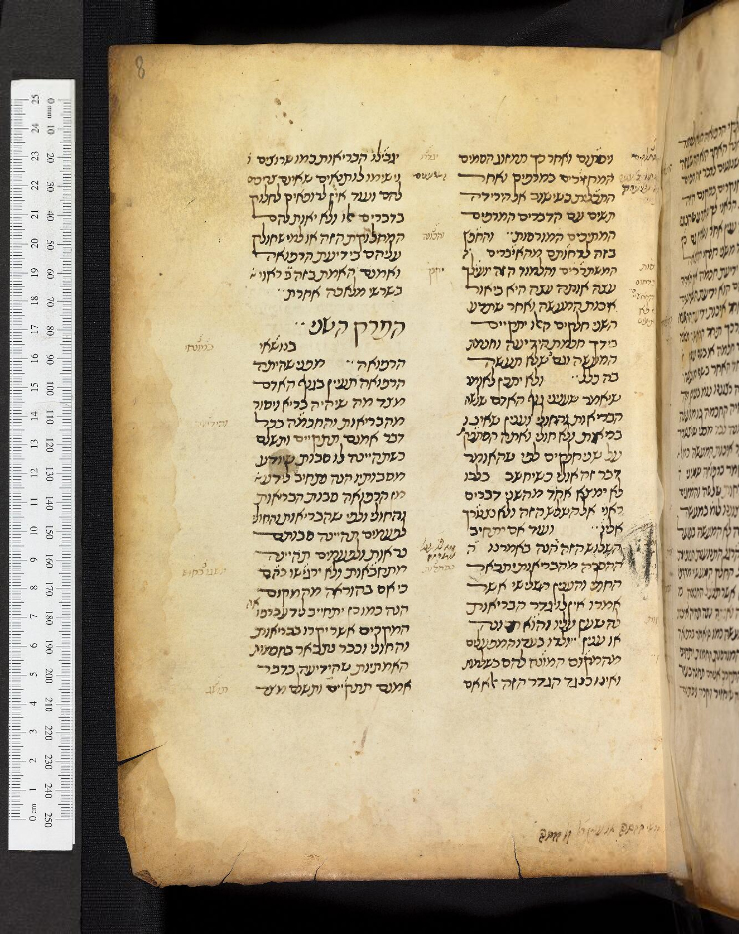
Photograph of a manuscript leaf numbered 8 in the top corner, with dense brown-ink Hebrew script in two columns on aged yellowed parchment. A ruler scale runs along the left edge. Part of another leaf is visible at the right.Book

Primary source

Page 8r of Hebrew Manuscript Copy of Avicenna's Canon

Avicenna · between 1276 and 1325

Page of an Arabic manuscript in brown leather binding, with an illuminated gold and blue headpiece bearing calligraphic text above a block of black handwritten Arabic script with red-ink annotations.Book

Secondary source

Qanun of Avicenna, National Library of Medicine Copy

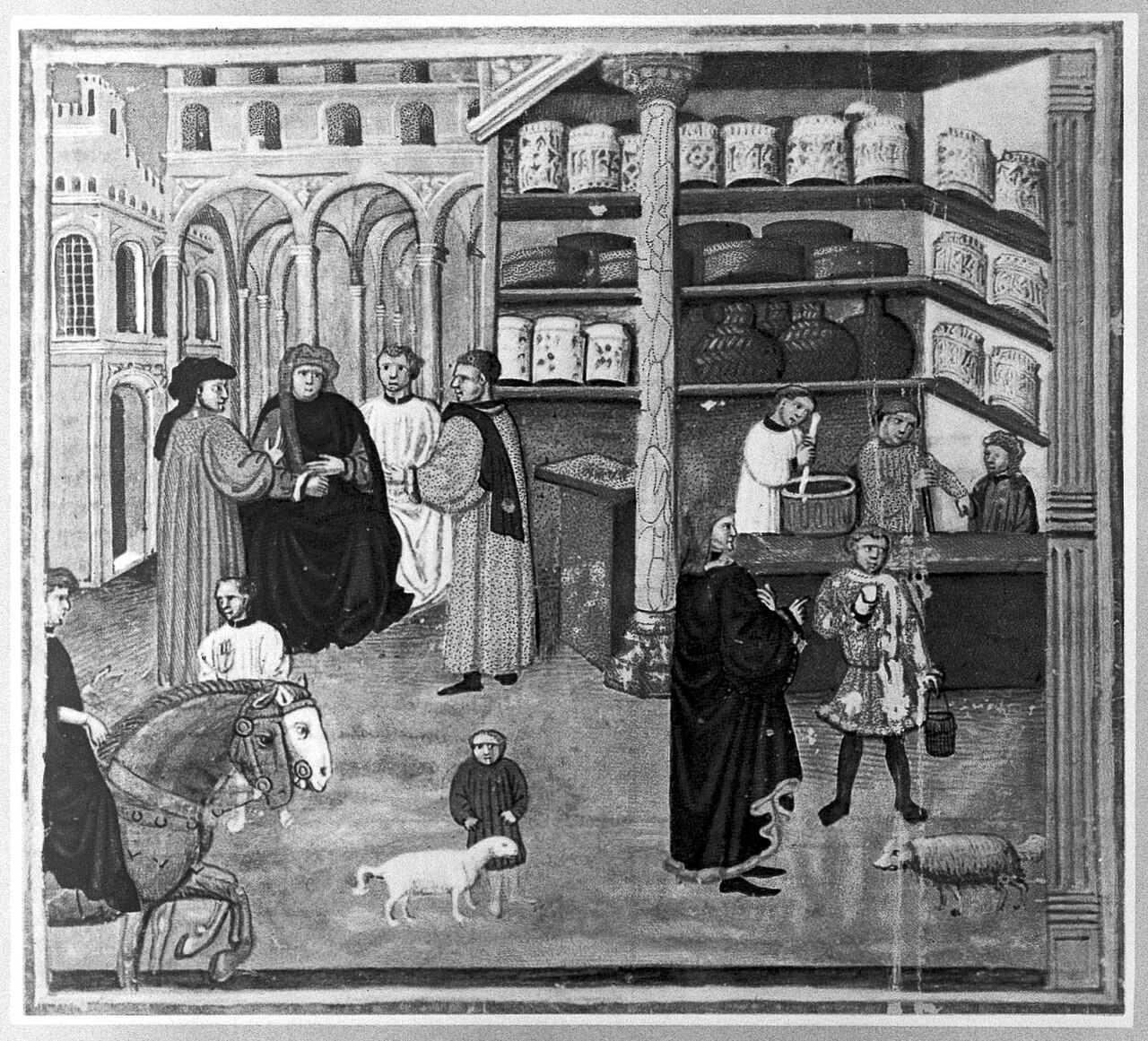
Black-and-white reproduction of a 15th-century miniature showing a street-side pharmacy with shelves of ceramic jars and baskets. Robed figures stand in conversation under arcades, a man pounds in a mortar, and children and animals fill the foreground.Painting

Secondary source

Avicenna Expounding Pharmacy to His Pupils

15th century

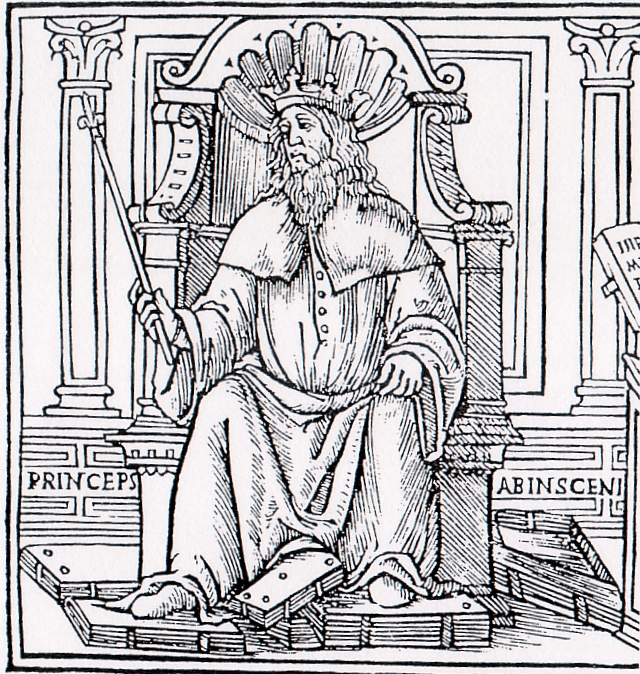
Black-and-white woodcut of a bearded, crowned man seated on a throne between columns, holding a scroll-like staff in one hand, with a book at the right edge. Text below reads PRINCEPS and ABINSCENI.Painting

Secondary source

Avicenna as Princeps Abinsceni

1520

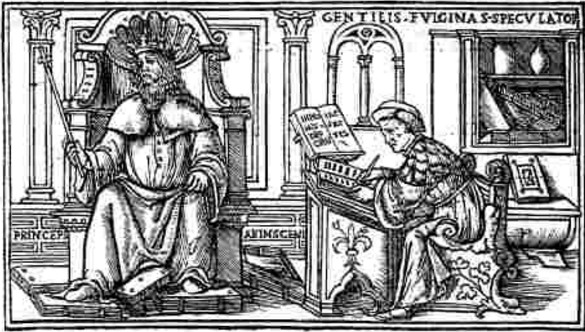
Black and white woodcut. On the left, a bearded, crowned figure in a long robe sits on a throne holding a scepter, labeled PRINCEPS AVICENNA. On the right, a seated scholar writes at a lectern with an open book, beside a window and columns. Above is the inscription GENTILIS FULIGINAS SPECULATOR.Painting

Secondary source

Avicenna and Gentile da Foligno

1520

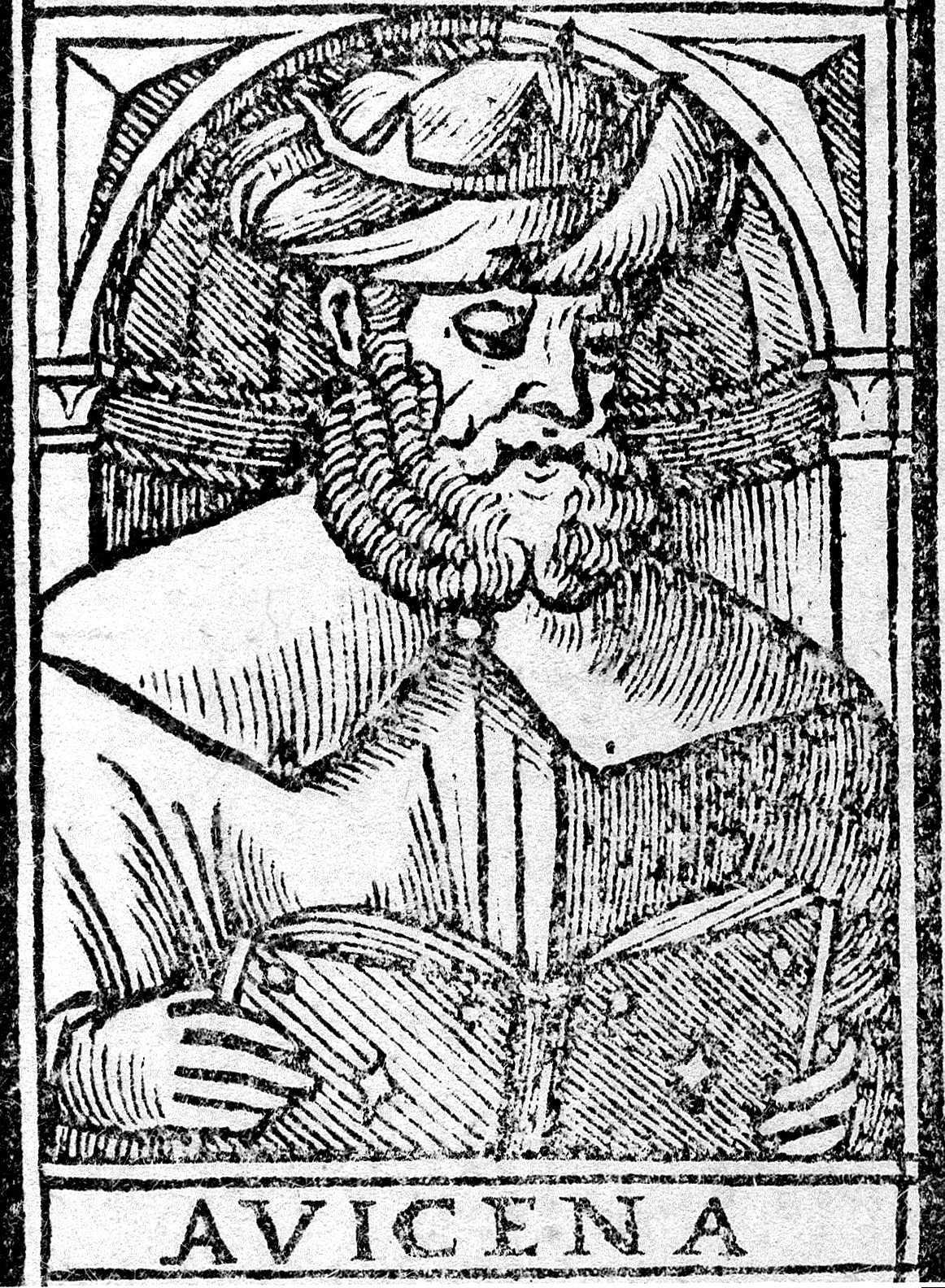
Woodcut portrait of a bearded man in a turban and robe, set within an arched frame, with the name AVICENNA printed in capital letters across the bottom border. The image is a detail of a book's title page.Painting

Secondary source

Title Page of Praesens maximus codex with Avicenna Portrait

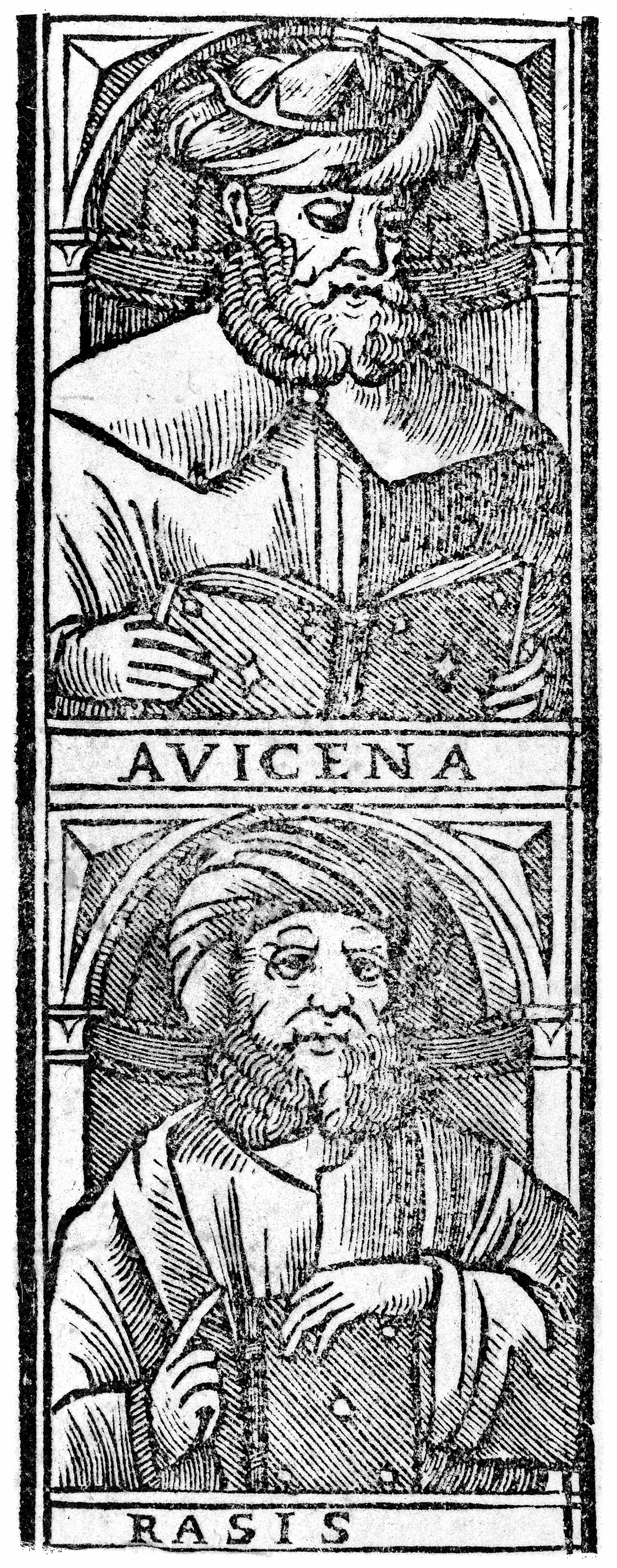
Black and white woodcut print with two stacked framed portraits of bearded men in turbans within arched frames. The upper portrait is labeled AVICENA, the lower is labeled RASIS.Painting

Secondary source

Avicenna and Rhazes, detail from an edition of the Canon of Medicine

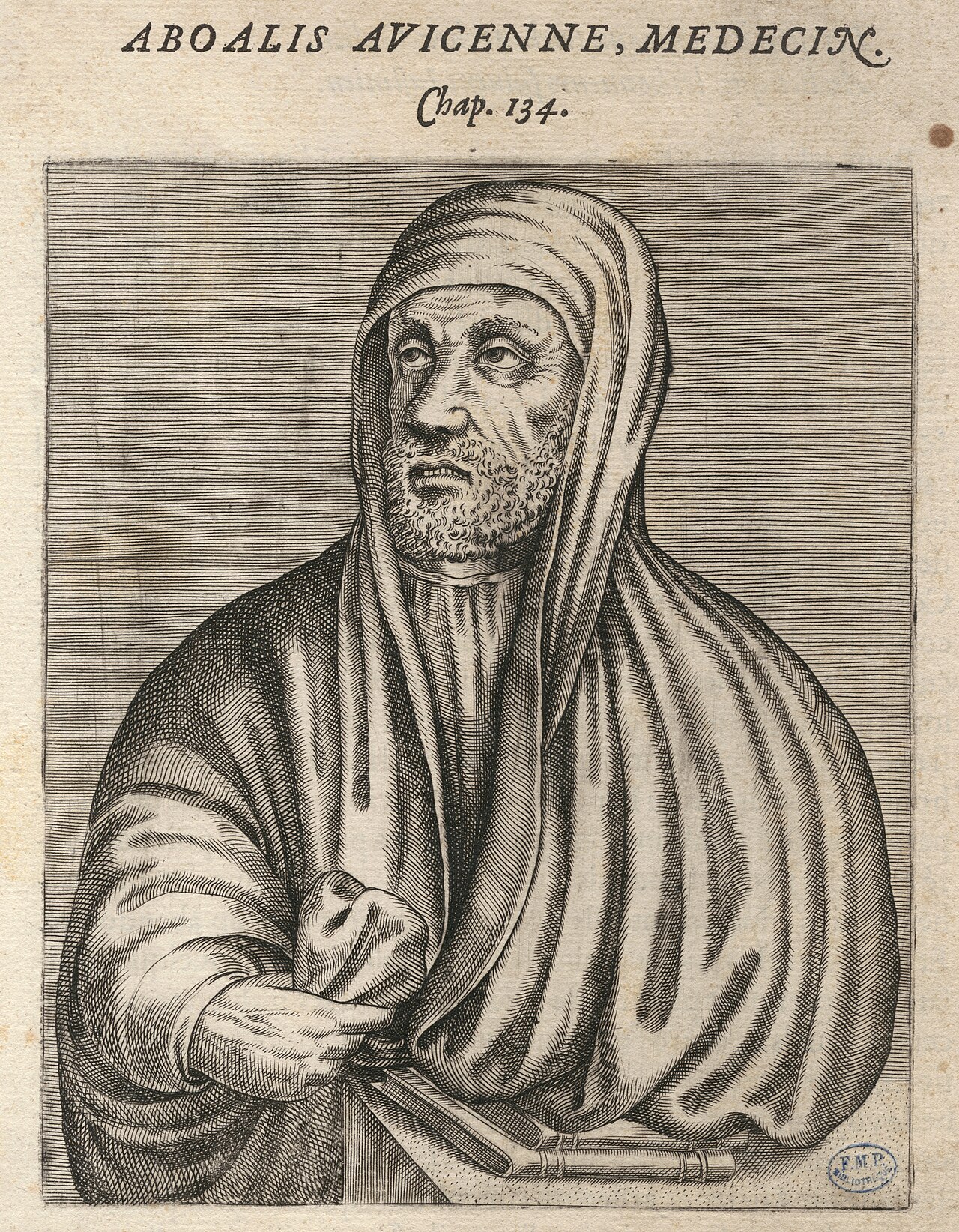
Black-and-white engraving of a bearded old man wearing a draped hood and robe, holding a book or tablet at the lower left, with the caption 'ABOALIS AVICENNE, MEDECIN' and 'Chap. 134' above. A library stamp appears in the lower right corner.Painting

Secondary source

Engraving of Avicenna by André Thevet

André Thévet

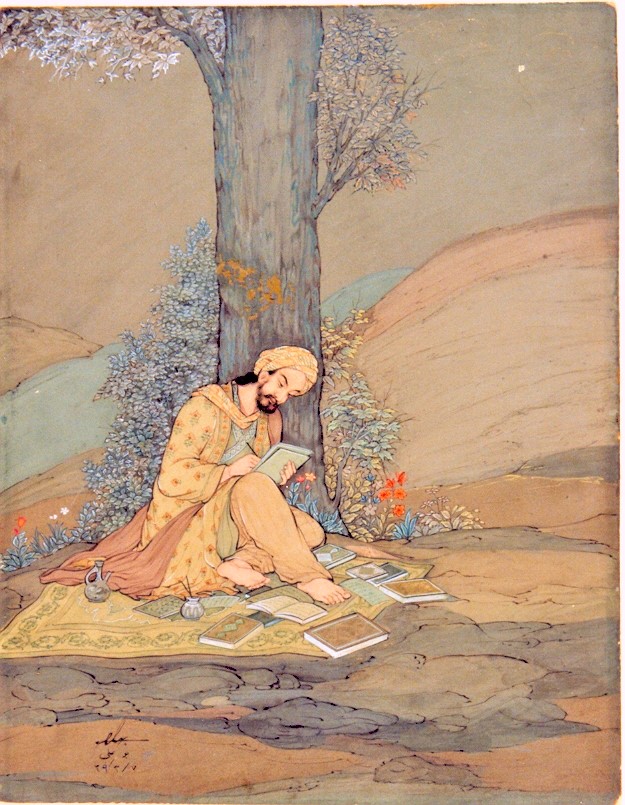
Painting in a Persian miniature style of a bearded man in a yellow turban and patterned yellow robe, seated on a rug under a tree, reading an open book. Several books lie around him on the ground, with a small jug nearby.Painting

Secondary source

Avicenna portrait by Hossein Behzad

Hossein Behzad · 7 Khordad 1329 SH (1950)

Book

Tertiary source

Avicenna entry, Catholic Encyclopedia

Charles G. Herbermann · 1913

Texts on faith and reason in Islam: Farabi, Avicenna, AverroesBook

Secondary source

Texts on faith and reason in Islam: Farabi, Avicenna, Averroes

M. Horten · 1913

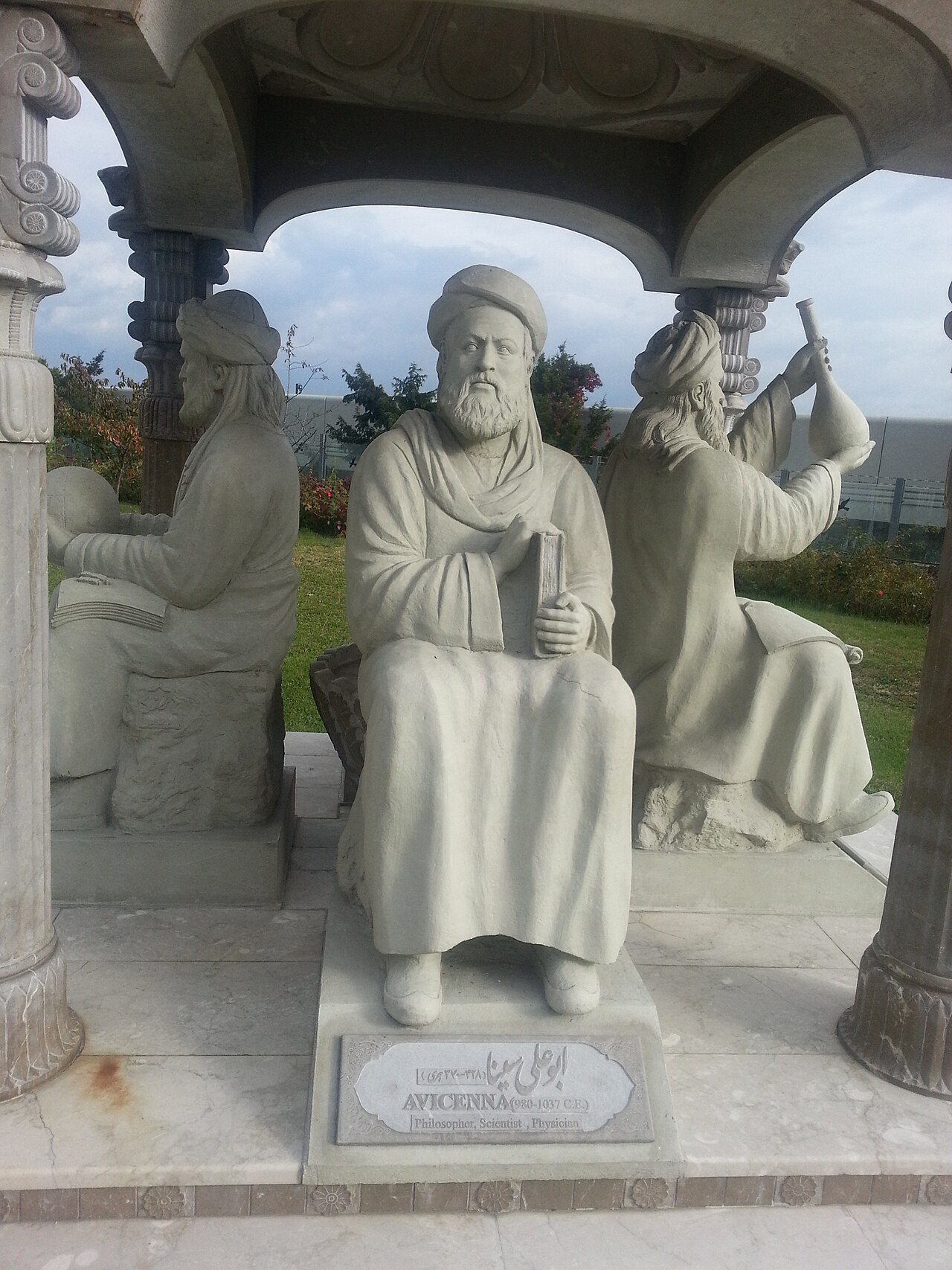
Photo of a seated stone statue of a bearded man in a turban and robe, holding a book, under a stone pavilion with other statues beside him. A plaque reads Avicenna (980-1037 C.E.), Philosopher, Scientist, Physician.Sculpture

Secondary source

Persian Scholar Pavilion in Vienna International Centre

2009 (donated by Iran)

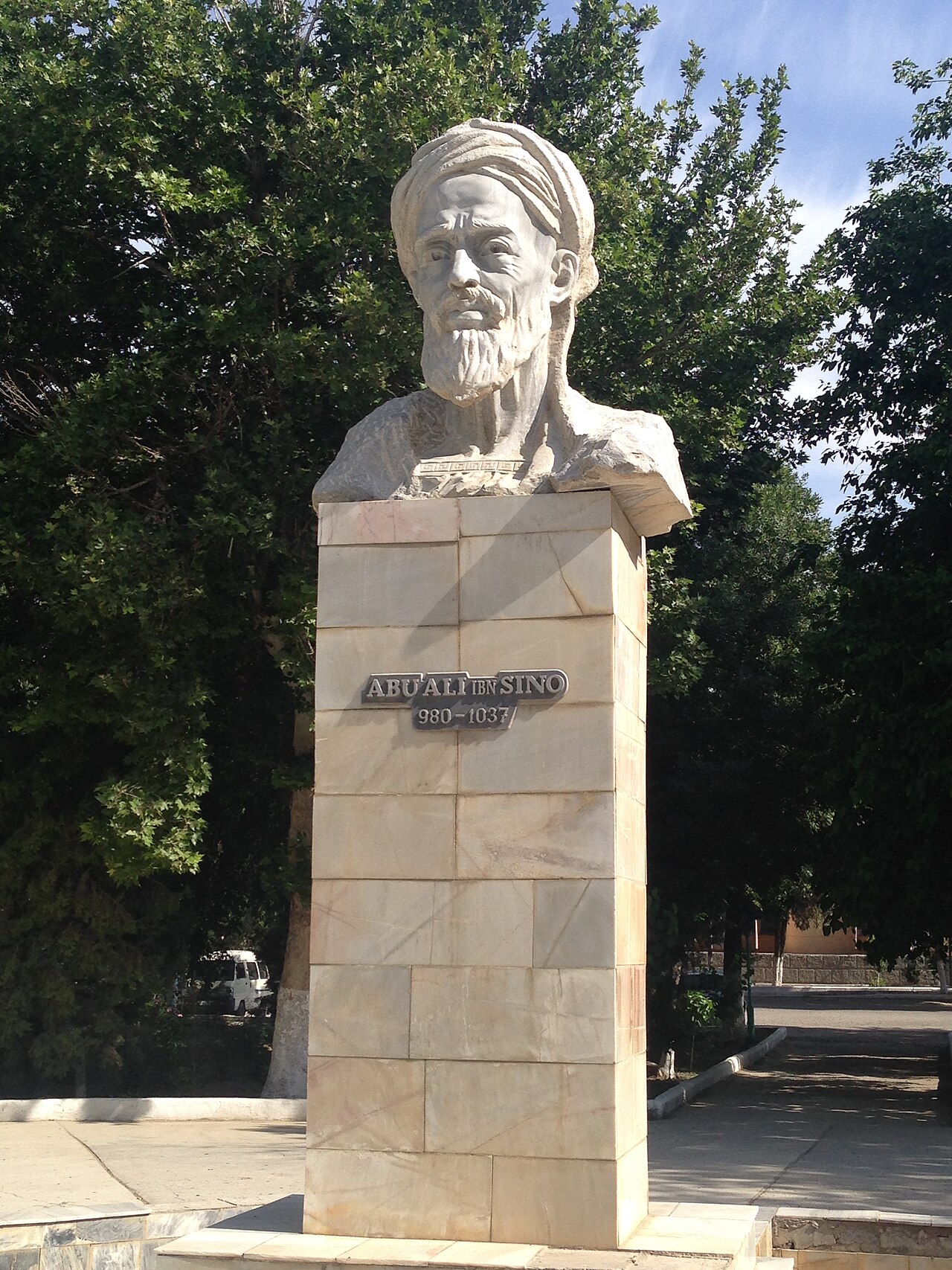
Photograph of a pale stone bust of a bearded man wearing a turban, mounted on a tall stacked-stone pedestal with a plaque reading 'ABU ALI IBN SINO 980-1037'. Trees and a blue sky are behind it.Sculpture

Secondary source

Statue of Ibn Sina, Bukhara

Want the full shelf? Chat with Avicenna in the app and open the Sources panel — every quote links back to the original.

Use Avicenna in class

2 collections

Ready-made collections from the Humy team that feature Avicenna. Preview any of them, then try it free.

Trusted by educators worldwide

Conversations
375,000+
Real exchanges between students and historical figures
Messages exchanged
4,142,000+
Across every figure, classroom and language
Historical figures
100,000+
Each informed by a curated biography and selected sources
Languages supported
50+
From English and Spanish to Arabic and Korean

Paying customers

Used by 98 schools and universities

Partner school logo
Tecnológico de Monterrey logo
Hyper Island logo
Partner school logo
Chambersburg Area School District logo
Broward County Public Schools logo
Nebo School District logo
National Louis University logo
South Florida PBS logo
Punahou School logo
University of Wisconsin–River Falls logo
Partner school logo
Partner school logo
Archbishop Mitty High School logo
Kingsburg High School logo
Norwalk Public Schools logo
Partner school logo
Connections logo
Partner school logo
Moore Public Schools logo
Partner school logo
Partner school logo
Partner school logo
Partner school logo
Robbinsville Public Schools logo
Partner school logo
Partner school logo
Partner school logo
Tecnológico de Monterrey logo
Hyper Island logo
Partner school logo
Chambersburg Area School District logo
Broward County Public Schools logo
Nebo School District logo
National Louis University logo
South Florida PBS logo
Punahou School logo
University of Wisconsin–River Falls logo
Partner school logo
Partner school logo
Archbishop Mitty High School logo
Kingsburg High School logo
Norwalk Public Schools logo
Partner school logo
Connections logo
Partner school logo
Moore Public Schools logo
Partner school logo
Partner school logo
Partner school logo
Partner school logo
Robbinsville Public Schools logo
Partner school logo
Partner school logo

What educators are saying

“We enjoyed the program last year and used it frequently.”
“My students say it’s a welcome change of pace. I’m not a fan of the “sage on the stage” model, so I try to incorporate research-oriented and self-paced activities. With Humy, students have to take charge of their learning. They’ve become more adept at critical thinking, forming better questions, and improving their reading comprehension. The interview feature has been my go-to tool. I create assignments where students must ask historical figures a set number of questions, then summarize the responses to ensure they’re truly absorbing the material. This approach lets them actively explore the past rather than passively consuming information.”
“Humy has helped me bring historical figures, sometimes long past, to life. When my students interact with these figures in real-time, it eliminates some of the perceived “ancient” characteristics of my curriculum. This has shifted my students’ thinking away from viewing history as abstract or irrelevant. Real-time interactions make historical figures relatable, even allowing students to ask off-topic questions that help put historical lives in a more relevant context for 13-year-olds. The feature I use the most is the interview feature. After teaching a topic, most recently Gandhi and Joan of Arc, I have the students ask pointed, focused questions. We practice good conversation techniques beforehand, teaching them to listen (or read) carefully and formulate thoughtful follow-up questions rather than just interrogating. It helps students practice effective conversation skills.”

FAQ

Frequently asked questions

Who is Avicenna?
Influential Persian polymath known for his contributions to medicine and philosophy. On Humy.ai you can chat with an AI version of Avicenna that draws on a short biography and 73 historical sources during the conversation — by text or voice, in 42 languages.
Is Avicenna AI free?
Avicenna is part of Humy's full library of more than 100,000 figures, which comes with a paid plan. A free account (no credit card) includes 20 messages a month with the free library's figures, so you can try how the conversations work first.
What sources does the Avicenna AI use?
It draws on a short biography and 73 historical sources (books, paintings and artifacts), including “Canon of Medicine”, “Al-Isharat wa al-Tanbihat” and “Commentary on Anatomy in Avicenna's Canon”. Each source has its own page on Humy.ai.
How historically accurate is the AI version of Avicenna?
Each figure uses a short biography and a small set of selected historical sources as context (retrieval-augmented generation), so answers stay closer to known material than the model's general knowledge alone. It isn't a citation-grade research tool — like any LLM, the AI can get details wrong or extrapolate. Treat it as a strong starting point for inquiry and cross-reference important claims.
Can I talk to Avicenna by voice?
Yes. In addition to text chat, you can call Avicenna and hear their voice respond in real time — useful for auditory learners, interview practice and Socratic dialogue.
Is Humy.ai safe and compliant for schools?
Yes. Humy.ai is used by more than 100 schools, universities and organisations. The platform is FERPA- and GDPR-aligned, supports SSO, and offers an IT-approval pack tailored for school procurement teams.

Ready when you are

Start chatting with Avicenna now.

20 messages free · No credit card · Available in 50+ languages.