


Secondary sourcePainting1520
Avicenna and Gentile da Foligno
1520
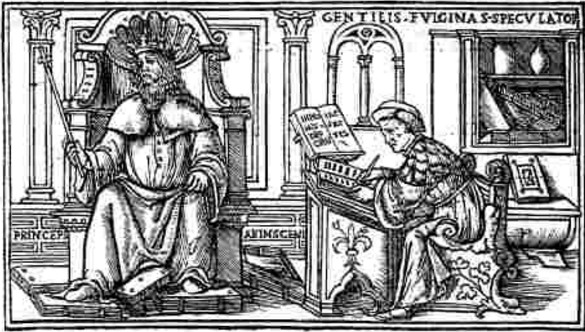
A 1520 Venice woodcut showing Avicenna enthroned beside the commentator Gentile da Foligno writing at a lectern.
Shows Avicenna as a crowned authority placed beside his commentator, as he was presented to readers of the Canon in print.
About this source
What it is
This black-and-white woodcut comes from a 1520 Venice edition of the Canon and its commentary by Gentile da Foligno. On the left, a bearded, crowned figure in a long robe sits on a throne holding a scepter, labeled PRINCEPS AVICENNA. On the right, a seated scholar writes at a lectern beside a window and columns. The printer is not named in the facts.
Why it matters
The picture places Avicenna next to the commentator who explained his work. This shows that European readers in 1520 used the Canon together with later explanations, and that both men were presented as authorities. It was made long after Avicenna's death in 1037, so it reflects later readers' view of him.
Look closer
- How does the artist show the difference between the crowned figure and the writing scholar?
- Why might a printed book include a picture of its commentator?
- What does the image leave out about how the Canon was actually read and used?
This painting is part of the curated material that grounds the AI version of Avicenna on Humy.ai — when students ask about related events, the AI can quote it and cite it.
More Avicenna sources
Meet the AI Avicenna →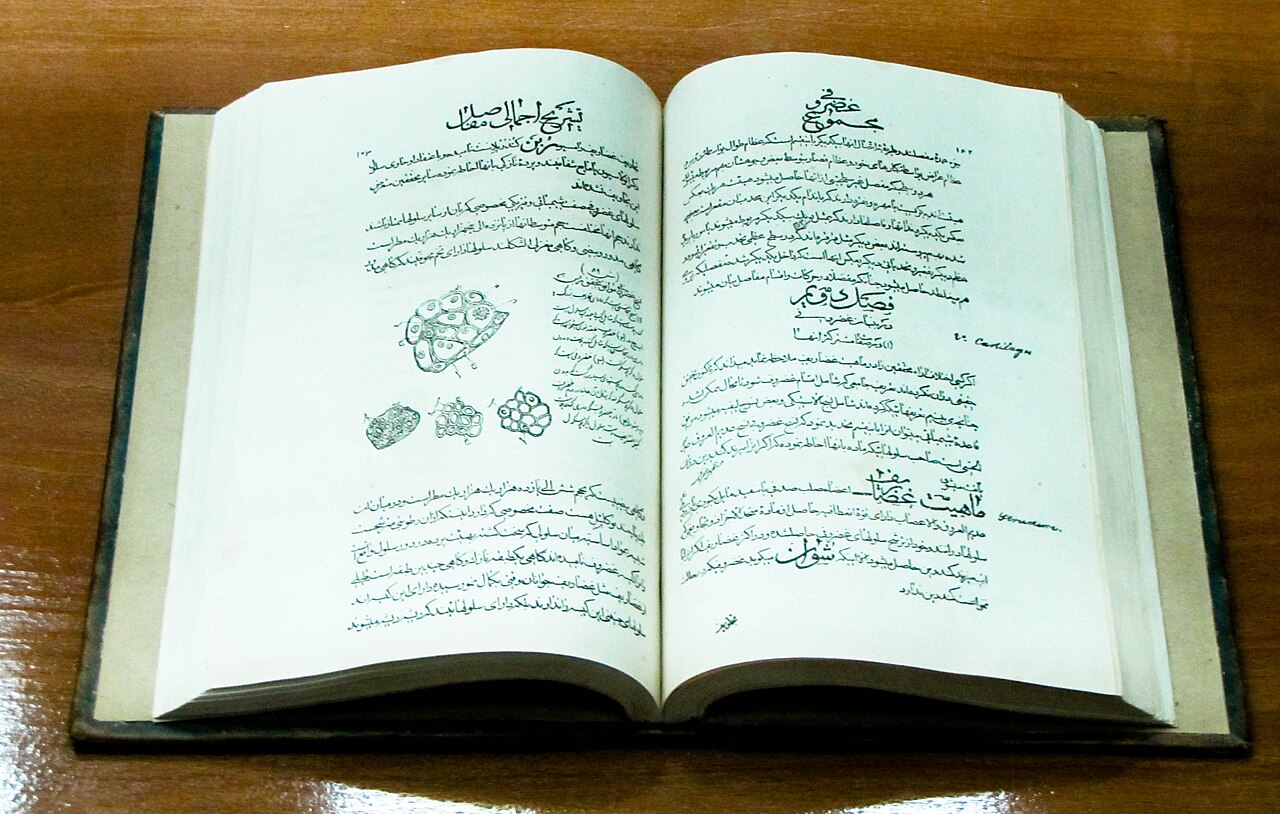 Book
Secondary source
Canon of Medicine
Avicenna · 1025
 Book
Primary source
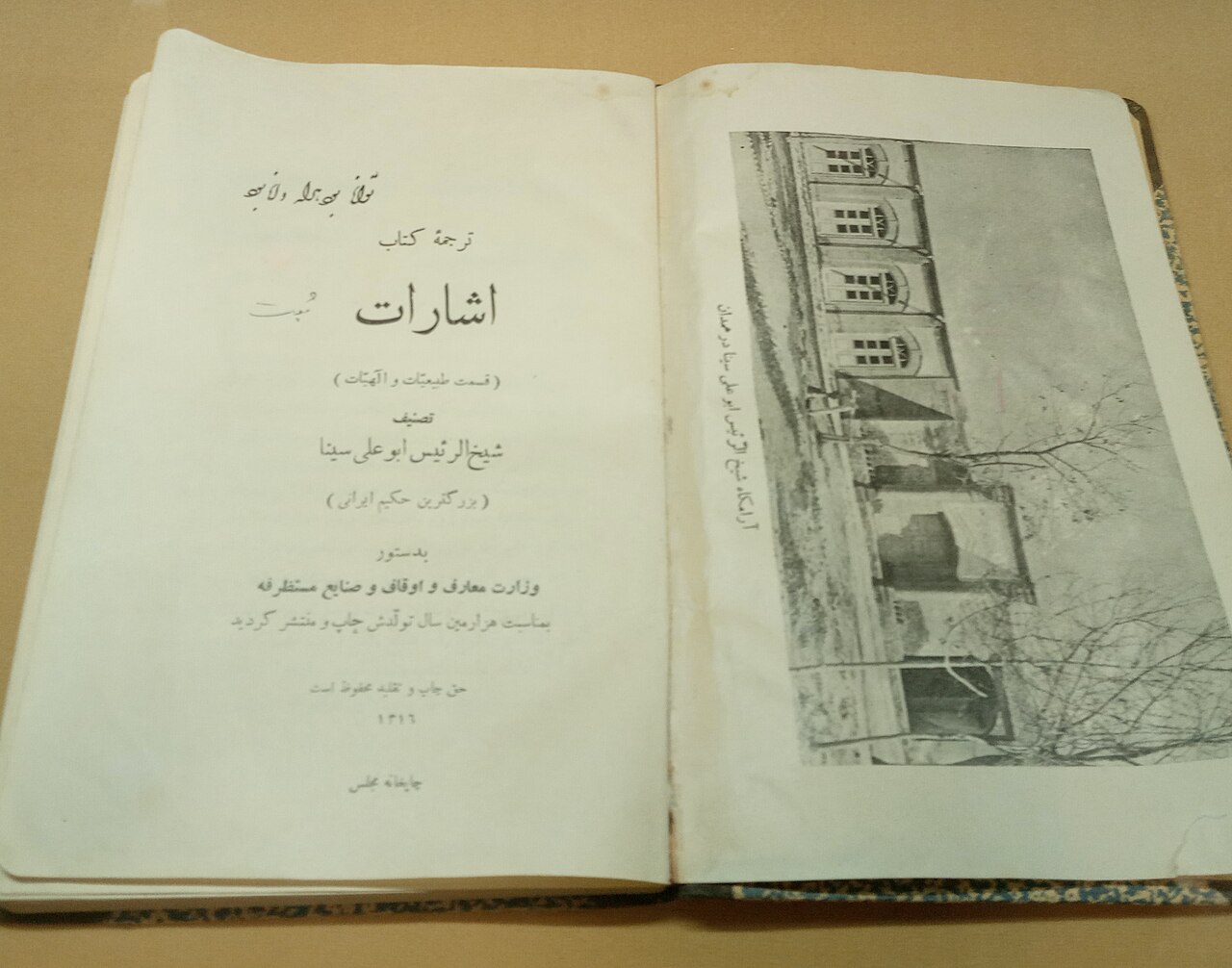
Al-Isharat wa al-Tanbihat
Avicenna
Secondary source
Commentary on Anatomy in Avicenna's Canon
Ibn al-Nafis · 13th century
 Painting
Secondary source
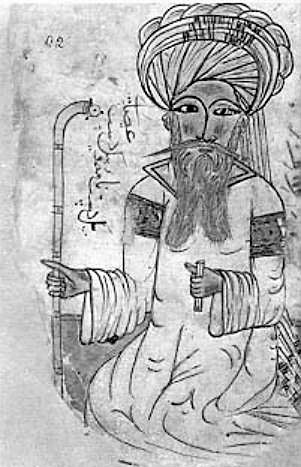
Avicenna (Subtilties of Truth manuscript image)
Beckwith · 1271
 Painting
Secondary source
Avicenna at the Sickbed
Walenty z Pilzna · c. 1479-1480
Ready when you are
Start chatting with Avicenna now.
20 messages free · No credit card · Available in 50+ languages.