


Secondary sourceArtifact
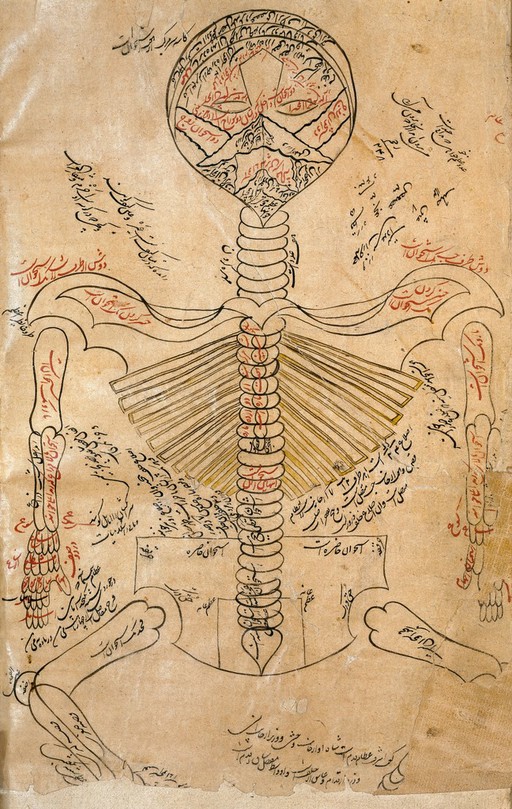
Skeleton System Diagram from the Canon of Medicine
A hand-drawn skeleton diagram based on Avicenna's Canon of Medicine, illustrating the bones of the body.
A skeleton diagram illustrating Avicenna's own teaching on the structure of the human body.
About this source
What it is
This manuscript page shows a hand-drawn skeleton diagram in brown ink, with a cranium, spine, ribs, arms and legs outlined, surrounded by Arabic and Persian annotations. It illustrates the skeletal system as described in Avicenna's Canon of Medicine and is held by the Wellcome Collection.
Why it matters
This drawing shows how Avicenna's descriptions of the skeleton were turned into teaching images for medical students over the centuries. It is a reminder that much medieval medical learning relied on text explained through hand-copied diagrams rather than photographs or printed charts.
Look closer
- How accurate does this skeleton look compared to a modern medical drawing?
- Why do you think handwritten notes were added around the figure?
- What does the condition of the page tell you about how old and well-used this manuscript might be?
This artifact is part of the curated material that grounds the AI version of Avicenna on Humy.ai — when students ask about related events, the AI can quote it and cite it.
More Avicenna sources
Meet the AI Avicenna →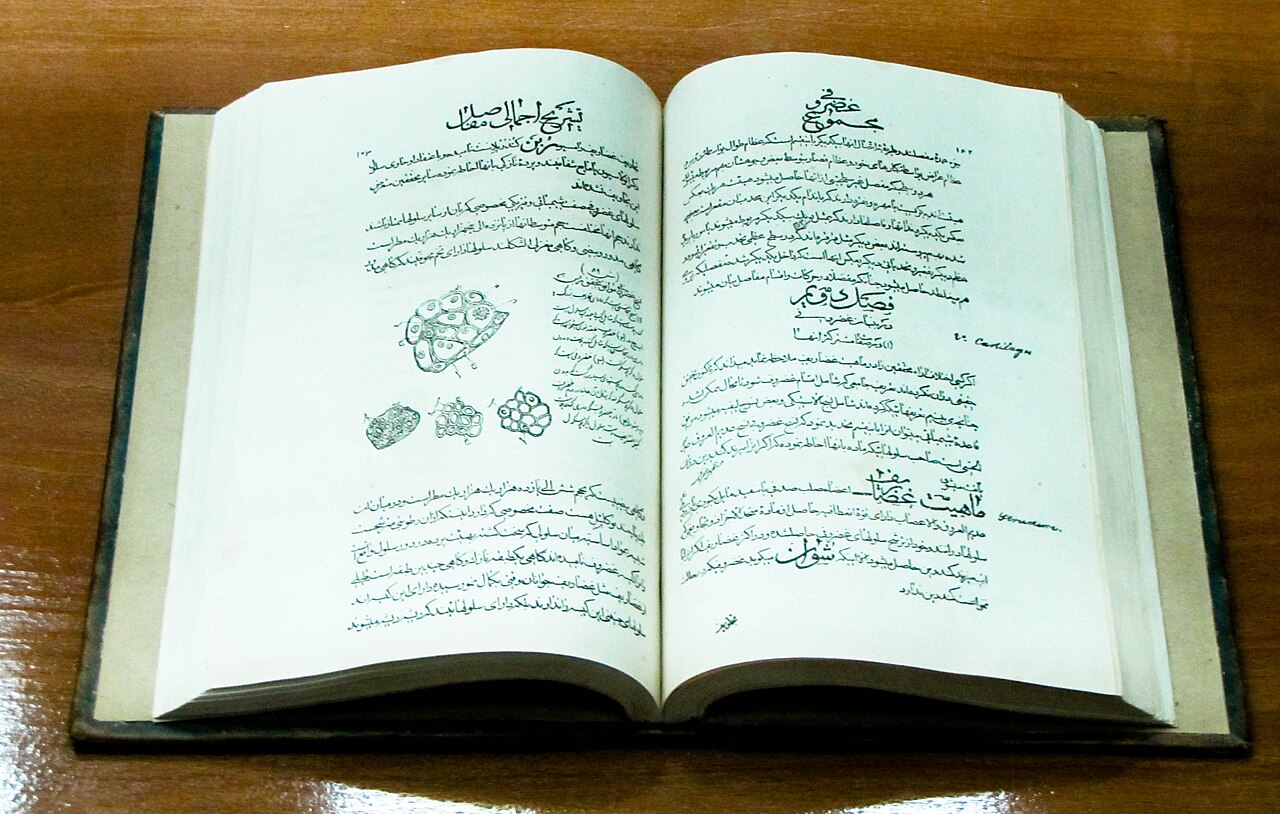 Book
Secondary source
Canon of Medicine
Avicenna · 1025
 Book
Primary source
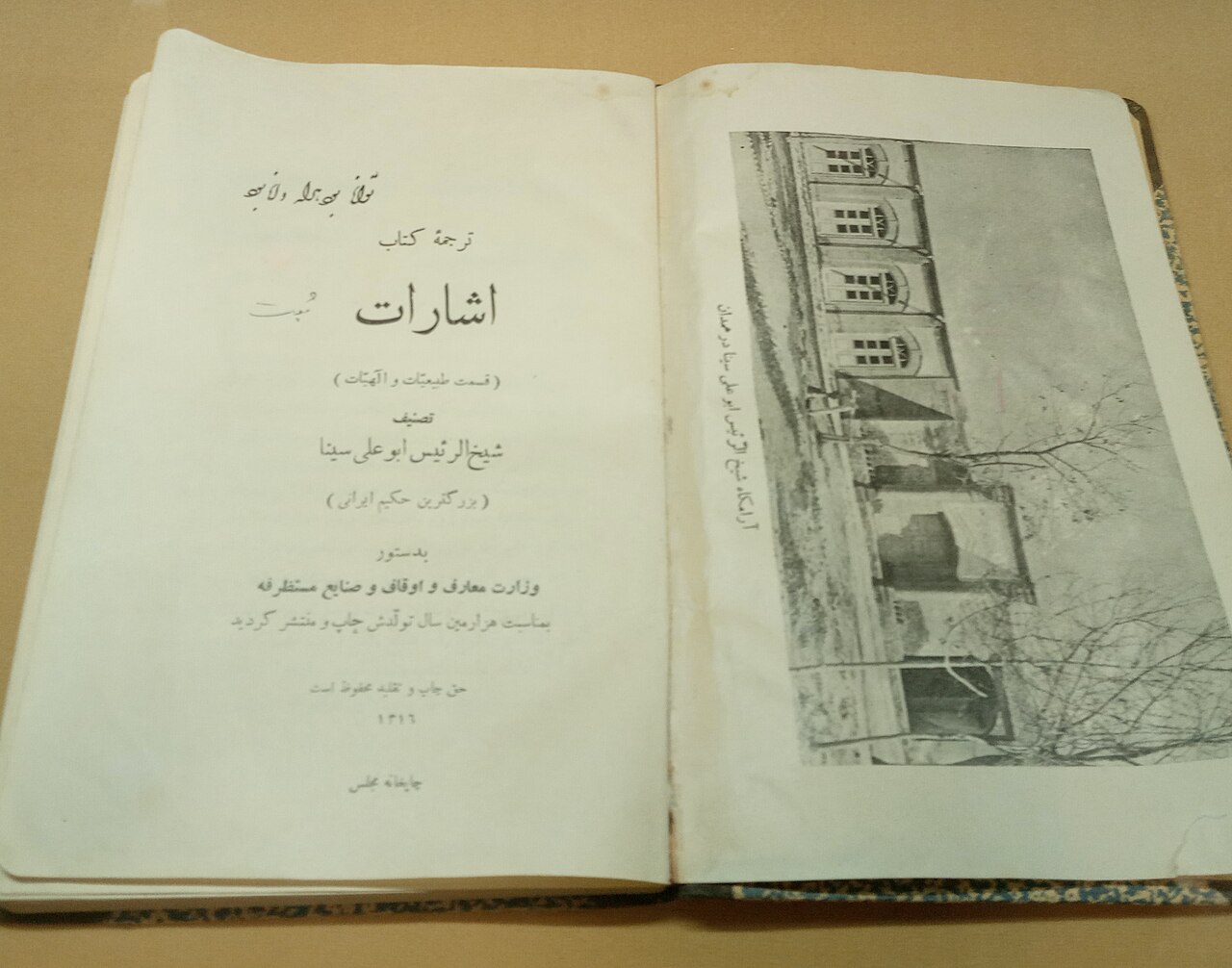
Al-Isharat wa al-Tanbihat
Avicenna
Secondary source
Commentary on Anatomy in Avicenna's Canon
Ibn al-Nafis · 13th century
 Painting
Secondary source
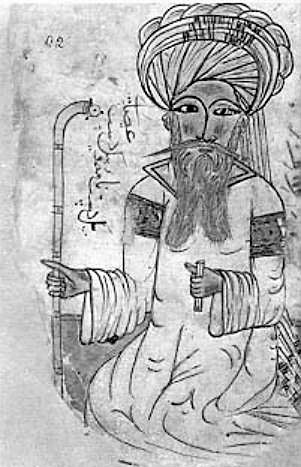
Avicenna (Subtilties of Truth manuscript image)
Beckwith · 1271
 Painting
Secondary source
Avicenna at the Sickbed
Walenty z Pilzna · c. 1479-1480
Ready when you are
Start chatting with Avicenna now.
20 messages free · No credit card · Available in 50+ languages.