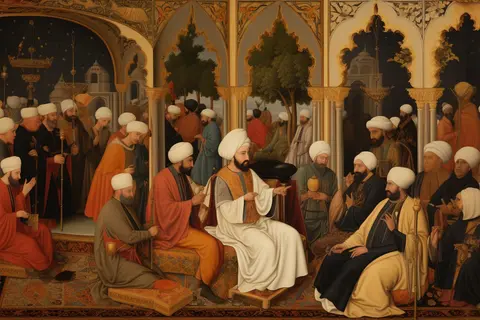

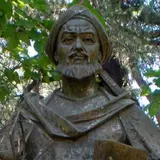
Portrait of Al-Khwarizmi

AI Historical Figure

Al-Khwarizmi

Mathematician and scholar who developed algorithms and the concept of algebra.

Chat with Al-Khwarizmi via text or voice — in 42 languages, drawing on a curated biography and 24 historical sources. Available 24/7.

Start chatting with Al-Khwarizmi20 messages free · No credit card
Lived
c. 780–850
From
UzbekistanIraq
Known for
Science & medicineScholarship & social science
Al-Khwarizmi

Al-Khwarizmi

Online · responds in seconds

Hello — I'm Al-Khwarizmi. Mathematician and scholar who developed algorithms and the concept of algebra. What would you like to ask me?

20 messages free · No credit card · Powered by Humy.ai

Live preview · Switch between 42 languages above · Send a message to continue in the app

Multilingual

Talk to Al-Khwarizmi in 42 languages

Ask Al-Khwarizmi questions in any language below, and the rest of Humy's app speaks it too. Pick yours to open the chat in that language.

Also in German (Austria), German (Switzerland), English (UK), English (Australia), English (Canada).

The sources behind this AI

24 sources · 10 books · 8 artifacts · 3 documents · 2 sculptures · 1 painting

Al-Khwarizmi doesn’t improvise from thin air. The AI is grounded in 24 curated historical sources students can inspect. Open any of them to see what informs the conversation.

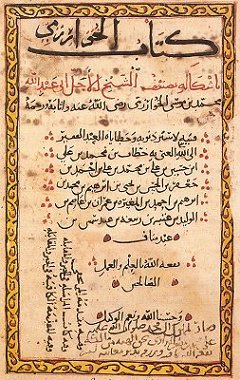
Manuscript title page in Arabic script with a decorated gold-and-brown border. The large heading reads the title of al-Khwarizmi's algebra work, with smaller lines of text beneath in a calligraphic hand, on aged parchment.Book

Primary source

Al-Jabr

Muḥammad ibn Musa al-Khwarizmi · c. 820

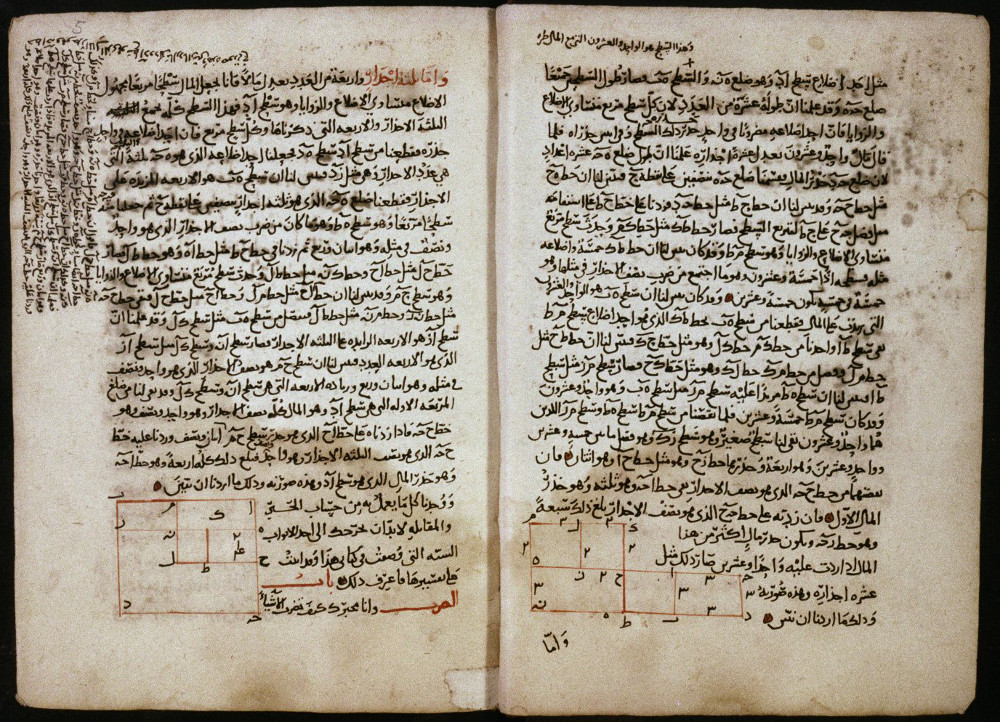
Open manuscript of two facing pages covered in handwritten Arabic script in brown ink on aged, yellowed paper, with small geometric diagrams drawn in red ink with labeled letters near the bottom of each page. The page edges are dark against a black background.Book

Primary source

Algebra Manuscript, Bodleian MS. Huntington 214

Muḥammad ibn Musa al-Khwarizmi · 1342

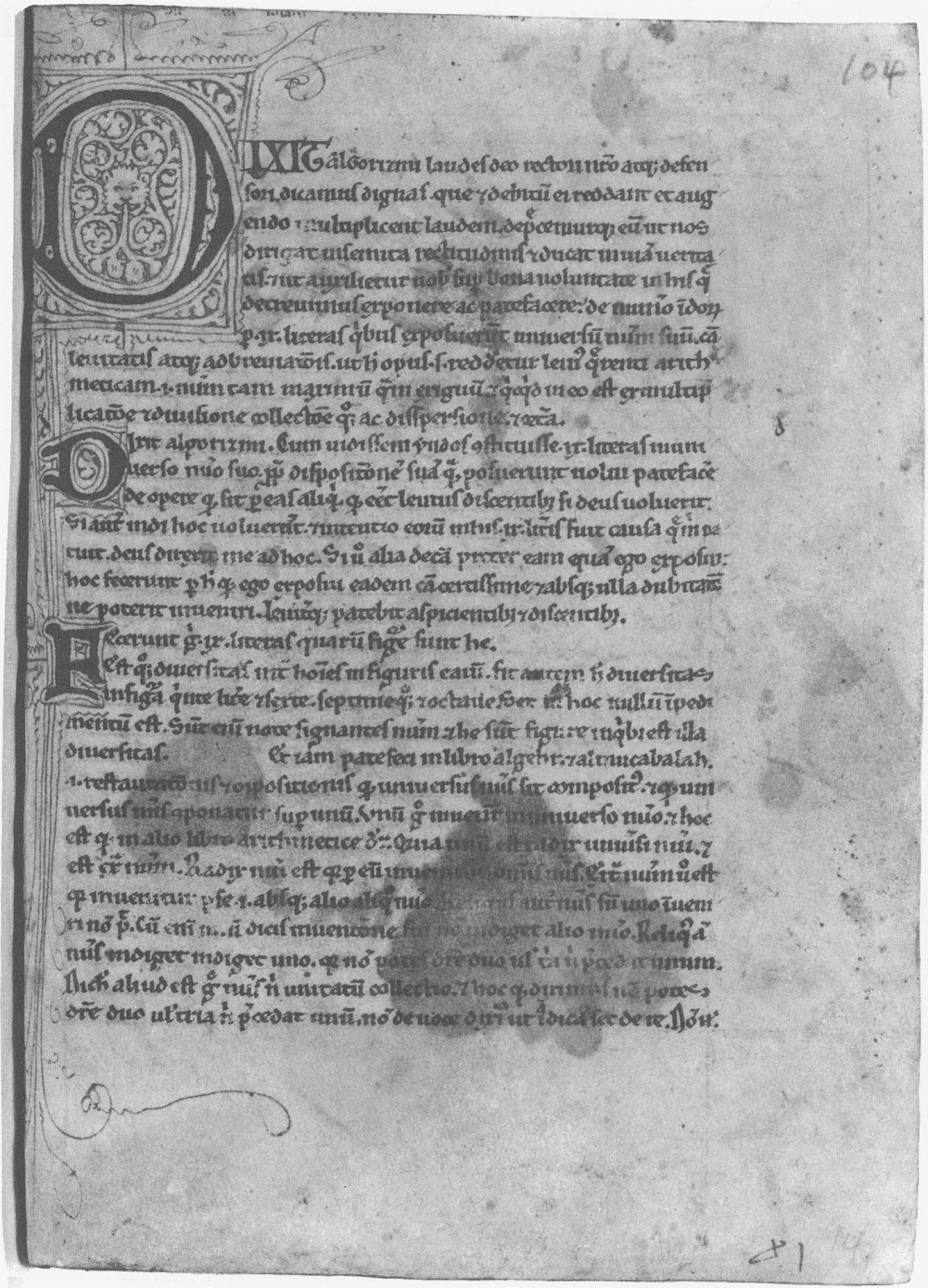
Black-and-white scan of a medieval Latin manuscript page. A large decorated initial D with ornate knotwork sits at upper left, and the text begins with 'DIXIT algorizmi' in dense handwritten script. A folio number 104 appears at top right.Book

Secondary source

Dixit Algorizmi

Muḥammad ibn Musa al-Khwarizmi

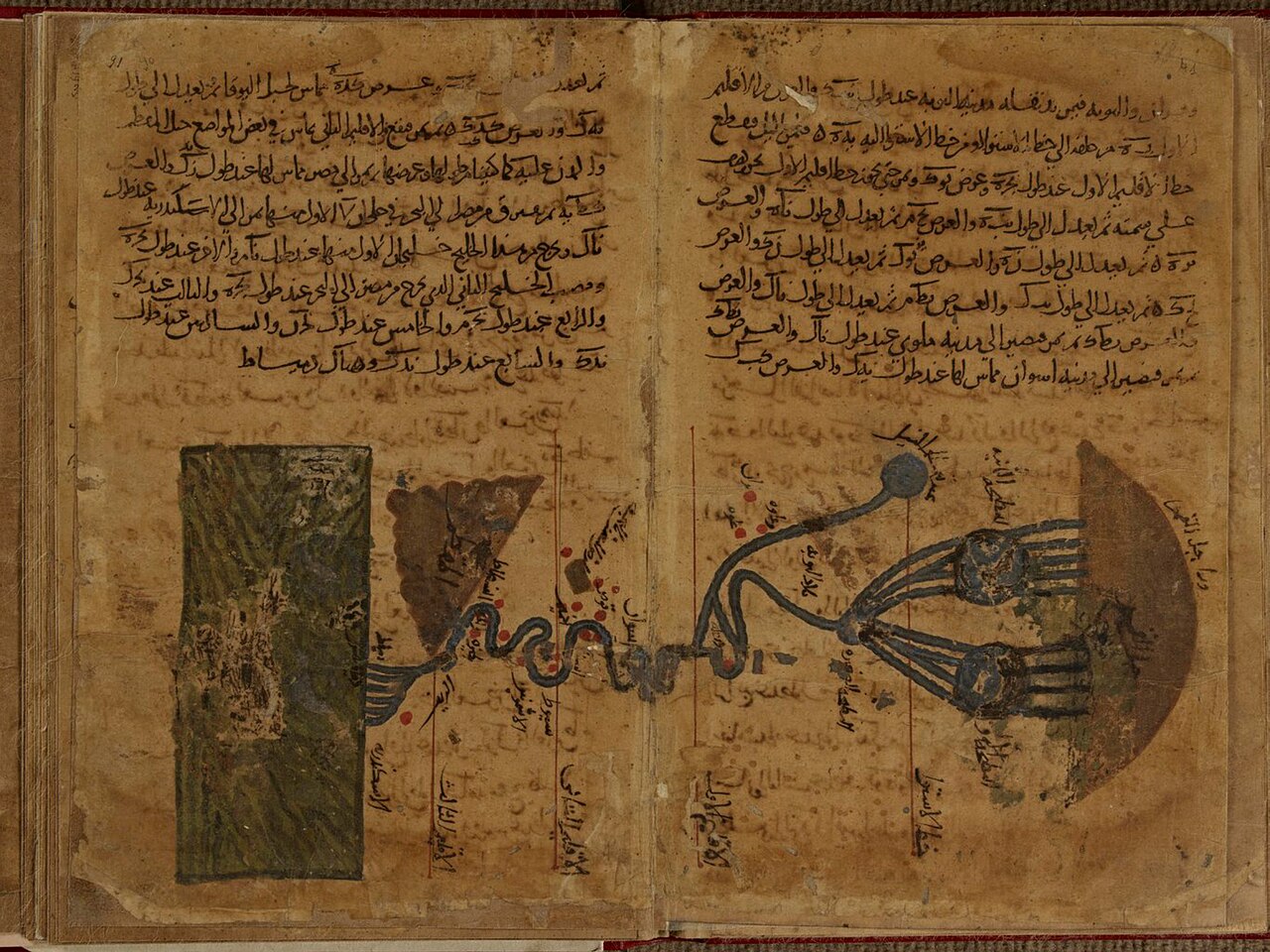
Two facing pages of an Arabic manuscript with black ink text in the margins and a colored diagram in the center: a blue and red river system with branching channels and lakes, a green rectangular panel on the left, and a brown curved shape on the right. Labels in Arabic are written along the diagram.Artifact

Primary source

Earliest Extant Map of the Nile

Muḥammad ibn Musa al-Khwarizmi

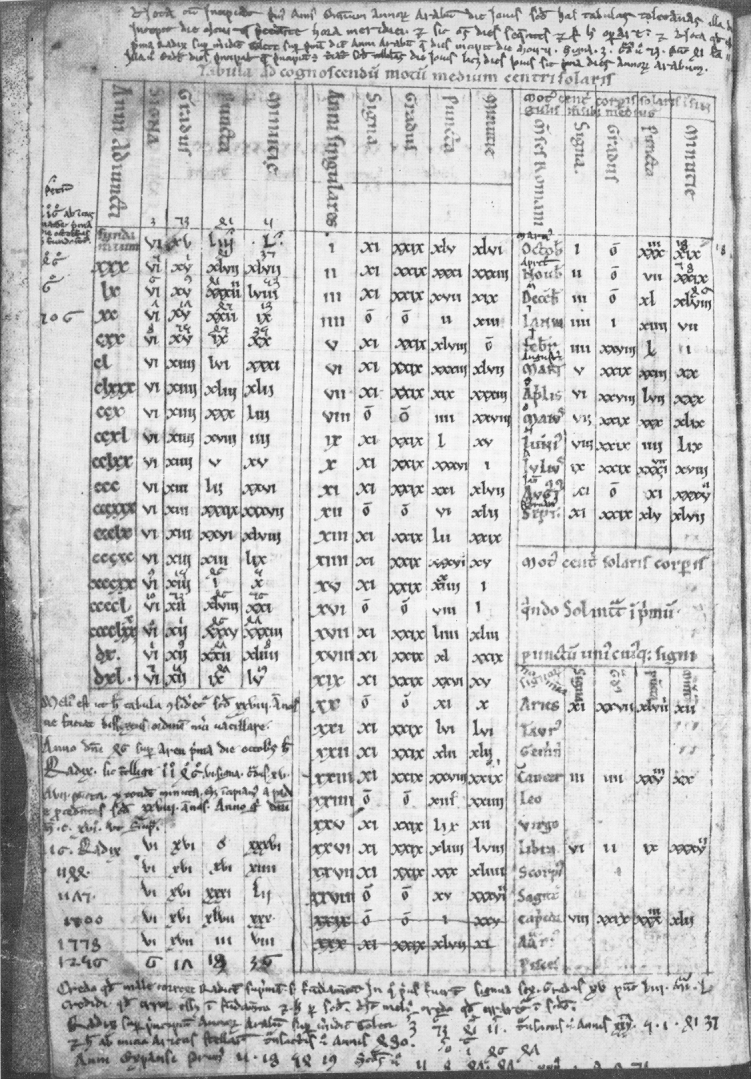
Scanned black-and-white manuscript page of medieval Latin tables with columns of Roman numerals, headed 'Tabula de cognoscendo motu medium centrum solaris'. Handwritten marginal notes and a column of dated entries appear at the bottom.Document

Secondary source

Zij Manuscript, Corpus Christi College MS 283

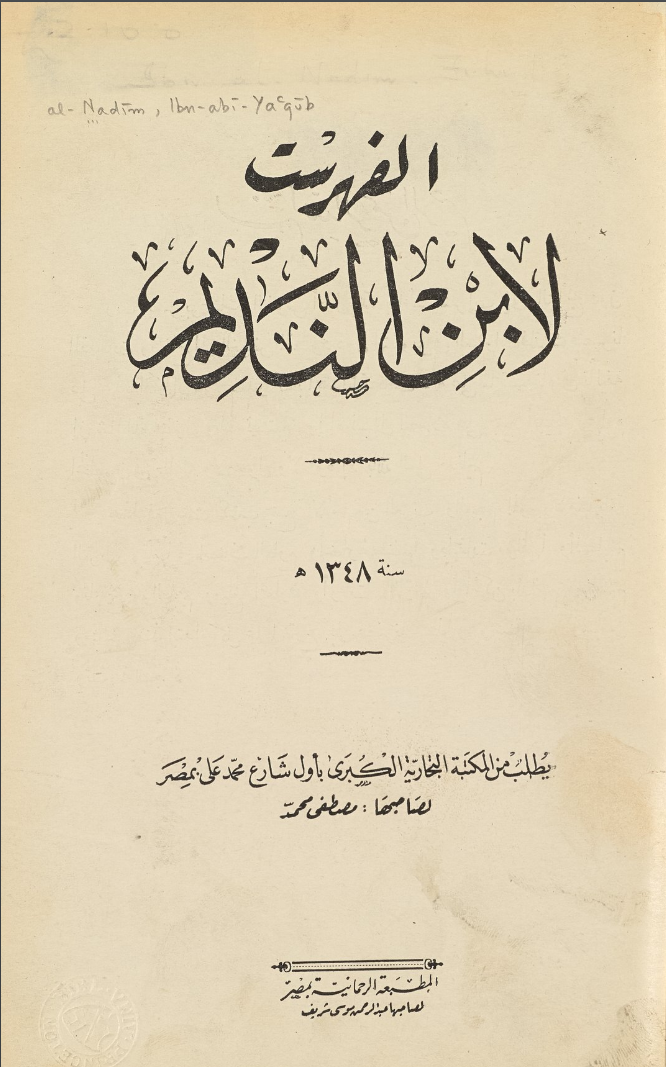
Title page of an Arabic book. Large decorative calligraphic title reads الفهرست لابن النديم. Below is the date سنة ١٣٤٨ هـ. Lower text gives the publisher's details in Arabic, and a faint pencil note in Latin letters reads al-Nadim, Ibn-abi-Ya'qub at top left.Book

Secondary source

Al-Fihrist

Ibn al-Nadim · 987

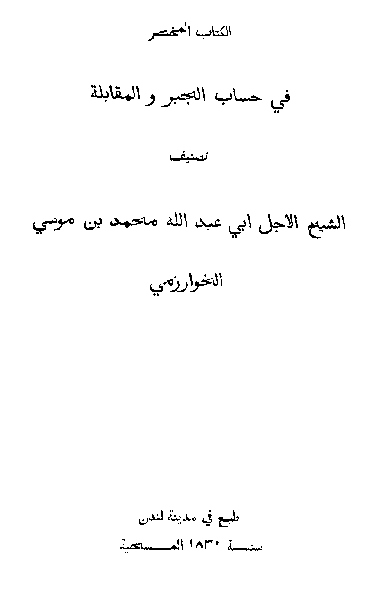
Title page in Arabic script of al-Kitab al-Mukhtasar fi Hisab al-Jabr wa al-Muqabala, composed by Al-Sheikh Al-Ajal Abi Abdullah Muhammad ibn Musa Al-Khwarazmi, printed in London 1830 AH.Book

Secondary source

The Algebra of Mohammed ben Musa

Fredrick Rosen · 1831

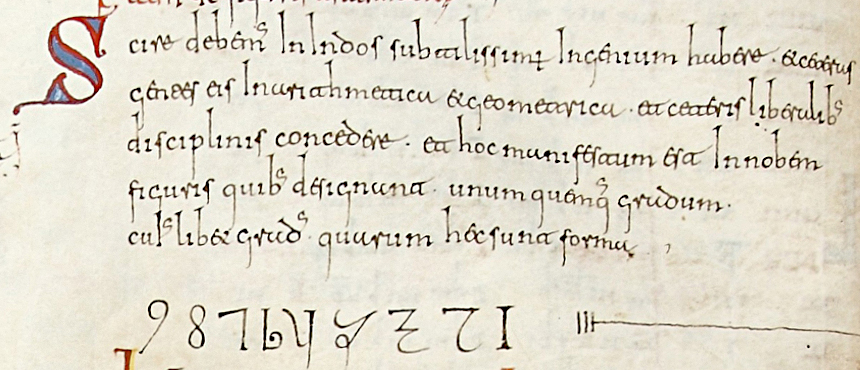
Page of a medieval Latin manuscript with a decorated red and blue initial S and several lines of brown ink text in Latin script. Below the text is a row of Hindu-Arabic numerals (1 to 9 in a Visigothic-style hand) with a tally-like mark at the right.Document

Secondary source

Codex Vigilanus

Vigila · c. 976-1000

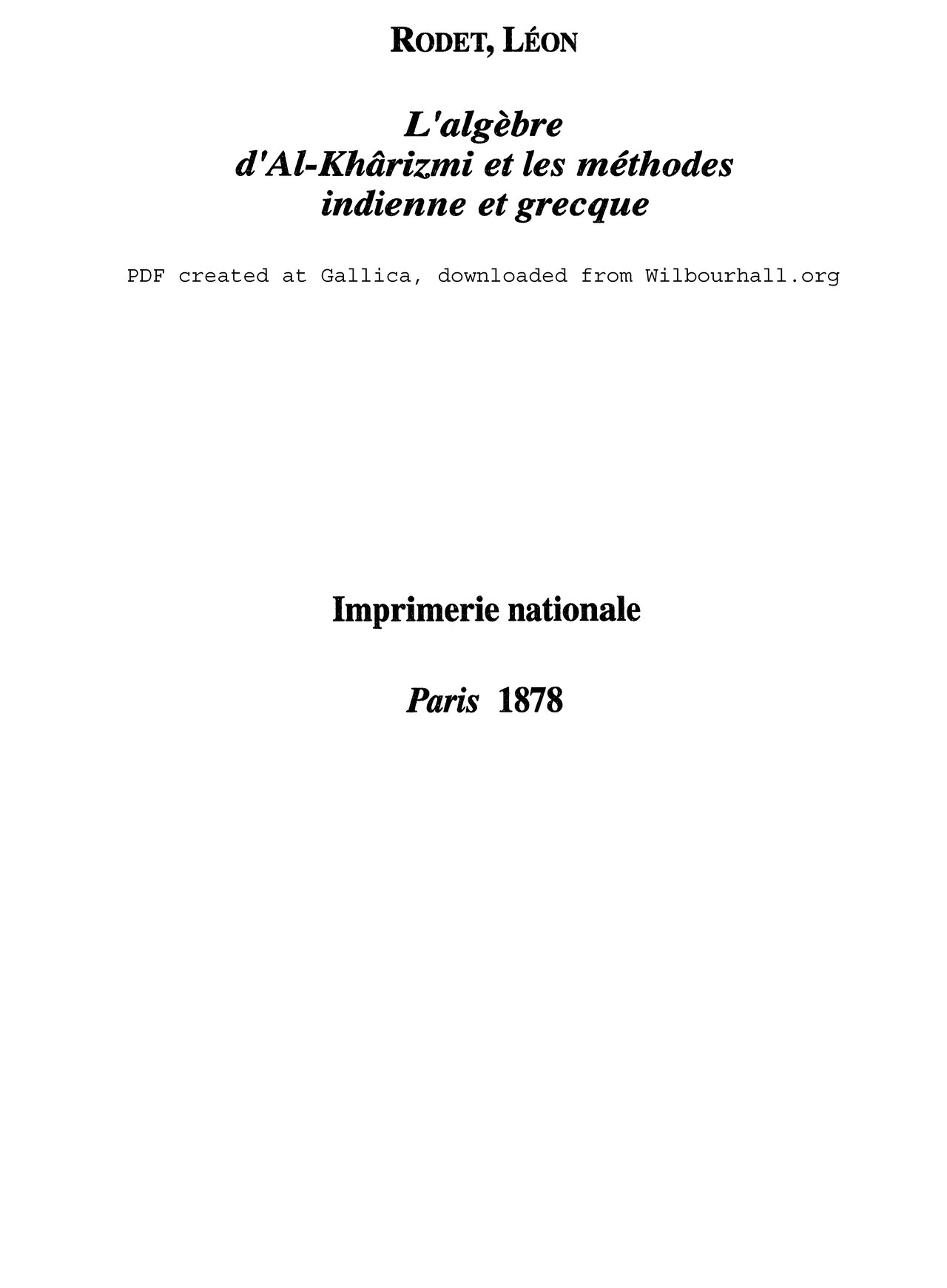
Title page of Léon Rodet's book L'algèbre d'Al-Khârizmi et les méthodes indienne et grecque. Author name RODET, LÉON at top. Note reads PDF created at Gallica, downloaded from Wilbourhall.org. Publisher Imprimerie nationale, Paris 1878.Book

Secondary source

L'algèbre d'Al-Khârizmi et les méthodes indienne et grecque

Léon Rodet · 1878

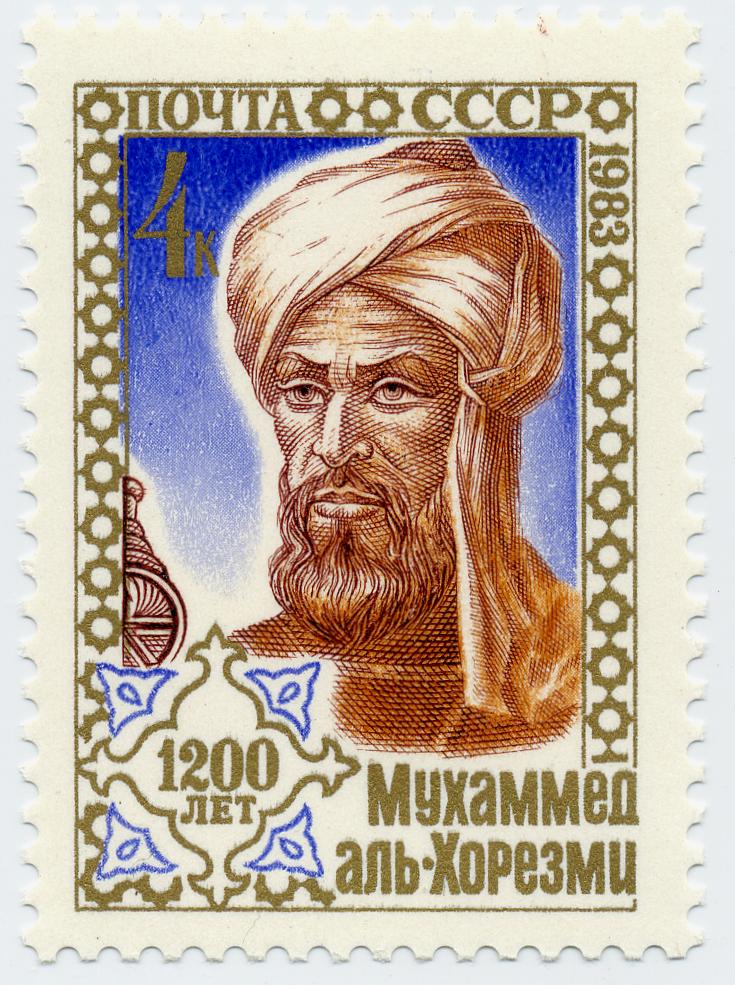
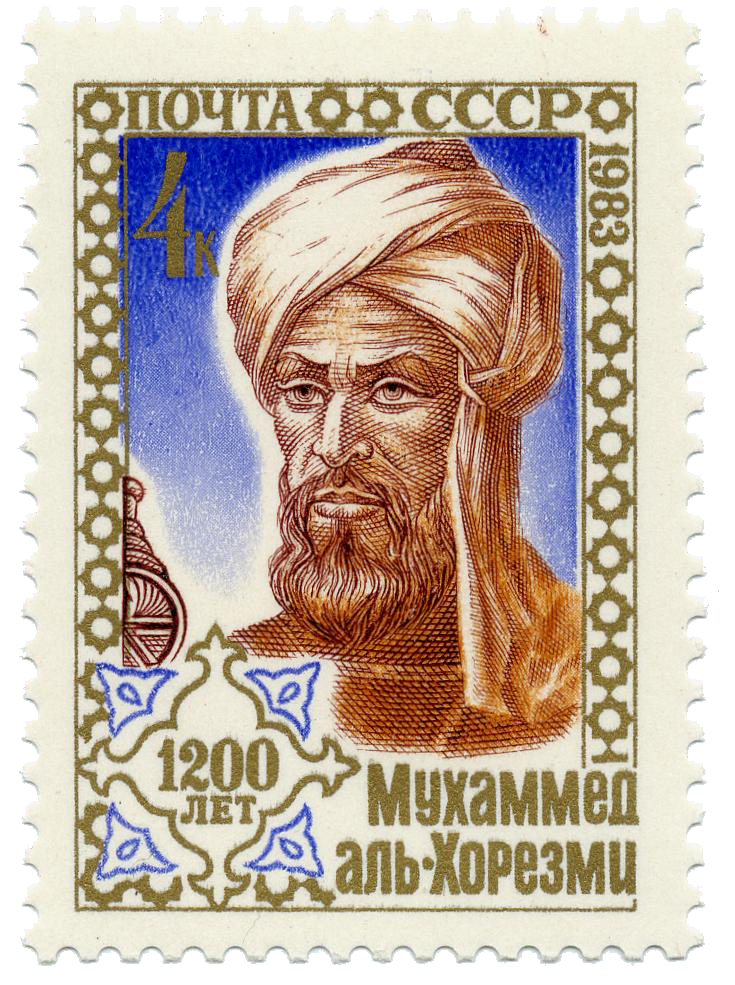
Soviet postage stamp, 4 kopecks, issued 1983 for the 1200th anniversary of al-Khwarizmi. Blue background with a brown-toned engraved portrait of a bearded man in a white turban. Gold ornamental border, a brass-colored astrolabe-like instrument at left, and Cyrillic text reading 'ПОЧТА СССР', '1983', '1200 ЛЕТ', and 'Мухаммед аль-Хорезми'.Artifact

Tertiary source

Soviet postage stamp for the 1200th anniversary of al-Khwarizmi

А. Адашев · 1983

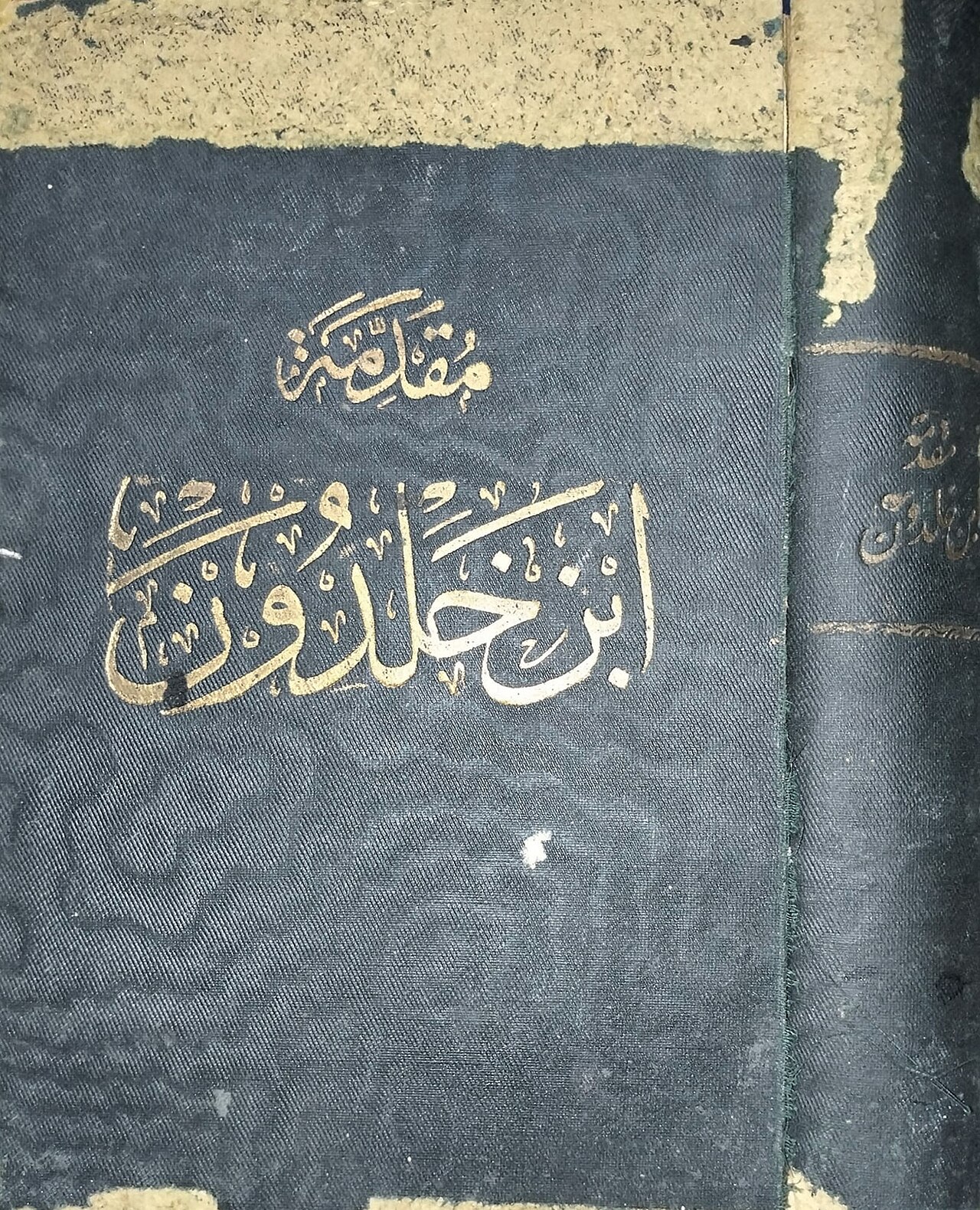
Dark blue cloth book cover with gold Arabic calligraphy reading 'Muqaddimah' above 'Ibn Khaldun'. The cover is worn, with pale patches at the top and bottom edges and a spine with partial gold lettering on the right.Book

Secondary source

Muqaddimah

Ibn Khaldun · 1377

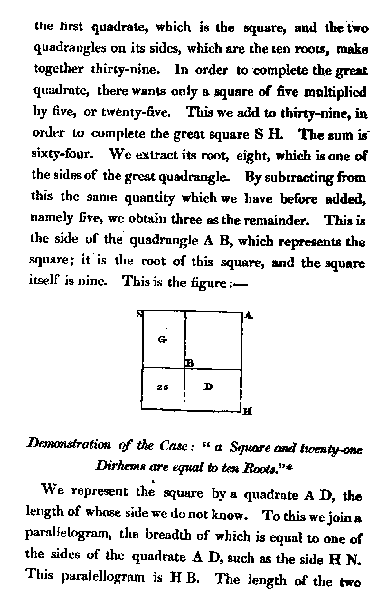
Scanned page of an English translation of al-Khwarizmi's algebra text, with printed paragraphs of mathematical prose. Below the text is a diagram of a large square divided into smaller squares labeled G, B, D, zs, H, and A, with the caption 'Demonstration of the Case: a Square and twenty-one Dirhems are equal to ten Roots.'Book

Primary source

The Algebra of Mohammed ben Musa (English translation)

Fredrick Rosen · 1831 translation of 9th-century original

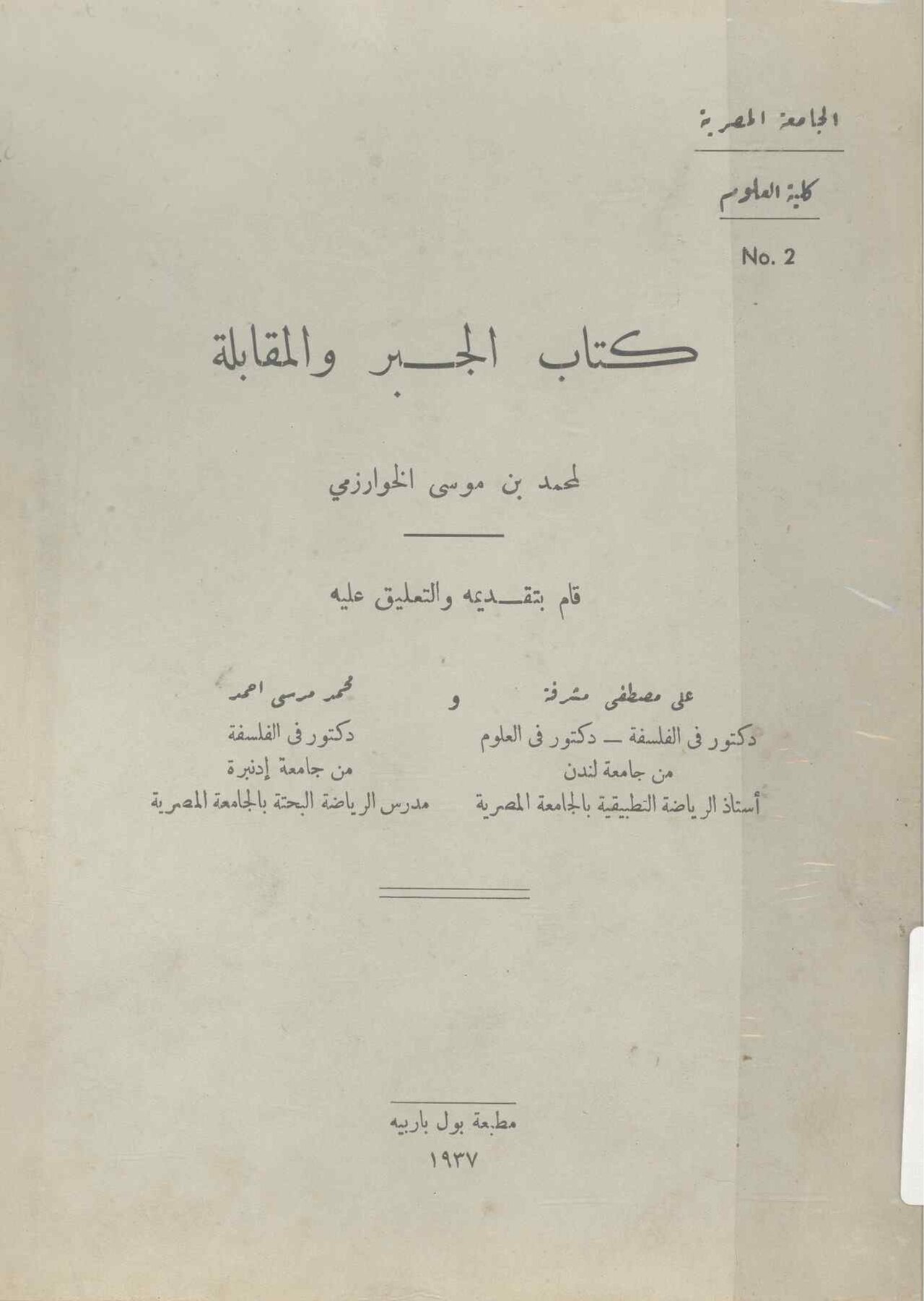
Title page of an Arabic book, Kitab al-Jabr wal-Muqabala, by Muhammad ibn Musa al-Khwarizmi, edited by Ali Mustafa Mushrifa and Muhammad Mursi Ahmad. Printed by Bol Barbier, 1937. Top right reads Egyptian University, Faculty of Science, No. 2.Book

Secondary source

Kitab al-Jabr wal-Muqabala (1937 Cairo edition)

Muḥammad ibn Musa al-Khwarizmi · 1937

The Algebra of Mohammed ben MusaBook

Secondary source

The Algebra of Mohammed ben Musa

Muḥammad ibn Musa al-Khwarizmi · 1831

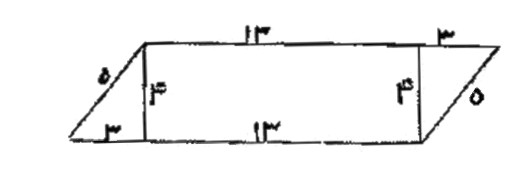
Line drawing of a slanted, box-like solid with a parallelogram front face and back edges drawn as parallel lines. Arabic numerals label the top, bottom, vertical, and slanted edges. Black ink on white.Painting

Secondary source

Geometric diagram from al-Mukhtasar fi hisab al-jabr wa'l-muqabala

Muḥammad ibn Musa al-Khwarizmi

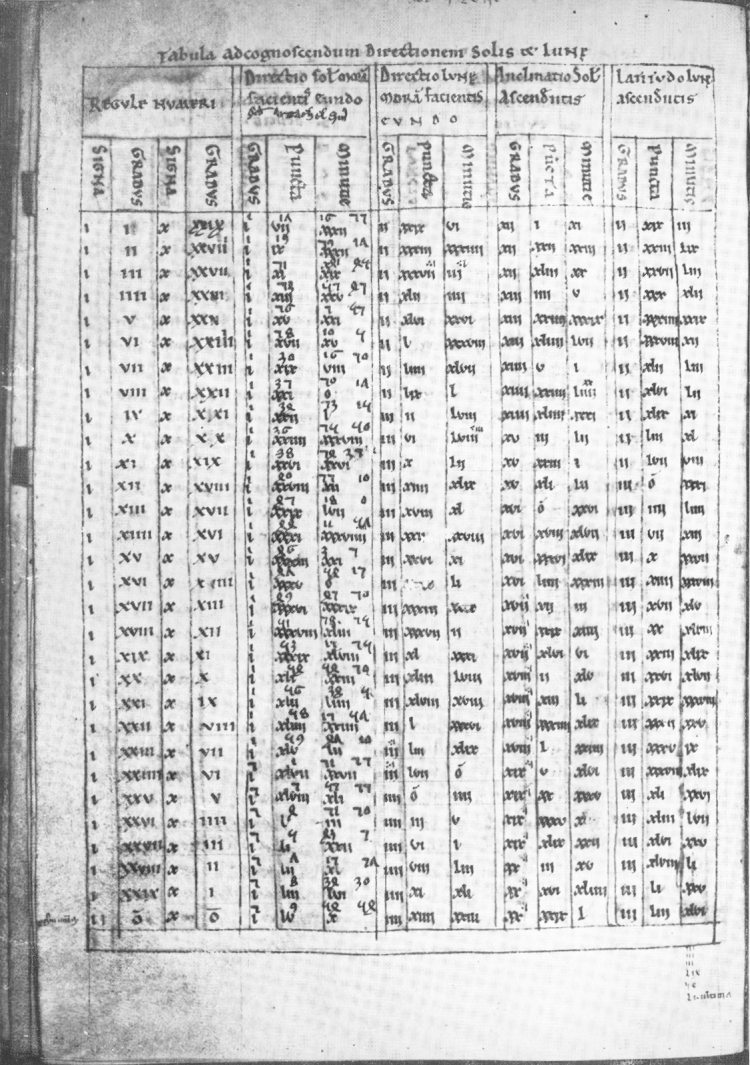
Scan of a black-and-white manuscript page with a large ruled table in Latin handwriting. The title across the top reads 'Tabula adcognoscendum directionem solis et lunae.' Columns of Roman numerals and small columns of hand-written figures are arranged in rows, with column headings such as 'Regule lunaris,' 'Directio solis,' 'Directio lune,' and 'Ascendentis.' The page has a darkened border on the left edge.Document

Primary source

Corpus Christi College MS 283 (Latin algorism page)

Unknown author · c. 12th century

Scan of a Soviet Union 1983 postage stamp with a brown and blue portrait of a bearded man in a white turban. Text reads 'Почта СССР 1983', '4 к', '1200 лет', and 'Мухаммед аль-Хорезми'. Decorative gold border.Artifact

Secondary source

Soviet 1983 commemorative stamp for al-Khwarizmi

Unknown author · 1983

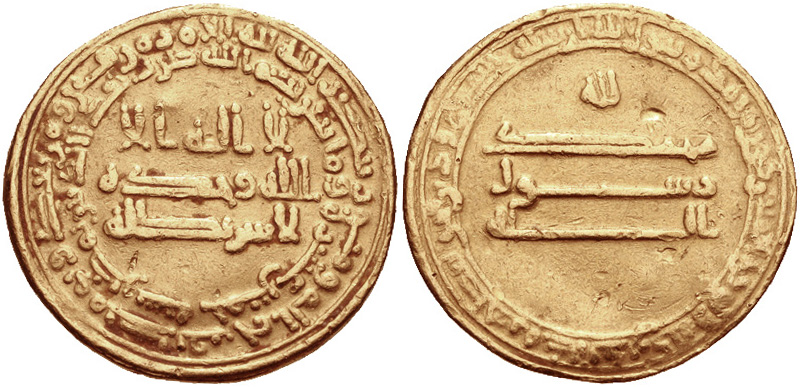
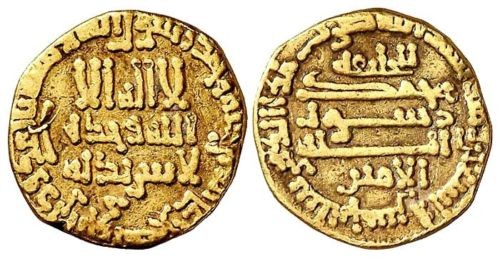
Two-sided gold coin with Arabic calligraphic inscriptions. The obverse has a central Islamic declaration of faith in horizontal lines within a circular marginal legend. The reverse has a central inscription in horizontal lines within a circular marginal legend. Both sides show raised lettering on a golden surface.Artifact

Primary source

Coin of al-Ma'mun

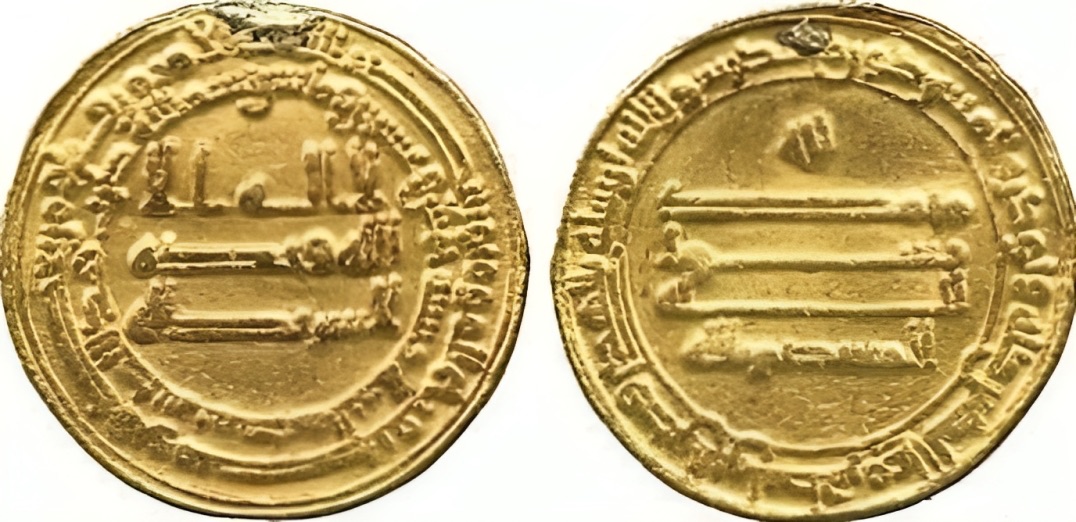
Two views of a gold Abbasid dinar coin. The left side shows a central inscription panel within a beaded border and legend, with a stylized arched design. The right side shows horizontal inscription lines inside a circular legend with Arabic script around the edge.Artifact

Primary source

Abbasid Dinar of al-Mu'tasim

225 AH

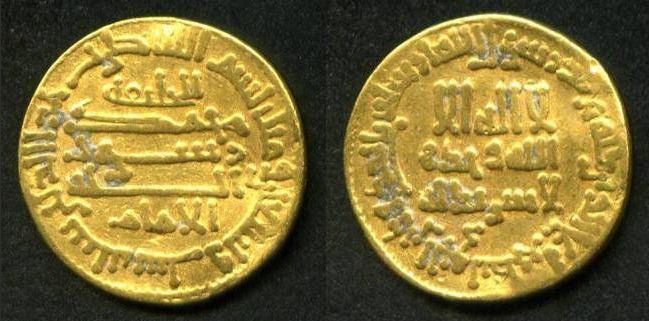
Two photographs of a gold Abbasid dinar coin, front and back, on a black background. Both faces carry raised Arabic inscriptions arranged in concentric circles and central fields, with some worn areas visible.Artifact

Primary source

Abbasid Dinar of al-Ma'mun, 196 AH

196 AH / 811 AD

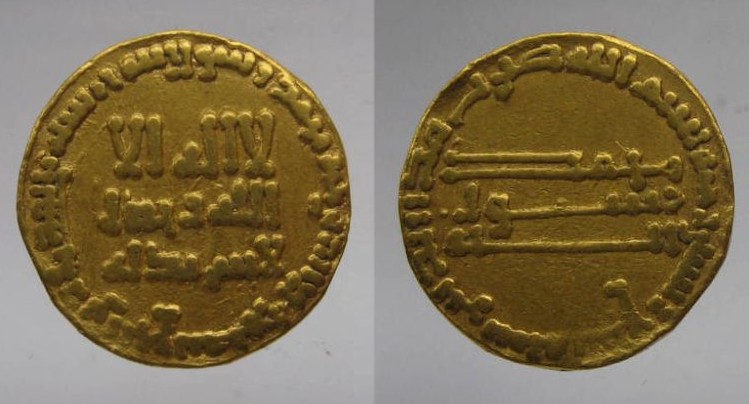
Two photographs of a gold Abbasid dinar coin, obverse on the left and reverse on the right, showing raised Arabic inscriptions in Kufic script around the rim and across the centre on a plain background.Artifact

Primary source

Abbasid Dinar of al-Mahdi

167 AH / 783 AD

Photograph of a small gold dinar coin showing two sides. The left side has Arabic calligraphy in a central inscription with a surrounding circular legend. The right side has Arabic script in a rectangular field with a circular legend around it. The coin is worn with a brownish-gold tone.Artifact

Primary source

Abbasid Dinar of al-Amin

195 AH / 811 AD

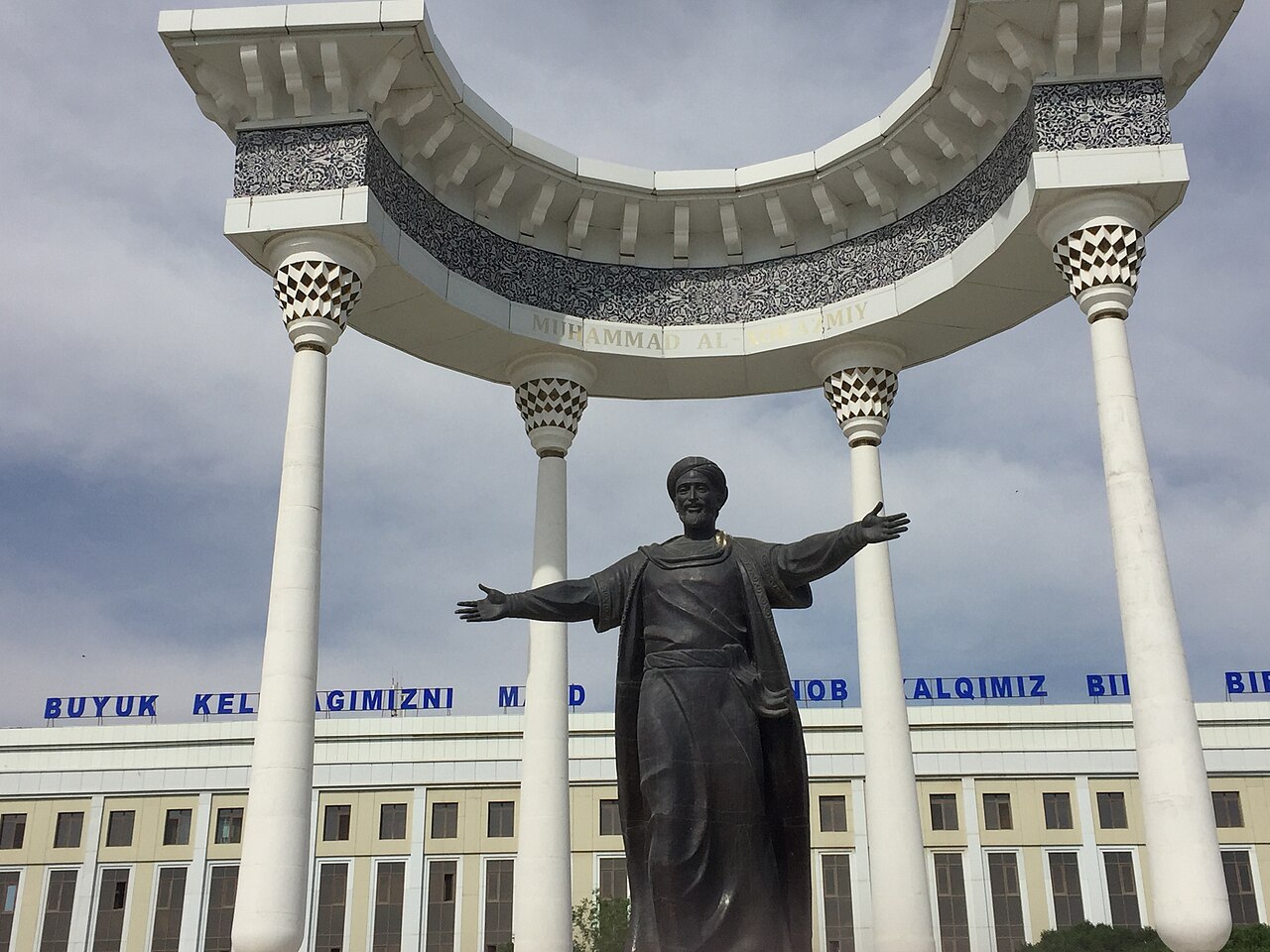
Photograph of a dark bronze statue of a bearded man in a long robe and turban, arms outstretched, standing before a white curved arch supported by four columns with patterned tops. The arch bears an inscription. Behind is a long building with blue lettering and a cloudy sky.Sculpture

Secondary source

Monument to al-Khwarizmi in Urgench

photographed 2019

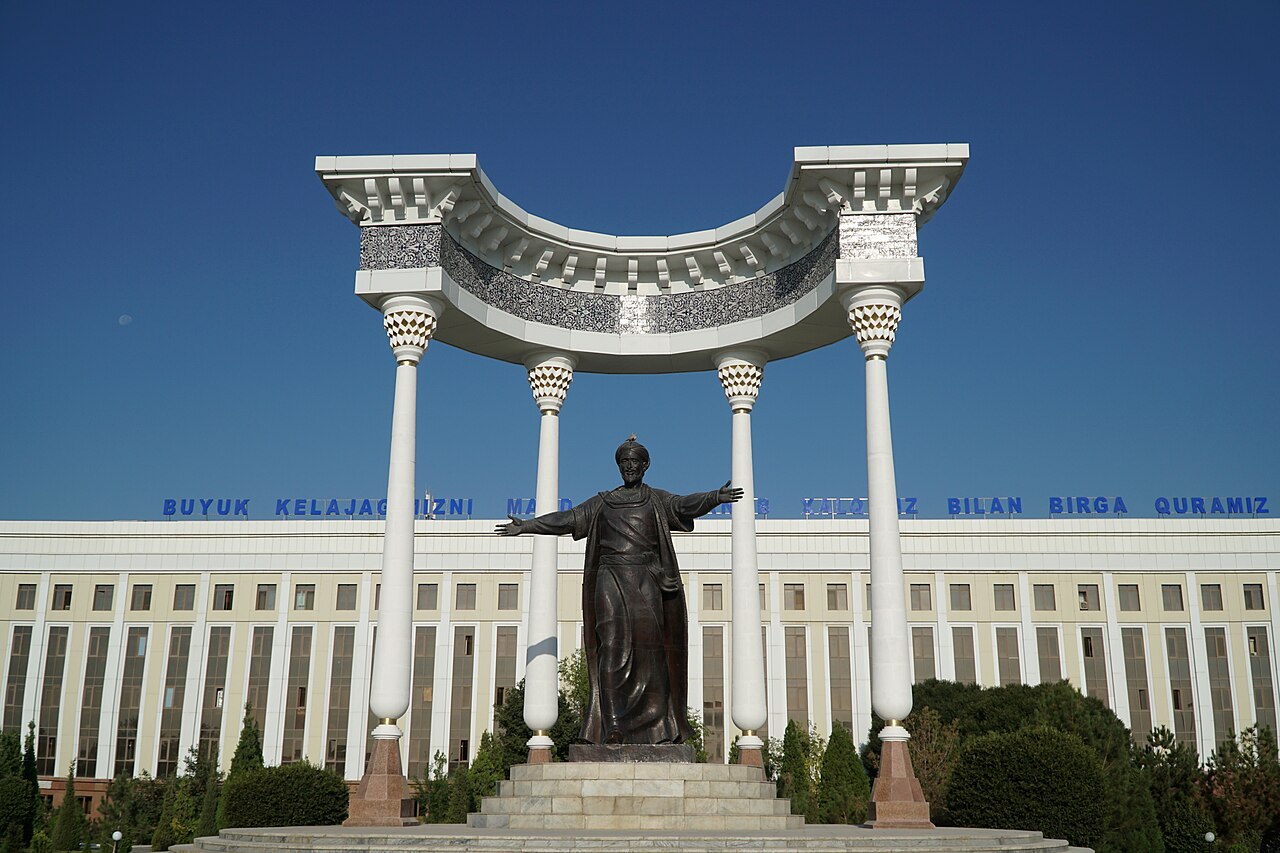
Bronze statue of a robed man with arms outstretched, set on a stone plinth in front of a white colonnaded canopy and a large white building with blue lettering. Clear blue sky.Sculpture

Secondary source

Statue of al-Khwarizmi in Urgench

Adam Harangozó · 2018 (photograph of statue)

Want the full shelf? Chat with Al-Khwarizmi in the app and open the Sources panel — every quote links back to the original.

Use Al-Khwarizmi in class

4 collections

Ready-made collections from the Humy team that feature Al-Khwarizmi. Preview any of them, then try it free.

Trusted by educators worldwide

Conversations
375,000+
Real exchanges between students and historical figures
Messages exchanged
4,142,000+
Across every figure, classroom and language
Historical figures
100,000+
Each informed by a curated biography and selected sources
Languages supported
50+
From English and Spanish to Arabic and Korean

Paying customers

Used by 98 schools and universities

Partner school logo
Tecnológico de Monterrey logo
Hyper Island logo
Partner school logo
Chambersburg Area School District logo
Broward County Public Schools logo
Nebo School District logo
National Louis University logo
South Florida PBS logo
Punahou School logo
University of Wisconsin–River Falls logo
Partner school logo
Partner school logo
Archbishop Mitty High School logo
Kingsburg High School logo
Norwalk Public Schools logo
Partner school logo
Connections logo
Partner school logo
Moore Public Schools logo
Partner school logo
Partner school logo
Partner school logo
Partner school logo
Robbinsville Public Schools logo
Partner school logo
Partner school logo
Partner school logo
Tecnológico de Monterrey logo
Hyper Island logo
Partner school logo
Chambersburg Area School District logo
Broward County Public Schools logo
Nebo School District logo
National Louis University logo
South Florida PBS logo
Punahou School logo
University of Wisconsin–River Falls logo
Partner school logo
Partner school logo
Archbishop Mitty High School logo
Kingsburg High School logo
Norwalk Public Schools logo
Partner school logo
Connections logo
Partner school logo
Moore Public Schools logo
Partner school logo
Partner school logo
Partner school logo
Partner school logo
Robbinsville Public Schools logo
Partner school logo
Partner school logo

What educators are saying

“We enjoyed the program last year and used it frequently.”
“My students say it’s a welcome change of pace. I’m not a fan of the “sage on the stage” model, so I try to incorporate research-oriented and self-paced activities. With Humy, students have to take charge of their learning. They’ve become more adept at critical thinking, forming better questions, and improving their reading comprehension. The interview feature has been my go-to tool. I create assignments where students must ask historical figures a set number of questions, then summarize the responses to ensure they’re truly absorbing the material. This approach lets them actively explore the past rather than passively consuming information.”
“Humy has helped me bring historical figures, sometimes long past, to life. When my students interact with these figures in real-time, it eliminates some of the perceived “ancient” characteristics of my curriculum. This has shifted my students’ thinking away from viewing history as abstract or irrelevant. Real-time interactions make historical figures relatable, even allowing students to ask off-topic questions that help put historical lives in a more relevant context for 13-year-olds. The feature I use the most is the interview feature. After teaching a topic, most recently Gandhi and Joan of Arc, I have the students ask pointed, focused questions. We practice good conversation techniques beforehand, teaching them to listen (or read) carefully and formulate thoughtful follow-up questions rather than just interrogating. It helps students practice effective conversation skills.”

FAQ

Frequently asked questions

Who is Al-Khwarizmi?
Mathematician and scholar who developed algorithms and the concept of algebra. On Humy.ai you can chat with an AI version of Al-Khwarizmi that draws on a short biography and 24 historical sources during the conversation — by text or voice, in 42 languages.
Is Al-Khwarizmi AI free?
Al-Khwarizmi is part of Humy's full library of more than 100,000 figures, which comes with a paid plan. A free account (no credit card) includes 20 messages a month with the free library's figures, so you can try how the conversations work first.
What sources does the Al-Khwarizmi AI use?
It draws on a short biography and 24 historical sources (books, artifacts and documents), including “Al-Jabr”, “Algebra Manuscript, Bodleian MS. Huntington 214” and “Dixit Algorizmi”. Each source has its own page on Humy.ai.
How historically accurate is the AI version of Al-Khwarizmi?
Each figure uses a short biography and a small set of selected historical sources as context (retrieval-augmented generation), so answers stay closer to known material than the model's general knowledge alone. It isn't a citation-grade research tool — like any LLM, the AI can get details wrong or extrapolate. Treat it as a strong starting point for inquiry and cross-reference important claims.
Can I talk to Al-Khwarizmi by voice?
Yes. In addition to text chat, you can call Al-Khwarizmi and hear their voice respond in real time — useful for auditory learners, interview practice and Socratic dialogue.
Is Humy.ai safe and compliant for schools?
Yes. Humy.ai is used by more than 100 schools, universities and organisations. The platform is FERPA- and GDPR-aligned, supports SSO, and offers an IT-approval pack tailored for school procurement teams.

Ready when you are

Start chatting with Al-Khwarizmi now.

20 messages free · No credit card · Available in 50+ languages.