


Secondary sourcePainting
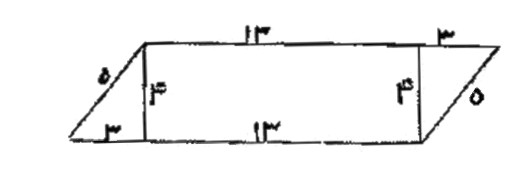
Geometric diagram from al-Mukhtasar fi hisab al-jabr wa'l-muqabala
Muḥammad ibn Musa al-Khwarizmi
A diagram from a printed edition of al-Khwarizmi's algebra book, illustrating his geometric method for solving equations.
A diagram illustrating al-Khwarizmi's geometric approach to solving algebraic equations.
About this source
What it is
This line drawing comes from a printed edition of al-Khwarizmi's algebra text, al-Mukhtasar fi hisab al-jabr wa'l-muqabala. It shows a slanted, box-like solid with labeled edges, used to illustrate a geometric method for solving equations.
Why it matters
Al-Khwarizmi often explained algebraic problems using geometric figures like this one, showing how shapes and numbers were connected in his mathematical thinking. This image, from a later printed edition rather than an original manuscript, helps modern readers see how his methods worked visually, not just in words.
Look closer
- Why might a mathematician use a geometric drawing to explain an algebra problem?
- What do the labeled edges and numerals tell you about how the solid relates to an equation?
- Since this is from a later edition, what might differ from al-Khwarizmi's original drawings?
This painting is part of the curated material that grounds the AI version of Al-Khwarizmi on Humy.ai — when students ask about related events, the AI can quote it and cite it.
More Al-Khwarizmi sources
Meet the AI Al-Khwarizmi →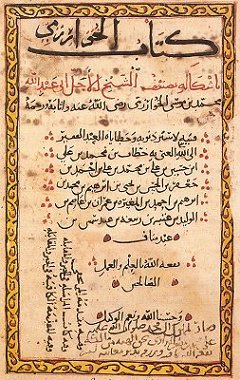 Book
Primary source
Al-Jabr
Muḥammad ibn Musa al-Khwarizmi · c. 820
 Book
Primary source
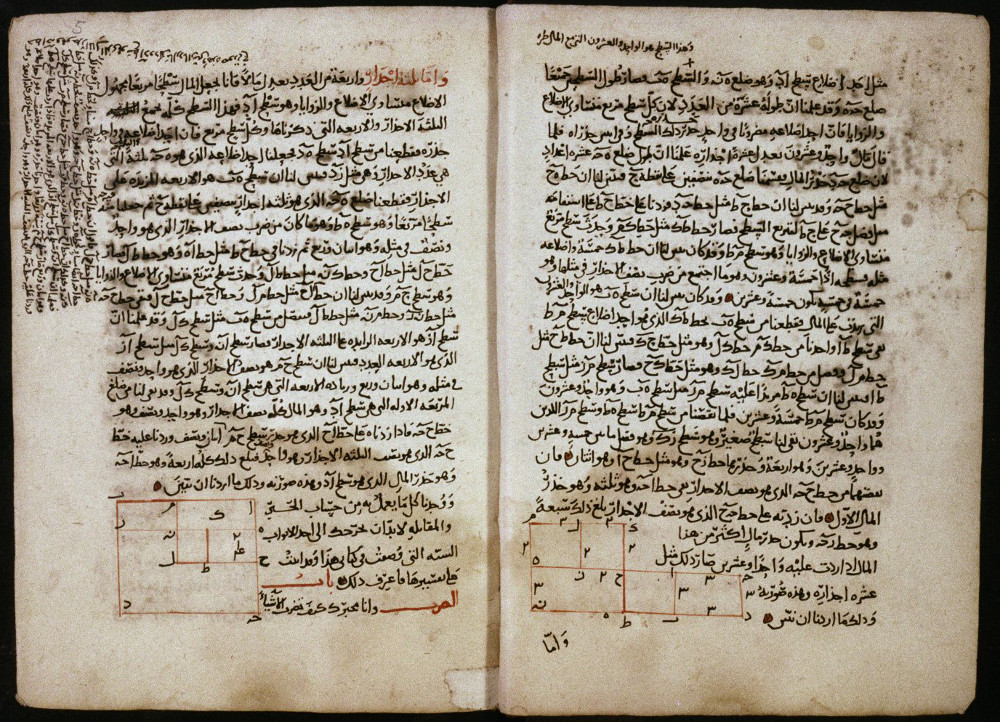
Algebra Manuscript, Bodleian MS. Huntington 214
Muḥammad ibn Musa al-Khwarizmi · 1342
 Book
Secondary source
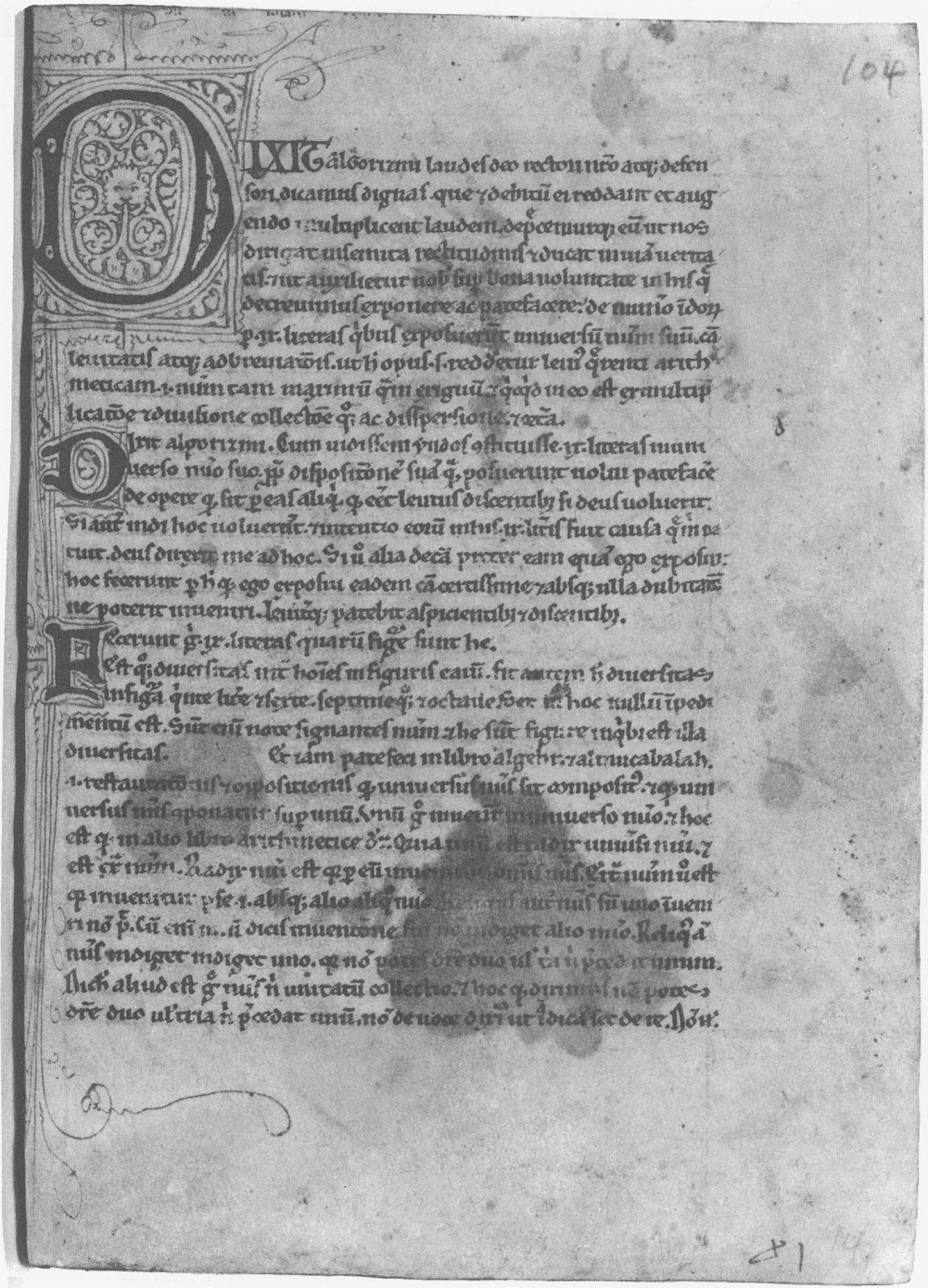
Dixit Algorizmi
Muḥammad ibn Musa al-Khwarizmi
 Artifact
Primary source
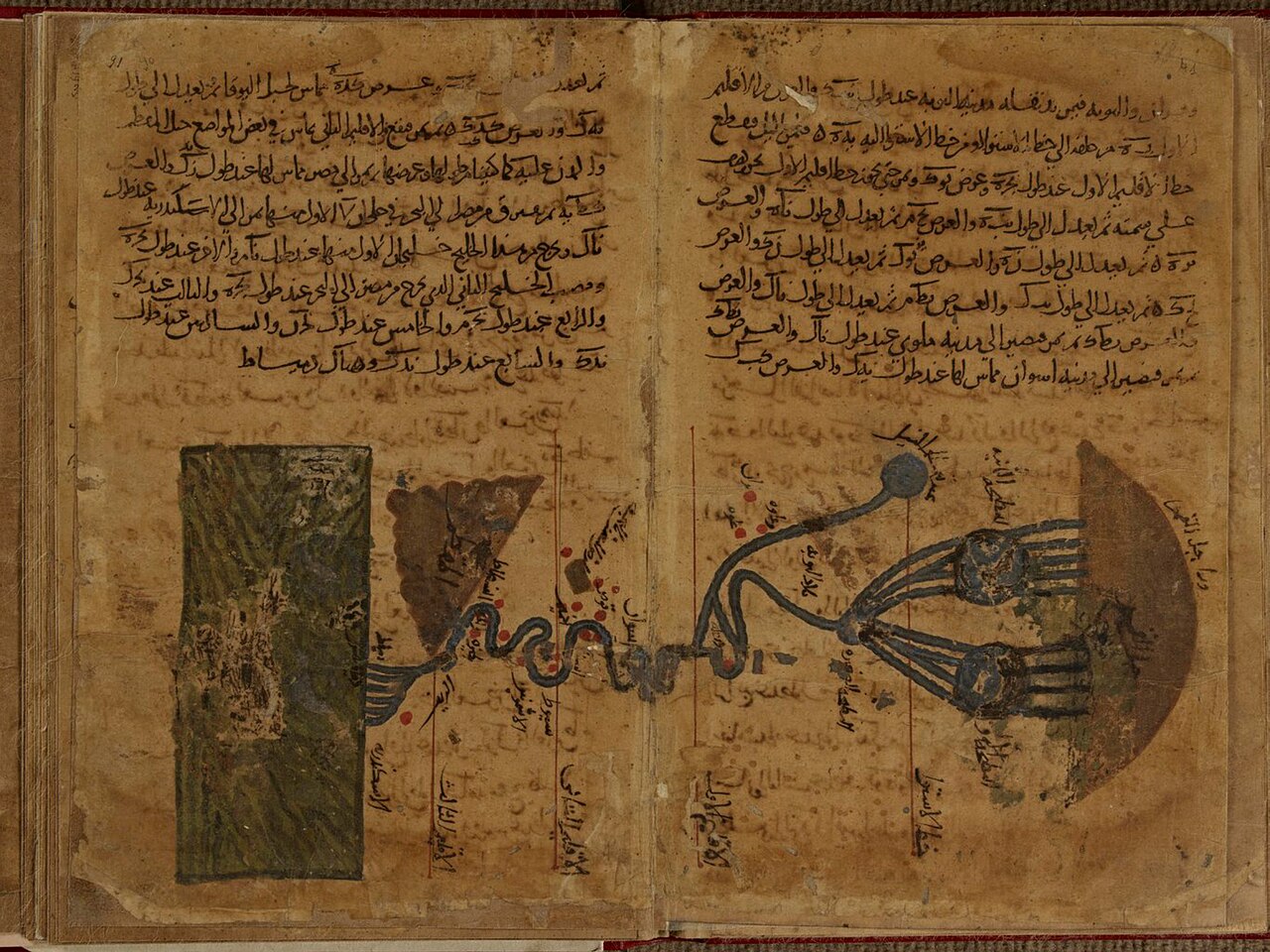
Earliest Extant Map of the Nile
Muḥammad ibn Musa al-Khwarizmi
 Document
Secondary source
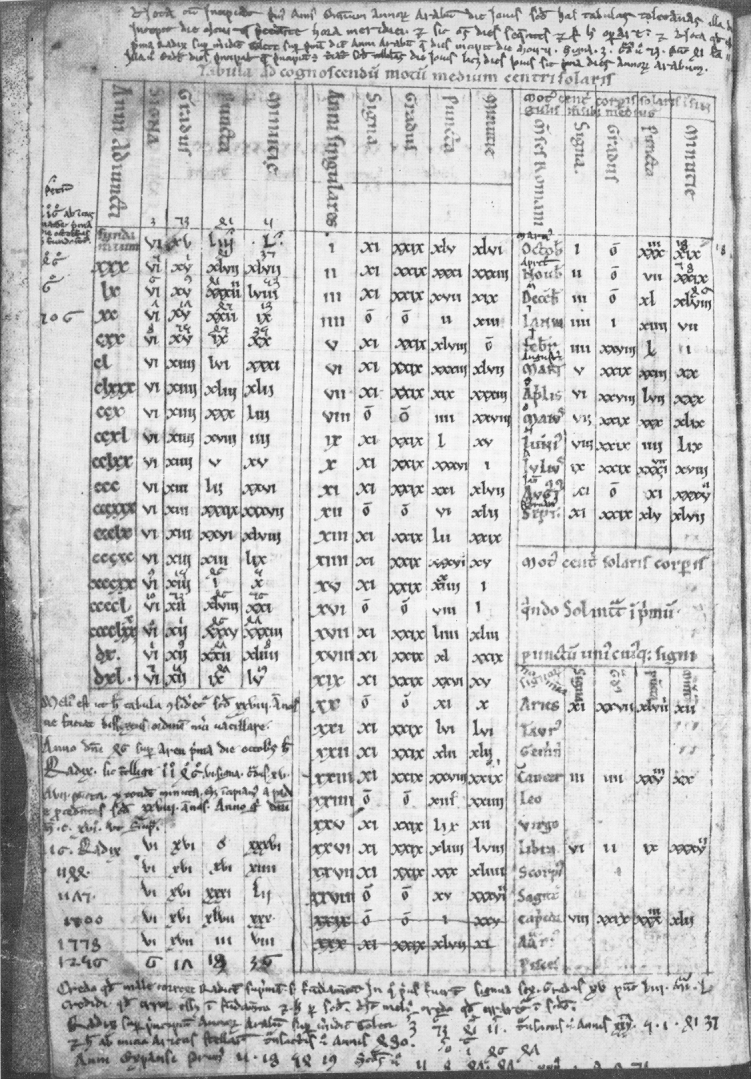
Zij Manuscript, Corpus Christi College MS 283
Ready when you are
Start chatting with Al-Khwarizmi now.
20 messages free · No credit card · Available in 50+ languages.