


Primary sourceDocument23 March 789
Admonitio generalis
Charlemagne · 23 March 789
A capitulary issued by Charlemagne in 789 laying out sweeping religious and educational reforms, including the order to found schools.
This capitulary, issued by Charlemagne in 789, lays out his programme of religious and educational reform across the kingdom.
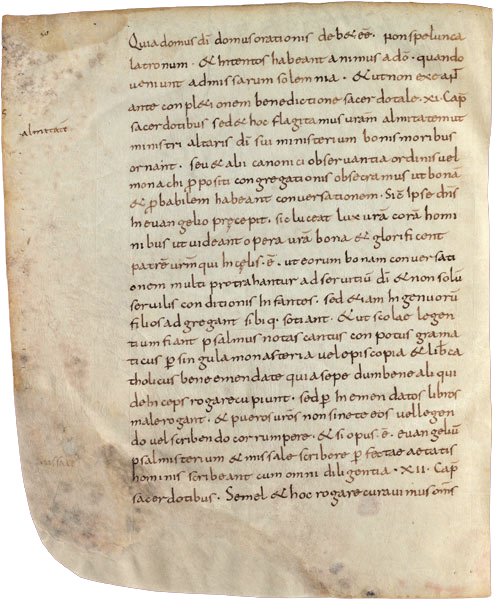
About this source
What it is
The Admonitio generalis is a capitulary (a collection of royal legislation) issued by Charlemagne in 789. It covers 82 chapters on religious and educational reform within the Frankish kingdom, drawn up with the help of clerical advisers and earlier church rulings. A surviving manuscript page is held in the Bibliothèque nationale de France.
Why it matters
In this document Charlemagne presents himself as a 'new Josiah', responsible for the moral health of his subjects, and orders monasteries and cathedrals to set up schools so that boys could learn to read, write and understand religious texts. It is one of the foundational documents of the Carolingian Renaissance and shows how closely Charlemagne tied together political power, religion and education.
Look closer
- Why does Charlemagne compare himself to a biblical king like Josiah?
- What does the order to build schools tell us about the state of education before 789?
- Who would have had to carry out these orders, and how might that have been difficult?
This document is part of the curated material that grounds the AI version of Charlemagne on Humy.ai — when students ask about related events, the AI can quote it and cite it.
More Charlemagne sources
Meet the AI Charlemagne → Book
Secondary source
Vita Karoli Magni
Einhard · c. 817-833
 Document
Primary source
Royal Frankish Annals
741-829, this manuscript c. 900
Primary source
De litteris colendis
Charlemagne · late 780s-800s
 Document
Primary source
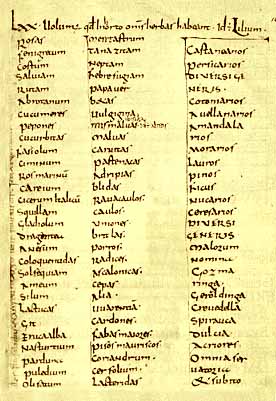
Capitulare de villis
c. 771-800
 Artifact
Primary source
Palatine Chapel in Aachen
Odo of Metz · c. 792-805
Ready when you are
Start chatting with Charlemagne now.
20 messages free · No credit card · Available in 50+ languages.