


Primary sourceLetterlate 780s-800s
De litteris colendis
Charlemagne · late 780s-800s
A letter issued in Charlemagne's name ordering monasteries and bishoprics to improve learning, probably drafted by his scholar Alcuin.
Issued in Charlemagne's name, this letter sets out his programme for reviving learning across his monasteries and churches.
About this source
What it is
De litteris colendis is a letter addressed by Emperor Charlemagne to Abbot Baugulf of Fulda, probably written in the late 8th or early 9th century. Although issued under Charlemagne's name, it was most likely drafted by his adviser Alcuin of York. The oldest surviving copy dates from the 8th century.
Why it matters
The letter is one of the earliest and most important sources for the educational reforms of the Carolingian Renaissance. It shows Charlemagne's concern that monks and priests should read and write well enough to understand the Bible correctly, since errors of understanding were seen as dangerous as errors of speech. It reveals Charlemagne's reliance on learned advisers like Alcuin to put his ambitions into words.
Look closer
- Why might Charlemagne, who reportedly struggled to write himself, care so much about others' literacy?
- What does it suggest that the letter was likely written by Alcuin rather than Charlemagne?
- Who was meant to receive and act on this letter, and why?
This letter is part of the curated material that grounds the AI version of Charlemagne on Humy.ai — when students ask about related events, the AI can quote it and cite it.
More Charlemagne sources
Meet the AI Charlemagne → Book
Secondary source
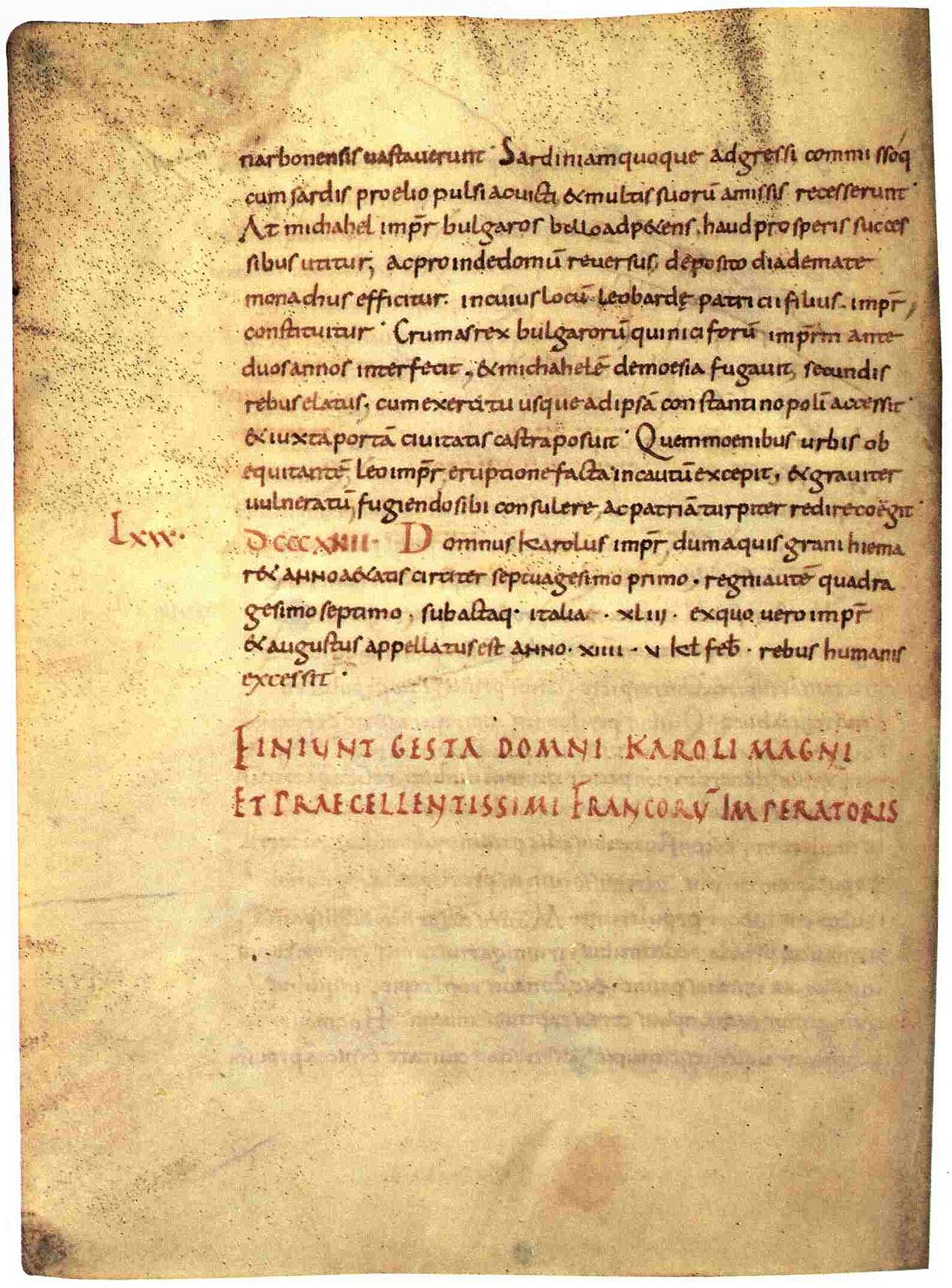
Vita Karoli Magni
Einhard · c. 817-833
 Document
Primary source
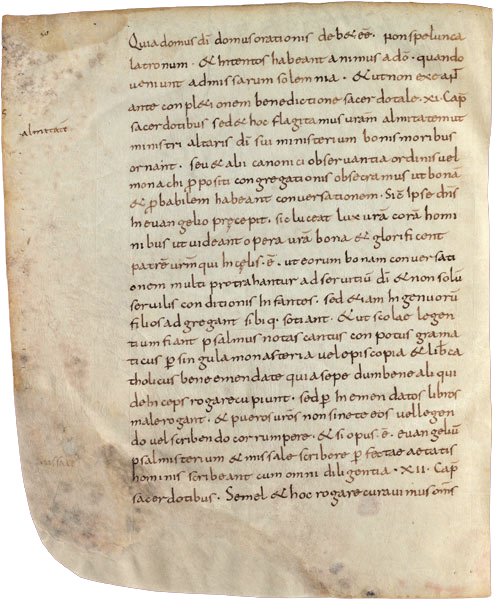
Royal Frankish Annals
741-829, this manuscript c. 900
 Document
Primary source
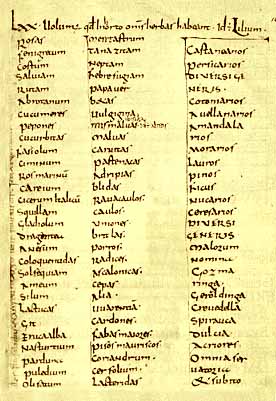
Admonitio generalis
Charlemagne · 23 March 789
 Document
Primary source
Capitulare de villis
c. 771-800
 Artifact
Primary source
Palatine Chapel in Aachen
Odo of Metz · c. 792-805
Ready when you are
Start chatting with Charlemagne now.
20 messages free · No credit card · Available in 50+ languages.