


Secondary sourcePainting1732
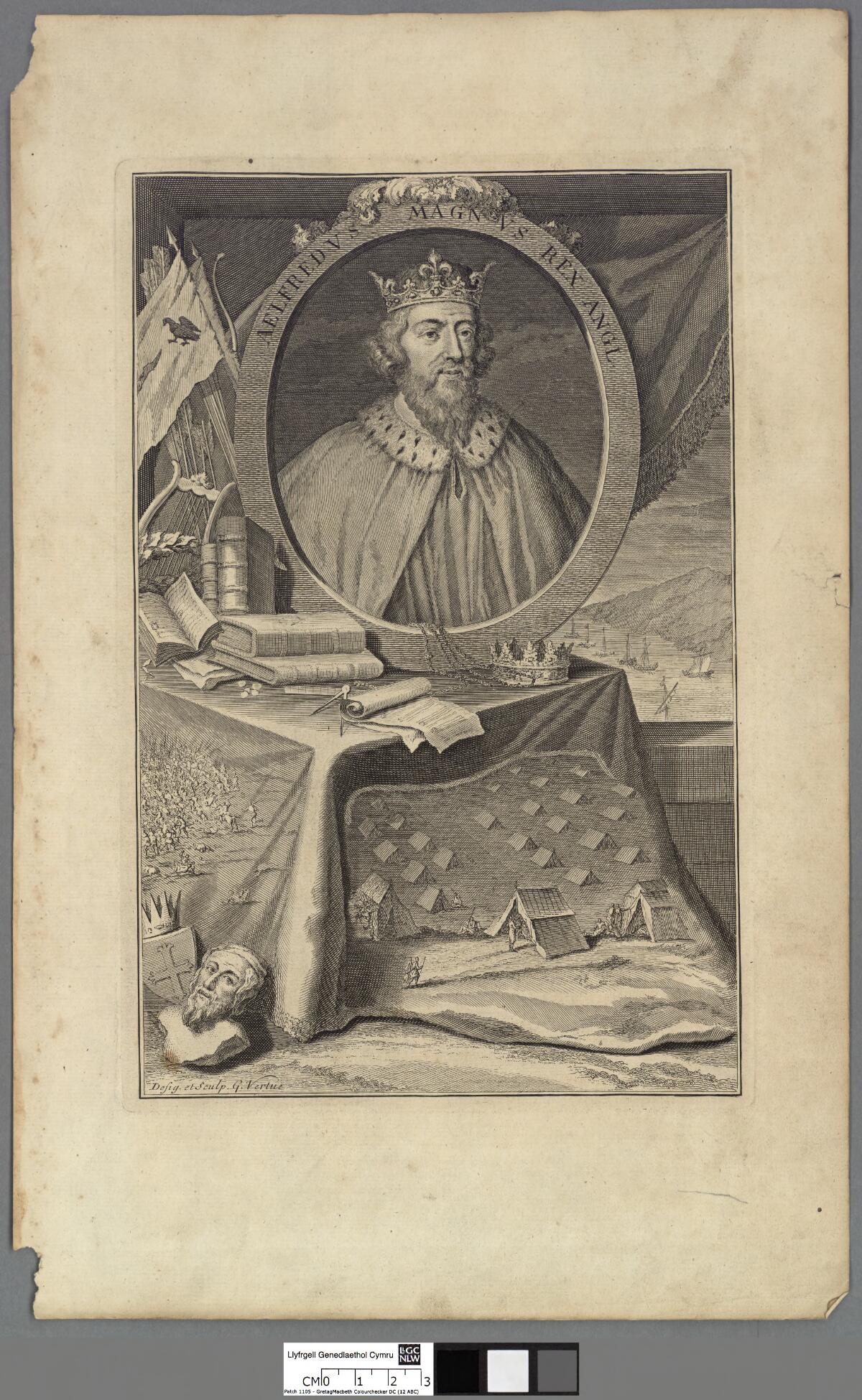
Aelfredus Magnus Rex Angl
George Vertue · 1732
An 18th-century engraved portrait imagining what Alfred the Great looked like, made long after his lifetime.
This imagined portrait helped popularize Alfred's image as a national hero long after his death.
About this source
What it is
This engraving, titled Aelfredus Magnus Rex Angl, is a portrait print made by George Vertue in 1732. It shows an invented image of Alfred as a crowned, bearded king surrounded by symbols such as books, a scroll, a crown, flags, and scenes of a military camp and a harbour. It is held by the National Library of Wales.
Why it matters
No portrait of Alfred made during his own lifetime survives, so artists like Vertue had to imagine his appearance. This print was made during a period when Alfred was becoming a celebrated national hero, and its surrounding symbols of learning, war, and seafaring reflect the qualities people admired in him.
Look closer
- What do the objects around the portrait — books, a scroll, a camp, ships — suggest about what the artist wanted viewers to think of Alfred?
- Since Vertue never saw Alfred, where might he have gotten ideas for this face and costume?
- Why do you think Alfred became such a popular subject for portraits in the 18th century?
This painting is part of the curated material that grounds the AI version of Alfred the Great on Humy.ai — when students ask about related events, the AI can quote it and cite it.
More Alfred the Great sources
Meet the AI Alfred the Great →
Ready when you are
Start chatting with Alfred the Great now.
20 messages free · No credit card · Available in 50+ languages.