


Secondary sourceDocumentc. 1300 (this copy; text 1122-1124)
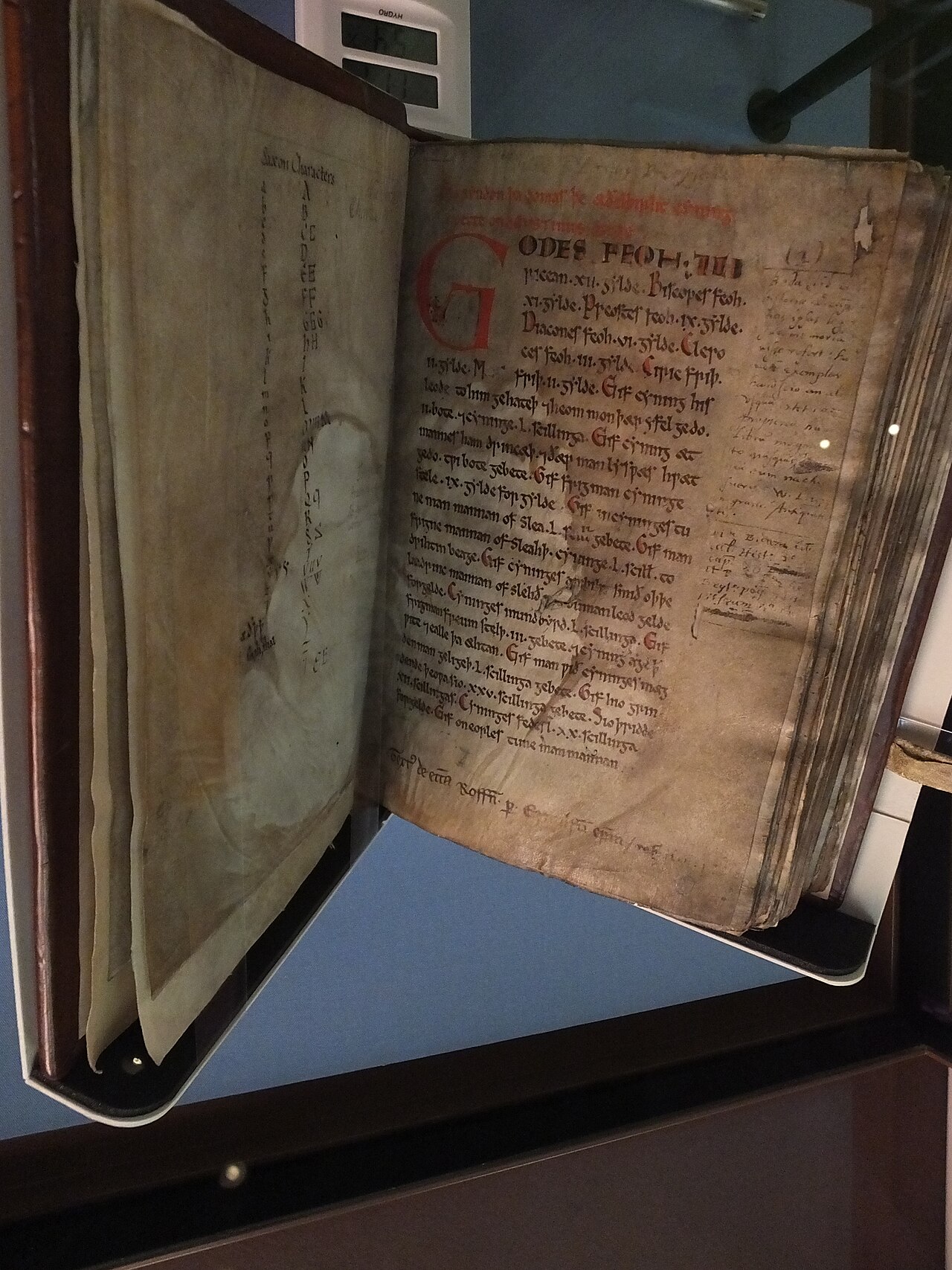
Textus Roffensis
c. 1300 (this copy; text 1122-1124)
A 12th-century Rochester manuscript preserving Anglo-Saxon law codes, including a copy of Alfred's own law code, showing how his laws were passed down.
This manuscript preserves a copy of Alfred's own law code, showing how his legal reforms were transmitted after his death.
About this source
What it is
The Textus Roffensis is a manuscript written between 1122 and 1124, now held at Rochester Cathedral. Its first part collects early English law codes, beginning with the laws of King Æthelberht of Kent and including those of later Kentish and West Saxon kings, copied by a single skilled scribe.
Why it matters
Among the laws it preserves is a copy of King Alfred's own law code, the Domboc, alongside earlier laws it drew on, such as those of King Ine of Wessex. This shows how Alfred's legal reforms were built on earlier Anglo-Saxon law and were still being copied and consulted centuries after his death, helping to form the foundations of later English law.
Look closer
- Why would a 12th-century scribe bother copying out law codes that were already centuries old?
- What does it suggest about Alfred's laws that they were still being recorded generations later?
- What changes did the scribe make to the older texts, and what might that tell us?
This document is part of the curated material that grounds the AI version of Alfred the Great and Aethelstan on Humy.ai — when students ask about related events, the AI can quote it and cite it.
More Alfred the Great sources
Meet the AI Alfred the Great →

Ready when you are
Start chatting with Alfred the Great now.
20 messages free · No credit card · Available in 50+ languages.