Portrait of Aethelstan

AI Historical Figure

Aethelstan

King of the Anglo-Saxons and the first king of the whole of England.

Chat with Aethelstan via text or voice — in 42 languages, drawing on a curated biography and 64 historical sources. Available 24/7.

Start chatting with Aethelstan20 messages free · No credit card
Lived
c. 894–939
From
United Kingdom
Known for
Rulers & royaltyMilitary
Aethelstan

Aethelstan

Online · responds in seconds

Hello — I'm Aethelstan. King of the Anglo-Saxons and the first king of the whole of England. What would you like to ask me?

20 messages free · No credit card · Powered by Humy.ai

Live preview · Switch between 42 languages above · Send a message to continue in the app

Multilingual

Talk to Aethelstan in 42 languages

Ask Aethelstan questions in any language below, and the rest of Humy's app speaks it too. Pick yours to open the chat in that language.

Also in German (Austria), German (Switzerland), English (UK), English (Australia), English (Canada).

The sources behind this AI

64 sources · 24 artifacts · 18 paintings · 10 documents · 10 books · 2 sculptures

Aethelstan doesn’t improvise from thin air. The AI is grounded in 64 curated historical sources students can inspect. Open any of them to see what informs the conversation.

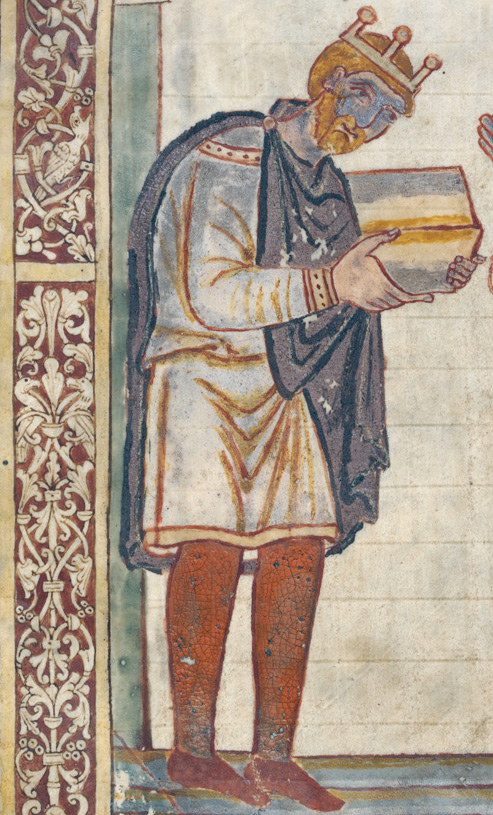
Painted detail from a medieval manuscript showing a crowned, bearded man in a pale tunic and dark grey cloak, with red-orange hose. He holds an open book with yellow-edged pages. A decorative red and cream border runs along the left edge.Painting

Primary source

Æthelstan Presenting a Book to St Cuthbert

c. 934

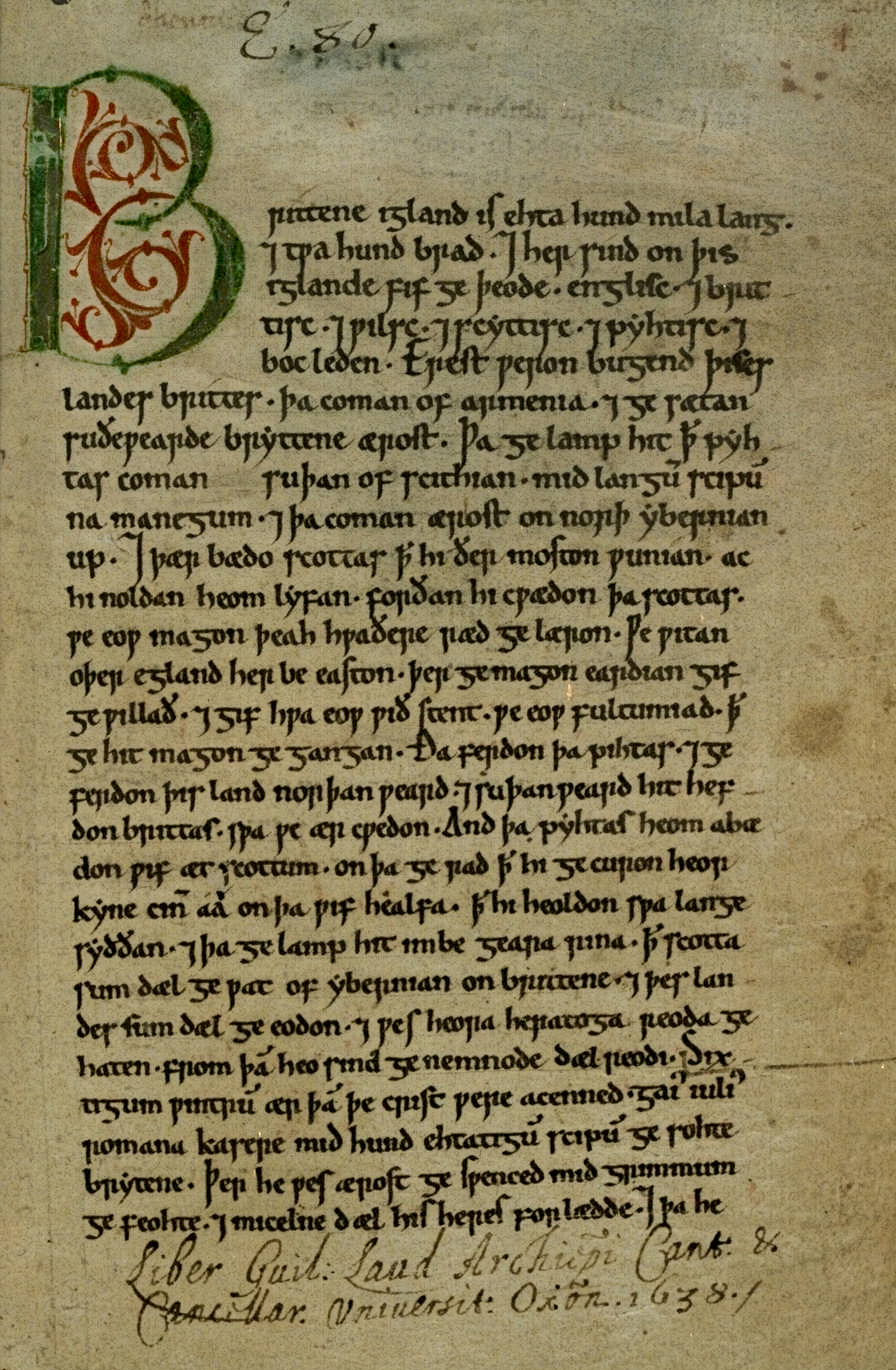
Manuscript page in Old English with a large decorated red and green initial letter B at upper left, handwritten brown-black text in columns, a faded marginal number at top, and handwritten inscription at bottom reading 'Liber Guil. Laud Archiep. Cant' and 'Bibliotheca Universitatis Oxon 1638'.Document

Primary source

Anglo-Saxon Chronicle

c. 890 (Common Stock)

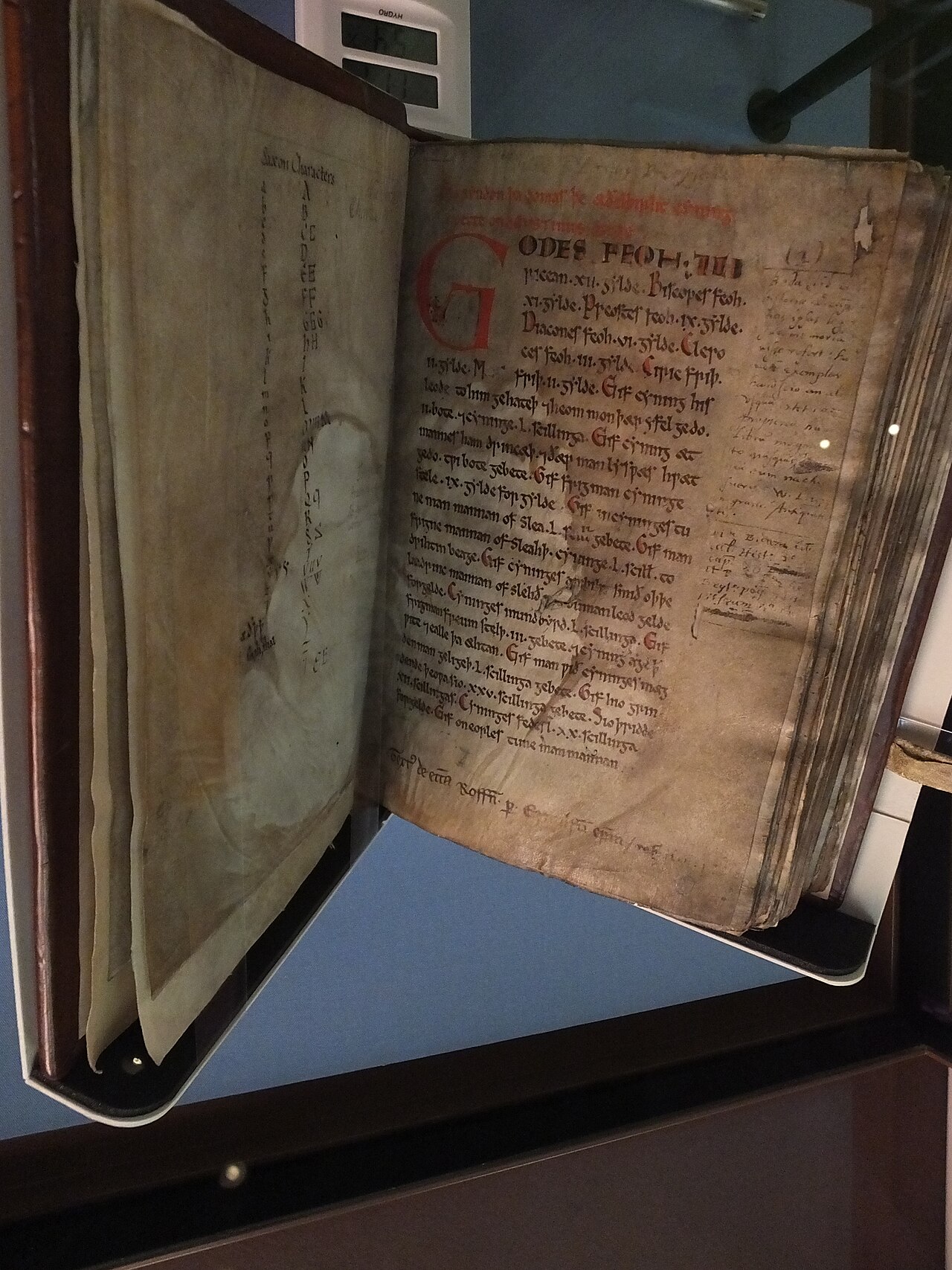
An open medieval manuscript displayed in a glass case, with a red-decorated initial and dense black handwriting on vellum pages. The left page shows a list titled Saxon Characters; the right page shows Latin and Old English text.Document

Secondary source

Textus Roffensis

c. 1300 (this copy; text 1122-1124)

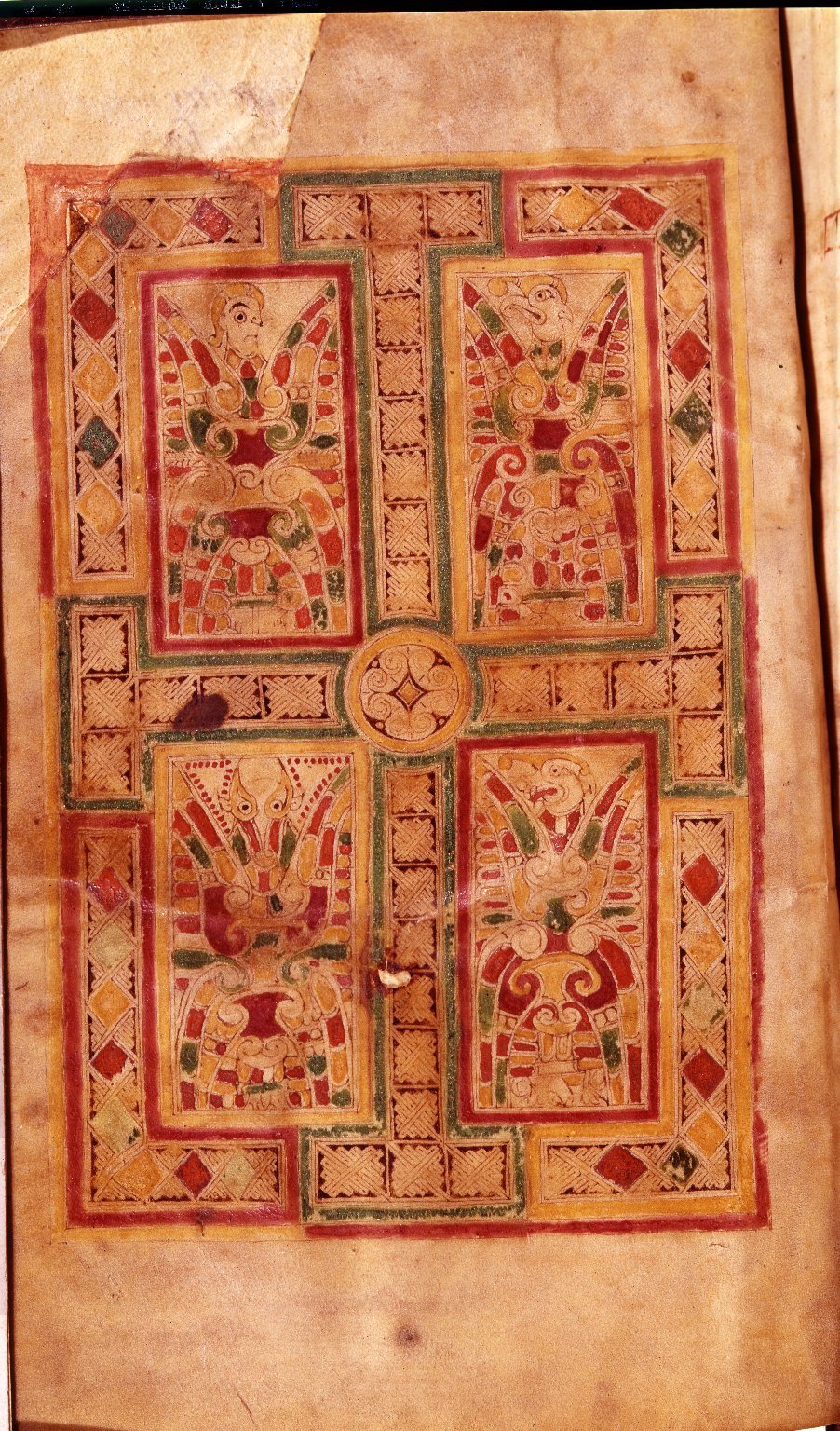
Full-page illuminated manuscript folio on vellum with a cross-carpet design: four framed panels with stylized interlaced animal and bird figures in red, green and yellow, separated by bands of geometric knotwork and a central circular medallion with a diamond motif.Book

Primary source

Mac Durnan Gospels

9th-10th century

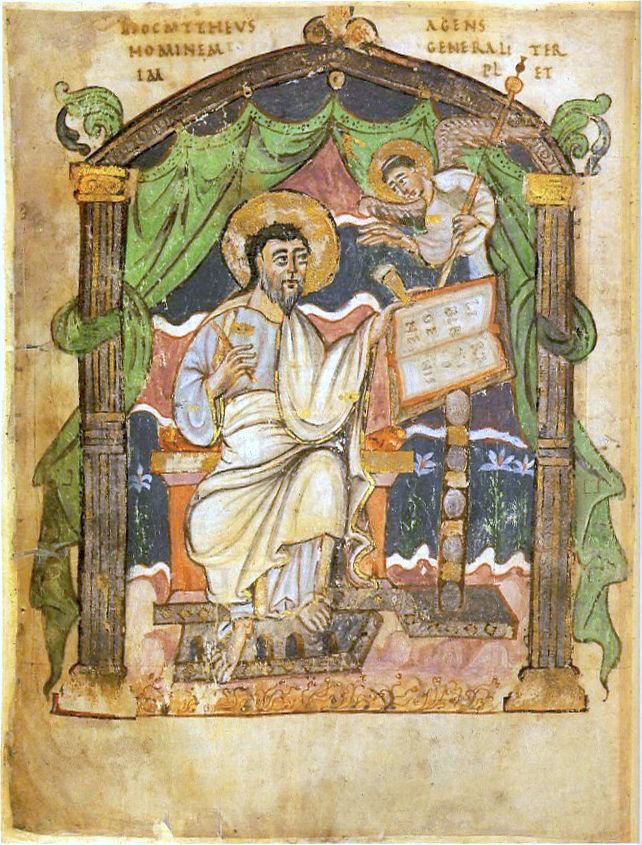
Full-page miniature of a bearded, seated figure in a white robe and blue mantle holding a pen, with an angel behind him writing on a tablet on a lectern. Gold halo, green curtain, and columns frame the scene, with Latin inscriptions above.Book

Primary source

Coronation Gospels of Æthelstan

late 9th or early 10th century

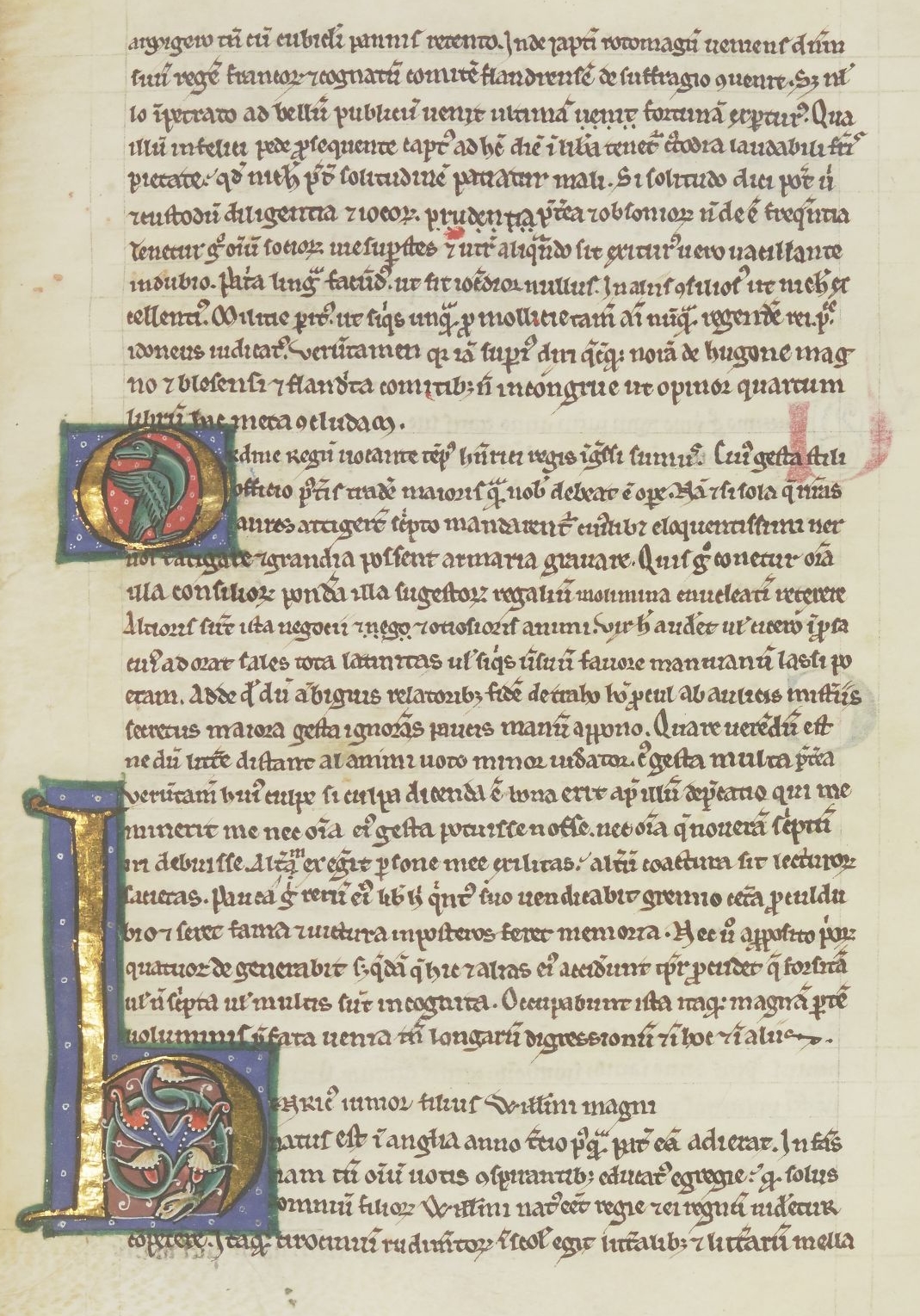
Manuscript page in Latin with dense black handwritten text in several columns on aged parchment. Two large decorative illuminated initials appear in blue, red, green and gold: a red and green initial on the left middle and a larger blue and gold initial with foliage at the lower left.Book

Secondary source

Gesta Regum Anglorum

William of Malmesbury · early 12th century

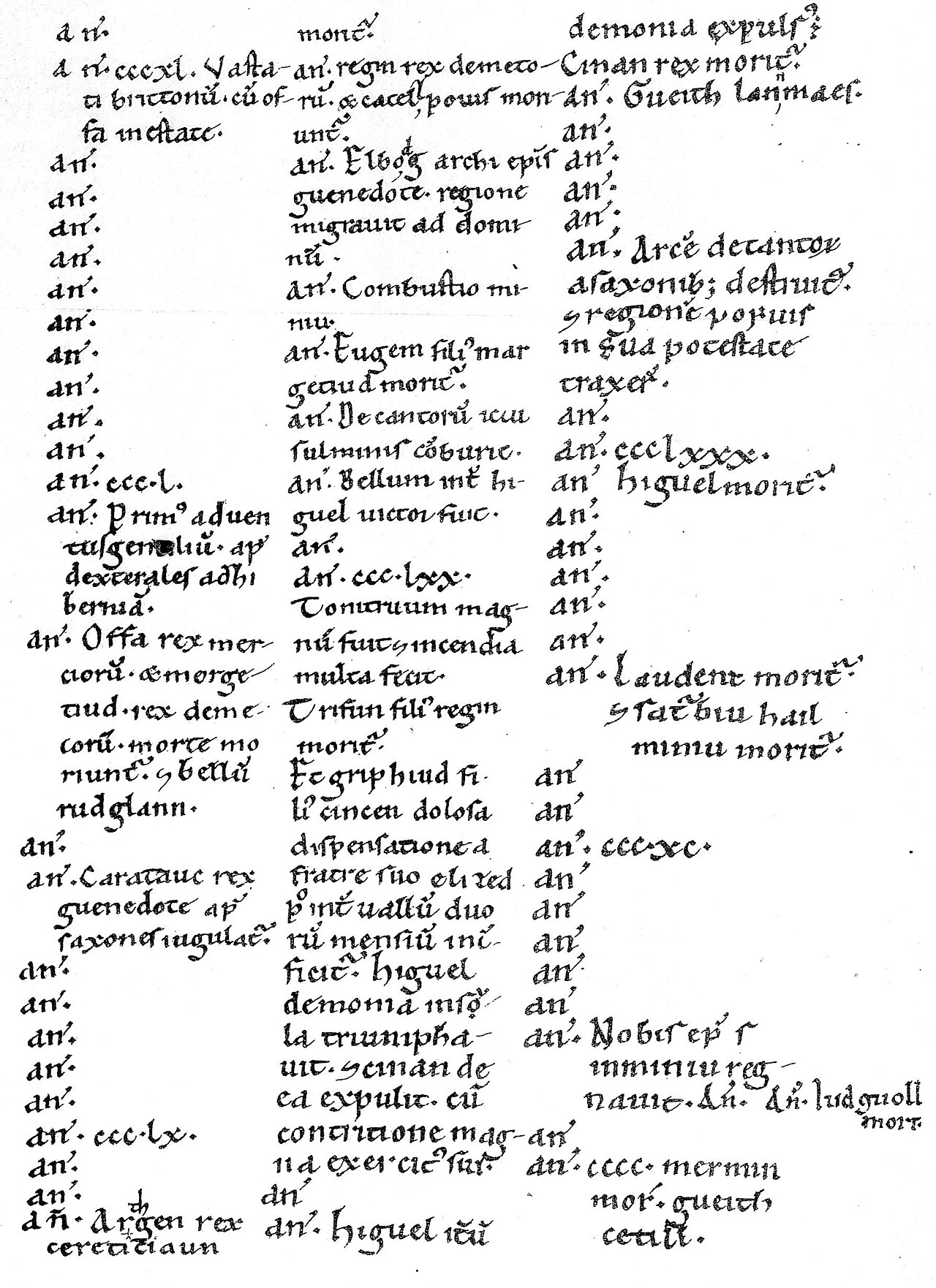
Manuscript page of the Annales Cambriae in medieval Latin, handwritten in three columns of brief year entries with abbreviated annal notes, some lines in a later cursive hand.Document

Secondary source

Annales Cambriæ

c. 1000 (earliest copy, 12th century)

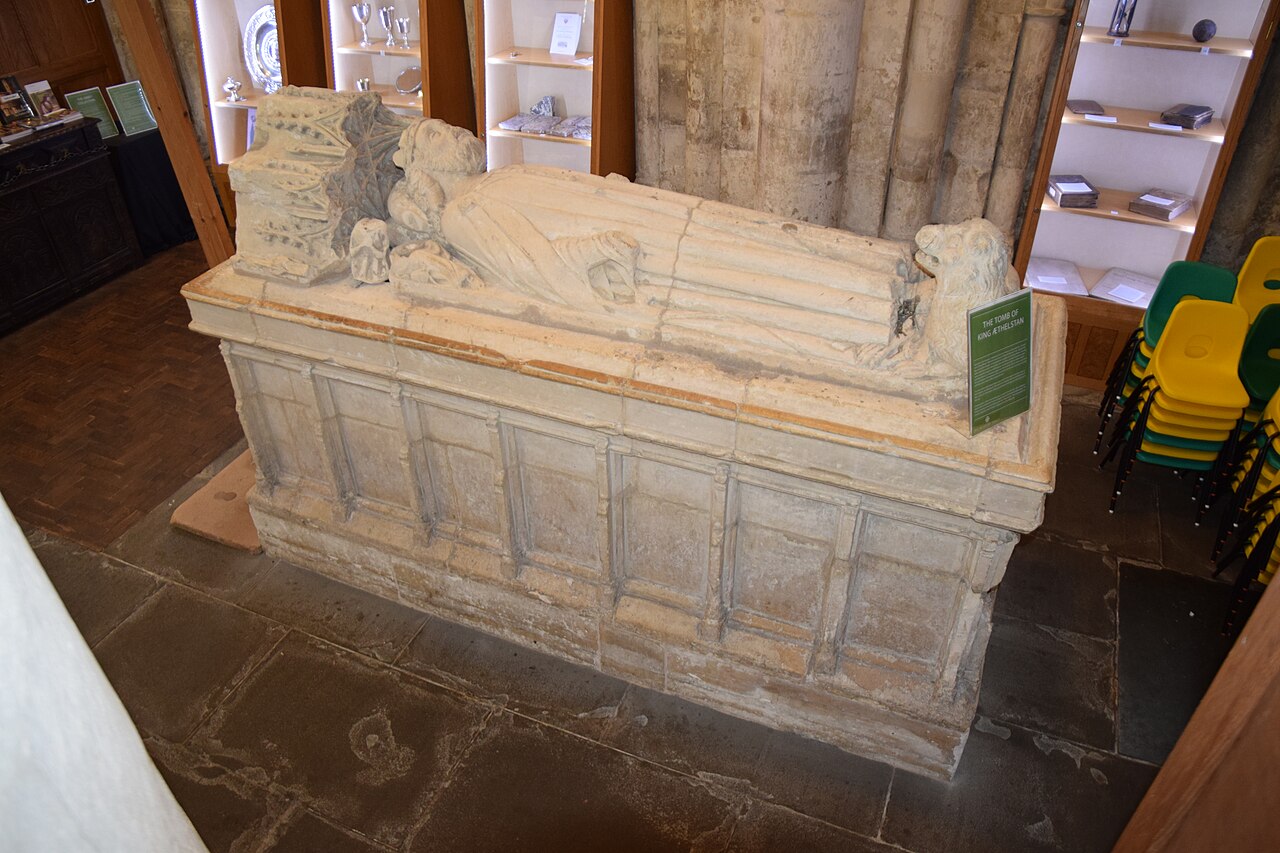
A carved stone table-tomb with a recumbent effigy, its head resting on a pillow and a lion at the feet, set on a panelled base in a stone-floored room. A green information panel stands beside it.Sculpture

Secondary source

Tomb of King Æthelstan

Unknown medieval sculptor · 15th century

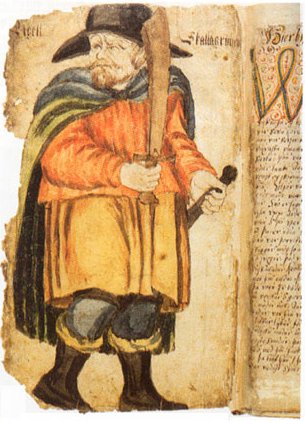
Painted illustration of a bearded man in a black hat, orange tunic, green-and-yellow cloak, and dark boots, holding a long sword. Beside him is a manuscript page of handwritten text with a decorated red and blue initial letter.Book

Secondary source

Egils saga

Snorri Sturluson · c. 1300 (composed; earliest fragment c. 1250)

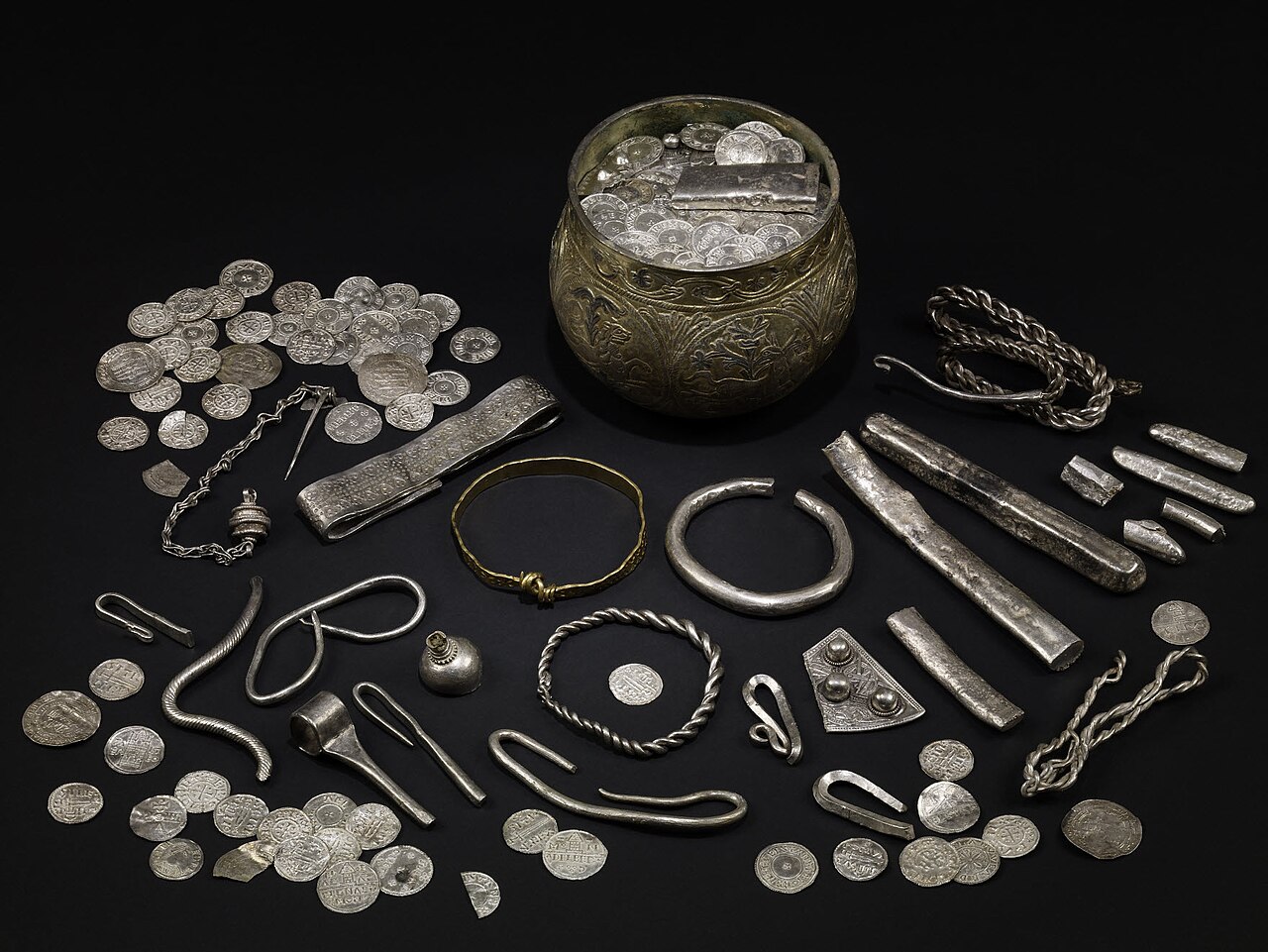
Photograph on a black background of a silver hoard: a brass bowl filled with coins and silver ingots sits at top center, surrounded by scattered silver coins, bracelets, armlets, ingots, a chain, and a twisted torc.Artifact

Primary source

Vale of York Hoard

buried soon after 927

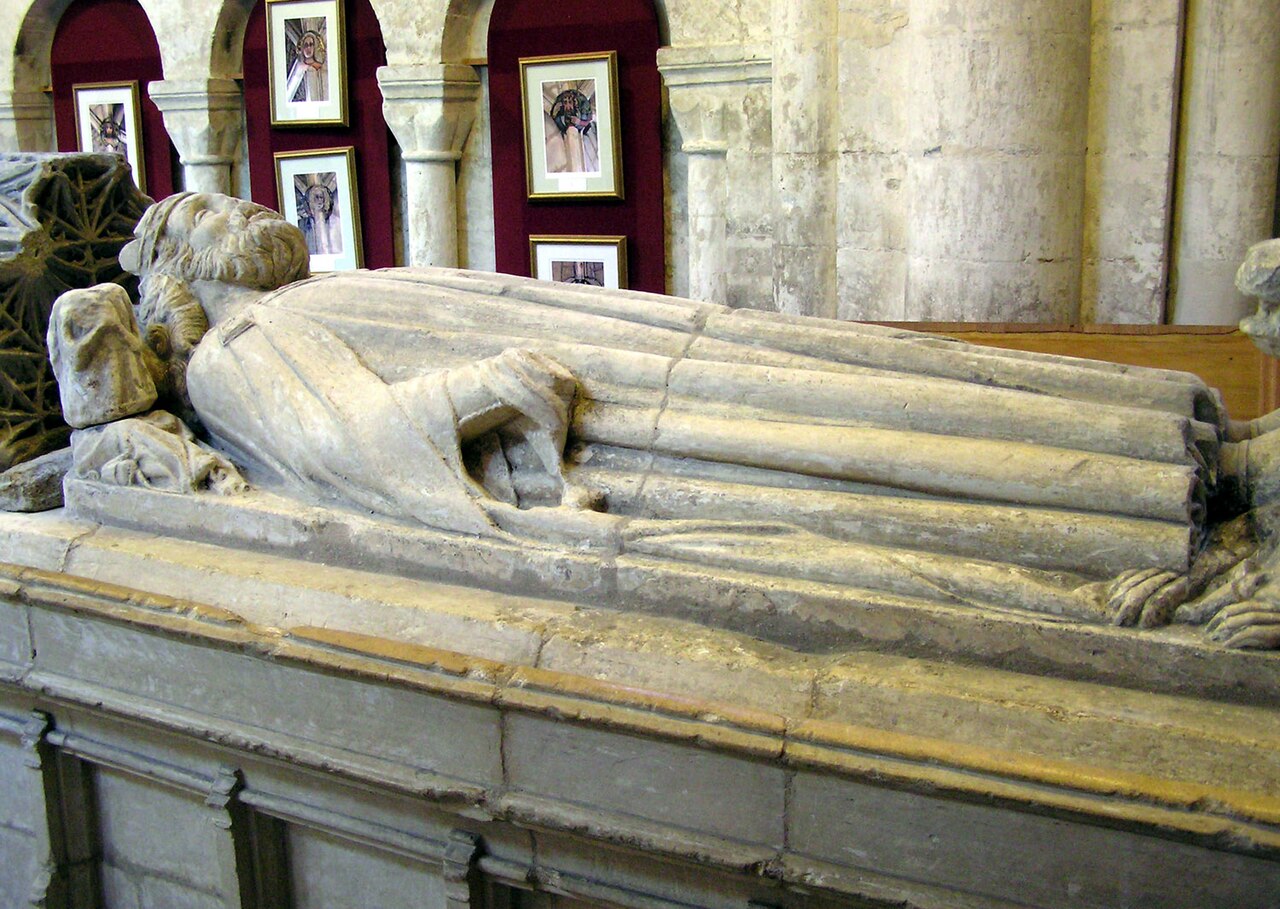
Photograph of a stone effigy of a bearded, crowned king lying on a tomb chest, head resting on a pillow, robes folded over his body. Stone pillars and framed pictures on red walls stand behind it.Sculpture

Secondary source

Tomb Effigy of King Æthelstan

15th century

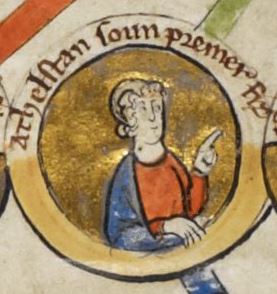
Medieval manuscript roundel portrait of a crowned king in blue and red robes, pointing upward, with gold background and partial Latin-style inscription 'ÆTHELSTAN REX' above, from the Genealogical Chronicle of English kings.Painting

Secondary source

Æthelstan in the Genealogical Chronicle of English kings

Unknown

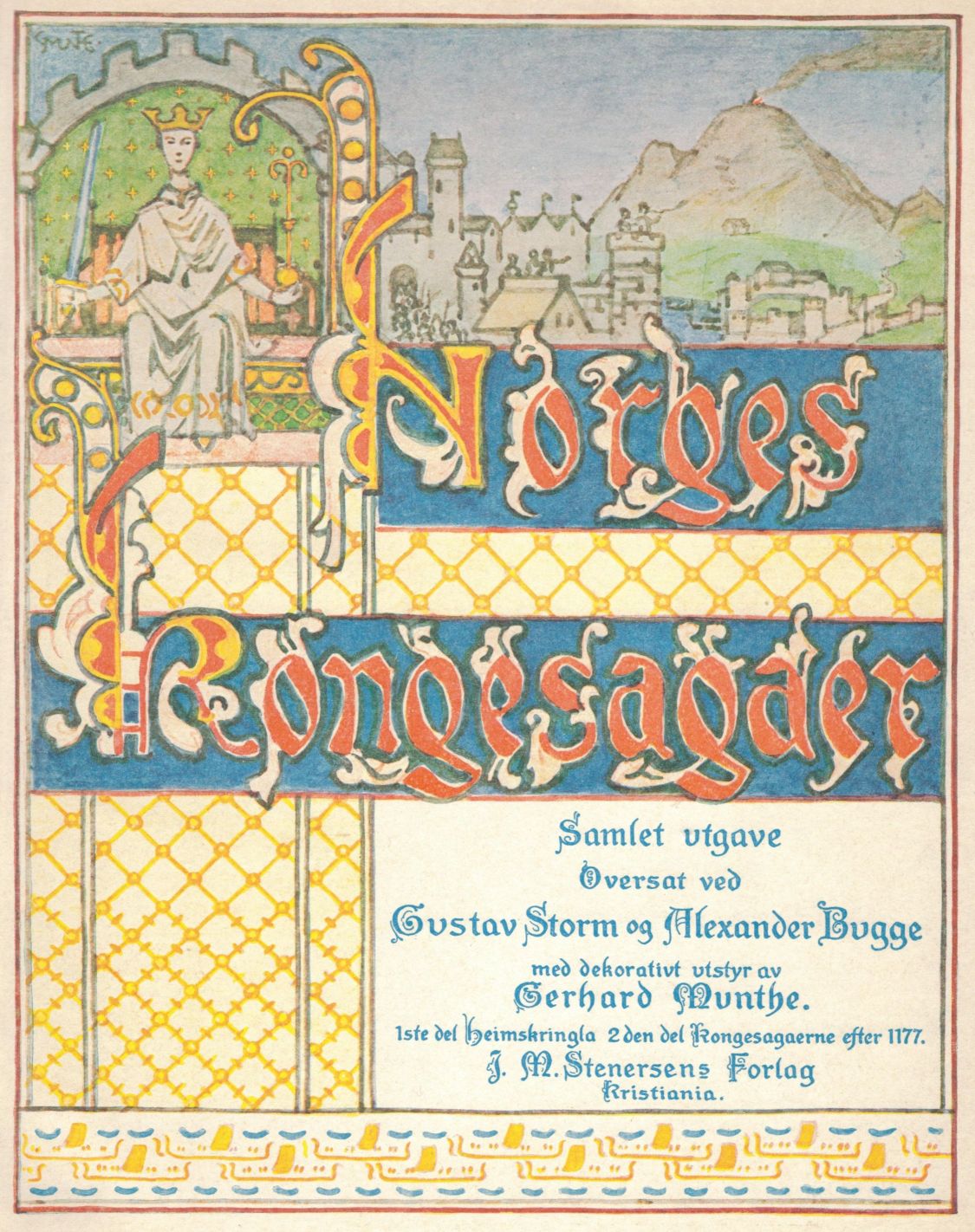
Decorative title page of the 1914 edition of Norges kongesagaer, with a crowned, seated king holding a sword and orb, a medieval town and mountain landscape, large blue and red lettering reading 'Norges Kongesagaer', and printed publication details below.Book

Secondary source

Heimskringla

Snorri Sturluson · c. 1230

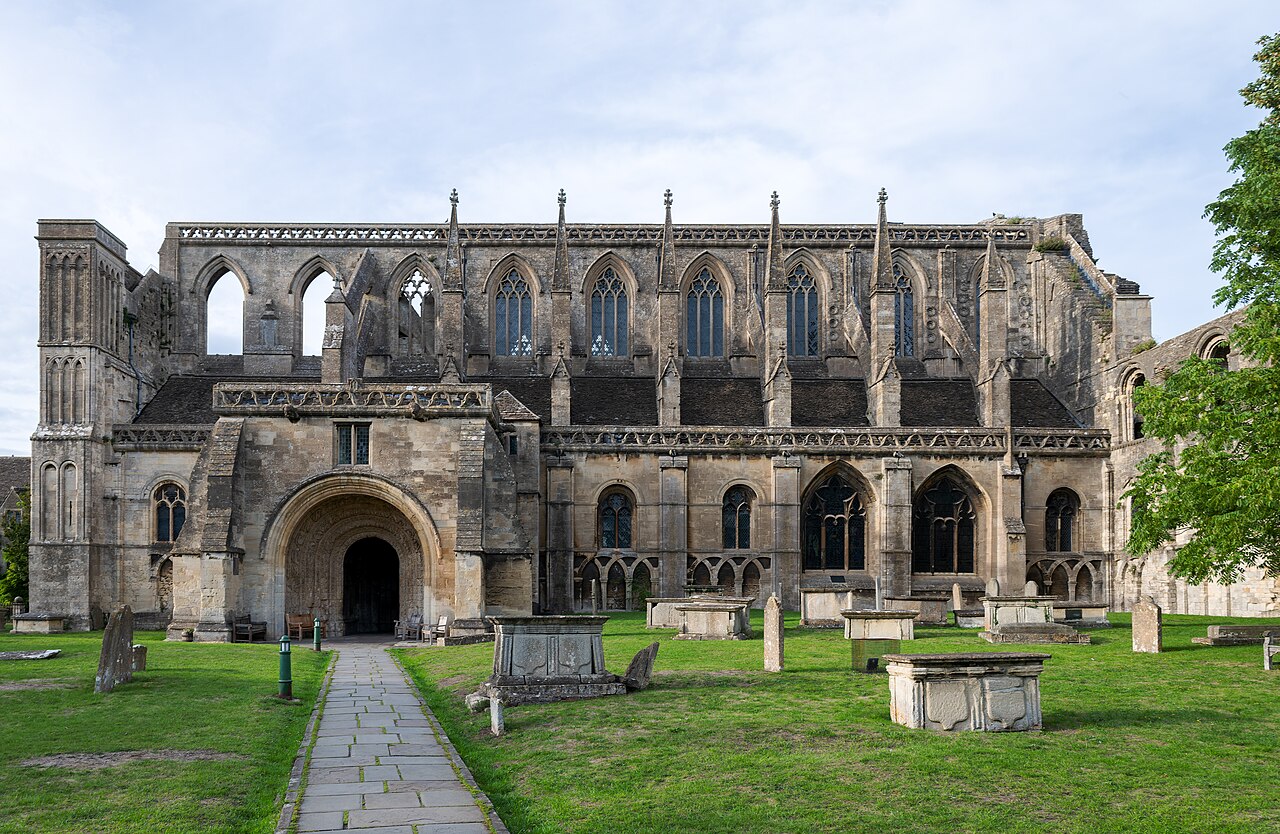
Exterior of a large medieval stone abbey church with pointed Gothic windows, a tall square tower at left, and a row of pinnacles along the roofline. A grassy churchyard with old tombs and a stone path lies in front; a tall tree is at right.Artifact

Secondary source

Malmesbury Abbey

founded c. 601, current church completed c. 1180

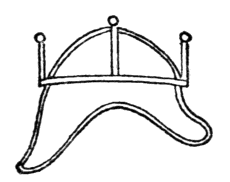
Black line drawing of a helmet with a brim band and three raised knobs on top, one at the center and one at each side, with a long curved flap extending down from the rear. Shown in profile against a white background.Document

Tertiary source

Complete Guide to Heraldry Fig619

Arthur Charles Fox-Davies

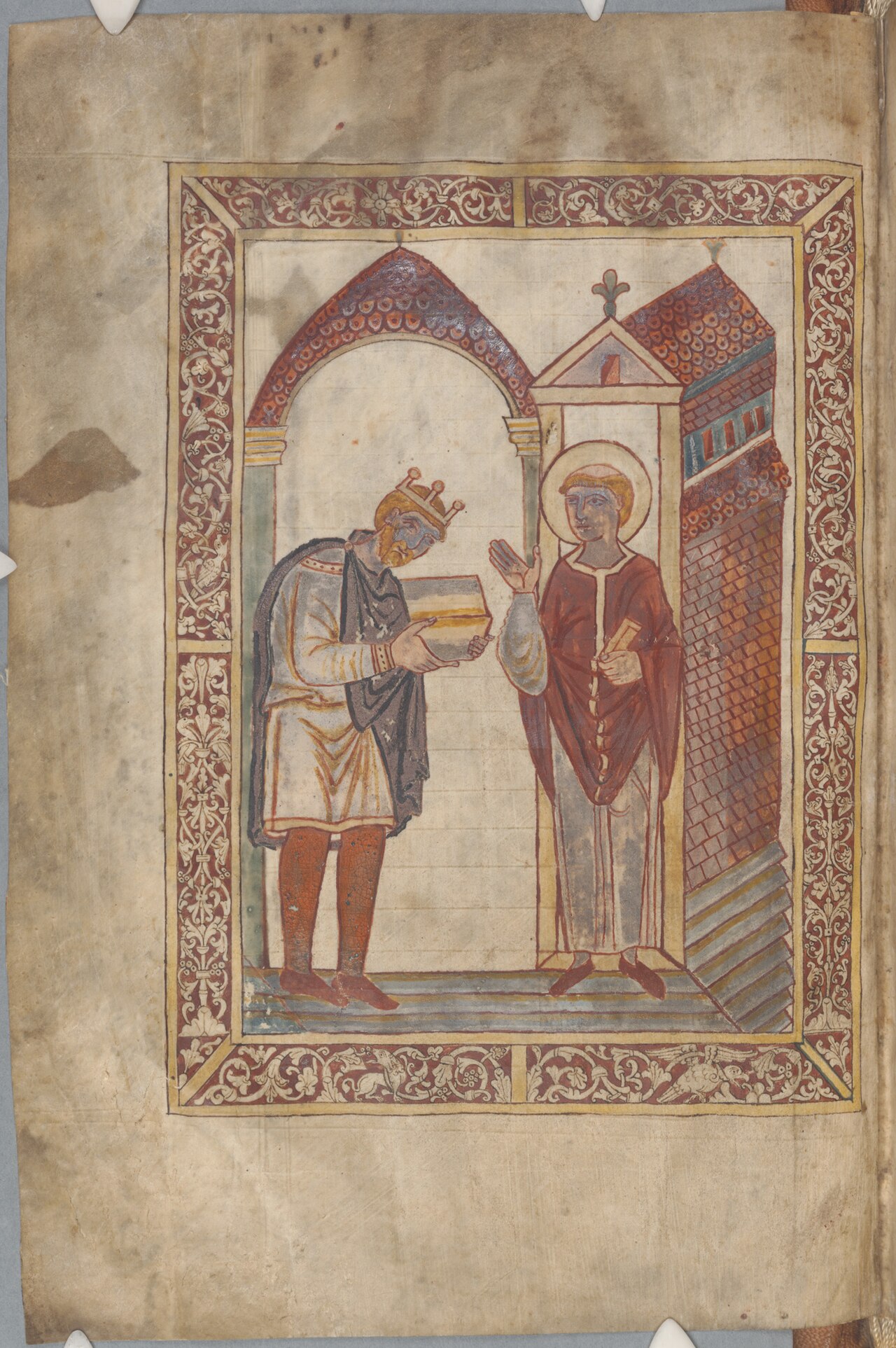
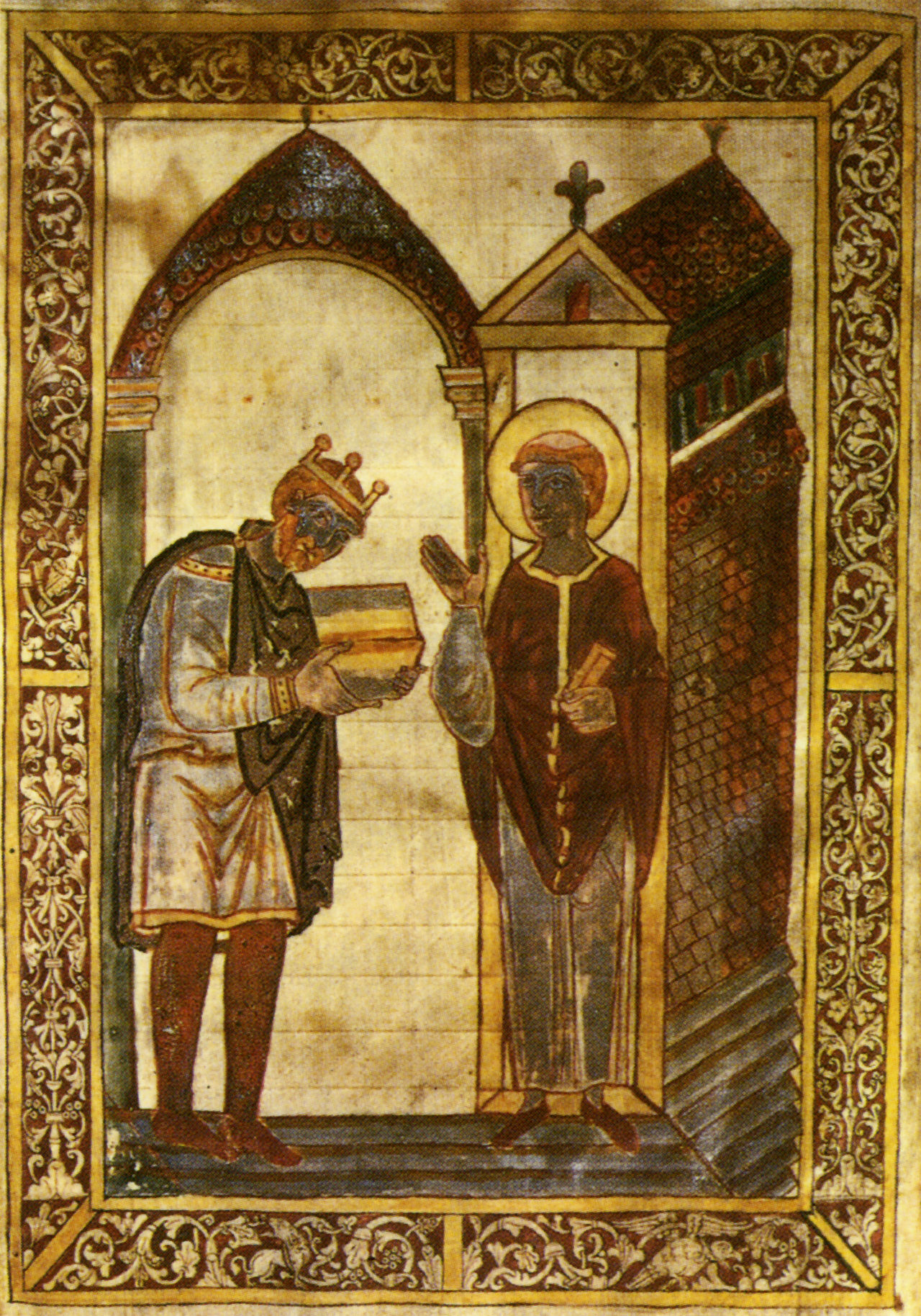
Illuminated manuscript page with a painted scene in a decorative red and gold border. A crowned king in a grey cloak and white tunic bows and offers a book to a haloed figure in a red robe who holds a scroll and raises one hand. Arched and tiled architecture frames them on a pale background.Painting

Primary source

Æthelstan presenting Bede's Life of St Cuthbert

Unknown · c. 930

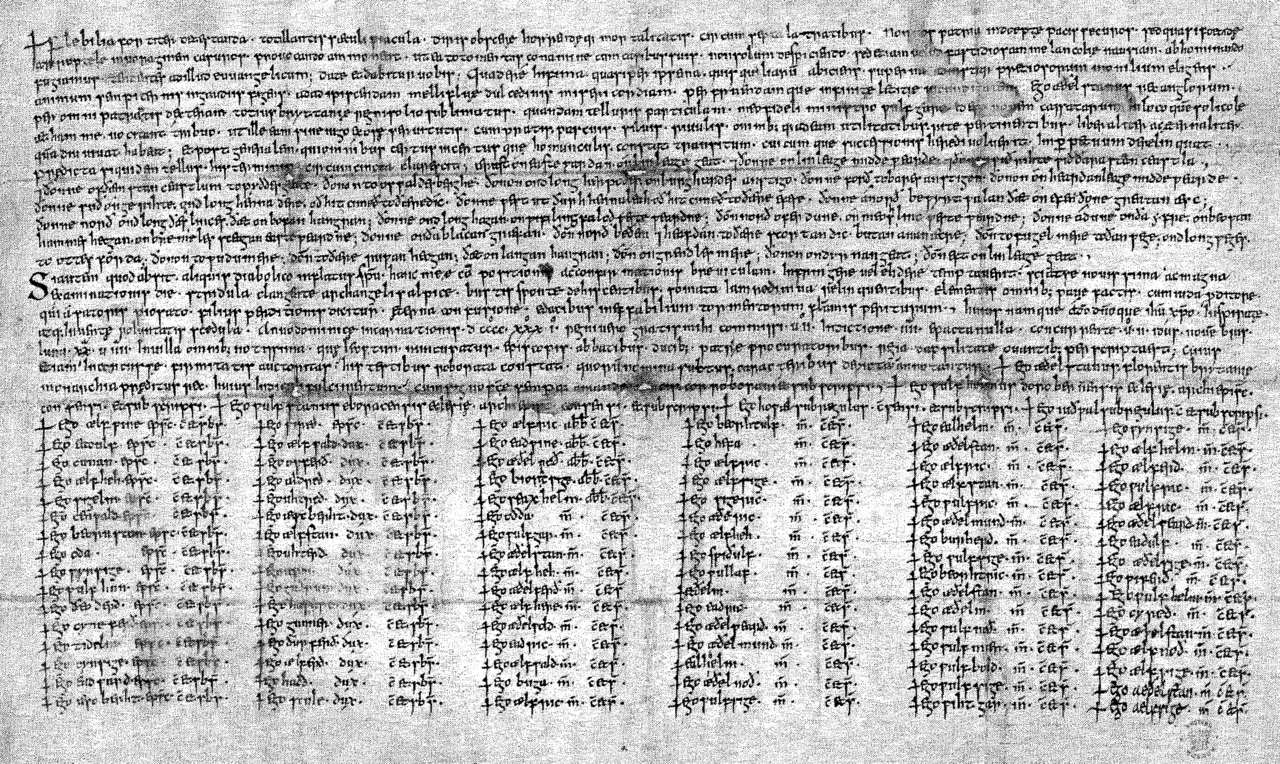
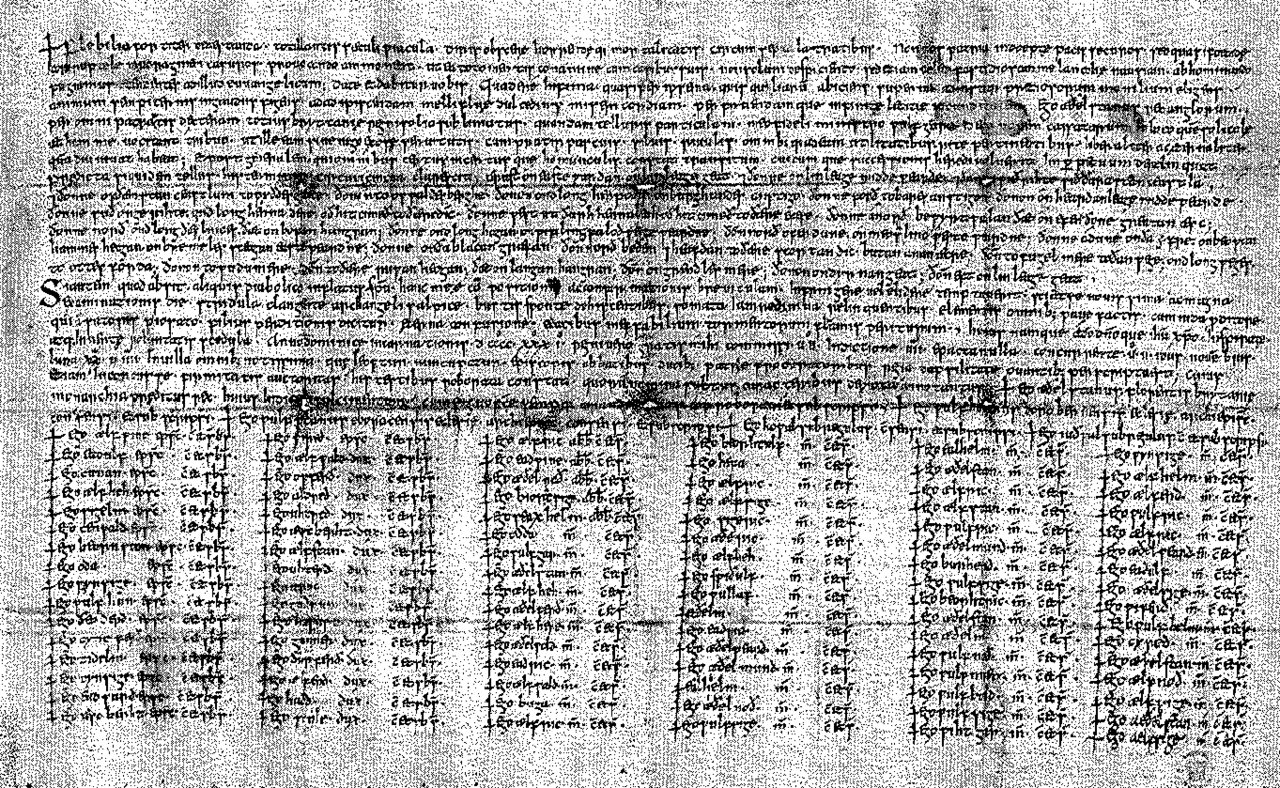
Scan of a medieval Anglo-Saxon charter in dark brown ink on yellowed parchment. A dense block of Latin script fills the top portion with a large decorated initial letter, followed by a grid of smaller witness signature lists arranged in columns with crosses and names below.Document

Primary source

Charter S 416: Æthelstan's Grant to Wulfgar

Æthelstan A · 931

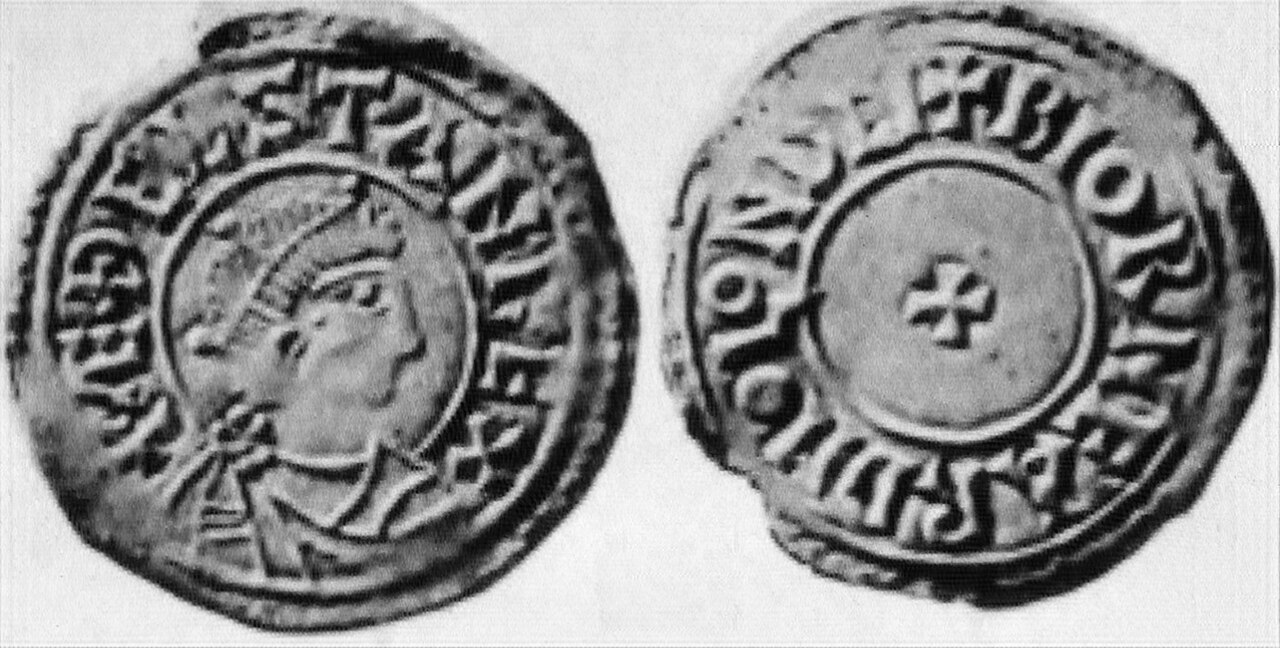
Black-and-white photograph of two sides of a silver penny. The left side shows a crowned bust of a king facing right with inscription around the edge. The right side shows a central small cross pattée within a circle, surrounded by inscription.Artifact

Primary source

Silver Penny of King Æthelstan, London Mint

Herbert Grueber · 924-939 (photographed 1899)

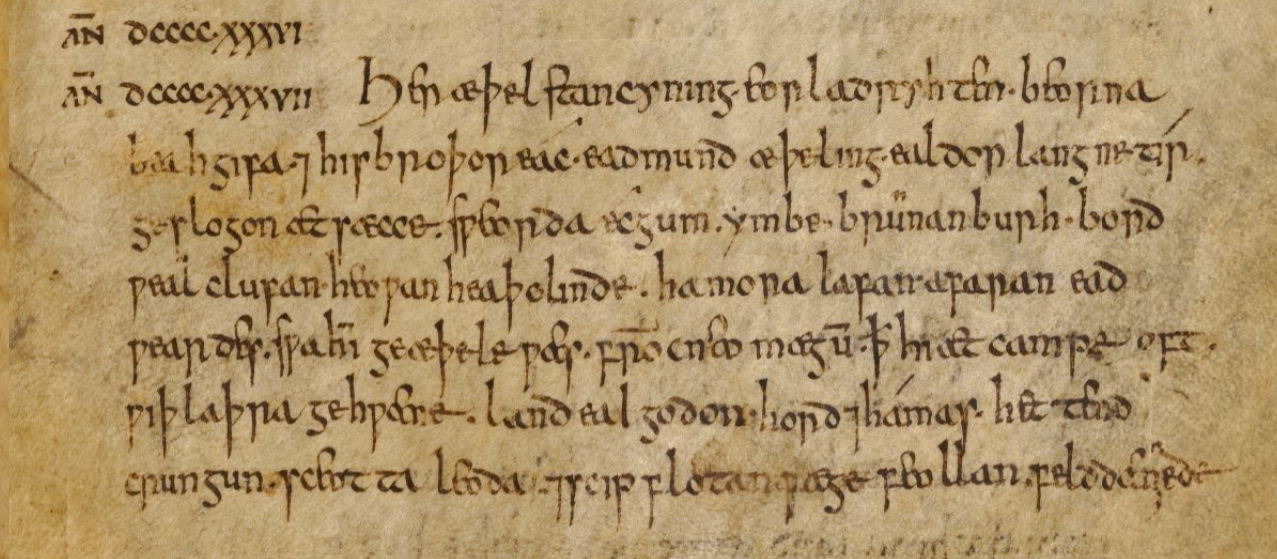
Manuscript page in Old English written in brown ink on aged parchment, showing the Anglo-Saxon Chronicle annal for the year 937 with Roman numeral date markers at the top left and the text beginning 'Her Æþelstan cyning...' in a handwritten script.Document

Primary source

Anglo-Saxon Chronicle, Annal for 937

10th century

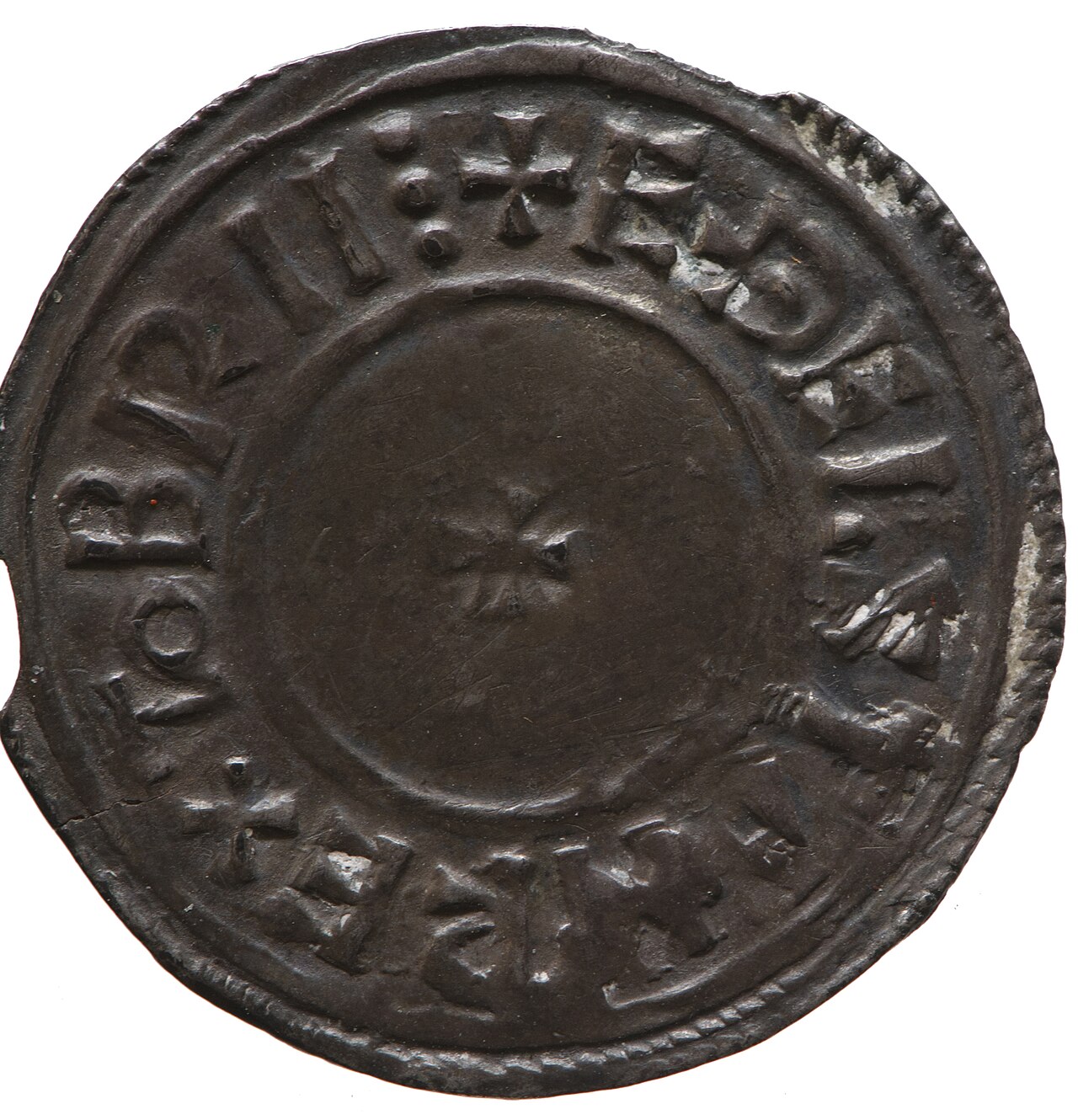
Photograph of a dark, worn silver penny coin, obverse side. A ring of partially legible Anglo-Saxon inscription surrounds a central circle containing a small cross pattée. Edges show a beaded border.Artifact

Primary source

Silver Penny of King Æthelstan, Obverse

924-939

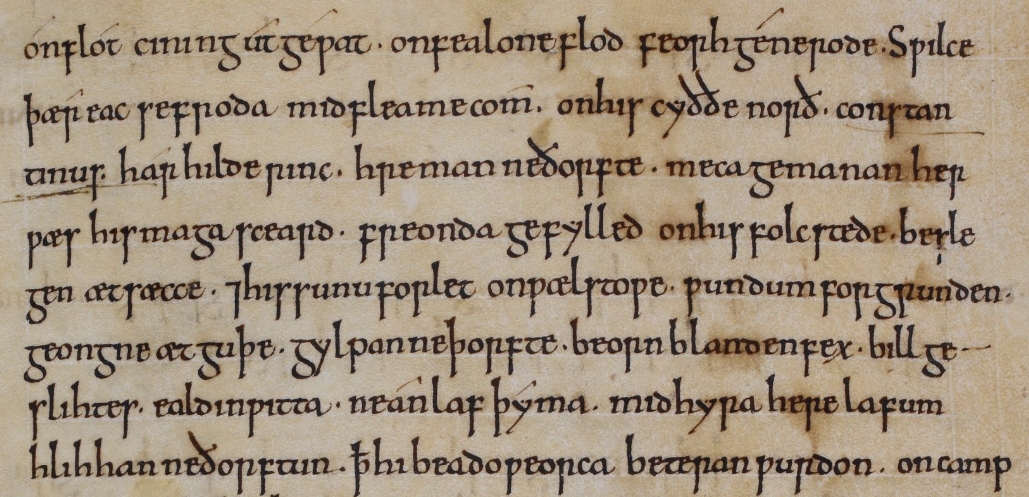
Close-up of a handwritten Old English manuscript page in brown ink on aged parchment, showing several lines of dense Anglo-Saxon script with some decorative capitals. The text is the Battle of Brunanburh poem.Book

Secondary source

Battle of Brunanburh Poem Fragment

11th-12th century

Document

Tertiary source

Athelstan Entry, Dictionary of National Biography

1885-1900

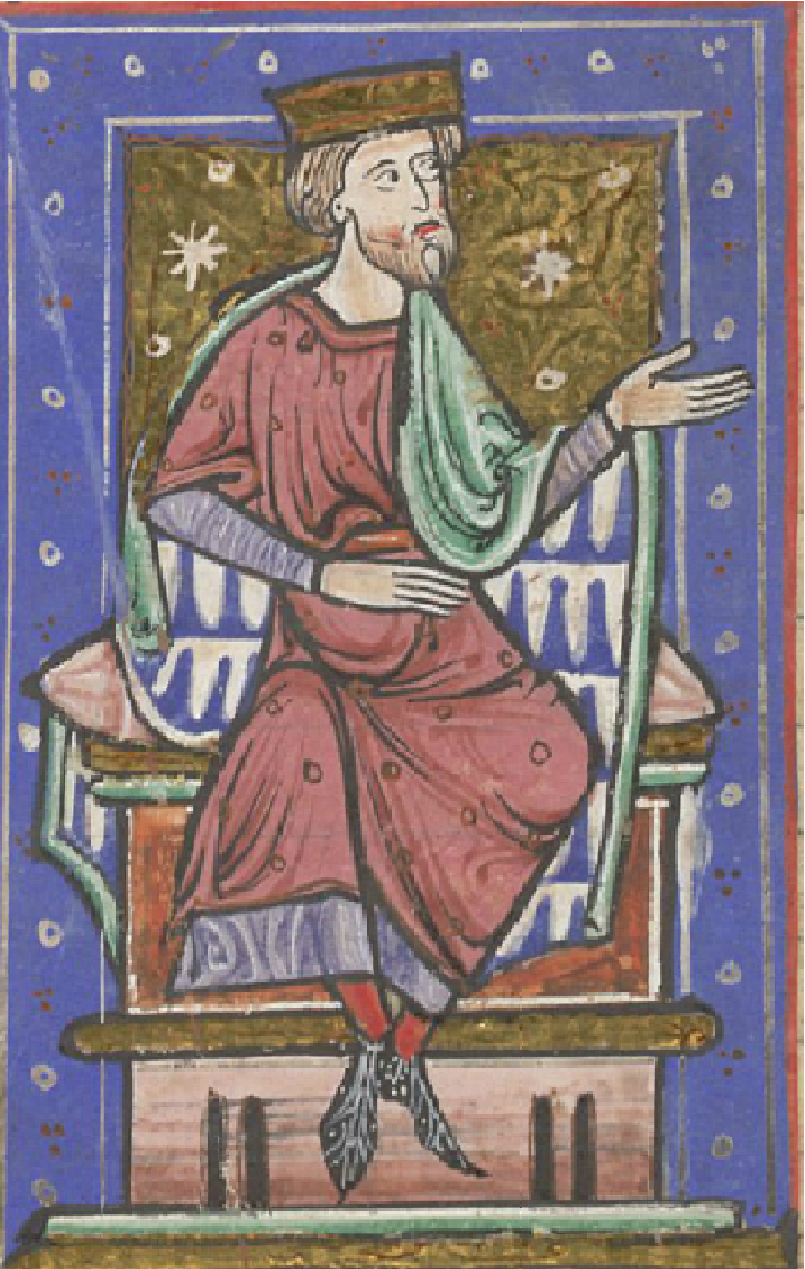
Illuminated manuscript painting of a bearded king seated on a throne, wearing a brown crown, a red robe and green mantle, extending his right hand outward. Blue background with white dots and a gold patterned panel behind him.Painting

Secondary source

Æthelstan, King of England

Unknown · c. 1220

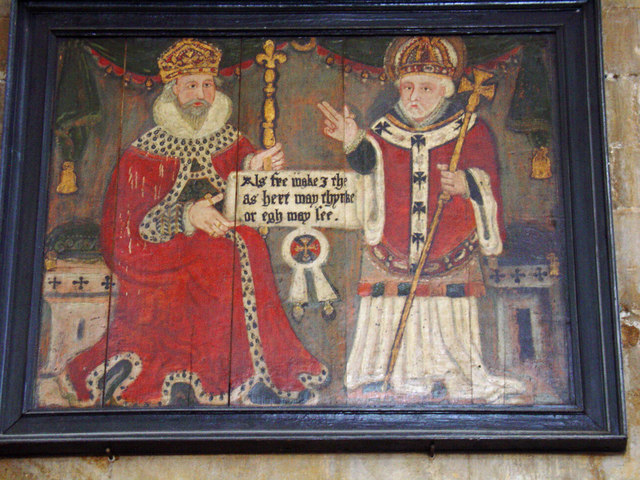
Painted wooden panel in a dark frame showing two crowned figures. On the left, a king in red robes trimmed with ermine sits holding a sword. On the right, a bishop in white and red vestments with a mitre and crozier raises his hand. Between them is a scroll with black-letter text and a hanging cross ornament. Gold cloth hangs behind them.Painting

Secondary source

Painting of Athelstan and John of Beverley, Beverley Minster

Unknown · 16th century

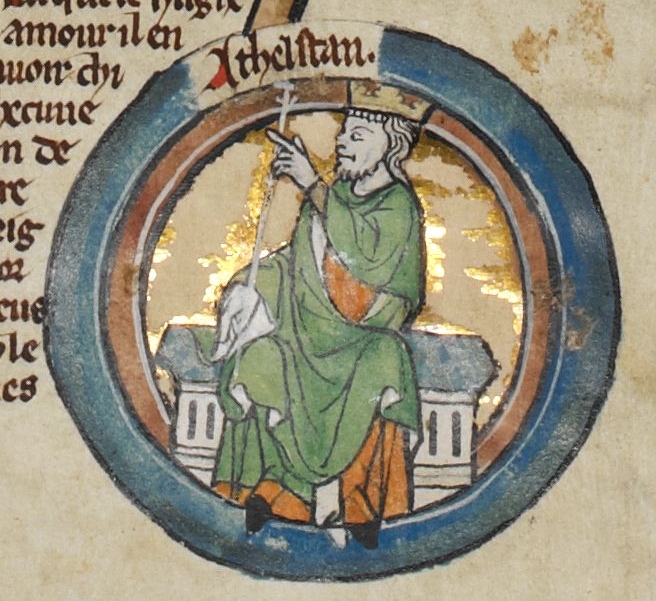
Medieval manuscript miniature in a blue circular frame: a crowned, bearded king in green robes and orange undergarments sits on a stone throne, holding a sceptre topped with a cross and pointing upward. Label reads 'Athelstan' on a banner above; text in a column to the left.Painting

Secondary source

Æthelstan in a 14th-century royal genealogy

Unknown · 14th century

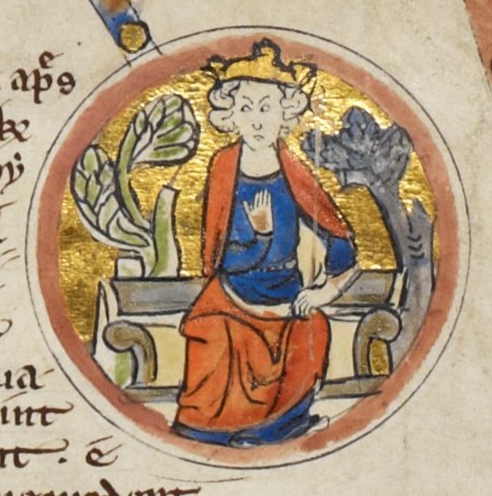
Medieval manuscript miniature in a round frame showing a crowned, pale-faced king seated on a bench, raising one hand and holding a sceptre-like object, against a gold background with trees, beside handwritten Latin text.Painting

Secondary source

Æthelstan in a 13th-century royal genealogy

Unknown · 13th century

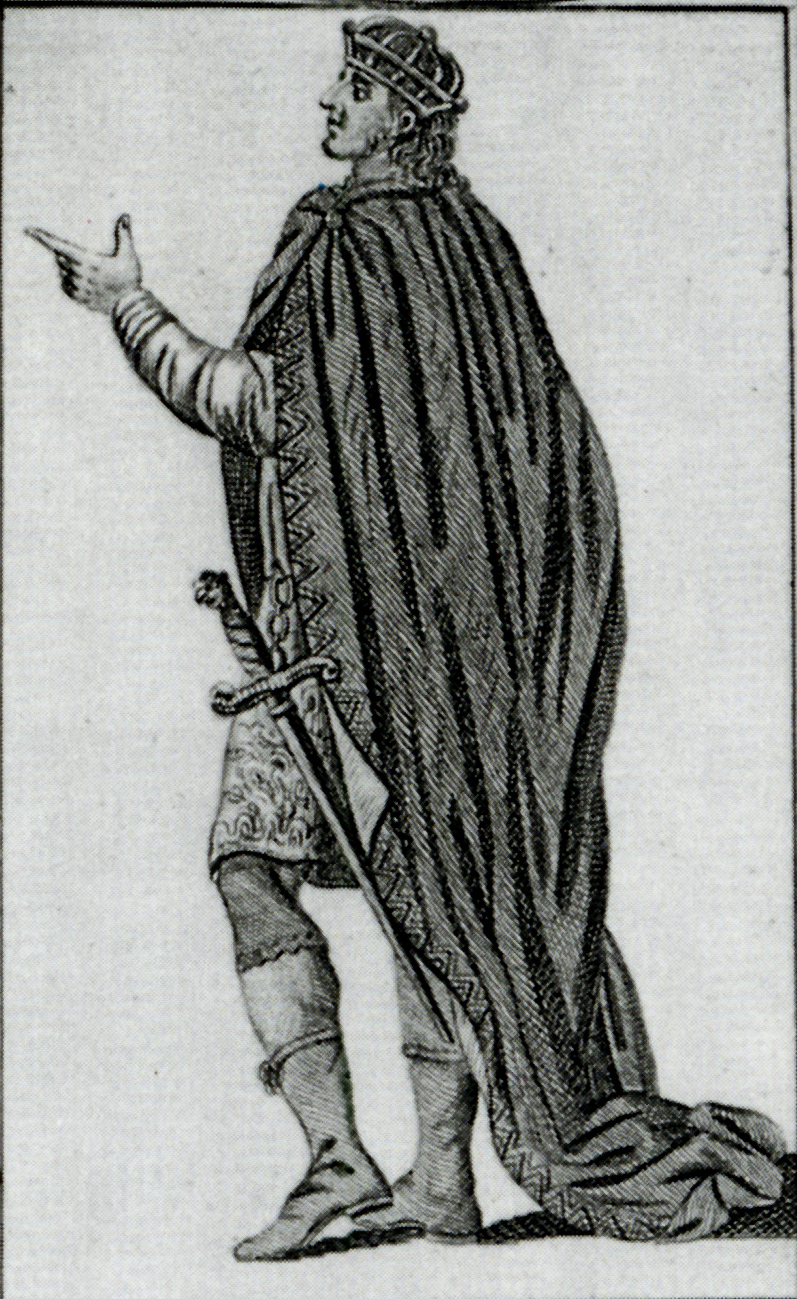
Black and white engraving of a crowned king in a long, striped cloak, shown in profile facing left, pointing his left hand forward. He wears a sword at his side and laced boots.Painting

Secondary source

Engraving of King Athelstan

Unknown · 18th century

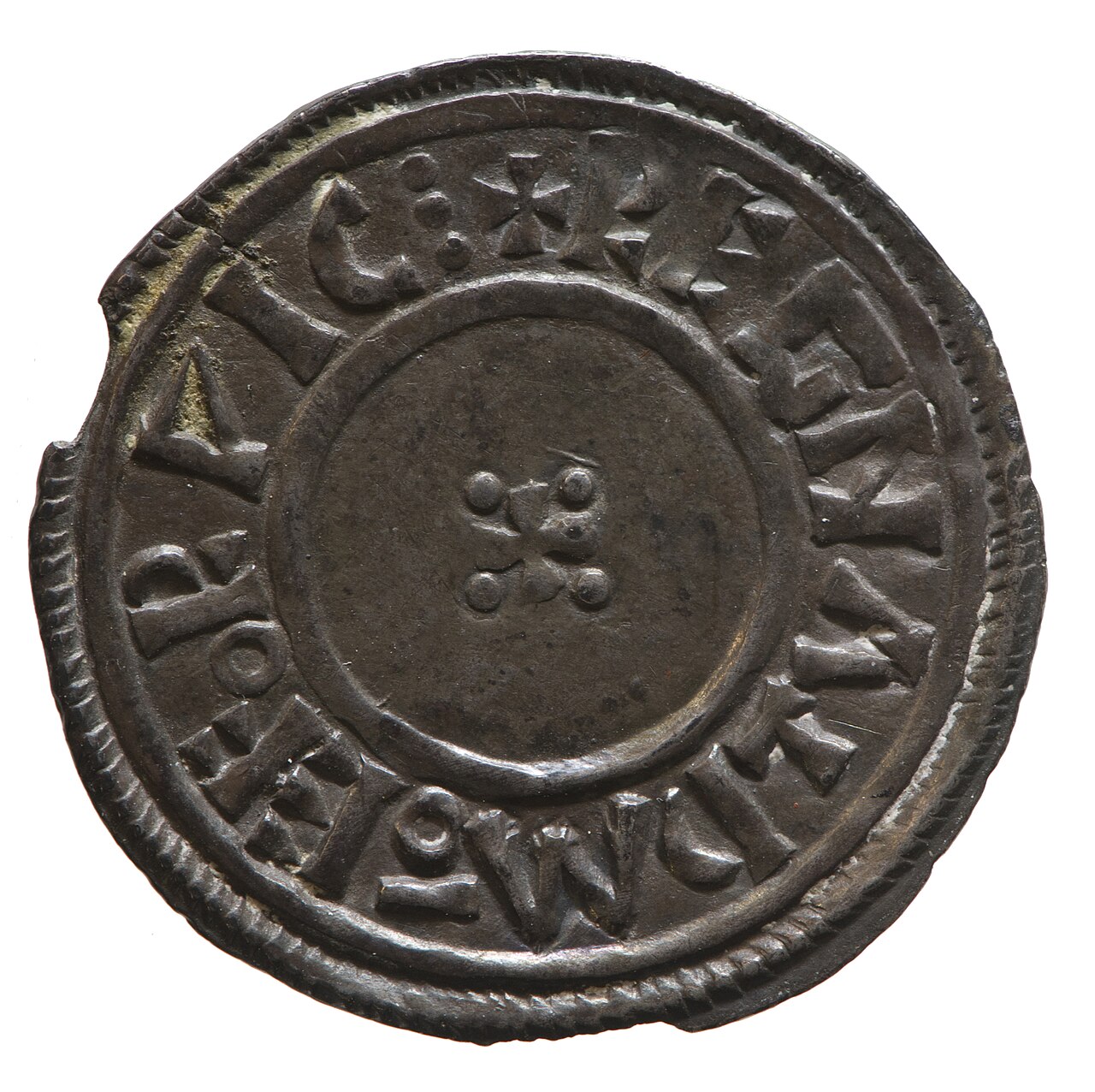
Reverse of a silver penny, dark and worn, with a raised rim of beaded edge. Inner circle contains a small cross-like motif of four pellets around a central cross. Surrounding inscription in Latin lettering around the edge, partly worn and difficult to read. Coin photographed against a white background.Artifact

Primary source

Silver Penny of Æthelstan

between 924 and 939

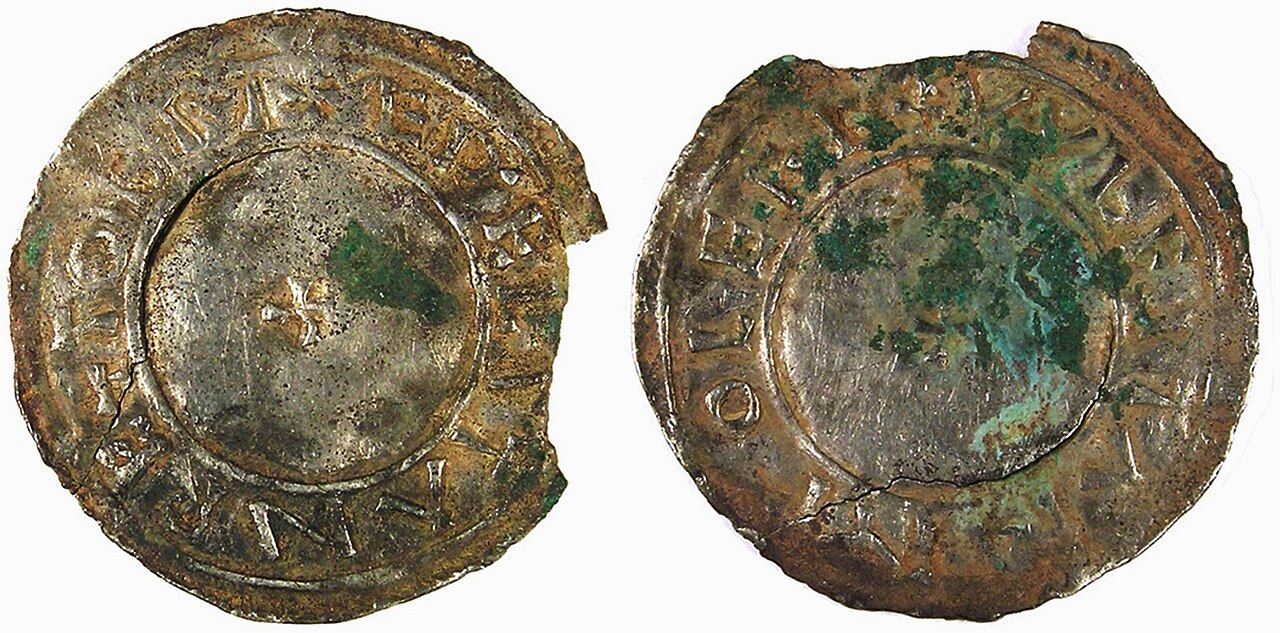
Two views of a damaged, corroded silver hammered penny with green patina. The left side shows a central cross within a circle and a broken edge with worn lettering. The right side shows a plain central field with partial lettering around the rim.Artifact

Primary source

Silver Penny of Æthelstan, Chester Mint

between 924 and 939

Document

Tertiary source

Æthelstan Entry, Encyclopædia Britannica (1911)

1911

Black-and-white scan of a medieval manuscript page written in dense, faded handwriting in several lines, with a large initial letter at the left and a block of columned entries with crosses and short lines in the lower portion. Fold marks and stains are visible across the parchment.Document

Primary source

Charter S 416 of King Æthelstan for Wulfgar

Æthelstan A · 931

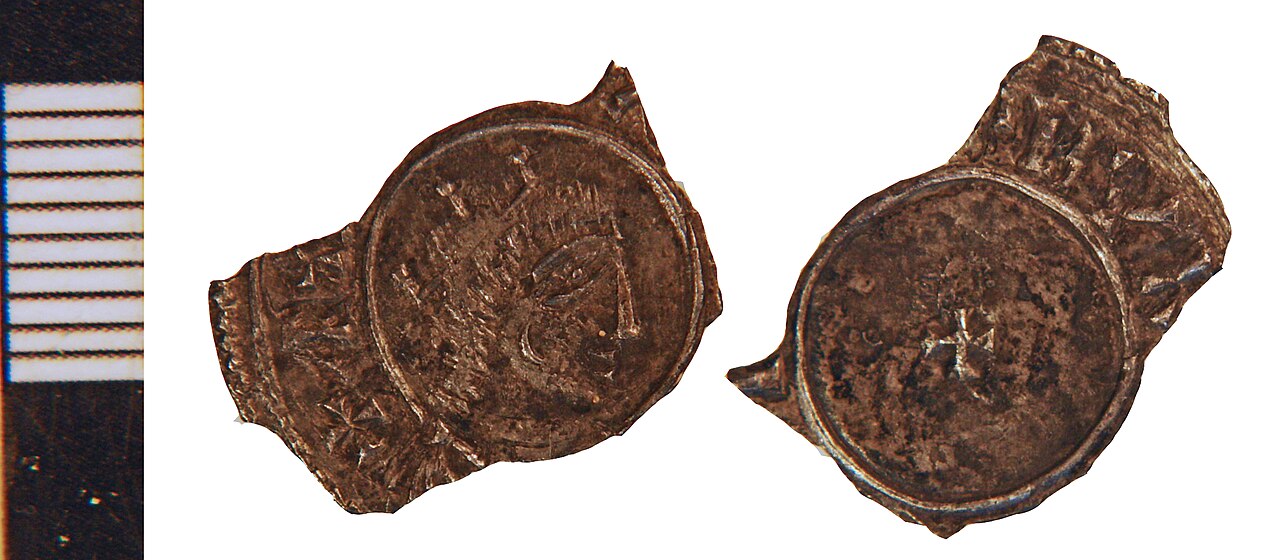
Two fragments of a corroded silver-coloured penny beside a measuring scale. The left fragment shows a crowned bust facing right with a cross above and partial lettering at the edge. The right fragment shows a cross on the reverse and partial lettering around the rim.Artifact

Primary source

Silver Penny of King Athelstan, Bust Crowned Type

924-939

Book

Secondary source

The Saxon Cathedral at Canterbury, Chapter 8

1929

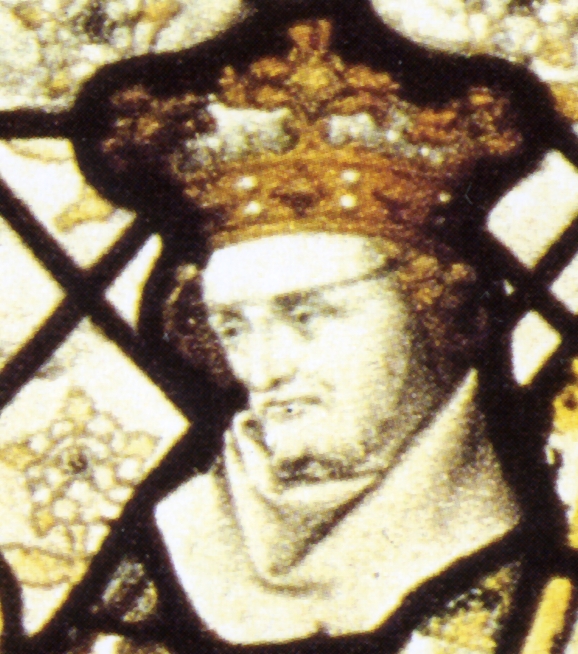
Close-up of a stained glass panel showing a crowned, bearded man in profile-leaning view, with a golden crown and white collar, set within dark leaded glass lines and yellowish background glass.Painting

Secondary source

Athelstan in Stained Glass, All Souls College Chapel

mid-15th century

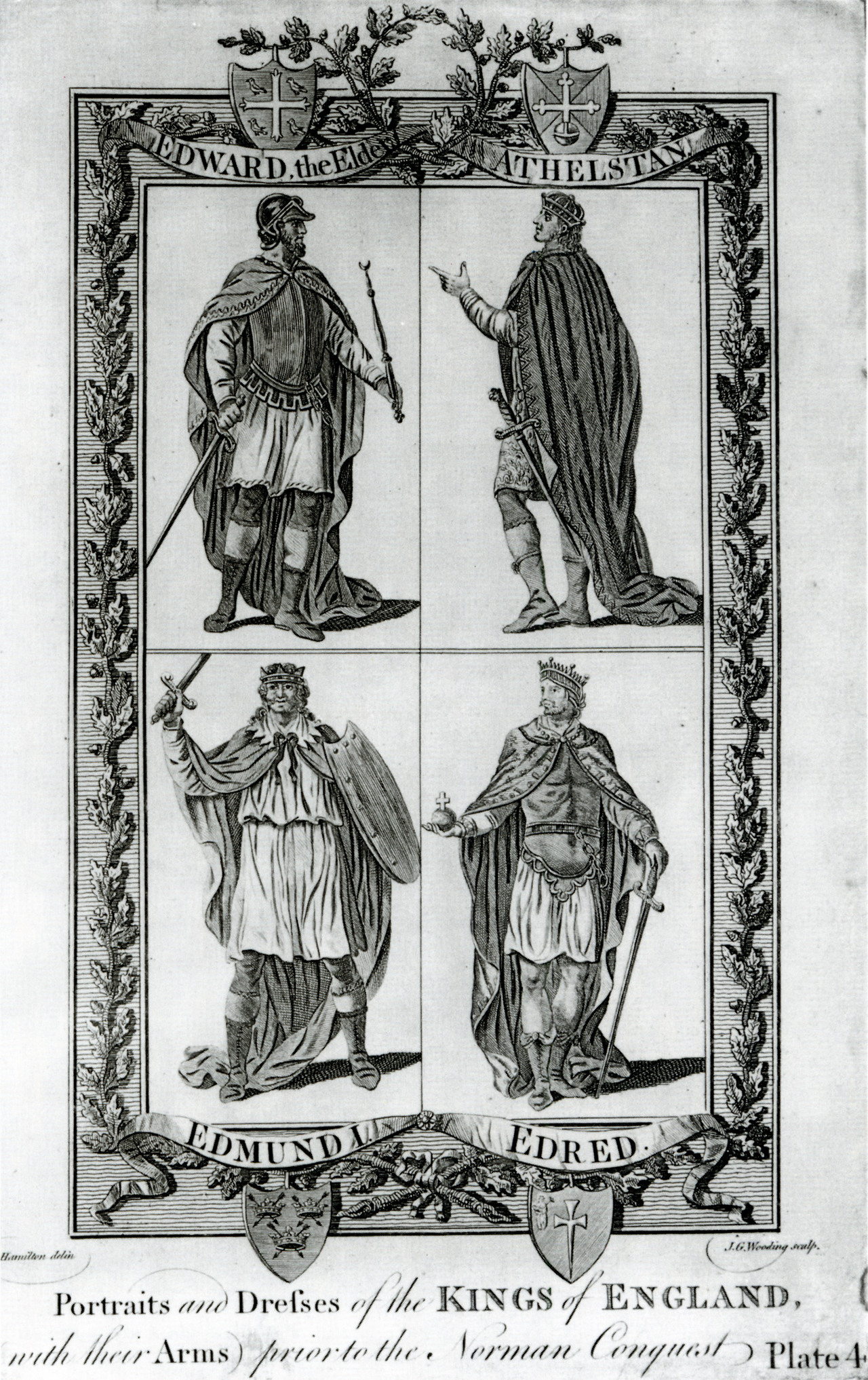
Engraved print titled Portraits and Dresses of the Kings of England, with four standing kings in framed panels: Edward the Elder (top left, helmeted, with sword), Athelstan (top right, crowned, cloaked, pointing), Edmund (bottom left, crowned, holding sword and shield), and Edred (bottom right, crowned, holding orb and sword). Decorative border with coats of arms at top and bottom.Painting

Secondary source

Kings Edward the Elder, Athelstan, Edmund and Edred

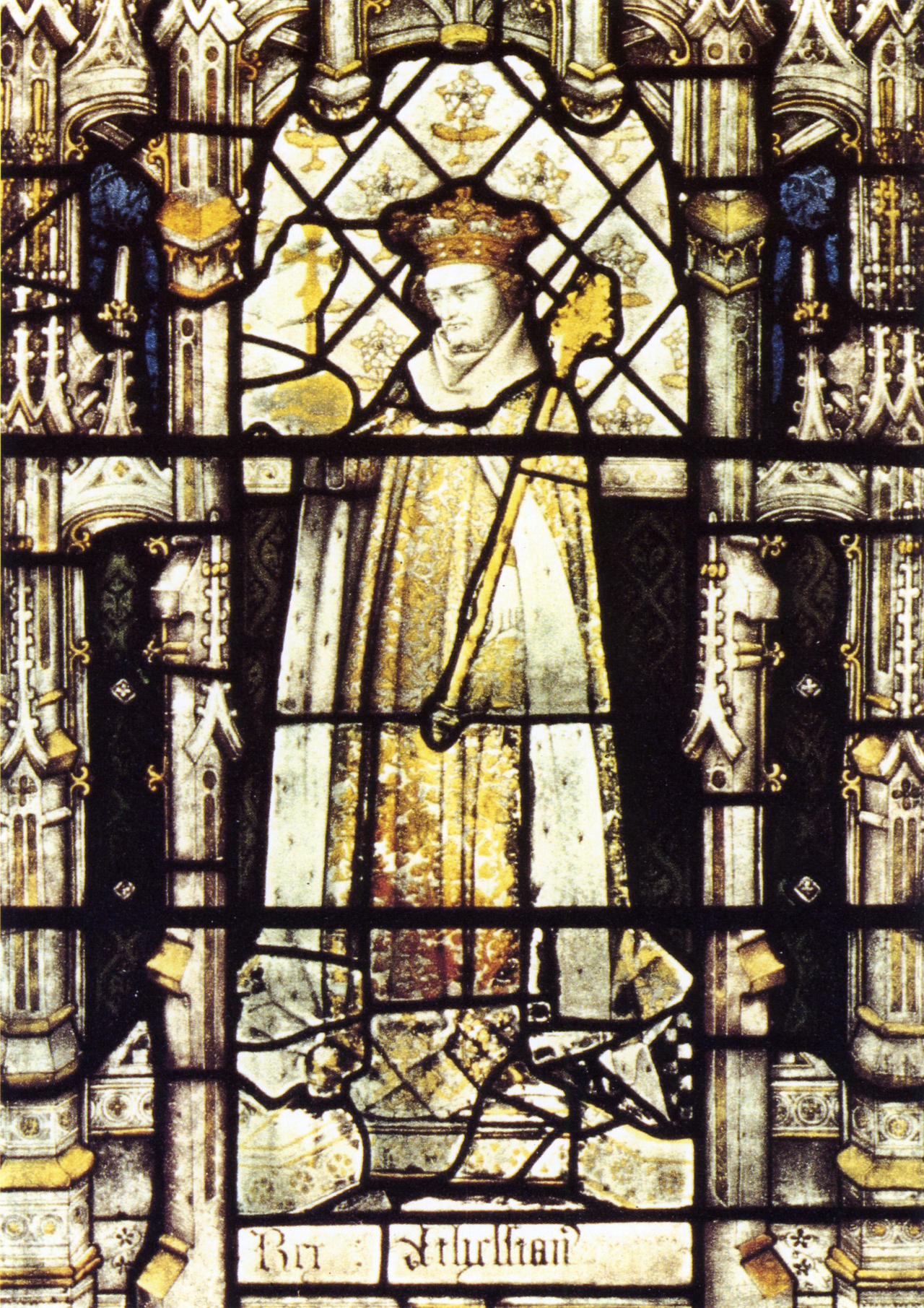
Stained glass panel showing a crowned king in gold-embroidered robes holding a long scepter topped with a golden fleur or foliate finial, standing under a canopy with Gothic tracery. Diamond-pattern leaded glass with cross motifs fills the background. Inscription band at the bottom reads 'Rex Athelstan' in lettering.Painting

Secondary source

Athelstan Image from All Souls College Chapel

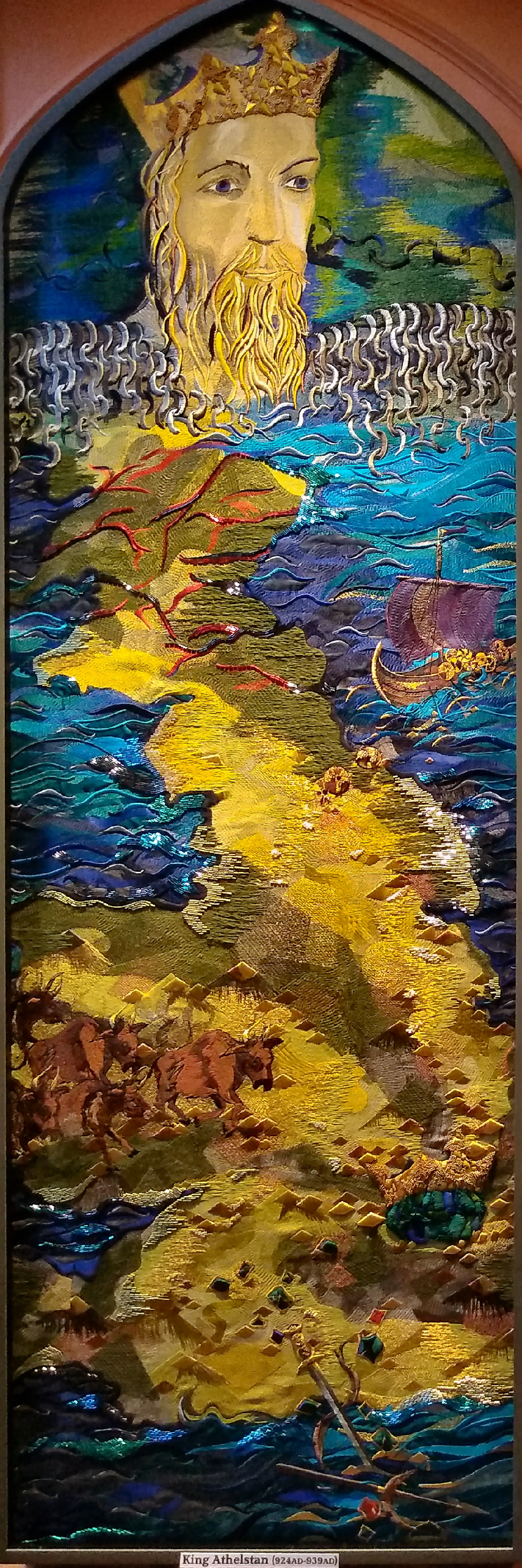
Tall arched embroidery panel showing King Athelstan with a gold crown and long golden beard above a sea of blue and teal waves, with a sailing ship, galloping horses, golden land, and a sword at the bottom. Caption reads King Athelstan (924AD-939AD).Artifact

Secondary source

Embroidery Panel of King Athelstan

Jacky Puzey (design by Sophia Pearson) · 2022

Illuminated manuscript miniature in a decorative gold and brown border. On the left, a crowned figure in a light tunic and dark cloak holds up a gold-colored box or book. On the right, a figure with a golden halo stands in a small arched shrine, raising one hand and holding a small book, beside a tiled building.Painting

Secondary source

Athelstan Manuscript Miniature

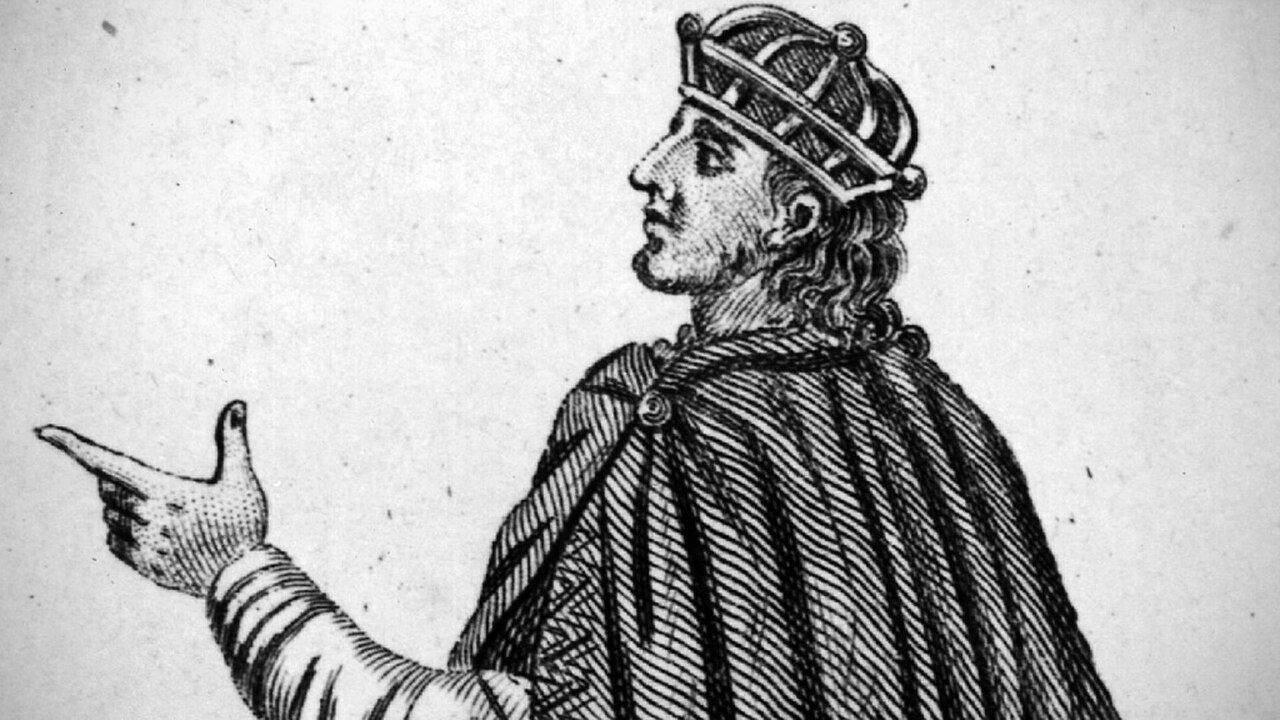
Black-and-white engraving of a bearded man in a crown with arched bands, wearing a striped cloak with a clasp at the shoulder. He faces right and extends his right arm to the left, pointing with his index finger.Painting

Secondary source

Aethelstan, 18th-Century Depiction

18th century

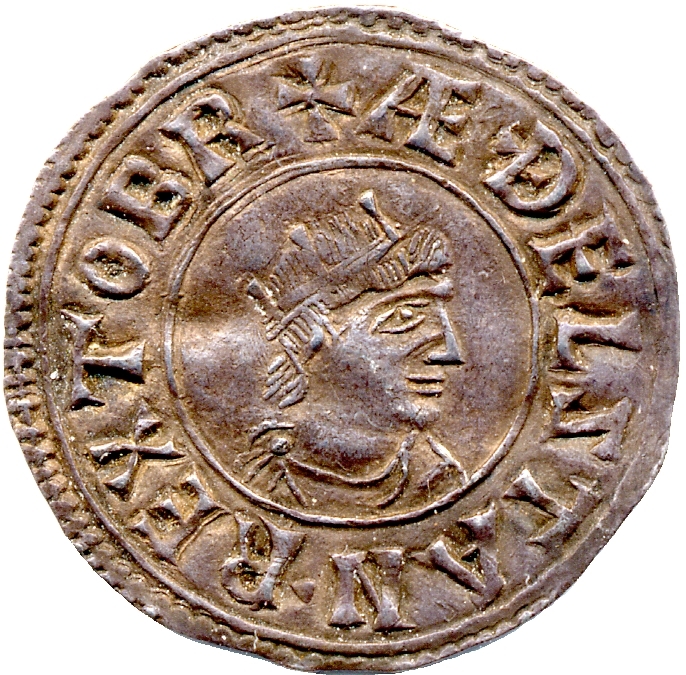
Photograph of an Anglo-Saxon silver penny, obverse. A bust of a crowned figure faces right within a beaded circle, surrounded by a ring of letters reading AEDELSTAN REX and the mint and moneyer inscription around the edge. Coin is brownish-silver.Artifact

Primary source

Penny of Æthelstan, Obverse

Otic (moneyer)

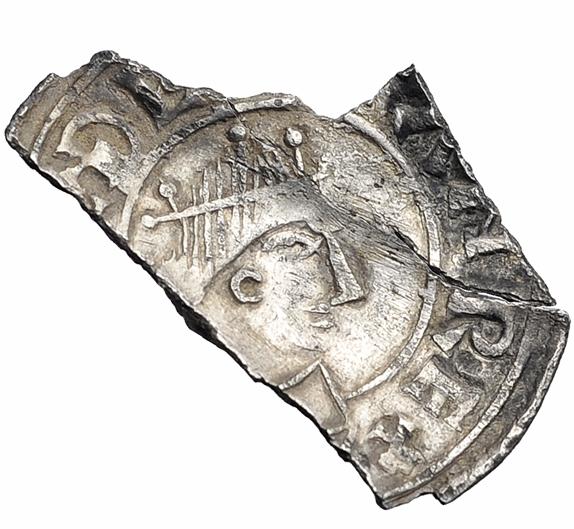
Photograph of a fragmentary silver penny with a broken, irregular edge. The visible side shows a crowned or diademed bust facing right, with partial inscription letters around the rim. The coin is shown against a white background.Artifact

Primary source

Penny of Æthelstan

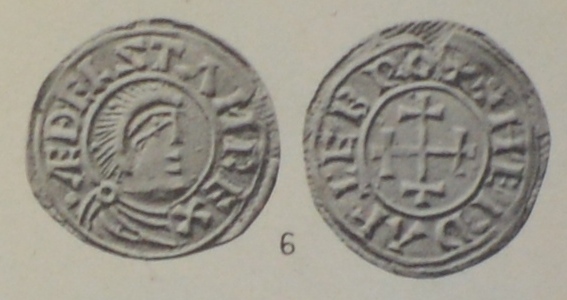
Black-and-white photograph of two silver coins side by side, labeled with the number 6 below. The left coin shows a crowned bust facing left with the inscription ÆTHELSTAN around the edge. The right coin shows a central cross with pellets in its quadrants and a circular inscription around the rim.Artifact

Primary source

Coin of King Æthelstan

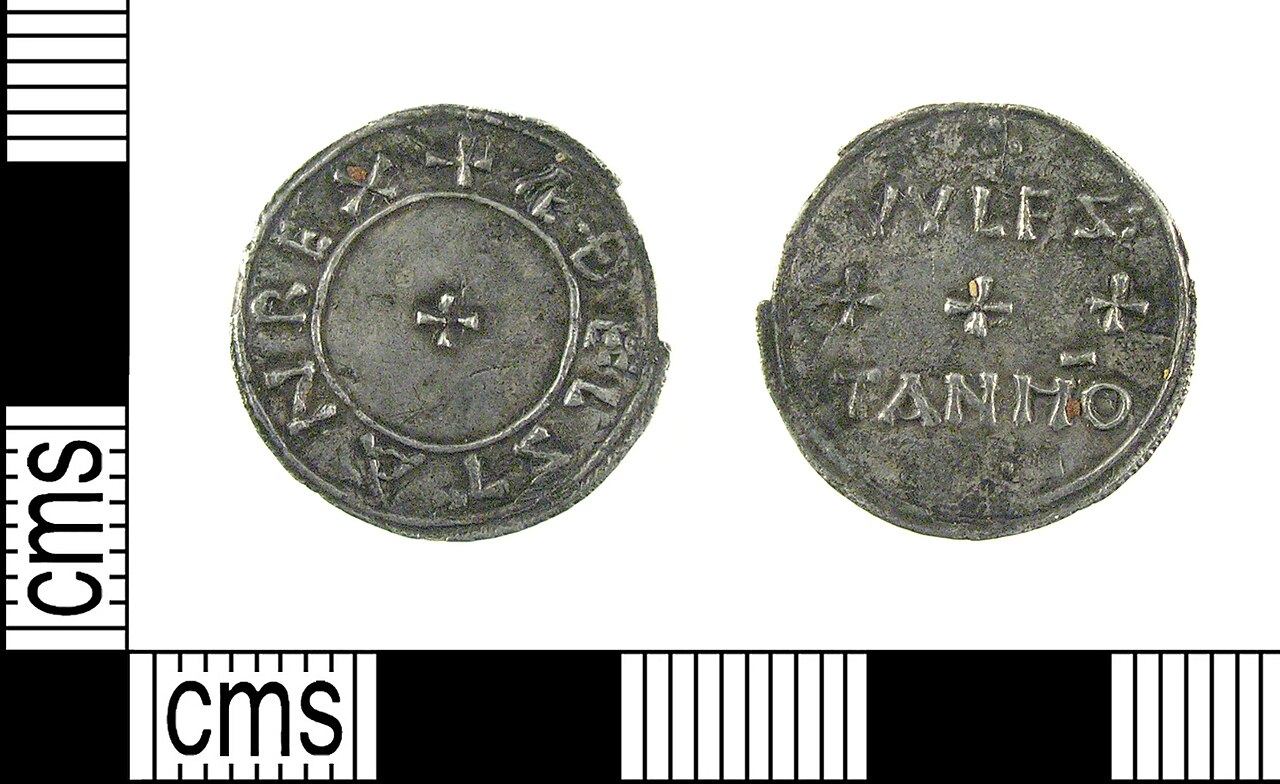
Two sides of a worn silver penny coin on a white background with a scale bar. The left side has a central cross inside a circle with a ring of letters around the edge. The right side has the partial inscription WULF and a moneyer's name, with three crosses arranged in a row in the centre.Artifact

Primary source

Silver Penny of Æthelstan, Moneyer Wulfstan

Wulfstan (moneyer) · between 924 and 939

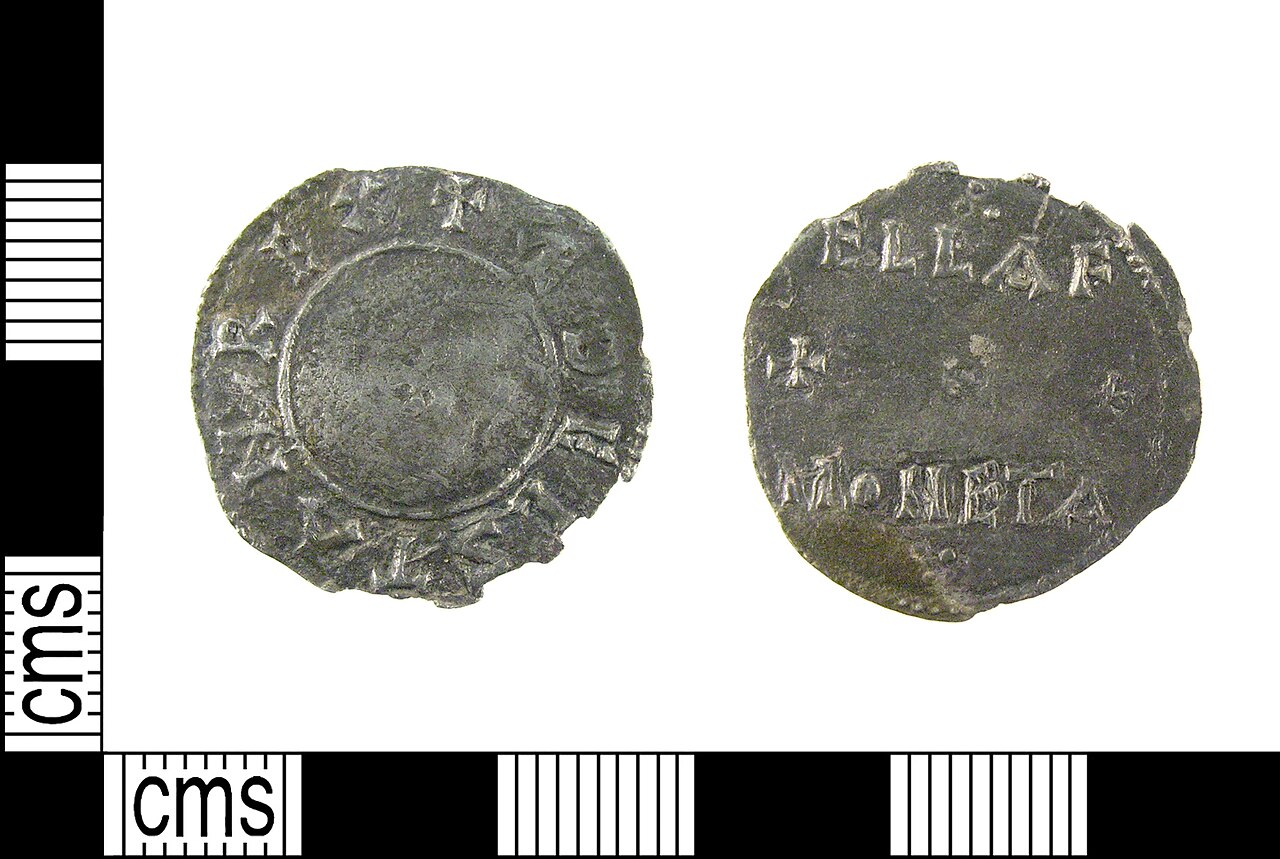
Two views of a small irregular silver coin on white background with a metric scale bar. Left: obverse with a central bust-like design inside a beaded ring and faint letters around the edge. Right: reverse with the inscription ELLAF, a small cross-like mark, and the word MONETA in the lower part.Artifact

Primary source

Silver Penny of Æthelstan, Moneyer Ellaf

Ellaf (moneyer) · between 924 and 939

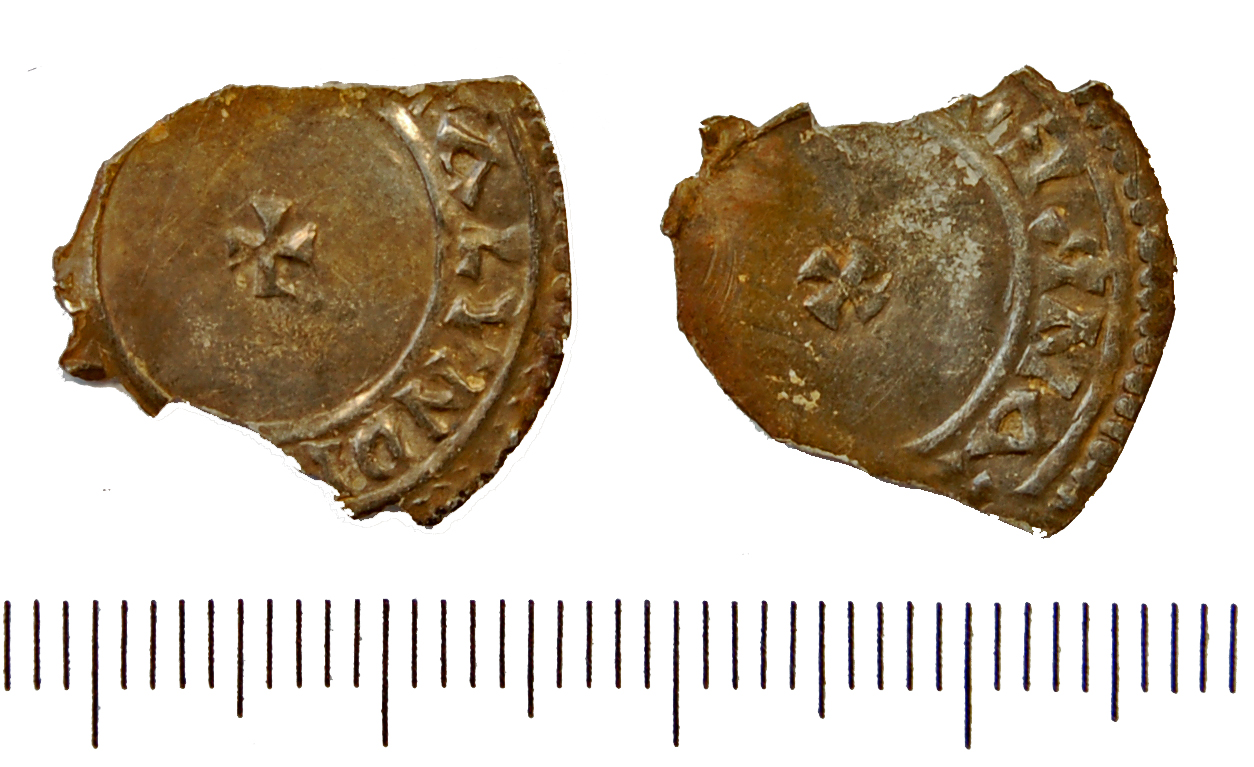
Two fragmentary silver-coloured coins, obverse and reverse, on a white background beside a millimetre scale ruler. Each shows a central cross with a worn inscription around the edge; both are damaged and broken at the edges.Artifact

Primary source

Silver Penny of Æthelstan, Circumscription Cross, Bristol

between 924 and 939

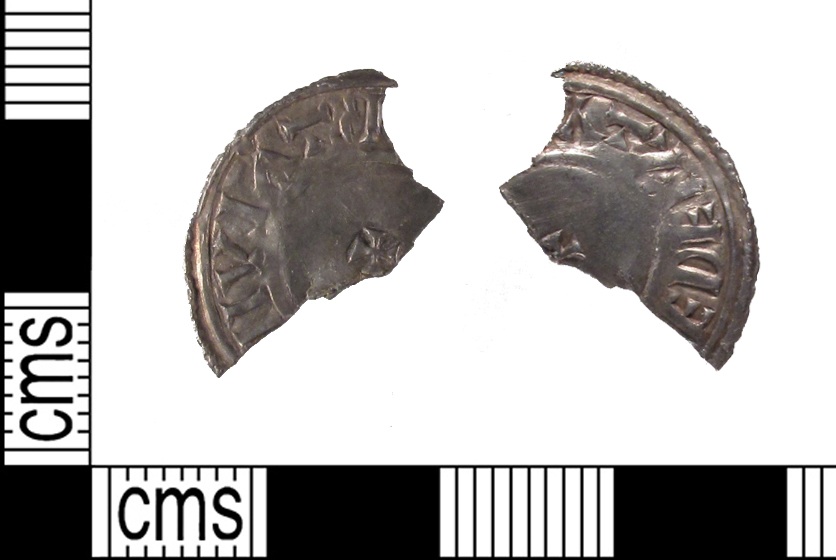
Two broken halves of a small silver coin on a white background, with a black and white scale bar along the top and left edges and bottom. The left fragment shows worn, partial legend letters along its rim; the right fragment shows partial letters and a small cross-like mark near the break.Artifact

Primary source

Early Medieval Penny of Æthelstan, Sussex Archaeological Society

between 924 and 939

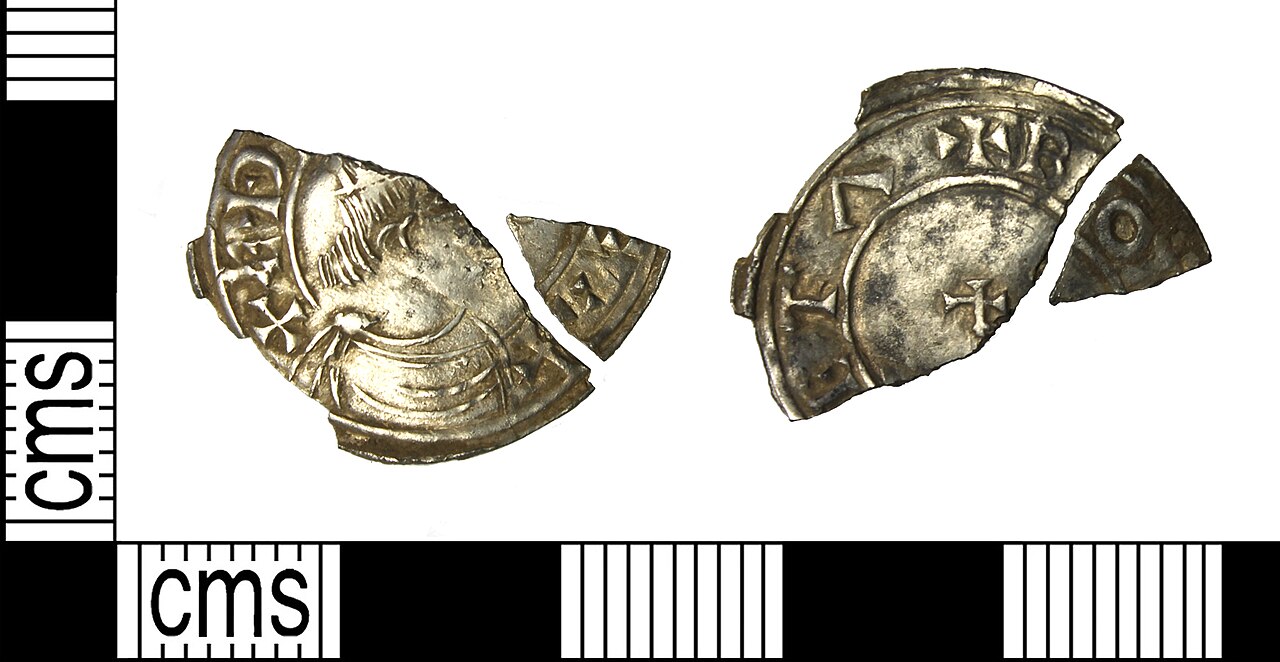
Two joined fragments of a silver penny, with a third small broken piece beside them. Left: a crowned bust facing right with partial lettering around the rim. Right: reverse with a small cross and partial lettering, and a separate fragment showing part of a letter. A centimeter scale bar runs along the edges.Artifact

Primary source

Penny of Aethelstan, Crowned Bust Type

924–939

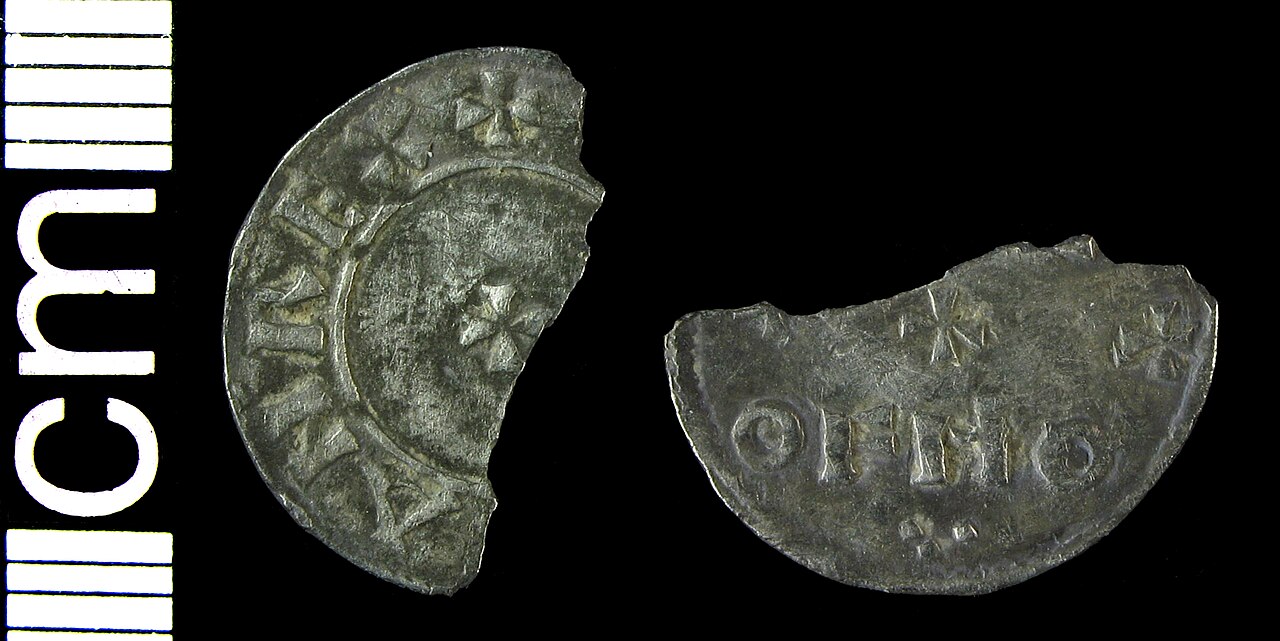
Two broken, bent silver-grey early-medieval halfpenny fragments on a black background beside a centimetre scale bar. The left piece shows a partial cross and lettering around a rim; the right piece shows a partial cross-like design and the letters 'OFFIC' or similar on a lower band.Artifact

Primary source

Halfpenny of Aethelstan, Two-Line Type

924–939

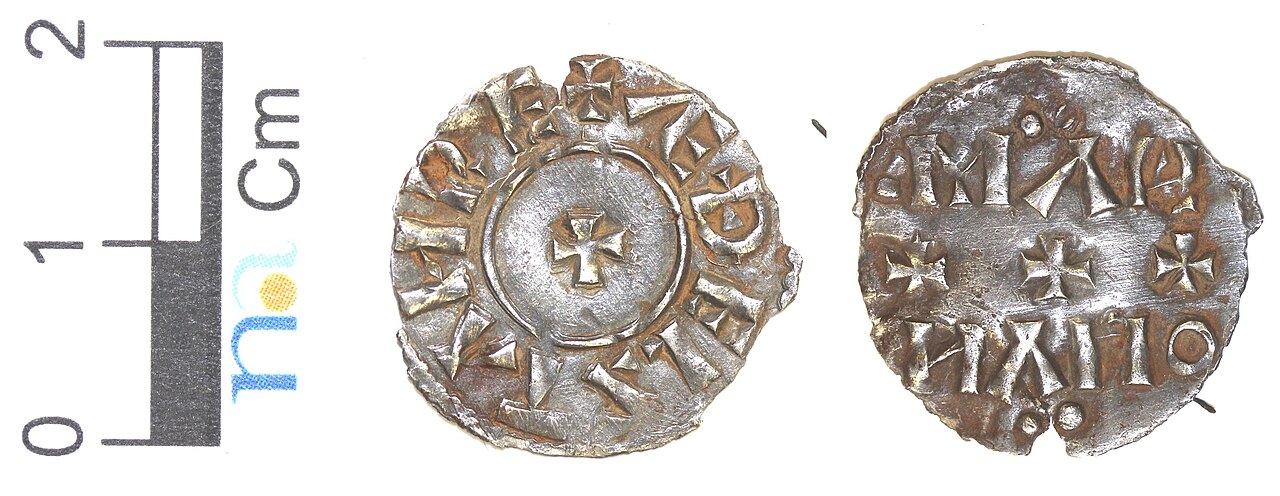
Two sides of a small silver coin on a scale bar marked 0 to 2 cm. Left side: a central cross inside a circle, with a ring of partly legible lettering around the edge. Right side: three crosses and inscribed lettering in two lines.Artifact

Primary source

Penny of Aethelstan, King of All England

924–939

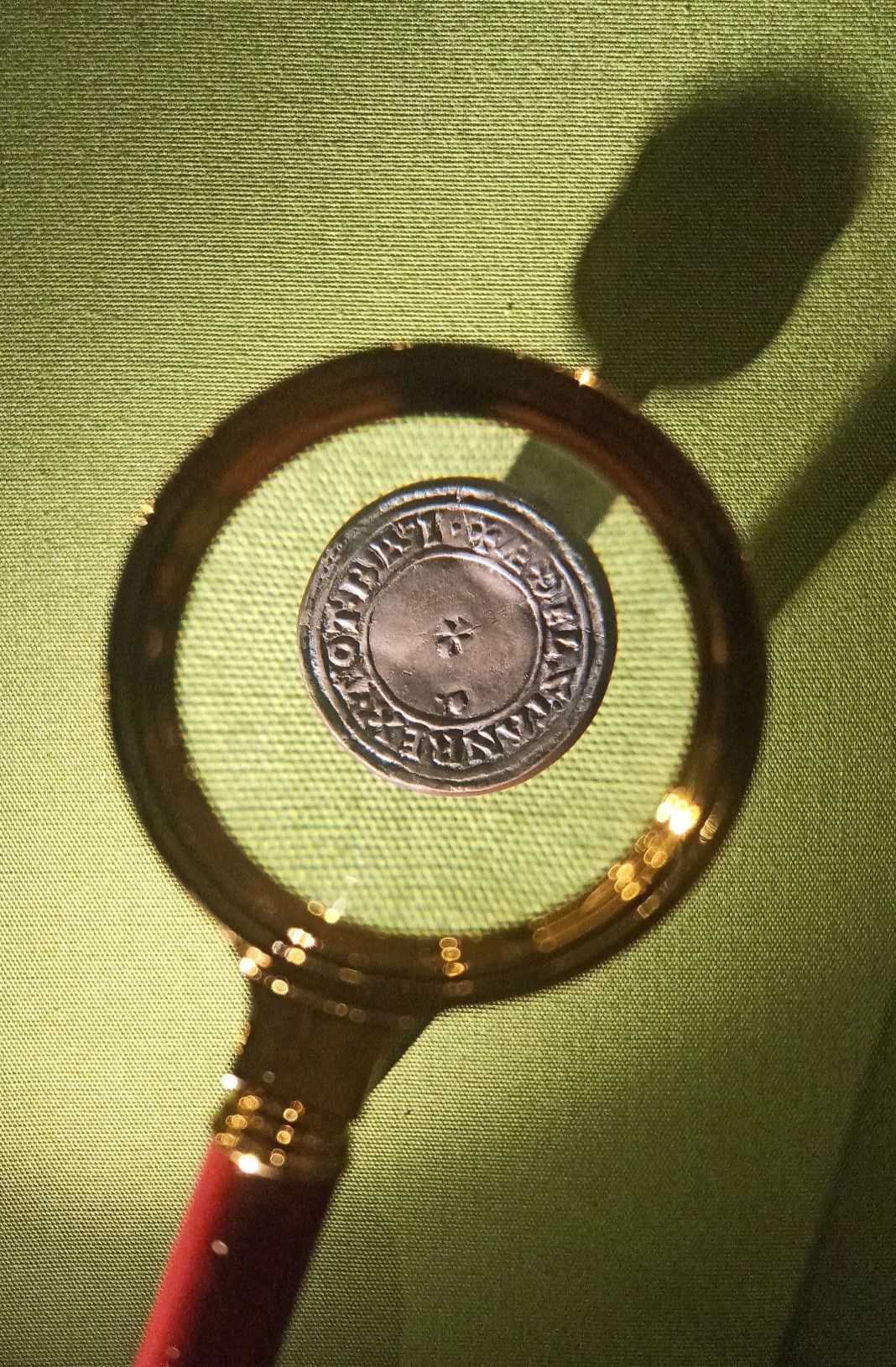
A silver-coloured Anglo-Saxon penny viewed through a magnifying glass with a red handle and brass rim, on a green cloth background. The coin has a cross in the centre and a ring of inscribed lettering around the edge.Artifact

Primary source

Anglo-Saxon Penny of King Athelstan from Lewes

925–939

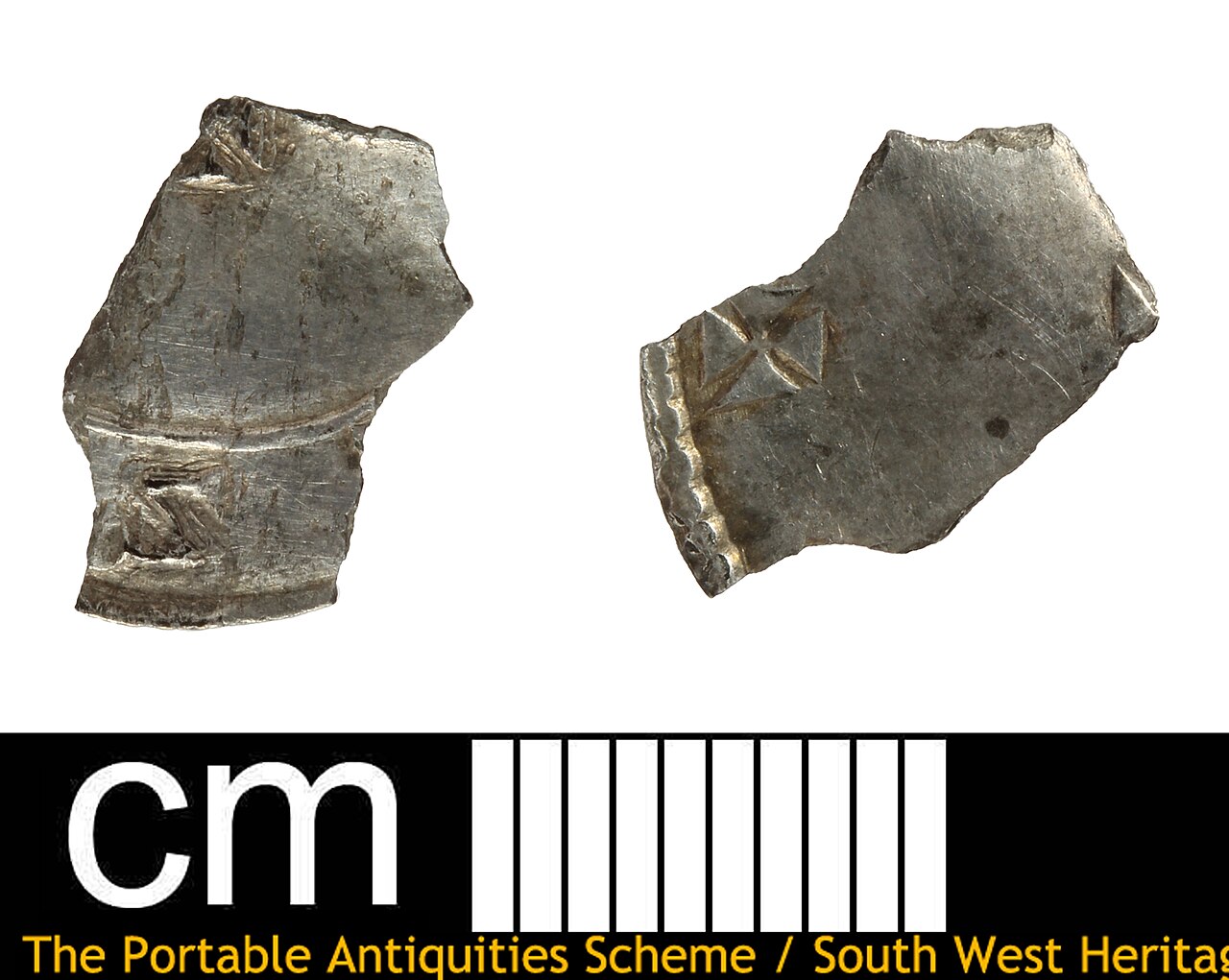
Two fragments of a silver coin on white background, with a metric scale bar below. The left fragment has a curved line and small marks; the right fragment has a raised edge and a small cross-like design.Artifact

Primary source

Fragment of a Penny Probably of Æthelstan

924–939

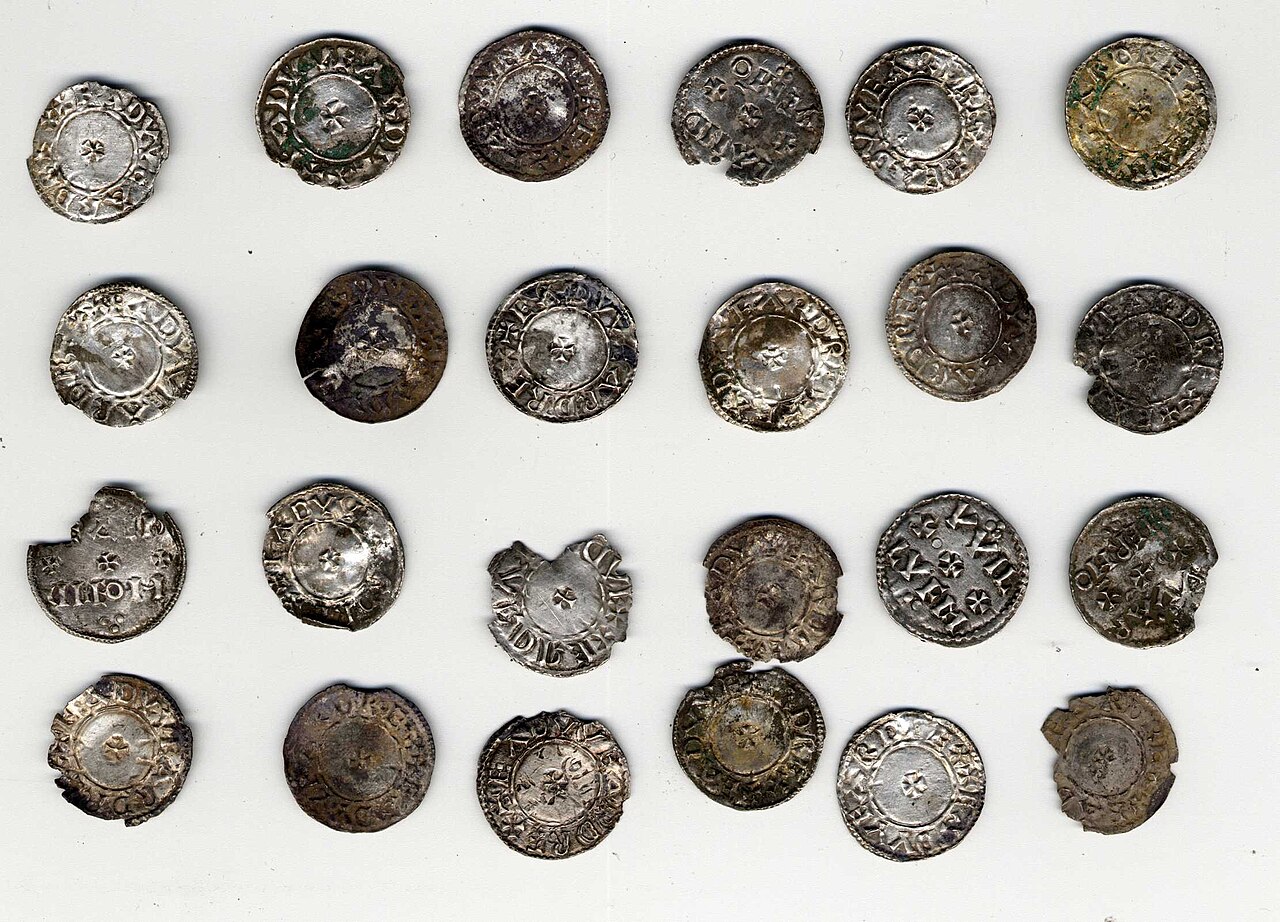
Photograph of about two dozen worn, partly corroded silver coins arranged in four rows on a white background. Most show a central cross pattern with fragmentary inscriptions around the edges; some are broken or clipped.Artifact

Primary source

Coin Hoard of Edward the Elder, Suffolk

c. 920

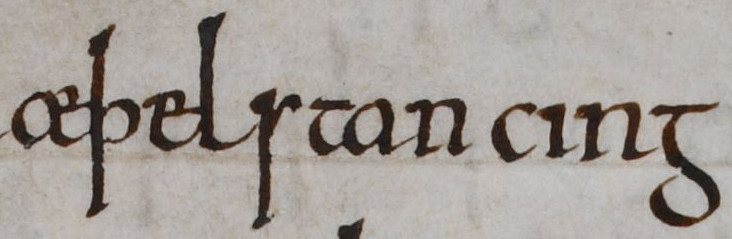
Close-up of handwritten medieval Latin-script text in brown ink on pale parchment, reading 'æþelstan cining' in Old English, with the ascender letters and the 'cining' abbreviation visible. The ink is faded and the parchment shows slight staining.Book

Secondary source

Æthelstan's Name in the Anglo-Saxon Chronicle (C text)

Unknown · c. 11th-12th century

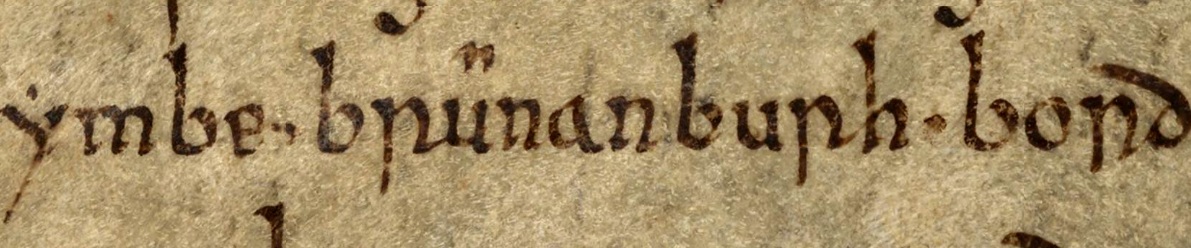
Close-up of a handwritten Old English manuscript line on aged, yellowish parchment in dark brown ink, reading approximately 'ymbe brunanburh' with a partial letter at the left edge and a 'bond' fragment at right.Book

Secondary source

Parker Chronicle Entry on the Battle of Brunanburh

Unknown · 937

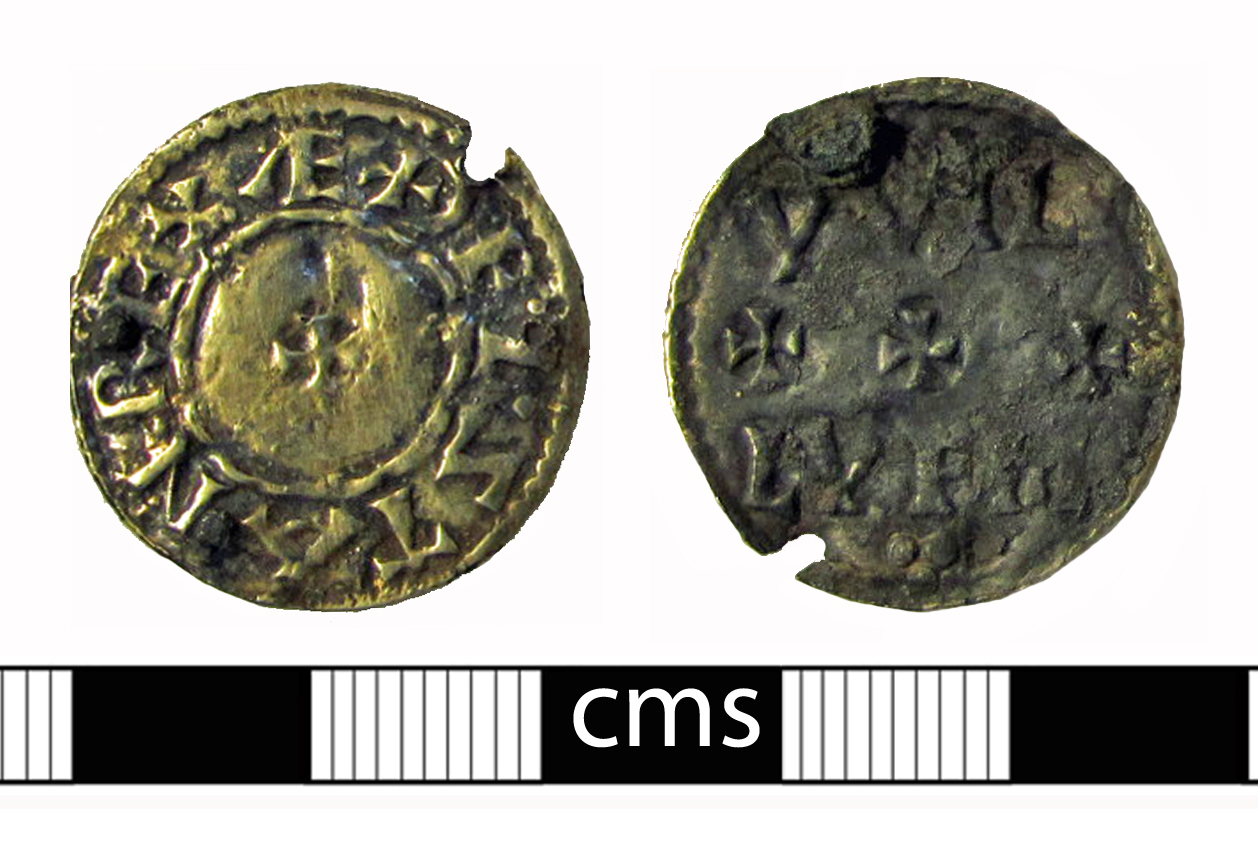
Two photographs of a small coin brooch, shown front and back on a white background with a scale bar below. The front is gold-coloured with a central design and a ring of lettering around the edge. The back is dark and has a plain cross pattern and letters, with a small notch broken from the rim.Artifact

Primary source

Coin Brooch Made from a Penny of Æthelstan

Willuf (moneyer) · between 924 and 1000

Book

Secondary source

Parochial History of Cornwall: Burian

Unknown · 1838

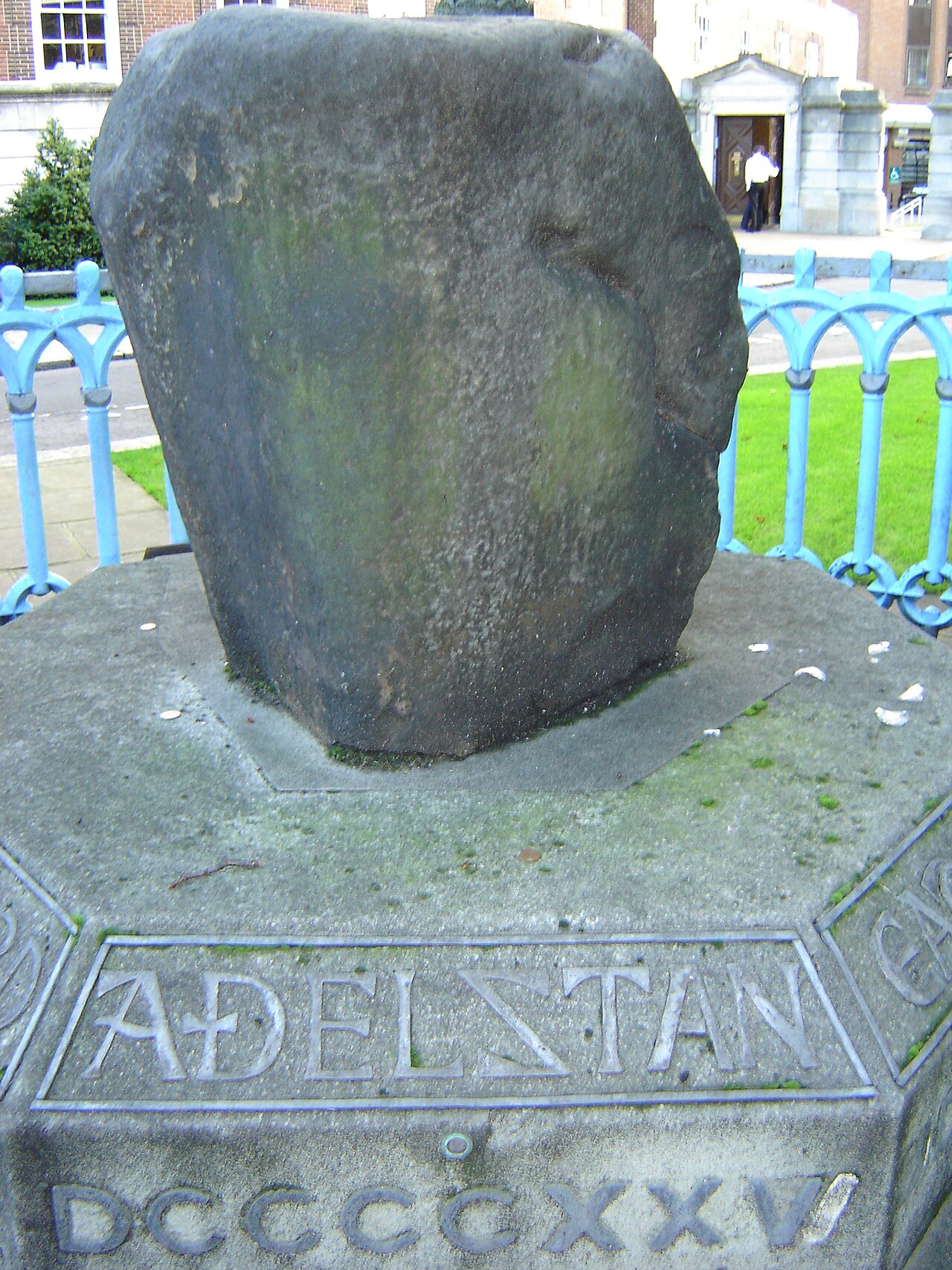
Photo of the Saxon Coronation Stone, a large dark grey rough-surfaced stone block resting on a hexagonal stone plinth. The plinth bears carved letters reading ADELSTAN and DCCCCXXV, with a blue metal railing and green grass behind.Artifact

Secondary source

Saxon Coronation Stone, Kingston upon Thames

Kto288 · photographed October 2006

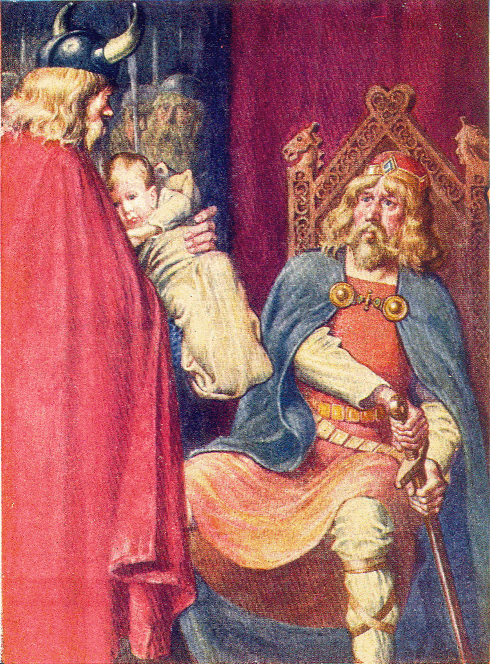
Painted illustration of a bearded man in a red cloak and horned helmet holding a baby toward a seated king. The king wears a red tunic, blue cape, gold-trimmed crown, and holds a sword; an ornate carved wooden throne with animal heads stands behind him. Armed men stand in the background.Painting

Secondary source

Harald Fairhair's Son Brought to King Athelstan

Monro Orr · 1908

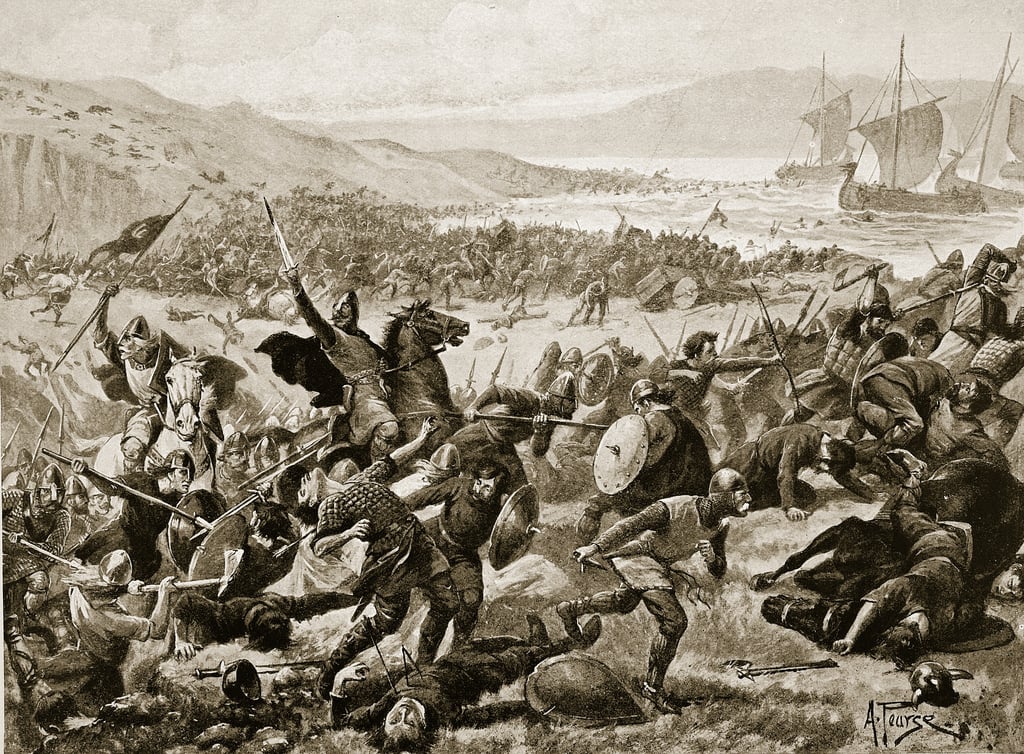
Sepia-toned illustration of a chaotic medieval battle on a grassy hillside. Mounted warriors with banners fight among foot soldiers carrying shields and spears. Several bodies lie on the ground. Ships with sails sit on a sea in the background, and the signature A. Pearse appears in the lower right.Painting

Secondary source

The Battle of Brunanburh

Alfred Pearse · 1922

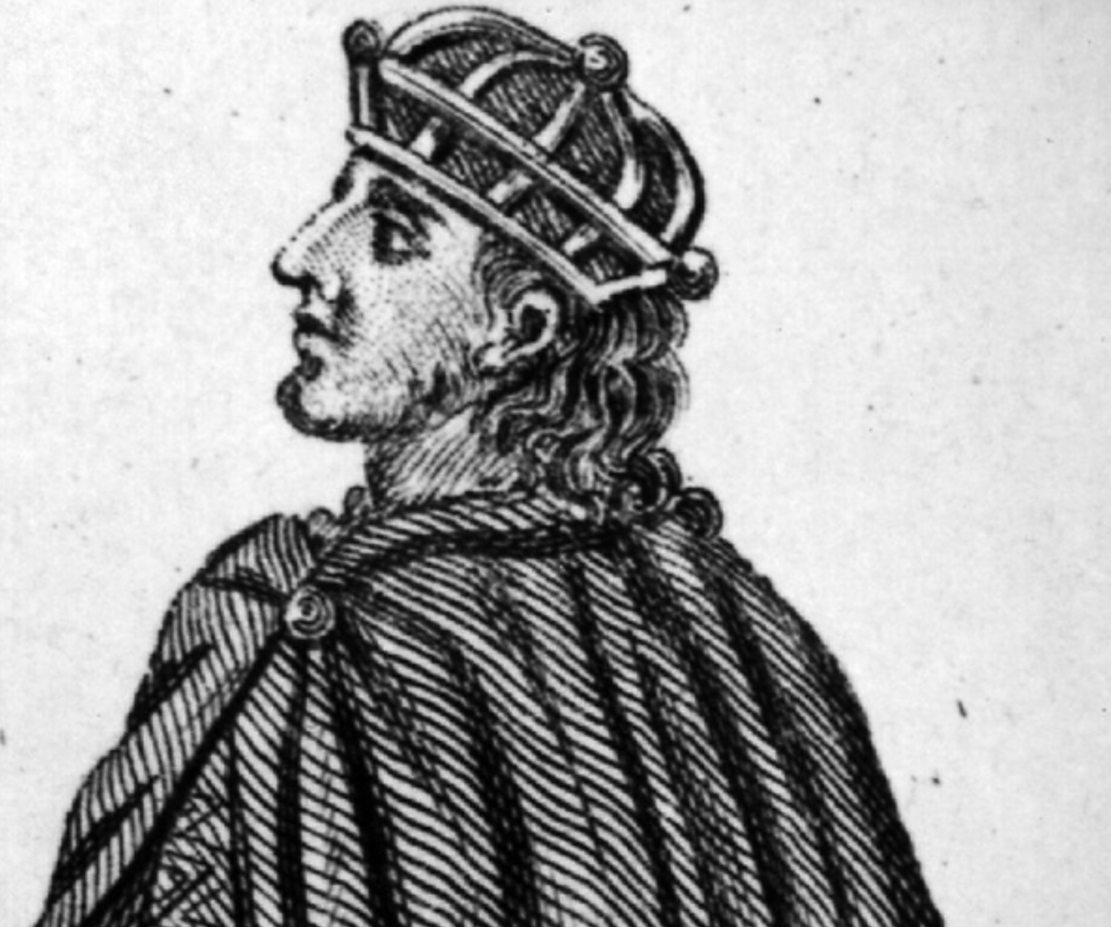
Black and white engraving in profile facing left of a bearded man wearing a crown with arched bands and knobs, and a cloak fastened at the shoulder with a round clasp. His hair is curled at the nape. The background is pale and plain.Painting

Secondary source

Aethelstan, 18th-Century Depiction

18th century (this copy 2017)

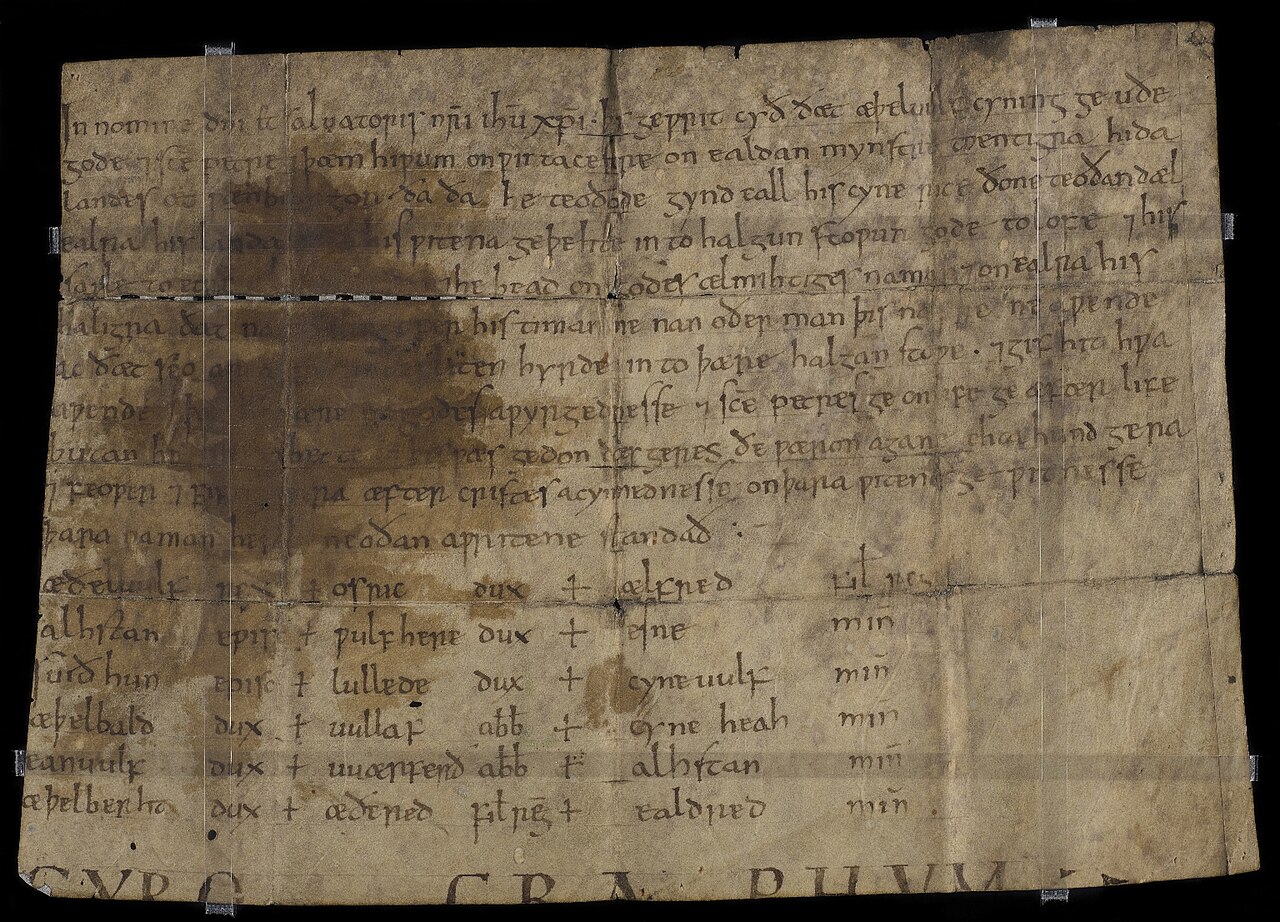
Photograph of a brown vellum manuscript page written in Old English-style black ink handwriting, with a large dark water stain on the left, a list of witness names with the word 'dux' and 'min' in the lower half, and large capital letters at the bottom edge.Document

Secondary source

Charter of King Ethelstane Granting Land to Winchester

11th century (copy of a charter dated 854)

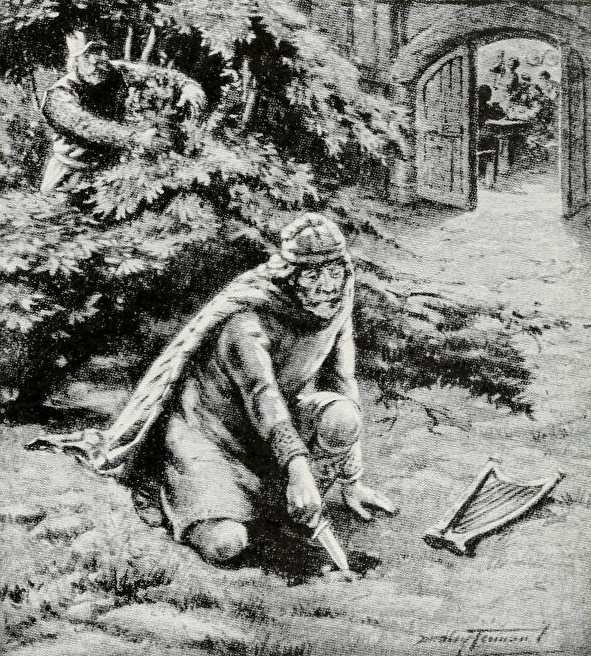
Black and white engraving-style illustration of a cloaked, hooded man crouching in grass near a bush, placing an object on the ground beside a small harp. In the background, through an arched doorway, people sit at a table in a lit hall. Signature in lower right corner.Painting

Secondary source

Olaf in Athelstan's Camp on the Eve of Brunanburh

Charles Dudley Tennant · c. 1922

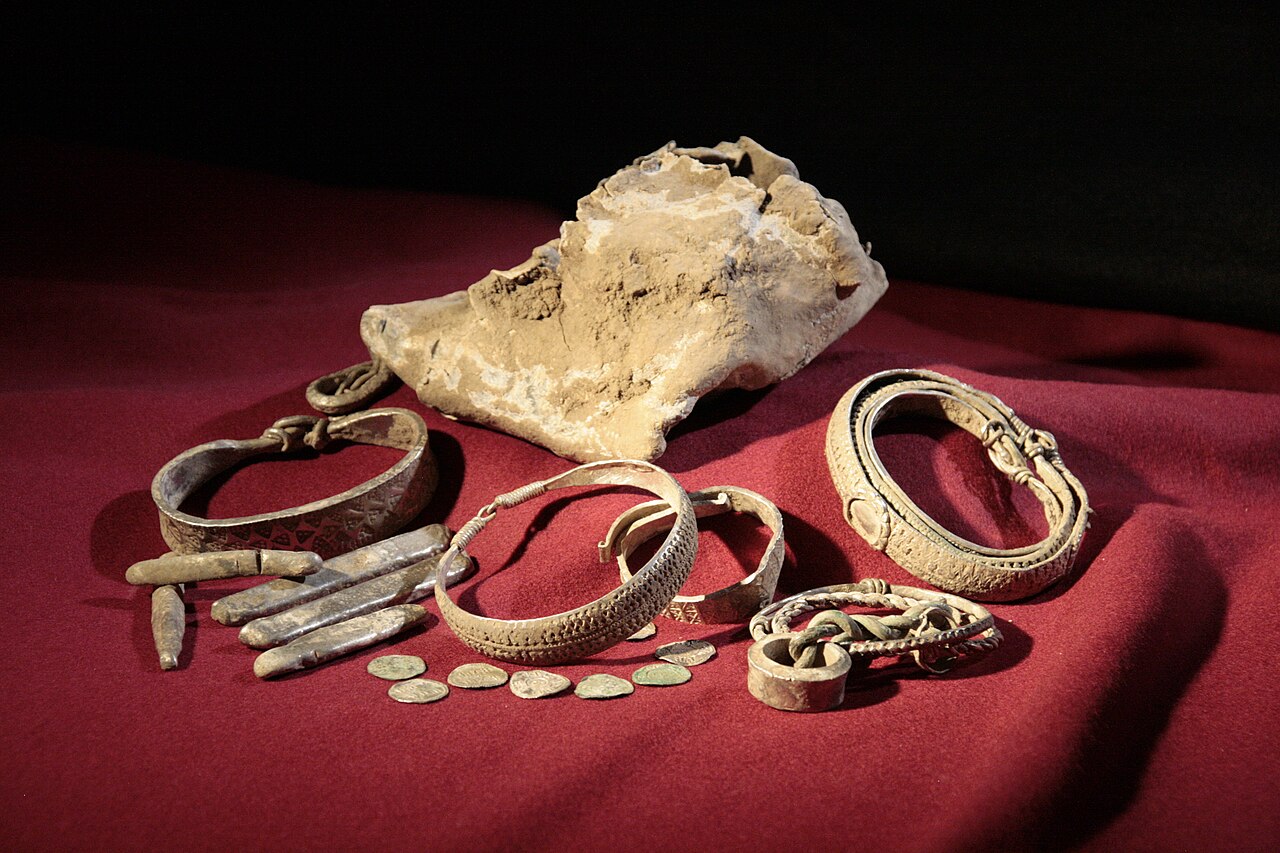
A group of Viking-age silver and metal objects on a dark red cloth: a crumbling pale lead container at the top, with arm-rings, ingots or bars, a few small coins, and a ring-shaped clasp arranged around it.Artifact

Primary source

Silverdale Hoard

c. 900-910

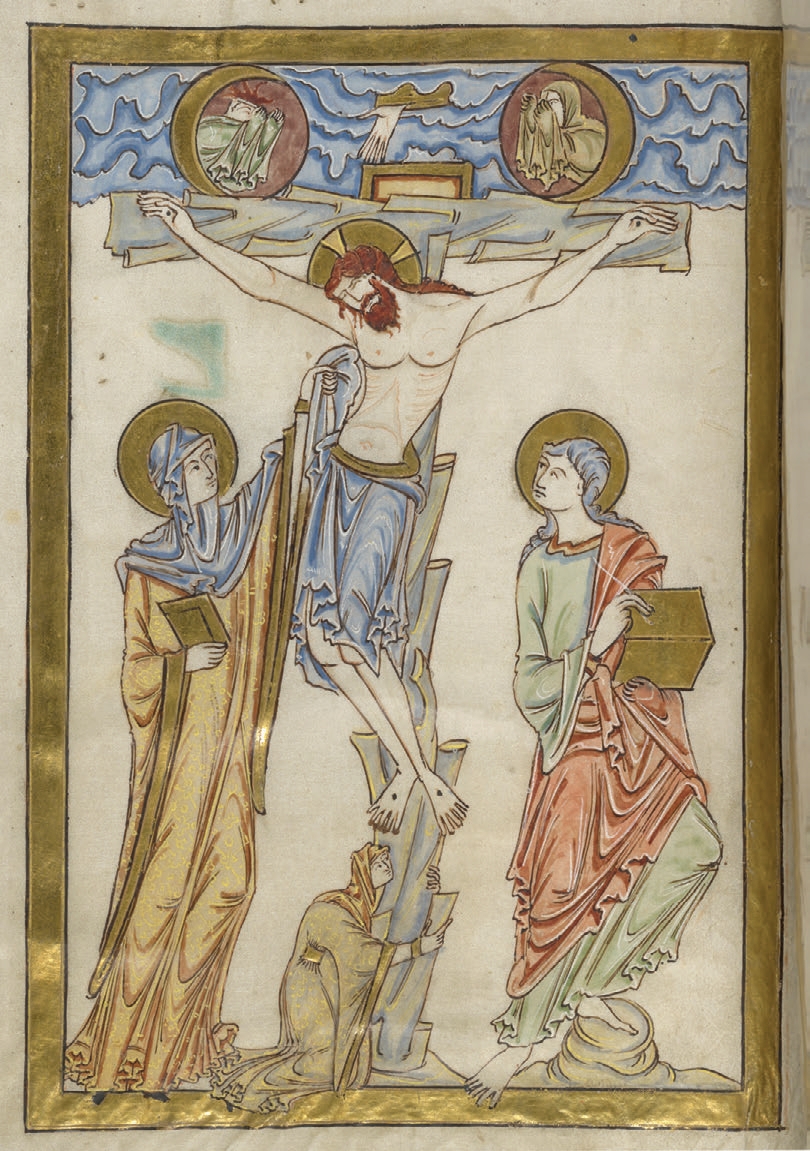
Medieval manuscript illumination of the Crucifixion on a gold-bordered page. Christ with a haloed head is on a cross against a blue cloud-patterned sky, with two small roundels of mourners above. Haloed Mary in a yellow robe and blue veil stands at left, a kneeling figure at the base, and a haloed John in green and red robes stands at right holding a book.Painting

Secondary source

Gospels of Judith of Flanders, fol. 1v

c. 1065

Want the full shelf? Chat with Aethelstan in the app and open the Sources panel — every quote links back to the original.

Use Aethelstan in class

2 collections

Ready-made collections from the Humy team that feature Aethelstan. Preview any of them, then try it free.

Trusted by educators worldwide

Conversations
375,000+
Real exchanges between students and historical figures
Messages exchanged
4,142,000+
Across every figure, classroom and language
Historical figures
100,000+
Each informed by a curated biography and selected sources
Languages supported
50+
From English and Spanish to Arabic and Korean

Paying customers

Used by 98 schools and universities

Partner school logo
Tecnológico de Monterrey logo
Hyper Island logo
Partner school logo
Chambersburg Area School District logo
Broward County Public Schools logo
Nebo School District logo
National Louis University logo
South Florida PBS logo
Punahou School logo
University of Wisconsin–River Falls logo
Partner school logo
Partner school logo
Archbishop Mitty High School logo
Kingsburg High School logo
Norwalk Public Schools logo
Partner school logo
Connections logo
Partner school logo
Moore Public Schools logo
Partner school logo
Partner school logo
Partner school logo
Partner school logo
Robbinsville Public Schools logo
Partner school logo
Partner school logo
Partner school logo
Tecnológico de Monterrey logo
Hyper Island logo
Partner school logo
Chambersburg Area School District logo
Broward County Public Schools logo
Nebo School District logo
National Louis University logo
South Florida PBS logo
Punahou School logo
University of Wisconsin–River Falls logo
Partner school logo
Partner school logo
Archbishop Mitty High School logo
Kingsburg High School logo
Norwalk Public Schools logo
Partner school logo
Connections logo
Partner school logo
Moore Public Schools logo
Partner school logo
Partner school logo
Partner school logo
Partner school logo
Robbinsville Public Schools logo
Partner school logo
Partner school logo

What educators are saying

“We enjoyed the program last year and used it frequently.”
“My students say it’s a welcome change of pace. I’m not a fan of the “sage on the stage” model, so I try to incorporate research-oriented and self-paced activities. With Humy, students have to take charge of their learning. They’ve become more adept at critical thinking, forming better questions, and improving their reading comprehension. The interview feature has been my go-to tool. I create assignments where students must ask historical figures a set number of questions, then summarize the responses to ensure they’re truly absorbing the material. This approach lets them actively explore the past rather than passively consuming information.”
“Humy has helped me bring historical figures, sometimes long past, to life. When my students interact with these figures in real-time, it eliminates some of the perceived “ancient” characteristics of my curriculum. This has shifted my students’ thinking away from viewing history as abstract or irrelevant. Real-time interactions make historical figures relatable, even allowing students to ask off-topic questions that help put historical lives in a more relevant context for 13-year-olds. The feature I use the most is the interview feature. After teaching a topic, most recently Gandhi and Joan of Arc, I have the students ask pointed, focused questions. We practice good conversation techniques beforehand, teaching them to listen (or read) carefully and formulate thoughtful follow-up questions rather than just interrogating. It helps students practice effective conversation skills.”

FAQ

Frequently asked questions

Who is Aethelstan?
King of the Anglo-Saxons and the first king of the whole of England. On Humy.ai you can chat with an AI version of Aethelstan that draws on a short biography and 64 historical sources during the conversation — by text or voice, in 42 languages.
Is Aethelstan AI free?
Aethelstan is part of Humy's full library of more than 100,000 figures, which comes with a paid plan. A free account (no credit card) includes 20 messages a month with the free library's figures, so you can try how the conversations work first.
What sources does the Aethelstan AI use?
It draws on a short biography and 64 historical sources (artifacts, paintings and documents), including “Æthelstan Presenting a Book to St Cuthbert”, “Anglo-Saxon Chronicle” and “Textus Roffensis”. Each source has its own page on Humy.ai.
How historically accurate is the AI version of Aethelstan?
Each figure uses a short biography and a small set of selected historical sources as context (retrieval-augmented generation), so answers stay closer to known material than the model's general knowledge alone. It isn't a citation-grade research tool — like any LLM, the AI can get details wrong or extrapolate. Treat it as a strong starting point for inquiry and cross-reference important claims.
Can I talk to Aethelstan by voice?
Yes. In addition to text chat, you can call Aethelstan and hear their voice respond in real time — useful for auditory learners, interview practice and Socratic dialogue.
Is Humy.ai safe and compliant for schools?
Yes. Humy.ai is used by more than 100 schools, universities and organisations. The platform is FERPA- and GDPR-aligned, supports SSO, and offers an IT-approval pack tailored for school procurement teams.

Ready when you are

Start chatting with Aethelstan now.

20 messages free · No credit card · Available in 50+ languages.