


Secondary sourcePainting14th century
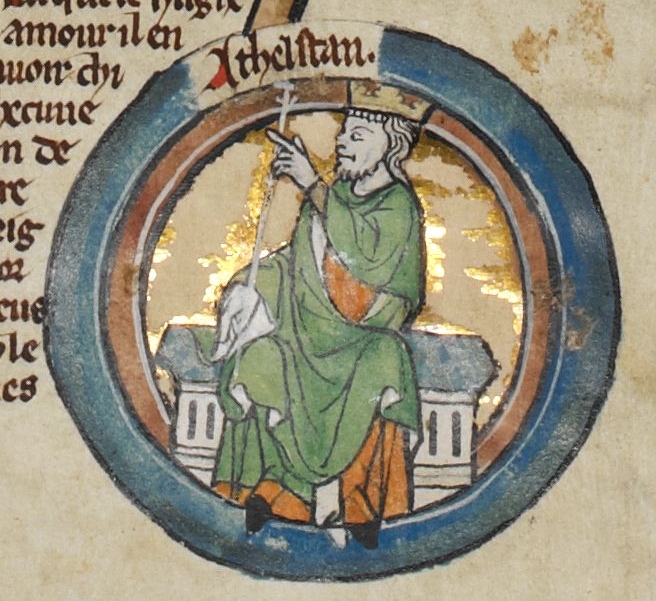
Æthelstan in a 14th-century royal genealogy
Unknown · 14th century
A 14th-century manuscript miniature of Æthelstan from a royal genealogy, showing how later medieval scribes remembered the king.
Æthelstan appears labelled by name in this royal genealogy, showing his place in the line of English kings.
About this source
What it is
This miniature comes from a 14th-century manuscript recording a royal genealogy. It shows a crowned, bearded king seated on a stone throne, holding a sceptre topped with a cross, labelled 'Athelstan' on a banner above.
Why it matters
Royal genealogies like this one were used to show the line of English kings and justify the authority of later rulers. Æthelstan's inclusion, centuries after his reign, shows how his position as an early unifying king of England remained important to medieval writers tracing royal descent.
Look closer
- Why would medieval scribes want to record a chain of kings like this?
- What symbols in the image (crown, sceptre) show royal power?
- Why is Æthelstan's name labelled directly on the image?
This painting is part of the curated material that grounds the AI version of Aethelstan on Humy.ai — when students ask about related events, the AI can quote it and cite it.
More Aethelstan sources
Meet the AI Aethelstan →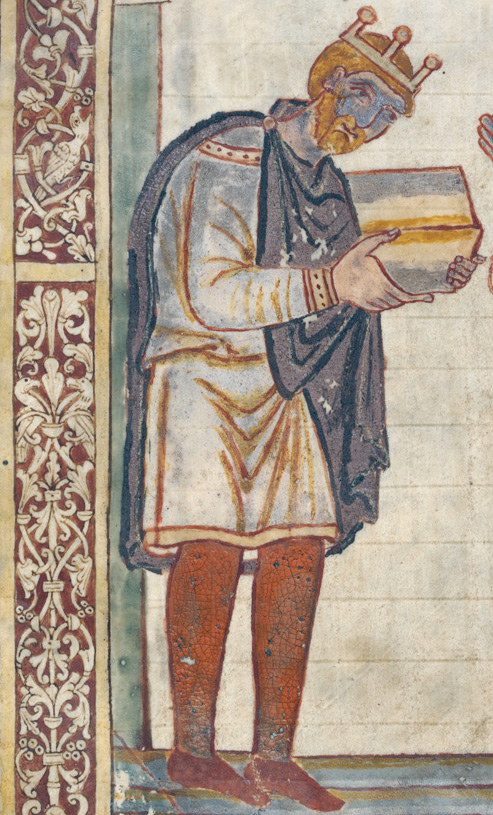 Painting
Primary source
Æthelstan Presenting a Book to St Cuthbert
c. 934
 Document
Primary source
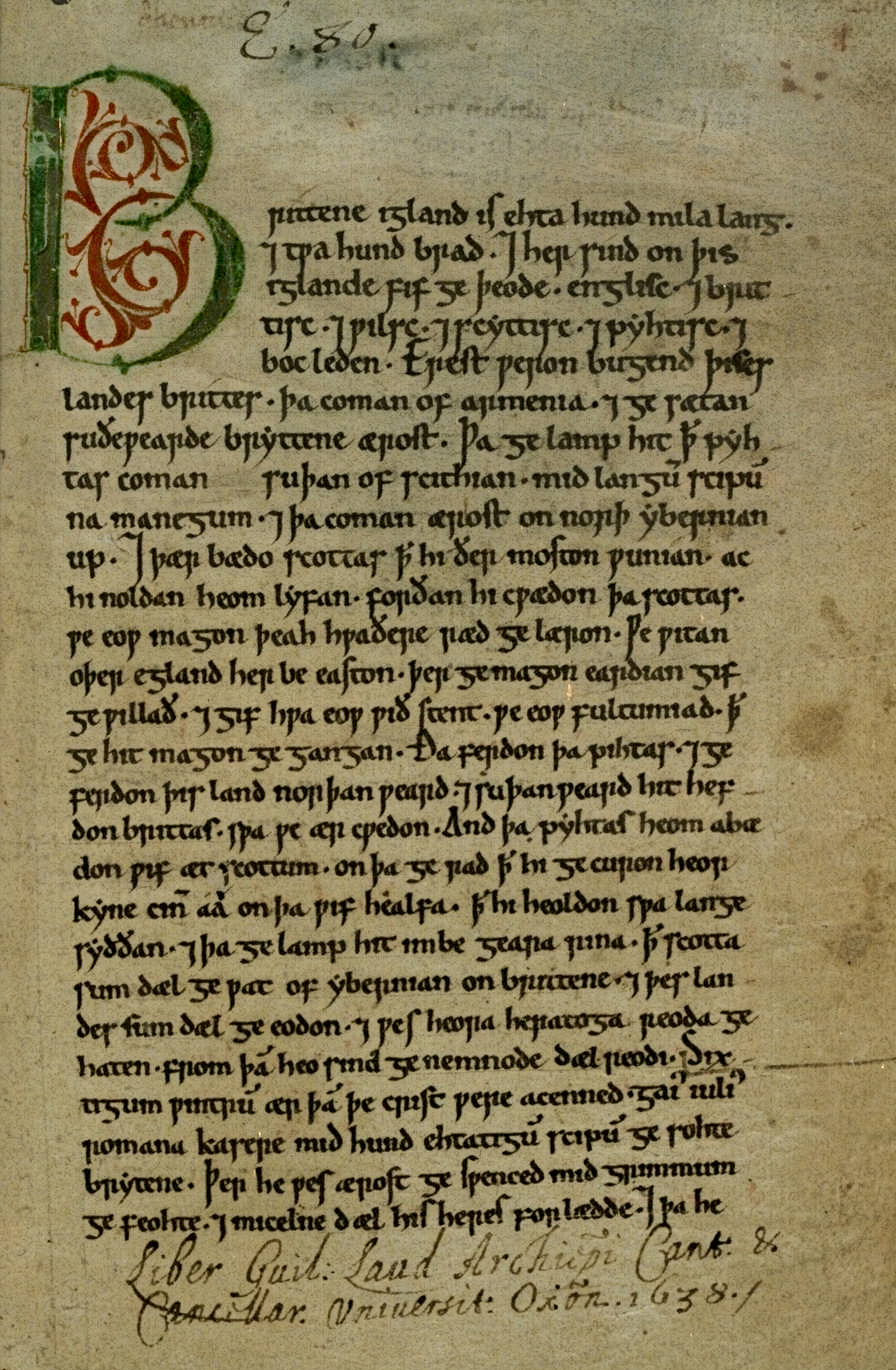
Anglo-Saxon Chronicle
c. 890 (Common Stock)
 Document
Secondary source
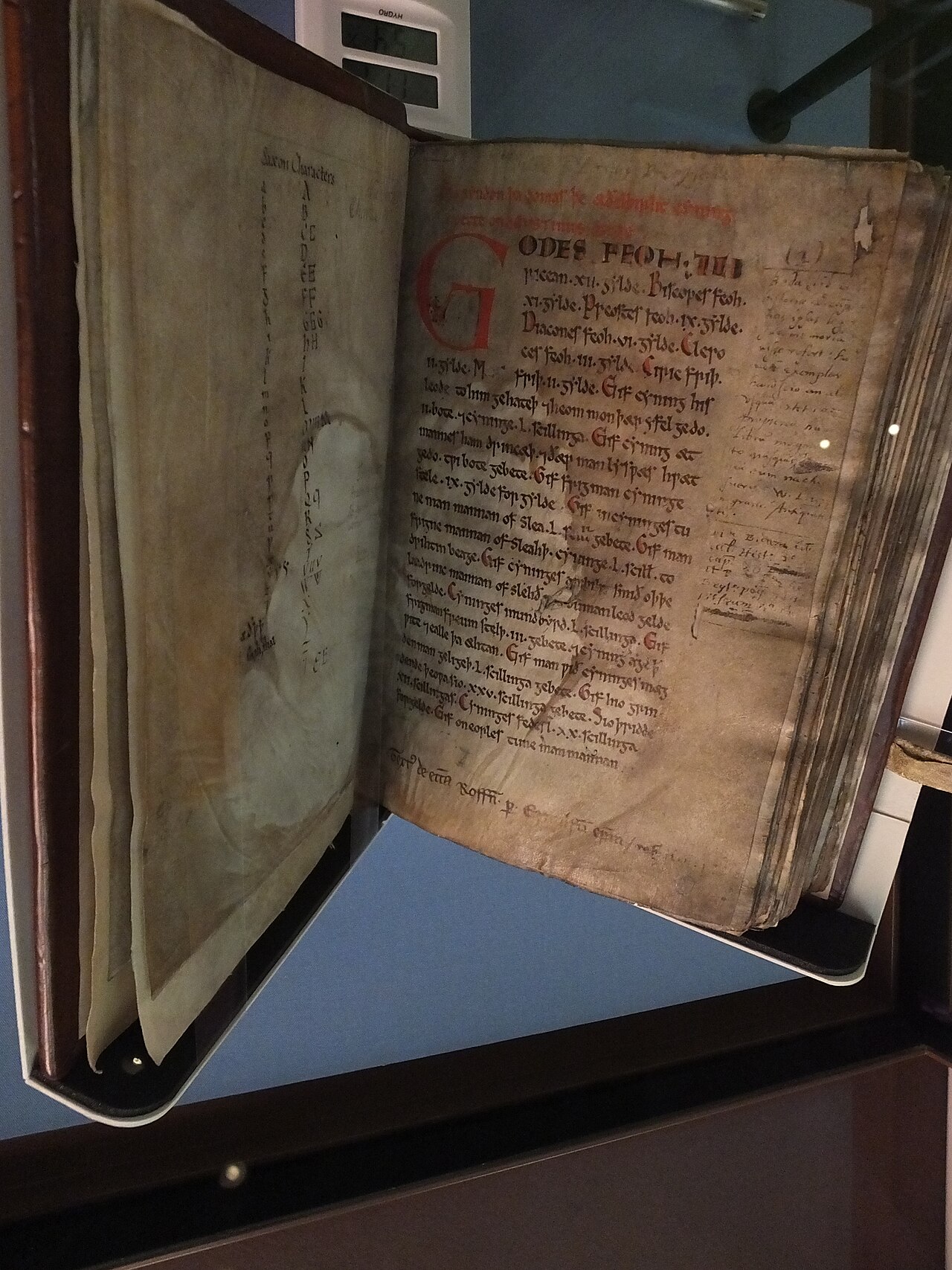
Textus Roffensis
c. 1300 (this copy; text 1122-1124)
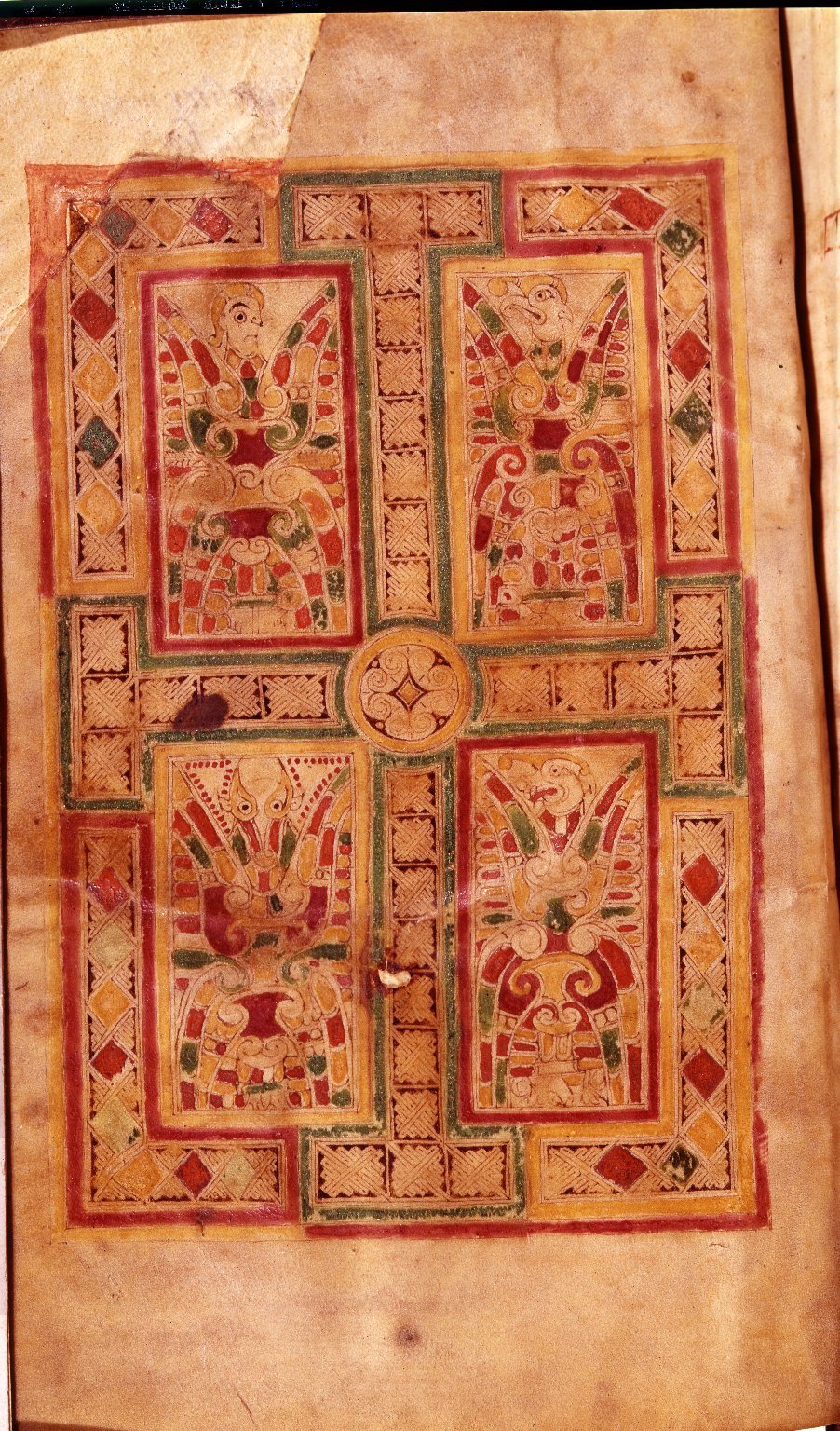 Book
Primary source
Mac Durnan Gospels
9th-10th century
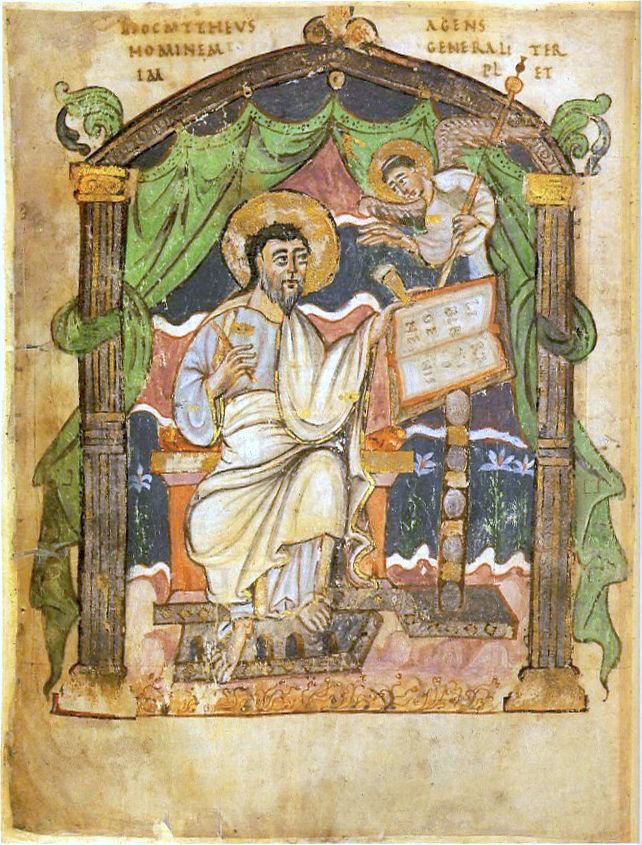 Book
Primary source
Coronation Gospels of Æthelstan
late 9th or early 10th century
Ready when you are
Start chatting with Aethelstan now.
20 messages free · No credit card · Available in 50+ languages.