


Primary sourceBook458 BCE
Agamemnon
Aeschylus · 458 BCE
The opening play of Aeschylus' Oresteia, dramatizing the murder of King Agamemnon by his wife Clytemnestra.
This is the opening play of Aeschylus' Oresteia and his most-studied individual work.
Free Humy account · No credit card · 120,912 sources to read
About this source
What it is
Agamemnon is a tragedy by Aeschylus, the first play of his Oresteia trilogy, first performed in 458 BCE in Athens.
Why it matters
The play follows King Agamemnon's return from the Trojan War and his murder at the hands of his wife, Queen Clytemnestra, who seeks revenge for the sacrifice of their daughter Iphigenia. It is the most closely studied single work by Aeschylus, showing his dense poetic language and his interest in cycles of guilt passed down through a family. The moral complexity of the play — neither Agamemnon nor Clytemnestra is simply right or wrong — reveals how Aeschylus used myth to explore questions about justice in his own time.
Look closer
- Why does Aeschylus make both Agamemnon and Clytemnestra morally complicated rather than simply hero and villain?
- What might the watchman's opening speech, waiting restlessly for news, tell the audience about the mood of the house?
- This translation was made centuries after Aeschylus by Robert Browning — how might a translator's choices change how we understand the original?
This book is part of the curated material that grounds the AI version of Aeschylus on Humy.ai — when students ask about related events, the AI can quote it and cite it.
More Aeschylus sources
Browse all 97 →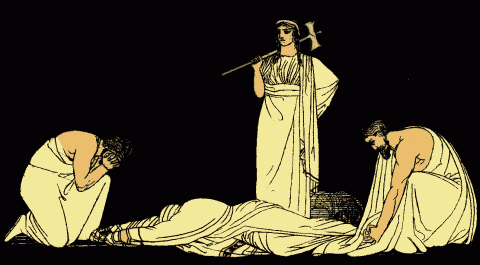
Ready when you are
Start chatting with Aeschylus now.
20 messages free · No credit card · Available in 50+ languages.