


Primary sourceBook458 BCE
Oresteia
Aeschylus · 458 BCE
The only complete surviving trilogy of Greek tragedy, written by Aeschylus, tracing revenge into trial by law.
Aeschylus wrote this trilogy; it is his most famous surviving work and best shows his view of justice.
Free Humy account · No credit card · 118,535 sources to read
About this source
What it is
The Oresteia is a trilogy of three tragedies — Agamemnon, The Libation Bearers, and The Eumenides — written by Aeschylus and first performed in 458 BCE at the Dionysia festival in Athens, where it won first prize.
Why it matters
It is the only complete connected trilogy to survive from ancient Greek theatre. The story follows a chain of killings within one family — Agamemnon's murder, then his son Orestes avenging him — and ends with a trial before an Athenian court rather than more bloodshed. This shift from personal revenge to public justice reflects how Aeschylus, writing in Athens' democratic age, thought about law and the city.
Look closer
- Why might Aeschylus have ended the cycle with a trial instead of another murder?
- What does the choice to connect three plays into one story tell us about his ambitions as a playwright?
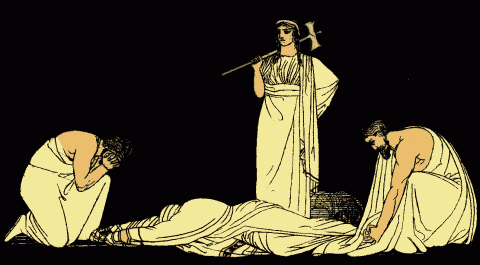
- The accompanying image shows a death scene covered by drapery — why might the staging hide the violence rather than show it directly?
This book is part of the curated material that grounds the AI version of Aeschylus on Humy.ai — when students ask about related events, the AI can quote it and cite it.
More Aeschylus sources
Browse all 97 →
Ready when you are
Start chatting with Aeschylus now.
20 messages free · No credit card · Available in 50+ languages.