


Secondary sourcePainting
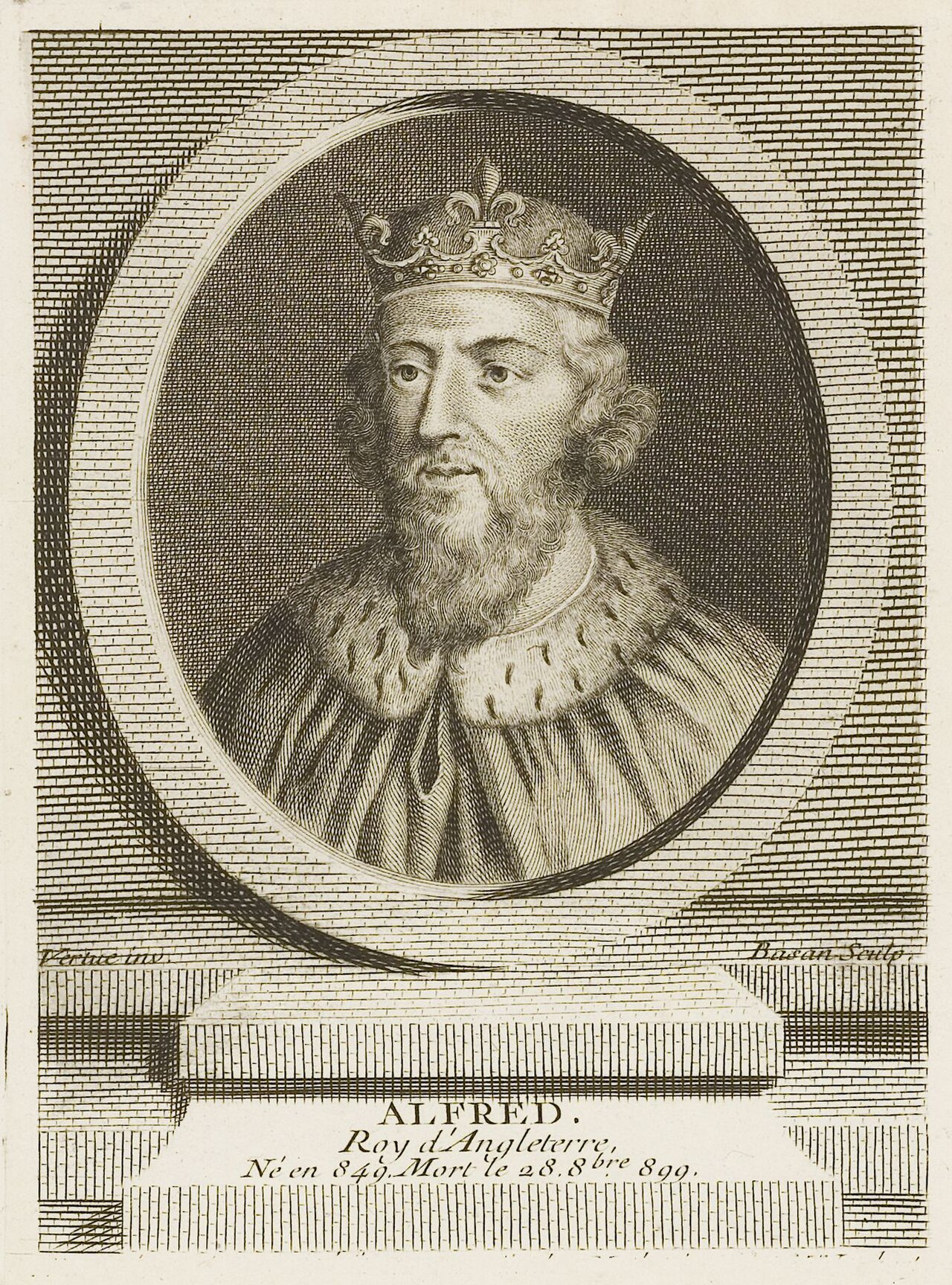
Alfred, King of England, engraved portrait
George Vertue
An engraved oval portrait of Alfred, made long after his death by George Vertue and Pierre François Basan. It shows how he was imagined in later centuries.
Shows how Alfred was pictured as a royal figure in later print culture, long after his death.
About this source
What it is
This is an engraved oval portrait of Alfred, shown in black and white. George Vertue is credited as the artist and designer, and Pierre François Basan as the engraver. The image shows a bearded man wearing a crown with fleurs-de-lis and a robe trimmed with ermine. A caption below reads "ALFRED, Roy d'Angleterre, Né en 849, Mort le 28.8bre 899". The date of the print is not known.
Why it matters
No portrait of Alfred was made during his lifetime that we know of, so engravings like this one show how later people chose to picture him. The crown and robe signal royal power. The print was made in France, and its French caption shows that Alfred's fame reached beyond England.
Look closer
- What symbols of royalty does the artist include, and what message do they send?
- Why might an engraver make a portrait of a king who lived centuries earlier?
- How can you tell that this face is an invention rather than a true likeness?
This painting is part of the curated material that grounds the AI version of Alfred the Great on Humy.ai — when students ask about related events, the AI can quote it and cite it.
More Alfred the Great sources
Meet the AI Alfred the Great →
Ready when you are
Start chatting with Alfred the Great now.
20 messages free · No credit card · Available in 50+ languages.