


Primary sourceDocument1674
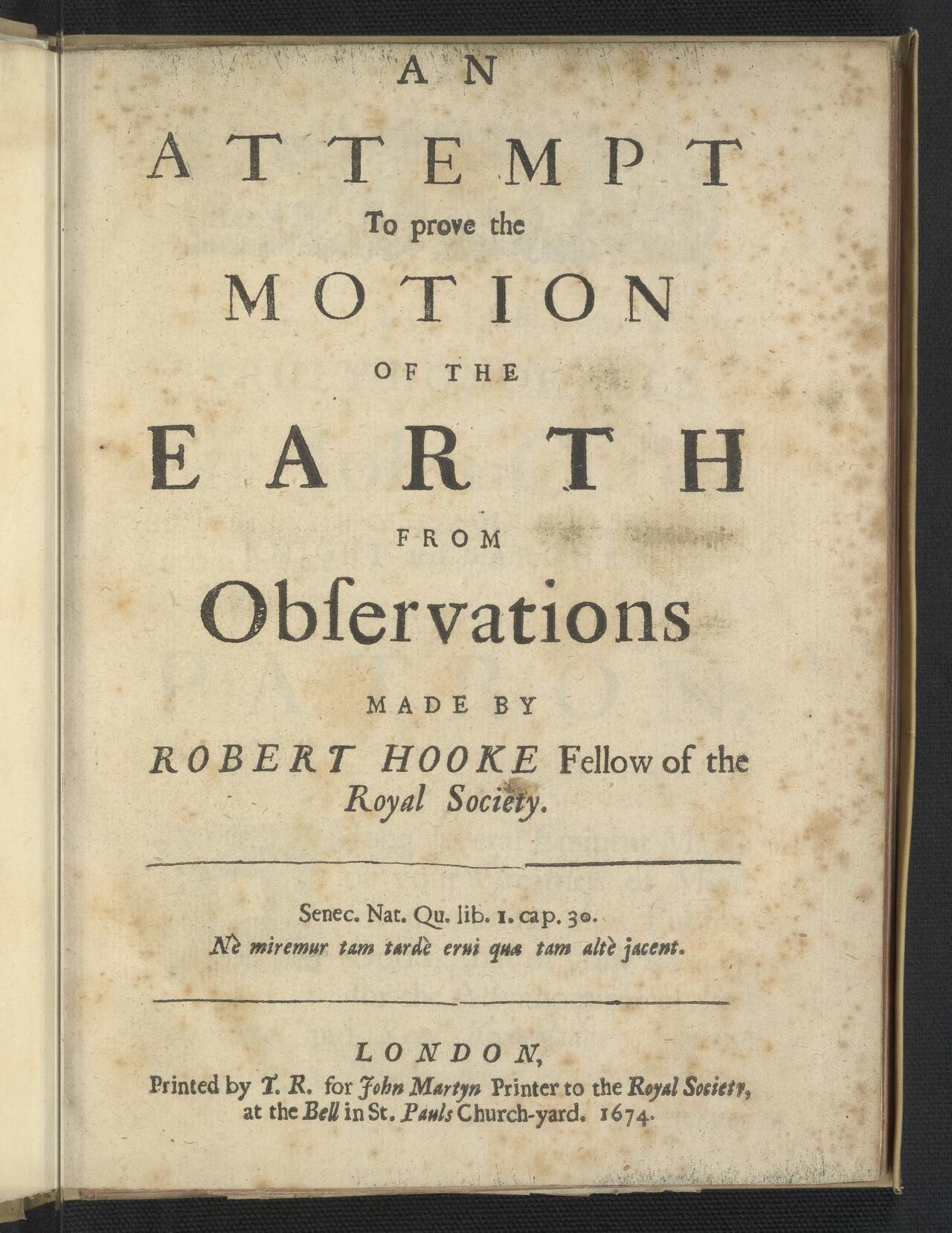
An Attempt to Prove the Motion of the Earth from Observations
Robert Hooke · 1674
Hooke's 1674 lecture arguing that gravitation applies to all celestial bodies, central to his later dispute with Newton over scientific priority.
This lecture records Hooke's own claim to ideas about gravitation that later fuelled his dispute with Newton.
Free Humy account · No credit card · 53,307 sources to read
About this source
What it is
This is a printed lecture by Robert Hooke, delivered as a Gresham lecture in 1674 and published in 1679. It is held today by the Royal Society and the British Library. In it Hooke sets out his thinking on planetary motion and gravitation.
Why it matters
The lecture states that gravitation applies to all celestial bodies, an idea central to the later dispute between Hooke and Isaac Newton over who first worked out the inverse-square law of gravity. The text shows Hooke developing ideas about motion and attraction well before Newton's Principia was published, and helps explain why Hooke later claimed credit for the discovery.
Look closer
- Why might a priority dispute like this one matter so much to scientists of the time?
- What kind of evidence would you need to decide who really deserves credit for a scientific idea?
- How does reading Hooke's own lecture change or confirm what you already know about the Hooke–Newton rivalry?
This document is part of the curated material that grounds the AI version of Robert Hooke on Humy.ai — when students ask about related events, the AI can quote it and cite it.
More Robert Hooke sources
Browse all 93 →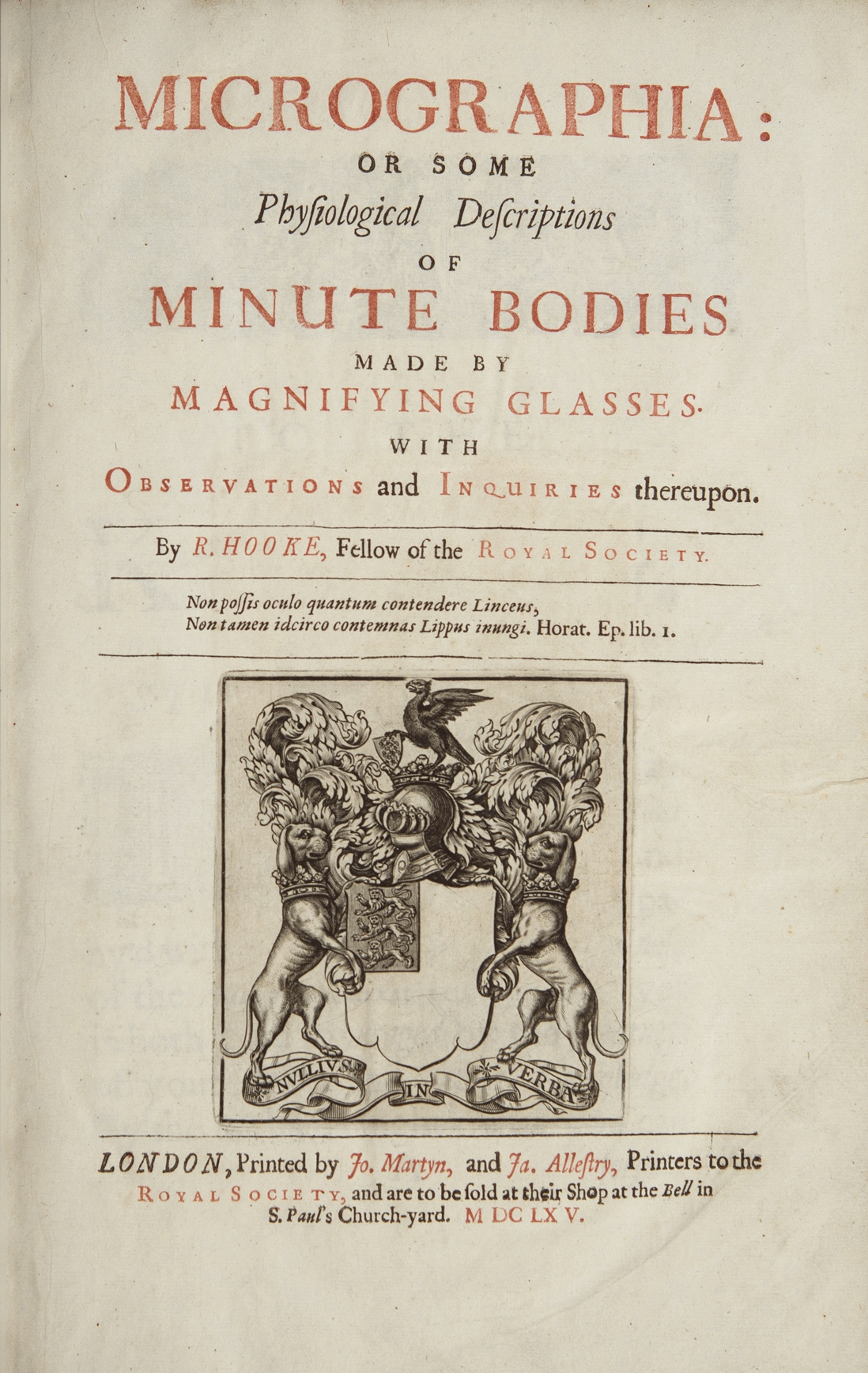 Book
Primary source
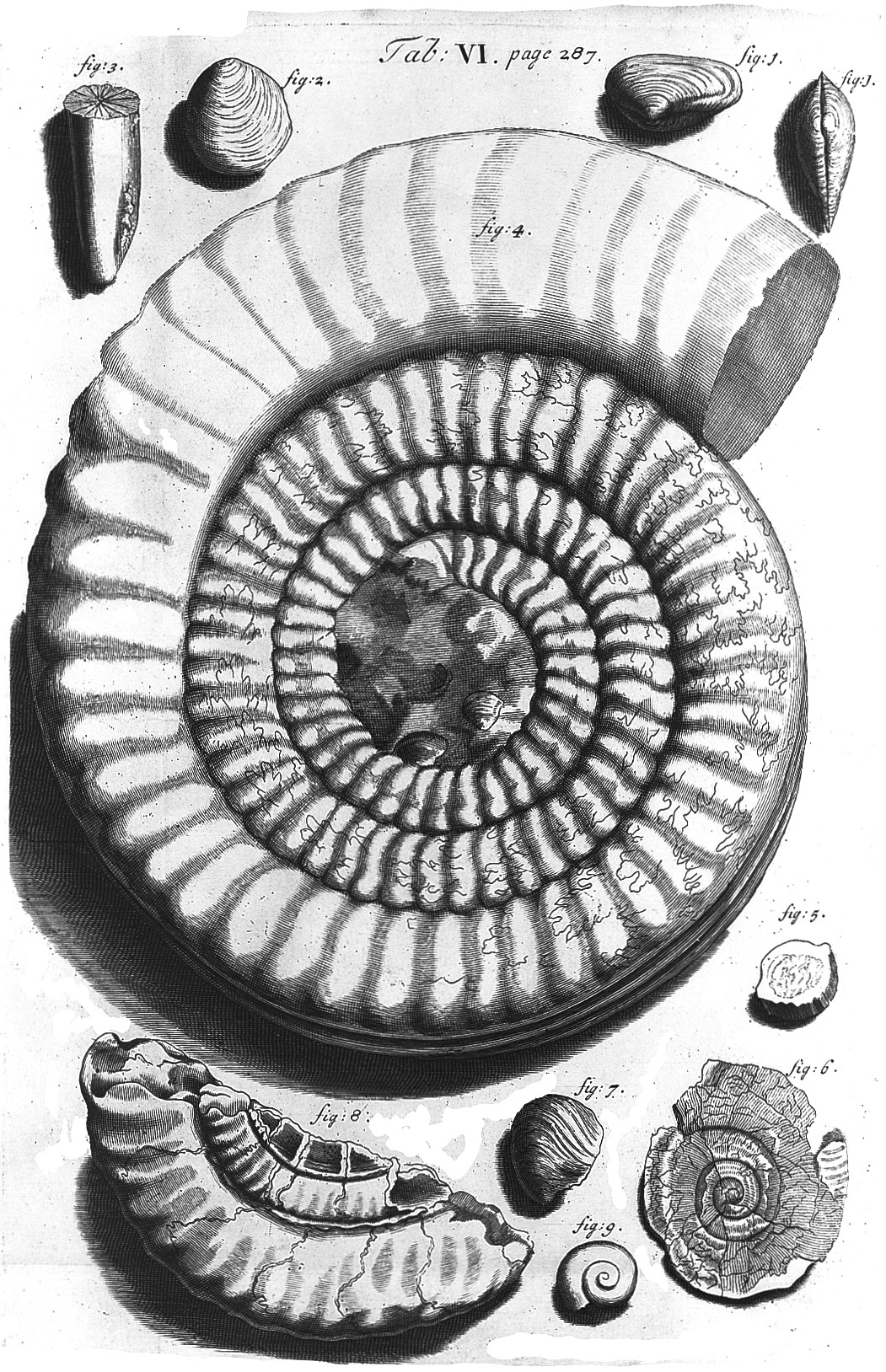
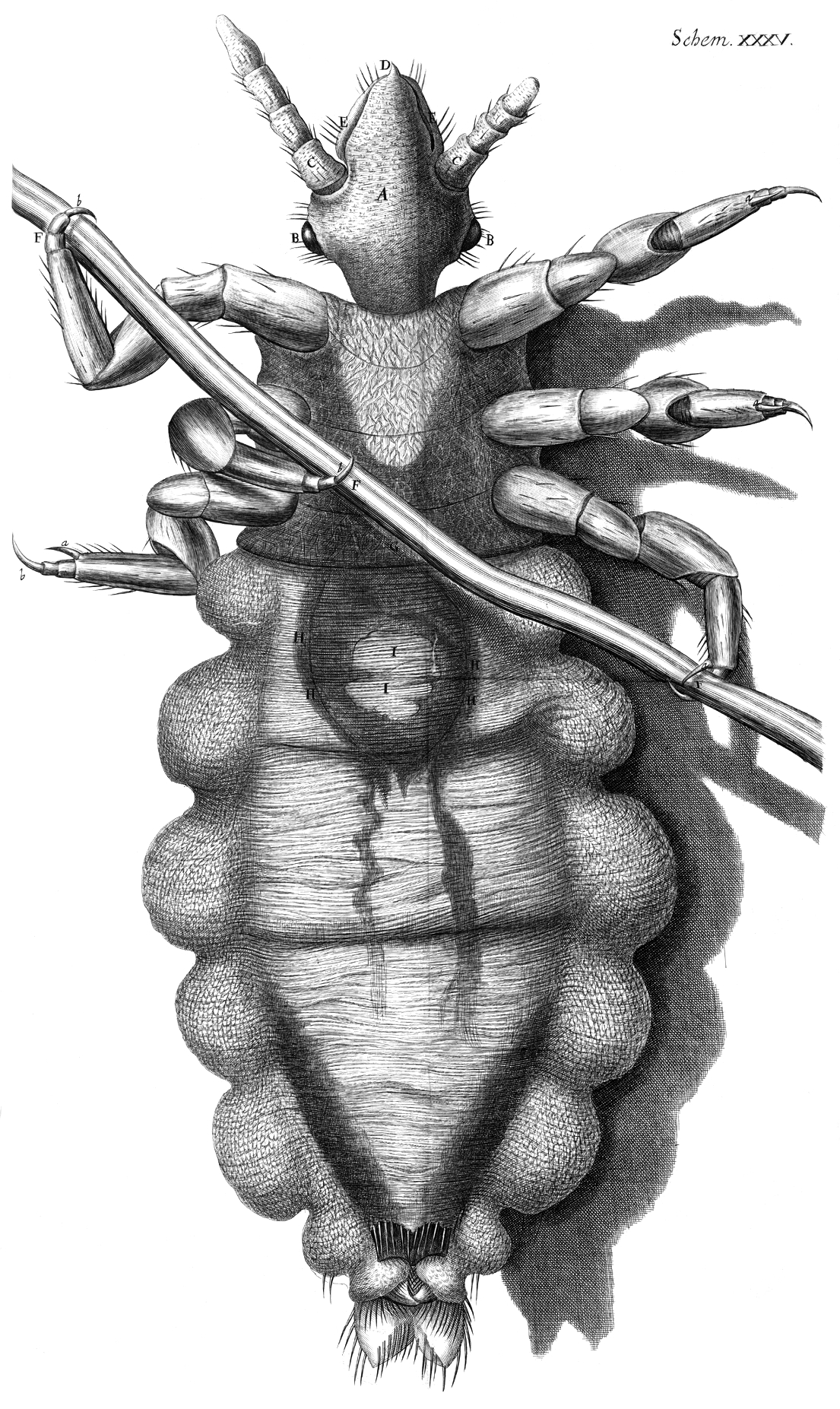
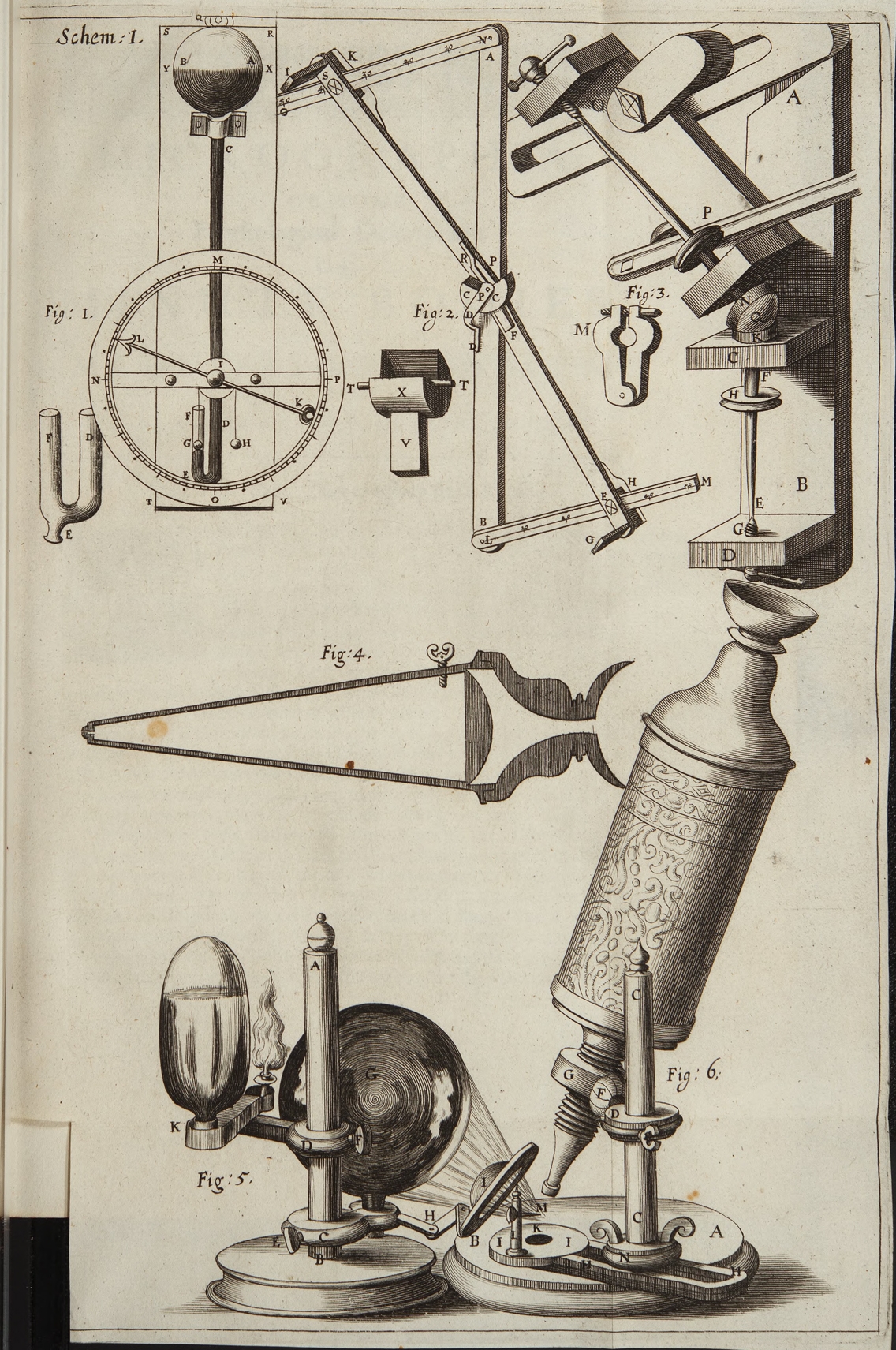
Micrographia
Robert Hooke · 1665
 Painting
Primary source
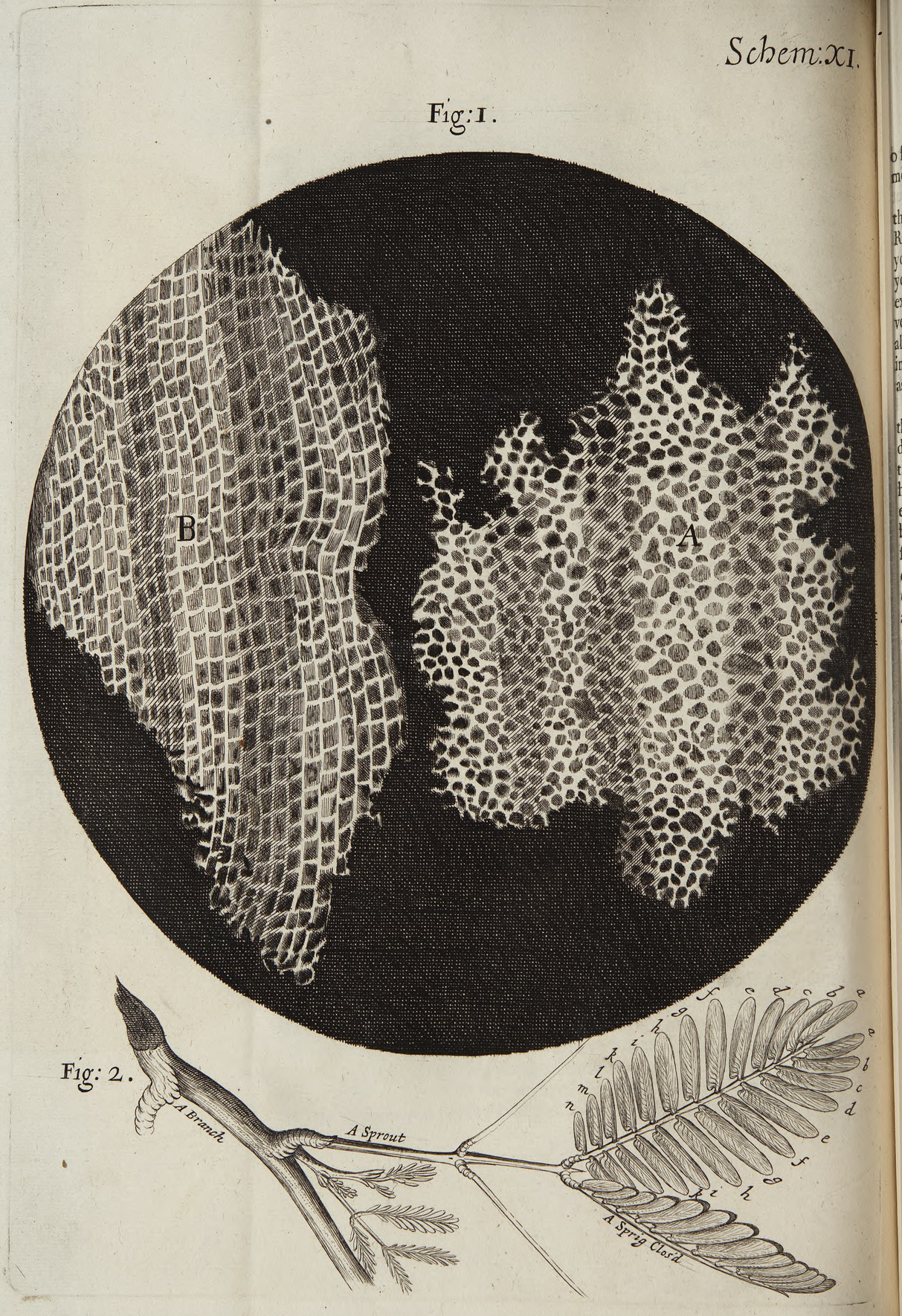
Of the Schematisme or Texture of Cork, and of the Cells and Pores of some other such frothy Bodies
Robert Hooke · 1665
 Painting
Primary source
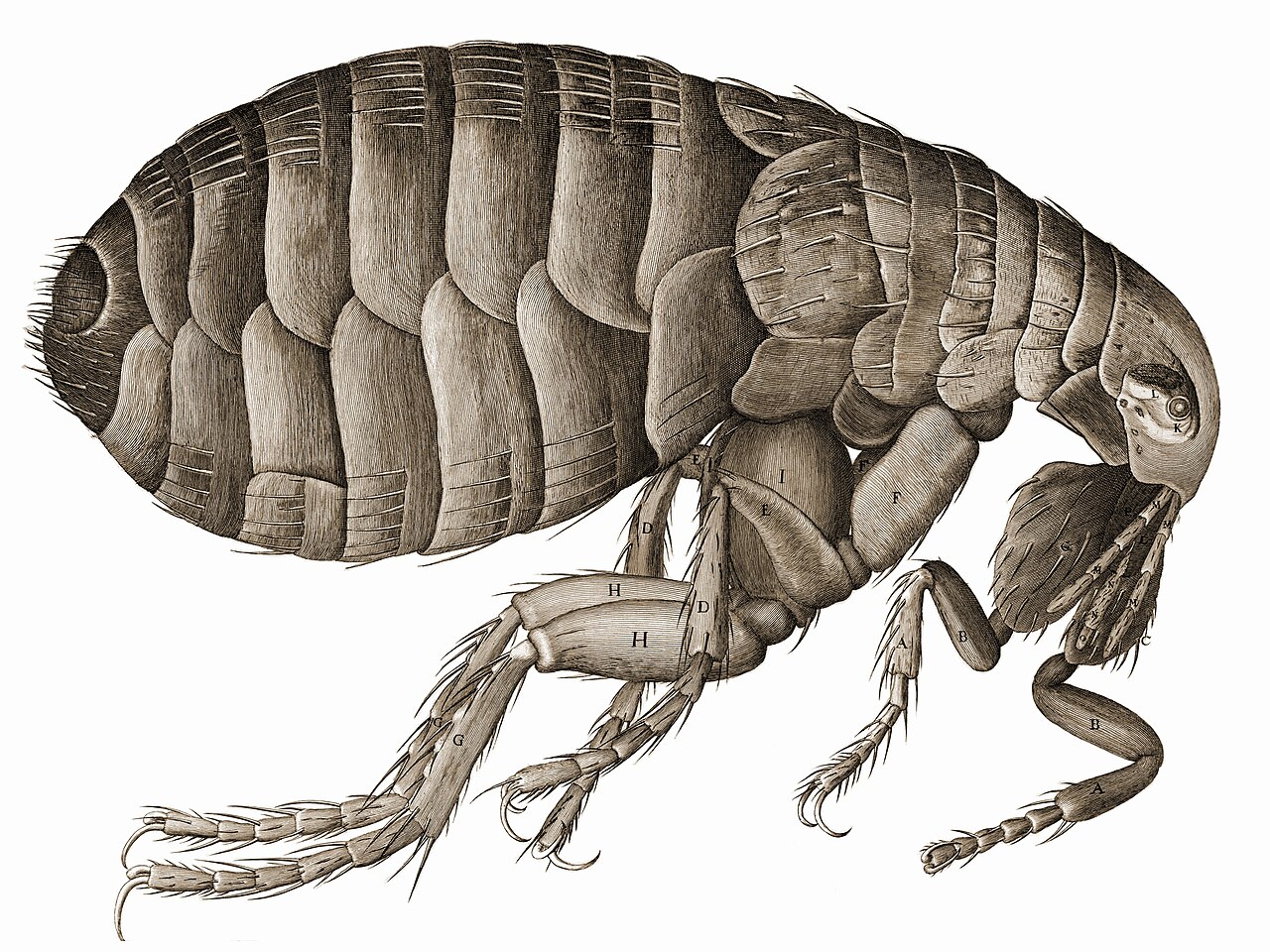
Of a Flea
Robert Hooke · 1665
 Artifact
Primary source
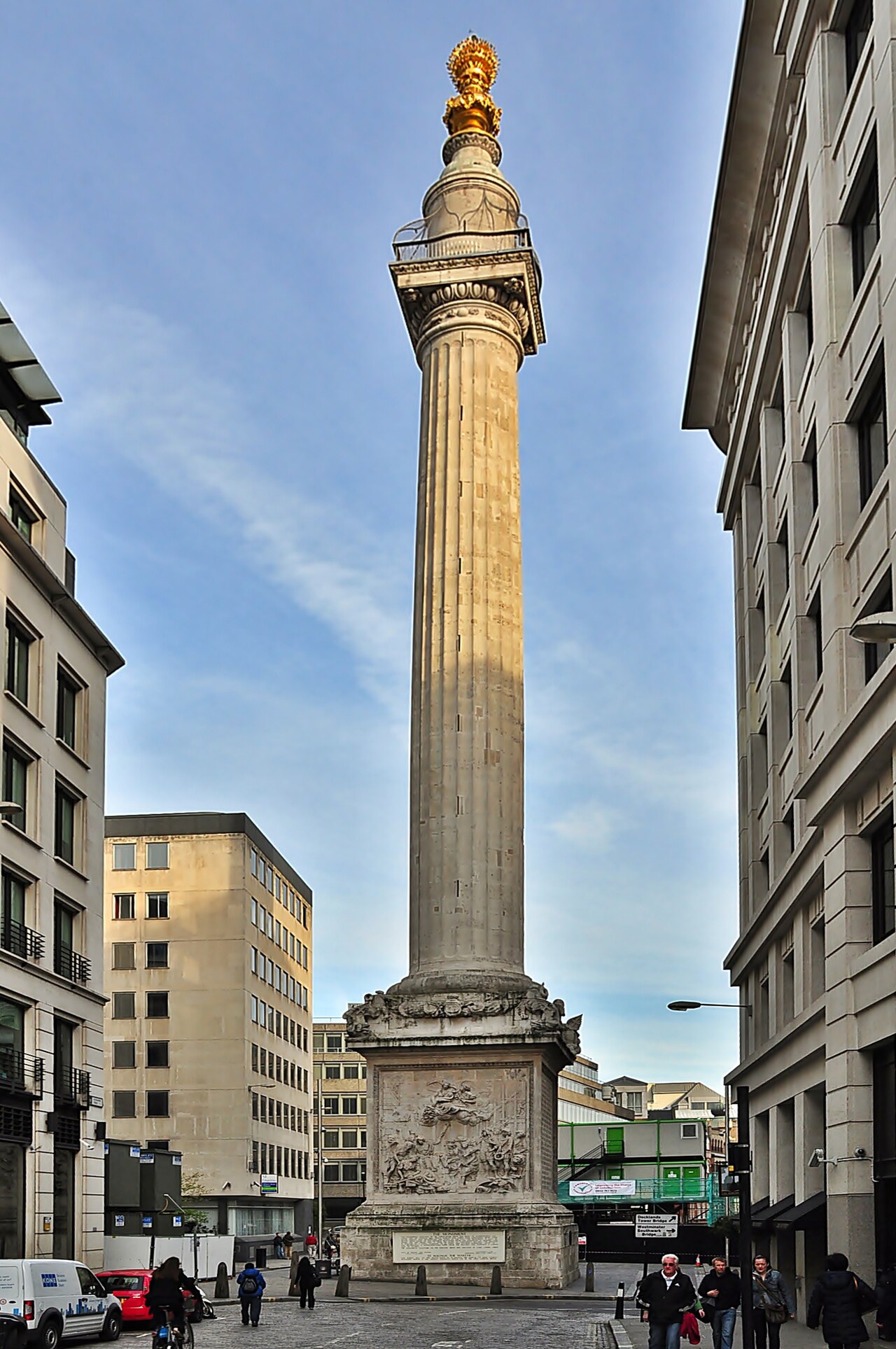
Monument to the Great Fire of London
Caius Gabriel Cibber · 1671-1677
Free account
Browse every Robert Hooke source
Sign up free →
Ready when you are
Start chatting with Robert Hooke now.
20 messages free · No credit card · Available in 50+ languages.