


Primary sourcePainting1619 (depicting 1615 event)
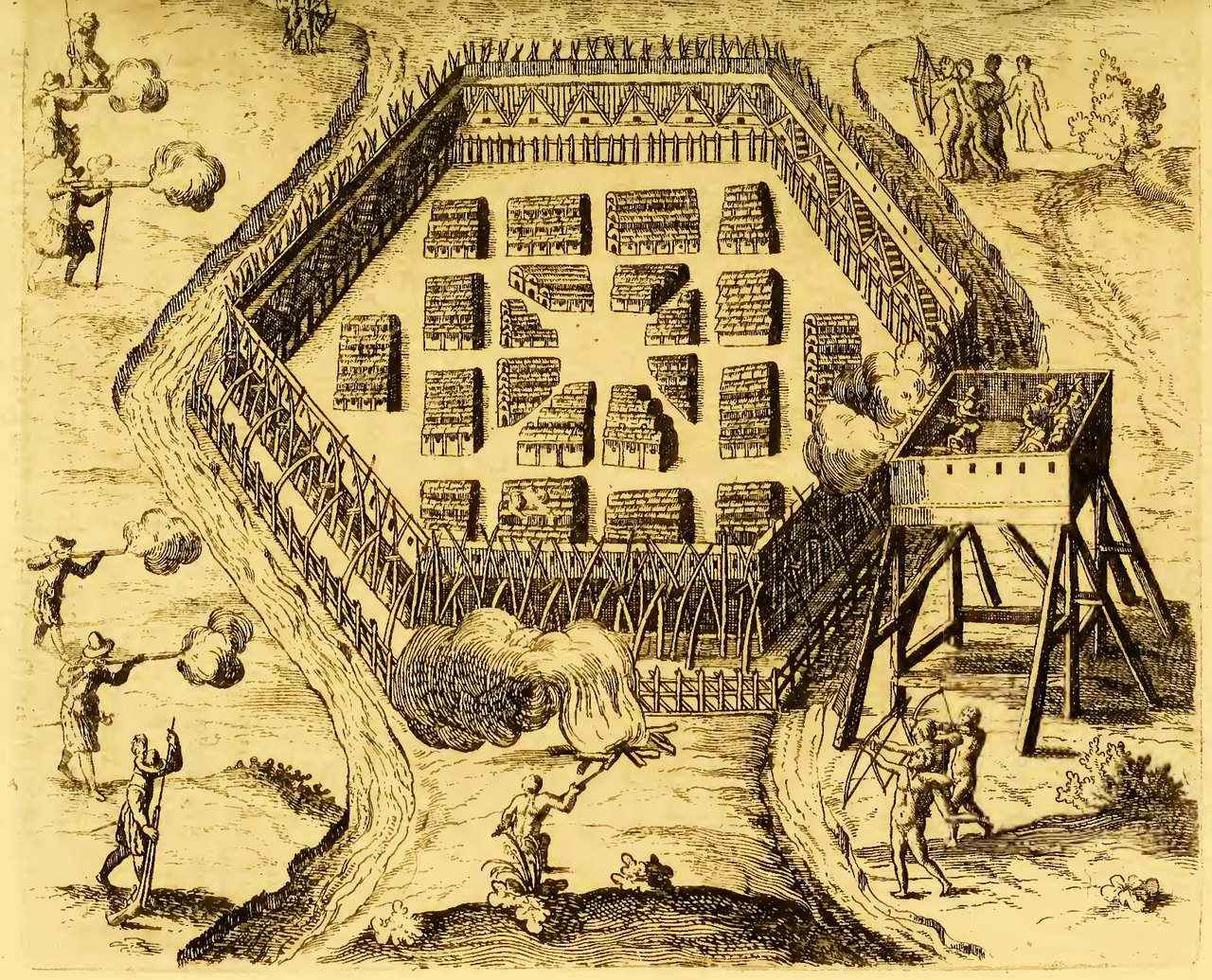
An Iroquois Fort
Samuel de Champlain · 1619 (depicting 1615 event)
Champlain's engraving of the 1615 siege of a fortified Haudenosaunee town, from his failed campaign with the Wendat in which he was wounded.
Created by Champlain, this engraving documents the 1615 siege in which he fought alongside the Wendat and was wounded.
About this source
What it is
This engraving, created by Samuel de Champlain, shows a palisaded Haudenosaunee (Iroquois) village believed to have stood near Onondaga Lake, which Champlain and his Wendat allies besieged in 1615. It first appeared in his 1619 book of voyages, published in Paris.
Why it matters
This image documents a military alliance between Champlain and the Wendat people against the Haudenosaunee, part of a long conflict shaped by competing trade and territorial interests. Champlain himself was wounded during this campaign, which shows the real risks explorers took when they became involved in Indigenous political and military affairs.
Look closer
- What details in the fort's design suggest it was built for defense?
- Why did Champlain choose to fight alongside the Wendat rather than stay neutral?
- What viewpoint does this image represent, and whose perspective is left out?
This painting is part of the curated material that grounds the AI version of Samuel de Champlain on Humy.ai — when students ask about related events, the AI can quote it and cite it.
More Samuel de Champlain sources
Meet the AI Samuel de Champlain → Book
Primary source
Les Voyages du sieur de Champlain
Samuel de Champlain · 1613
 Document
Primary source
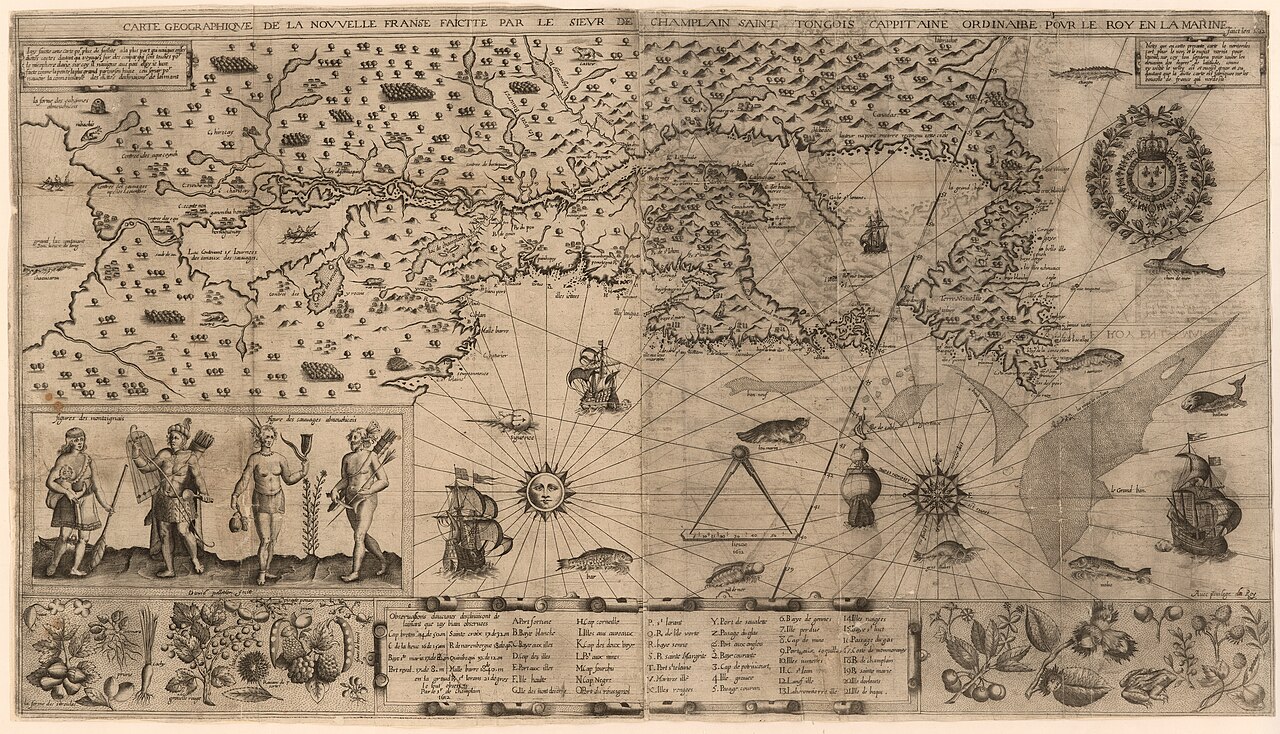
Carte geographique de la Nouvelle Franse
Samuel de Champlain · 1612
 Book
Primary source
Des Sauvages, ou voyage de Samuel Champlain
Samuel de Champlain · 1603
 Document
Primary source
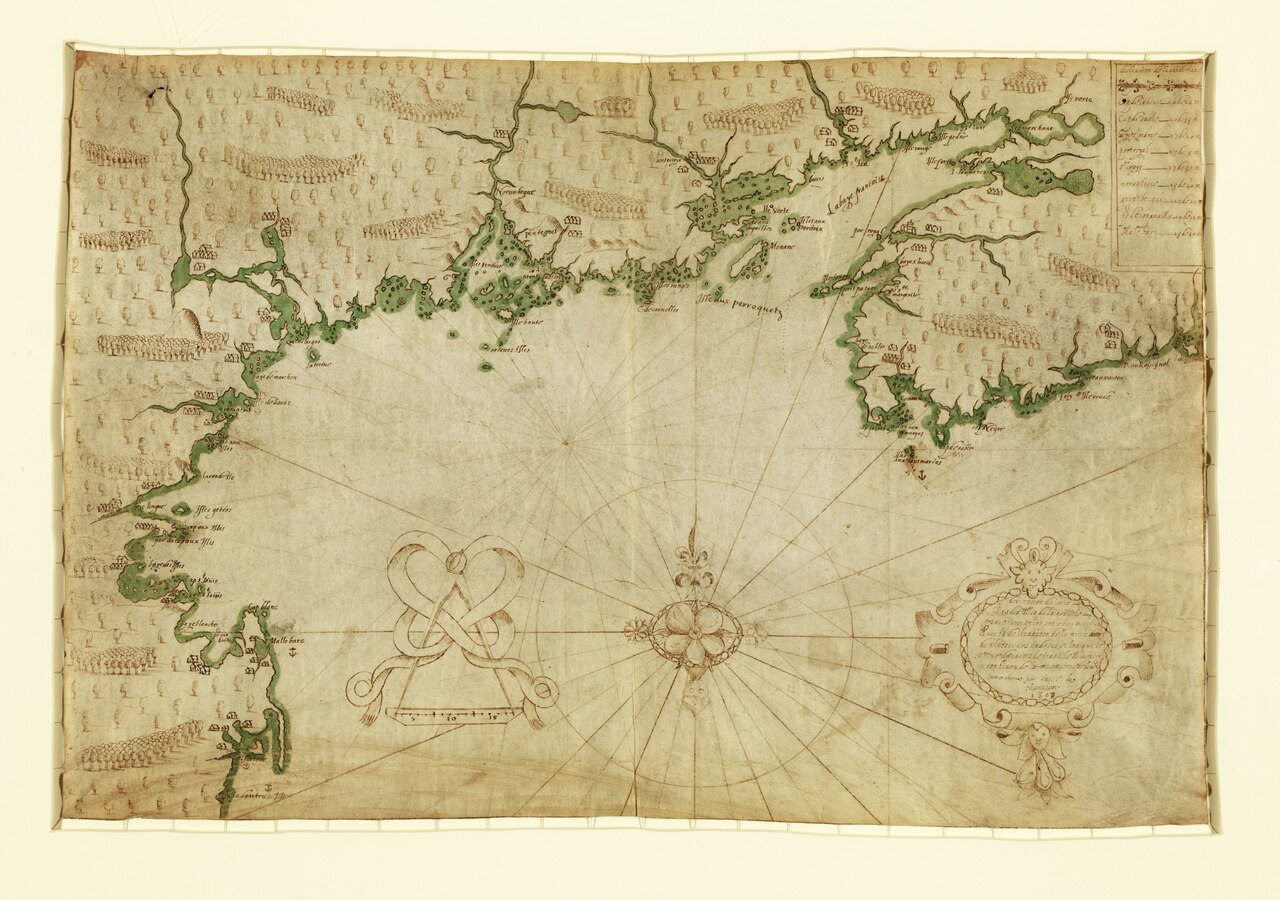
Descripsion des costs, pts., rades, Illes de la Nouuele France
Samuel de Champlain · 1607
 Document
Primary source
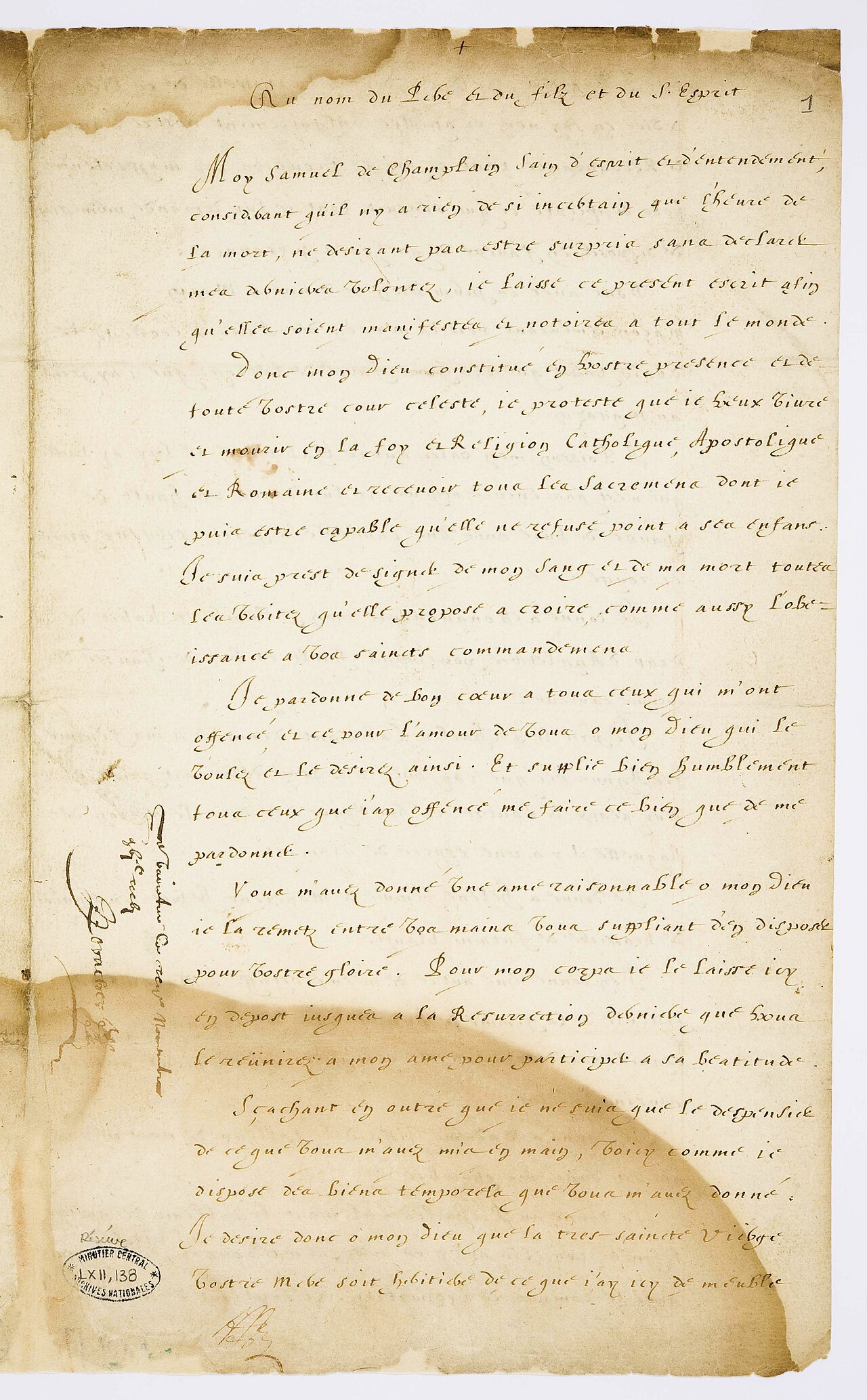
Testament de Samuel Champlain
Samuel de Champlain · 17 November 1635
Ready when you are
Start chatting with Samuel de Champlain now.
20 messages free · No credit card · Available in 50+ languages.