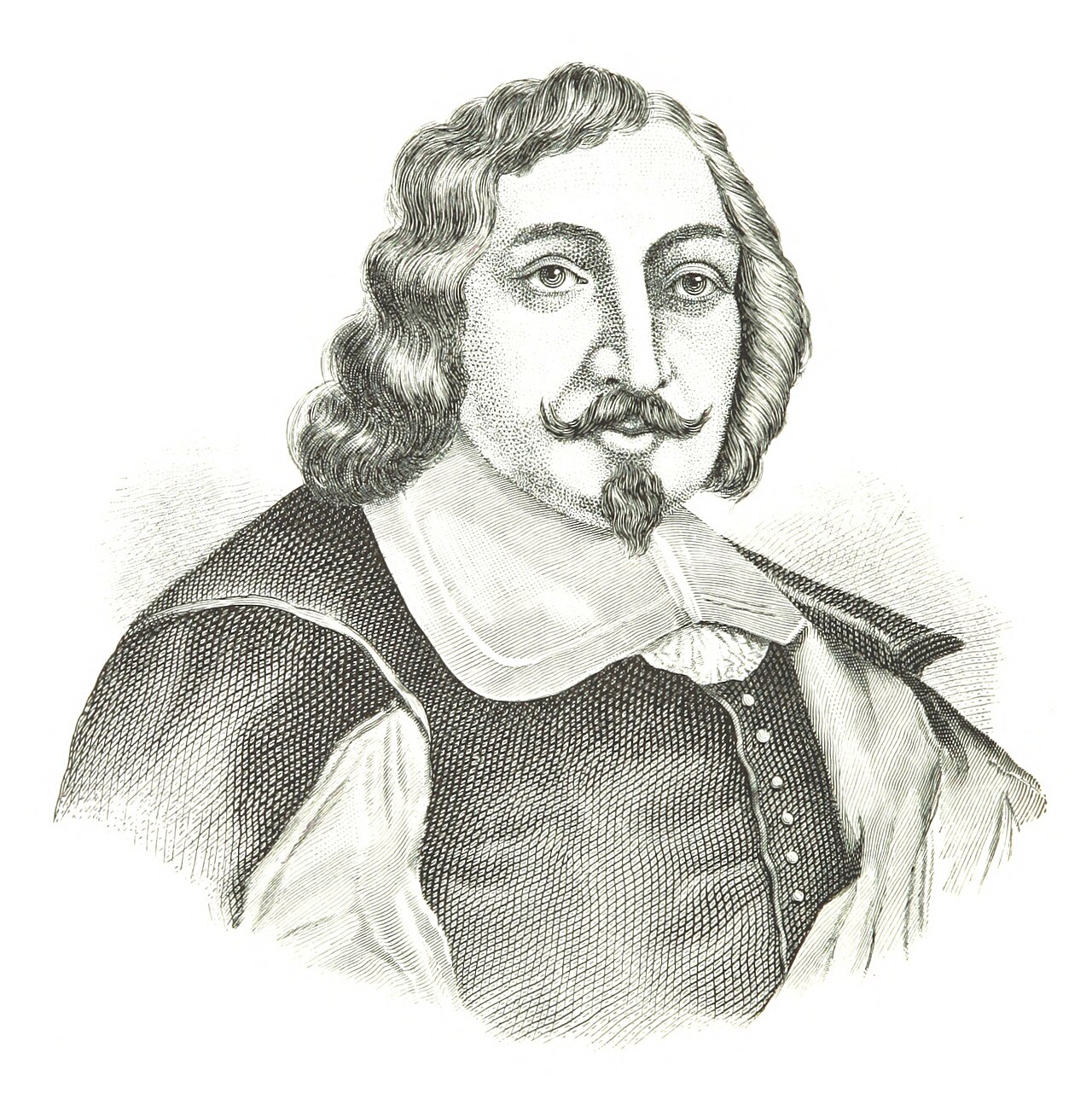
Portrait of Samuel de Champlain

AI Historical Figure

Samuel de Champlain

French explorer and cartographer, known as the "Father of New France.

Chat with Samuel de Champlain via text or voice — in 42 languages, drawing on a curated biography and 82 historical sources. Available 24/7.

Start chatting with Samuel de Champlain20 messages free · No credit card
Lived
1567–1635
From
FranceCanada
Known for
Politics & governmentScholarship & social science
Samuel de Champlain

Samuel de Champlain

Online · responds in seconds

Hello — I'm Samuel de Champlain. French explorer and cartographer, known as the "Father of New France. What would you like to ask me?

20 messages free · No credit card · Powered by Humy.ai

Live preview · Switch between 42 languages above · Send a message to continue in the app

Multilingual

Talk to Samuel de Champlain in 42 languages

Ask Samuel de Champlain questions in any language below, and the rest of Humy's app speaks it too. Pick yours to open the chat in that language.

Also in German (Austria), German (Switzerland), English (UK), English (Australia), English (Canada).

The sources behind this AI

82 sources · 31 paintings · 26 books · 18 documents · 3 artifacts · 3 sculptures · 1 photograph

Samuel de Champlain doesn’t improvise from thin air. The AI is grounded in 82 curated historical sources students can inspect. Open any of them to see what informs the conversation.

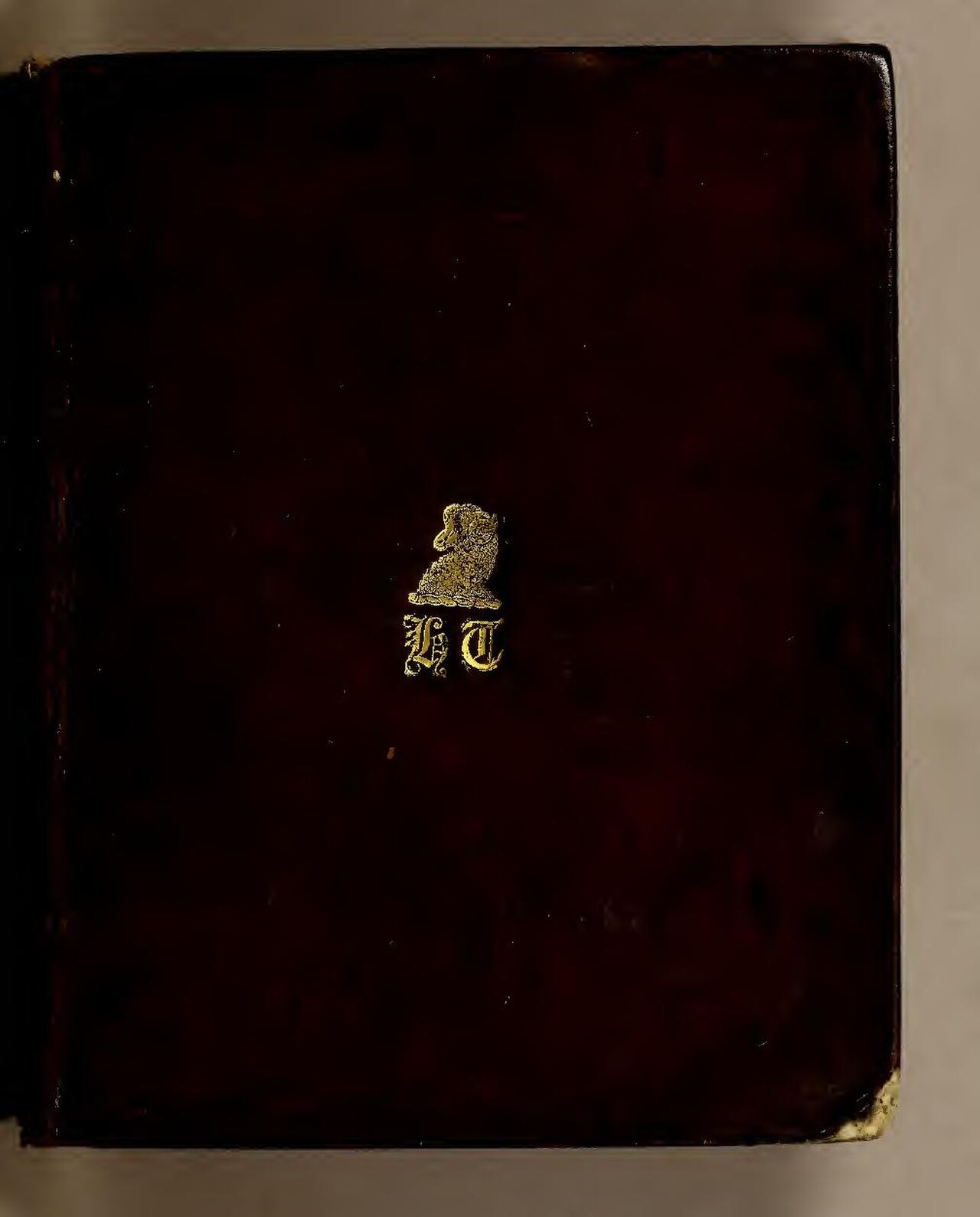
Front cover of a dark red leather-bound book with a small gold-tooled emblem of a lion or griffin-like creature above the initials 'E' and 'T' in gold lettering, centered on the cover.Book

Primary source

Les Voyages du sieur de Champlain

Samuel de Champlain · 1613

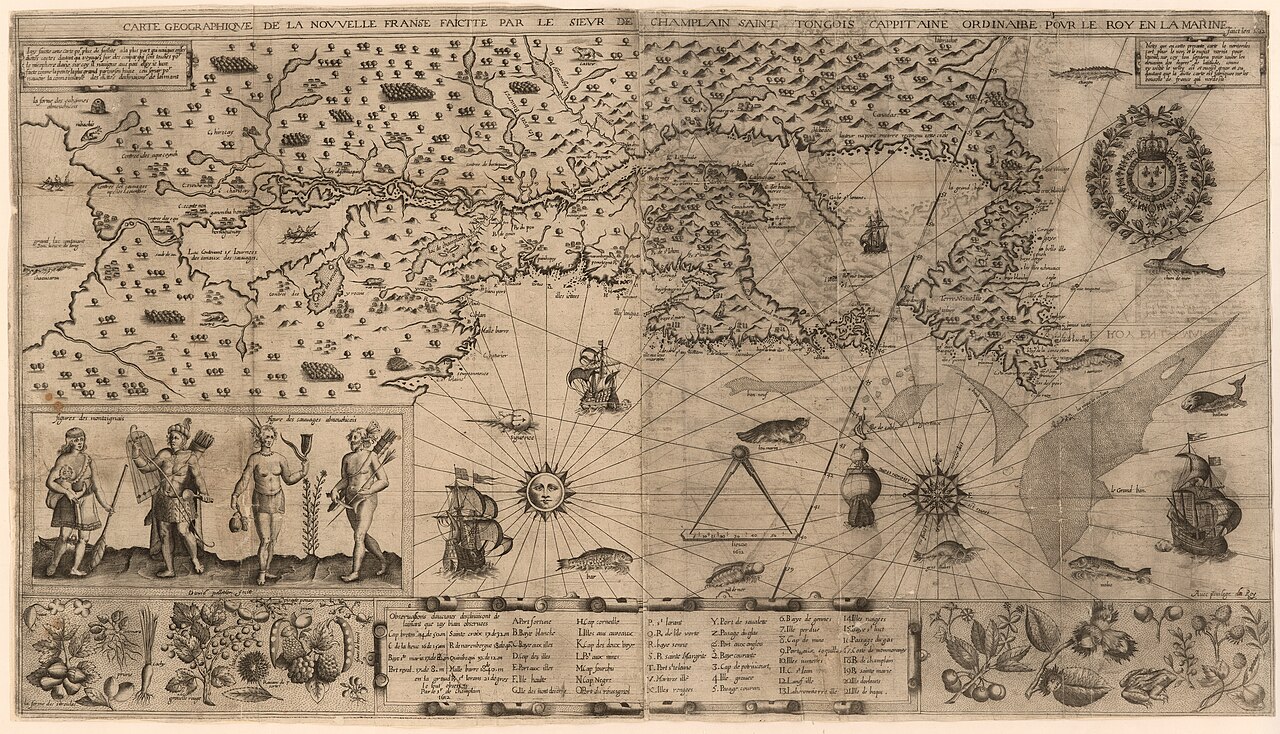
Sepia-toned engraved map titled 'Carte geographique de la Nouvelle Franse' showing the Atlantic coast, rivers, lakes, and decorative borders with compass roses, sailing ships, sea creatures, Native American figures, and a coat of arms.Document

Primary source

Carte geographique de la Nouvelle Franse

Samuel de Champlain · 1612

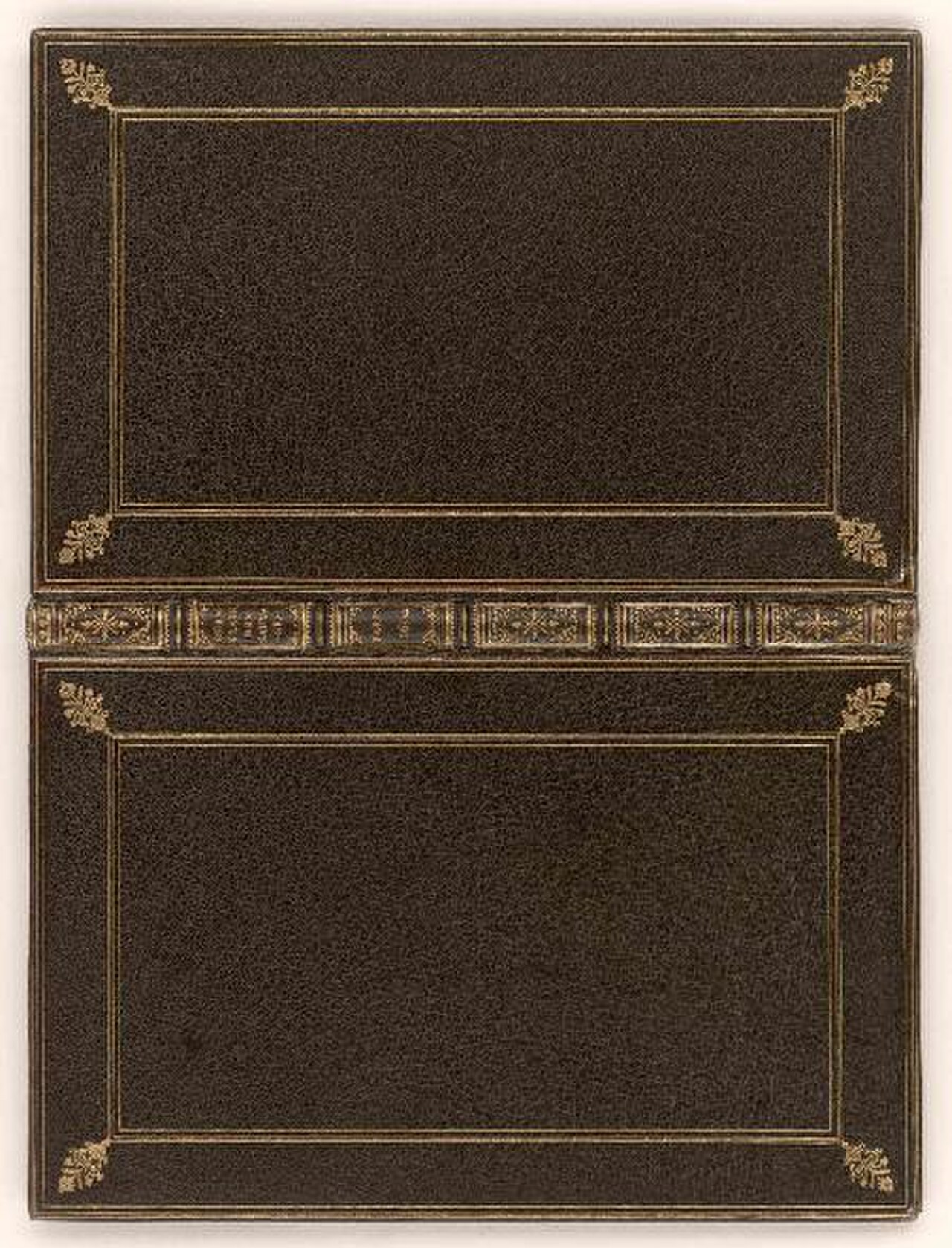
Front cover of a dark brown leather-bound book with gold-tooled decorative corner ornaments and a thin gold border frame on each panel, with a patterned gold-tooled spine band across the middle. The cover is closed and shows no visible title.Book

Primary source

Des Sauvages, ou voyage de Samuel Champlain

Samuel de Champlain · 1603

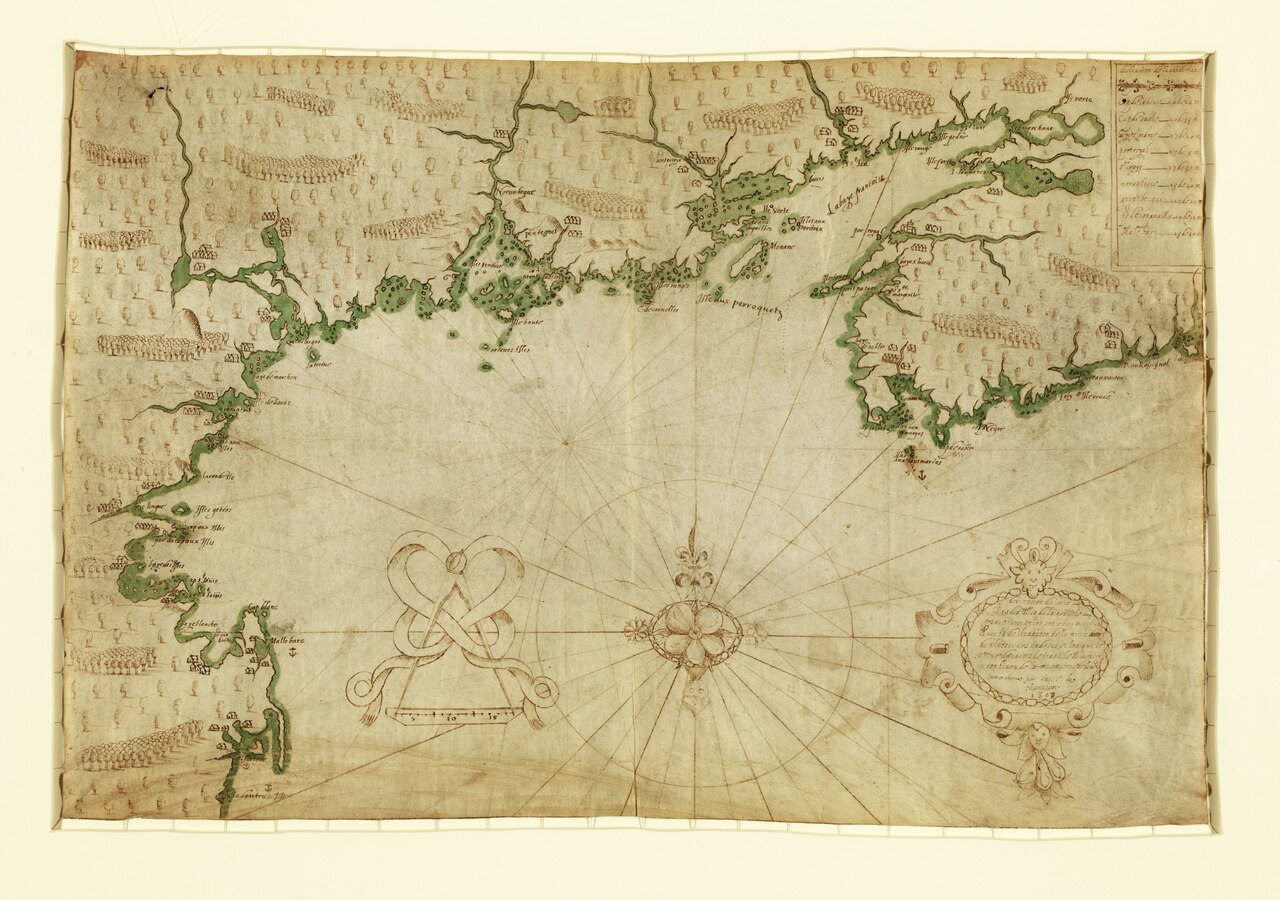
Hand-drawn manuscript map on vellum showing a coastline with green-washed shorelines, pictorial hill relief, place names in handwriting, a compass rose, a decorative cartouche and a scale bar. Ink lines and wash on aged parchment.Document

Primary source

Descripsion des costs, pts., rades, Illes de la Nouuele France

Samuel de Champlain · 1607

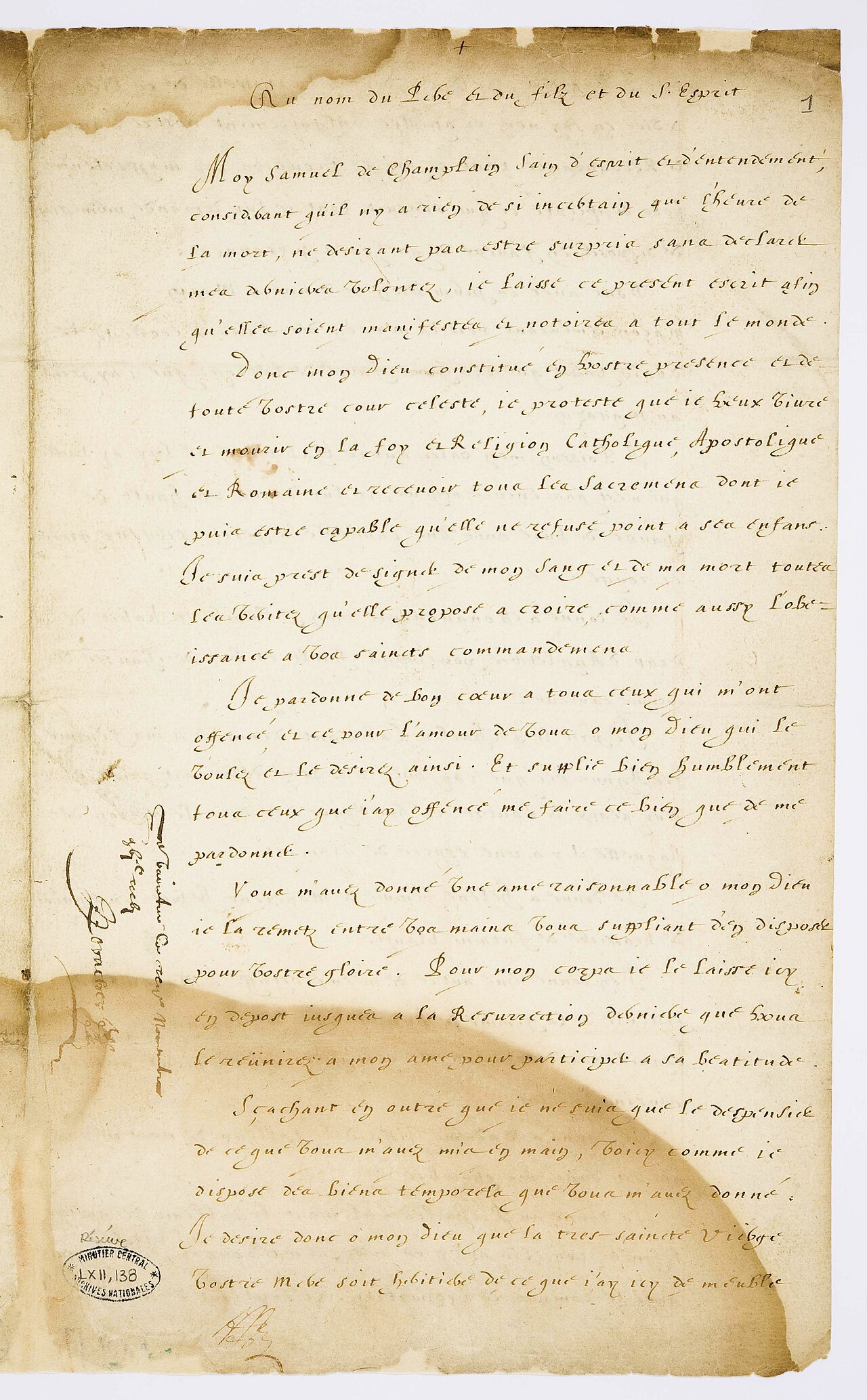
First page of a handwritten French manuscript, Samuel de Champlain's testament, dated 1635. Cursive brown ink on aged yellowed paper with water stains, a stamp reading Archives Nationales, and a handwritten signature at the left margin. The text begins 'Au nom du Pere et du fils et du Saint Esprit'.Document

Primary source

Testament de Samuel Champlain

Samuel de Champlain · 17 November 1635

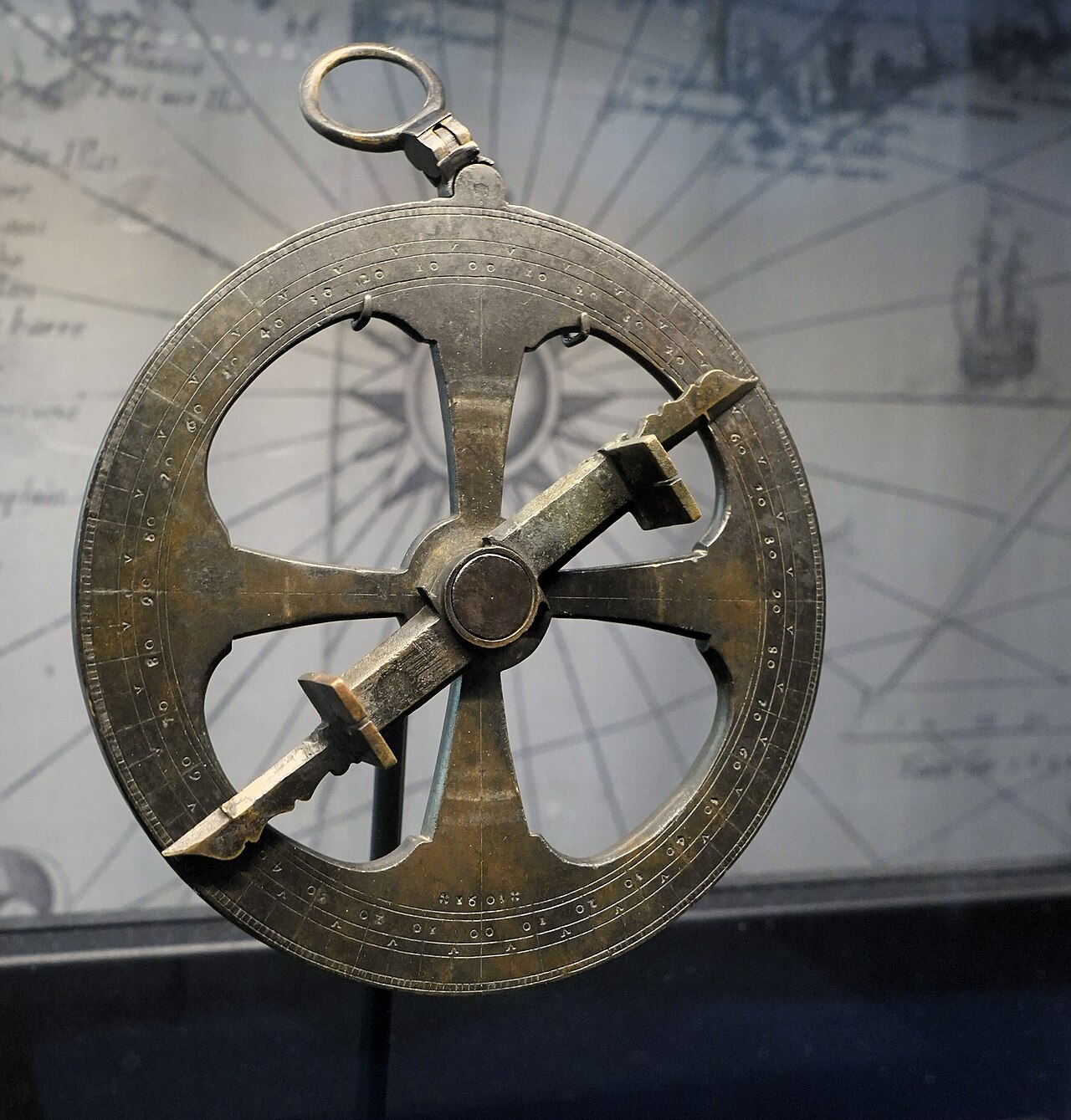
A bronze mariner's astrolabe in a glass display case. It has a ring at the top for hanging, a circular plate with engraved scale markings around the edge, four open spokes, and a central pivot with two alidade arms. A blurred old map is behind it.Artifact

Primary source

Mariner's Astrolabe

1603

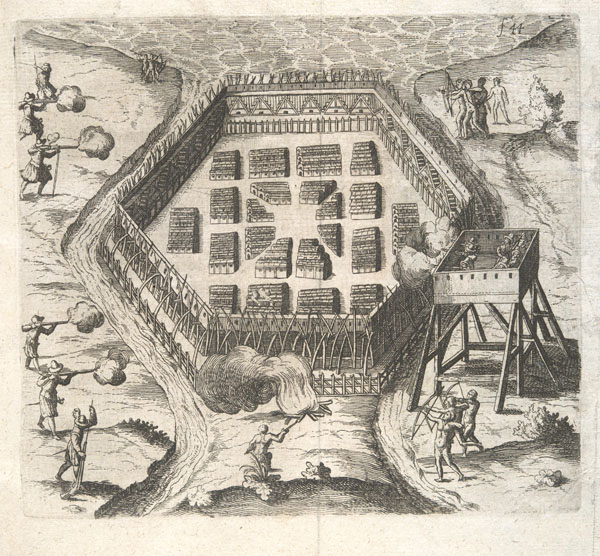
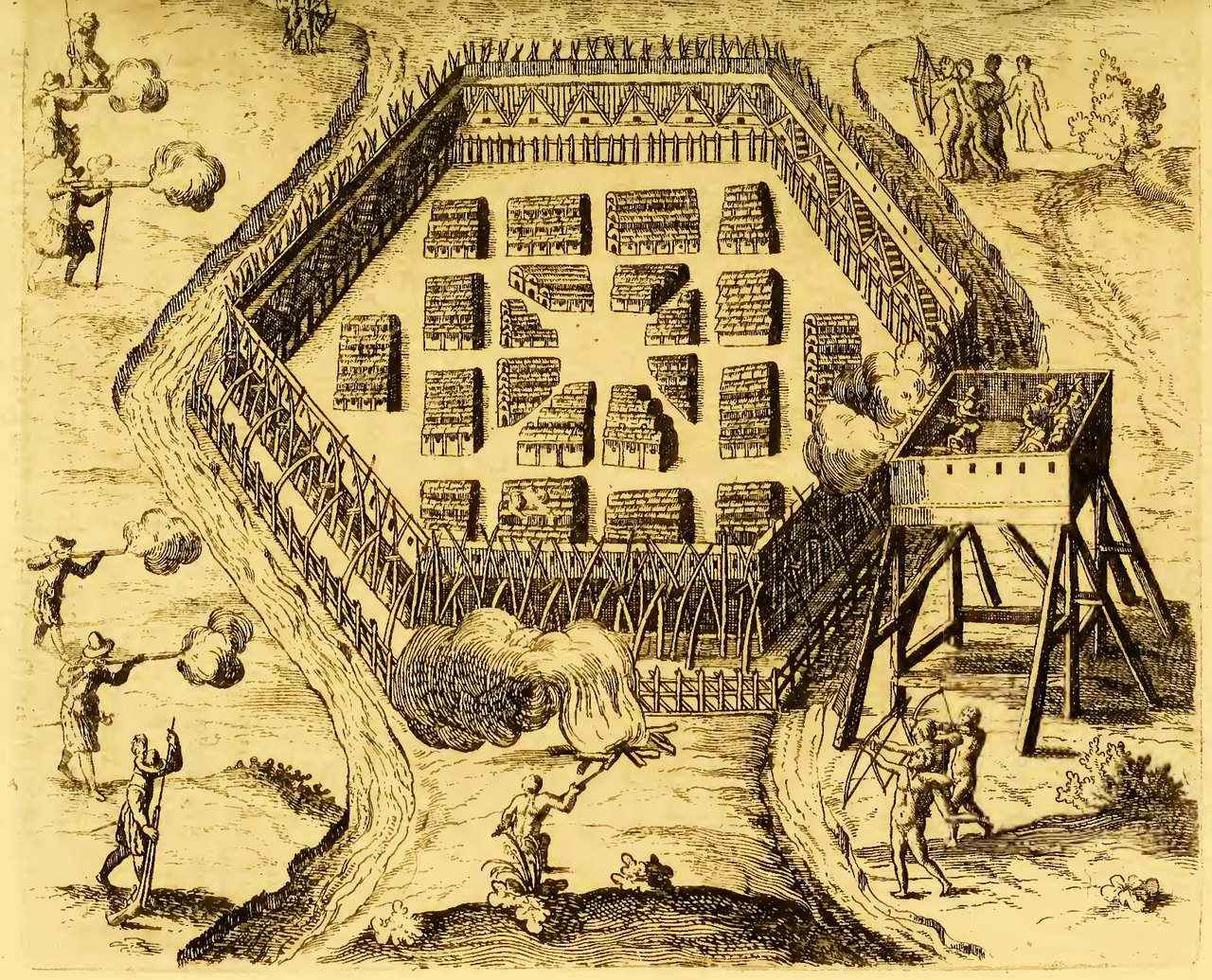
Engraved plate showing a palisaded fortified village with rows of longhouses inside, figures firing guns and bows outside, smoke rising, and a wooden siege tower on the right. Figures in the upper right appear to be in conversation.Book

Primary source

Voyages et descouvertures faites en la Nouvelle France

Samuel de Champlain · 1619

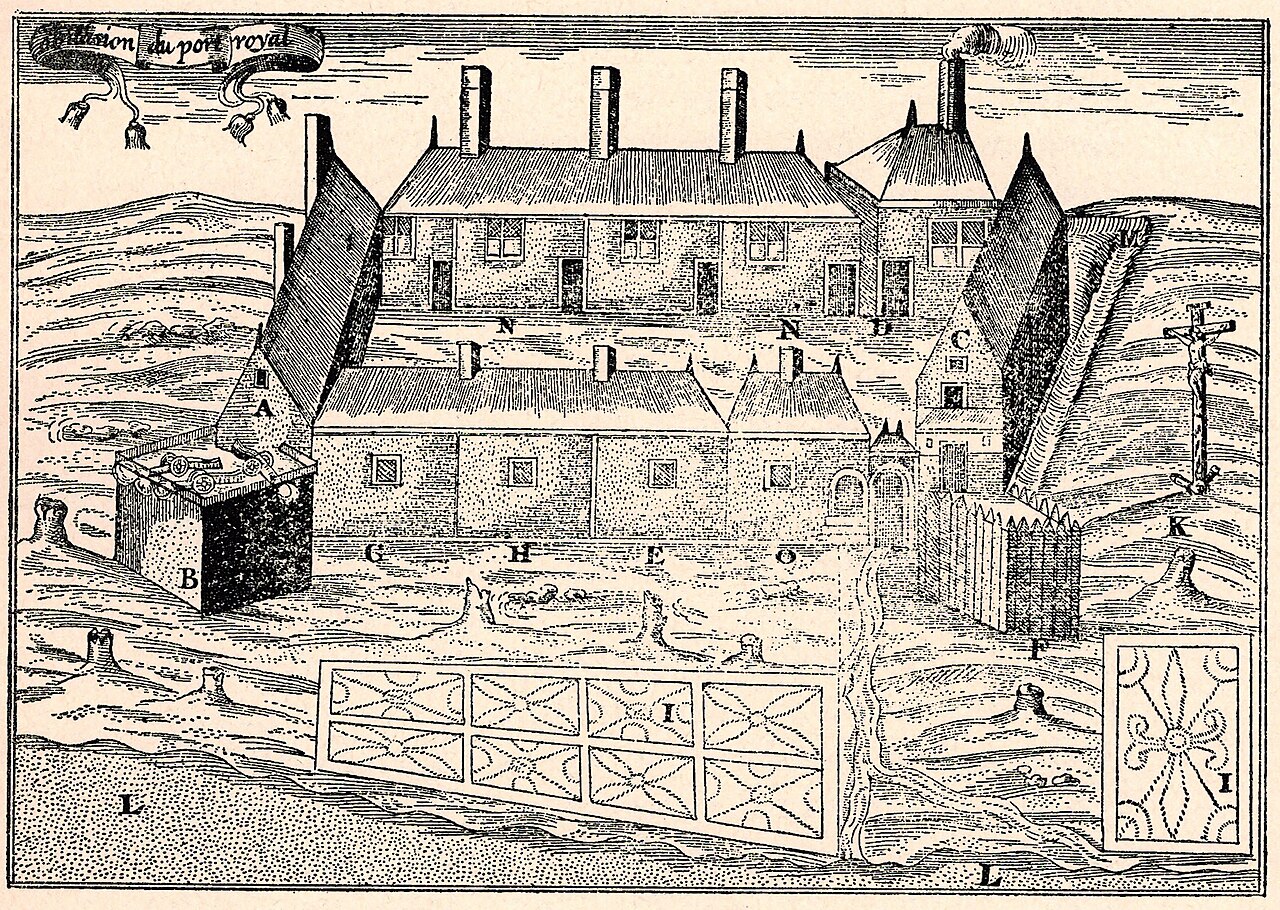
Engraved plan-view print titled 'Habitation du port royal' showing the 1613 Port Royal settlement: a long two-storey building with chimneys and dormer roofs, lettered labels A through O, a palisade fence, a small stone bastion with cannon, and a garden or fenced area with patterned beds in the foreground.Document

Primary source

Habitation du Port Royal

Samuel de Champlain · 1613

Engraved bird's-eye view of a palisaded Iroquois village with rows of longhouses inside a double fence, a raised wooden tower at the right corner, and attackers with bows and muskets firing smoke outside the walls.Painting

Primary source

An Iroquois Fort

Samuel de Champlain · 1619 (depicting 1615 event)

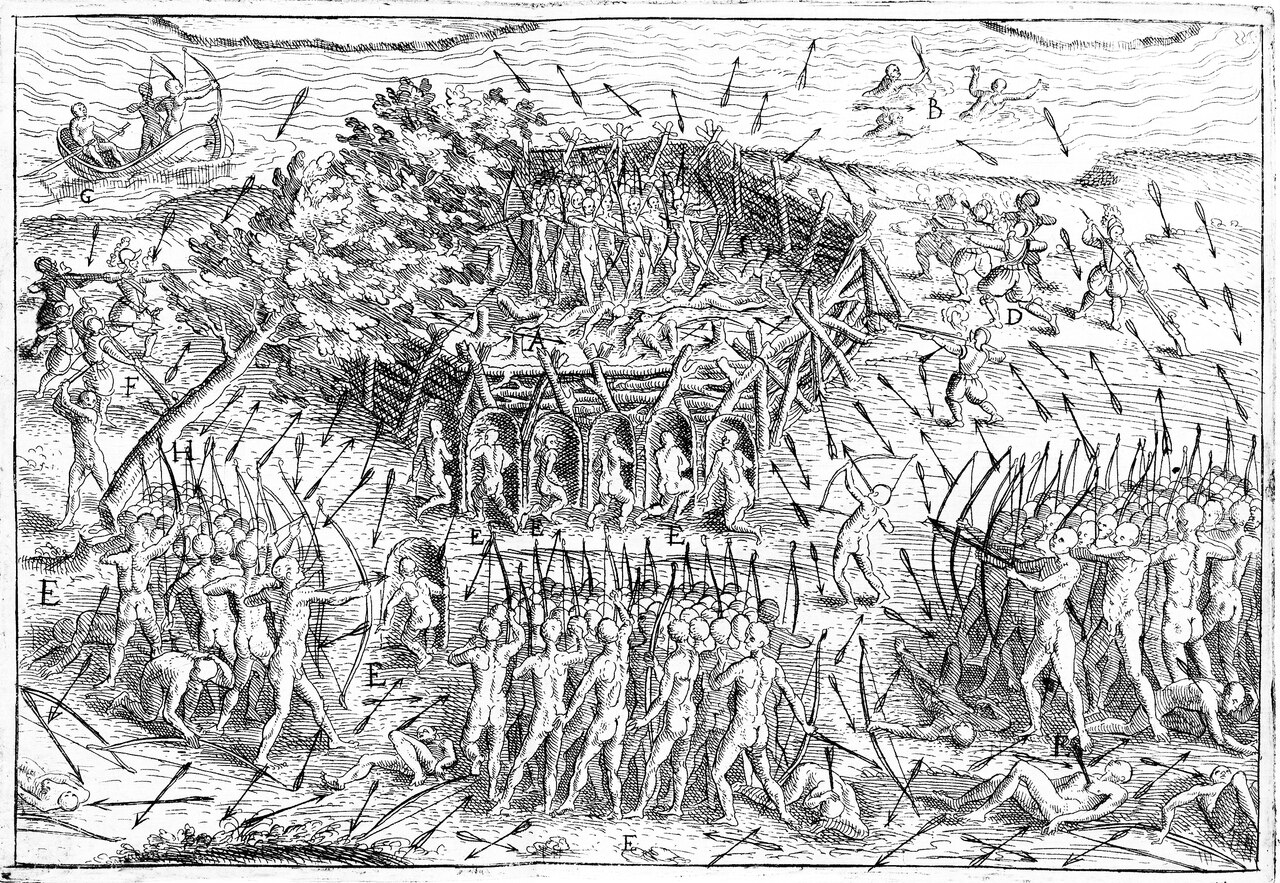
Black and white engraving of a battle: on the left, a canoe with archers and European-clothed figures; in the center, a palisaded fort with figures inside and outside, with arrows filling the air; bottom foreground shows many naked warriors with bows and clubs, some fallen. Lettered labels A through H appear across the scene.Painting

Primary source

Attaque d'un fort Iroquois, 1610

Samuel de Champlain · 1610 (published 1619)

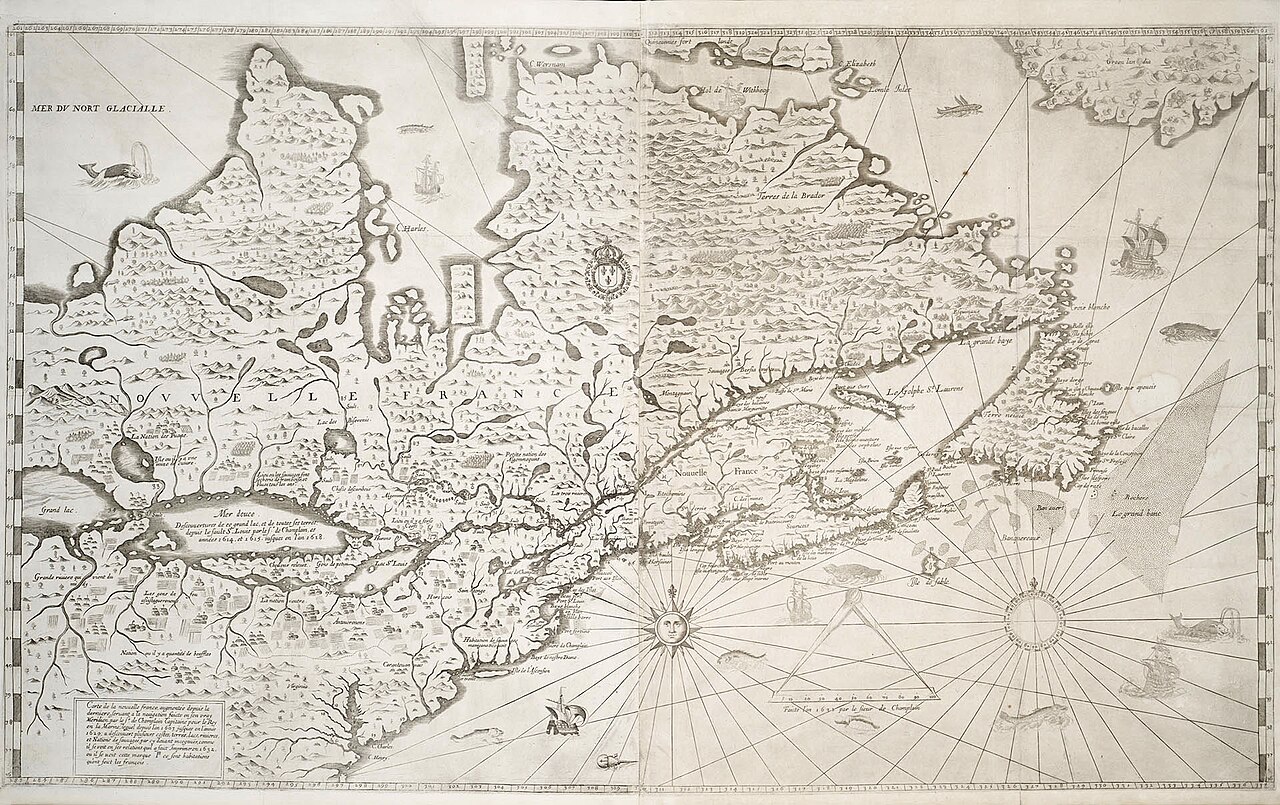
Engraved antique map of New France, with a large mainland area labeled Nouvelle France and Mer Douce, a northern sea labeled Mer du Nord Glaciale, coastlines and rivers, compass roses with sun-like faces, a ship, sea monsters, decorative cartouches with text, and a scale bar at the bottom.Document

Primary source

Carte de la Nouvelle France (1632)

Samuel de Champlain · 1632

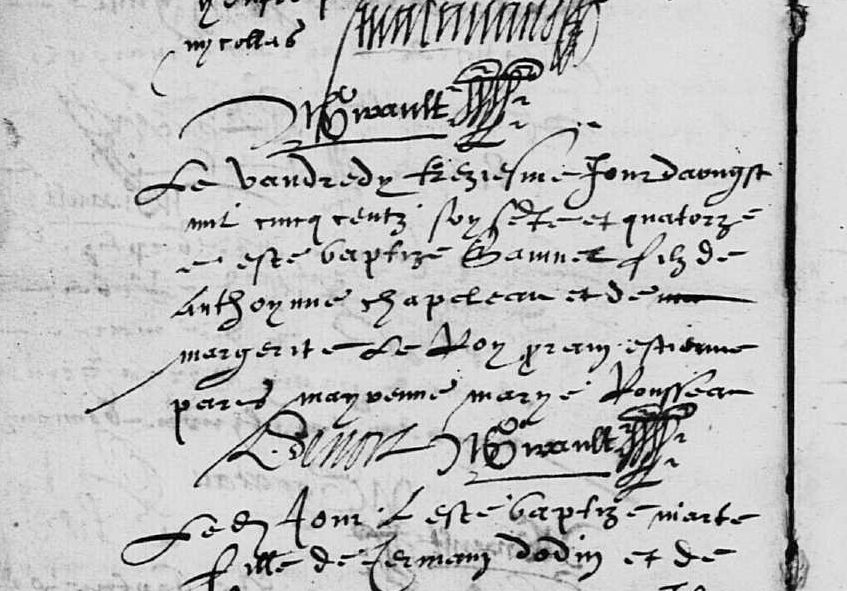
Scan of a handwritten 16th-century French parish baptism record in black ink on aged paper. It records a baptism on a Friday in August 1574 of Samuel, son of Anthoine Chapeleau and Marguerite Le Roy, with godparents named in the entry.Document

Primary source

Baptism Record of Samuel de Champlain

13 August 1574

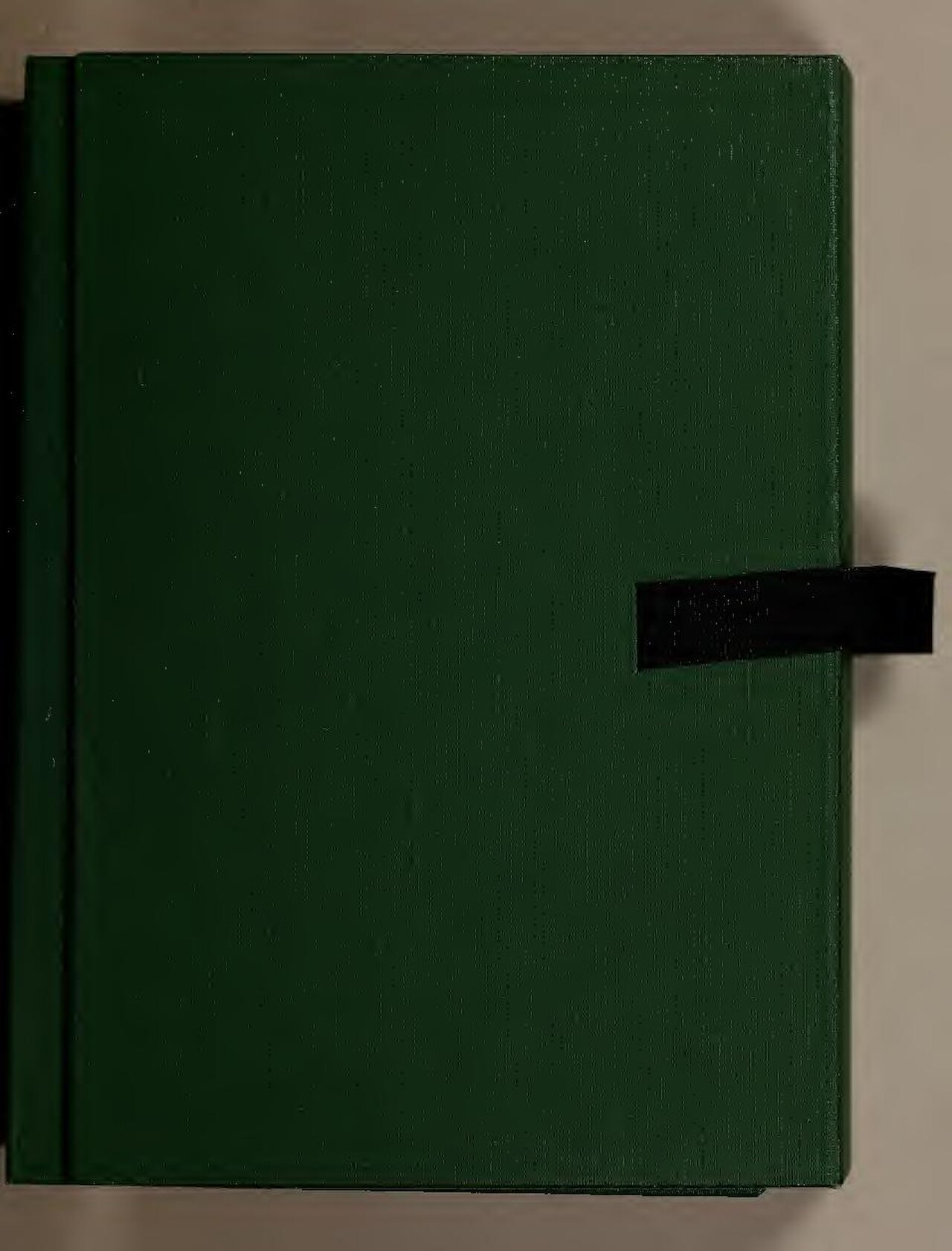
A dark green cloth-bound book with a black ribbon bookmark or tie hanging from the right edge, photographed against a pale grey background. The cover is plain with no visible title or text.Book

Primary source

Histoire de la Nouvelle-France

Marc Lescarbot · 1609

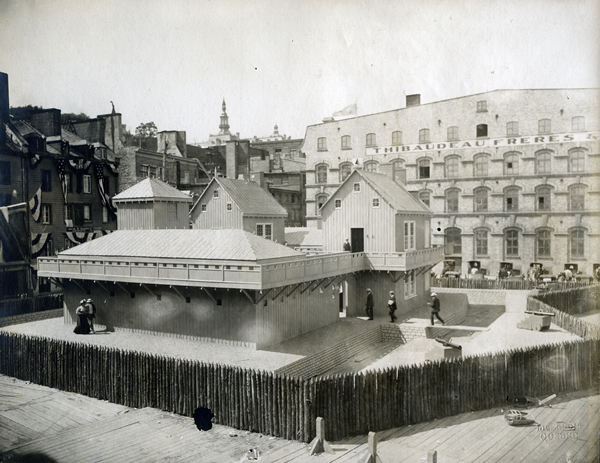
Black and white photo of a wooden reproduction of the Habitation de Québec, a fenced log-palisade compound with a raised wooden gallery and steep roofs, seen from above. Large stone building with many windows behind it, and a church spire in the distance.Artifact

Secondary source

Habitation de Québec

Samuel de Champlain · 1908 (reconstruction); original 1608

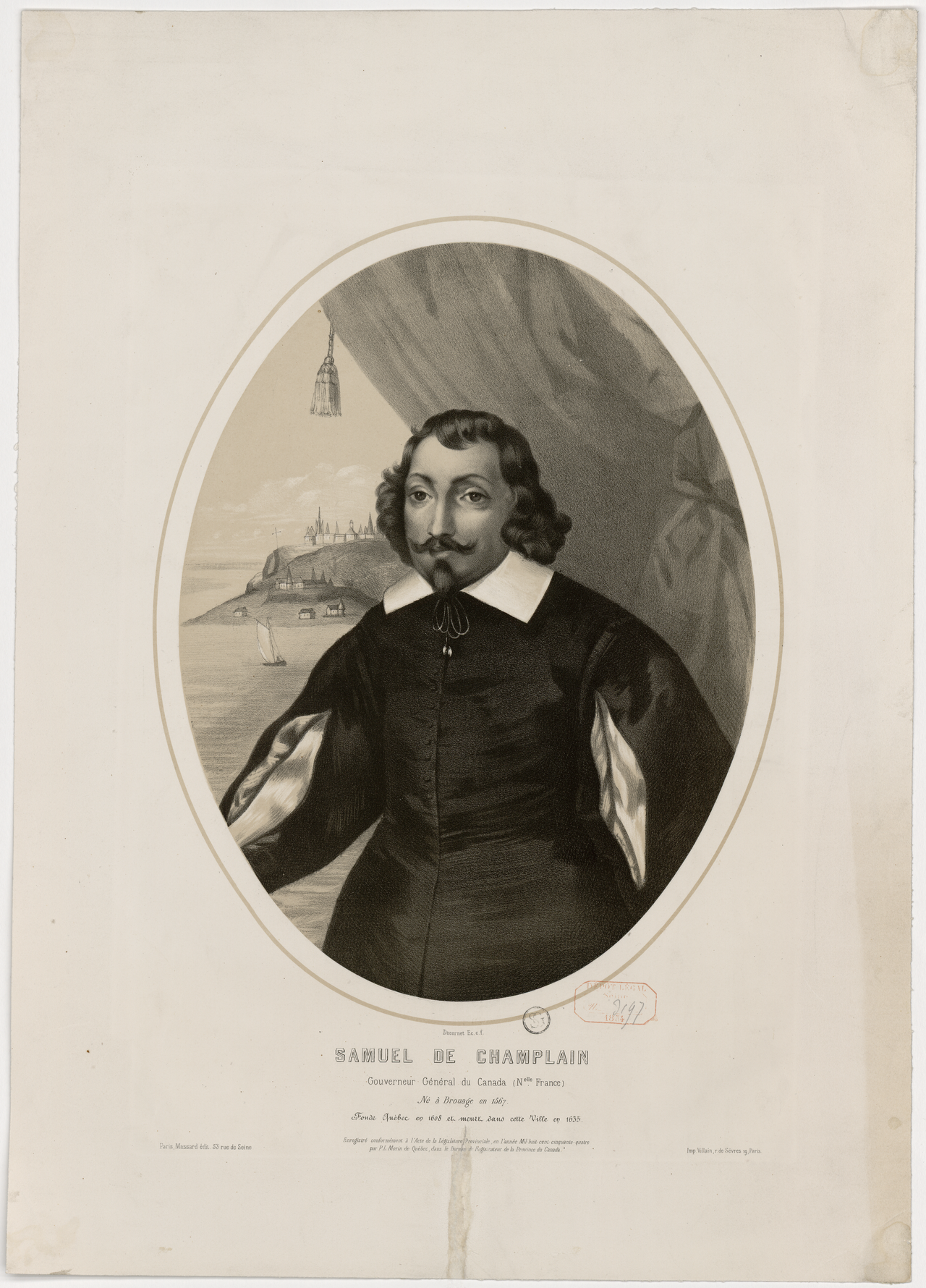
Oval-framed black-and-white lithograph portrait of a man with shoulder-length wavy hair and a moustache, wearing a dark dark-collared garment with a white collar and striped sleeves. Background shows a coastal town on a hill, a ship on water, and a drape. Printed title text below.Painting

Secondary source

Portrait of Samuel de Champlain

Louis Joseph César Ducornet · 1854

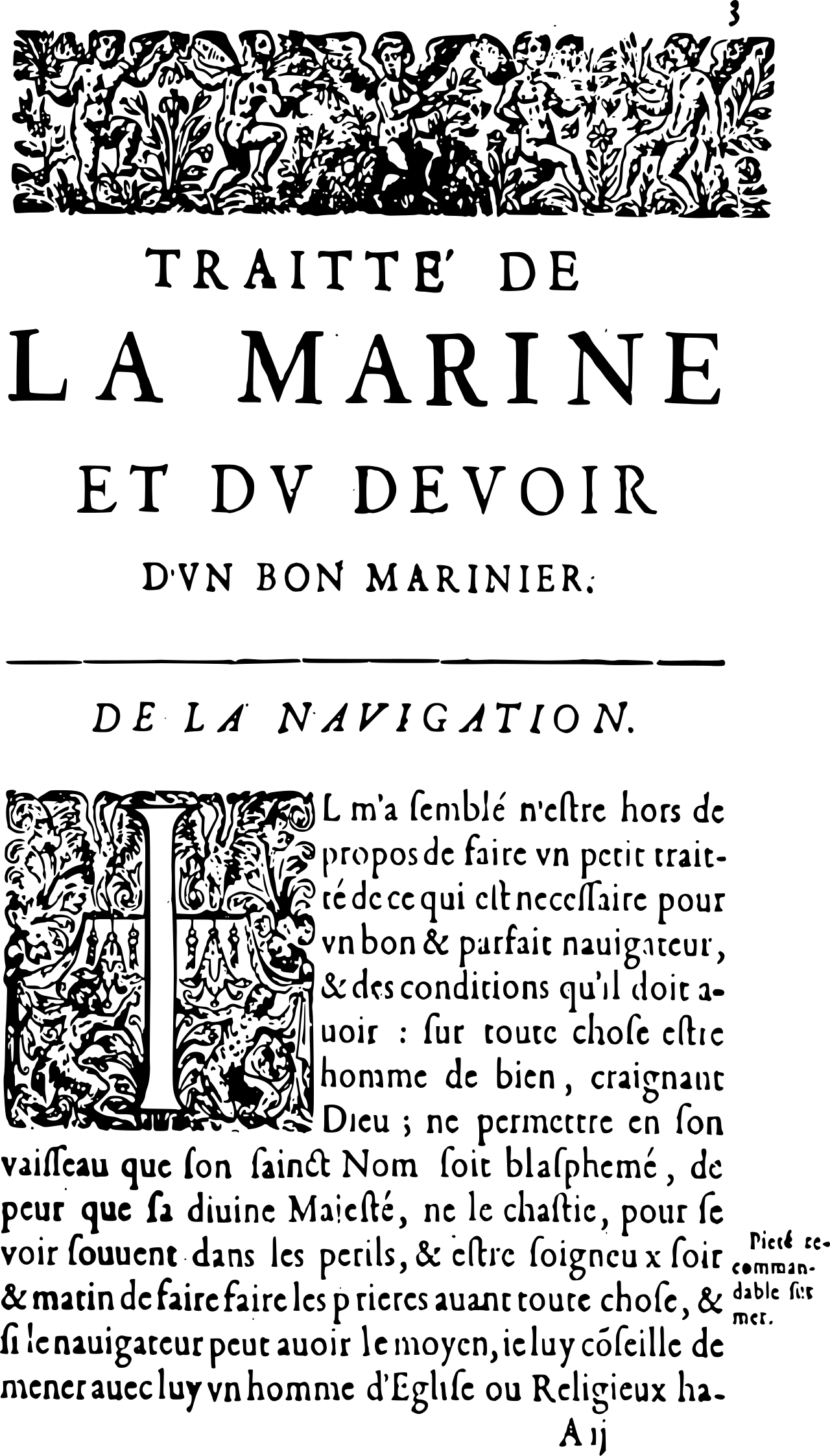
Title page and opening page of a 17th-century French treatise. Top has a decorative woodcut border of foliage and figures. Title reads 'Traitté de la marine et du devoir d'un bon marinier', followed by 'De la navigation' and the first lines of body text beginning with an ornate initial letter.Book

Primary source

Traitté de la marine et du devoir d'un bon marinier

Samuel de Champlain · 1632

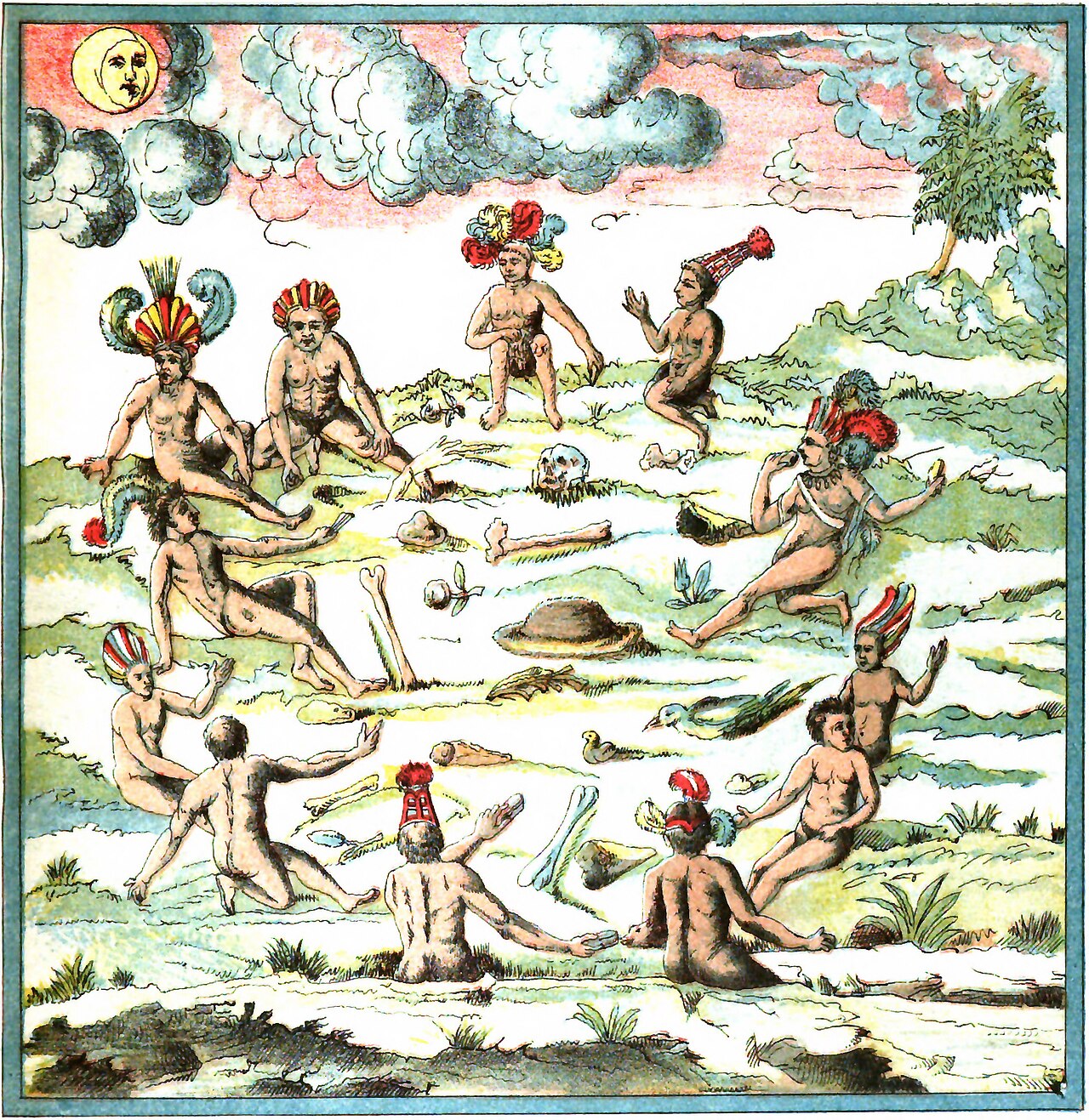
Hand-colored engraving of several naked figures in feathered headdresses seated on grass around scattered bones and a skull, with a smiling sun and clouds in a pink sky above. One figure gestures with raised arms, another sits with a hand to the face.Painting

Primary source

Récit des Indiens (Brief Discours, planche LIX)

Samuel de Champlain · c. 1601

Dark maroon book cover with a white library barcode label at the upper left reading 'University of St. Michael's College' and a barcode with the number 39 printed vertically along it. No title or author text is visible.Book

Primary source

Le Grand Voyage du pays des Hurons

Gabriel Sagard · 1632

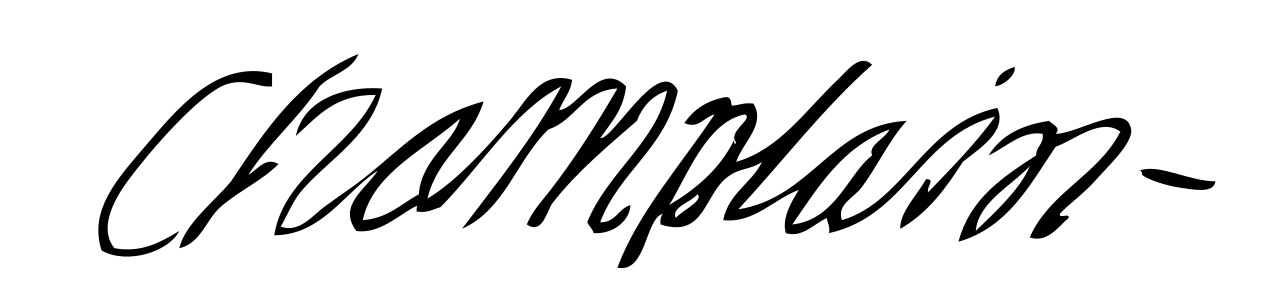
Black handwritten cursive signature on a white background, stylized flowing strokes that read as the name Champlain with a long dash at the end.Document

Primary source

Signature of Samuel de Champlain

Samuel de Champlain

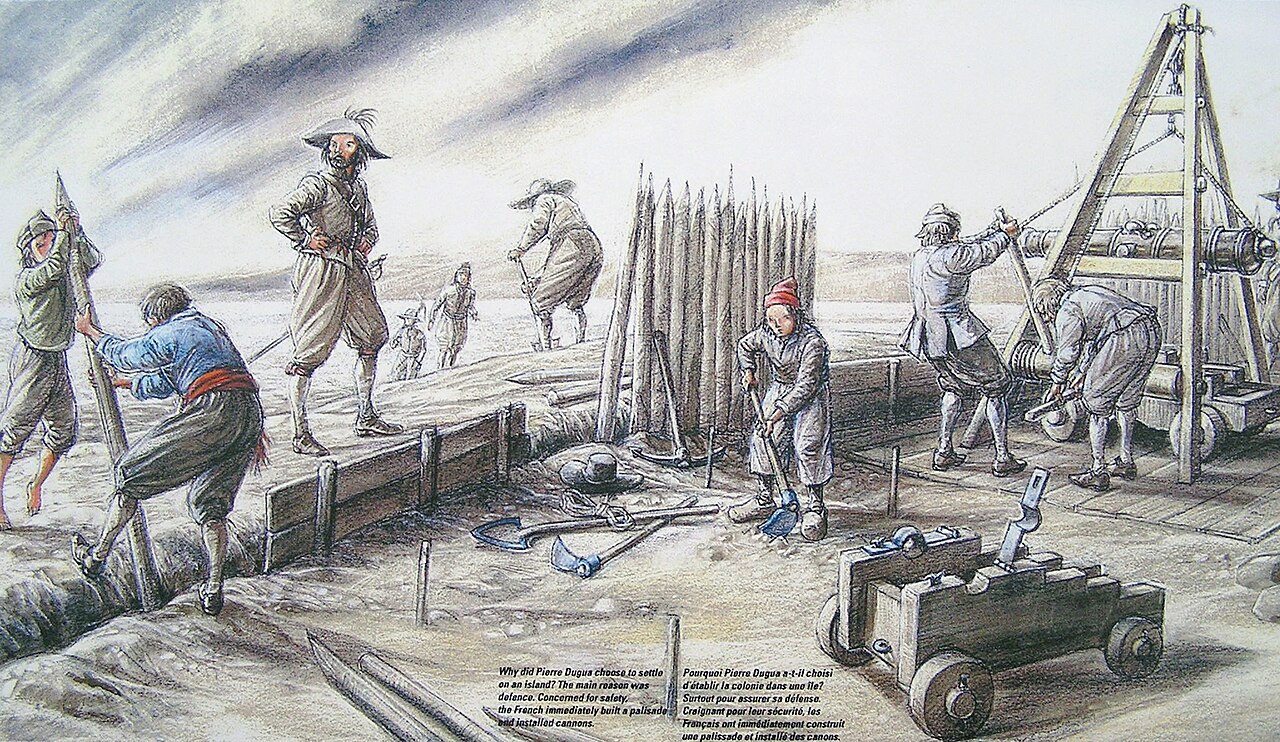
Painted illustration of 1604 colonists building a palisade on an island. A man in a feathered hat with a sword stands on a plank walkway, while others set sharpened posts into a trench and dig. Cannons and tools lie on the ground; a cannon on a wooden carriage sits at right near a wooden frame. Caption text appears at bottom in English and French.Artifact

Primary source

Saint Croix Island Settlement Site

1604

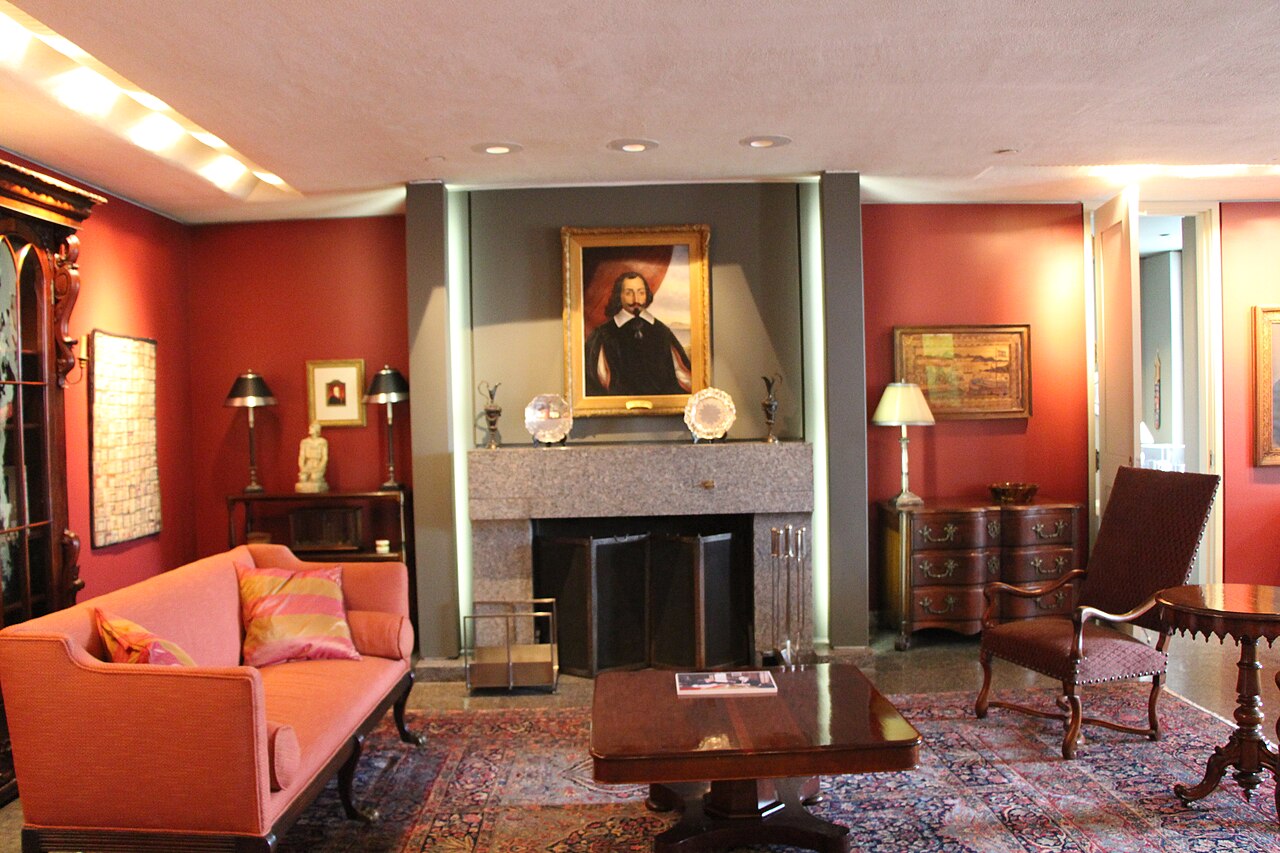
A red-walled formal living room with a pink sofa, a granite fireplace, and a gold-framed portrait of a man with a mustache and dark collar above the mantel. Antique furniture, a patterned rug, and table lamps are visible.Painting

Secondary source

Supposed Portrait of Samuel de Champlain

Théophile Hamel · 1850

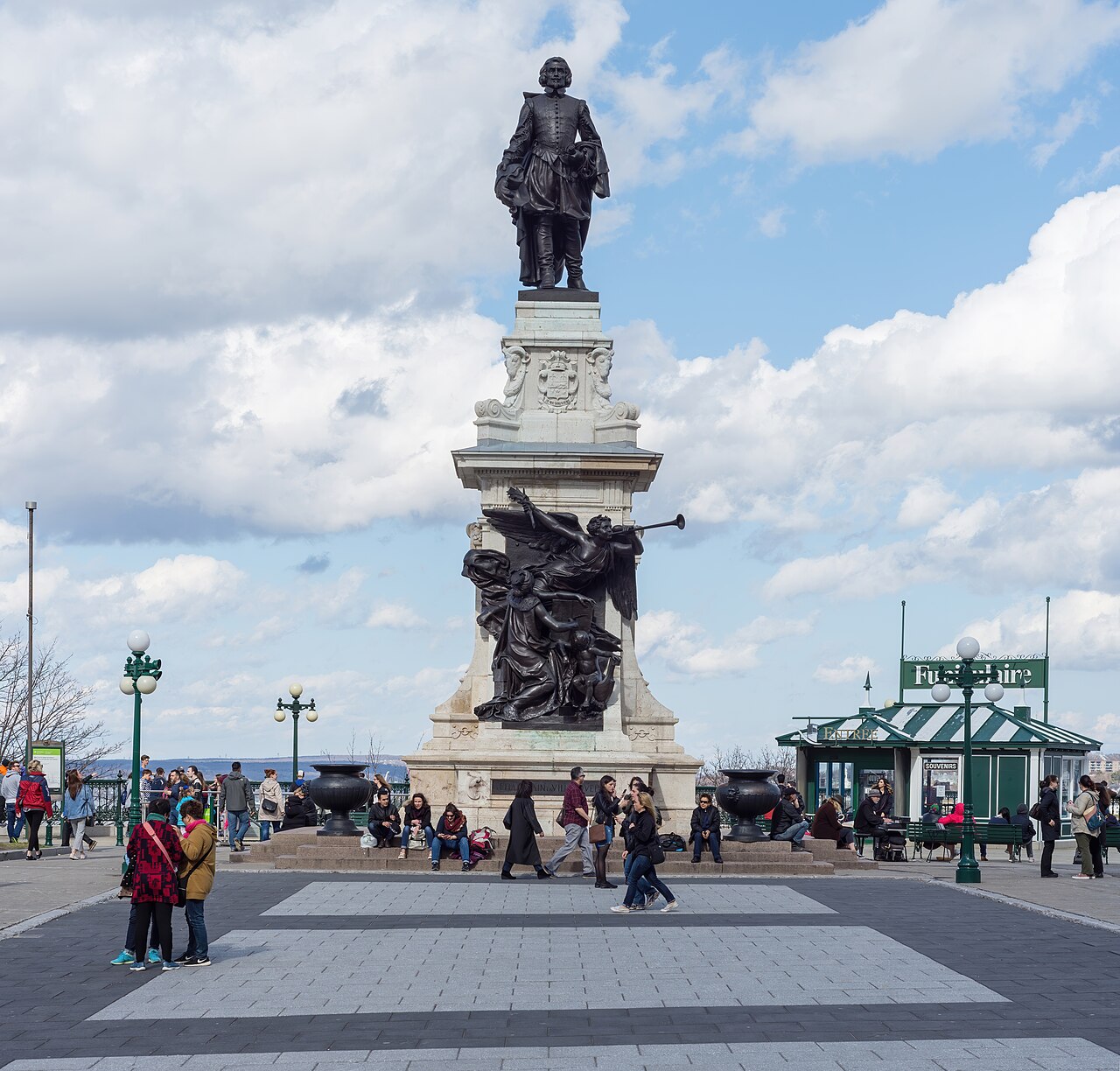
A tall bronze statue of a man in period dress stands atop a tall stone monument in a plaza. Below, a bronze relief group of figures sits on the pedestal, with a trumpeter. Tourists and people sit around the base, with a green kiosk to the right.Sculpture

Secondary source

Statue of Samuel de Champlain

Paul Chevré · 1898

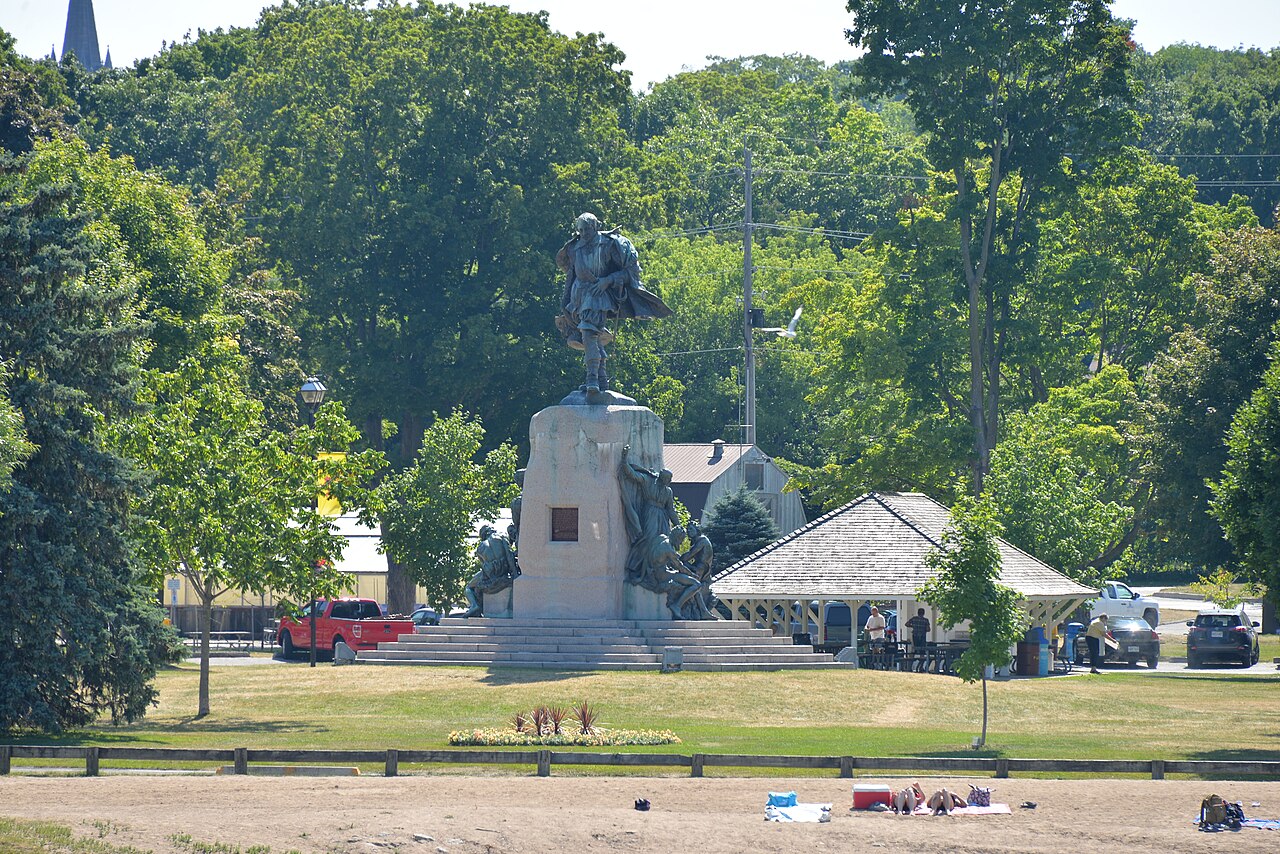
A bronze statue of a standing figure in period clothing with a cloak, mounted on a tall pale stone pedestal with bronze relief figures, set on a stepped stone base in a park with trees, a gazebo, and parked vehicles nearby.Sculpture

Secondary source

Champlain Monument, Orillia

Vernon March · 1925

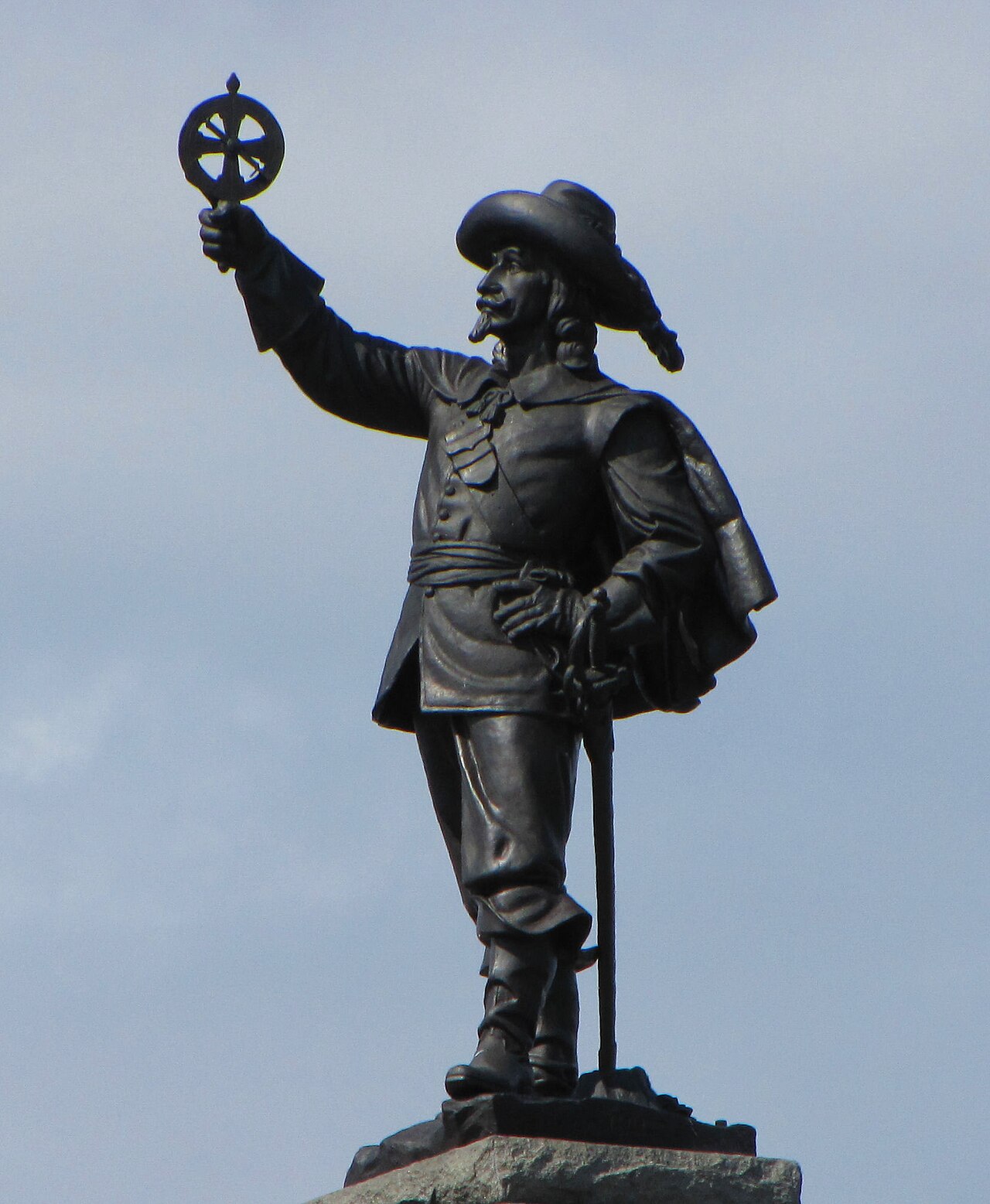
Dark bronze statue of a man in a wide-brimmed plumed hat, cloak, and boots, standing on a stone pedestal. He raises a round astrolabe in his right hand against a pale blue sky.Sculpture

Secondary source

Champlain Statue, Nepean Point

Hamilton MacCarthy · 1915

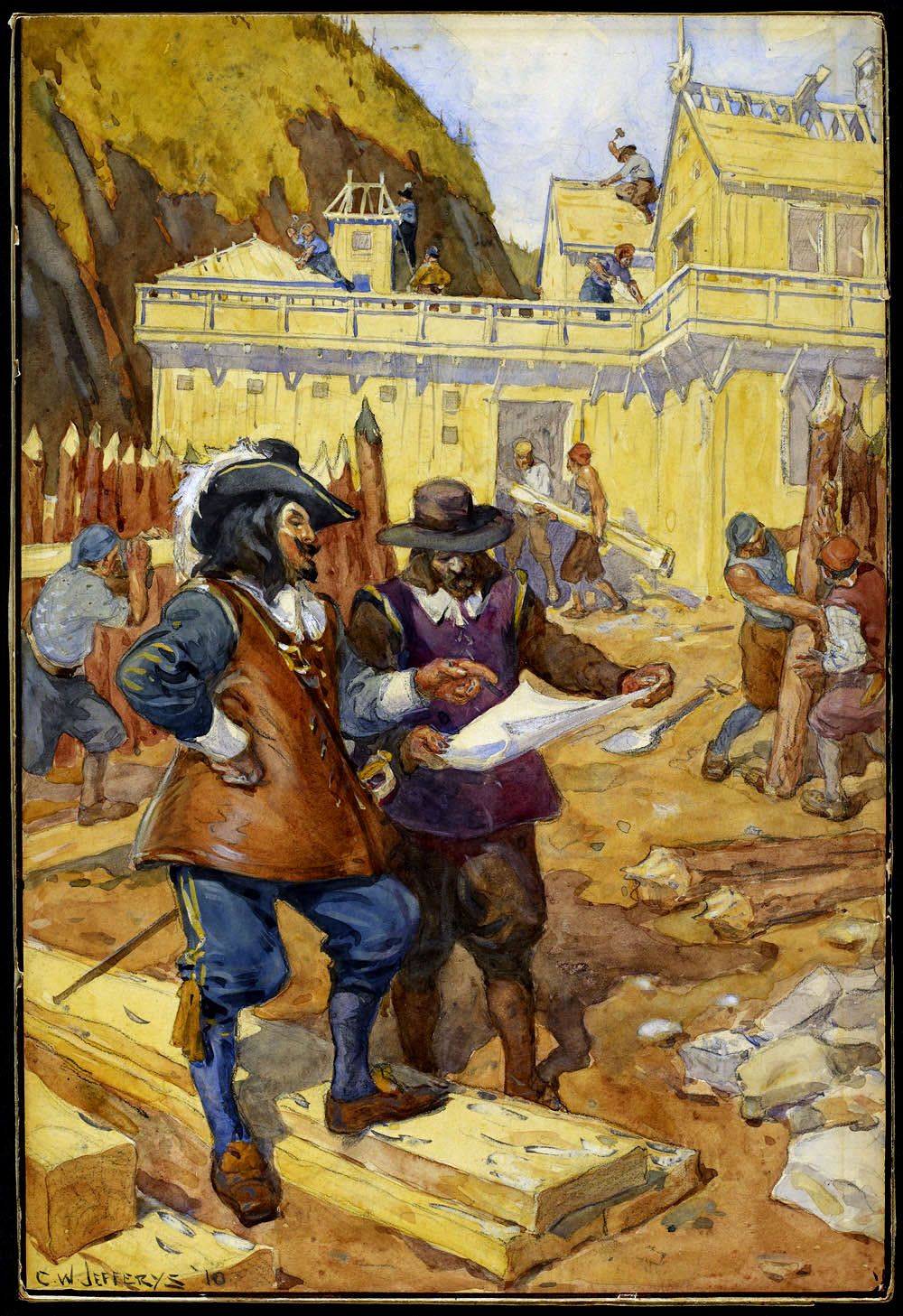
Watercolour painting of a construction site at a fort with yellow wooden buildings and a palisade. A man in a feathered hat and orange-brown doublet stands on timber, while a bearded man in a dark hat and purple vest studies a paper plan. Workers hammer on roofs and carry beams.Painting

Secondary source

Champlain Superintending the Building of His Habitation, 1608

Charles William Jefferys · 1925

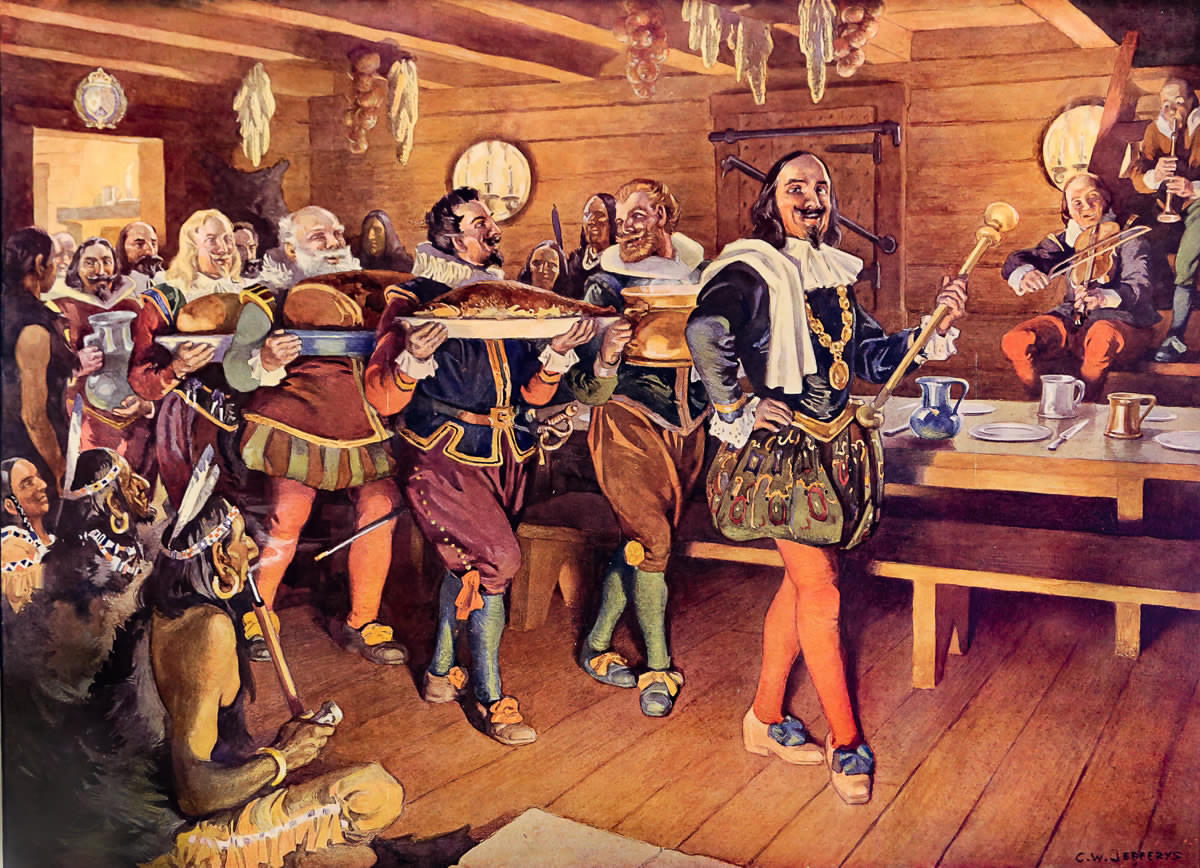
Painting of a lively 17th-century feast in a wooden hall. A bearded man in a white collar and gold chain stands at right holding a staff, while servants carry platters of food and a fiddler plays. Feathered and fur-clad figures sit at left.Painting

Secondary source

The Order of Good Times Established by Samuel de Champlain

Charles William Jefferys · 1925

Front cover of a dark leather-bound book with gold-tooled double-rule borders and decorative corner ornaments, against a pale background. The cover has no visible text.Book

Primary source

Relation de ce qui s'est passé en la Nouvelle France en l'année 1633

Paul Le Jeune · 1634

Book

Primary source

Histoire du Canada

Gabriel Sagard · 1636

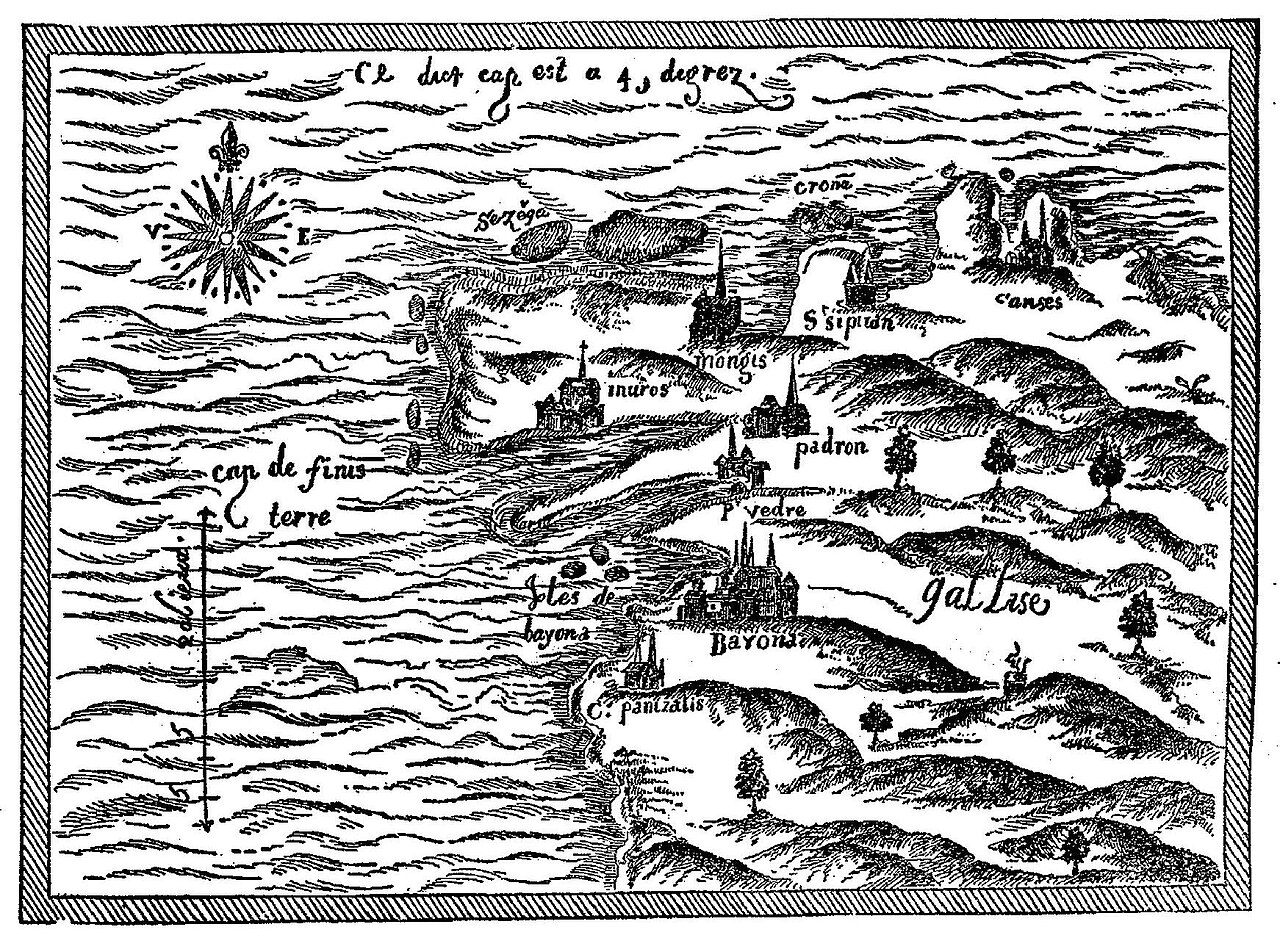
Black-and-white engraved map of a coastline with rough hatched waves on the left sea and hills, trees and towns on the right land. A compass rose sits at upper left. Handwritten French labels include 'Le cap est a 45 degrez', 'cap de finis terre', 'Bayona', 'Padron', 'Muros', 'Sisipun', 'Canses', and 'Gal Lise', with a scale bar on the left. The image is framed by a hatched border.Painting

Primary source

Plate 1 from the West Indies Narrative

Samuel de Champlain · 1870 (reproducing earlier work)

Book

Primary source

Voyages of Samuel de Champlain, 1604-1618

Samuel de Champlain · 1907

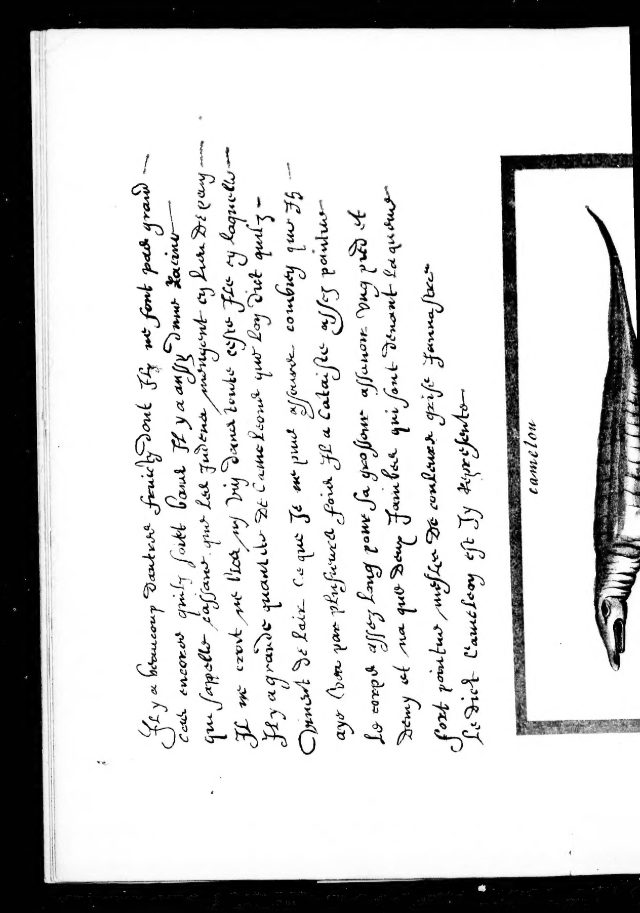
Narrative of a Voyage to the West Indies and Mexico, 1599-1602Book

Primary source

Narrative of a Voyage to the West Indies and Mexico, 1599-1602

Samuel de Champlain · 1859 (describing 1599-1602)

Book

Secondary source

Samuel Champlain, founder of Quebec: history of his life and voyages

N.-E. Dionne · 1891

Book

Secondary source

The Founder of New France: A Chronicle of Champlain

Charles W. Colby · 1915

Book

Secondary source

The Makers of Canada: Champlain

N. E. Dionne · 1905/1912

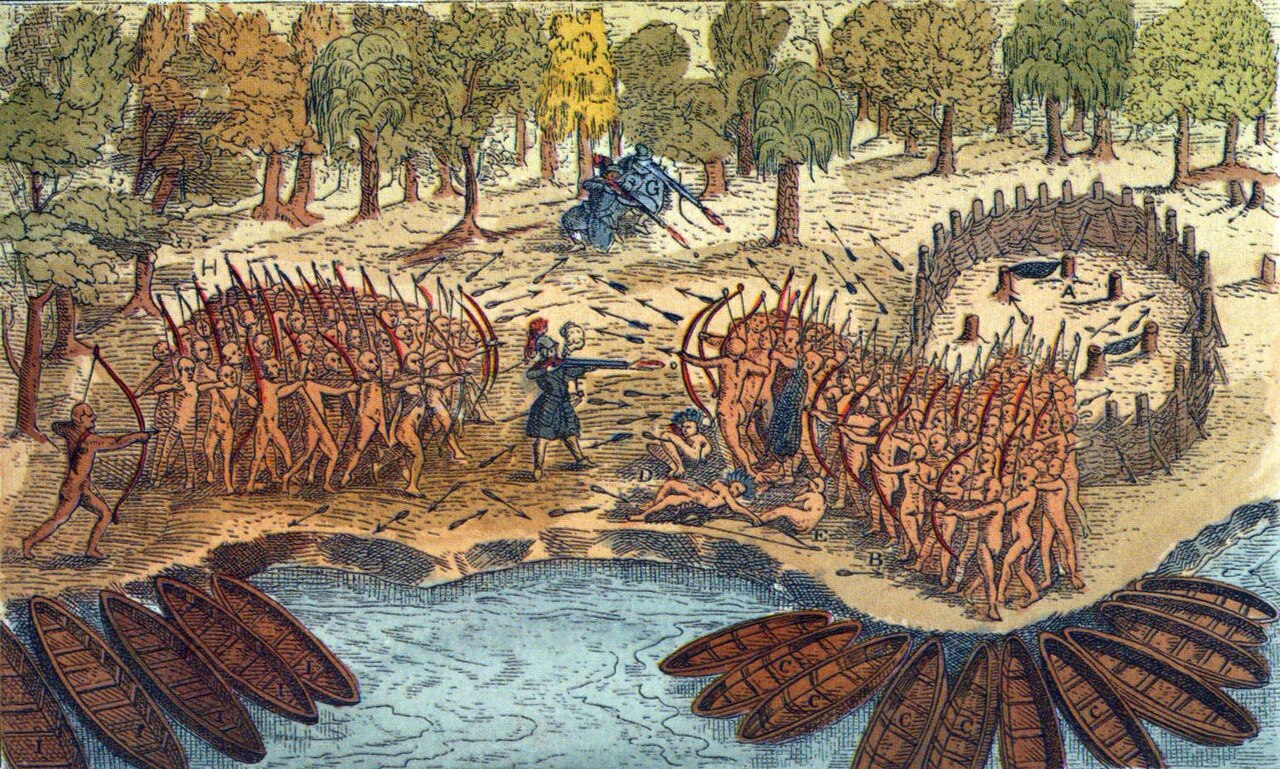
Hand-colored engraving of a battle between two groups of Native warriors with bows and arrows on a sandy shore by a lake and forest. A European in armor with a musket and a helmeted figure appear among the trees. Canoes line the water in front, and a palisade fort stands at right.Painting

Primary source

Champlain's Illustration of the 1609 Battle with the Iroquois

Samuel de Champlain · 1613

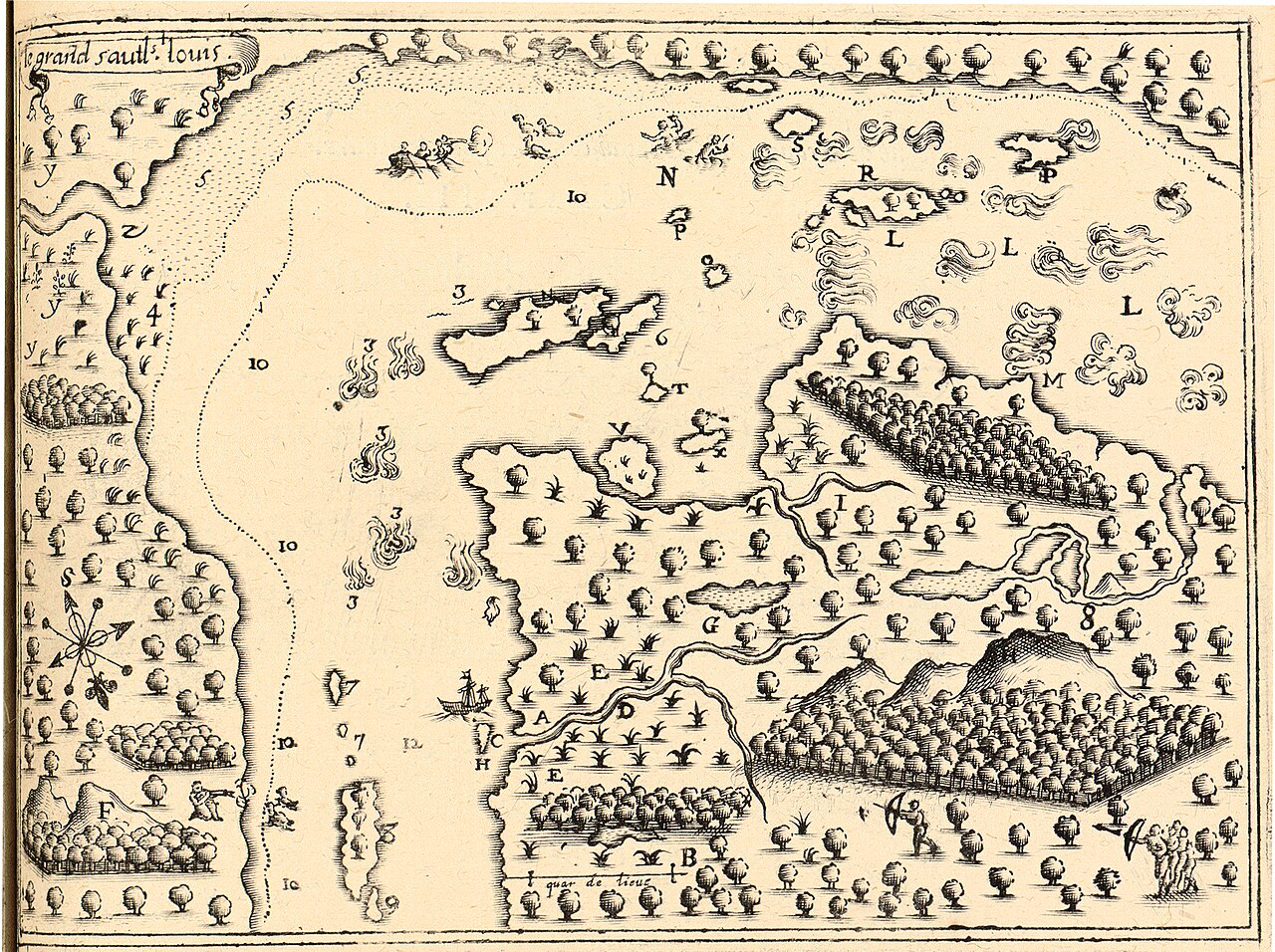
Historical engraved map drawing of the Lachine Rapids area, labeled 'grand sault st louis' at top left. Shows a wide river with dotted lines, numbered depth markings, small islands, wooded areas, lettered reference points, a compass rose at left, canoes and figures on the water and shore, and a long rectangular map border.Painting

Primary source

Drawing of Sault St-Louis and Montreal

Samuel de Champlain · 1611

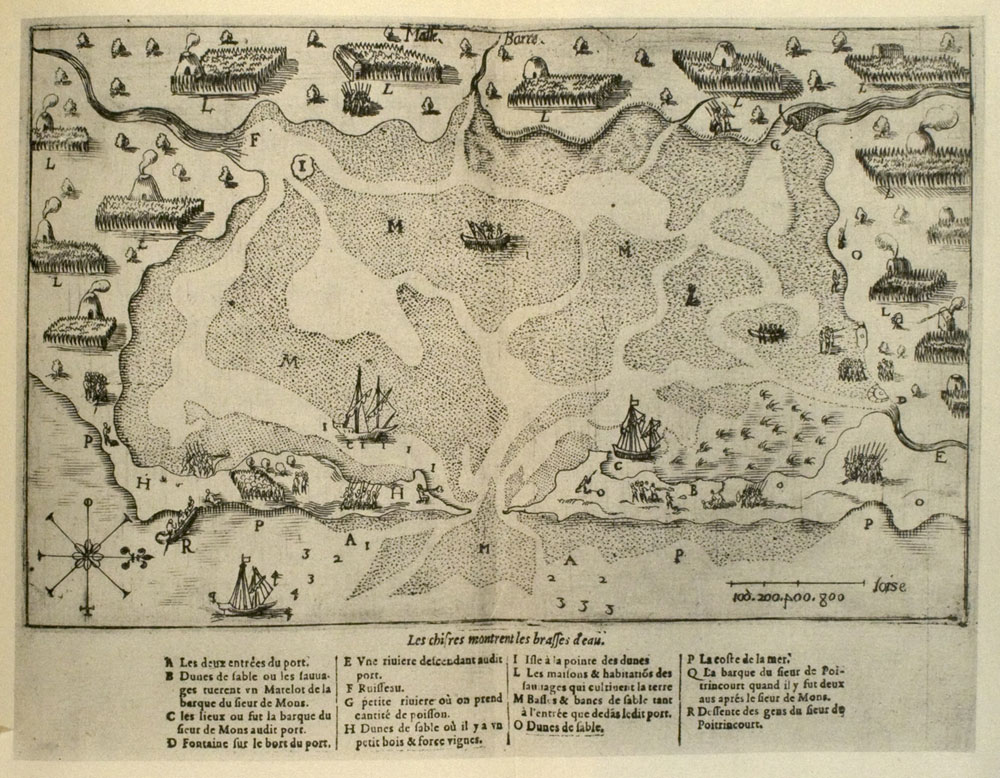
Engraved historic map of a harbor with sandy dunes, water depth figures, two ships, a compass rose, and lettered key below. Native dwellings and figures line the shoreline, and a scale bar reads 100 200 300 400 toises.Painting

Primary source

Map of Nauset Harbor, Cape Cod

Samuel de Champlain · 1605

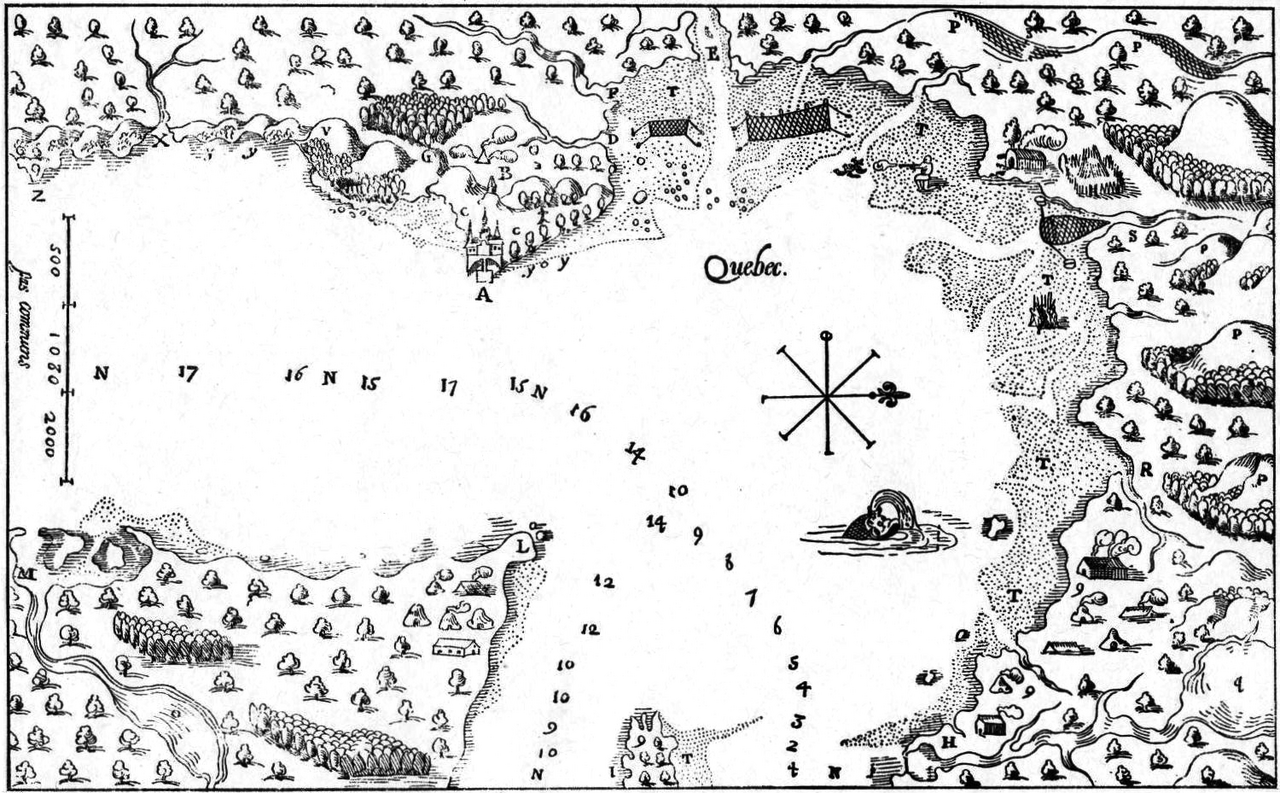
Black and white engraved map of Quebec and the St. Lawrence River by Champlain, 1608. Shows lettered landmarks, a compass rose, depth soundings in fathoms along the river, forests drawn as tree symbols, and the word Quebec near the center.Painting

Primary source

Map of the Quebec Settlement and River

Samuel de Champlain · 1608

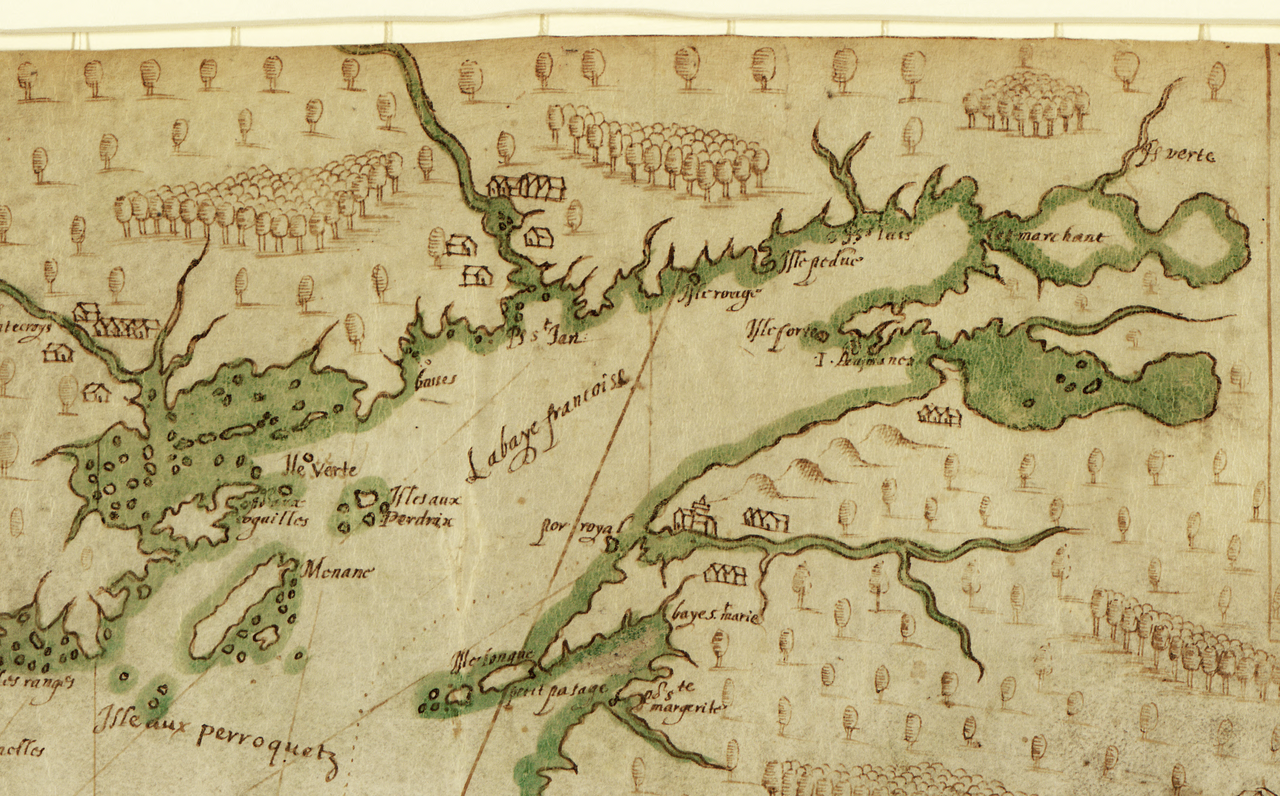
Detail of a hand-drawn manuscript map on vellum showing a coastline with green-tinted water, labeled islands and place names in brown ink such as 'La baye françoise', 'Isle de Ste Croix'-style labels, tree and building symbols, and a sea-chart style compass line.Painting

Primary source

La baye françoise

Samuel de Champlain · 1607

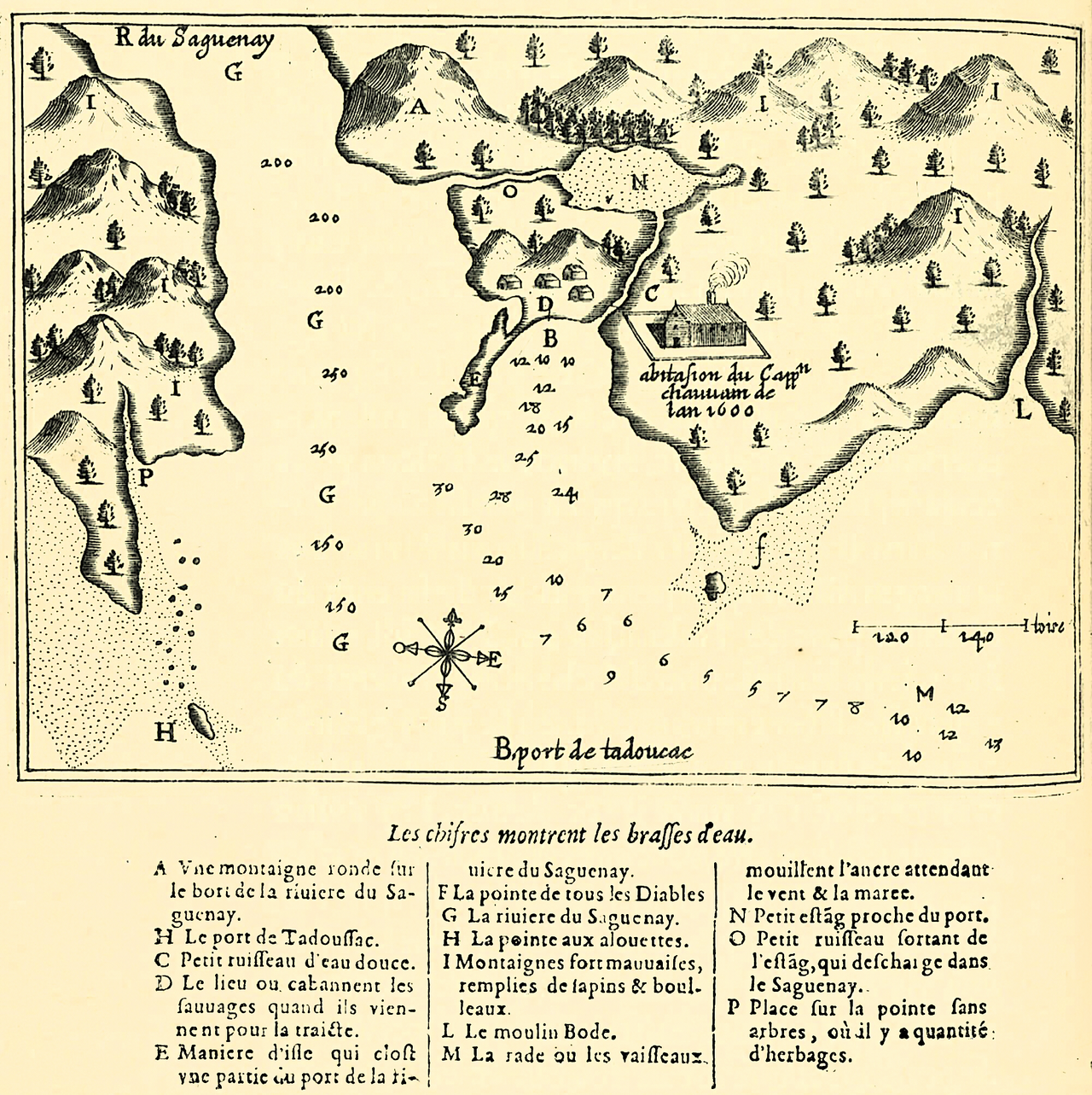
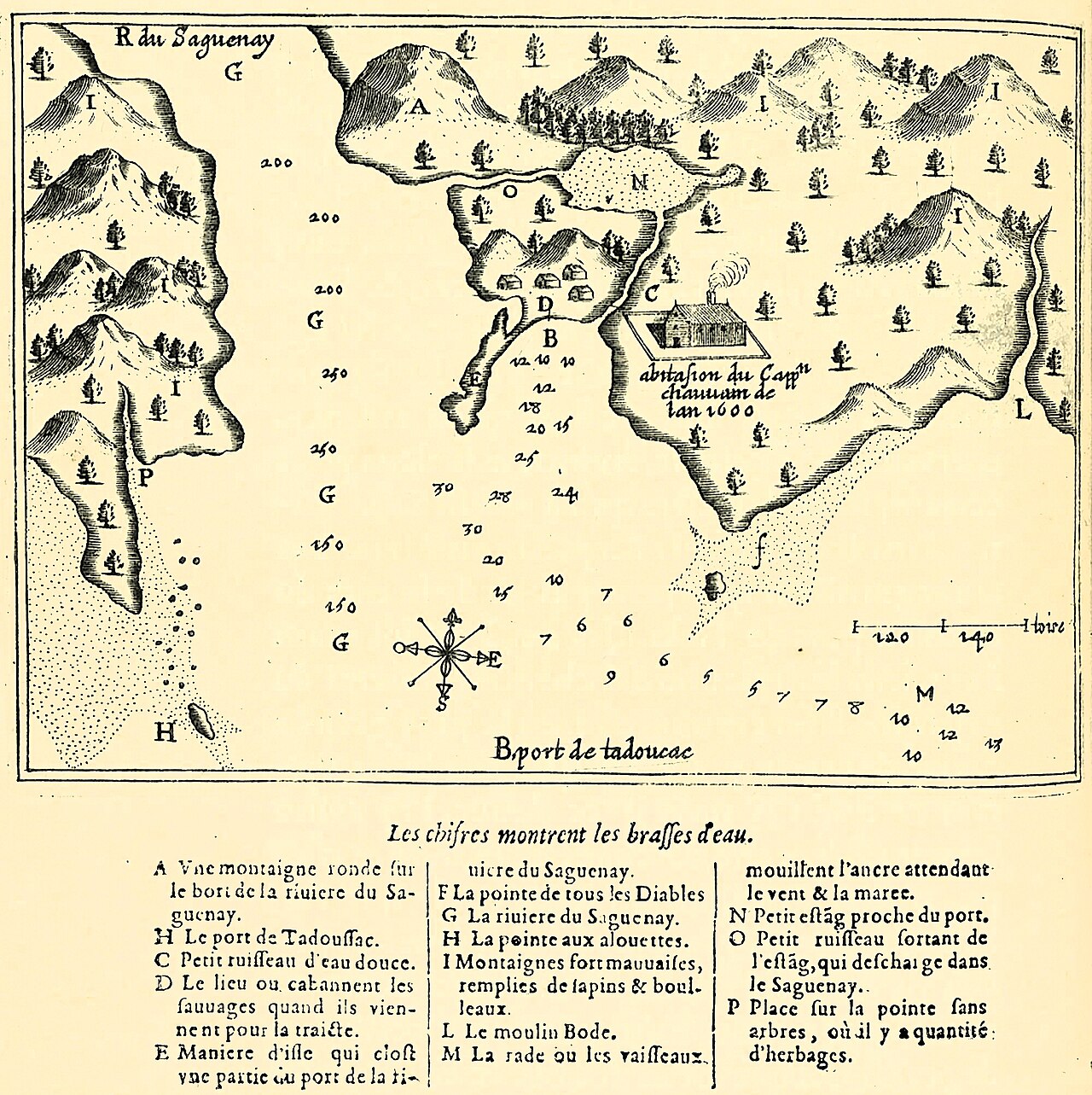
Engraved map of the Tadoussac harbour and Saguenay River area, with coastal mountains, trees, numbered depth soundings in brasses, a compass rose, a lettered legend, and the label 'Le port de Tadoussac'. The map shows a house labelled 'habitation du Capne Chauvin de Tan 1600'.Document

Primary source

Map of Tadoussac Harbour (1603)

Samuel de Champlain · 1603

Engraved battle scene of armed figures with bows and arrows fighting in a forest clearing, with a wooden palisade on the right and canoes in the foreground. Figures lie on the ground among arrows.Painting

Primary source

Defeat of the Iroquois on Lake Champlain

Samuel de Champlain · 1613

Early 17th-century engraved map of the Tadoussac harbour and Saguenay River mouth, with lettered landmarks, depth soundings in fathoms, a compass rose, a scale bar, and a legend in French below. Title reads B. port de Tadoussac.Document

Primary source

Map of Tadoussac and the Saguenay River Mouth (1613)

Samuel de Champlain · 1613

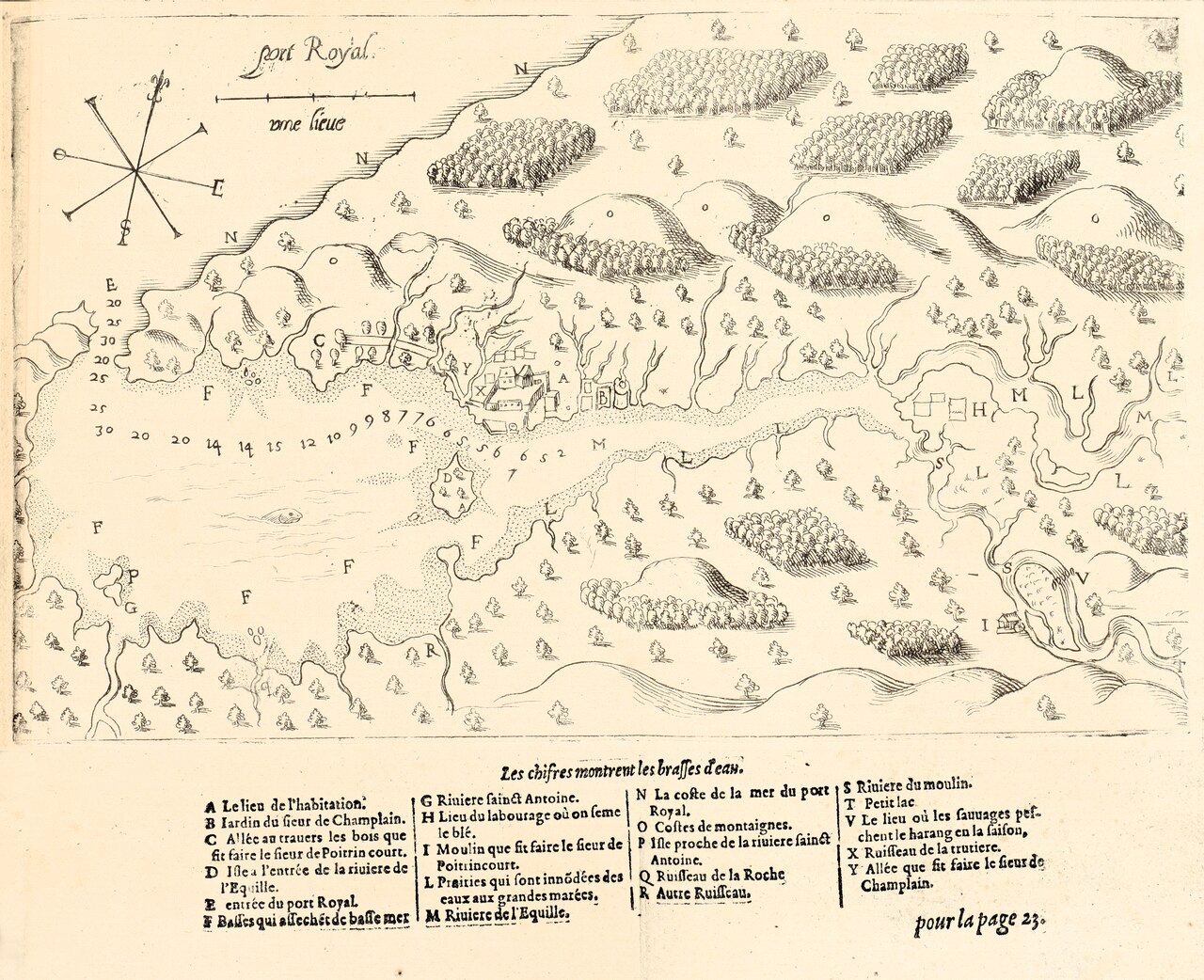
Engraved map titled Port Royal showing the bay, coastline, forests, hills, a compass rose, a scale of one league, numbered depth soundings, lettered legend keys, and buildings of the habitation.Document

Primary source

Map of Port Royal Bay (1613)

Samuel de Champlain · 1613

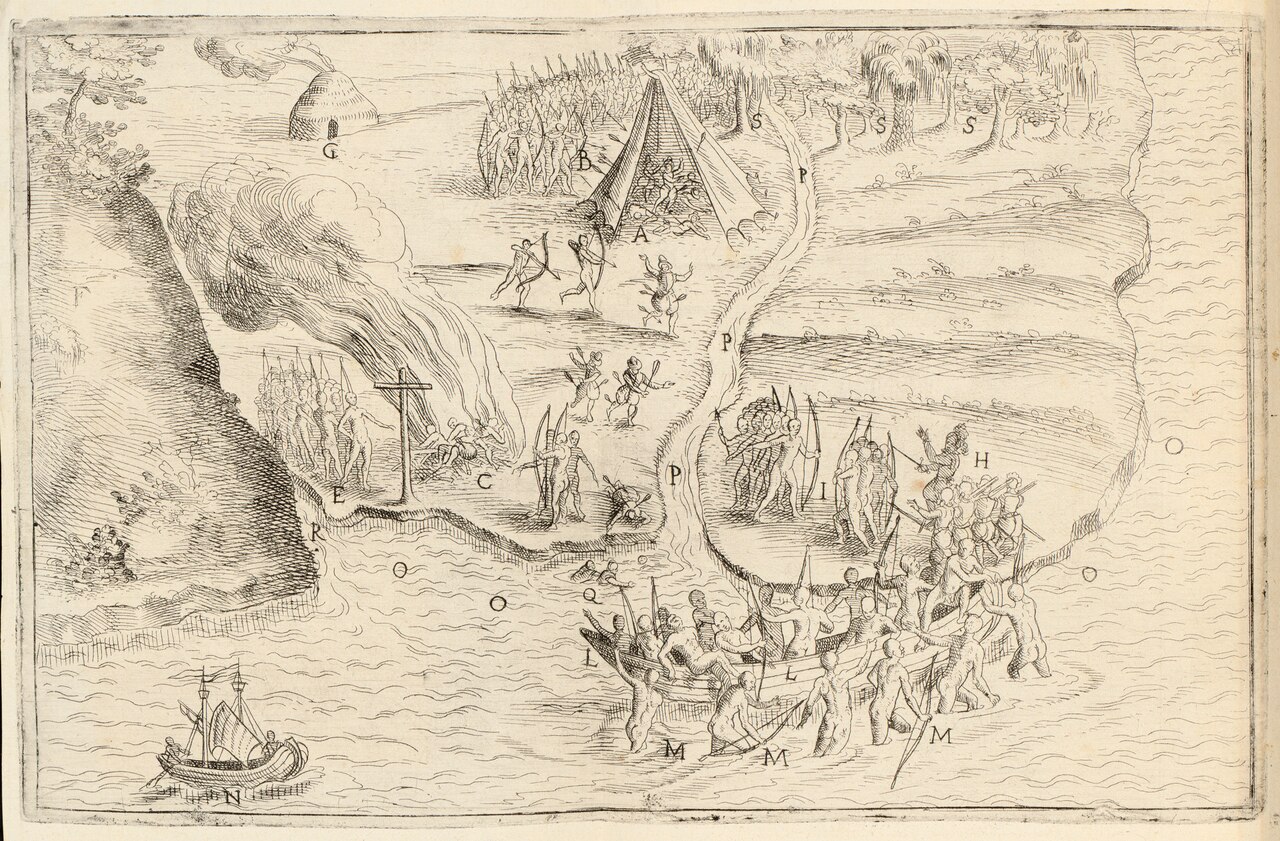
Engraved illustration of a coastal skirmish: a conical hut and smoke at left, a cross on a pole at center-left, bowmen and warriors on shore, and a crowd of armed figures in a boat at lower right. Lettered keys mark the scene.Painting

Primary source

Port Fortuné Altercation with the Nauset, 1606

Samuel de Champlain · 1613 (depicting events of 1606)

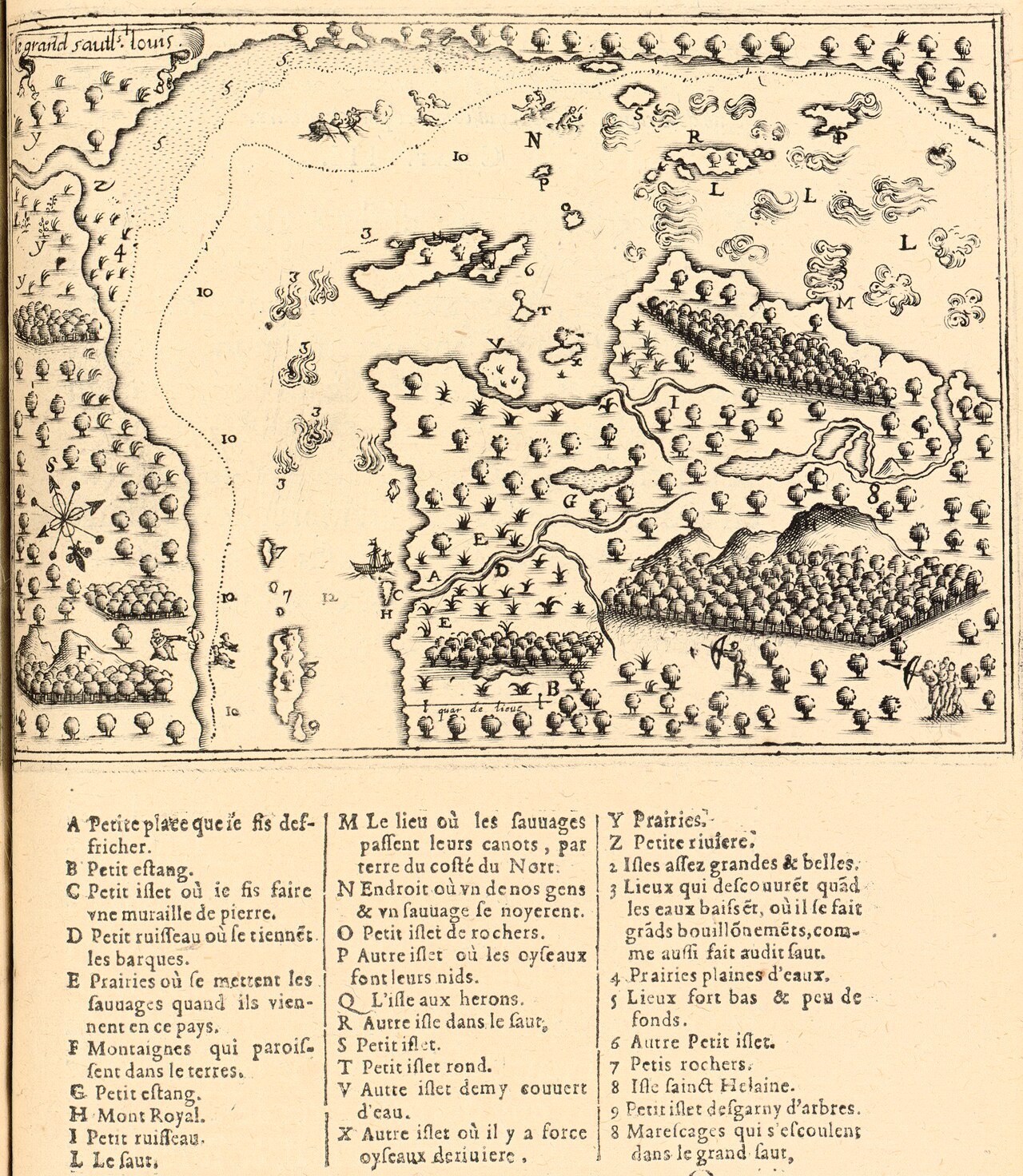
Early 17th-century engraved map of the Sault St-Louis rapids near Montreal, with a legend in French lettered A to Z and numbered features. Shows rivers, islands, forests, Indigenous canoes, and rapids, with the title 'le grand sault st Louis' at top left.Document

Primary source

Drawing of the Sault St-Louis and Lachine Rapids, 1611

Samuel de Champlain · 1611

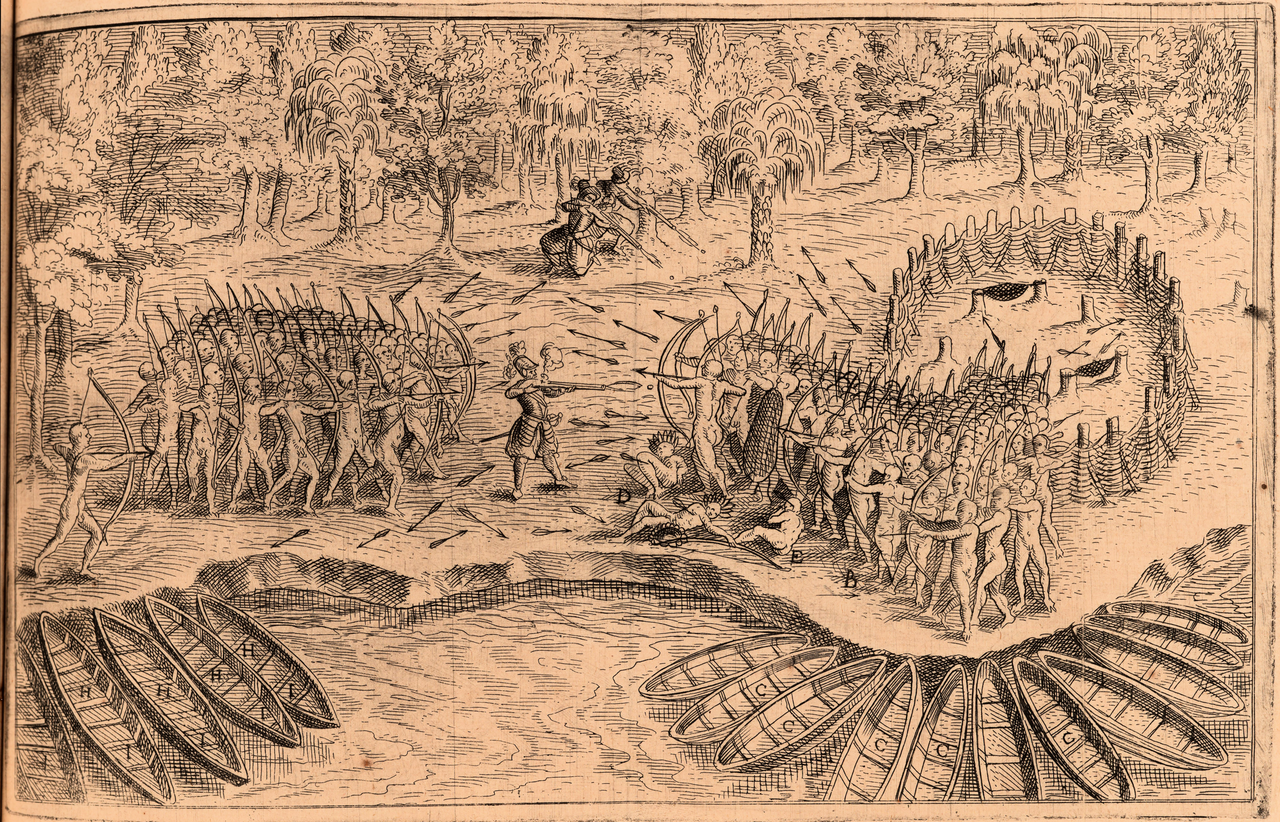
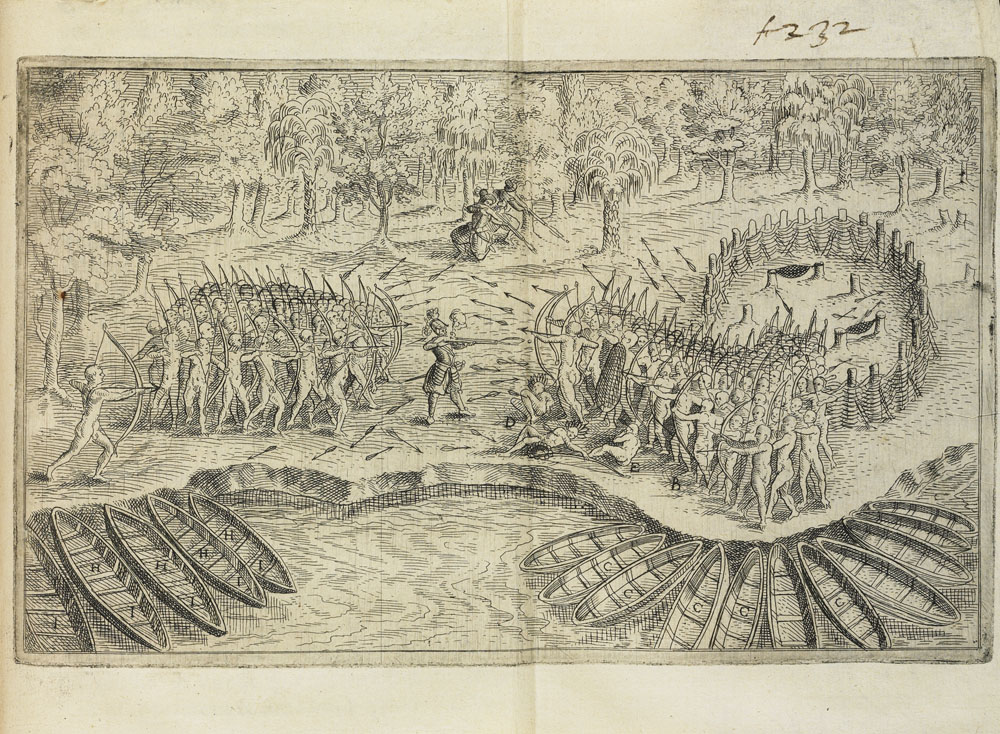
Engraved plate showing a battle between two groups of archers on a wooded shore. Canoes lie along the water in the foreground. Figures in the center fall and lie on the ground, and a fortified palisade stands at the right. A number 232 is handwritten at top right.Painting

Primary source

The Defeat of the Iroquois on Lake Champlain

Samuel de Champlain · 1613

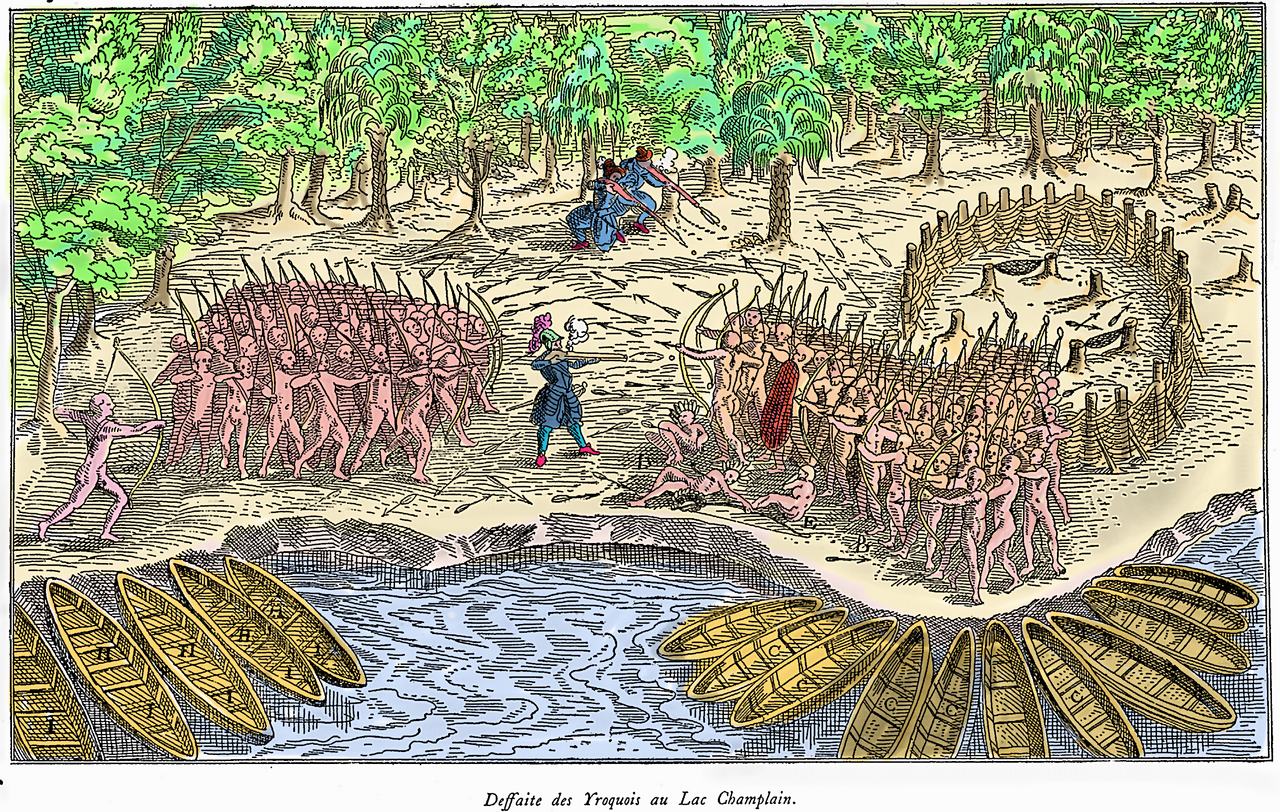
Colored engraving titled 'Deffaite des Yroquois au Lac Champlain'. Two opposing groups of figures, one on the left and one on the right, face each other across a clearing with bows and arrows; a few figures lie on the ground in the center. Wooden palisade fort on the right. Canoes are lined along a river or lake shore at the bottom. Trees fill the background, and two figures in blue clothing with a red figure stand in the middle.Painting

Primary source

Deffaite des Yroquois au Lac Champlain

Samuel de Champlain · 1613, reprinted 1632

Book

Primary source

The Works of Samuel de Champlain, Volume VI

Samuel de Champlain · 1922

placeholderDocument

Secondary source

placeholder

New York (State). Lake Champlain Tercentenary Commission · 1913

placeholderBook

Secondary source

placeholder

Henry Dwight Sedgwick · 1902

Book

Secondary source

Les pionniers français dans l'Amérique du Nord

Francis Parkman · 1874

Héros d'autrefois: Jacques Cartier et Samuel de ChamplainBook

Secondary source

Héros d'autrefois: Jacques Cartier et Samuel de Champlain

Joseph Dumais · 1913

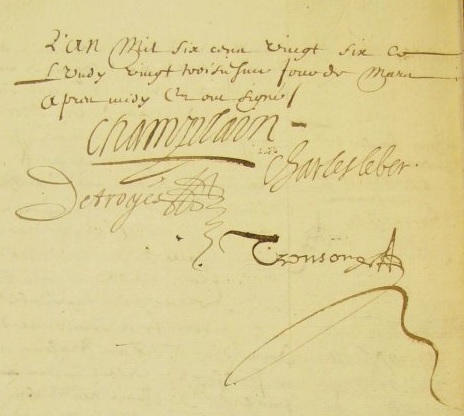
Close-up of a handwritten 17th-century French document showing signatures. Visible text includes a date line 'l'an mil six cens vingt six' and signatures reading 'Champlain', 'Leber', and 'Tronson' with flourishes, along with a scribbled mark below.Document

Primary source

placeholder

Pierre Dubeau · 23 March 1626

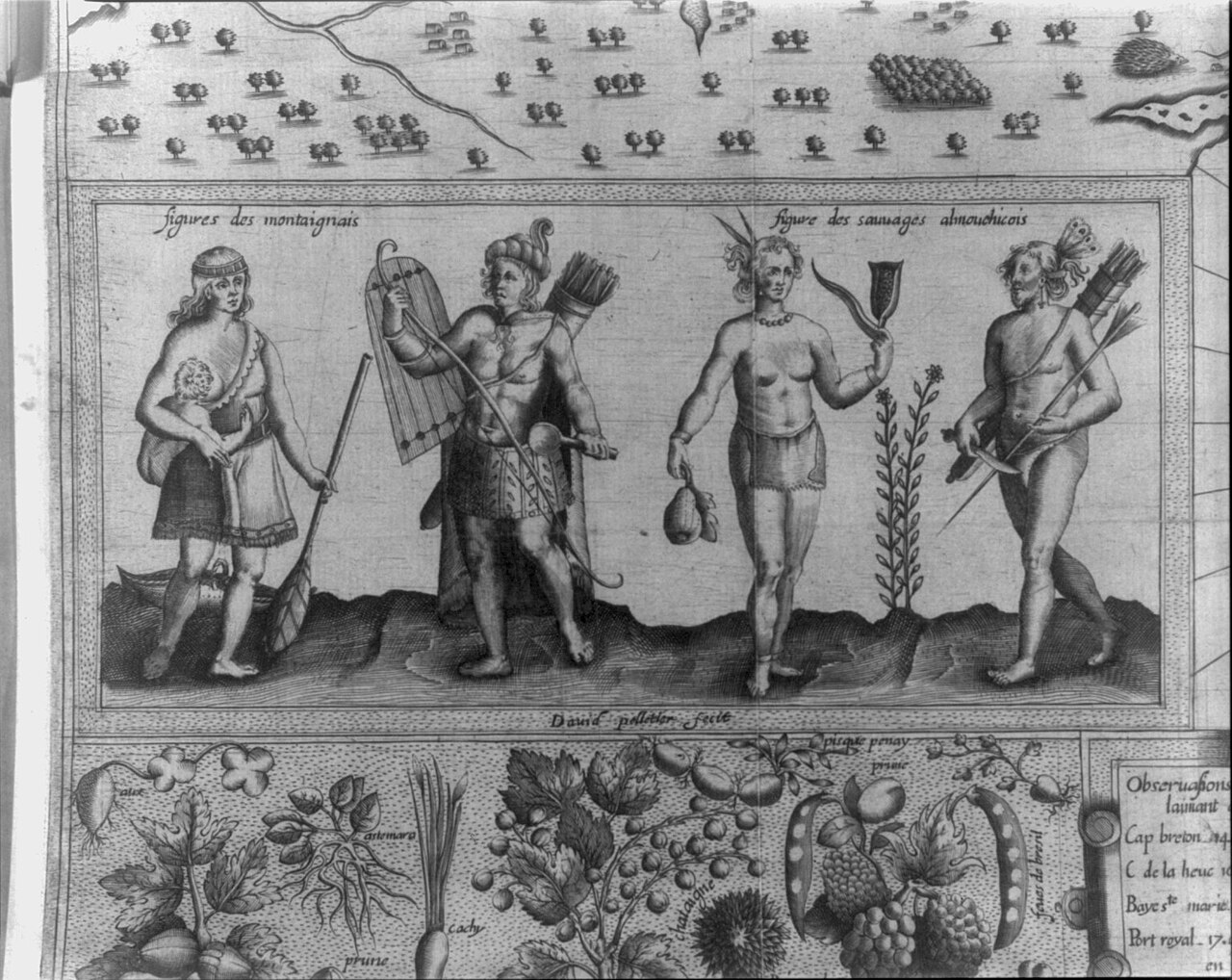
Black and white engraving of four Indigenous figures standing in a landscape with trees and a village above, with French captions at top. Left, a woman carries a child and holds a paddle beside a canoe. Second, a man holds a shield and bow with arrows. Third, a nude woman holds a gourd and a cup. Fourth, a nude man holds a bow and arrows. Below are plants and fruits with labels.Painting

Primary source

Figures des Montaignais, figure des sauvages Almouchiquois

1613

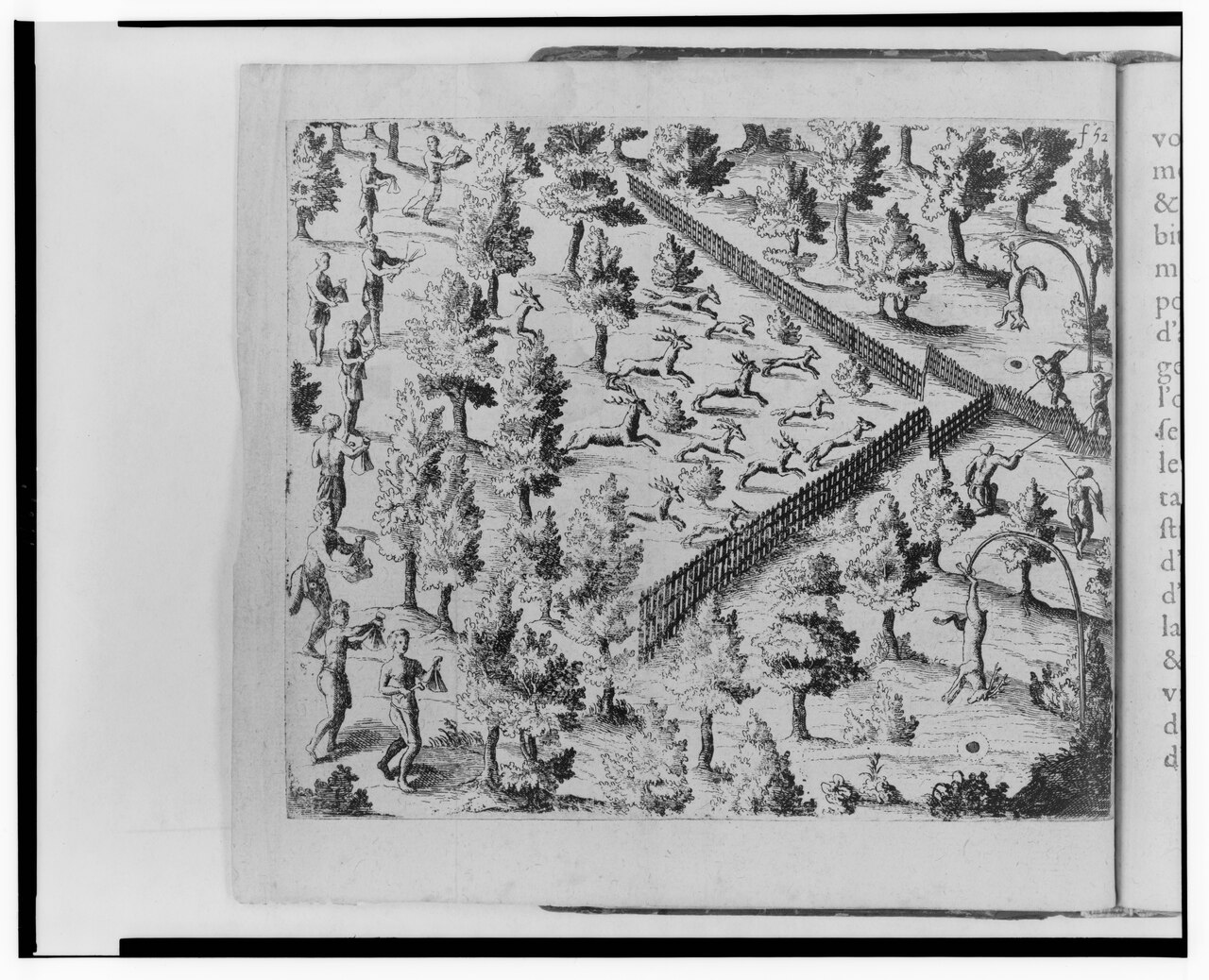
Black and white engraving of a forest scene in which people drive deer toward a long fence and into a funnel-shaped enclosure. Many deer leap and run among trees while hunters stand along the fence. Figure labeled f.52 at upper right, with printed text on the right edge of the page.Painting

Primary source

A Method of Hunting Deer in the Northeast

1613

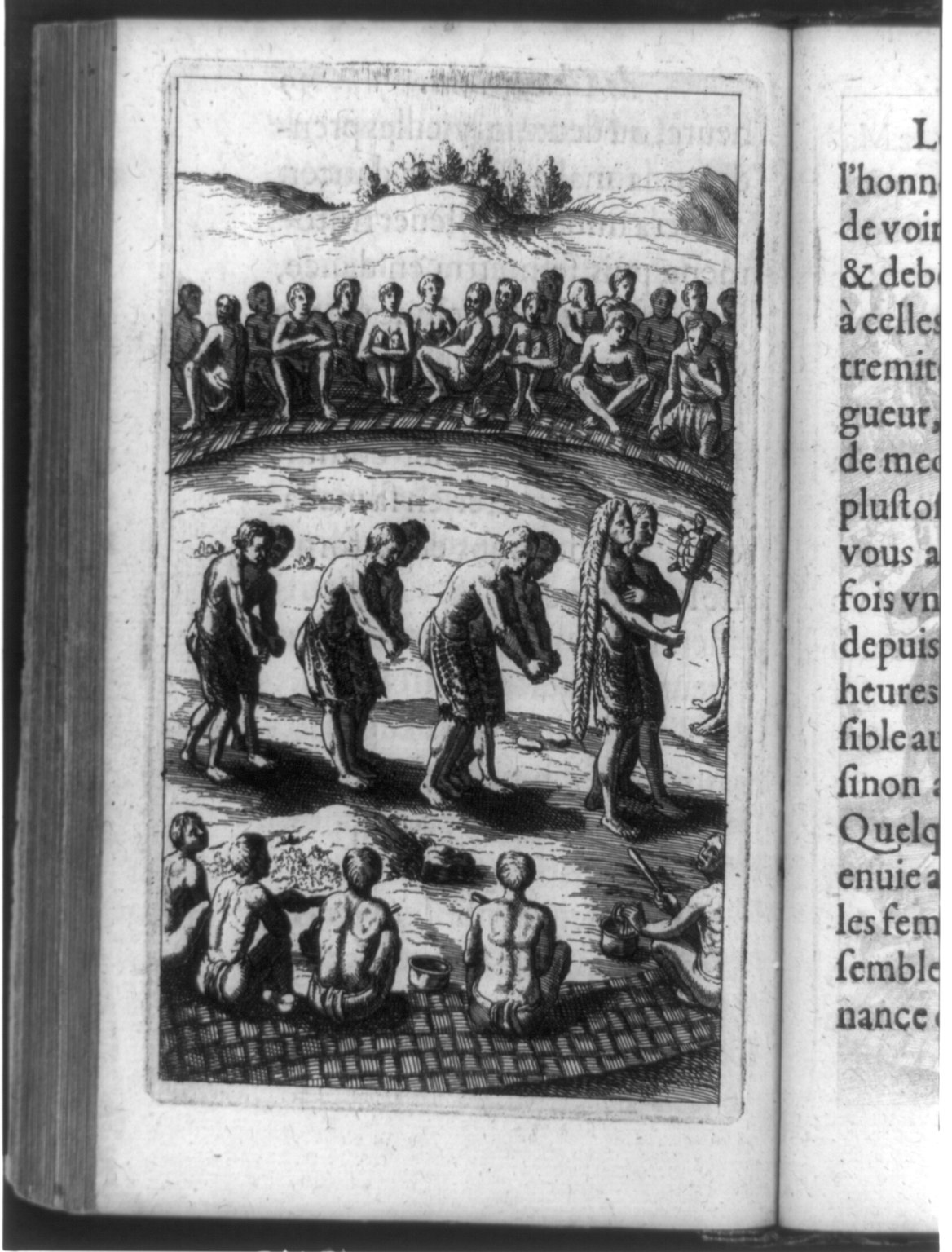
Black and white engraving of a page from an old book. On the left, a framed print shows a ceremony: seated figures ring a circle at the top, a line of standing figures bend forward in a procession, and a figure holds a tall pole topped with a turtle. Seated figures sit on a woven mat at the bottom. French text is printed on the facing page at right.Painting

Primary source

Native American Ceremony with Medicine Man Holding Turtle Pole

1619

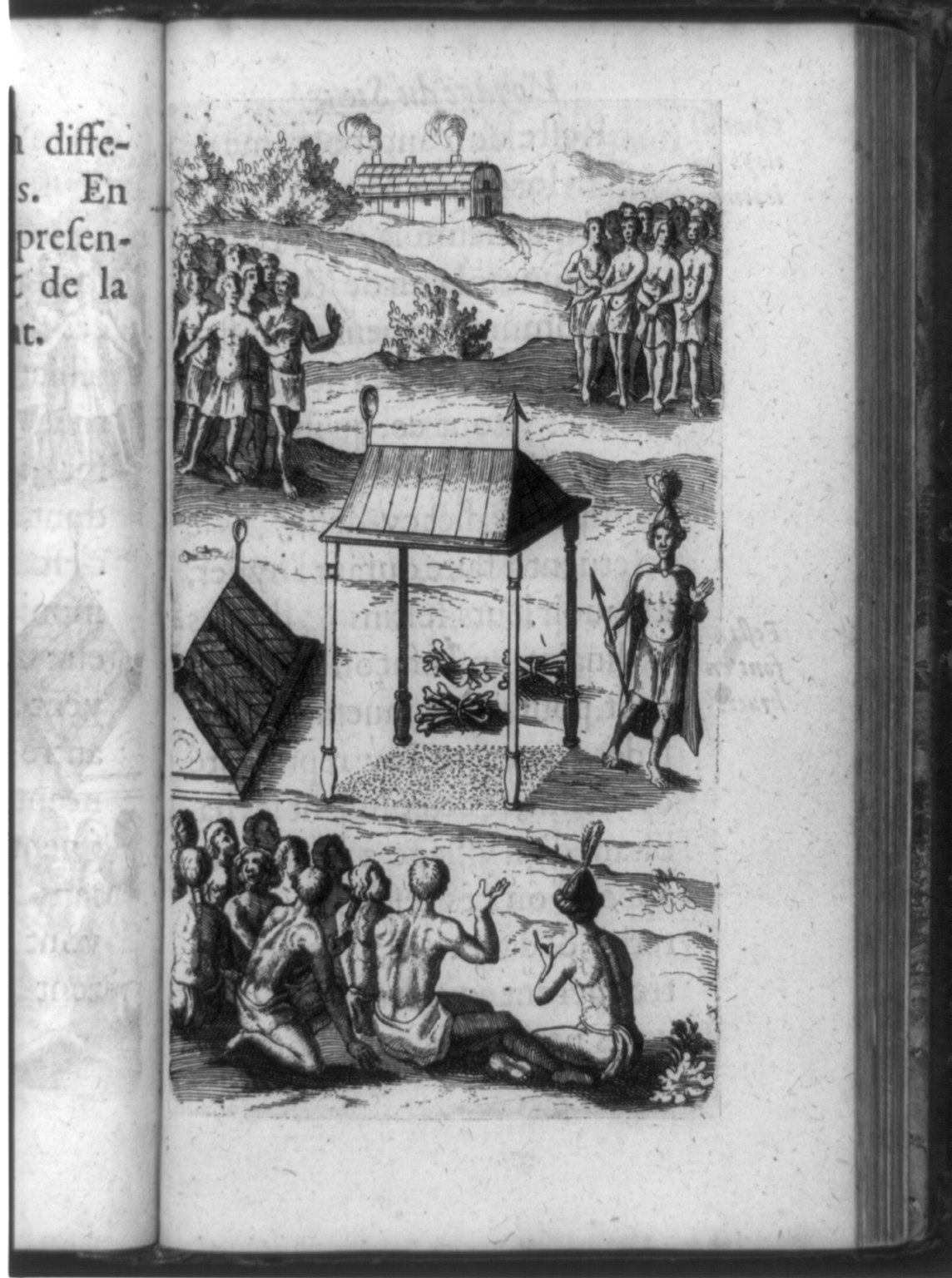
Black-and-white engraving on a book page. Center: a raised wooden platform with a roof and bundles of bones beneath it, with fire below. A feathered, armed man stands at right. Top: a longhouse with smoke and two groups of standing people. Bottom: seated people face a feathered man.Painting

Primary source

Native American Burial or Memorial Ceremony, New France

1619

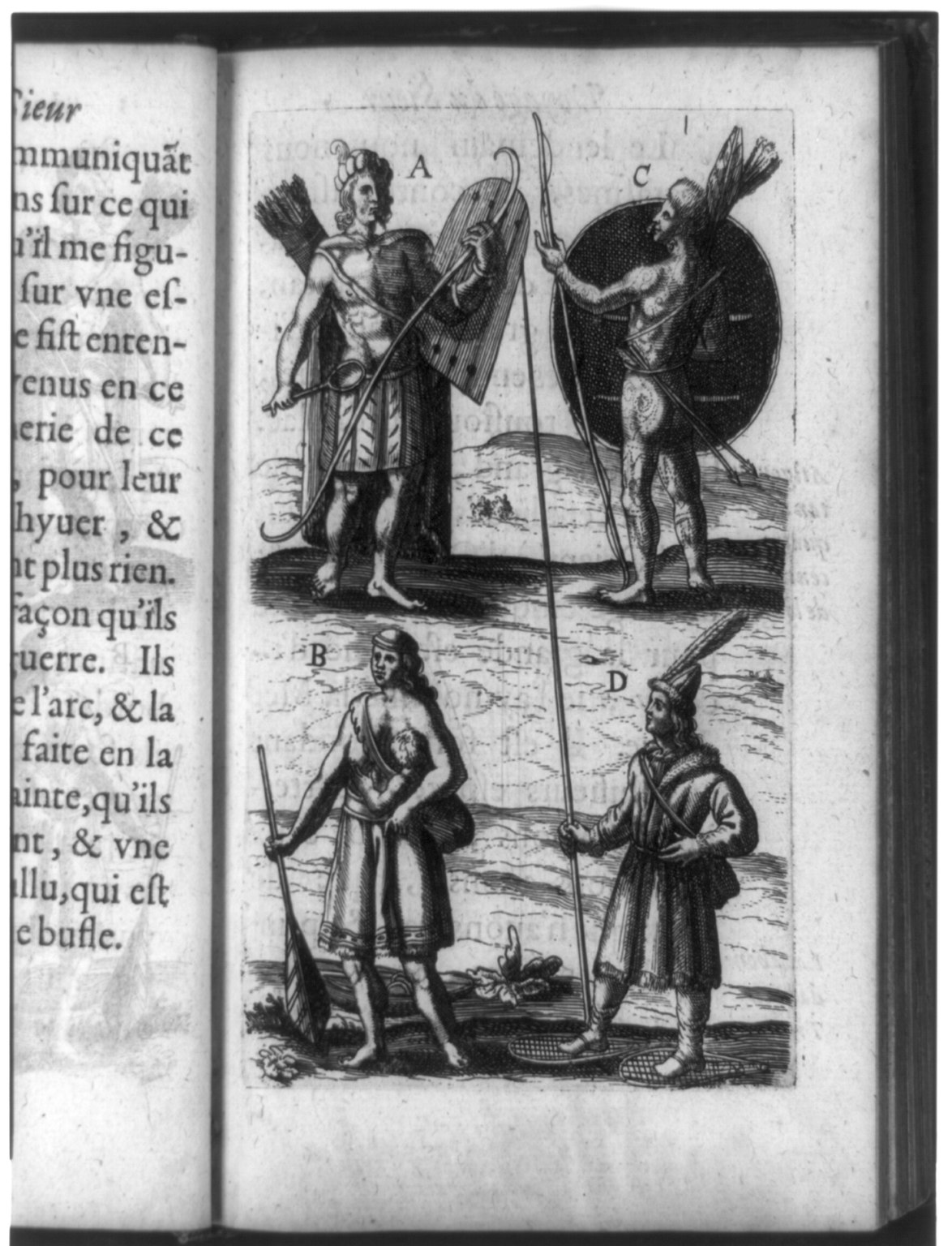
Black-and-white scan of a page from a 1619 French book showing a printed plate with four engraved figures labeled A, B, C, and D. Figures A and C are men in war attire with shields, bows, and arrows. Figure B is a woman with a paddle, and figure D is a man wearing winter clothing and snowshoes. Printed French text appears on the facing page.Painting

Primary source

Four Native American Indians of New France

1619

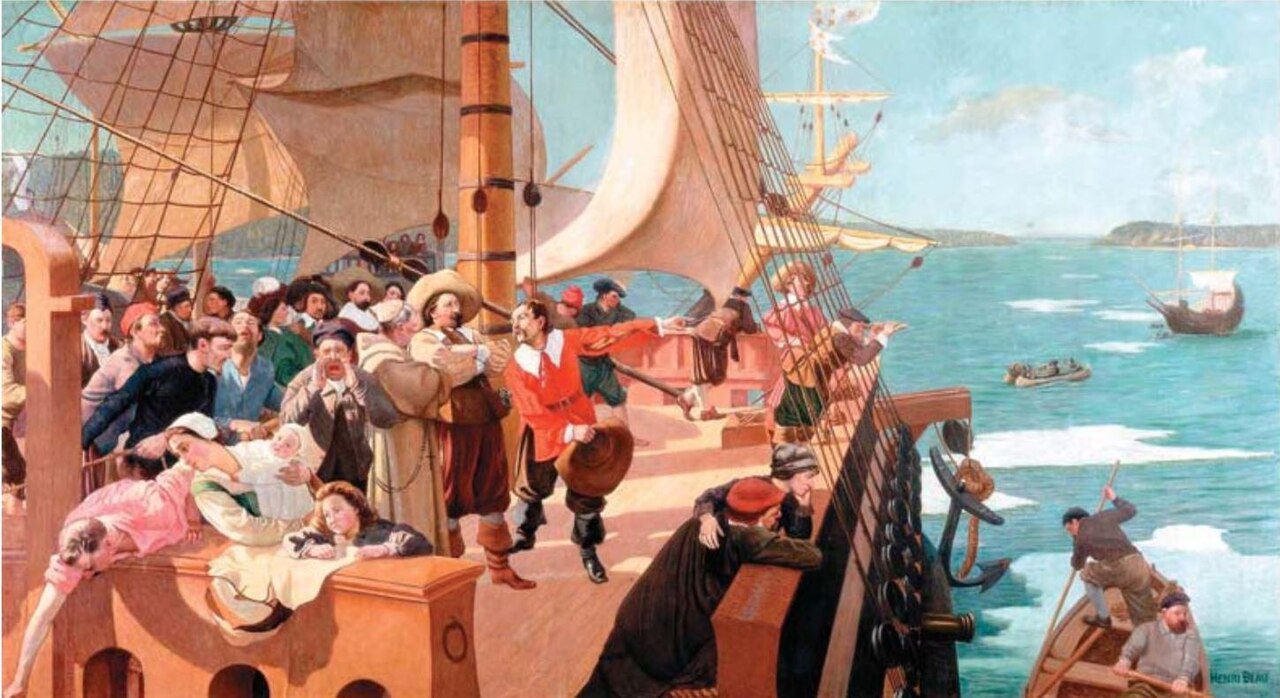
Painting of a 17th-century sailing ship deck crowded with men in period dress, some in hats and cloaks, a figure in a red doublet and hat at center, a sick or injured person lying on the deck at left, and small boats on icy water with a distant ship and shoreline.Painting

Secondary source

L'arrivée de Champlain à Québec

Henri Beau · 1903

Front cover of a dark red book with a gold embossed oval emblem at center, featuring a crown at top, coats of arms, and the text 'Chronicles of Canada Series' around the border. Library barcode labels appear at top left and left edge, and a partial blue label with the word 'nia' is at the lower left.Book

Secondary source

The Founder of New France: a Chronicle of Champlain

Charles W. Colby

Book

Tertiary source

Champlain, Samuel de (Encyclopaedia Britannica, 1911)

1911

Book

Tertiary source

Samuel de Champlain (Catholic Encyclopedia, 1913)

1913

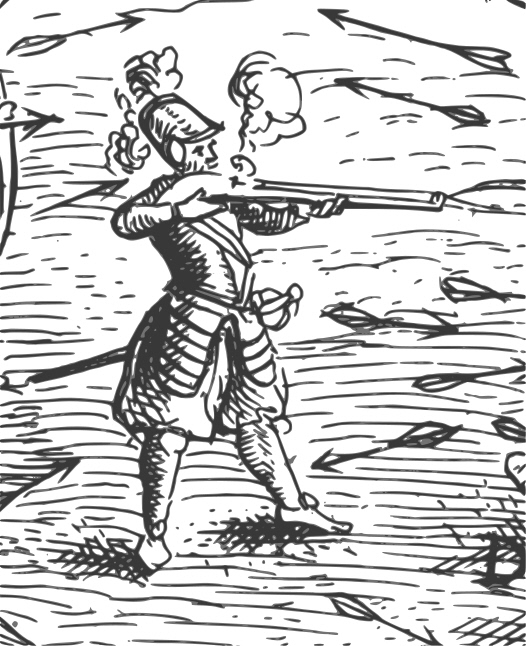
Black-and-white engraved illustration of a helmeted soldier in a cuirass and short breeches firing a long arquebus, with smoke puffing from the muzzle. Arrows fly across a hatched background.Painting

Primary source

Defeat of the Iroquois at Lake Champlain (detail)

Samuel de Champlain · 1613

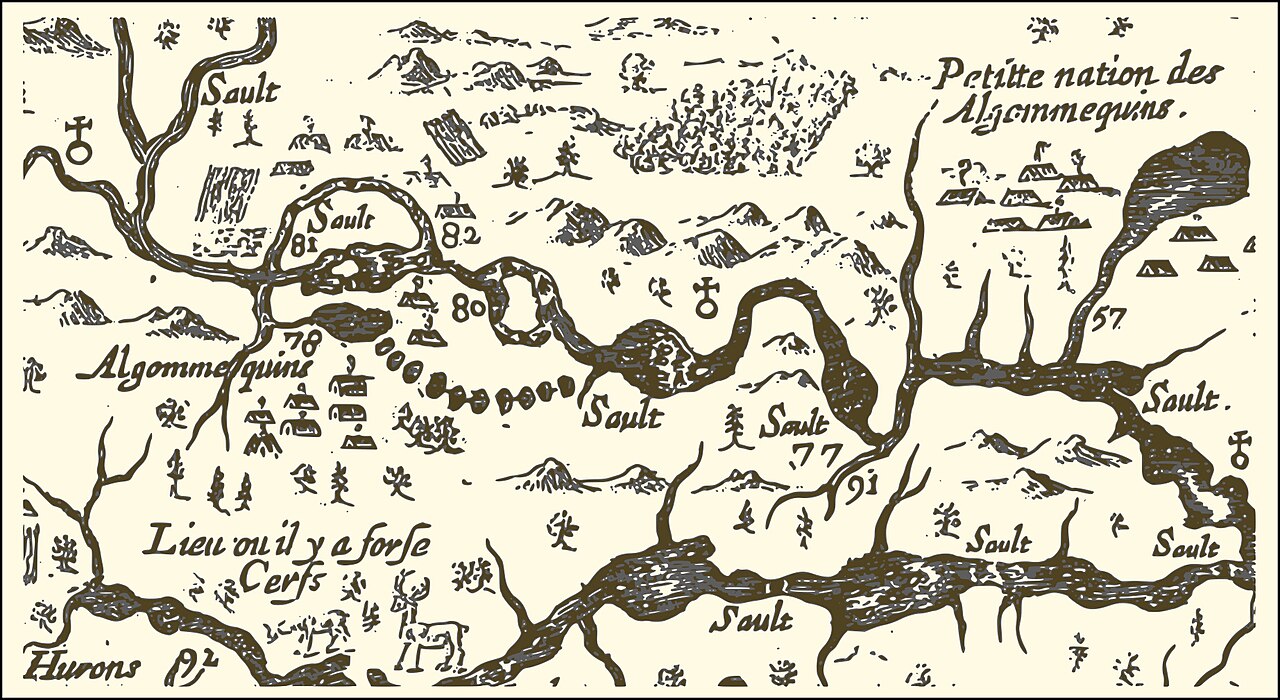
Black-and-white engraved map on cream paper with hand-drawn style features. A river winds across the page with dark shaded areas marked 'Sault' for rapids. Labels include 'Algommequins', 'Petite nation des Algommequins', 'Lieu où il y a forse Cerfs', and 'Hurons'. Small tents, trees, mountains, and animals are drawn, with numbered sites 77, 78, 80, 81, 82, and 91.Document

Primary source

Champlain's 1632 map of the Ottawa River route

Samuel de Champlain · 1632

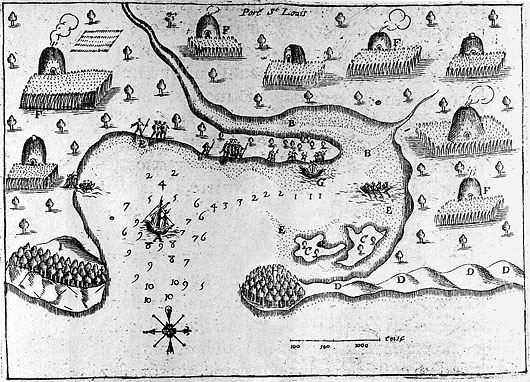
Black-and-white hand-drawn map of a harbor labeled 'Port St. Louis' at top. It shows a winding river, a sounding-marked bay with a ship, small circular and rectangular dwellings with domed roofs, tree symbols, a compass rose at lower left, and a scale bar at lower right.Document

Primary source

Champlain's hand-drawn map of Plymouth Harbor

Samuel de Champlain

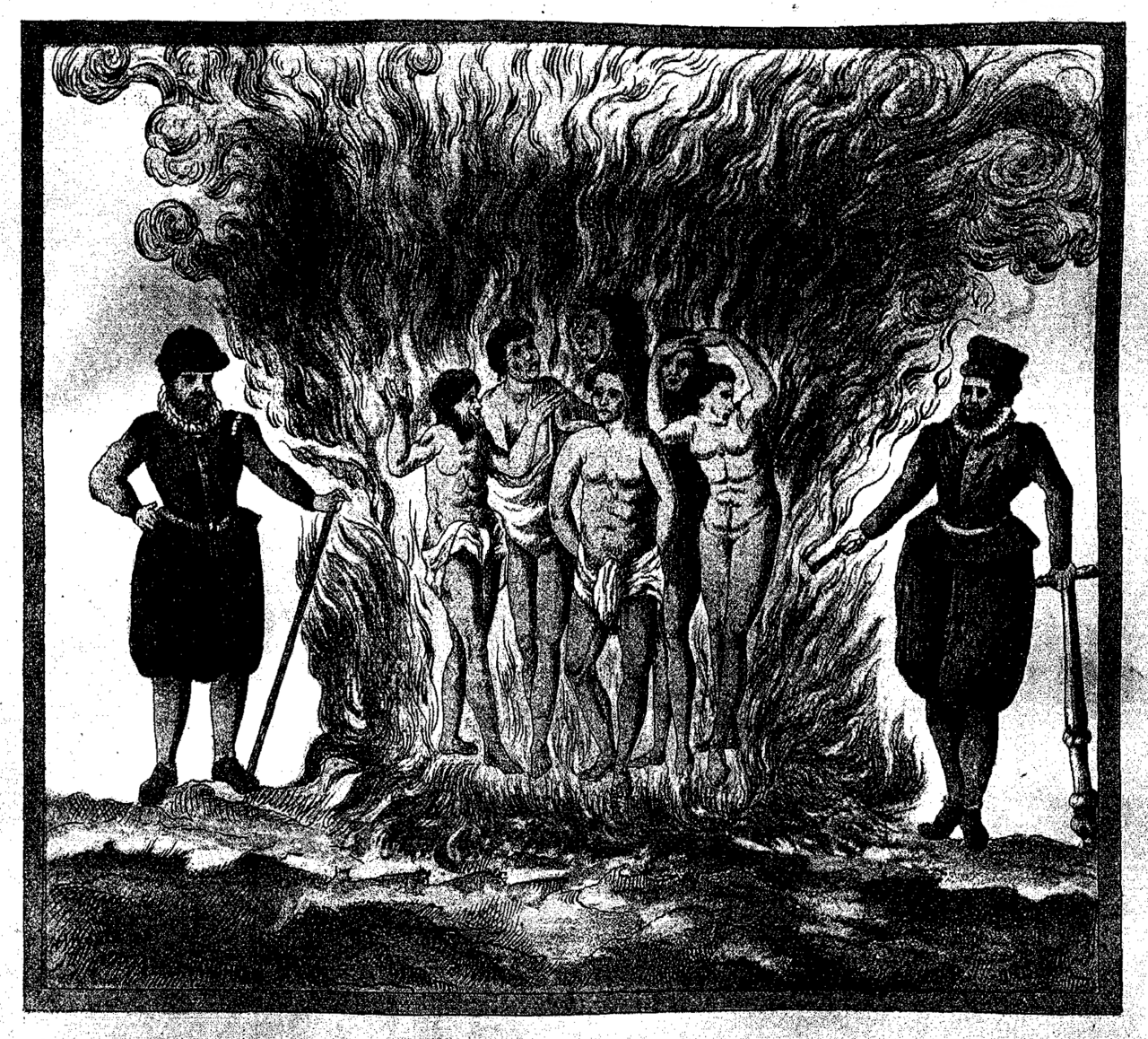
Black and white engraving of a scene: two bearded European men in period dress stand at either side of a large fire, while several naked figures stand bound amid the flames.Painting

Primary source

Oeuvres de Champlain 1870, plate 60

Samuel de Champlain · 1870 (edition)

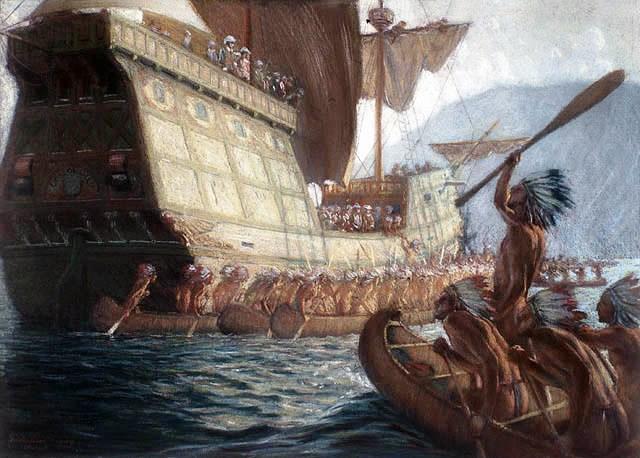
Painting of a large European sailing ship with multiple sails and rows of crew on its deck, beside canoes filled with paddling Indigenous men in feathered headdresses on dark water. A paddler in the foreground raises a paddle.Painting

Secondary source

Samuel de Champlain arrives at Quebec

George Agnew Reid · 1909

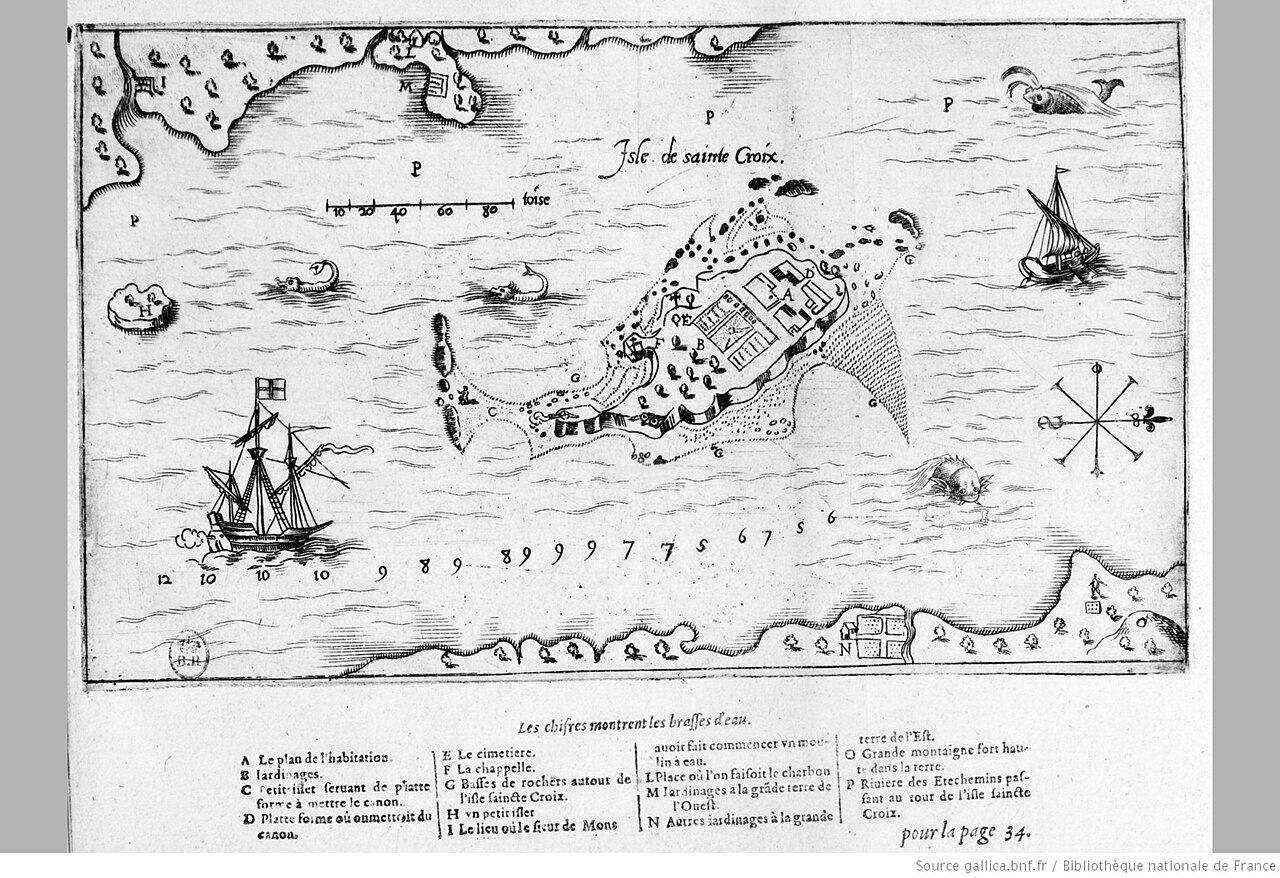
Black and white engraved map titled Isle de sainte Croix, showing an island with buildings, surrounding reefs, ships at sea, a compass rose, a scale bar, sea monsters, and a key of lettered labels below in French.Document

Primary source

Isle Sainte-Croix, 1613 illustration

Samuel de Champlain · 1613 (published; based on 1607 voyage)

Samuel de Champlain, a brief sketchBook

Secondary source

Samuel de Champlain, a brief sketch

Henry Higgins Hurlbut · 1885

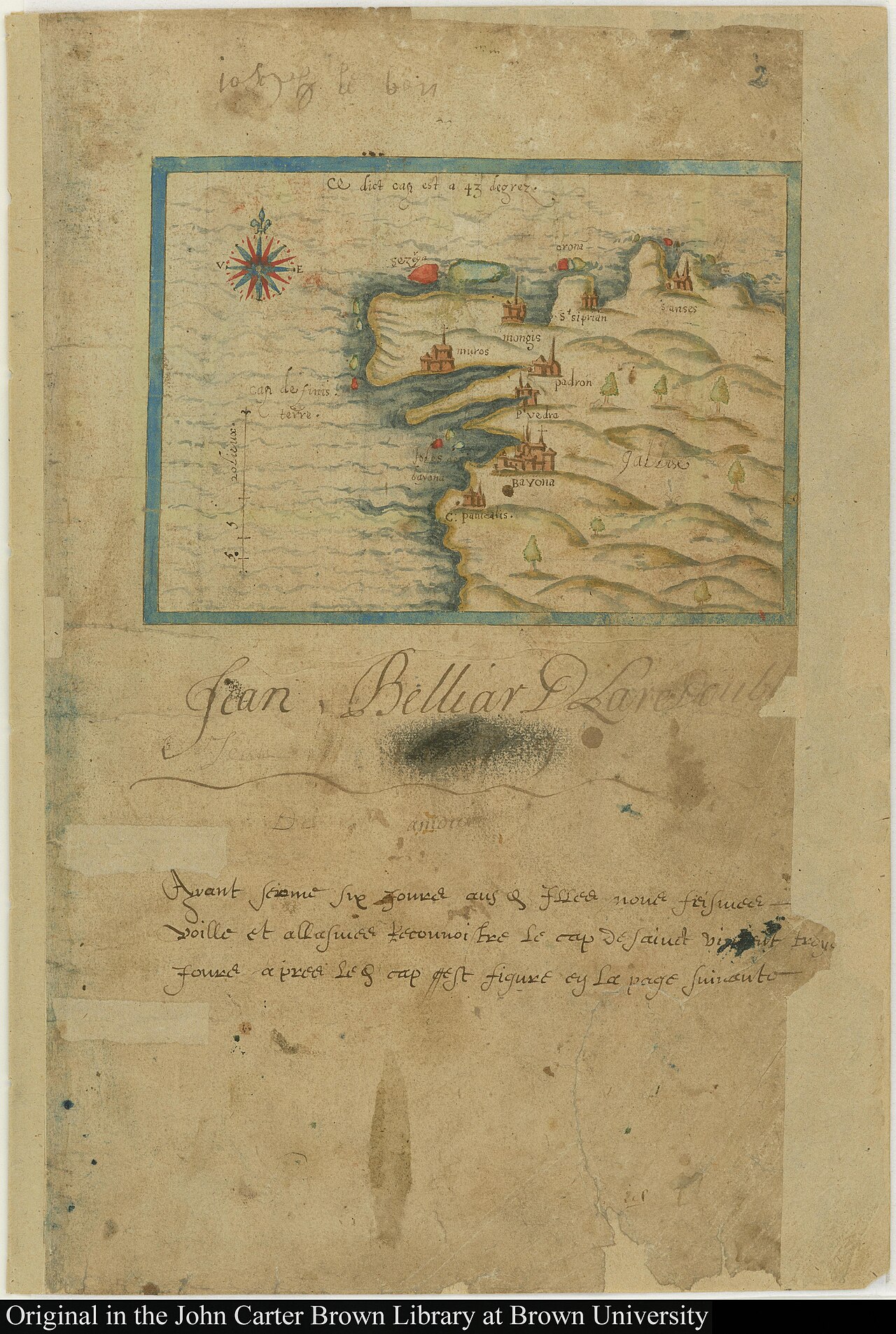
Scan of an aged manuscript page with a small hand-colored map of a coastline in a blue-bordered frame, with a compass rose, place names, and towns drawn as small red-roofed buildings. Below are handwritten French inscriptions with a faded signature and a dark smudge.Document

Primary source

Map of the Galician Coast

Samuel de Champlain (attributed) · circa 1602

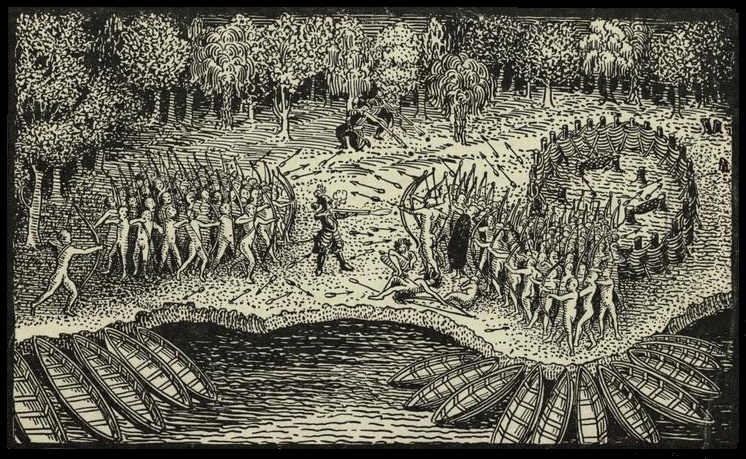
Black and white engraving of a battle scene: two armed groups of figures with bows and shields face each other across a sandy clearing near a river lined with canoes. A fortified palisade stands at right, with trees behind. Figures in the foreground are shooting arrows; a bearded figure in dark clothing stands center.Painting

Secondary source

Engraving of Champlain's 1609 Battle with the Iroquois

Unknown 19th-century engraver, after Samuel de Champlain · 1885 reproduction of a 1609 work

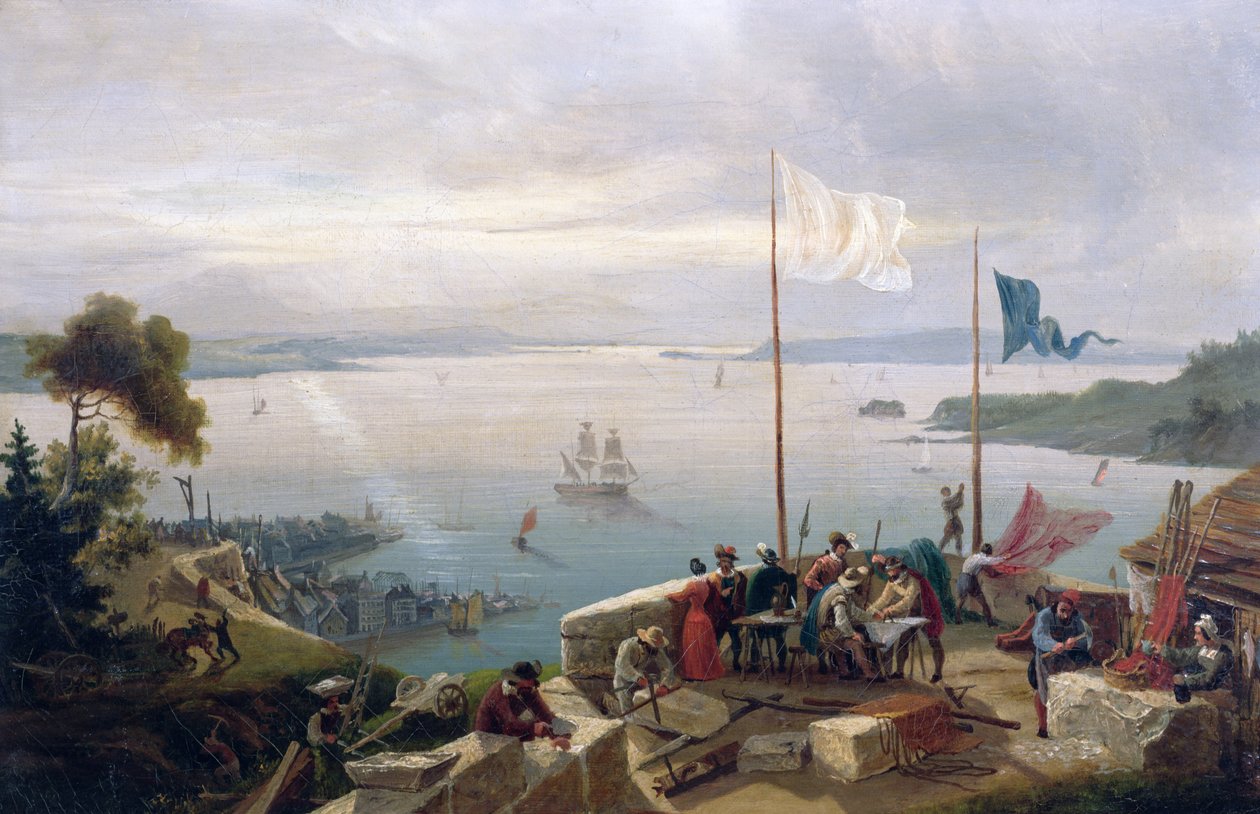
Painting of a coastal scene: on a rocky promontory, men in period dress work with stones and tools, with two flags on tall poles, one white and one blue. Below, a town sits along a river bay where a sailing ship and small boats float under a cloudy sky.Painting

Secondary source

Foundation of Quebec by Champlain

Ambroise Louis Garneray · 1848

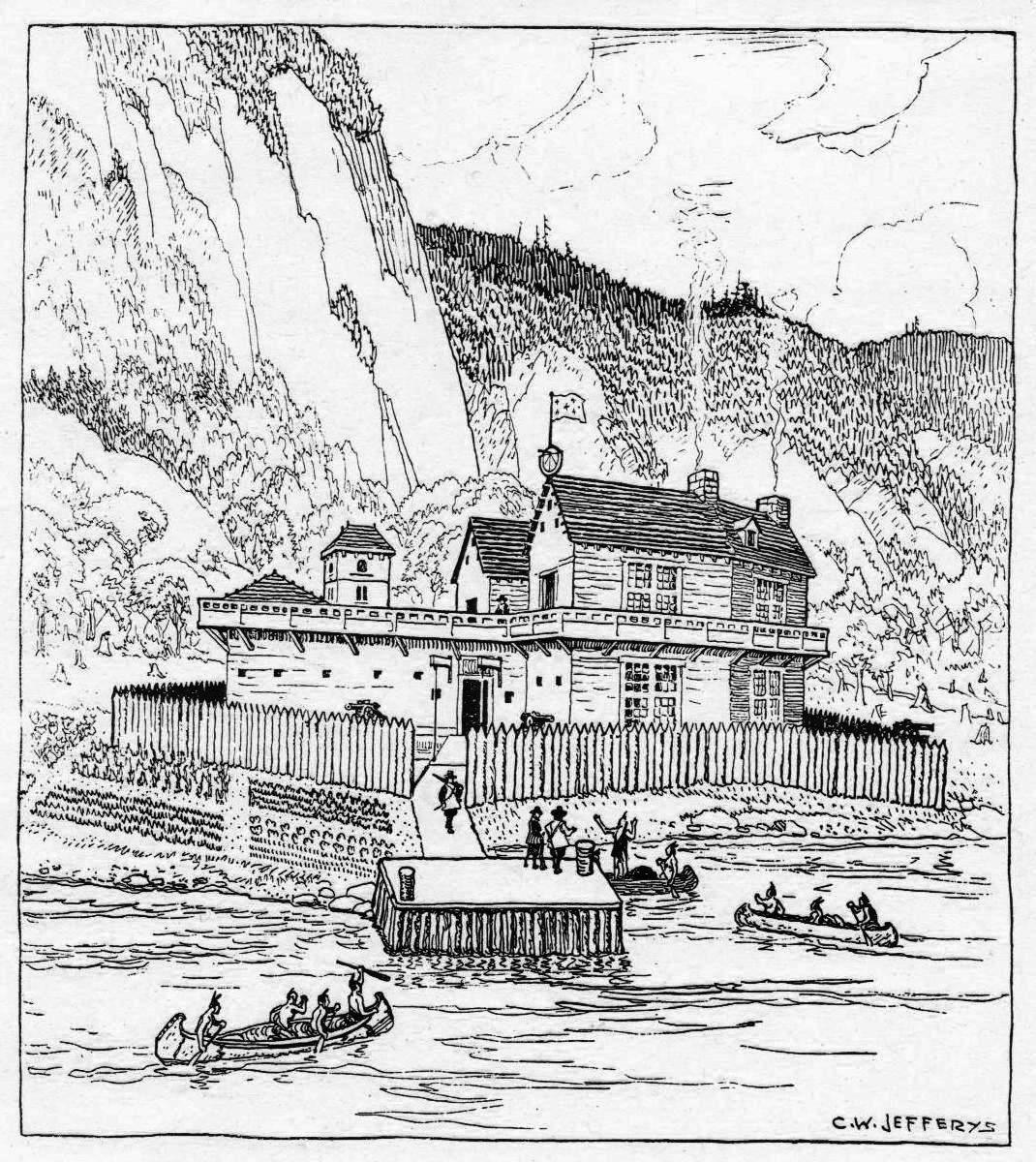
Black and white pen-and-ink drawing of a wooden fort-like settlement with a two-story log building, a watchtower, and a palisade fence on a riverbank beside a cliff. A flag flies on the roof. People stand on a wooden landing, and canoes with paddlers travel on the river. Signed C.W. Jefferys at lower right.Painting

Secondary source

Quebec Settlement, 1608

Charles William Jefferys · 1925

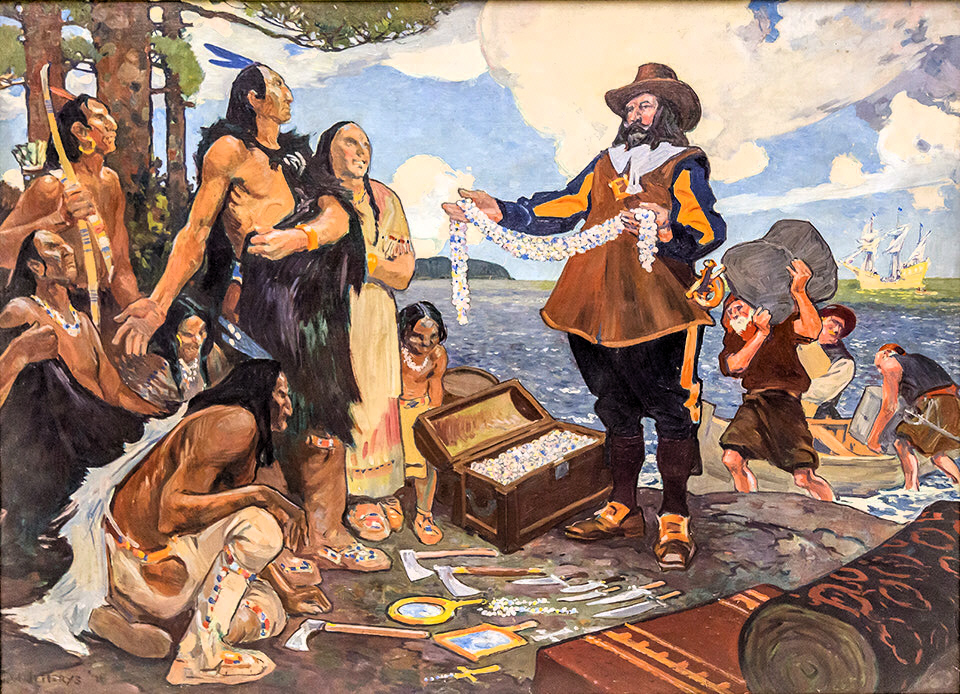
Painting of a bearded European man in a wide-brimmed hat and blue and orange doublet holding a strand of white beads, standing before a chest of beads while Indigenous people in fringed clothing look on. Men carry bundles from a boat, and a sailing ship is on the water.Painting

Secondary source

Champlain Trading with Indians

Charles William Jefferys · 1911

Front cover of a dark red bound book with a small cream library call-number label on the lower left reading F 1030 .J M36. The cover has a blind-stamped border and corner decorations, with no visible title text.Book

Secondary source

Expedition of Champlain Against the Onondagas in 1615

Orsamus Holmes Marshall · 19th century

Book

Primary source

The Jesuit Relations and Allied Documents, Vol. 1: Acadia 1610-1613

Jesuit missionaries · 1610-1613

Document

Secondary source

Book Review Digest 1905: review of Dionne's Samuel de Champlain

1905

Engraved portrait of a man with shoulder-length wavy hair, a thin mustache and a pointed goatee, wearing a dark doublet with a broad white collar and small buttons. Black and white line engraving on a white background.Photograph

Secondary source

Page 198 of Sulte's 1882 History of Canada

1882

Names That Live in Catholic HeartsBook

Secondary source

Names That Live in Catholic Hearts

Anna T. Sadlier · 1882

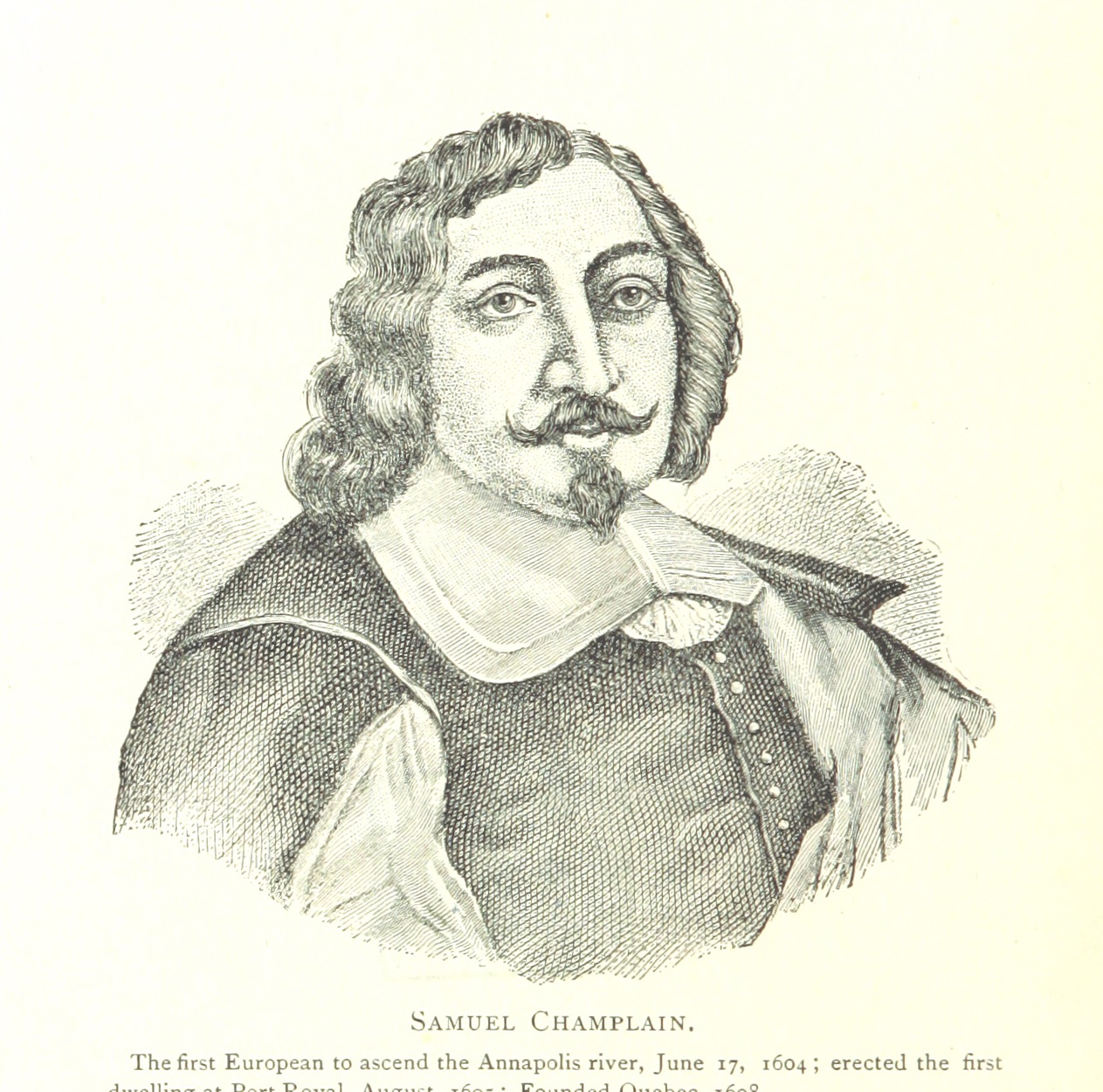
Black and white engraved portrait of a man with shoulder-length wavy hair, a curled mustache and pointed beard, wearing a dark doublet with a wide white collar and a cloak. Caption below reads Samuel Champlain, followed by a line about his 1604 voyage.Painting

Secondary source

Samuel Champlain portrait, A Short History of Annapolis Royal

1897

Book

Secondary source

Tourist's Maritime Provinces, Chapter 9 (1915)

1915

Book

Secondary source

Woman of the Century: Harriette Persis Hurlbut (1893)

1893

Want the full shelf? Chat with Samuel de Champlain in the app and open the Sources panel — every quote links back to the original.

Use Samuel de Champlain in class

1 collection

A ready-made collection from the Humy team that features Samuel de Champlain. Preview it, then try it free.

Trusted by educators worldwide

Conversations
375,000+
Real exchanges between students and historical figures
Messages exchanged
4,142,000+
Across every figure, classroom and language
Historical figures
100,000+
Each informed by a curated biography and selected sources
Languages supported
50+
From English and Spanish to Arabic and Korean

Paying customers

Used by 98 schools and universities

Partner school logo
Tecnológico de Monterrey logo
Hyper Island logo
Partner school logo
Chambersburg Area School District logo
Broward County Public Schools logo
Nebo School District logo
National Louis University logo
South Florida PBS logo
Punahou School logo
University of Wisconsin–River Falls logo
Partner school logo
Partner school logo
Archbishop Mitty High School logo
Kingsburg High School logo
Norwalk Public Schools logo
Partner school logo
Connections logo
Partner school logo
Moore Public Schools logo
Partner school logo
Partner school logo
Partner school logo
Partner school logo
Robbinsville Public Schools logo
Partner school logo
Partner school logo
Partner school logo
Tecnológico de Monterrey logo
Hyper Island logo
Partner school logo
Chambersburg Area School District logo
Broward County Public Schools logo
Nebo School District logo
National Louis University logo
South Florida PBS logo
Punahou School logo
University of Wisconsin–River Falls logo
Partner school logo
Partner school logo
Archbishop Mitty High School logo
Kingsburg High School logo
Norwalk Public Schools logo
Partner school logo
Connections logo
Partner school logo
Moore Public Schools logo
Partner school logo
Partner school logo
Partner school logo
Partner school logo
Robbinsville Public Schools logo
Partner school logo
Partner school logo

What educators are saying

“We enjoyed the program last year and used it frequently.”
“My students say it’s a welcome change of pace. I’m not a fan of the “sage on the stage” model, so I try to incorporate research-oriented and self-paced activities. With Humy, students have to take charge of their learning. They’ve become more adept at critical thinking, forming better questions, and improving their reading comprehension. The interview feature has been my go-to tool. I create assignments where students must ask historical figures a set number of questions, then summarize the responses to ensure they’re truly absorbing the material. This approach lets them actively explore the past rather than passively consuming information.”
“Humy has helped me bring historical figures, sometimes long past, to life. When my students interact with these figures in real-time, it eliminates some of the perceived “ancient” characteristics of my curriculum. This has shifted my students’ thinking away from viewing history as abstract or irrelevant. Real-time interactions make historical figures relatable, even allowing students to ask off-topic questions that help put historical lives in a more relevant context for 13-year-olds. The feature I use the most is the interview feature. After teaching a topic, most recently Gandhi and Joan of Arc, I have the students ask pointed, focused questions. We practice good conversation techniques beforehand, teaching them to listen (or read) carefully and formulate thoughtful follow-up questions rather than just interrogating. It helps students practice effective conversation skills.”

FAQ

Frequently asked questions

Who is Samuel de Champlain?
French explorer and cartographer, known as the "Father of New France. On Humy.ai you can chat with an AI version of Samuel de Champlain that draws on a short biography and 82 historical sources during the conversation — by text or voice, in 42 languages.
Is Samuel de Champlain AI free?
Samuel de Champlain is part of Humy's full library of more than 100,000 figures, which comes with a paid plan. A free account (no credit card) includes 20 messages a month with the free library's figures, so you can try how the conversations work first.
What sources does the Samuel de Champlain AI use?
It draws on a short biography and 82 historical sources (paintings, books and documents), including “Les Voyages du sieur de Champlain”, “Carte geographique de la Nouvelle Franse” and “Des Sauvages, ou voyage de Samuel Champlain”. Each source has its own page on Humy.ai.
How historically accurate is the AI version of Samuel de Champlain?
Each figure uses a short biography and a small set of selected historical sources as context (retrieval-augmented generation), so answers stay closer to known material than the model's general knowledge alone. It isn't a citation-grade research tool — like any LLM, the AI can get details wrong or extrapolate. Treat it as a strong starting point for inquiry and cross-reference important claims.
Can I talk to Samuel de Champlain by voice?
Yes. In addition to text chat, you can call Samuel de Champlain and hear their voice respond in real time — useful for auditory learners, interview practice and Socratic dialogue.
Is Humy.ai safe and compliant for schools?
Yes. Humy.ai is used by more than 100 schools, universities and organisations. The platform is FERPA- and GDPR-aligned, supports SSO, and offers an IT-approval pack tailored for school procurement teams.

Cross-reference Samuel de Champlain

Like any LLM, the AI version of Samuel de Champlain can get details wrong. Open one of these sources in a new tab to verify what you’ve read.

Ready when you are

Start chatting with Samuel de Champlain now.

20 messages free · No credit card · Available in 50+ languages.