


Primary sourcePainting1610 (published 1619)
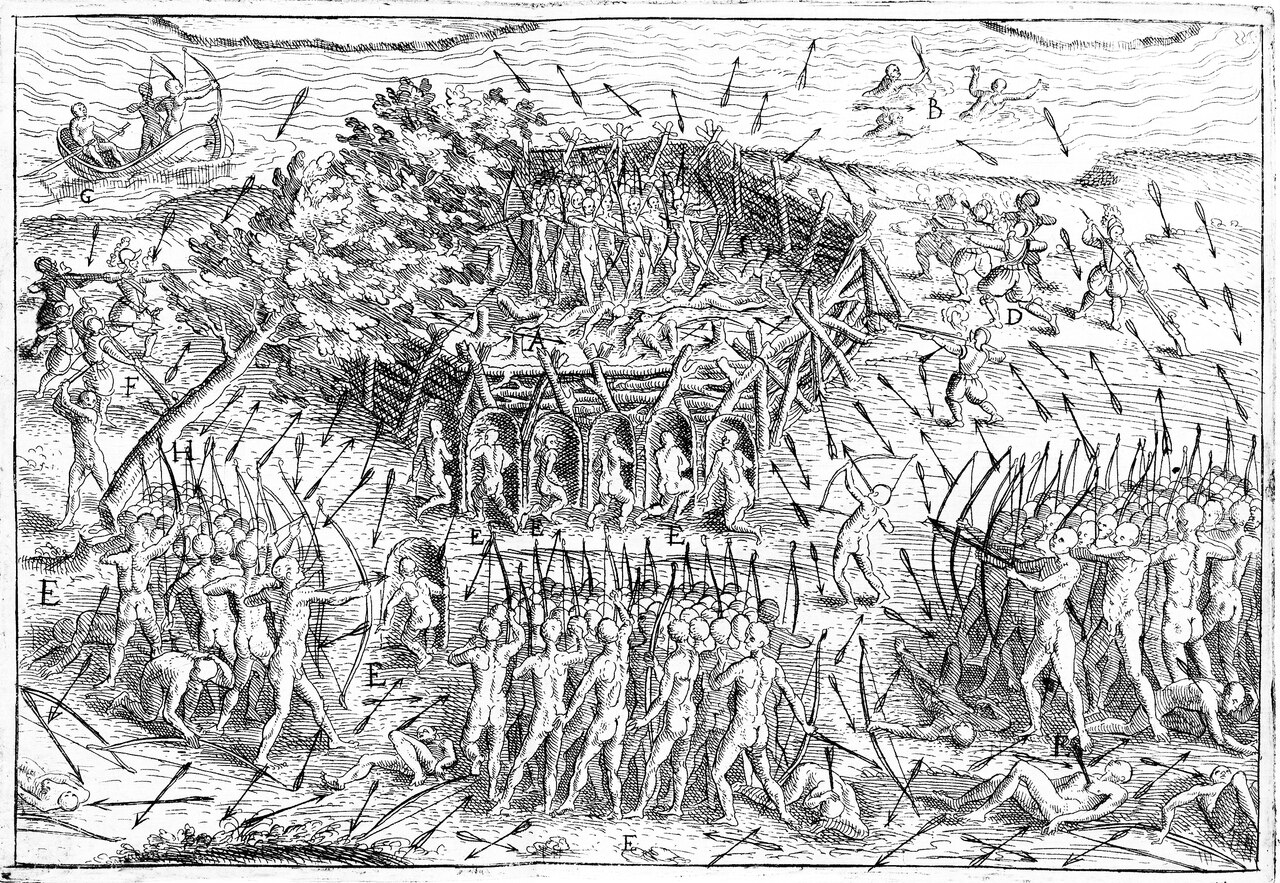
Attaque d'un fort Iroquois, 1610
Samuel de Champlain · 1610 (published 1619)
Champlain's engraving of a 1610 battle at the Richelieu River, showing him and French allies fighting alongside Indigenous allies against an Iroquois fort.
Drawn by Champlain, this engraving depicts his own participation in an armed attack alongside Indigenous allies in 1610.
About this source
What it is
This engraving was made by Samuel de Champlain to depict a battle in June 1610 at the mouth of the Richelieu River, where he and five Frenchmen joined Indigenous allies in attacking an Iroquois fort.
Why it matters
The image shows how Champlain's small group of armed Frenchmen provided firepower that reinforced his Indigenous allies' forces, a key factor in early colonial warfare in North America. It illustrates the alliances and violence that shaped Champlain's exploration and the broader fur trade rivalries of the time.
Look closer
- What does the placement of the French and their allies in the image suggest about their roles in the battle?
- Why might Champlain have wanted this scene recorded and published?
- What does the image not show about the perspectives of those being attacked?
This painting is part of the curated material that grounds the AI version of Samuel de Champlain on Humy.ai — when students ask about related events, the AI can quote it and cite it.
More Samuel de Champlain sources
Meet the AI Samuel de Champlain → Book
Primary source
Les Voyages du sieur de Champlain
Samuel de Champlain · 1613
 Document
Primary source
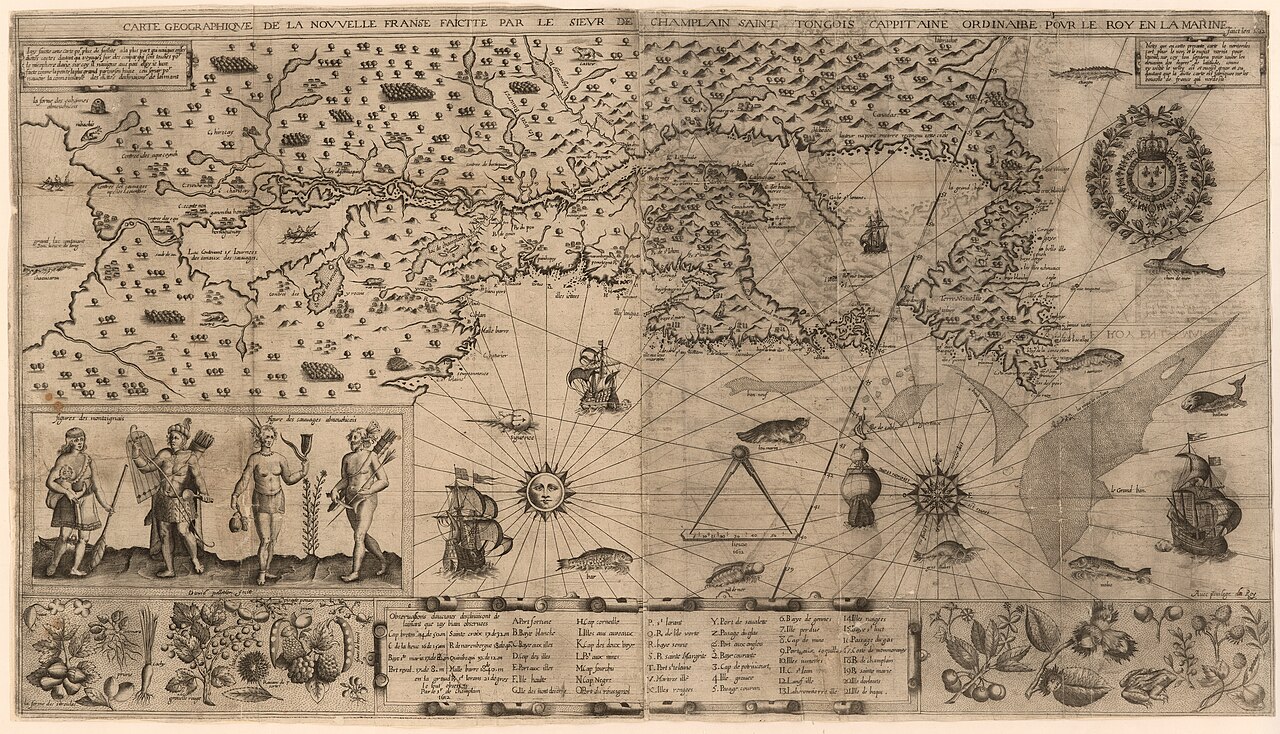
Carte geographique de la Nouvelle Franse
Samuel de Champlain · 1612
 Book
Primary source
Des Sauvages, ou voyage de Samuel Champlain
Samuel de Champlain · 1603
 Document
Primary source
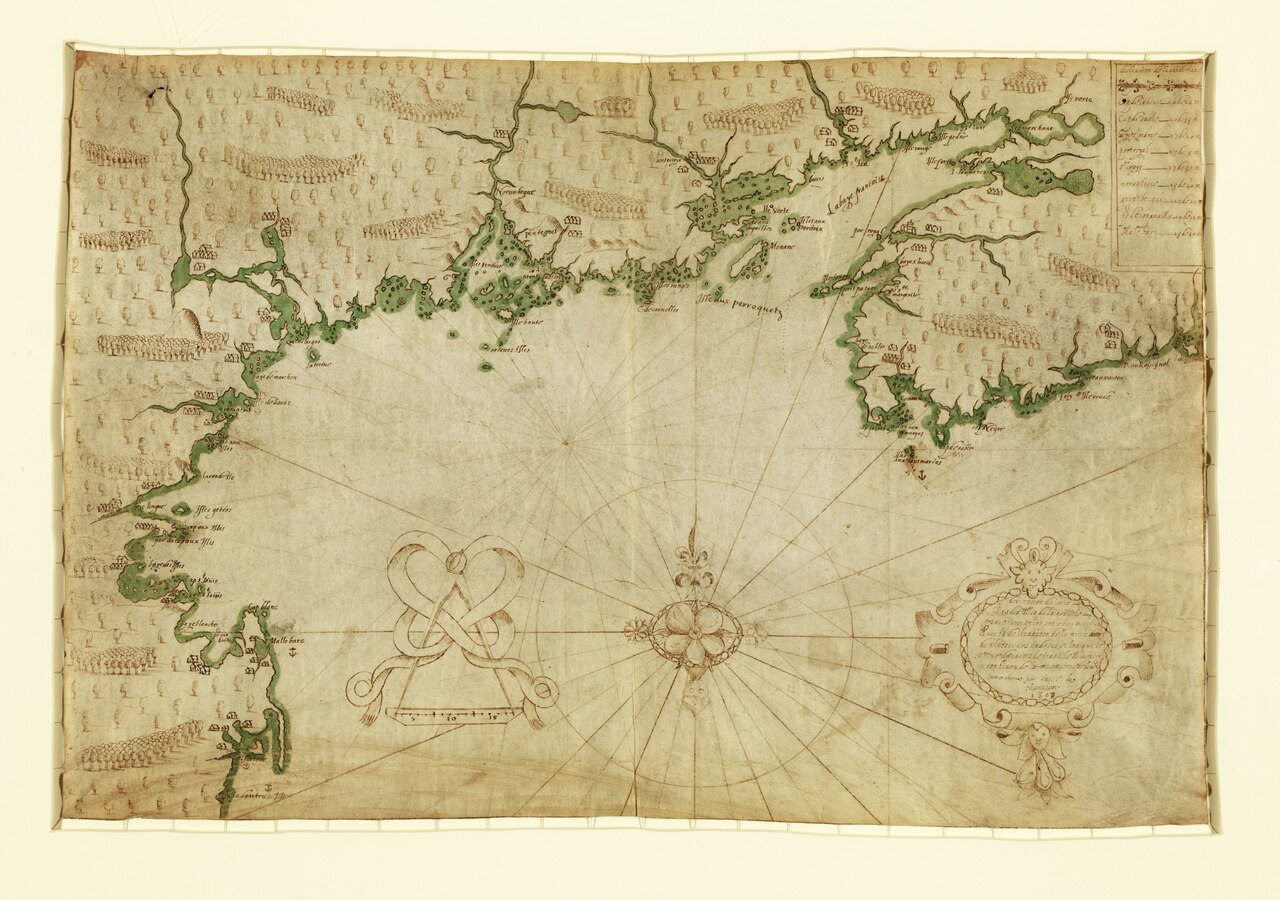
Descripsion des costs, pts., rades, Illes de la Nouuele France
Samuel de Champlain · 1607
 Document
Primary source
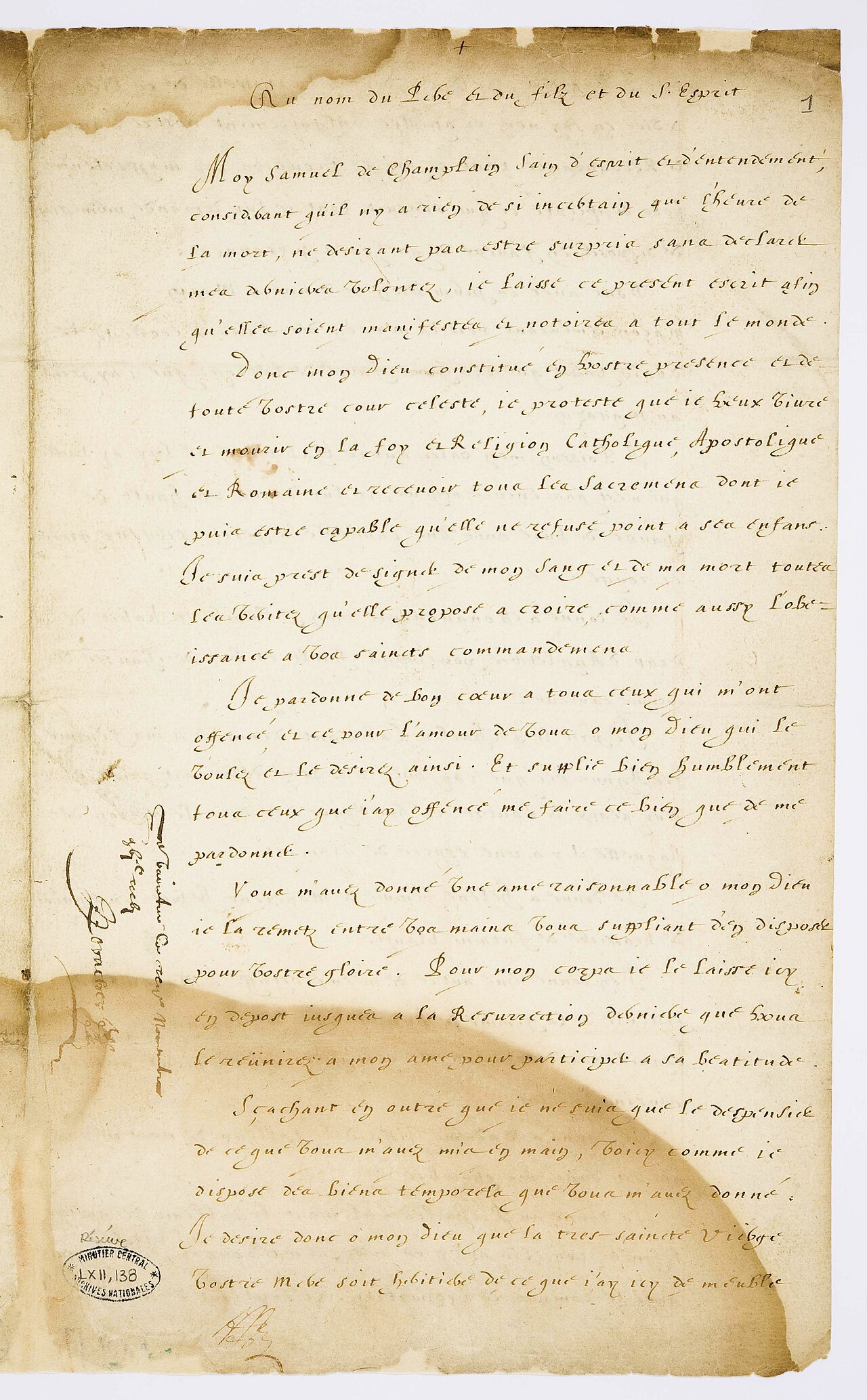
Testament de Samuel Champlain
Samuel de Champlain · 17 November 1635
Ready when you are
Start chatting with Samuel de Champlain now.
20 messages free · No credit card · Available in 50+ languages.