


Primary sourceBook23 November 1644
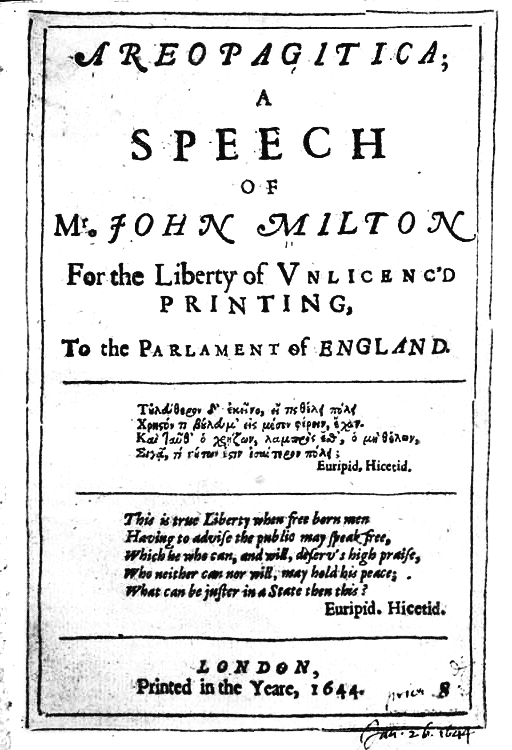
Areopagitica
John Milton · 23 November 1644
Milton's 1644 pamphlet attacking government licensing of the press is one of history's most influential defences of free expression.
Milton wrote this pamphlet, his most famous prose work, arguing against censorship of the press.
Free Humy account · No credit card · 120,912 sources to read
About this source
What it is
Areopagitica is a prose pamphlet written by John Milton and published in 1644, during the English Civil War. It argues against Parliament's Licensing Order of 1643, which required books to be approved by censors before publication.
Milton distributed it himself as an unlicensed pamphlet, defying the very censorship rule he was attacking.
Why it matters
Milton had personally suffered censorship over his writings on divorce, and he wrote this work partly in protest at the treatment of political agitator John Lilburne. It drew on Greek and biblical examples to argue that truth is better served by open debate than by government control, and it later became a foundation for modern arguments about freedom of the press.
Look closer
- Why would Milton publish a pamphlet against censorship without getting it licensed?
- What personal experiences might have shaped Milton's views on this issue?
- How does Milton use ancient Greek and Roman examples to support an argument about his own time?
This book is part of the curated material that grounds the AI version of John Milton on Humy.ai — when students ask about related events, the AI can quote it and cite it.
More John Milton sources
Browse all 91 →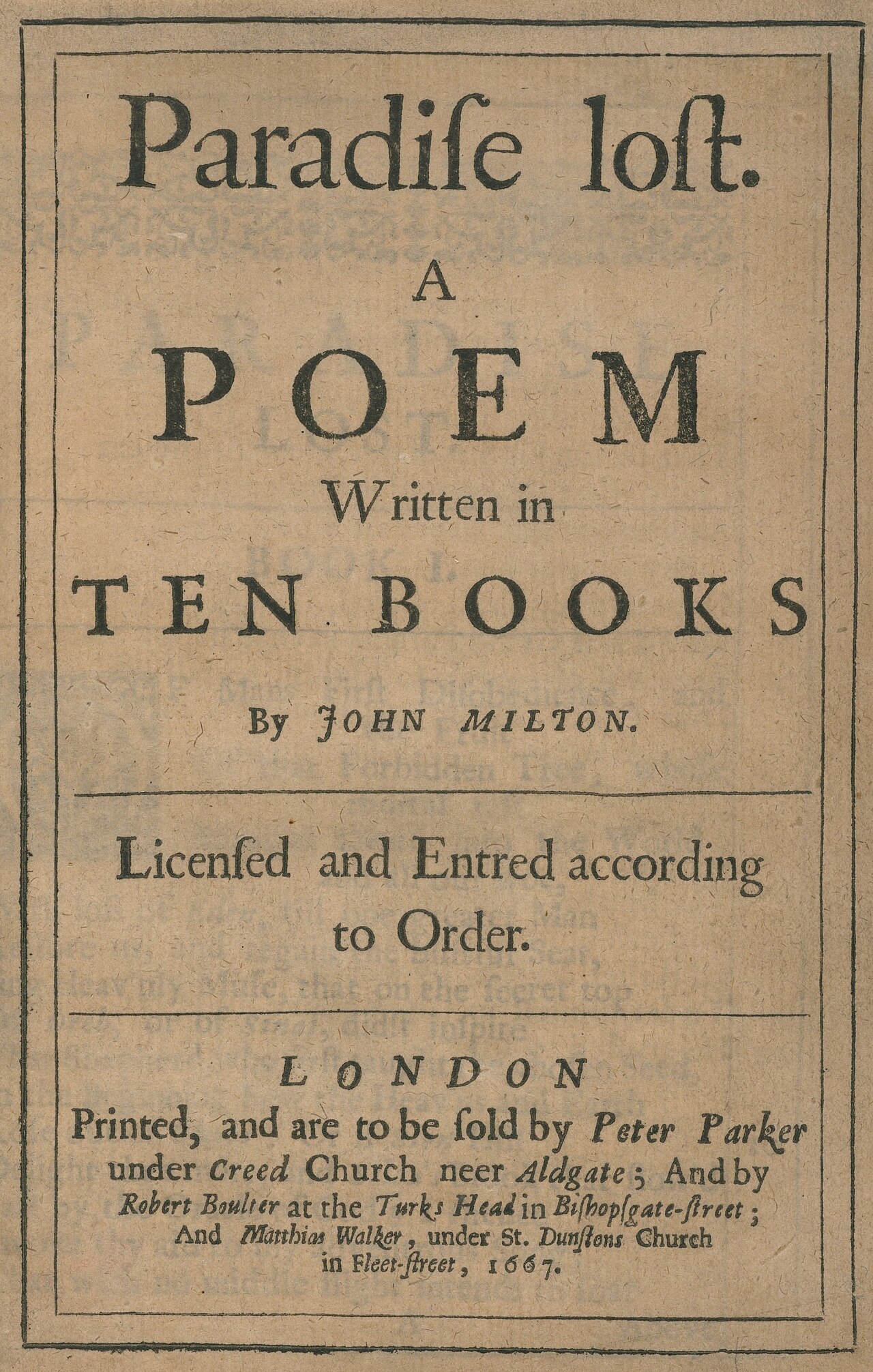 Book
Primary source
Paradise Lost
John Milton · 1667
Primary source
When I Consider How My Light is Spent
John Milton · c. 1655
 Painting
Primary source
Portrait of John Milton
Unknown painter · 1629
 Book
Secondary source
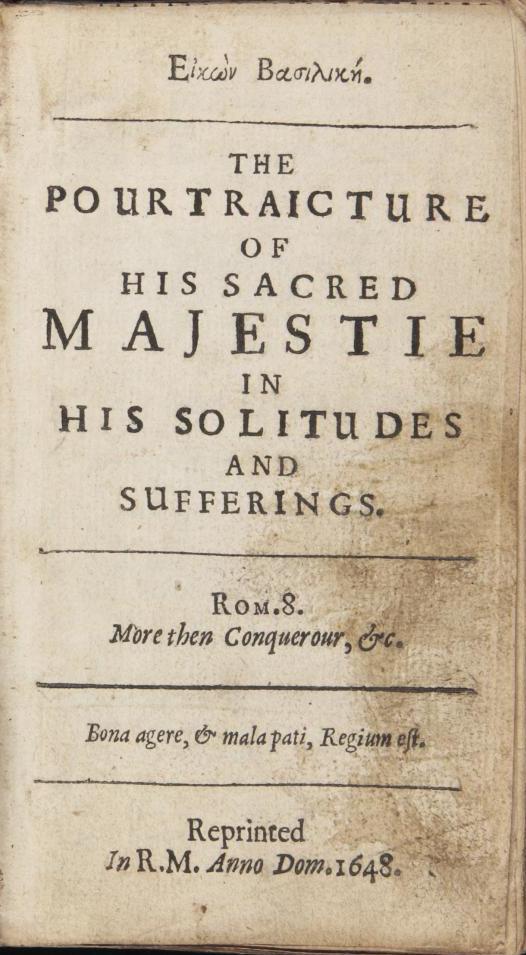
Eikon Basilike
Attributed to Charles I (possibly John Gauden) · 1649
Free account
Read every John Milton source
Sign up free →
Ready when you are
Start chatting with John Milton now.
20 messages free · No credit card · Available in 50+ languages.