


Secondary sourceArtifact18th century
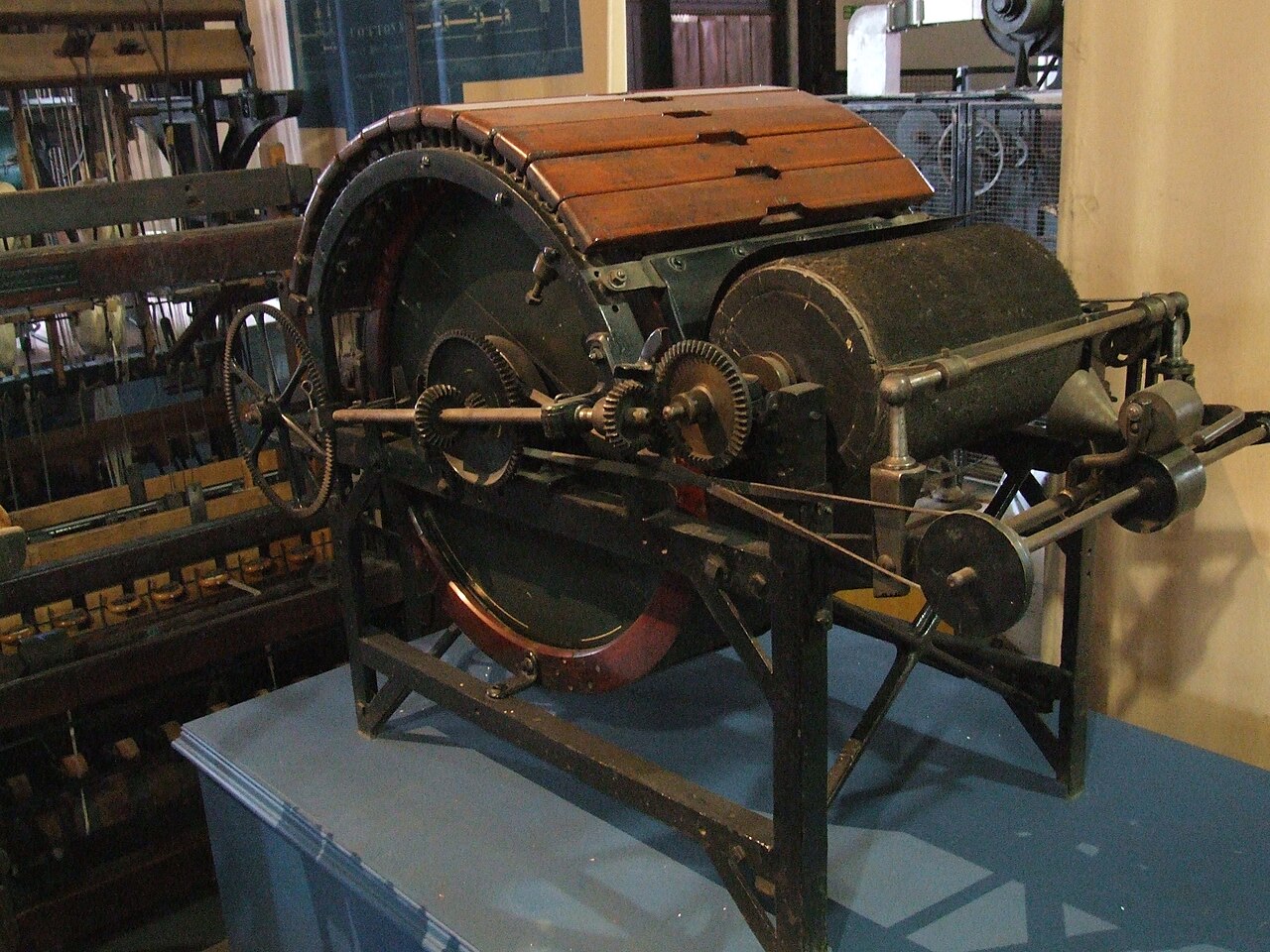
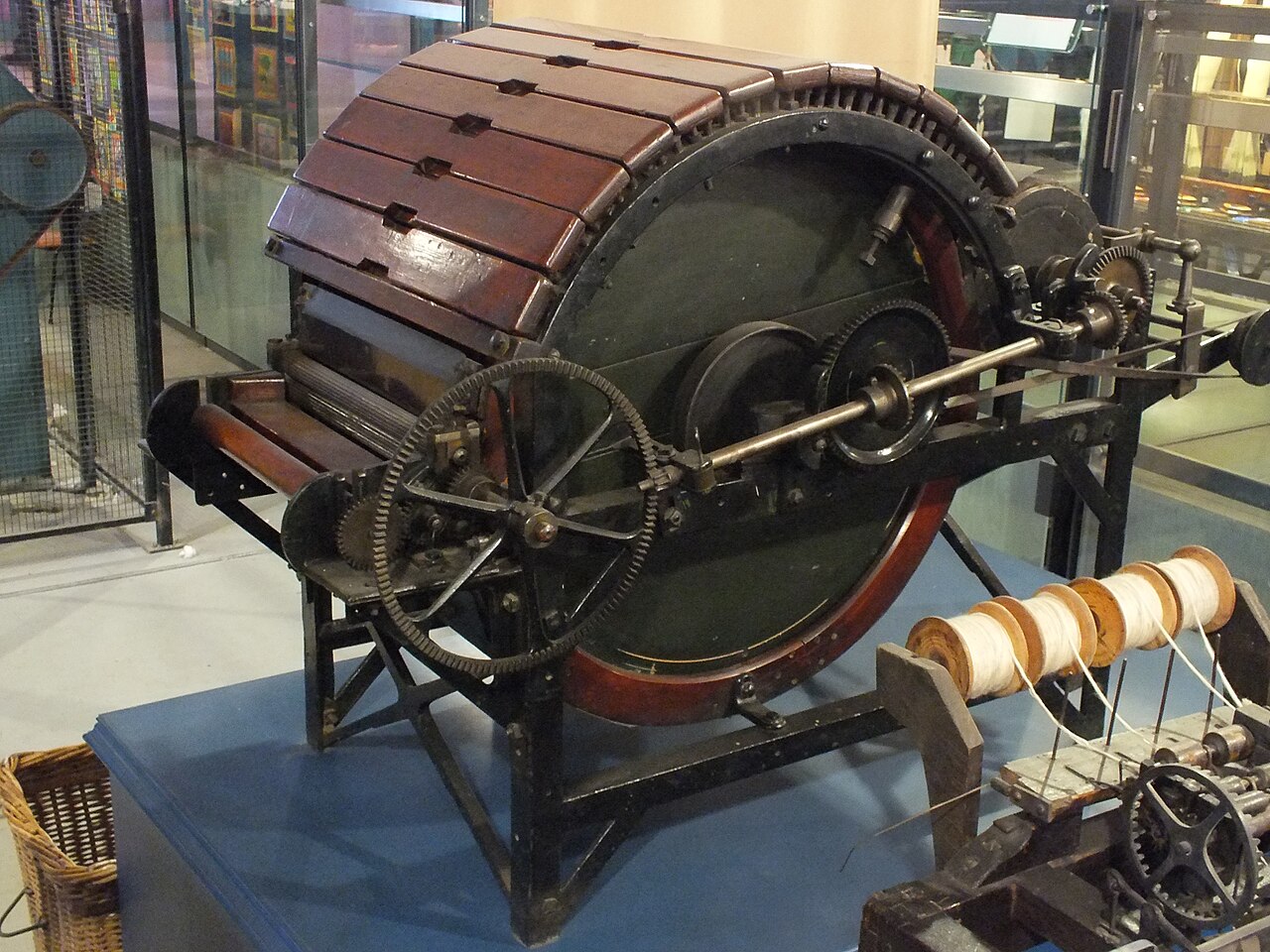
Arkwright's Carding Engine, Museum of Science and Industry
18th century
An 18th-century carding engine, a machine type invented by Richard Arkwright, preserved at a Manchester museum.
This carding engine represents the type of textile machinery Arkwright invented and helped bring into widespread use.
About this source
What it is
This photograph shows an eighteenth-century carding engine, a wooden and iron machine with a large cylinder, gears, and belt drive, on display at the Museum of Science and Industry in Manchester. The museum holds textile machines that show the whole cotton-mill process.
Why it matters
Carding engines like this were part of the mechanized textile process Arkwright helped develop. His inventions, including machines like this, transformed how cotton was processed, moving work from hand labor to factory machinery, and helped launch the Industrial Revolution.
Look closer
- What parts of the machine can you identify, and what job might each part do?
- Why do museums preserve old machines like this one instead of just describing them in books?
- What does this object not show about the workers who operated such machines?
This artifact is part of the curated material that grounds the AI version of Richard Arkwright on Humy.ai — when students ask about related events, the AI can quote it and cite it.
More Richard Arkwright sources
Meet the AI Richard Arkwright →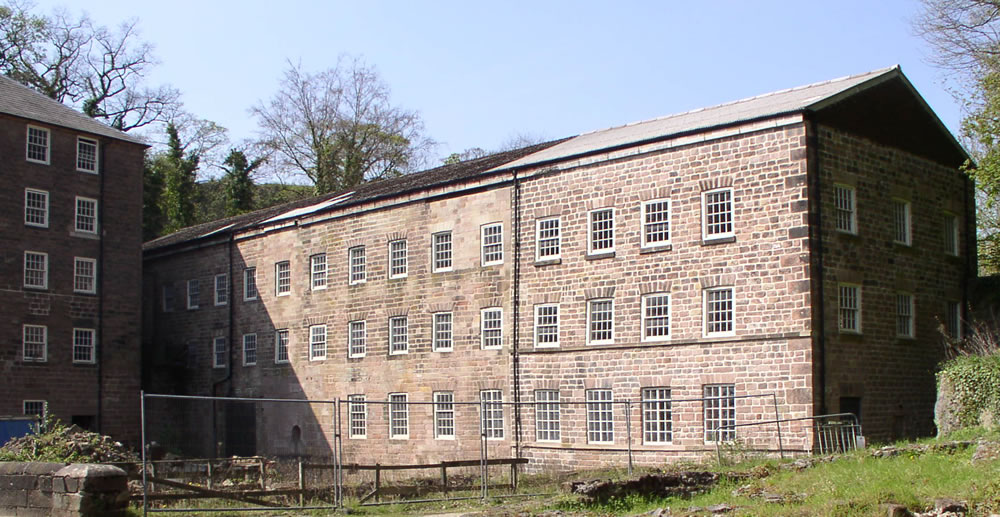 Artifact
Primary source
Cromford Mill
Richard Arkwright · 1771
 Painting
Primary source
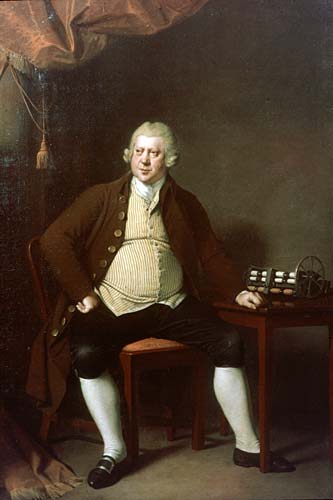
Portrait of Richard Arkwright
Joseph Wright of Derby · 1790
 Artifact
Primary source
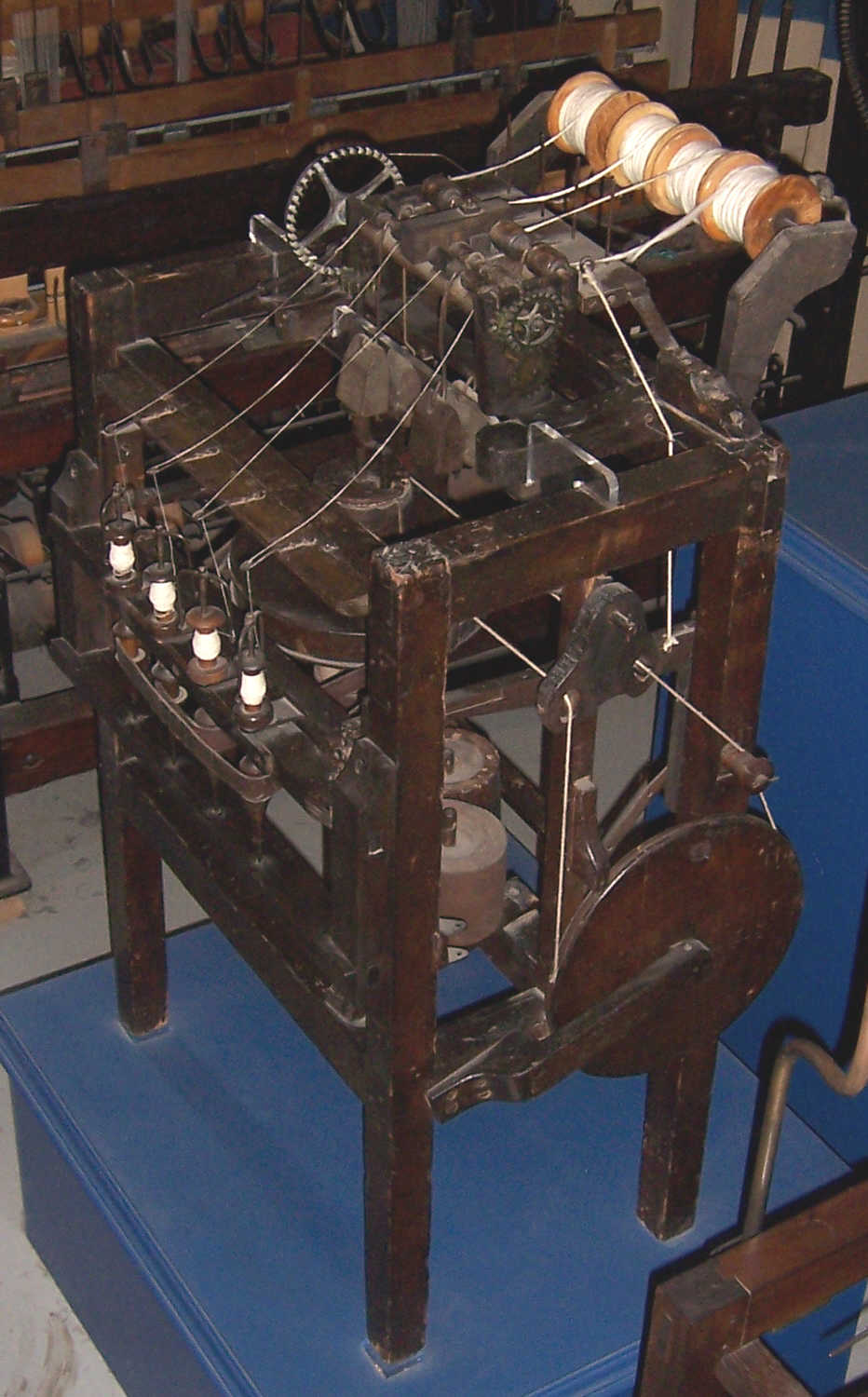
Arkwright Water Frame
1775
 Artifact
Primary source
Arkwright's Carding Machine
1775
Primary source
The Case of Mr. Richard Arkwright and Co.
Richard Arkwright · 1782
Ready when you are
Start chatting with Richard Arkwright now.
20 messages free · No credit card · Available in 50+ languages.