


Secondary sourcePainting1880
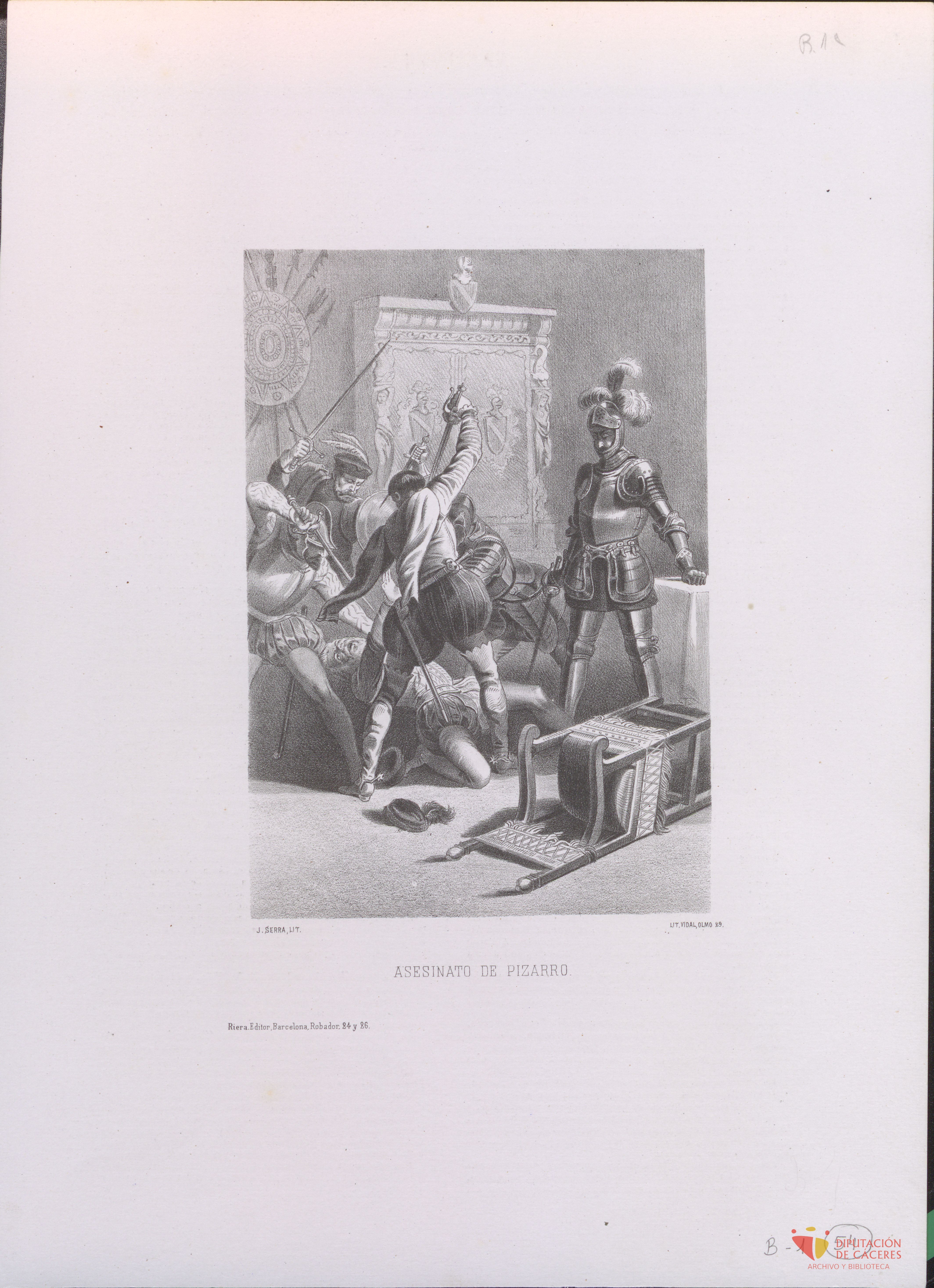
Assassination of Francisco Pizarro
Rafael del Castillo de la Cuesta · 1880
An 1880 black-and-white print of the murder of Francisco Pizarro, made by Rafael del Castillo long after the event in 1541.
Shows how Pizarro's violent death in 1541 was remembered in the 19th century, through a later illustration rather than a contemporary image.
About this source
What it is
This is a black-and-white lithographic print titled 'Asesinato de Pizarro'. It shows an armored figure in a plumed helmet standing at right while cloaked and armed men fight, and one figure lies on the floor of a room with a decorated wall and a carved stone frame. A round shield hangs at left. The printed caption names the Riera publisher in Barcelona. The print is held by the Archivo de la Diputación Provincial de Cáceres and was made in 1880 by Rafael del Castillo de la Cuesta.
Why it matters
Pizarro was killed in 1541 during a violent conflict among Spanish conquerors in Peru. This image was made almost four centuries later, so it shows how his death was remembered, not how it looked at the time. Its dramatic fighting reflects the taste of a 19th-century audience for stirring historical scenes. Students can use it to discuss how violence in the conquest era was turned into popular entertainment and national memory.
Look closer
- Who seems to be winning the fight, and how can you tell from the bodies and weapons?
- Why might an artist in 1880 choose to show this moment in such a dramatic way?
- What does the scene leave out about the wider conflict and about the Inca people?
This painting is part of the curated material that grounds the AI version of Francisco Pizarro on Humy.ai — when students ask about related events, the AI can quote it and cite it.
More Francisco Pizarro sources
Meet the AI Francisco Pizarro →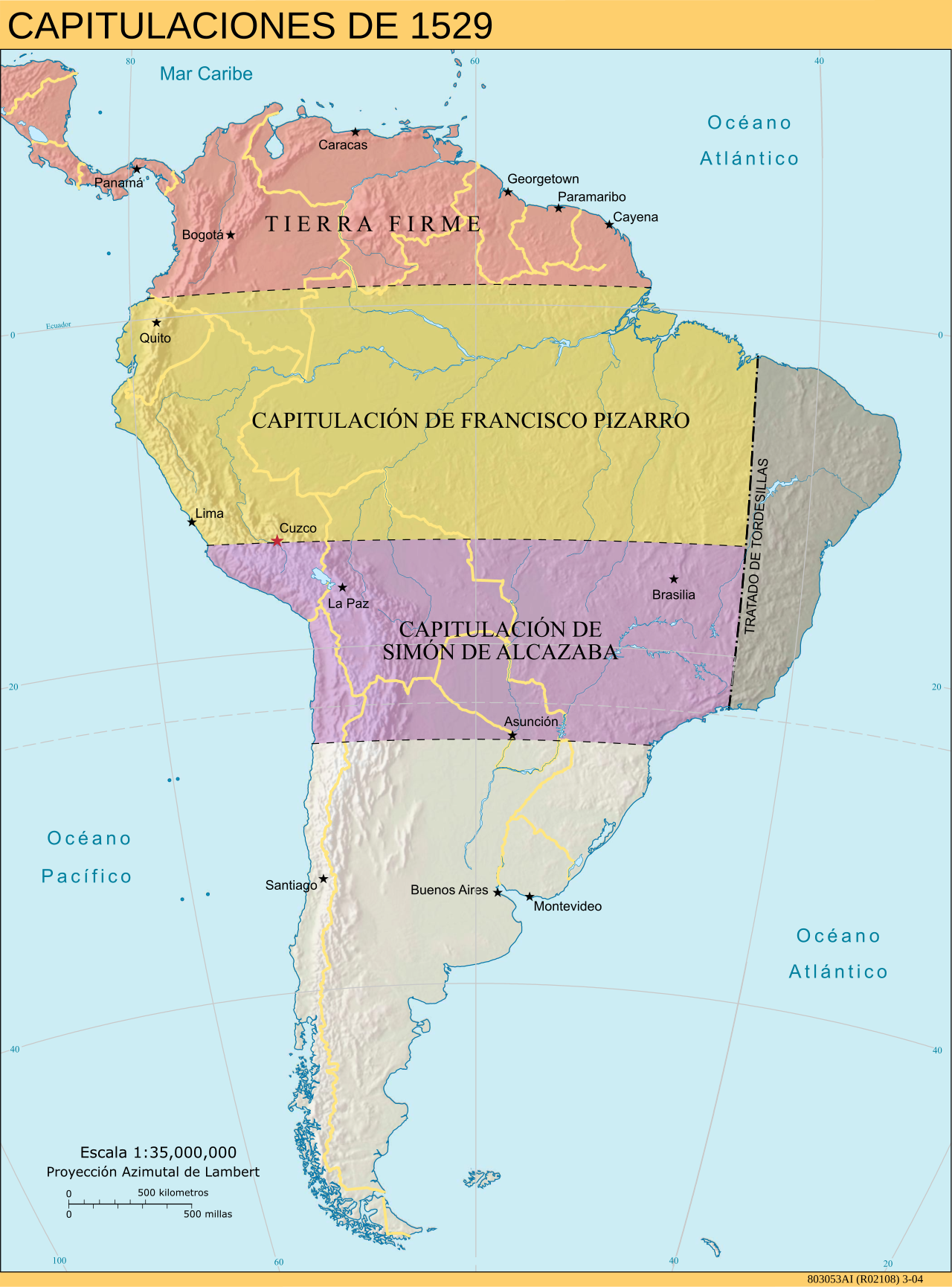 Document
Primary source
Capitulation of Toledo
Crown of Castile · 26 July 1529
 Painting
Secondary source
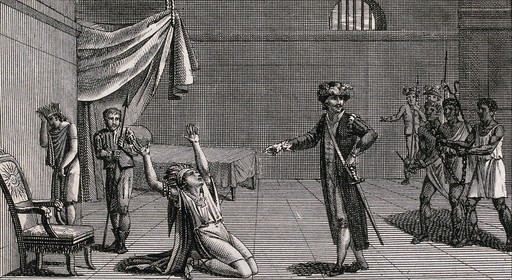
L'Ynca du Pérou aux pieds de Pizarre
A.C.F. Villerey after N. Vallain
 Painting
Secondary source
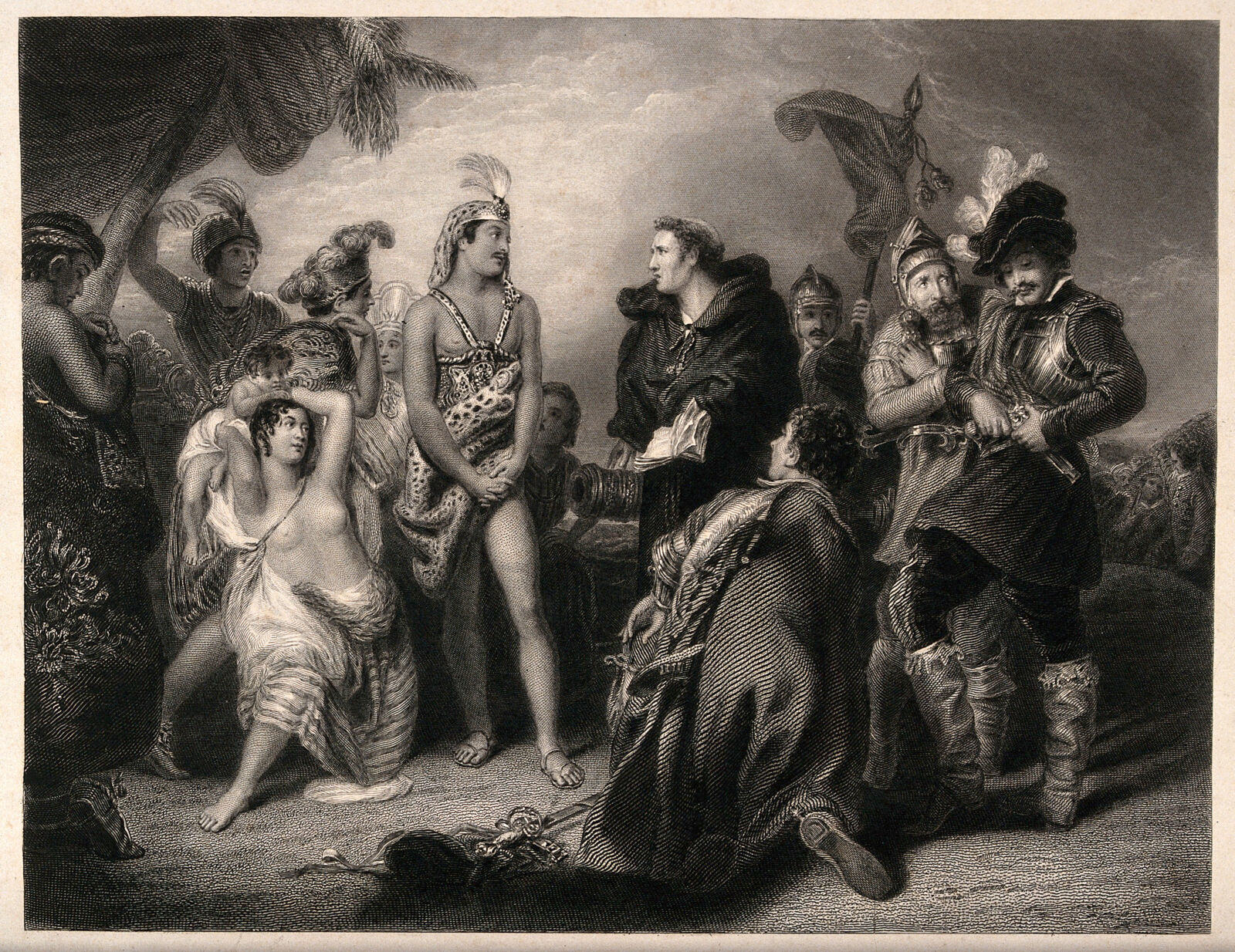
Valverde urging Atahualpa to convert
Henry Perronet Briggs (painting); engraved by W. Greatbach · 1830
 Book
Primary source
Verdadera relación de la conquista del Perú
Francisco de Jerez · 1534 (this edition 1891)
 Painting
Secondary source
Atawallpa Pizarro tinkuy
Felipe Guaman Poma de Ayala · 1532 (depicted); drawing later
Ready when you are
Start chatting with Francisco Pizarro now.
20 messages free · No credit card · Available in 50+ languages.