


Secondary sourceSculpture1850
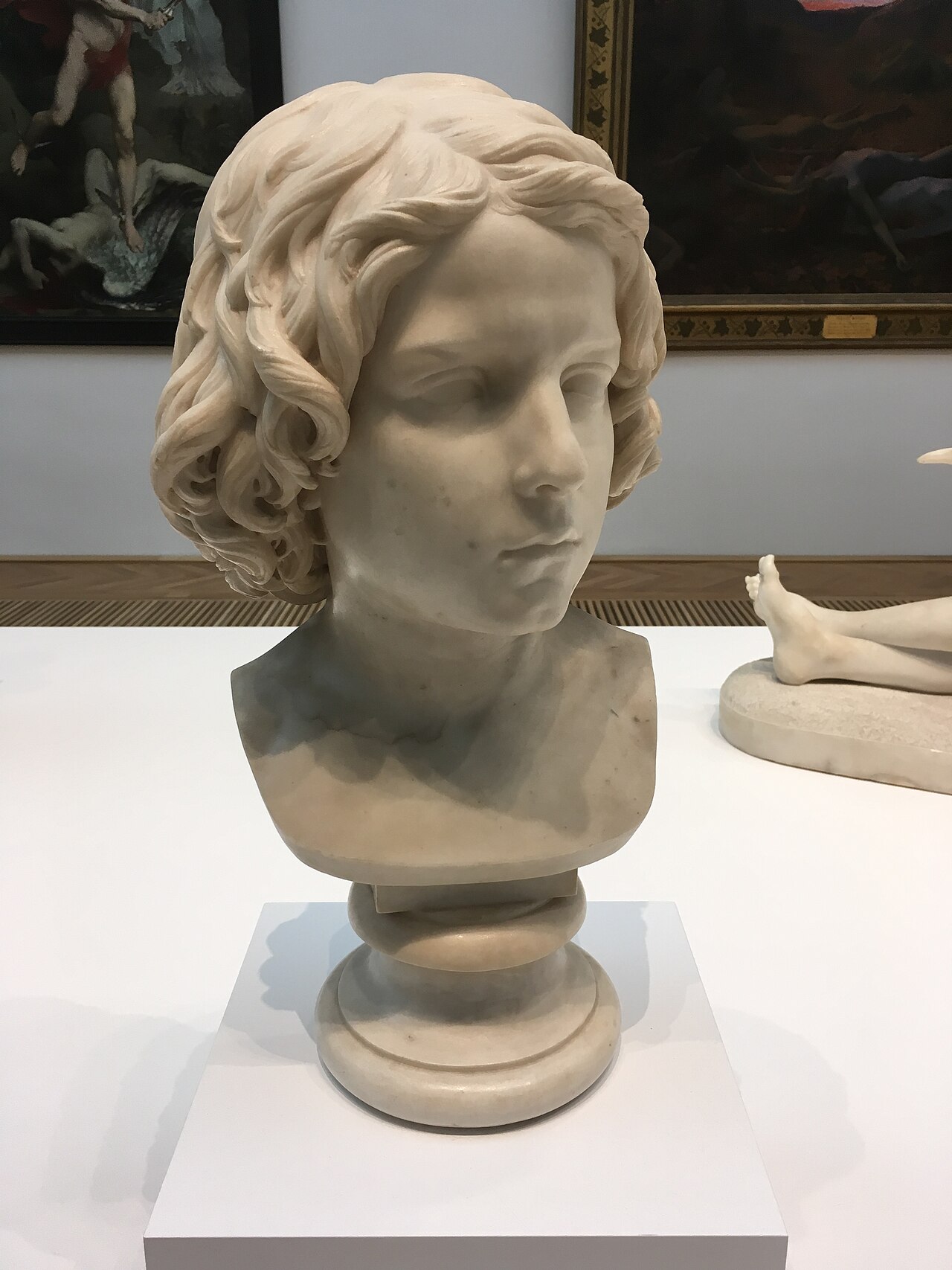
Attila, Head Study
Gabriel-Jules Thomas · 1850
A white marble head study of Attila made in 1850 by the sculptor Gabriel-Jules Thomas, now in a museum in Nantes. It is an imagined portrait of the Hun ruler made many centuries after his death.
Shows how a nineteenth-century sculptor imagined Attila's face, making him a subject of art long after his death.
About this source
What it is
This is a marble study of Attila's head, titled Attila, tete d'etude, made in 1850 by Gabriel-Jules Thomas. The museum record places it in the musee des Beaux-Arts in Nantes. The image shows a white marble bust of a young man with wavy, curled hair and a calm, downcast gaze, set on a round stepped base. Paintings in gilt frames hang on the wall behind it.
Why it matters
The sculpture is an imagined portrait. No likeness of Attila is known from his own time, so the sculptor had to invent a face for him. Works like this show how nineteenth-century European artists pictured a legendary enemy of Rome, and how they valued the classical tradition of portrait busts. The sculpture reveals more about the artist's time and taste than about the ruler who lived in the 5th century.
Look closer
- What features does the sculptor give Attila, and which of them seem chosen to look noble or calm?
- How does a marble bust in a museum change the way a visitor thinks about a historical figure?
- What can we not know about Attila's real appearance from this artwork?
This sculpture is part of the curated material that grounds the AI version of Attila the Hun on Humy.ai — when students ask about related events, the AI can quote it and cite it.
More Attila the Hun sources
Meet the AI Attila the Hun →
Ready when you are
Start chatting with Attila the Hun now.
20 messages free · No credit card · Available in 50+ languages.