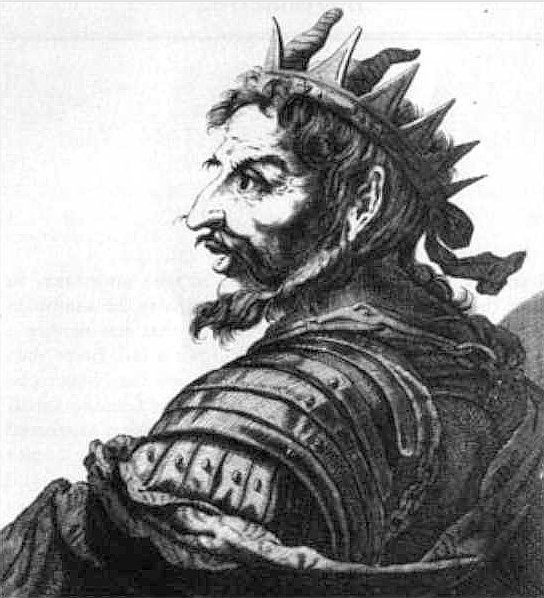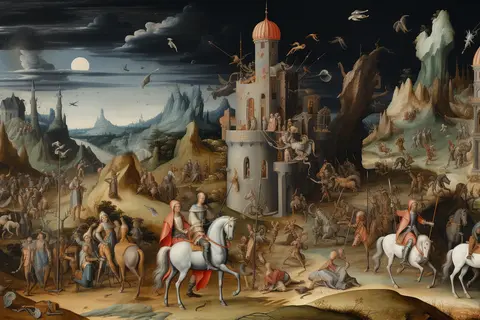

Portrait of Attila the Hun

AI Historical Figure

Attila the Hun

Sensitive

Ruthless and feared ruler of the Huns who led devastating campaigns across Europe.

Chat with Attila the Hun via text or voice — in 42 languages, drawing on a curated biography and 92 historical sources. Available 24/7.

Start chatting with Attila the Hun20 messages free · No credit card
Lived
c. 406–453
From
Hungary
Known for
Rulers & royaltyMilitary
Attila the Hun

Attila the Hun

Online · responds in seconds

Hello — I'm Attila the Hun. Ruthless and feared ruler of the Huns who led devastating campaigns across Europe. What would you like to ask me?

20 messages free · No credit card · Powered by Humy.ai

Live preview · Switch between 42 languages above · Send a message to continue in the app

Multilingual

Talk to Attila the Hun in 42 languages

Ask Attila the Hun questions in any language below, and the rest of Humy's app speaks it too. Pick yours to open the chat in that language.

Also in German (Austria), German (Switzerland), English (UK), English (Australia), English (Canada).

The sources behind this AI

92 sources · 44 paintings · 20 books · 13 artifacts · 9 sculptures · 6 documents

Attila the Hun doesn’t improvise from thin air. The AI is grounded in 92 curated historical sources students can inspect. Open any of them to see what informs the conversation.

Solid black book cover with a white Library of Congress catalog label near the bottom, bearing the text LIBRARY OF CONGRESS, a barcode, the number 00020502083, and a red dot.Book

Primary source

Getica

Jordanes · 555

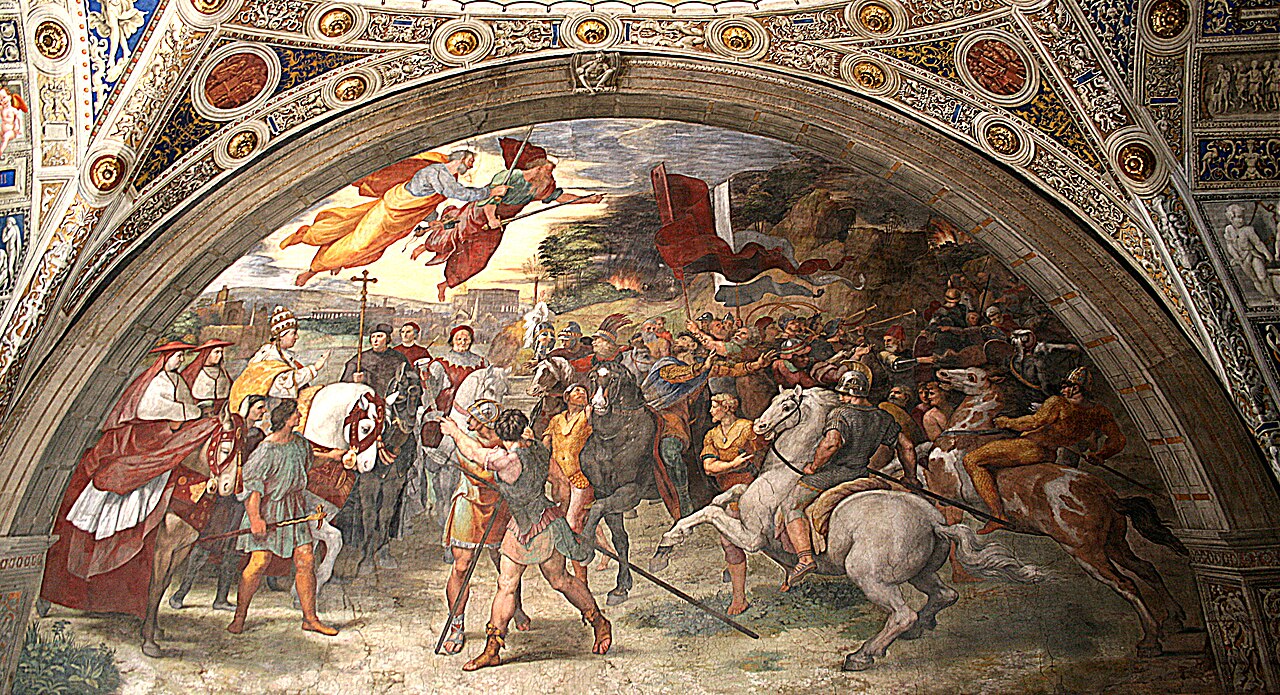
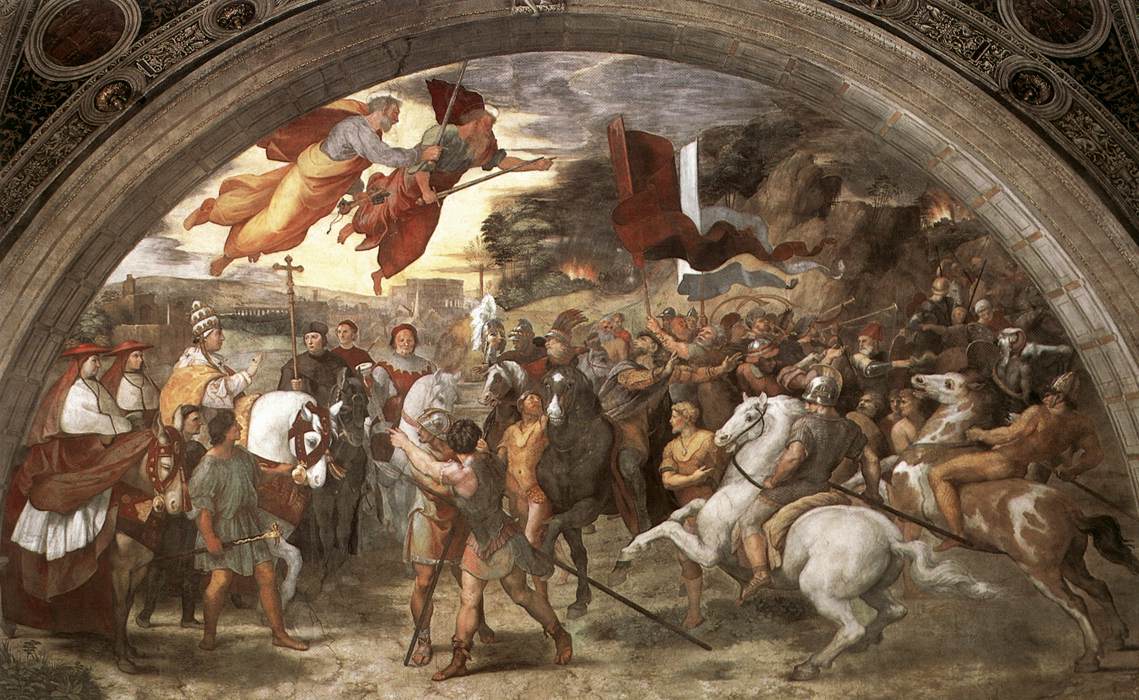
Fresco in an arched vault showing a scene of armed warriors on horseback and on foot in a battle, with a flying figure in orange and red robes above, and a pale-robed procession of clergy with a horse on the left. Decorative gilded stucco frames the arch.Painting

Primary source

The Meeting of Leo the Great and Attila

Raphael · 1513-1514

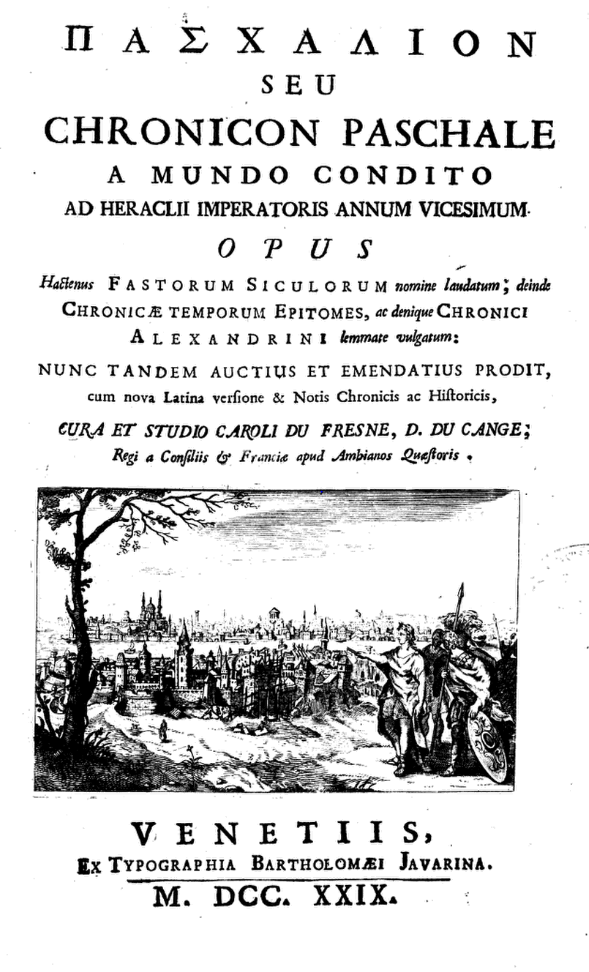
Title page of the 1729 Venice edition of the Chronicon Paschale, in Greek and Latin text, printed by Bartholomaei Javarina. Below the text is an engraved view of a walled city with spires, with two figures in period dress and armor in the foreground.Book

Secondary source

Chronicon Paschale

Anonymous · 630

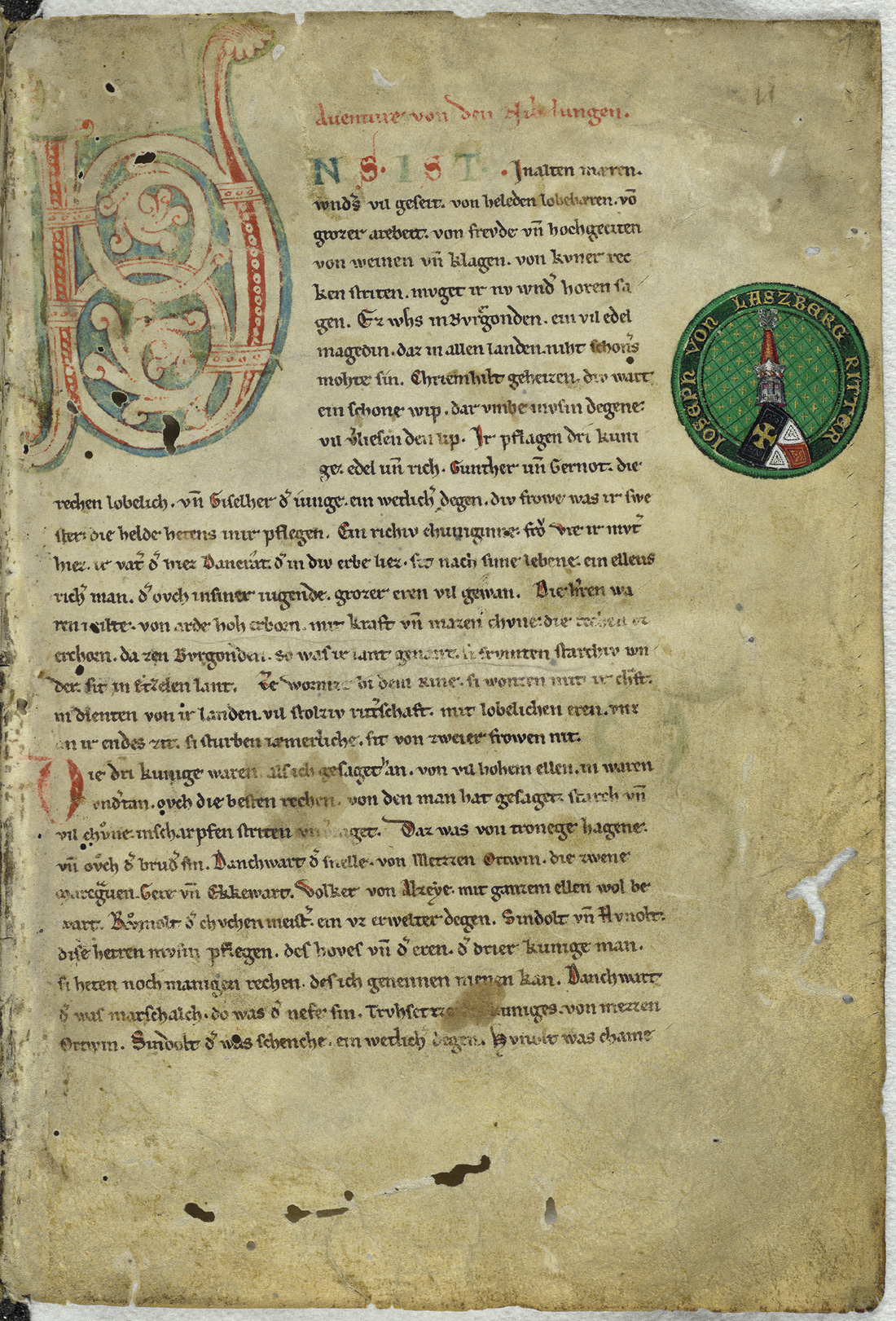
Medieval manuscript folio in Middle High German with a large decorated red, blue and green initial letter on the left, red heading text at top, and a round green seal with the inscription 'Joseph von Laszberg Ritter' at right. Yellowed parchment with black ink text in columns.Book

Secondary source

Nibelungenlied

c. 1200

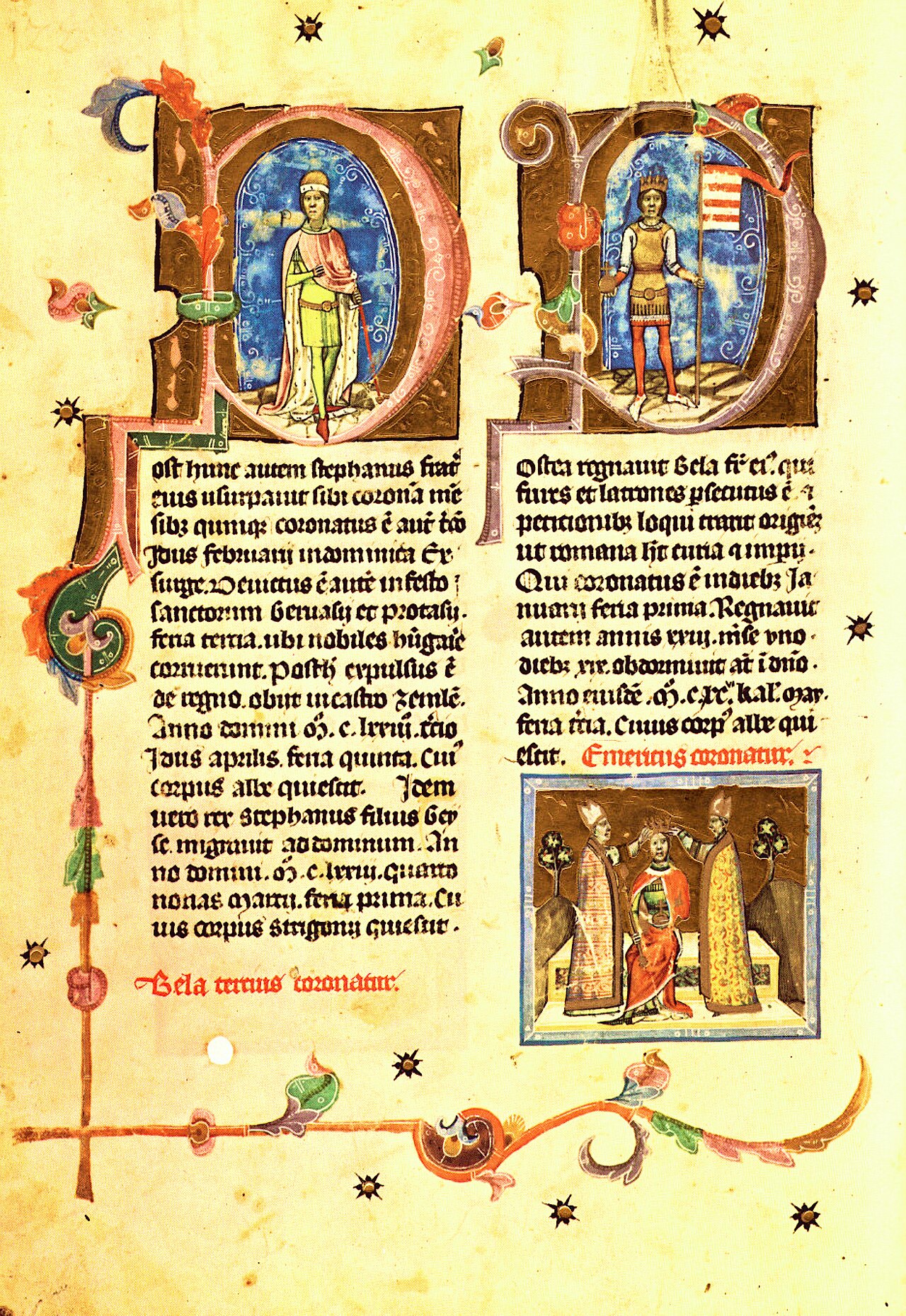
A manuscript page with illuminated initials containing two painted kings, one holding a sword and one holding a banner with red and white stripes, above columns of Latin text in black ink and red rubrics. A small framed miniature at lower right shows a king being crowned by two bishops.Book

Secondary source

Chronicon Pictum

Márk Kálti · after 1358, no later than 1370

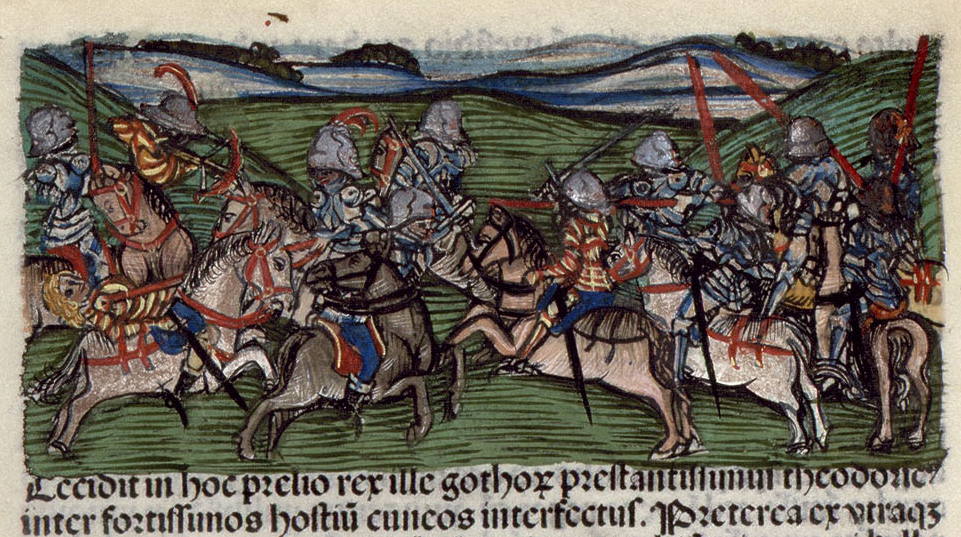
Hand-colored woodcut from a chronicle showing mounted armored knights in a battle on green hills, with lances and banners. Below is a line of Latin text describing the fallen king Theodoric and the fighting.Painting

Secondary source

Chronica Hungarorum - The Battle of King Attila at the Catalaunian Plains

Johannes de Thurocz · 1488

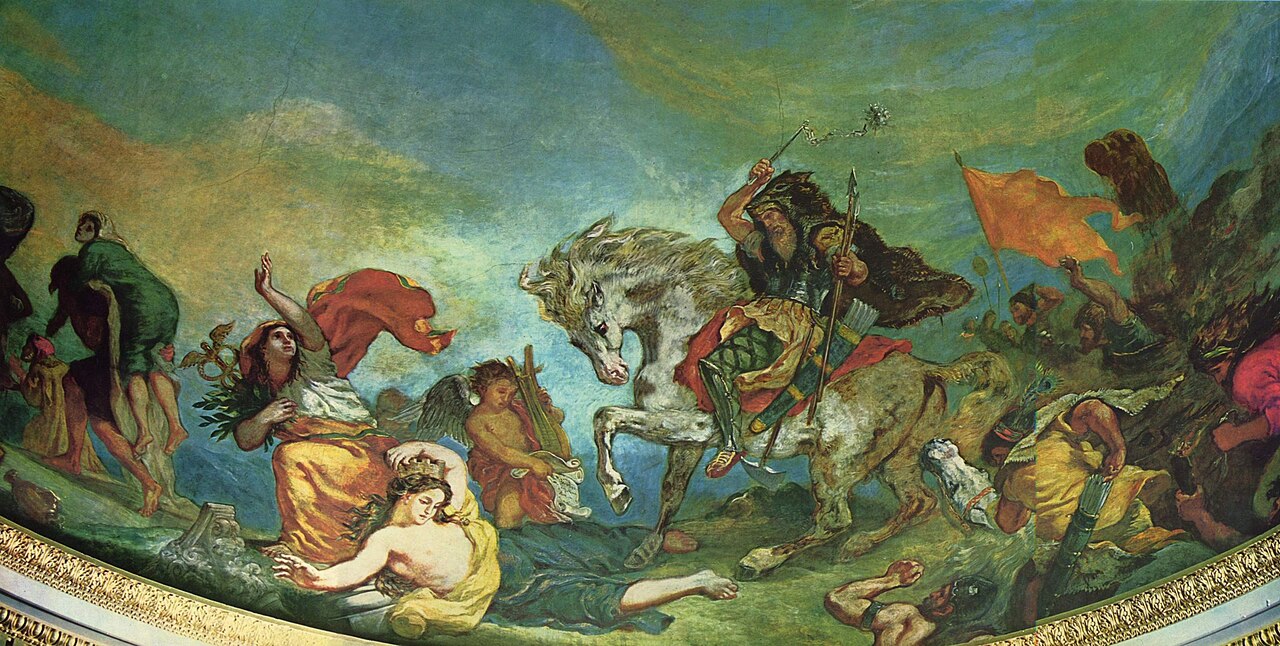
Detail of a painted ceiling lunette showing a rider on a white horse with a raised sword and a red-orange banner, trampling figures; on the left, a woman raises her arm beside a winged cherub playing a lyre, and a fallen nude woman lies in the foreground.Painting

Secondary source

Attila and his Hordes Overrun Italy and the Arts

Eugène Delacroix · 1838

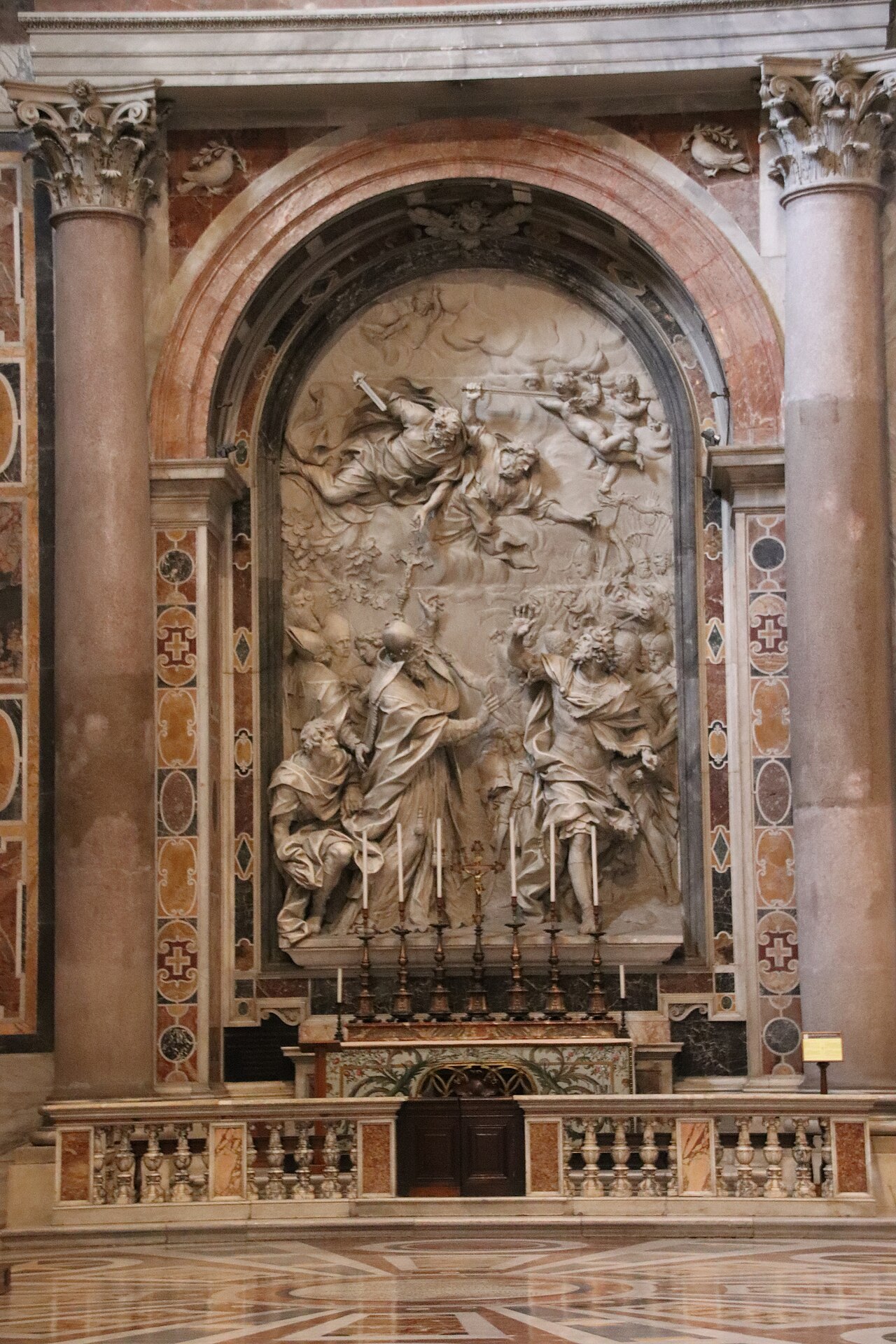
Large white marble relief set in an arched niche above an altar, showing a pope with clerics and a figure on horseback in clouds above with angels wielding swords. Marble columns and an altar with candlesticks flank it.Sculpture

Secondary source

Flight of Attila (marble relief)

Alessandro Algardi · 1646–1653

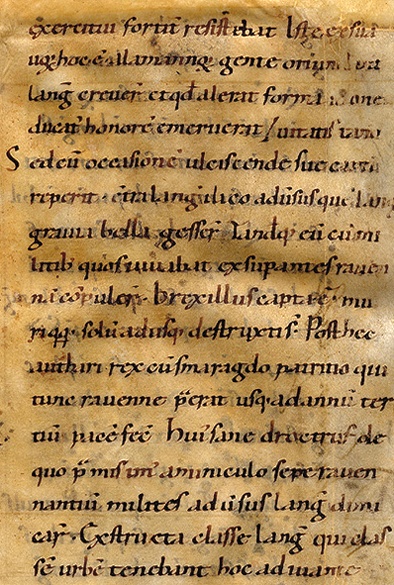
Close-up of a manuscript page in dense handwritten Latin minuscule on aged, yellowed parchment. Dark brown ink, with some ruled lines and decorated initial S at left margin. Text is continuous with no illustrations.Book

Secondary source

History of the Lombards

Paul the Deacon · after 787, before 796

Book

Secondary source

Res Gestae

Ammianus Marcellinus · c. 380-392 AD

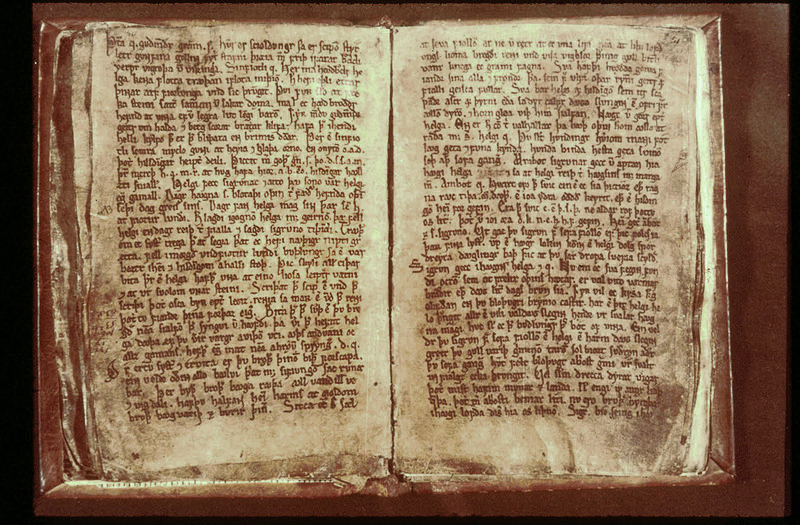
An open medieval manuscript lying in a dark leather binding, with two pages of dense handwritten Old Norse text in brown ink arranged in long columns, with some initial capitals and red markings. The pages are yellowed and worn at the edges.Book

Secondary source

Codex Regius

1270s

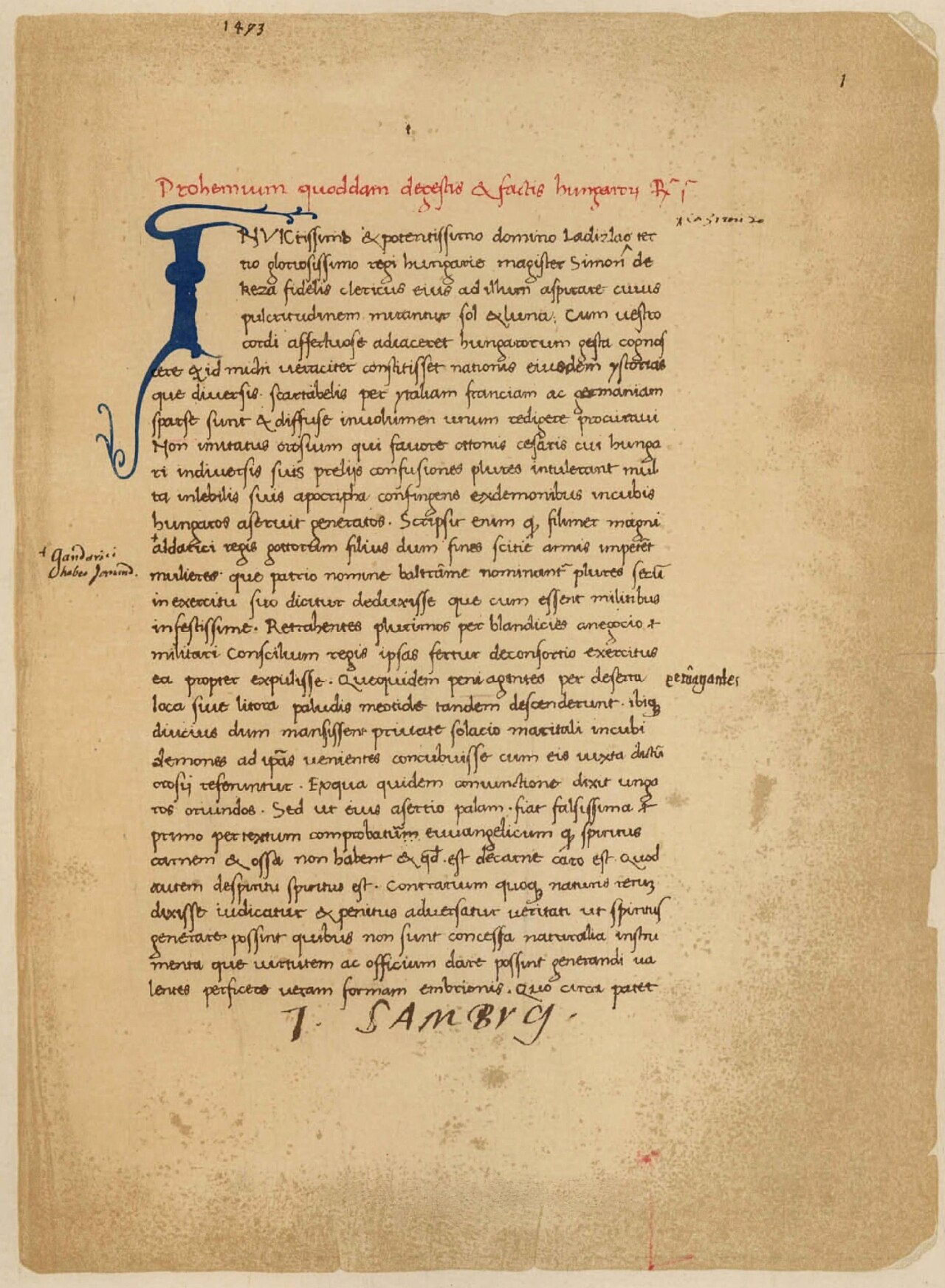
Gesta Hunnorum et HungarorumBook

Secondary source

Gesta Hunnorum et Hungarorum

Simon of Kéza · c. 1282-1285

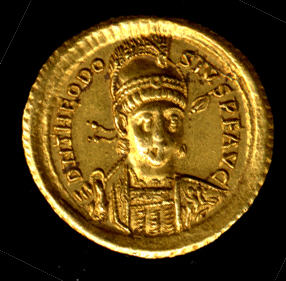
Photograph of a gold solidus coin viewed face-on against a black background. The central bust shows a diademed emperor in profile facing right, wearing a helmet-like crown and armor, with a spear or standard over the shoulder. Inscription text circles the rim in Latin lettering.Artifact

Primary source

Gold Solidus of Theodosius II

408-450 AD

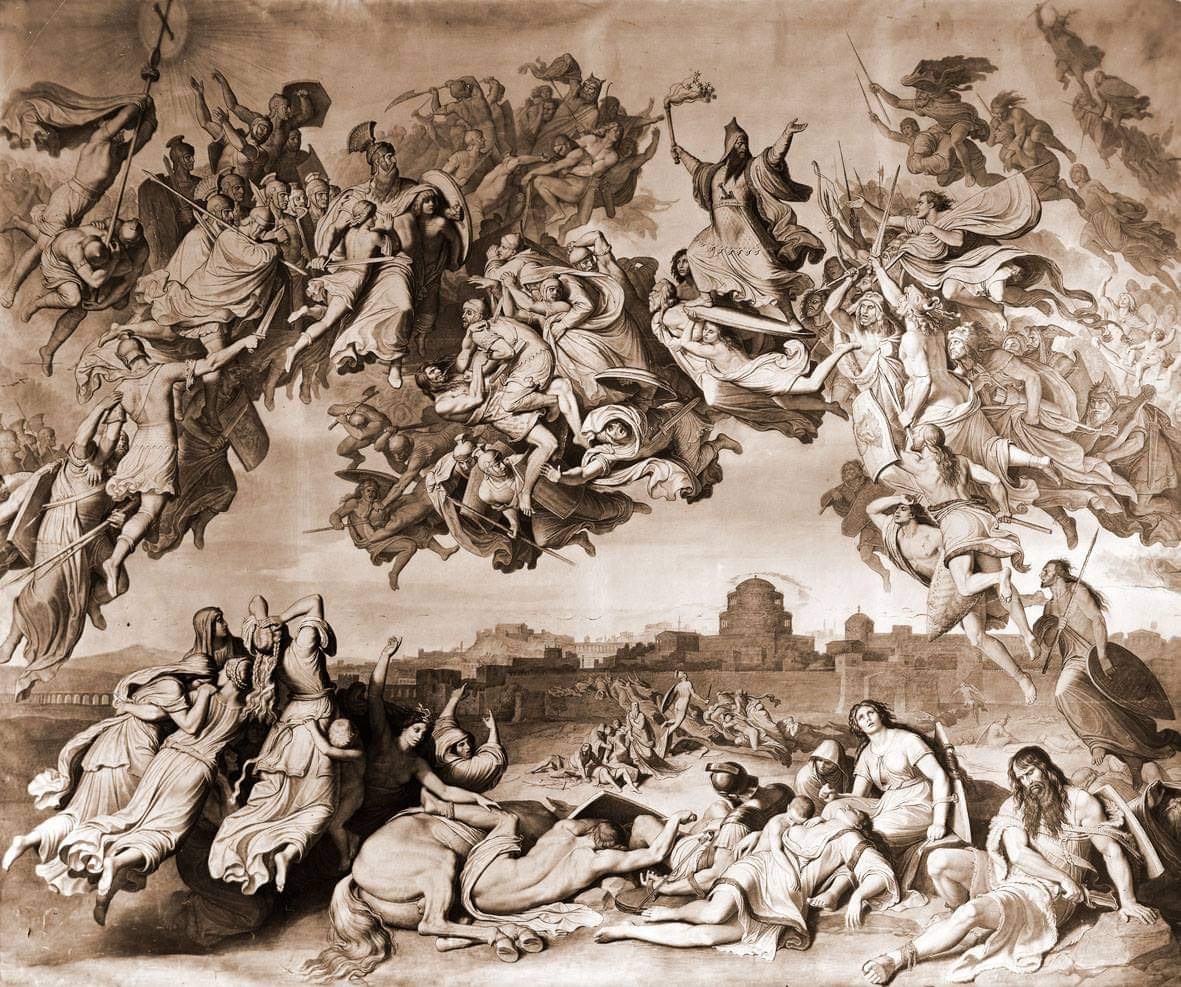
Sepia engraving of a large, dramatic battle scene. Warriors on horseback and on foot fight in swirling clouds above, while a walled city with domed buildings sits on the horizon. In the foreground, grieving women and wounded or dead figures lie on the ground.Painting

Secondary source

The Battle of the Huns

Wilhelm von Kaulbach · 1837

Book

Secondary source

Waltharius

Ekkehard I · before 973 AD

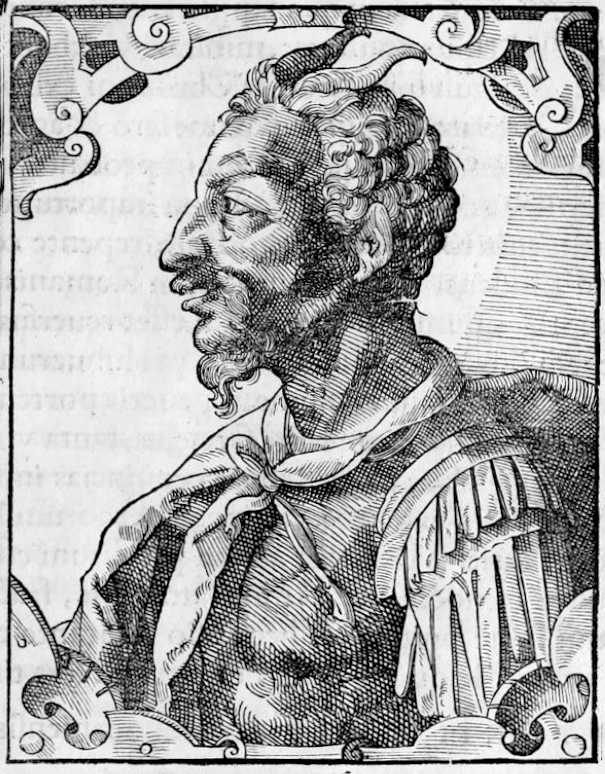
Woodcut-style print in profile of a bearded man with curly hair, a horned or antlered ornament above the forehead, a tied cloth at the neck, and armor-like shoulder plates. Decorative scrollwork frames the image on a page of printed text.Painting

Secondary source

Attila Portrait (Imaginary)

Paolo Giovio · 1575 (published)

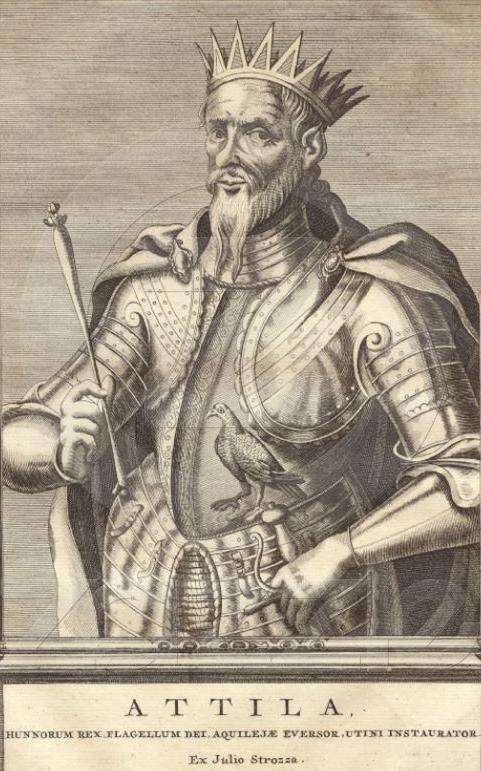
Engraved portrait of a bearded man wearing a spiked crown, plate armour, and a cloak, holding a staff and a small bird on his arm. Printed caption below reads ATTILA and an inscription in Latin.Painting

Secondary source

Portrait of Attila, Scourge of God

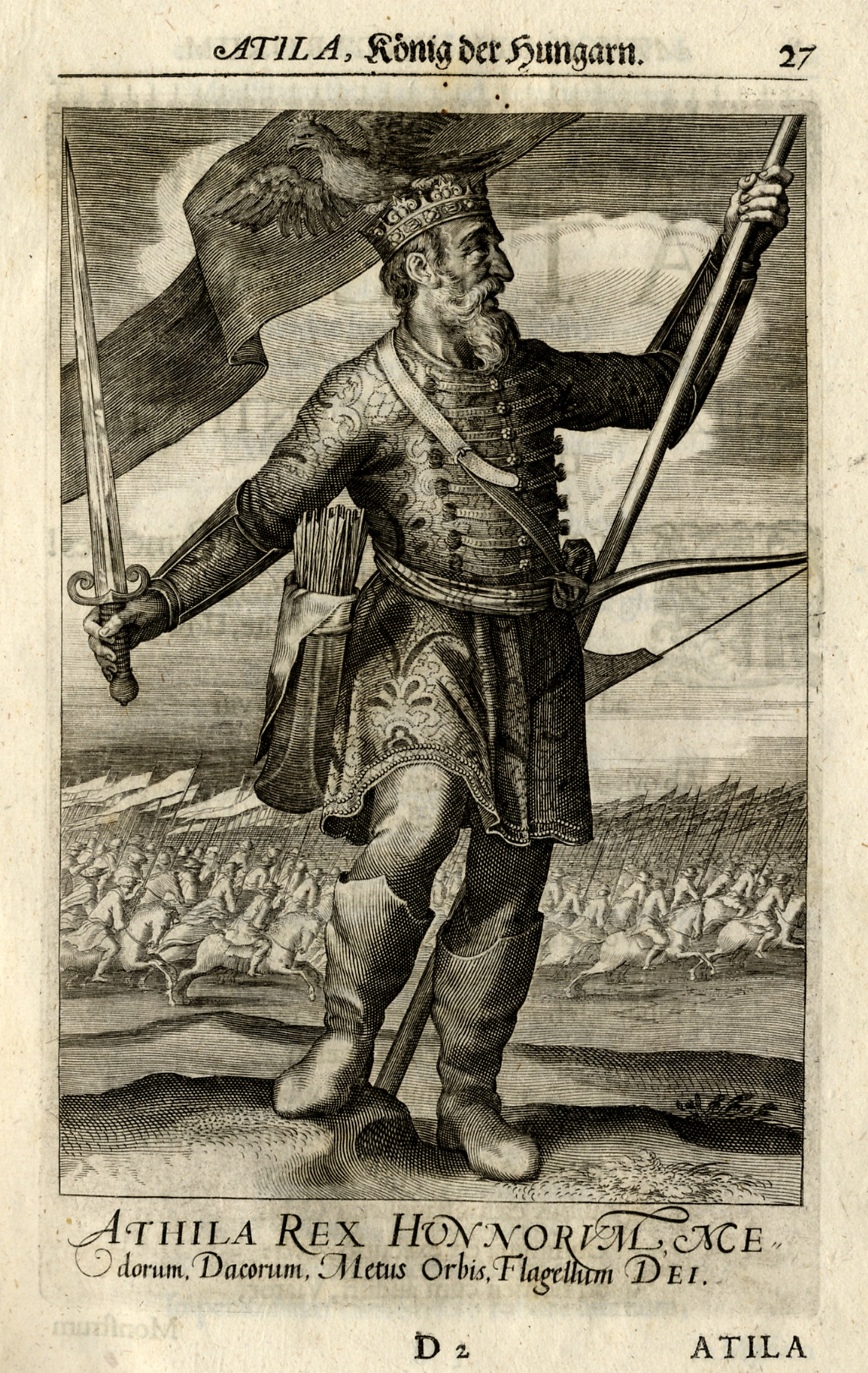
Engraved print of a crowned, bearded man in ornate Hungarian-style costume holding a sword in one hand and a spear with a flag in the other, a quiver and bow at his side, with mounted troops behind him. Caption below reads Athila Rex Hunnorum; page header reads Atila, König der Hungarn, 27.Painting

Secondary source

Attila Rex Hunnorum

Lanzmar Ferenc · 17th century

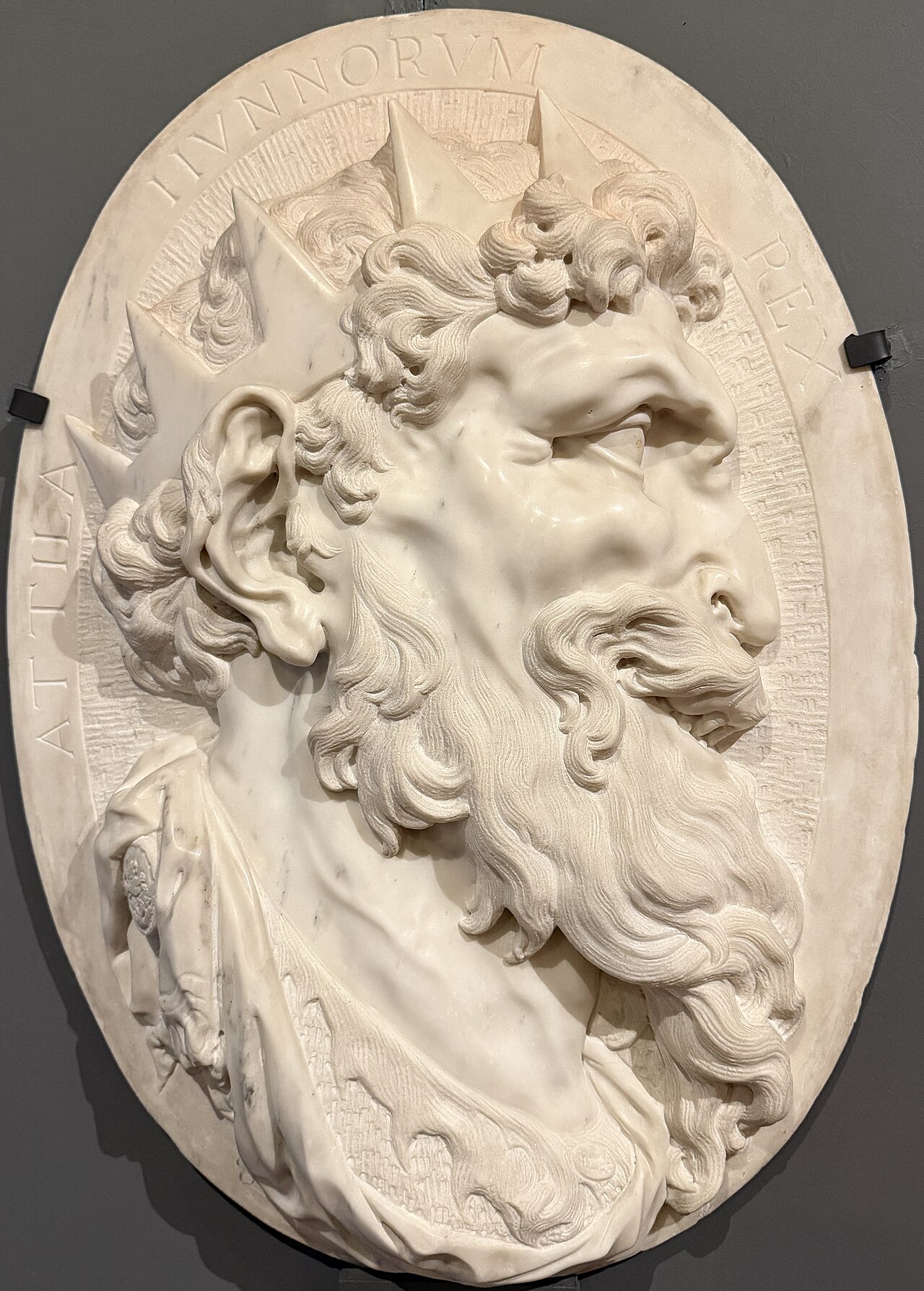
Oval white marble high relief bust in profile of a bearded man with a spiked crown, facing right, with curly hair and a draped garment. Inscription reads ATTILA HVNNORVM REX around the rim.Sculpture

Secondary source

Attila (Marble Relief)

Giovanni Bonazza · 18th century

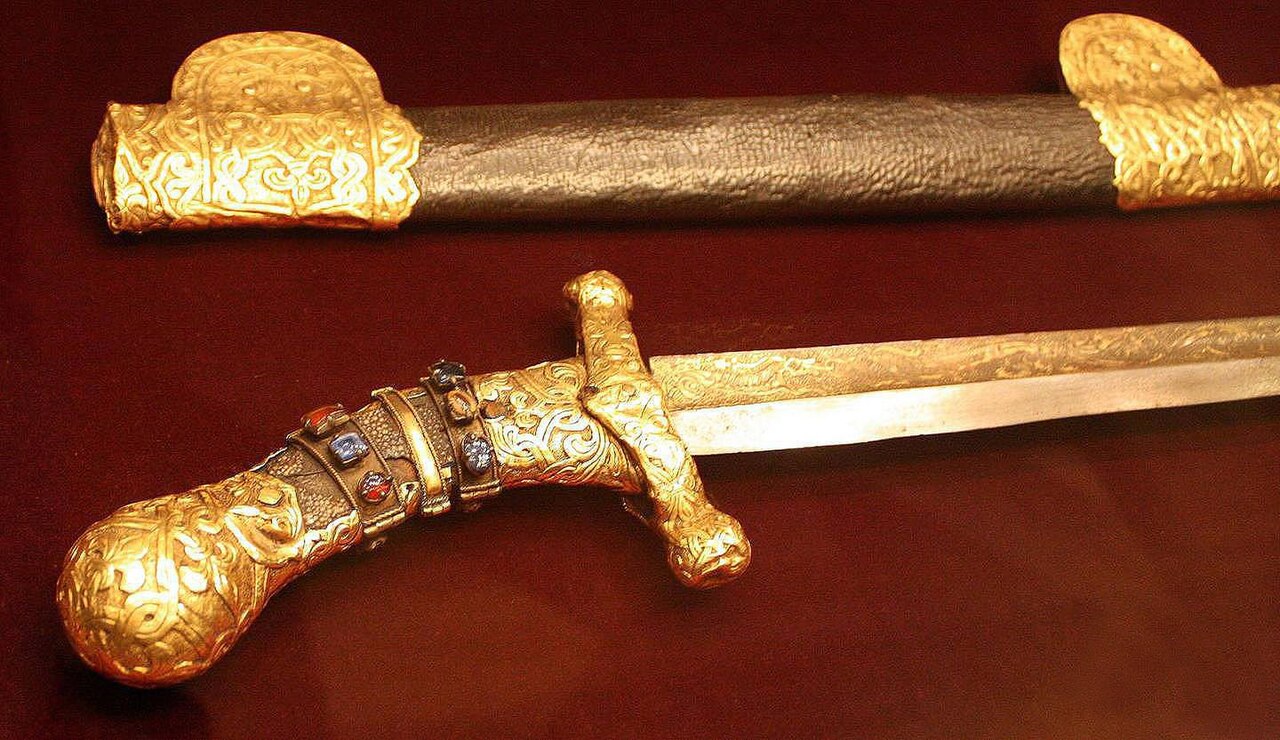
A gold-decorated sabre with an ornate golden hilt set with colored stones, a pommel shaped like a ball, and a long engraved blade, lying beside its dark scabbard with gilded fittings on a red velvet background.Artifact

Secondary source

Sword of Attila

10th century (object); legend recorded 1063/1077

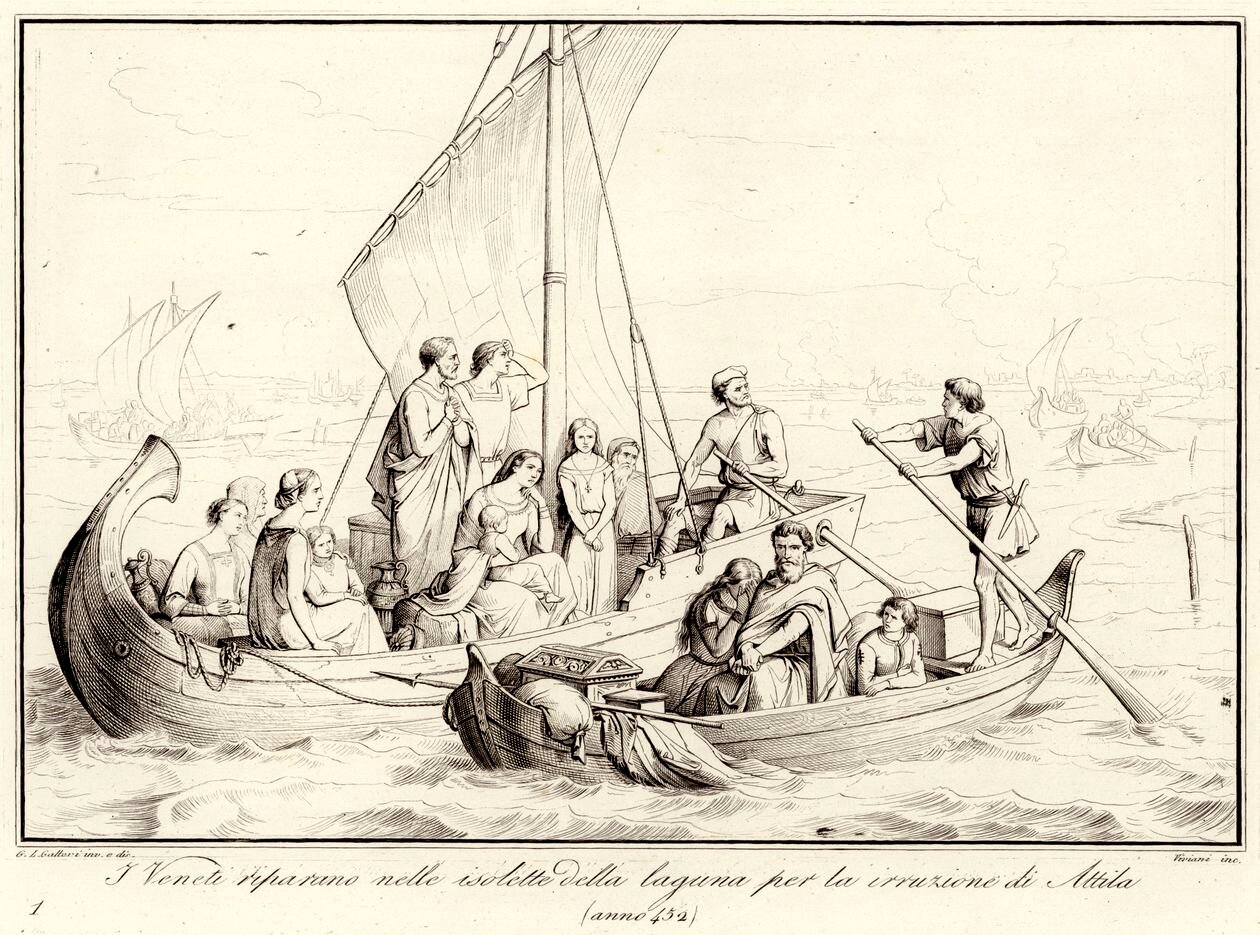
Black-and-white engraved print of refugees in two boats on a lagoon. In the left boat, a group of women and children sit with bundles and a jug, and a standing man in a toga holds a sail-rope near a tall mast. In the right boat, a bearded man in a cloak and a woman sit at the stern while a man in a cap sits at the tiller. A figure in a tunic stands at the right, rowing with a long oar. Distant sailing boats appear on the water. Italian caption along the bottom reads: I Veneti riparano nelle isolette della laguna per la irruzione di Attila (anno 452).Painting

Secondary source

The Venetians Flee to the Lagoon Islands from Attila

Giuseppe Lorenzo Gatteri and Francesco Zanotto · 19th century (depicting legendary events of 452)

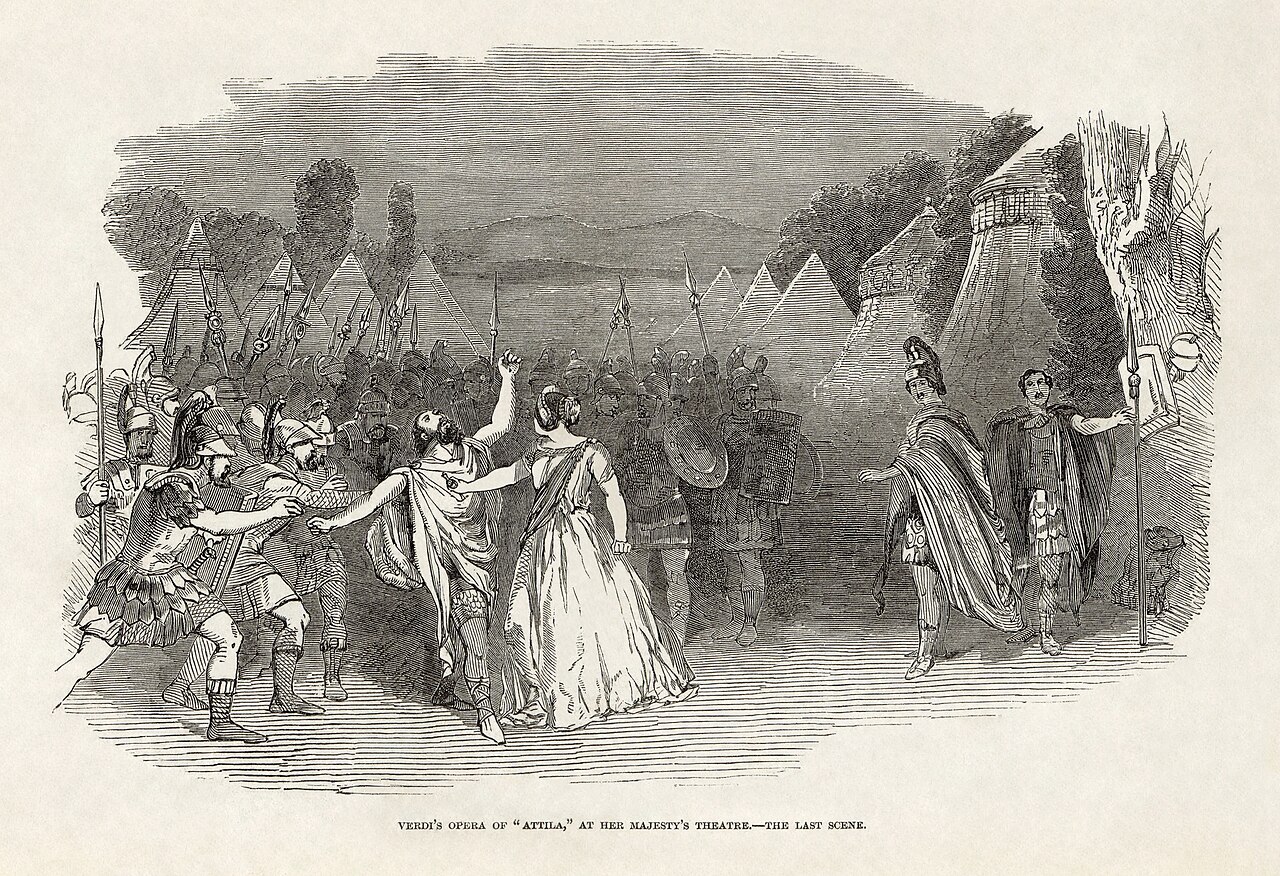
Engraved illustration from the Illustrated London News showing a scene from Verdi's opera Attila at Her Majesty's Theatre: armored warriors on the left grab at a man in a cloak, a woman in a long white gown stands center, and a helmeted figure with a spear stands at right beside a tent camp. Caption reads 'Verdi's Opera of Attila at Her Majesty's Theatre - The Last Scene'.Document

Secondary source

Attila

Giuseppe Verdi · 1846

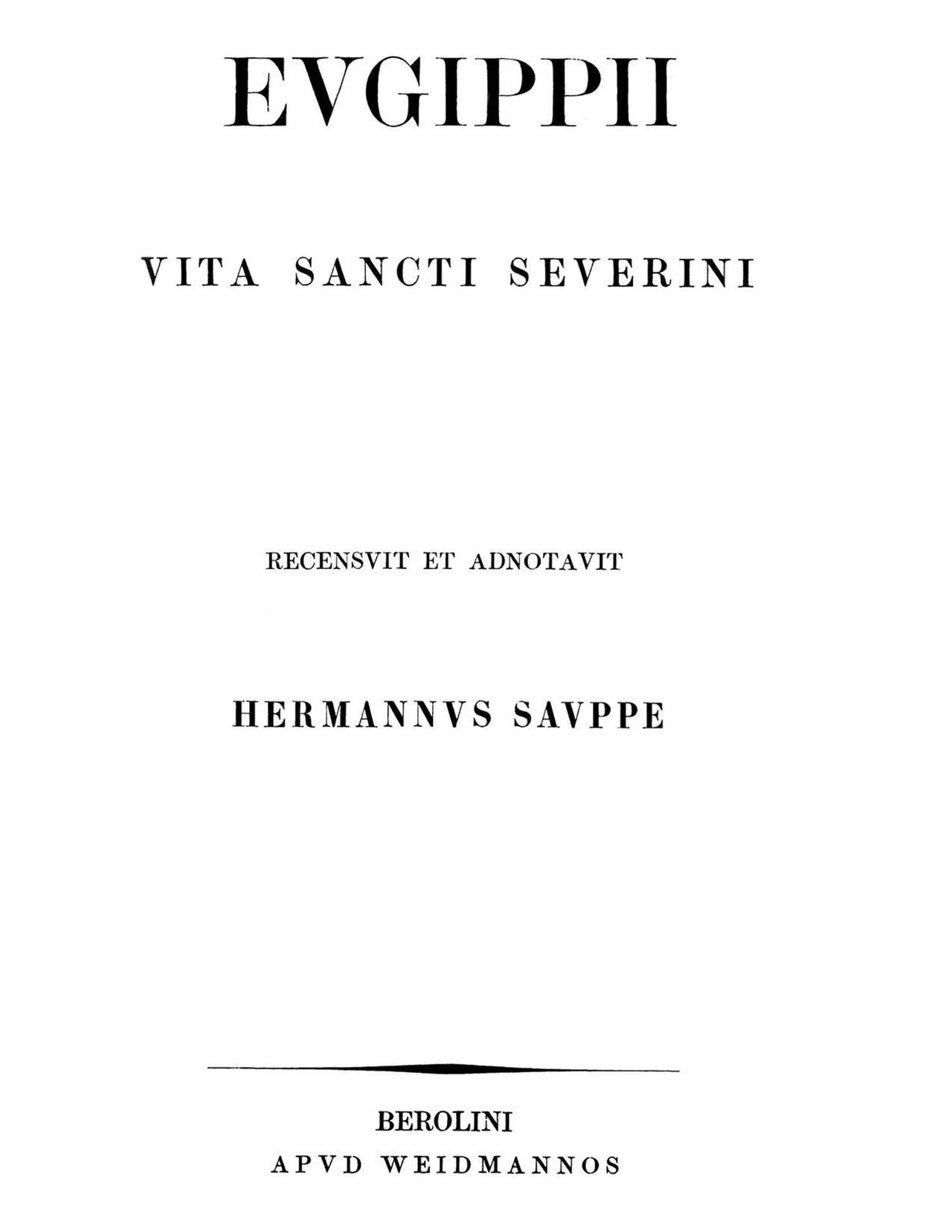
Title page of a Latin book: 'EVGIPPII VITA SANCTI SEVERINI, RECENSVIT ET ADNOTAVIT HERMANNVS SAUPPE, BEROLINI APUD WEIDMANNOS'. Black text on white, with a decorative rule above the publication line.Book

Secondary source

Life of Saint Severinus

Eugippius · 511

Book

Secondary source

Atlamál

c. 1200

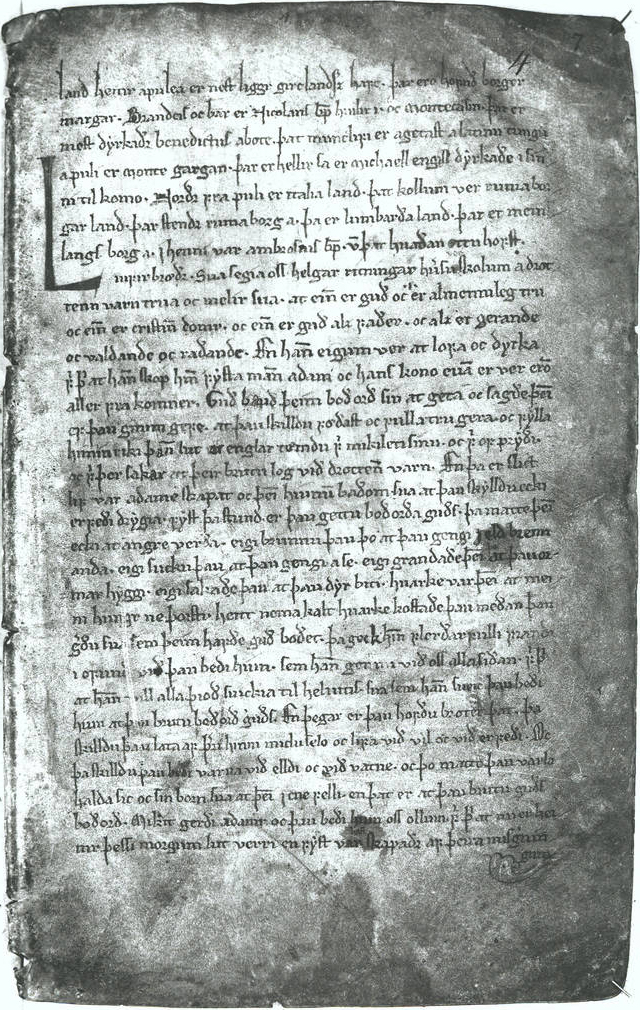
Scanned manuscript page in dark ink, written in a medieval Old Norse hand in long lines of text with a large decorated initial letter L on the left side. The page is grey and slightly worn, with the page number 4 in the upper right corner.Book

Secondary source

Hervarar saga ok Heiðreks

c. 1300

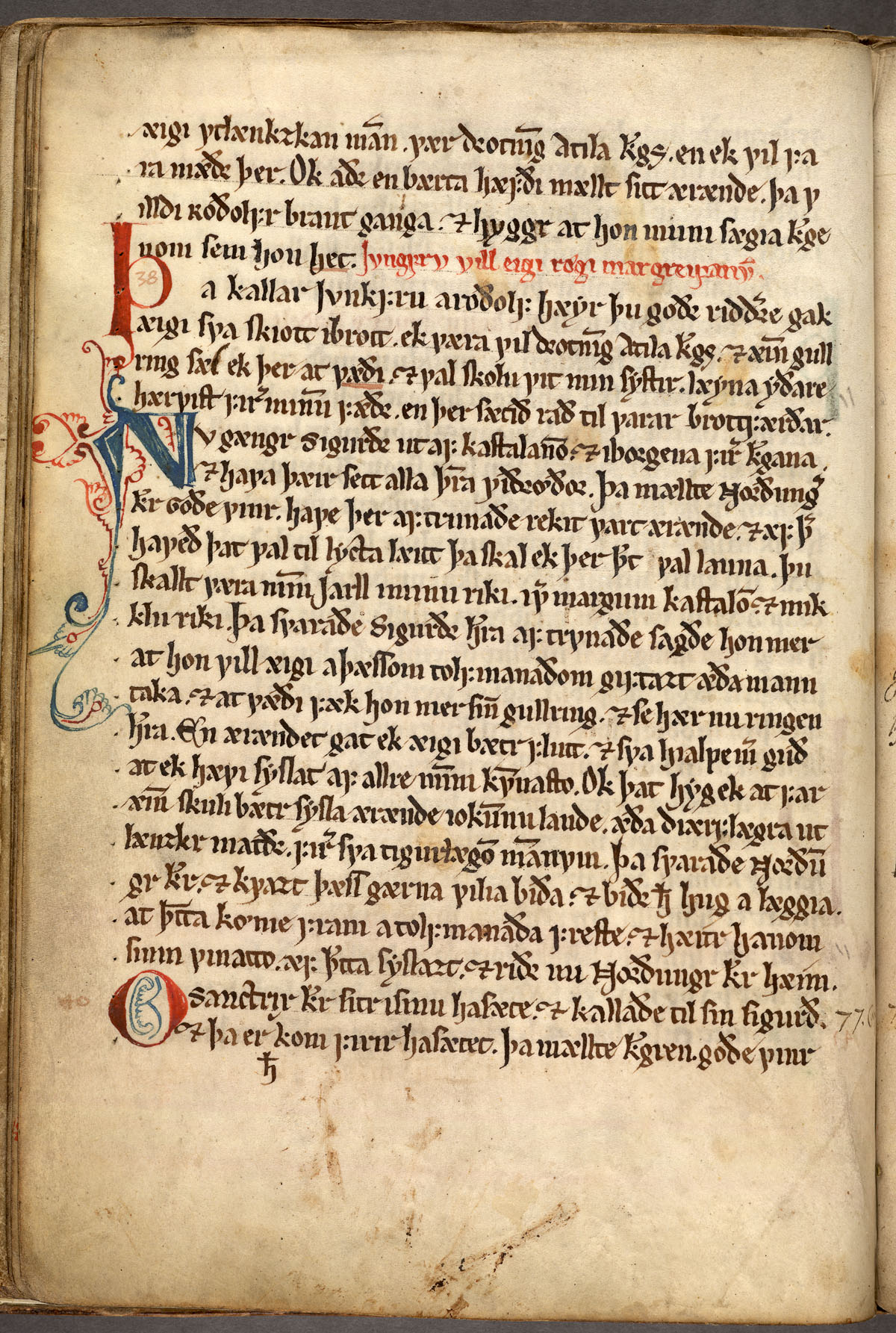
A page of an illuminated medieval manuscript in Old Norse, written in brown-black ink in a cursive gothic hand on yellowed vellum. Decorated initial letters in blue, red and gold ornament the opening lines. Red rubric text appears in the middle of the page, and a small illuminated initial sits near the bottom left.Book

Secondary source

Þiðreks saga

c. 1300

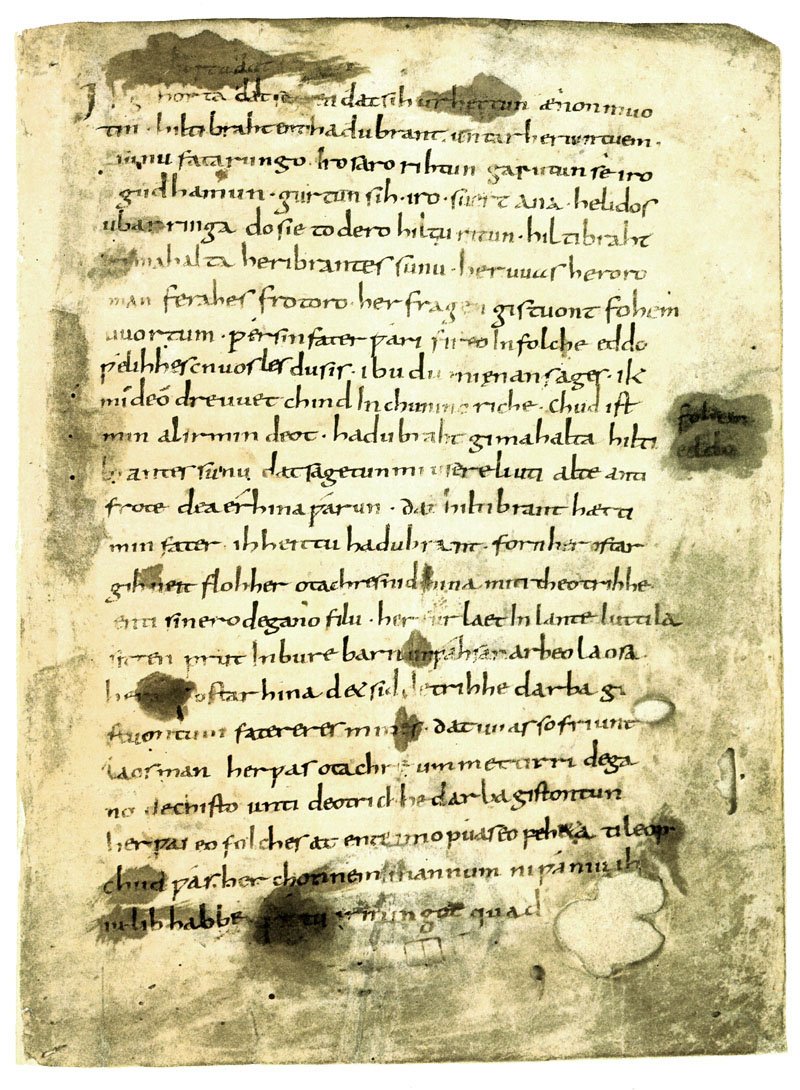
Photograph of a manuscript page written in faded brown ink in an early medieval Germanic script, in long handwritten lines with dark stains and blotches on the parchment. Likely a page of the Lay of Hildebrand.Book

Secondary source

Lay of Hildebrand

830

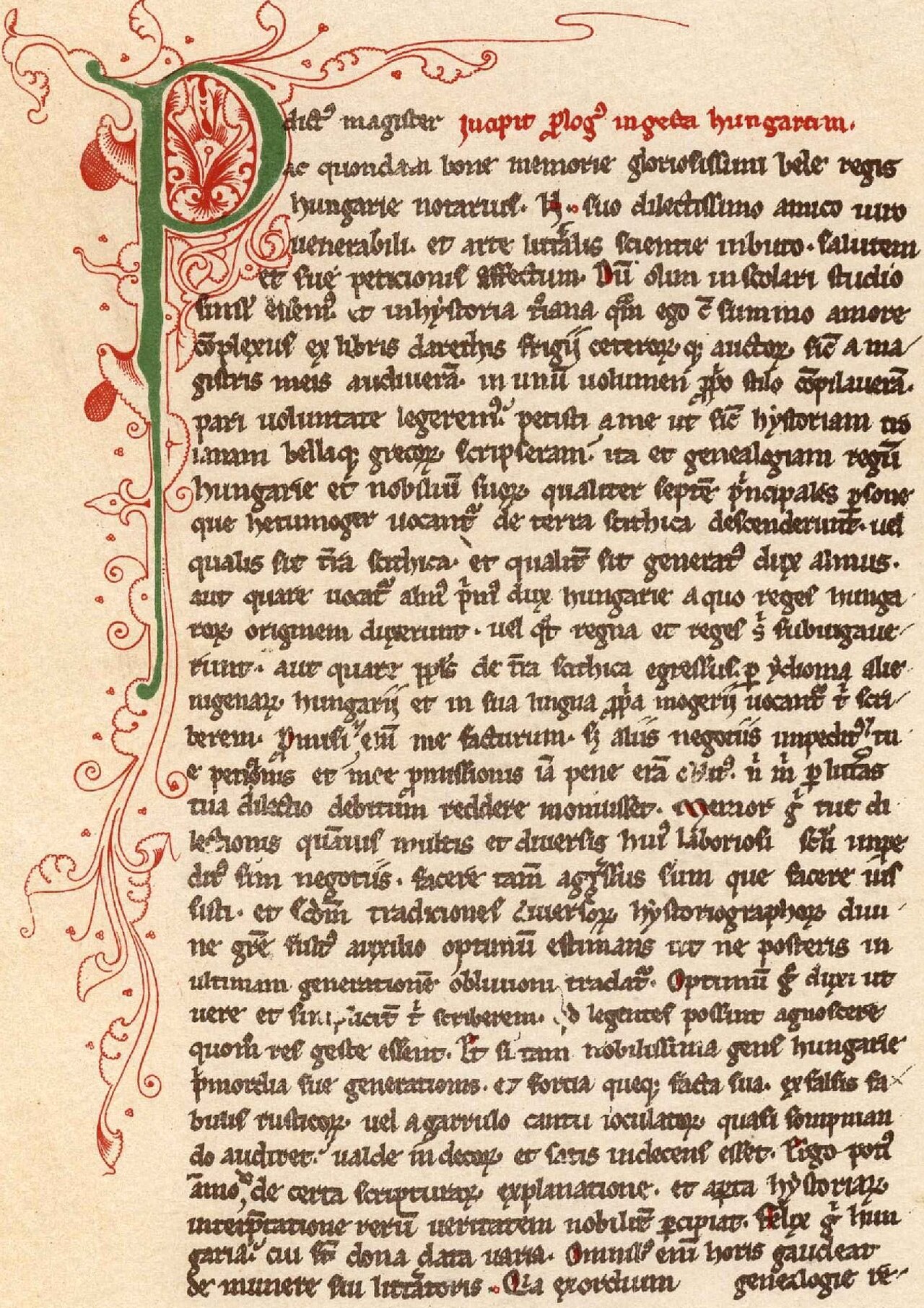
A manuscript page in dark brown ink on aged parchment. A large decorated initial P in green and red, with red scrollwork extending down the left margin. A red heading begins the first line, and the Latin text runs in columns of handwritten lines.Book

Secondary source

Gesta Hungarorum

Anonymus (Bele Regis Notarius) · c. 1200-1230

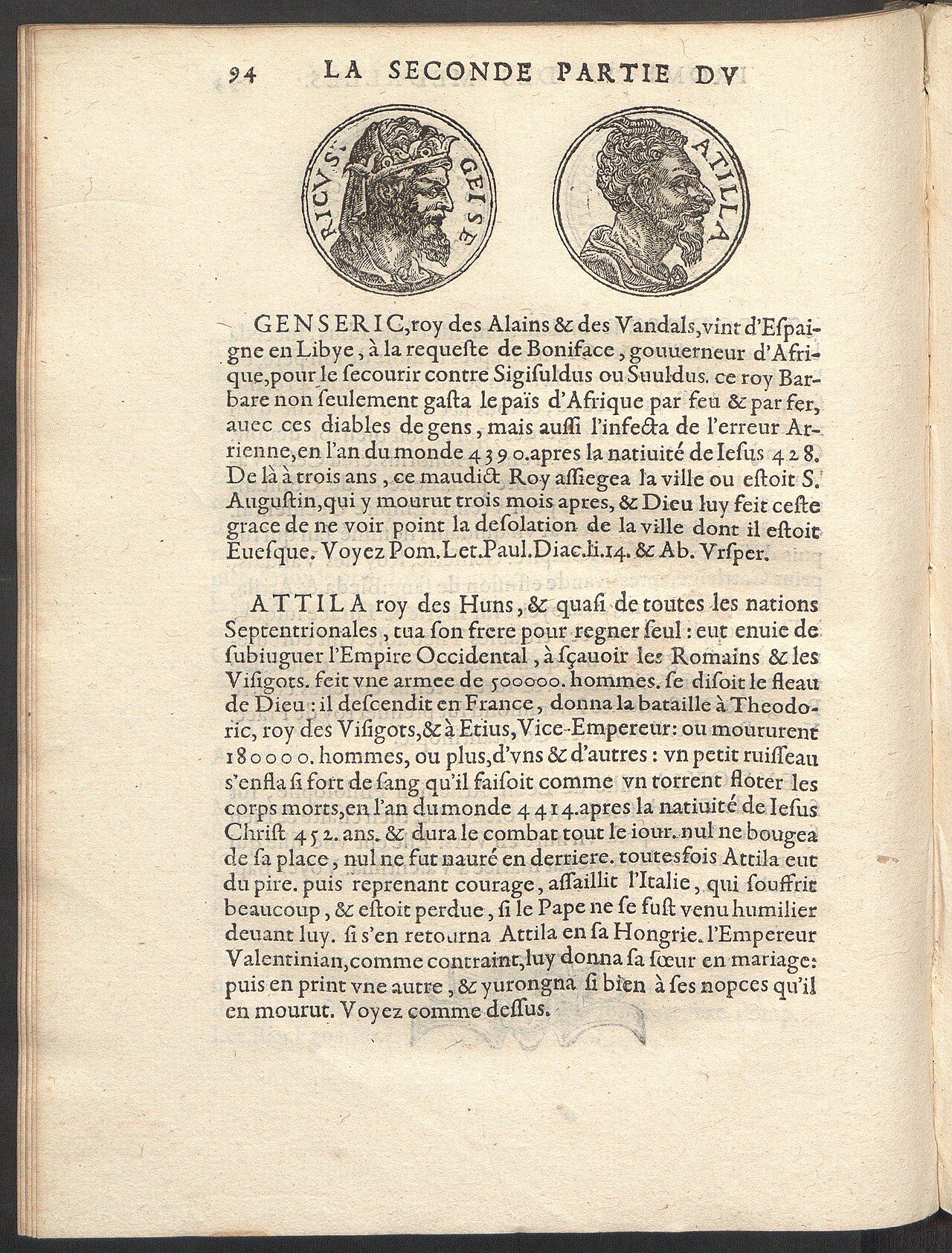
Page 94 of a 1581 printed book, with the running head 'LA SECONDE PARTIE DV'. Two circular woodcut medallion portraits sit at top: left labeled 'GENSERIC' in profile with a crown, right labeled 'ATTILA' in profile with curly hair and beard. Below is French printed text in two paragraphs about Genseric, king of the Alans and Vandals, and Attila, king of the Huns.Painting

Secondary source

Seconde partie du promptuaire des médailles

Guillaume Rouillé · 1581

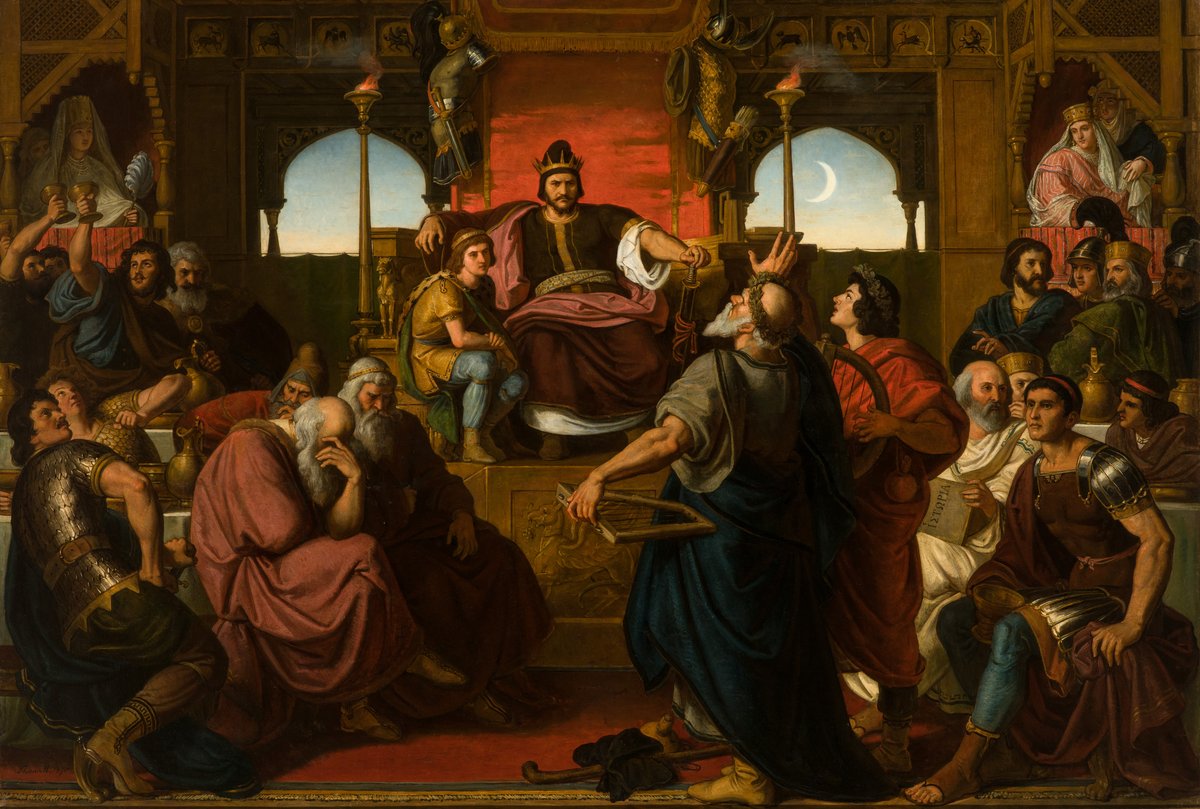
A large painting of a royal feast in a wooden hall. A bearded king in a crown sits on a raised throne in the center, with a red backdrop, while a figure in a blue robe holding a harp raises a hand toward him. Guests in armor and robes sit at tables, some with drinking cups, and a crescent moon shows through an arched window at right. Two veiled women sit on balconies at the upper corners.Painting

Secondary source

The Feast of Attila

Mór Than · 1870

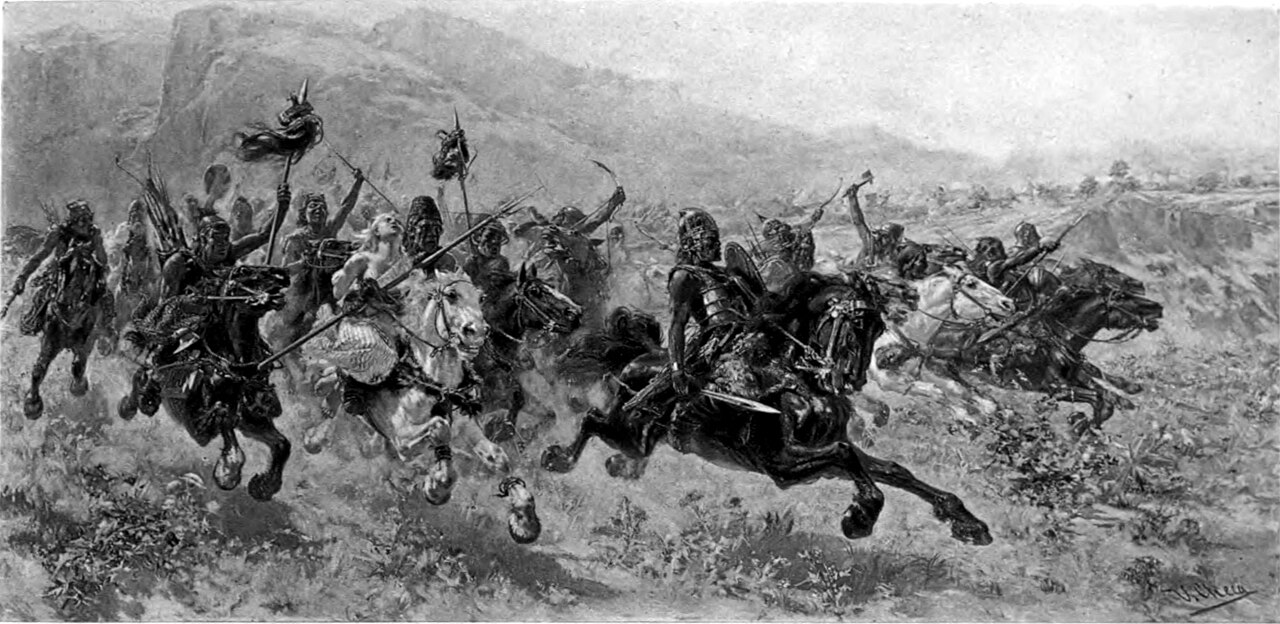
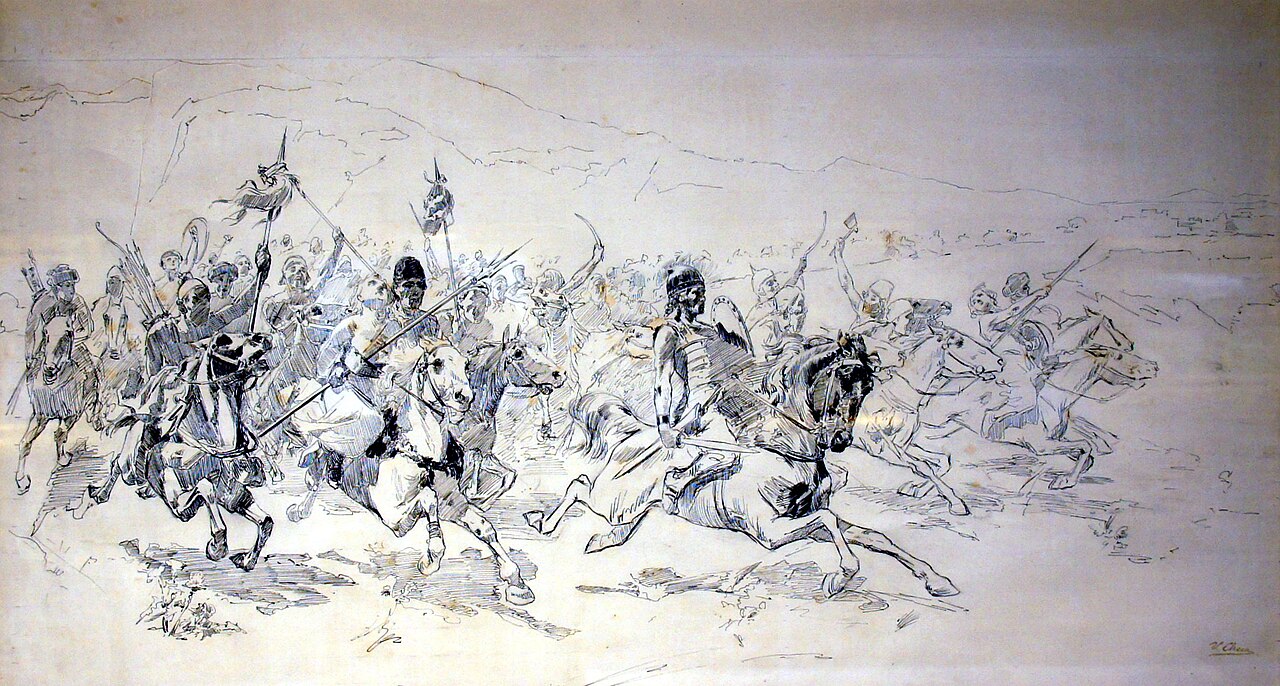
Black-and-white engraved print of mounted warriors charging across grassland toward the viewer. Riders wear helmets and armor and carry spears and standards, some raising weapons. Horses gallop with flying manes, and a rocky hill rises in the background. A signature appears in the lower right corner.Painting

Secondary source

Attila, the Scourge of God

Ulpiano Checa

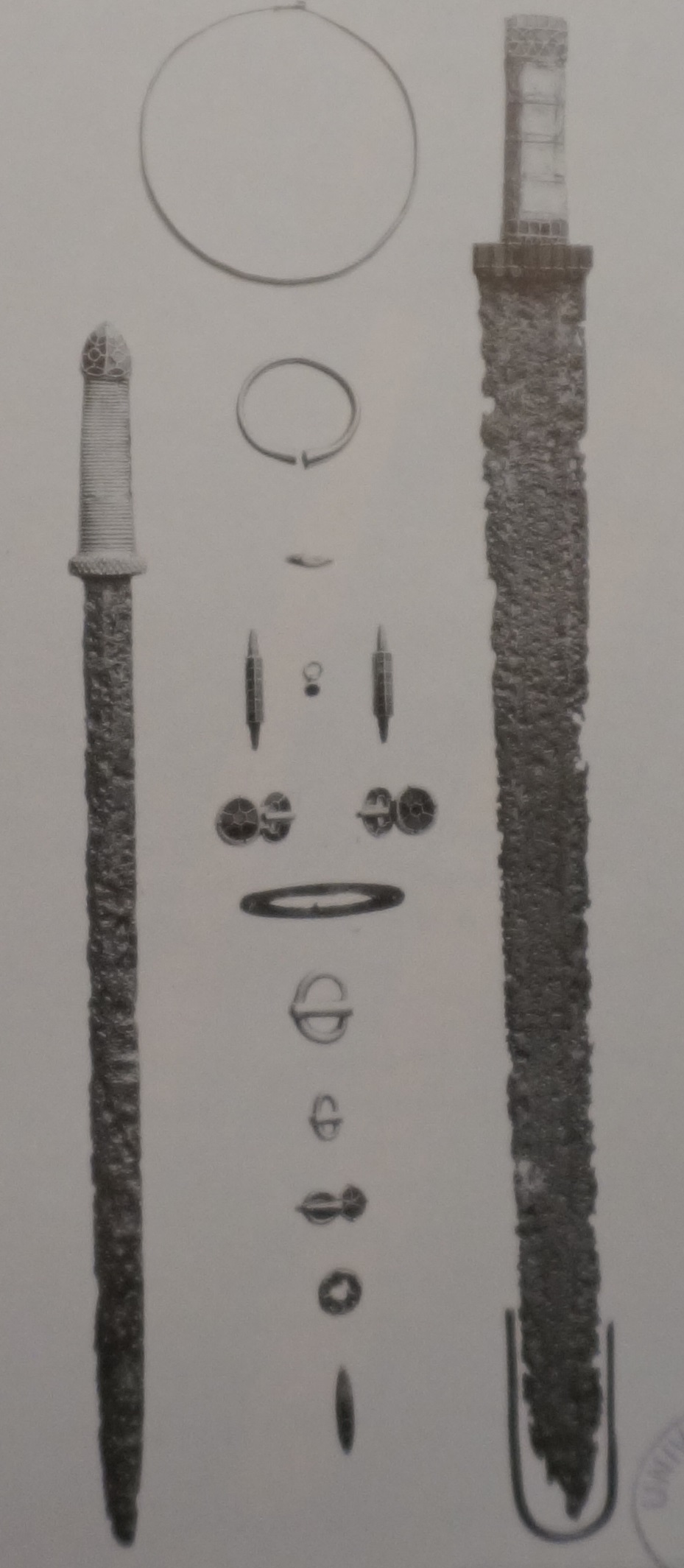
Grayscale engraved plate of the Pouan treasure objects on a pale background: two long swords (left and right), a neck ring at top, a bracelet, small pendants, paired brooches, a ring, and several buckles or fasteners.Artifact

Primary source

Treasure of Pouan

5th century

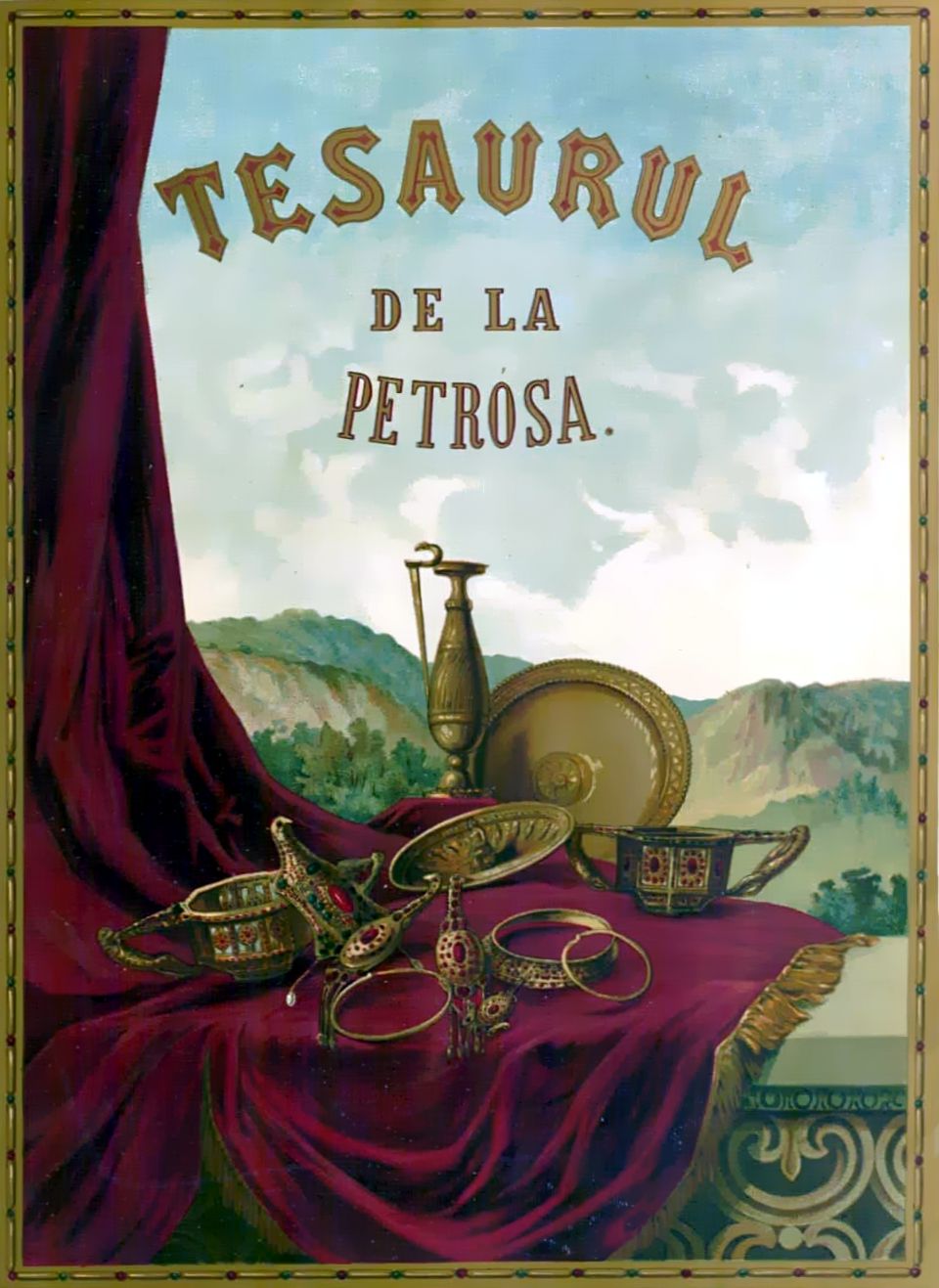
Colour lithograph title plate reading 'Tesaurul de la Petrosa' in decorative letters over a sky and hills. Below, a still life of gold vessels, a ewer, a dish, a shallow bowl, bracelets and jewelled ornaments rests on a red drape.Artifact

Primary source

Pietroasa Treasure

Visigoths · 381

The Gothic History of Jordanes, English translationBook

Secondary source

The Gothic History of Jordanes, English translation

Jordanes (translated by Charles Christopher Mierow) · 1915

Fresco in a lunette-shaped frame showing a scene of armored soldiers and horsemen in a battlefield, with a pope on a white horse and red-robed cardinals on the left, and two flying figures with swords and a red cloak in the sky above.Painting

Secondary source

The Meeting of Leo the Great and Attila

Raphael · 1514

Attila and the HunsBook

Secondary source

Attila and the Huns

Edward Hutton · 1915

Document

Tertiary source

Attila entry, Encyclopaedia Britannica (1911)

Thomas Hodgkin · 1911

Document

Tertiary source

Attila entry, Dictionary of Christian Biography and Literature (1911)

1911

Document

Tertiary source

Attila entry, The New International Encyclopaedia

1902

Book

Secondary source

Attila the Hun, chapter in Famous Men of the Middle Ages

John H. Haaren · 1904

Book

Secondary source

The Battle of Chalons, chapter in Fifteen Decisive Battles of the World

Edward Creasy · 1851

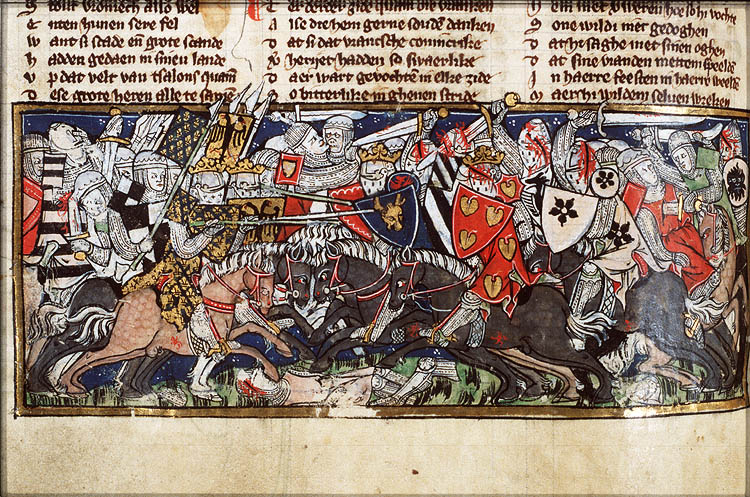
Medieval manuscript miniature in a framed panel showing a battle of mounted and foot knights in armor with banners, shields, and lances, with blood visible on some figures. Above the panel are columns of Middle Dutch text in black ink with red initials.Painting

Secondary source

Battle of the Catalaunian Plains

Unknown · c. 1325-1335

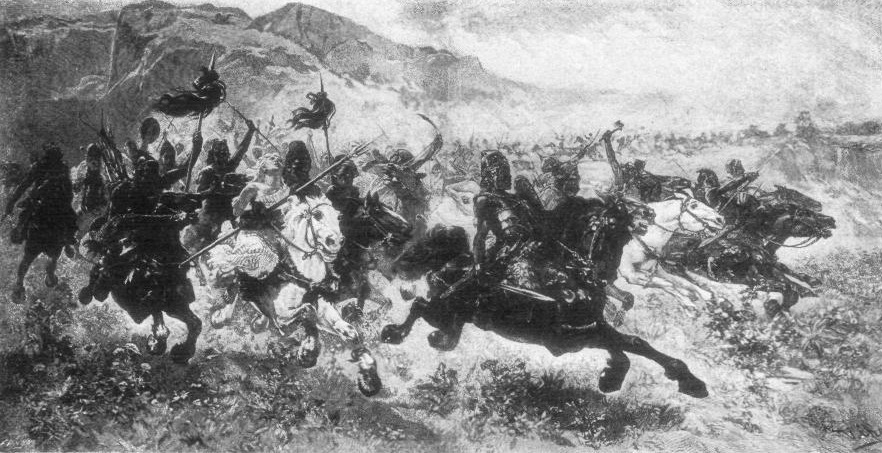
Black-and-white reproduction of a painting of mounted warriors charging across grassy ground toward mountains. Riders with spears and billowing banners gallop in dense formation, dust rising behind them, with more horsemen receding into the distance.Painting

Secondary source

The Huns Led by Attila Invade Italy

Ulpiano Checa

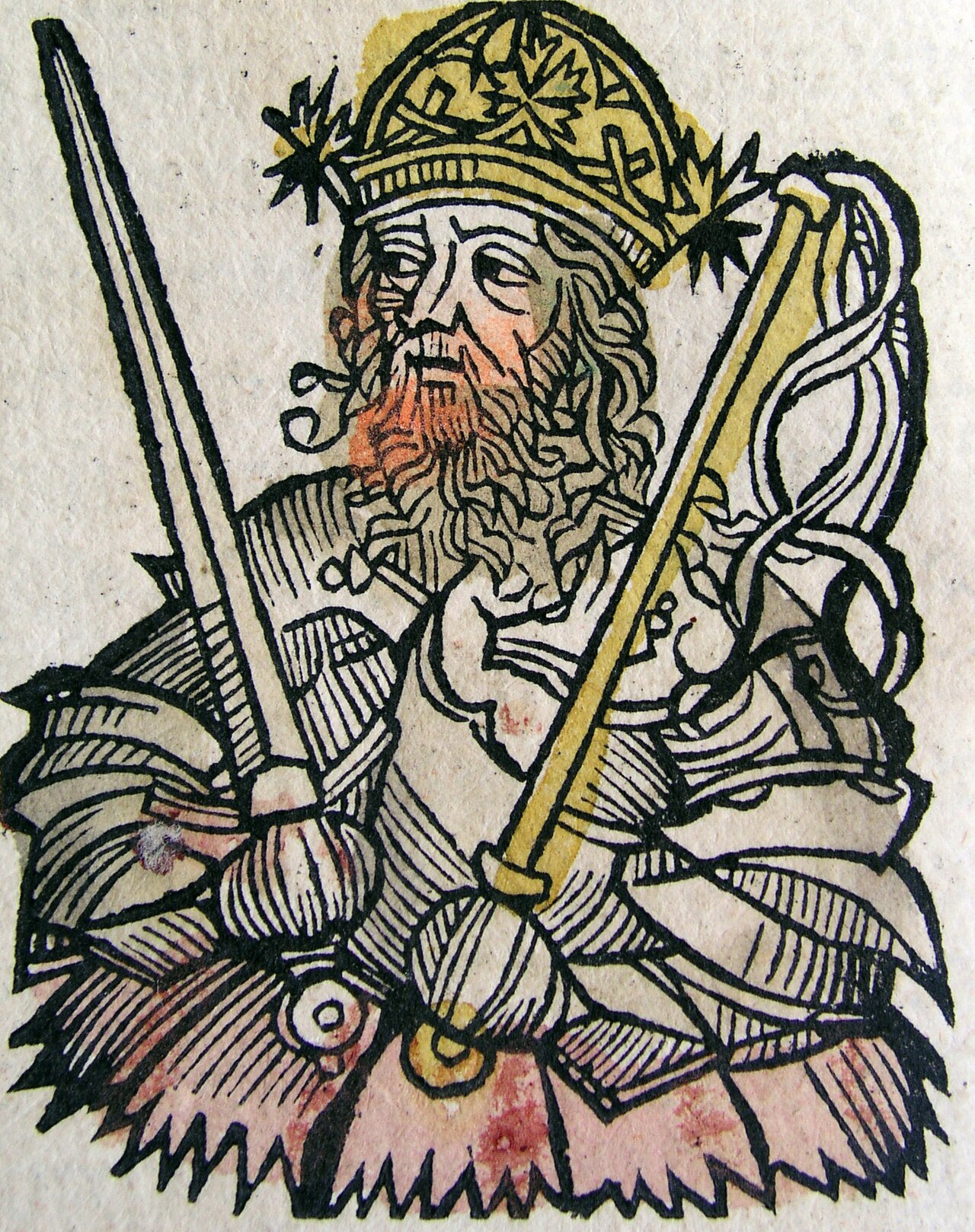
Hand-colored woodcut of a bearded, crowned king holding a long sword in one hand and a scepter in the other, wearing a fur-trimmed robe, with decorative foliage and a pink-tinted base. Black outlines with yellow, red, and gray coloring.Painting

Secondary source

Nuremberg Chronicle, Attila, King of the Huns

1493

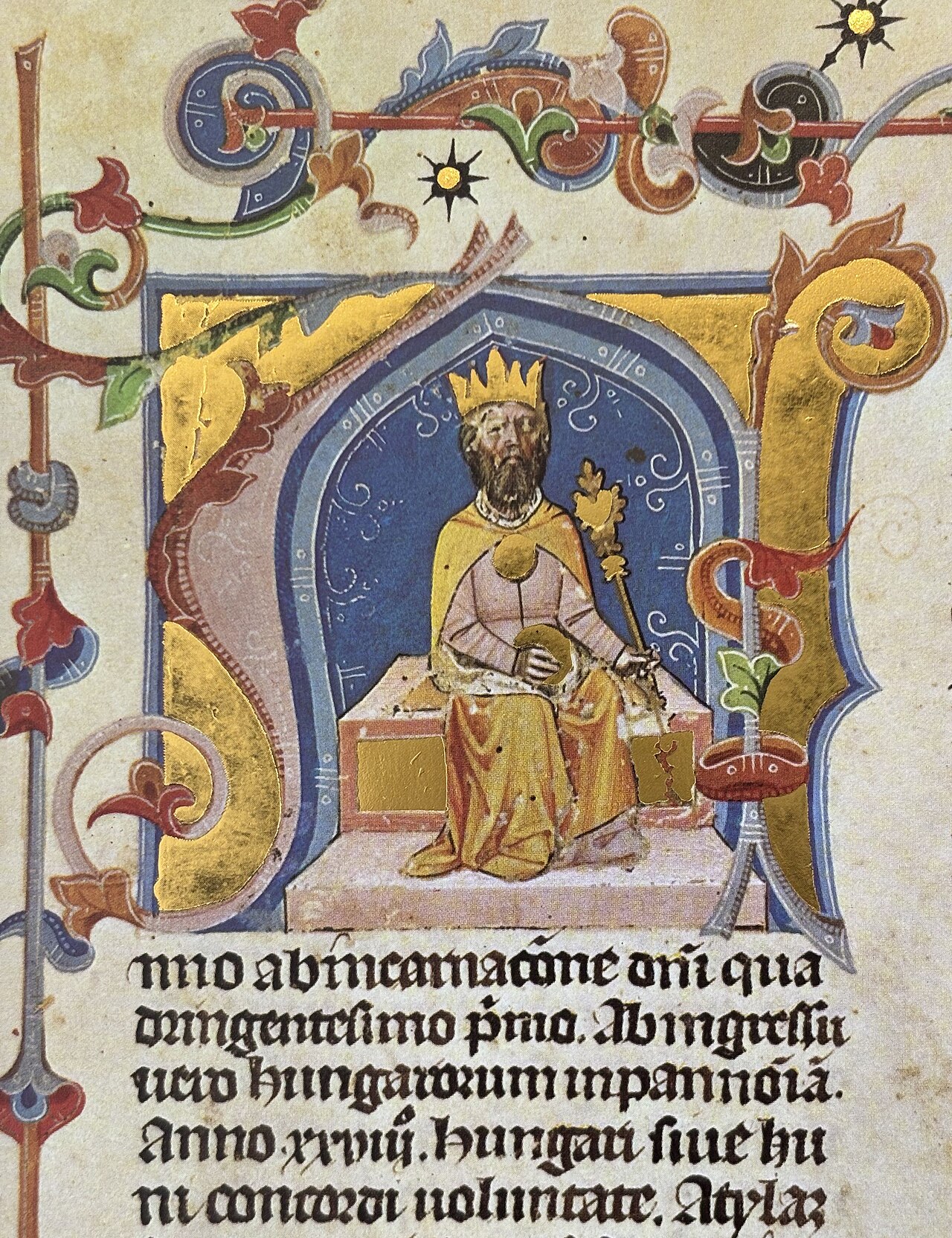
A painted miniature of a bearded king with a gold crown seated on a pink throne under a blue arched canopy, holding a gold scepter in one hand and an orb in the other, wearing a gold-and-pink robe. Gold leaf decorates the border. Below is Latin text in black gothic script.Painting

Secondary source

Illuminated Chronicle page, King Attila on the Throne

Márk Kálti · c. 1360

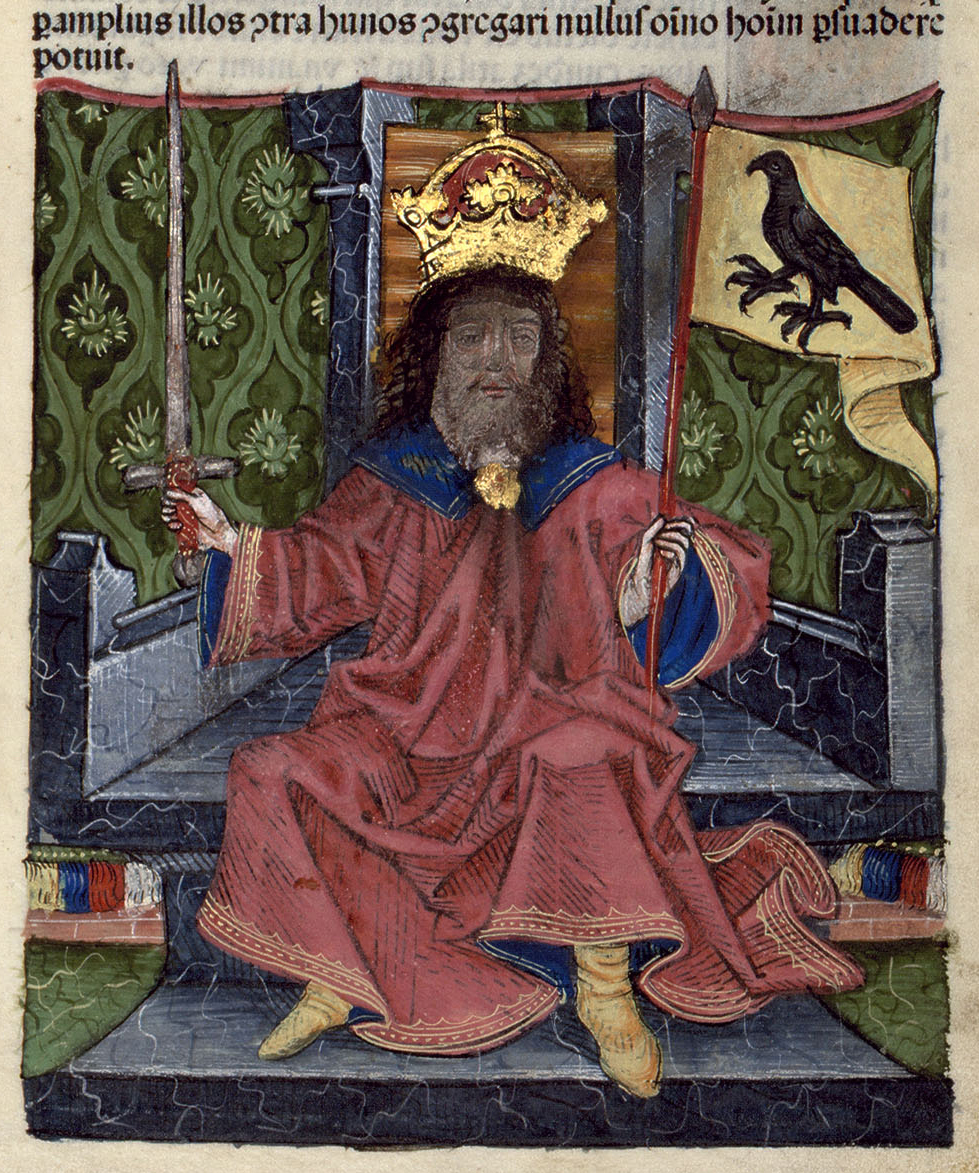
Painted illustration of a bearded king seated on a stone throne, wearing a golden crown and red robe with blue collar, holding a sword in his left hand and a red scepter in his right. A black raven on a gold banner appears at upper right, and Latin text runs across the top of the page.Painting

Secondary source

King Attila in the Chronica Hungarorum

Johannes de Thurocz · 1488

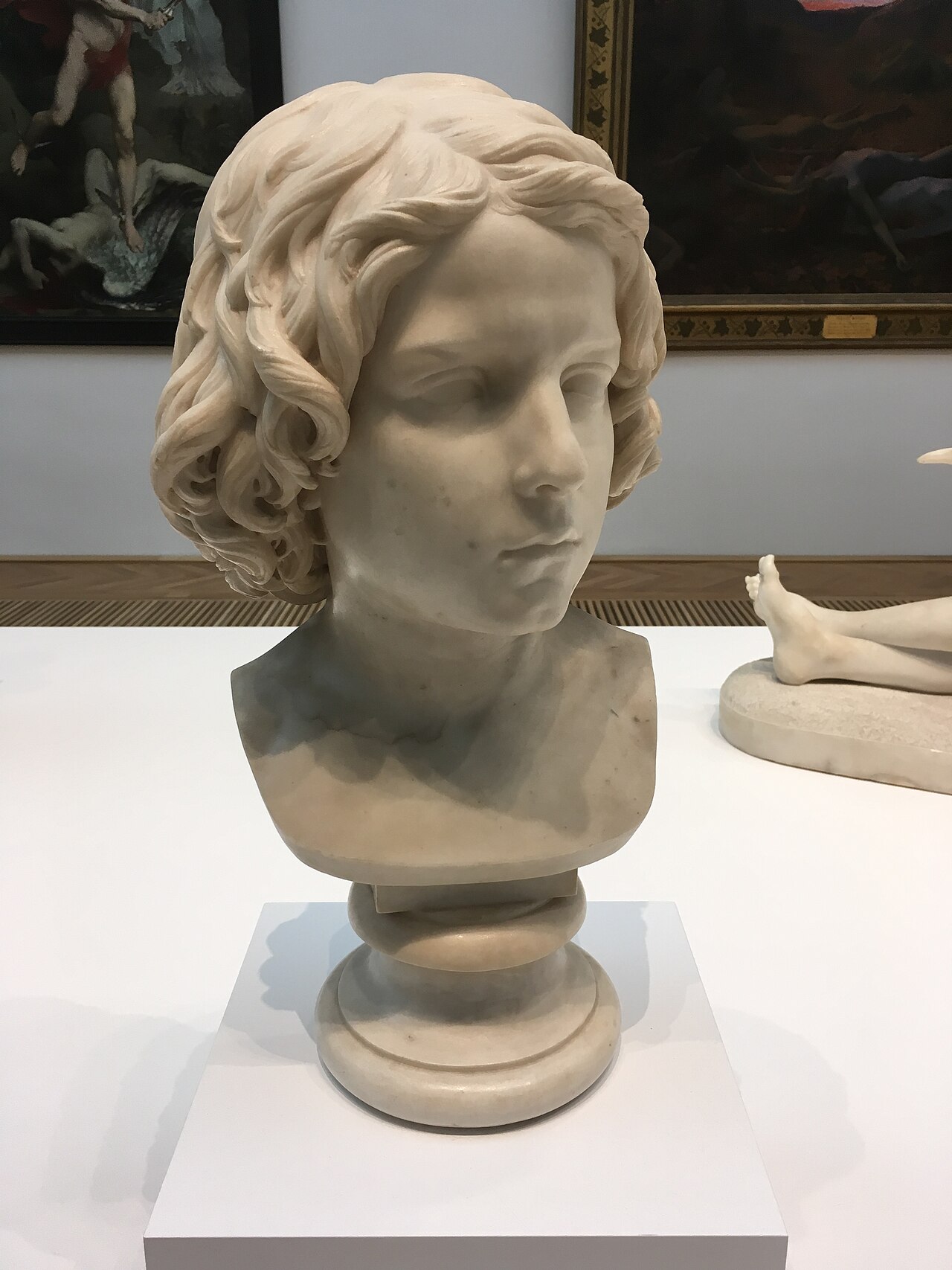
White marble bust of a young man with wavy, curled hair and a calm, downcast gaze, on a round stepped base. Behind it are paintings in gilt frames on a wall, and a marble foot is visible at the right edge.Sculpture

Secondary source

Attila, Head Study

Gabriel-Jules Thomas · 1850

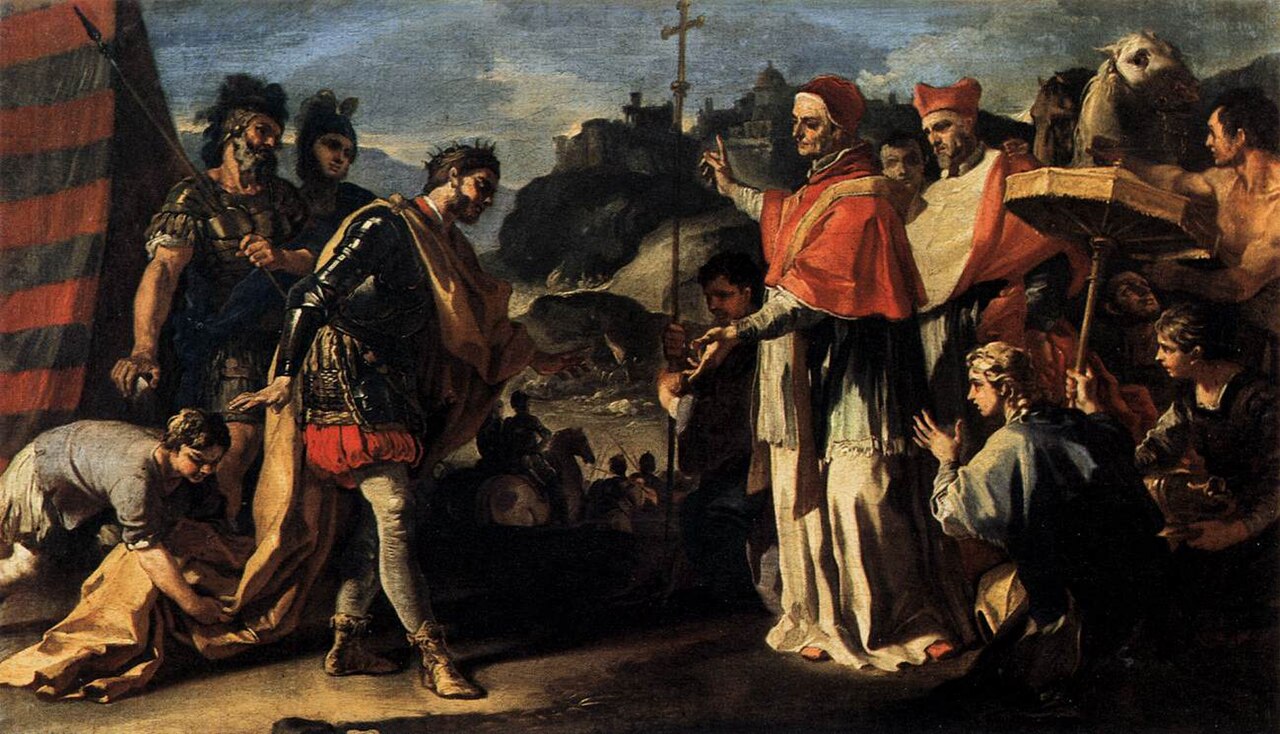
Painting of a scene with a bearded man in dark armor and a gold cloak in the foreground, a kneeling figure at lower left, and a clergyman in red cape and white robes pointing upward at center-right. Behind them are soldiers with a red and black striped banner, a cross-topped staff, a rocky landscape with a hilltop town, and a crowd of onlookers.Painting

Secondary source

The Meeting of Pope Leo and Attila

Francesco Solimena · first half of the 18th century

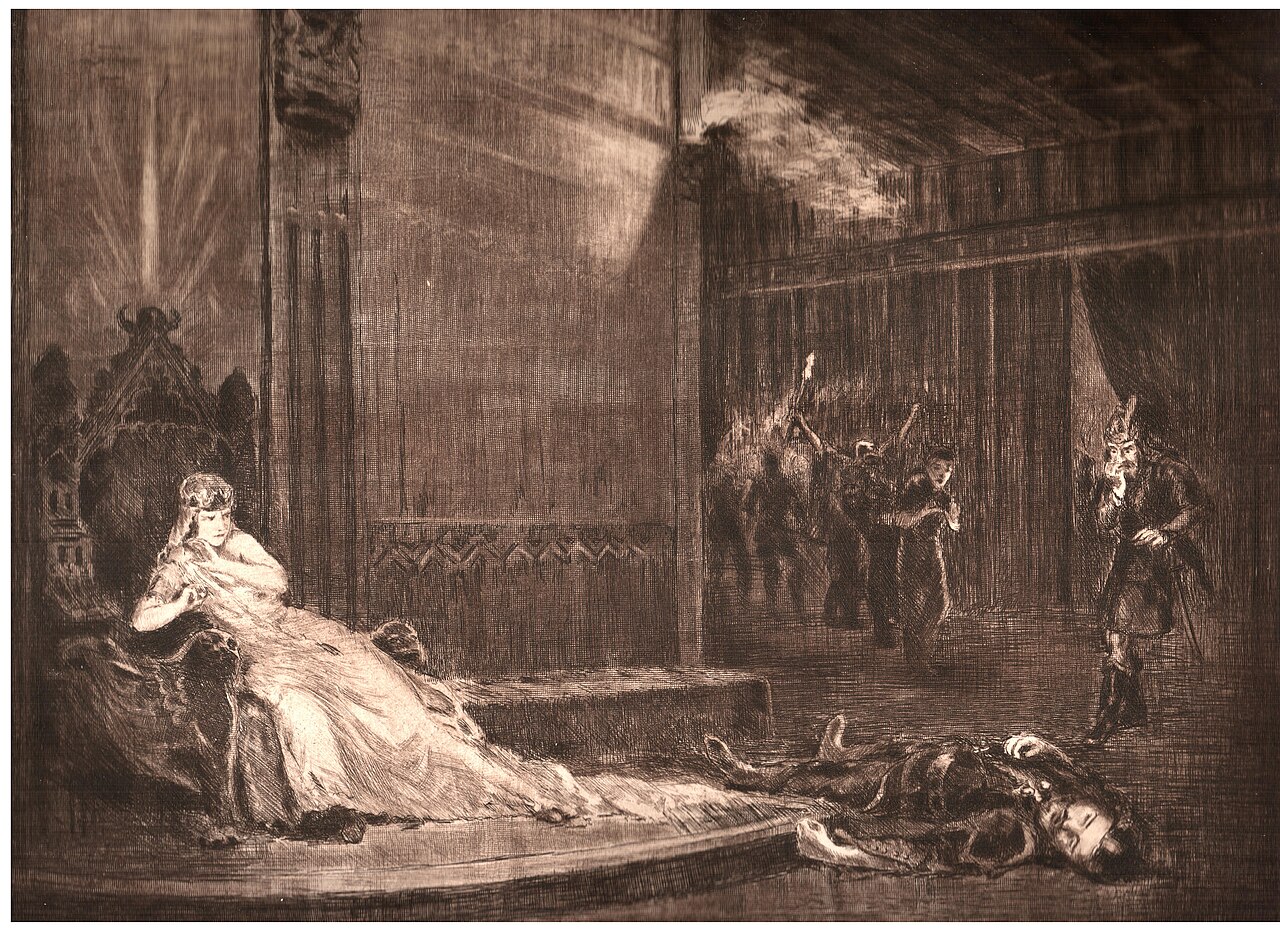
Sepia etching of a dim hall: a woman in a long gown reclines on a couch at left, a dead bearded man lies on the floor at lower right, and armed men with torches stand in the background near a figure in a fur hat at right.Painting

Secondary source

Great King Attila Murdered

Edvi Illes Odon · 19th-20th century (according to the curator's note)

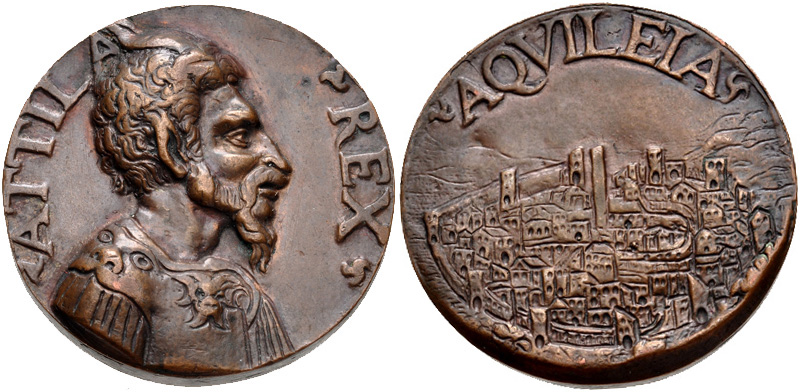
Two-sided bronze medal. Obverse: profile bust of a bearded man with curly hair and armor, facing right, with the inscription ATTILA REX. Reverse: a walled hilltop city with towers and buildings, labeled AQVILEIA.Artifact

Secondary source

Medal of Attila with Aquileia on the Reverse

17th century

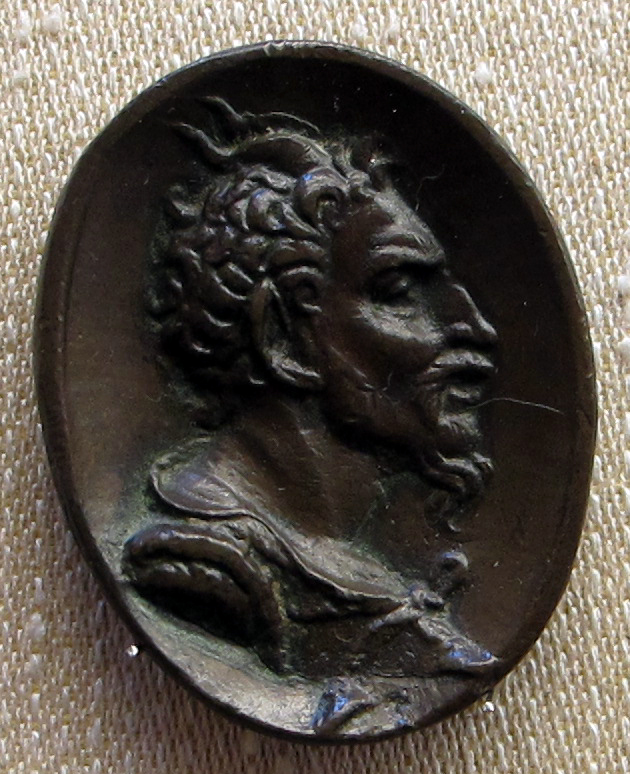
Dark bronze oval plaquette in low relief showing a bearded man in profile facing right, with curly hair, a bare-looking shoulder covered by a cloak or armor edge, against a plain background on a textured cloth.Artifact

Secondary source

Renaissance Plaquette Showing Attila

c. 1490-1500

Ink drawing on pale paper of a cavalry charge across a barren plain. Armored horsemen with lances and banners ride toward the viewer, with archers and riders behind them and mountains in the distant background.Painting

Secondary source

Atila y los hunos (preparatory drawing)

Ulpiano Checa · 1891

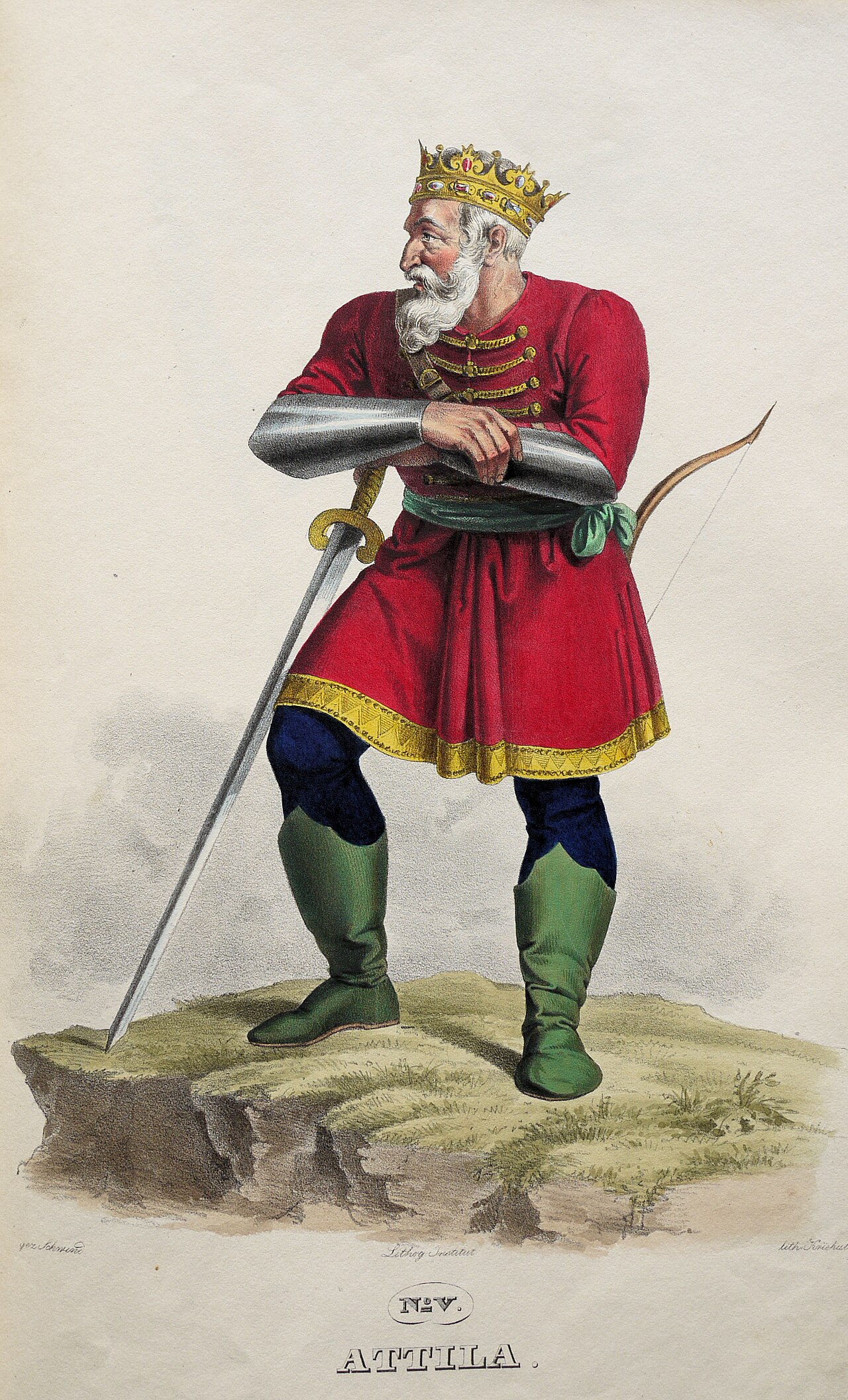
Hand-colored lithograph of a bearded, crowned man in a red tunic with gold trim, silver arm guards, green boots and blue trousers. He leans on a long sword planted on a grassy rocky outcrop, with a bow over his shoulder. Caption below reads ATTILA.Painting

Secondary source

Attila, King of the Huns (lithograph)

Josef Kriehuber · c. 1828

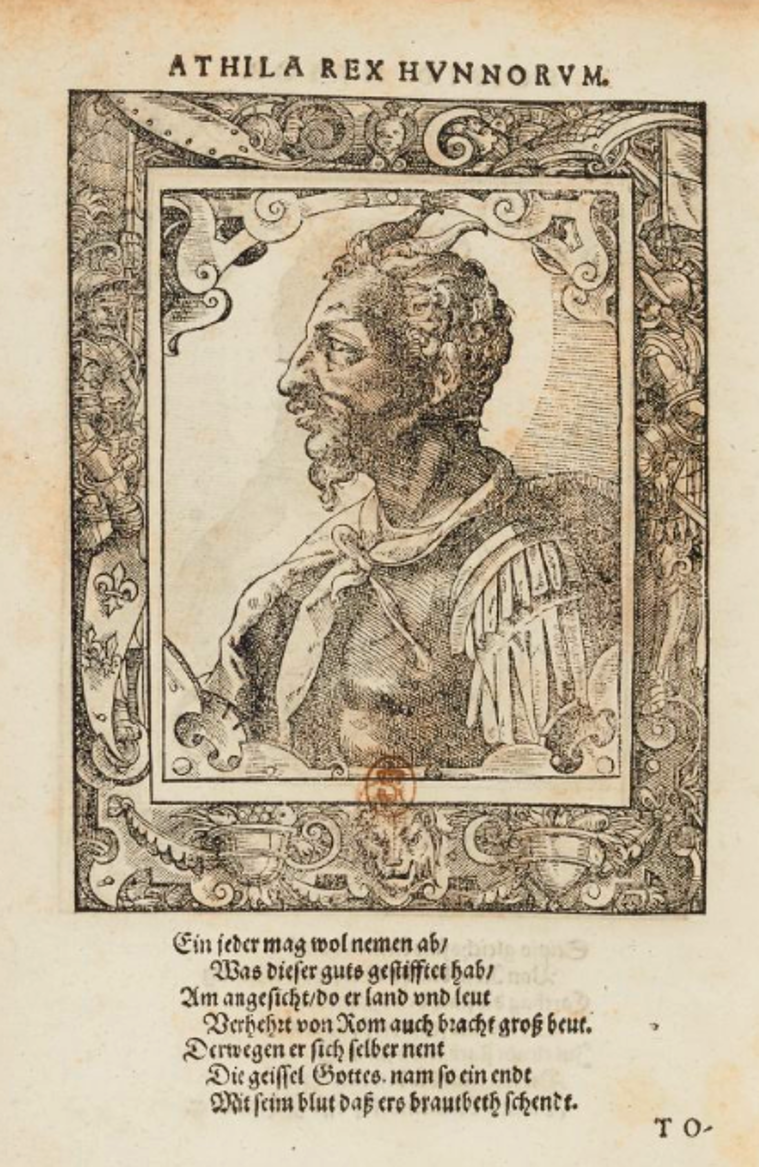
Woodcut portrait of a bearded, curly-haired man in profile facing left, wearing armor and a cloak, framed by ornate decorative borders. Above is the title 'ATHILA REX HVNNORVM'. Below is a block of German verse in black letter.Painting

Secondary source

Athila Rex Hunnorum (woodcut)

Theobald Müller · 1577

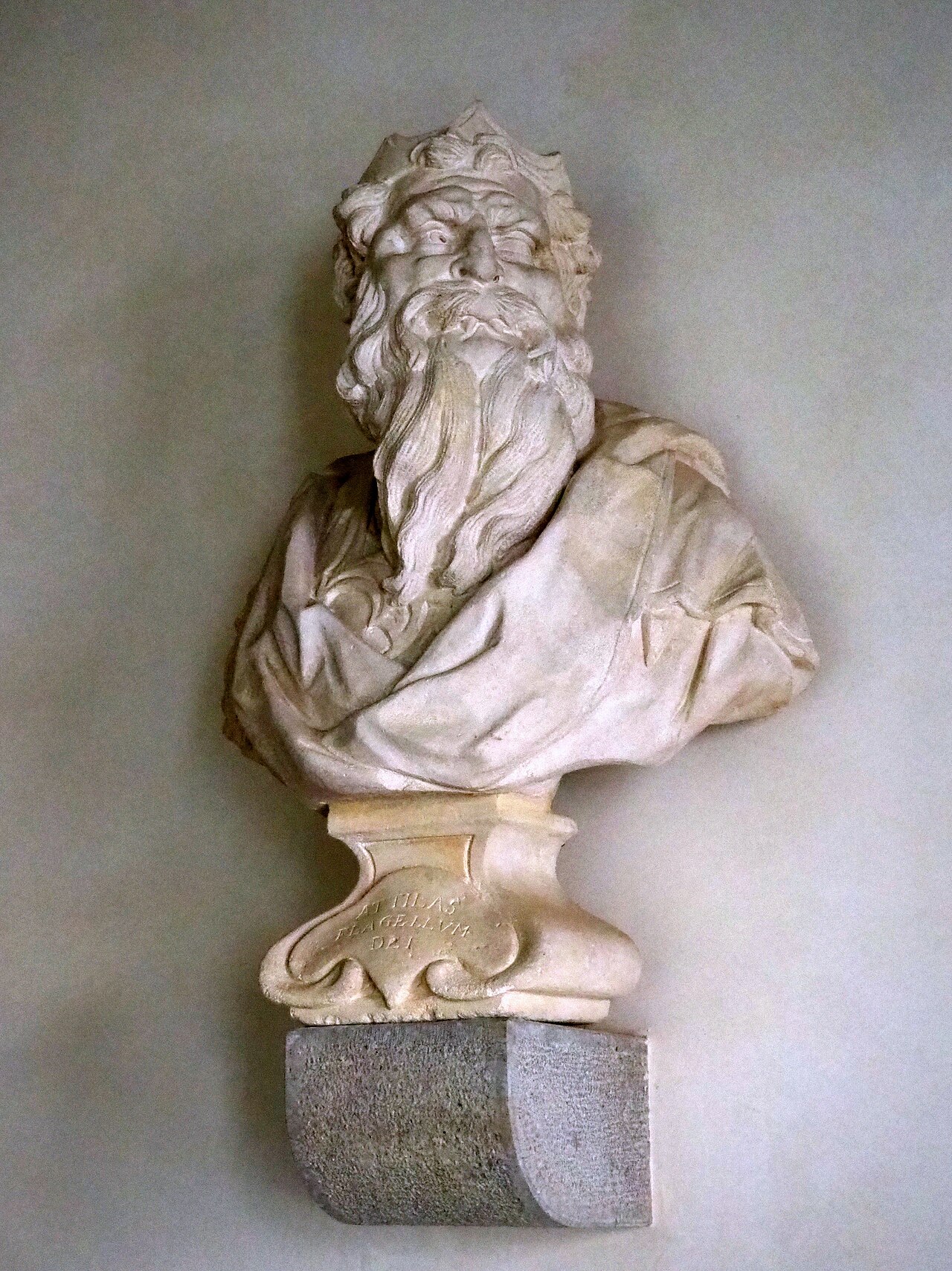
White marble bust of a bearded, crowned figure with long flowing beard and wavy hair, draped in a cloak, on a carved pedestal with an inscription, set on a grey stone base against a pale wall.Sculpture

Secondary source

Bust of Attila (Giovanni Bonazza)

Giovanni Bonazza · 18th century

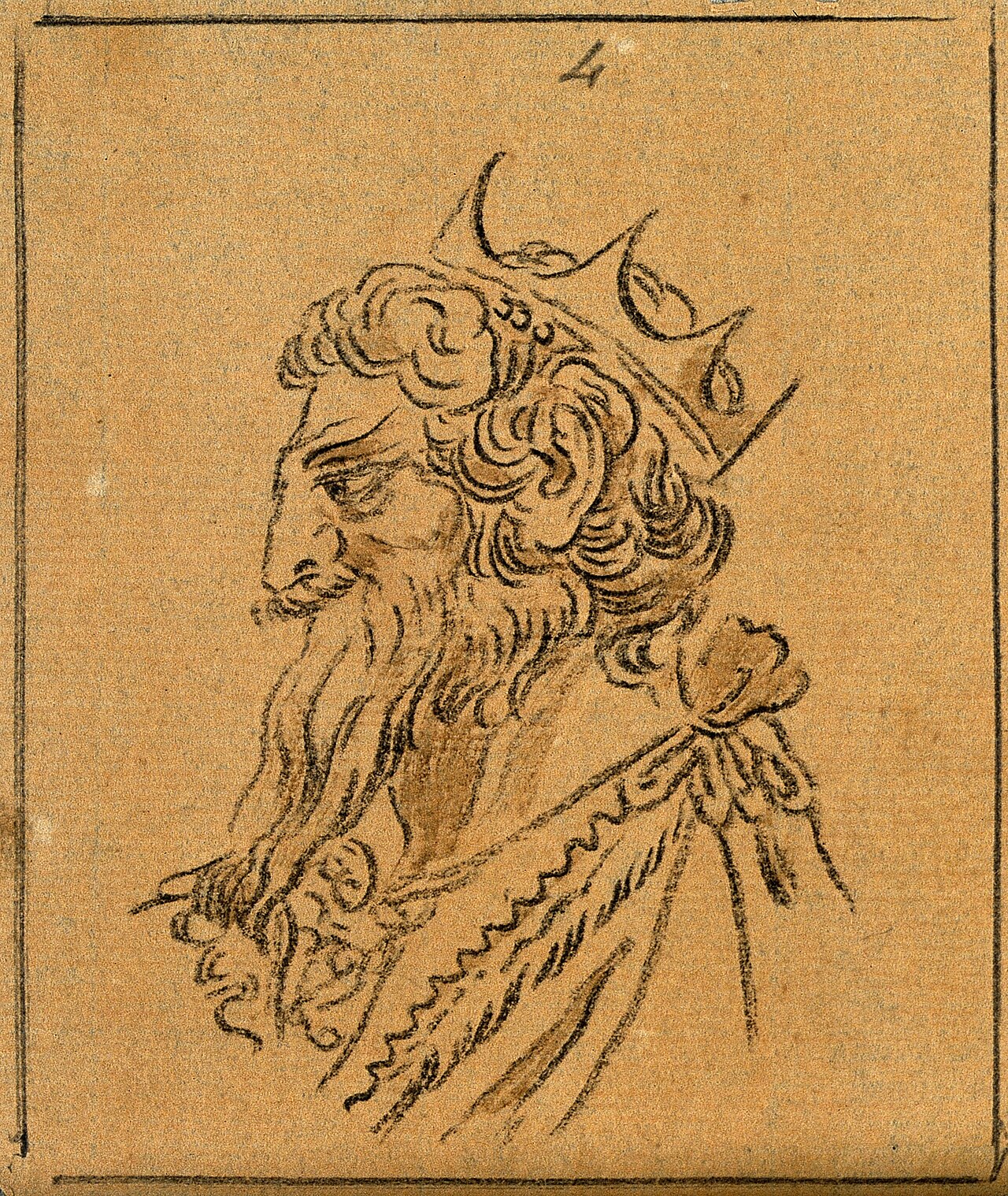
Pen and brown ink sketch on tan paper, profile of a bearded man with curly hair wearing a crescent-topped crown or helmet, wrapped in a cloak with a ruffled edge. A small numeral 4 appears at the top.Painting

Secondary source

Attila the Hun (drawing)

c. 1789

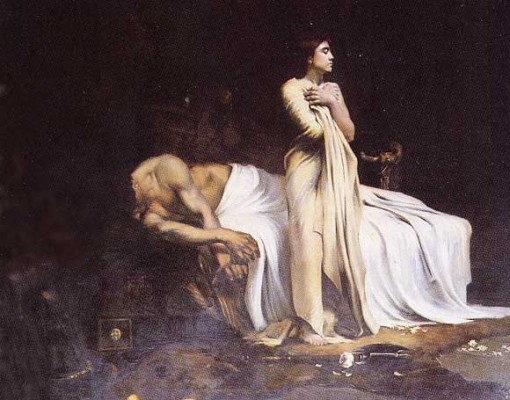
Painting in dark tones: a nude, muscular man slumps forward over the arm of a chair in the foreground. A woman in a long cream-colored robe stands beside him, one hand pressed to her chest, looking upward. A white cloth drapes the chair. Objects lie on the floor.Painting

Secondary source

The Death of Attila

J. Villeclère · 19th century

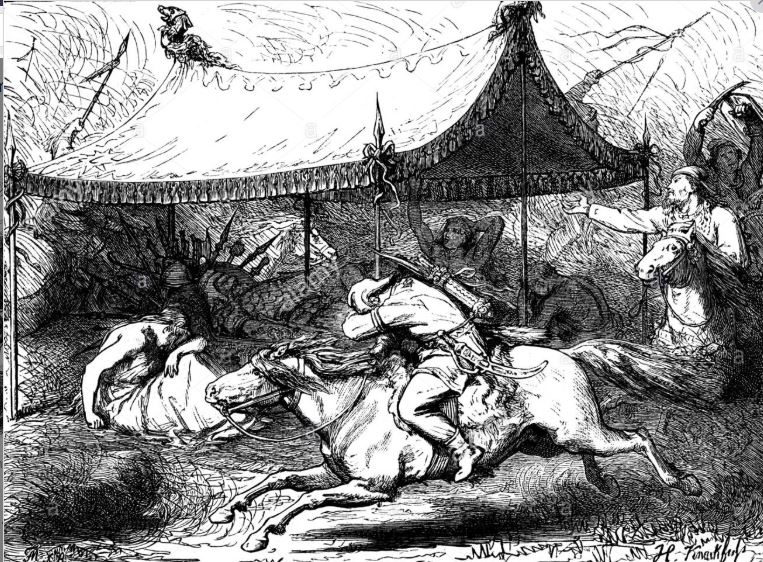
Black and white wood engraving of a scene in a tent with a fringed canopy. A man lies on the ground on the left, head resting on his arm. A rider on a white horse gallops in the foreground, with a second figure on horseback on the right raising an arm. Spears stand among the tent poles, and a sketched signature appears at the lower right.Painting

Secondary source

Death of Attila

19th century

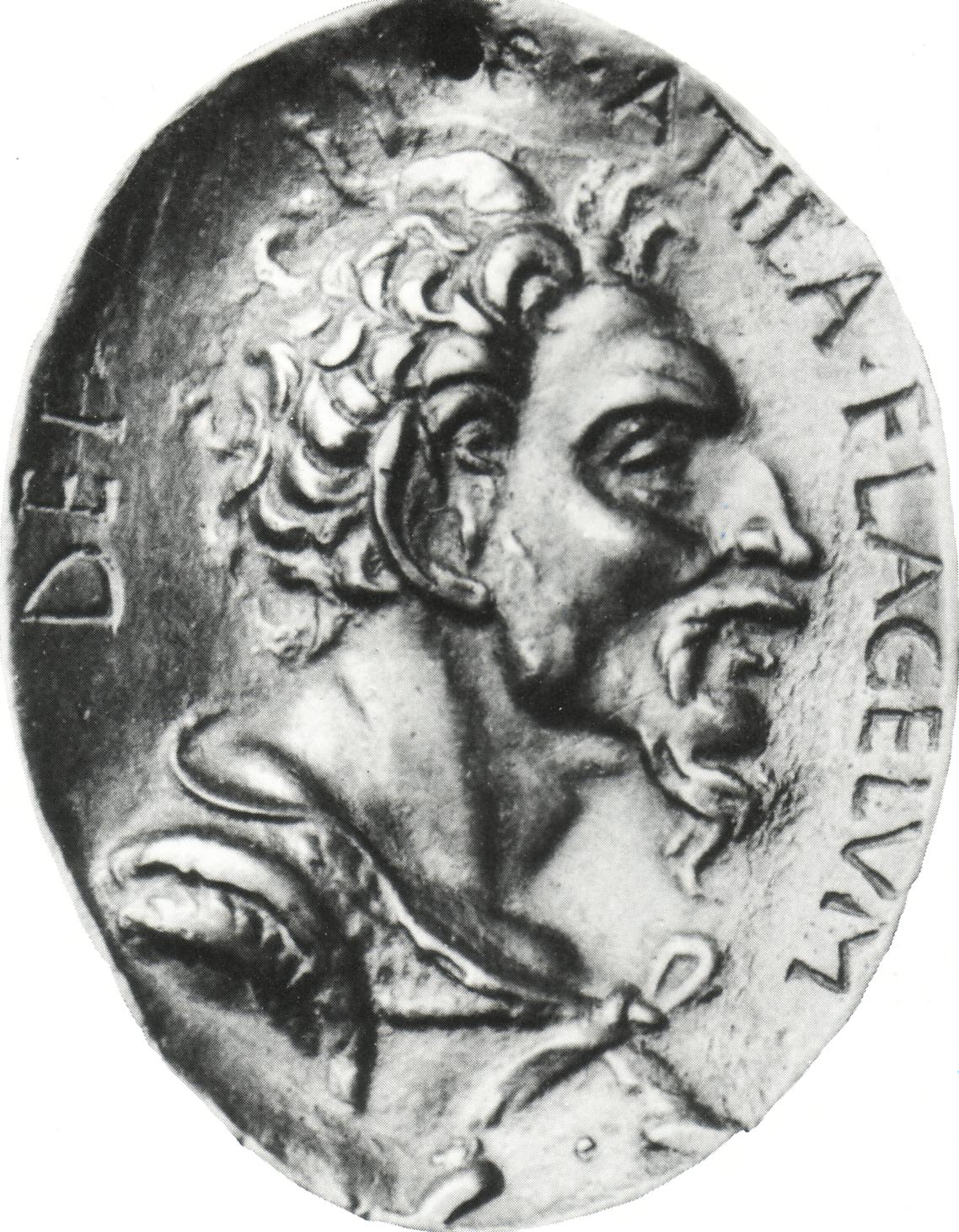
Photo of an oval bronze medallion in profile. A bearded man with curly hair and a cloak faces right. Raised lettering along the right edge reads ATTILA FLAGELLVM, with more letters on the left and top edges.Artifact

Secondary source

Attila 'fléau de Dieu' bronze medal

2000

Black-and-white engraved portrait in profile of a bearded man with a hooked nose and furrowed brow, wearing a spiked crown with horn-like points, a layered metal armor breastplate, and a cloak. The background is pale.Painting

Secondary source

Ritratto di Attila

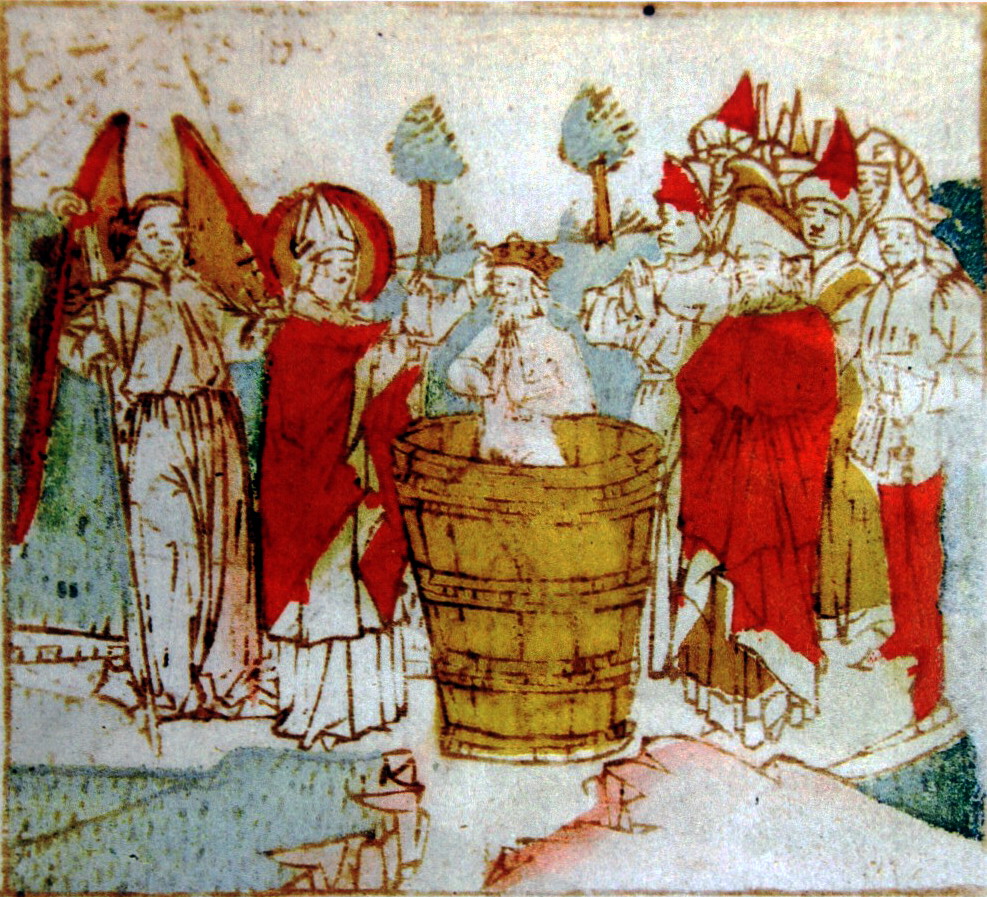
Hand-colored drawing of a medieval scene: a crowned man stands waist-deep in a large wooden tub while a bishop in red vestments with a halo stands beside him. Other figures in red and white robes and hats watch, and two small trees appear in the background.Painting

Secondary source

Attila baptized by Saint Servatius

c. 1460

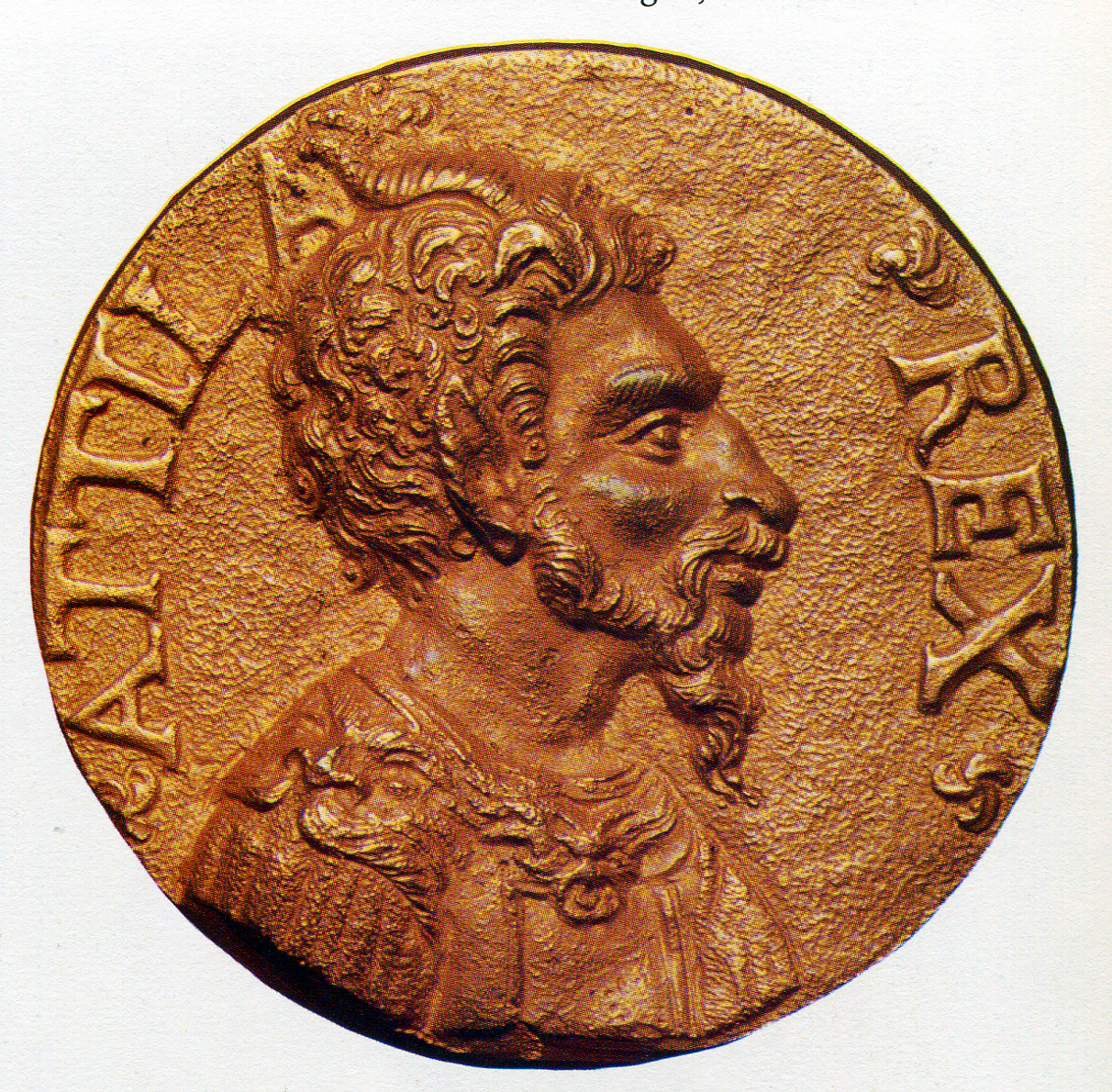
Bronze-toned medal in profile view showing a bearded man with curly hair and a laurel-like headpiece, facing right. Inscriptions read ATTILA on the left and REX on the right. Circular relief on a plain background.Artifact

Secondary source

Medal of Attila

Не позже начала XVII в. (no later than the early 17th century)

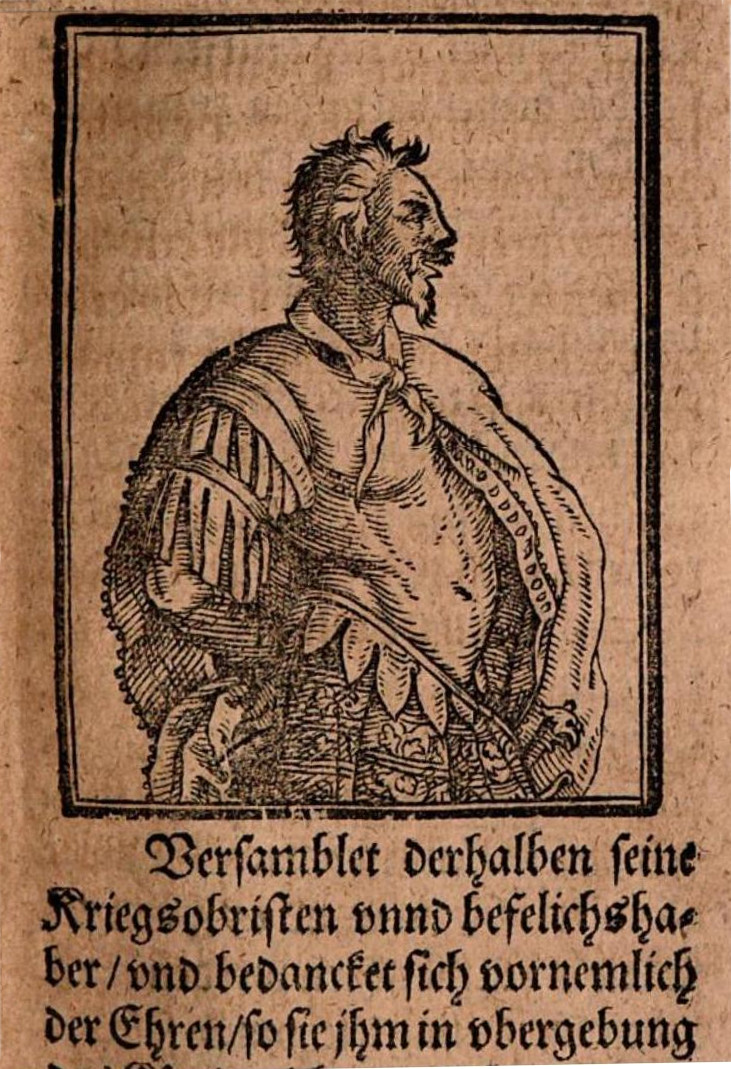
Woodcut in a rectangular border of a bearded man with wild, tufted hair, shown in profile facing right, wearing a cloak with a decorative trim and a loose collar. Below is a German Fraktur caption, partly cut off.Painting

Secondary source

Attila illustration, Wilhelm Dilich's Ungarische Chronica

Wilhelm Dilich · 1604

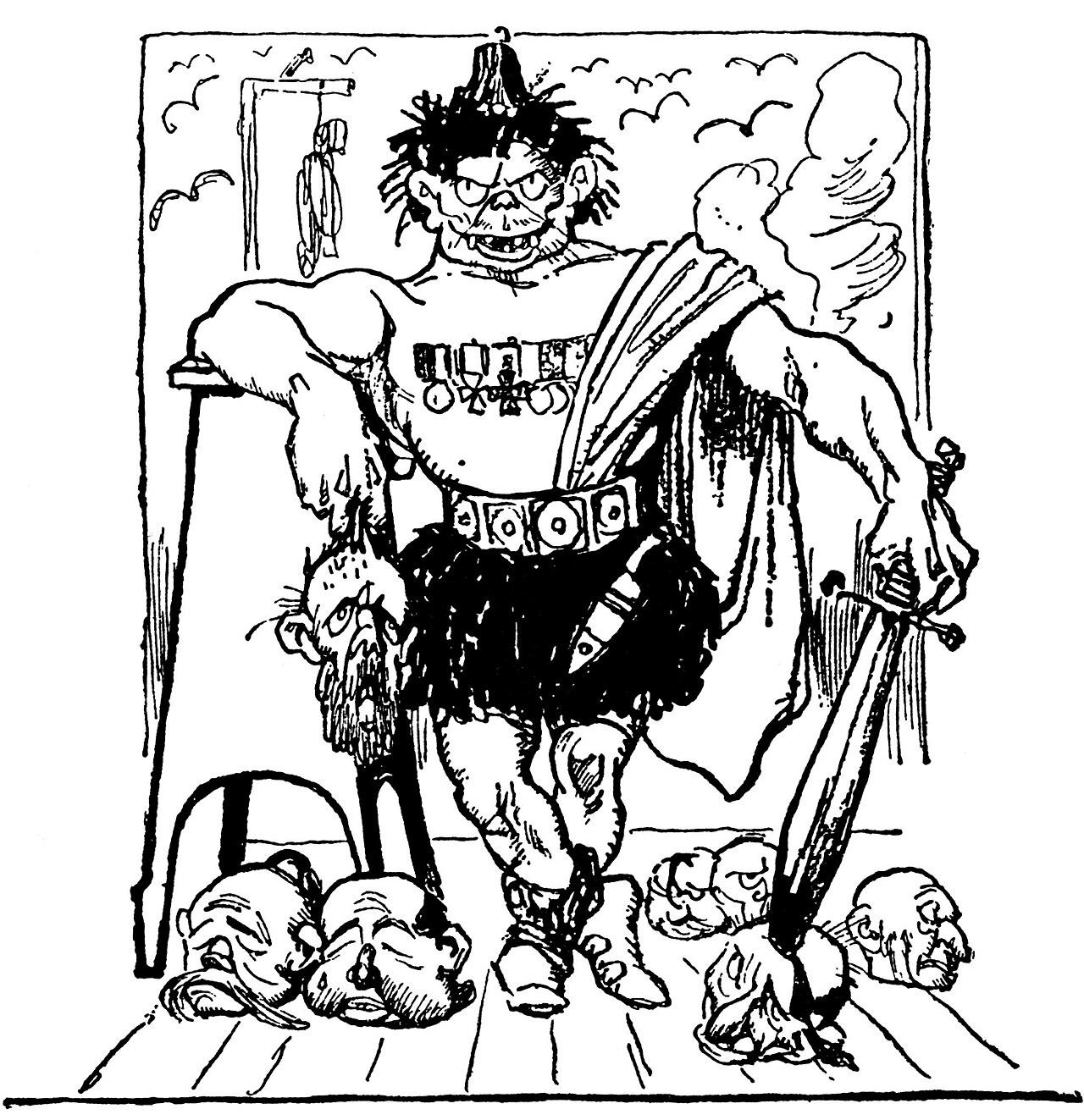
Black-and-white ink drawing of a caricatured, grotesquely muscular warrior with wild hair and a scowling face, wearing medals, a belt with studs, a cape, and a short fur kilt. He holds a sword in one hand and rests the other on a stand. Severed heads lie on the floor at his feet, and a head hangs from his belt. Smoke rises in the background.Painting

Secondary source

Attila (Radakov caricature)

Aleksei Aleksandrovich Radakov · 1911

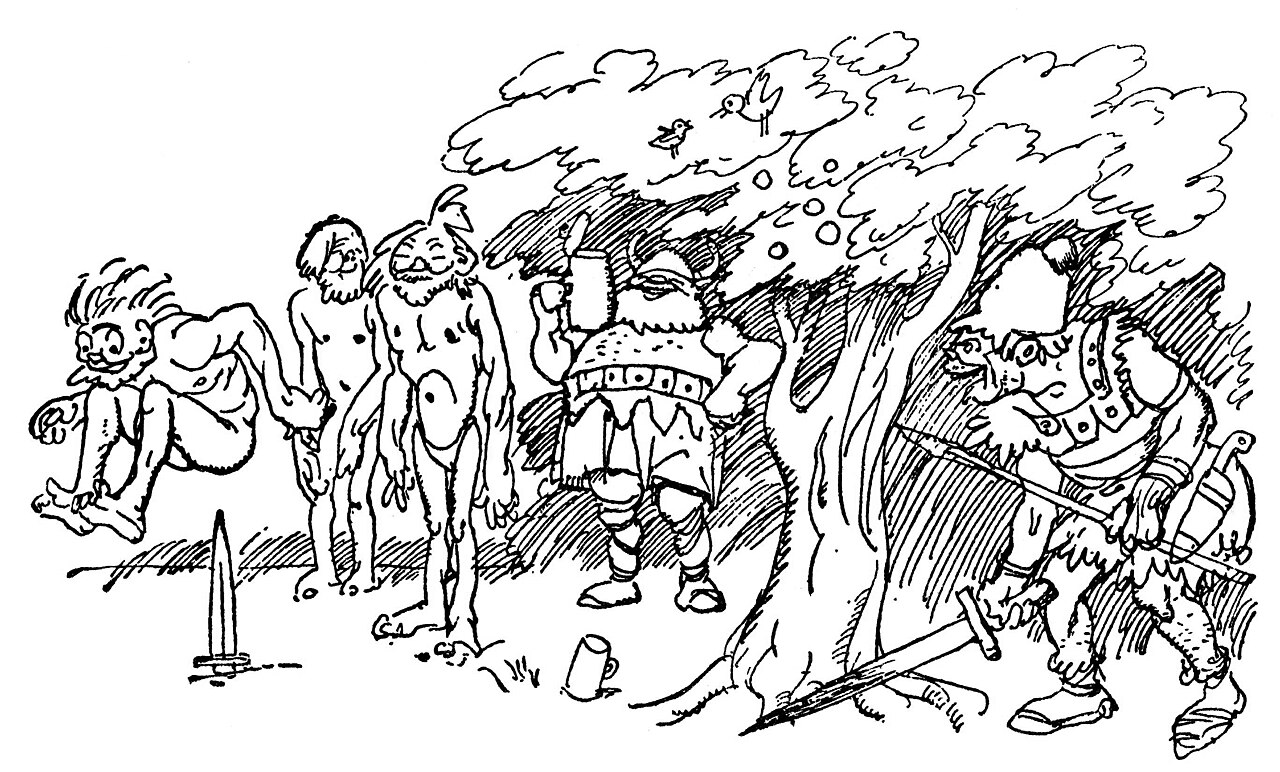
Pen-and-ink cartoon of a rowdy group of hairy, nude or scantily clad men in a forest. At left, one leaps; two stand in middle; a bearded man holds a mug and drinks by a tree; a fierce-looking warrior with a sword stands at right beside a tree.Painting

Secondary source

Attila Is Sneaking Up To Teutons

Aleksei Aleksandrovich Radakov · 1911

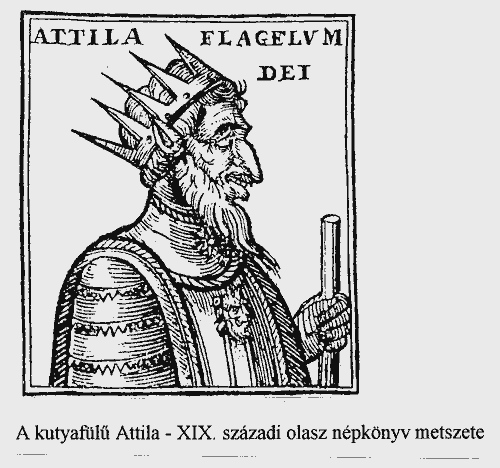
Woodcut-style engraving of a bearded man in profile wearing a spiked crown, with a fur-trimmed garment and holding a staff. Text above reads ATTILA and FLAGELVM DEI. Caption below in Hungarian reads: A kutyafülű Attila - XIX. századi olasz népkönyv metszete.Painting

Secondary source

Kutyafülű Attila (Dog-eared Attila)

19th century

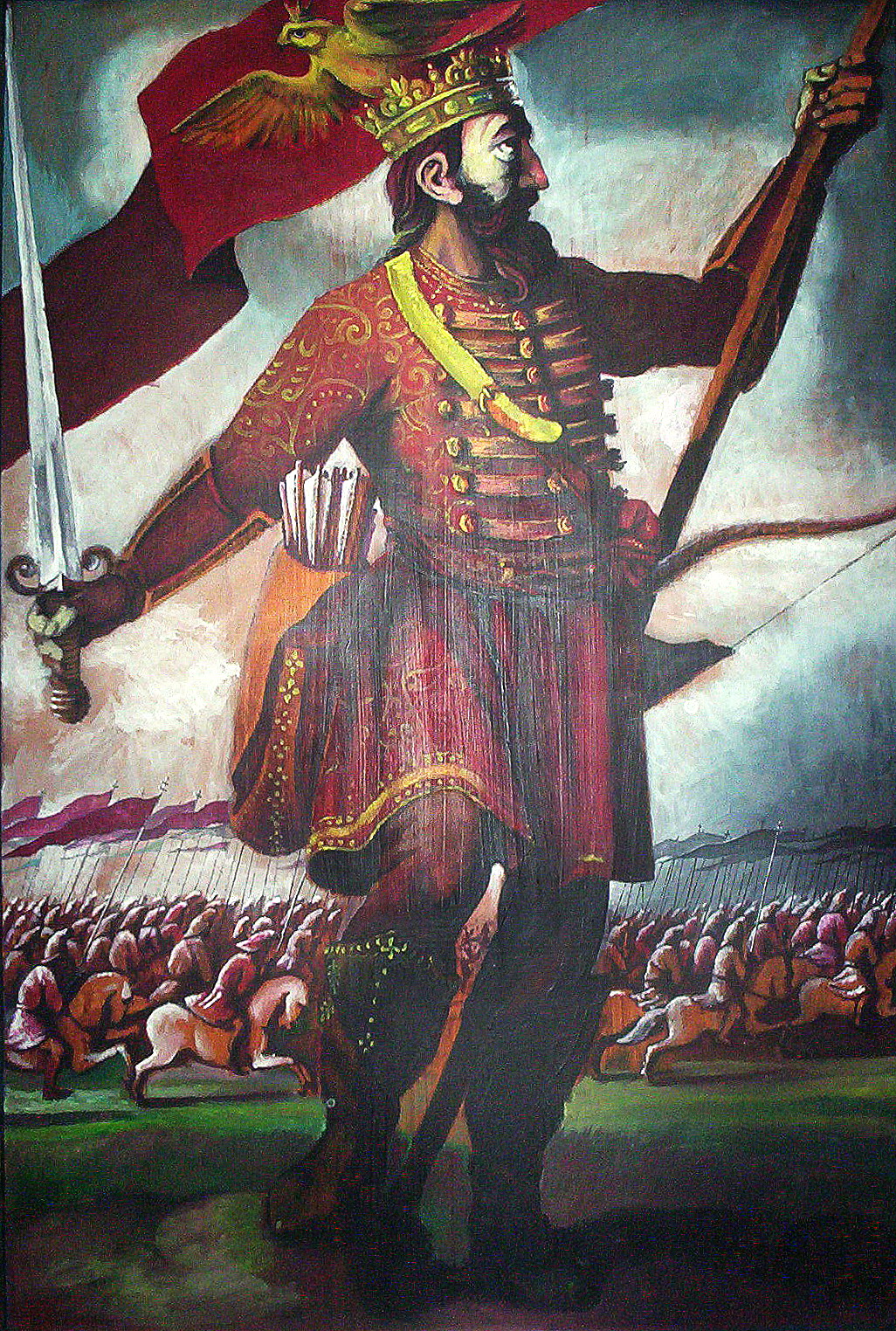
Painting of a bearded man in a gold-trimmed crown and red embroidered tunic with a yellow sash, holding a sword in one hand and a staff with a golden bird finial in the other. Behind him, a red banner and an army of mounted warriors on a green field under a cloudy sky.Painting

Secondary source

Atilla király (King Attila)

Tamás Tulipán · 2007-11-25

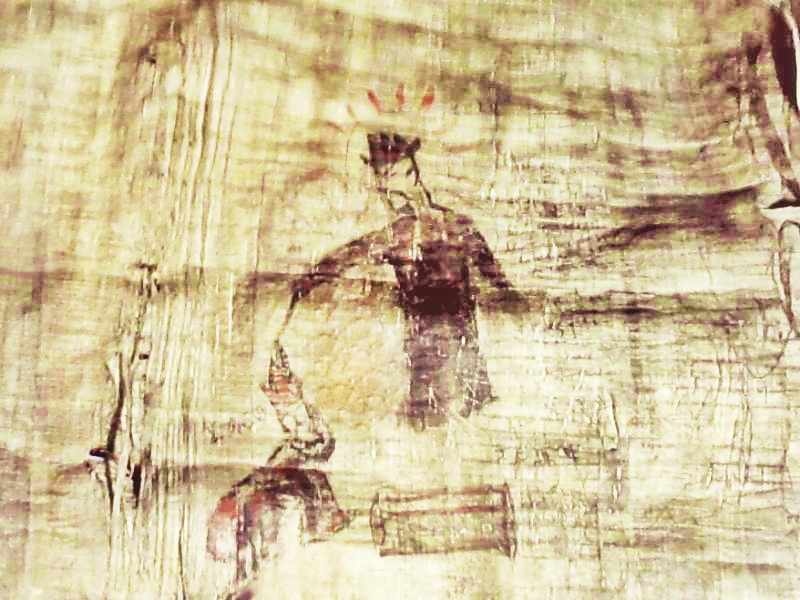
Faded brown drawing on a yellowed, streaked, textured surface. A standing figure in dark robes with a crown-like headdress and an outstretched arm is at center. At lower left, a smaller reddish figure kneels with an arm raised. A cylinder-shaped object lies at lower center.Painting

Secondary source

Pope Leo I Kneels Before Attila

Saint Marina the Monk · 470 AD (depicted event; drawing date unknown)

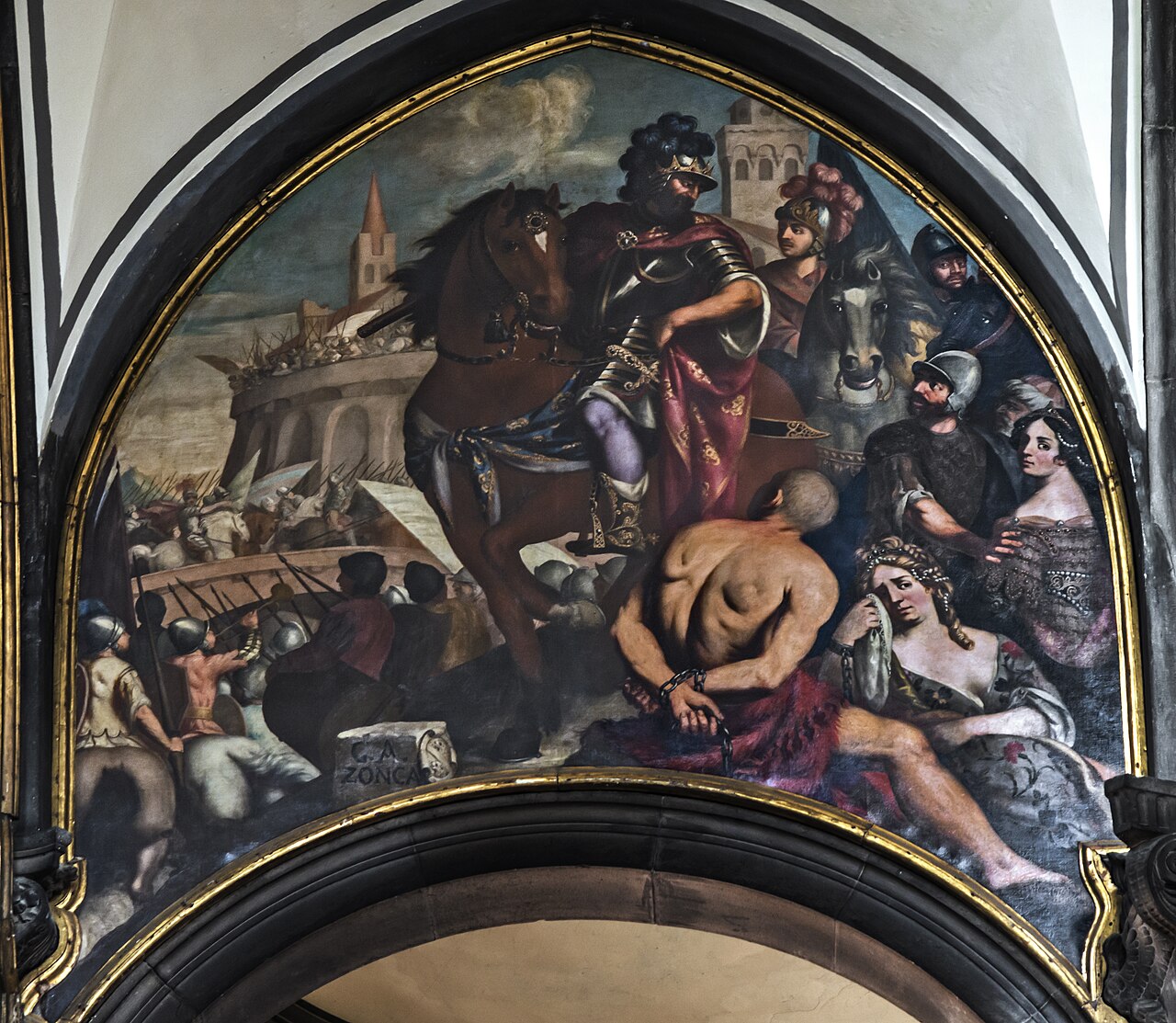
A curved lunette fresco in a church arch showing a mounted warrior with a dark curly beard and a red cloak on a brown horse, with armored soldiers, a fleeing crowd, a stone tower, and a bare-backed chained man kneeling before a seated woman. The signature 'Zonca' appears at the bottom.Painting

Secondary source

Fresco of Attila conquering Aquileia

Zonca · 17th century

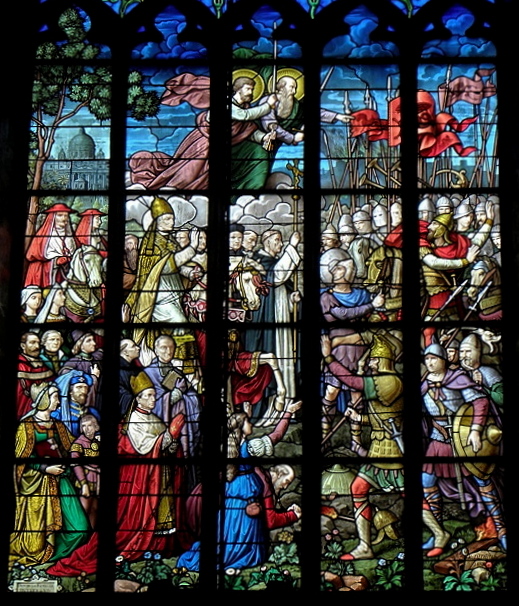
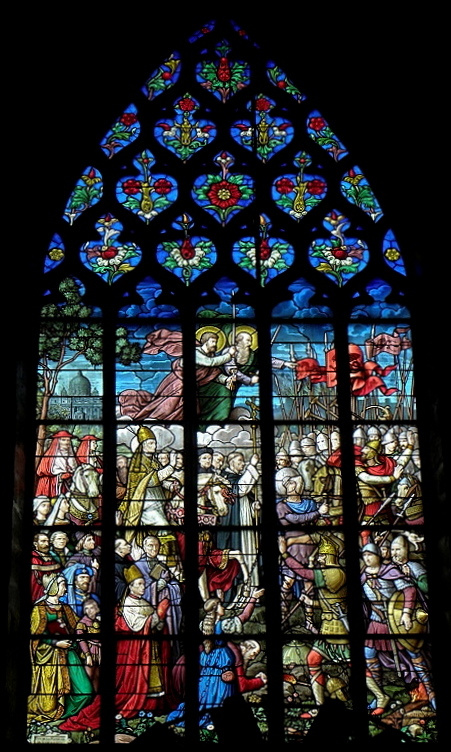
Multi-panel stained glass church window with vivid colors. Upper center shows a haloed figure in white robes facing a mounted warrior with red banners and soldiers; left side shows a domed city and a figure on a white horse; lower panels show robed clergy, townspeople, and armored soldiers.Artifact

Secondary source

Saint Leo repelling Attila (Bédée stained glass)

2016

Artifact

Tertiary source

Audio reading of the Gothic Wikipedia article on Attila

Andrew Jarrette · 6 January 2018

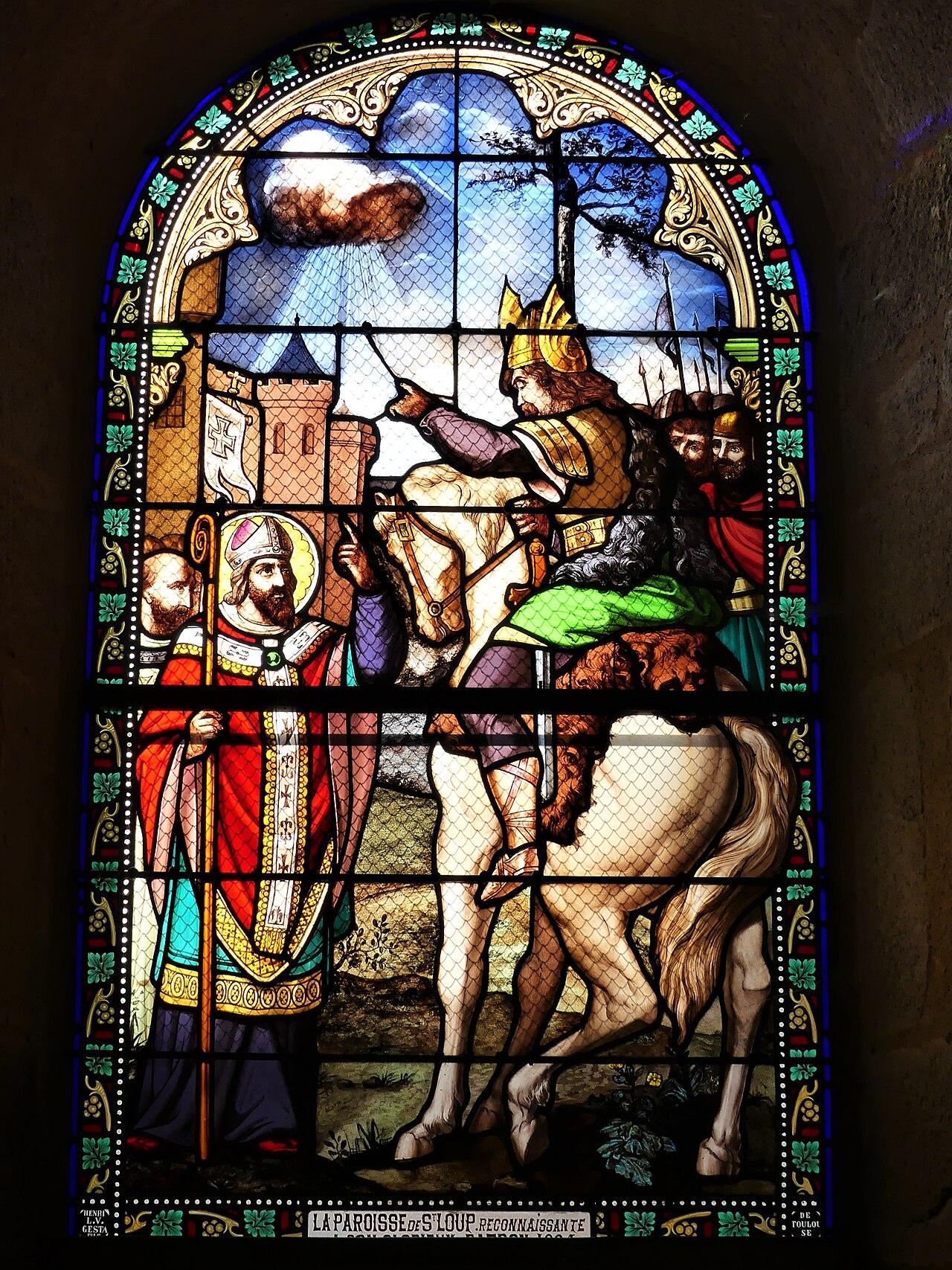
Stained glass window in an arched frame showing a bishop in red and white vestments with a crosier on the left, and a crowned warrior on a white horse on the right pointing toward a walled town. A label at the bottom reads La Paroisse de St Loup reconnaissante.Painting

Secondary source

Saint Loup meeting Attila (Saint-Loup stained glass)

Henri-Louis-Victor Gesta · 31 October 2021

Stained glass church window in pointed Gothic shape with blue and red floral tracery at top. Lower panels depict a scene with a robed bishop in a golden halo facing a crowd of armed soldiers and figures on horseback, with red banners.Painting

Secondary source

Saint Leo repulsing Attila (Bédée window panel 111-01)

2016

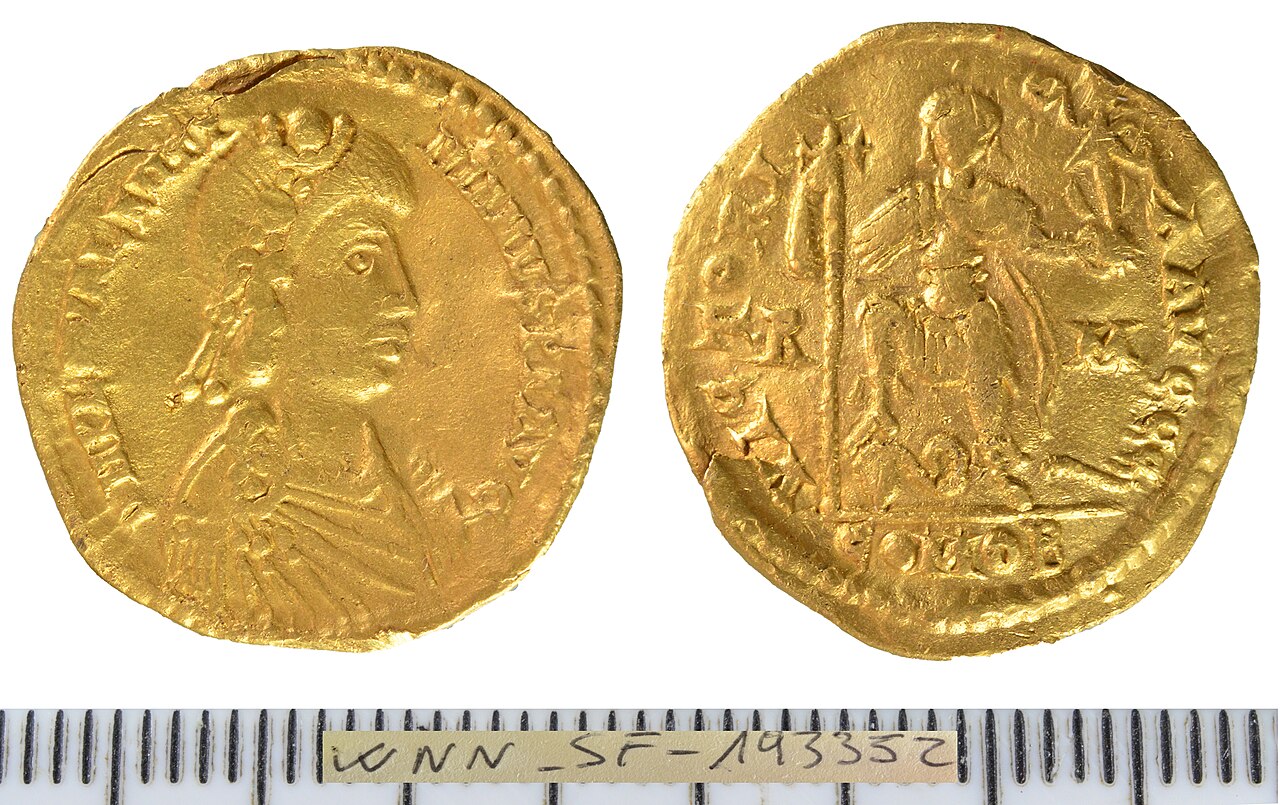
Two views of a gold Roman solidus coin on a white background with a metric scale bar below. Left: obverse with a diademed bust of a figure facing right, with a pearl-studded diadem and draped garment. Right: reverse showing a standing figure holding a long cross and a small figure of Victory on a globe, with inscriptions around the edge and a label reading 'SOLI' or similar at the bottom. The coin is worn with some surface irregularities.Artifact

Primary source

Roman solidus of Valentinian III

between 440 and 450

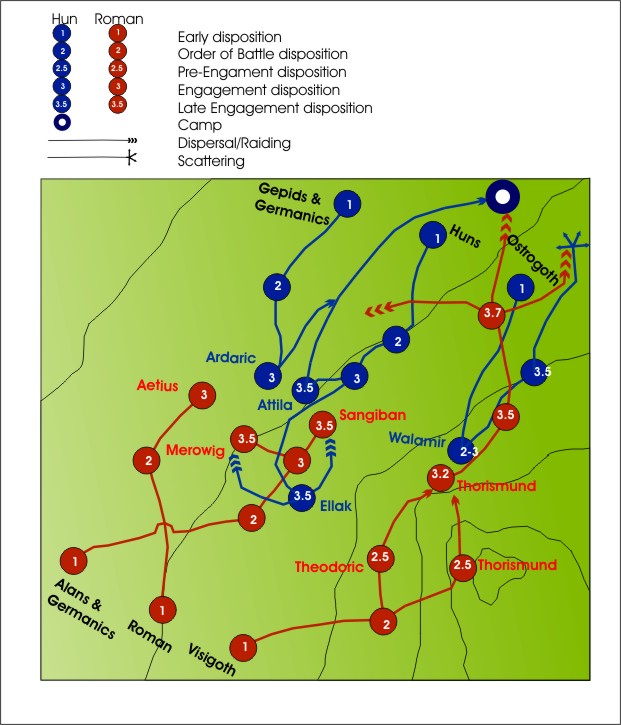
Map of the Battle of Chalons showing the disposition of Hun (blue) and Roman/allied (red) forces across a green terrain map. Legend at top explains numbered circles for early, order of battle, pre-engagement, engagement, and late engagement dispositions, plus camp, dispersal, and scattering symbols. Labeled commanders include Attila, Ardaric, Ellak, Aetius, Merowig, Theodoric, and Thorismund, with groups such as Ostrogoths, Gepids and Germanics, and Alans and Germanics.Document

Secondary source

Disposition of Forces at the Battle of Chalons

Dryzen · 21 September 2006 (upload date)

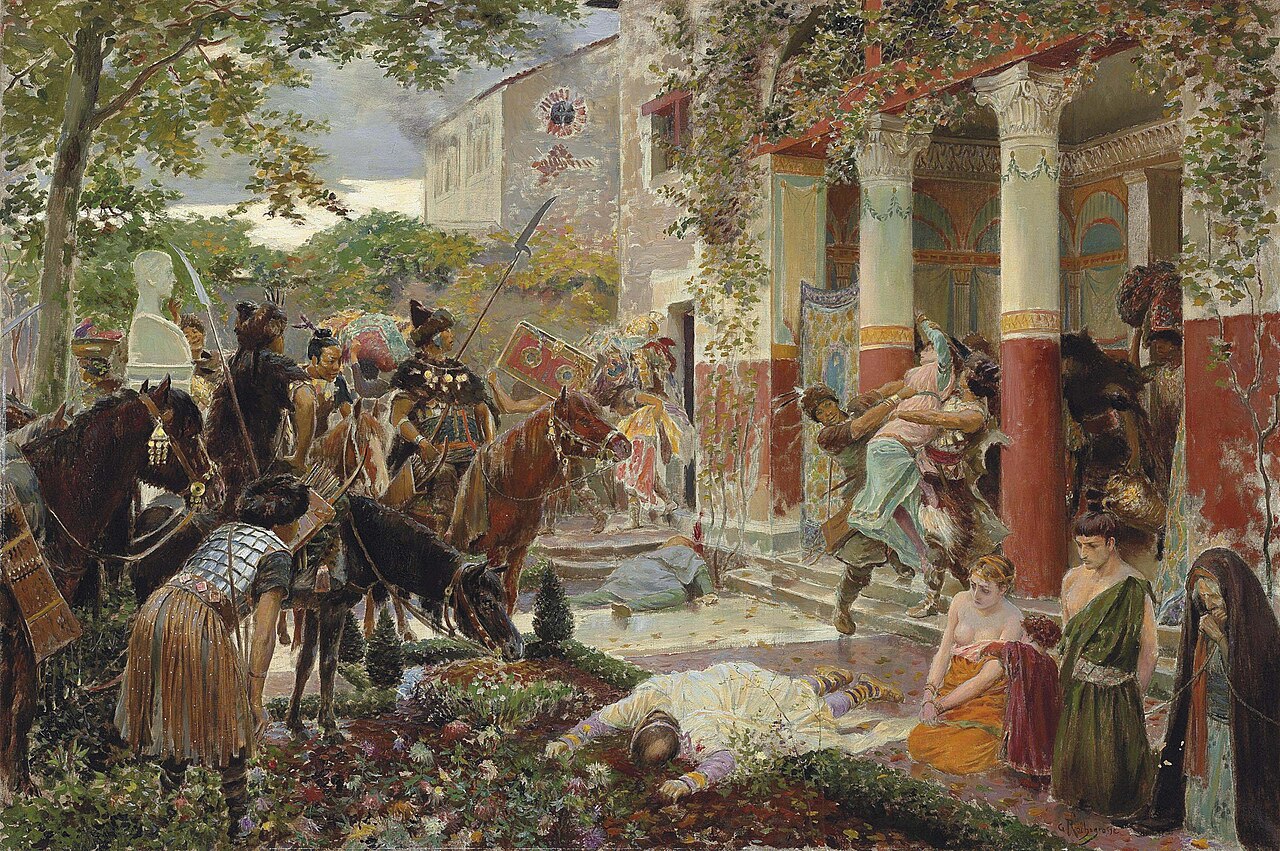
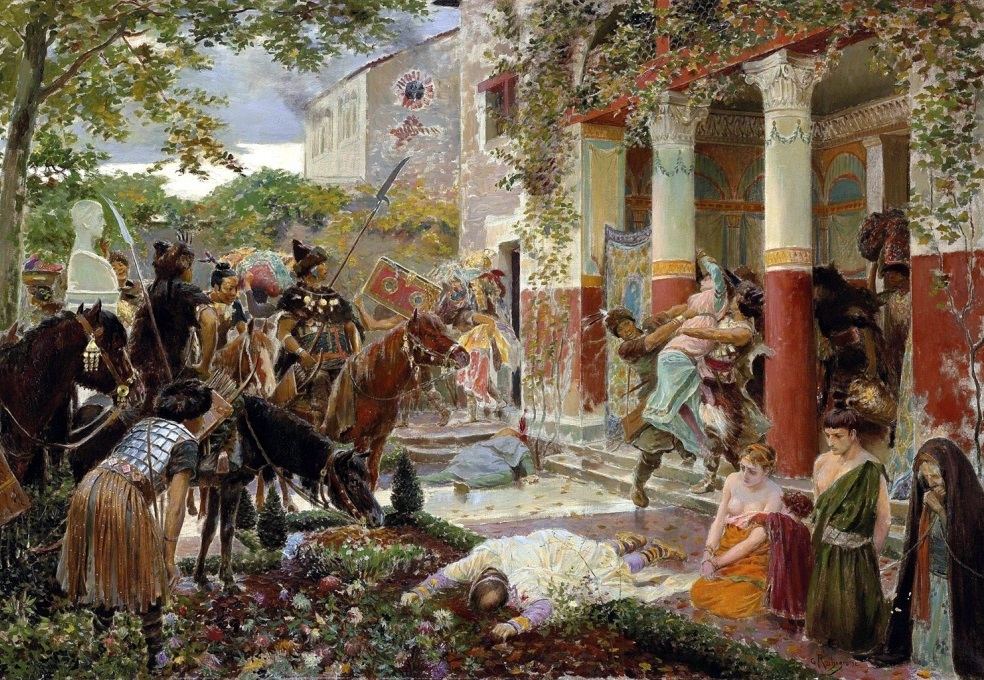
Painting of a Roman villa courtyard with mounted warriors in helmets and armor on horseback. A man in a blue-green tunic seizes a woman near a column; a man lies face down in flowers in the foreground. Women in dresses watch, and a veiled figure stands at right.Painting

Secondary source

Attila et les Huns

Georges Rochegrosse · before 1938

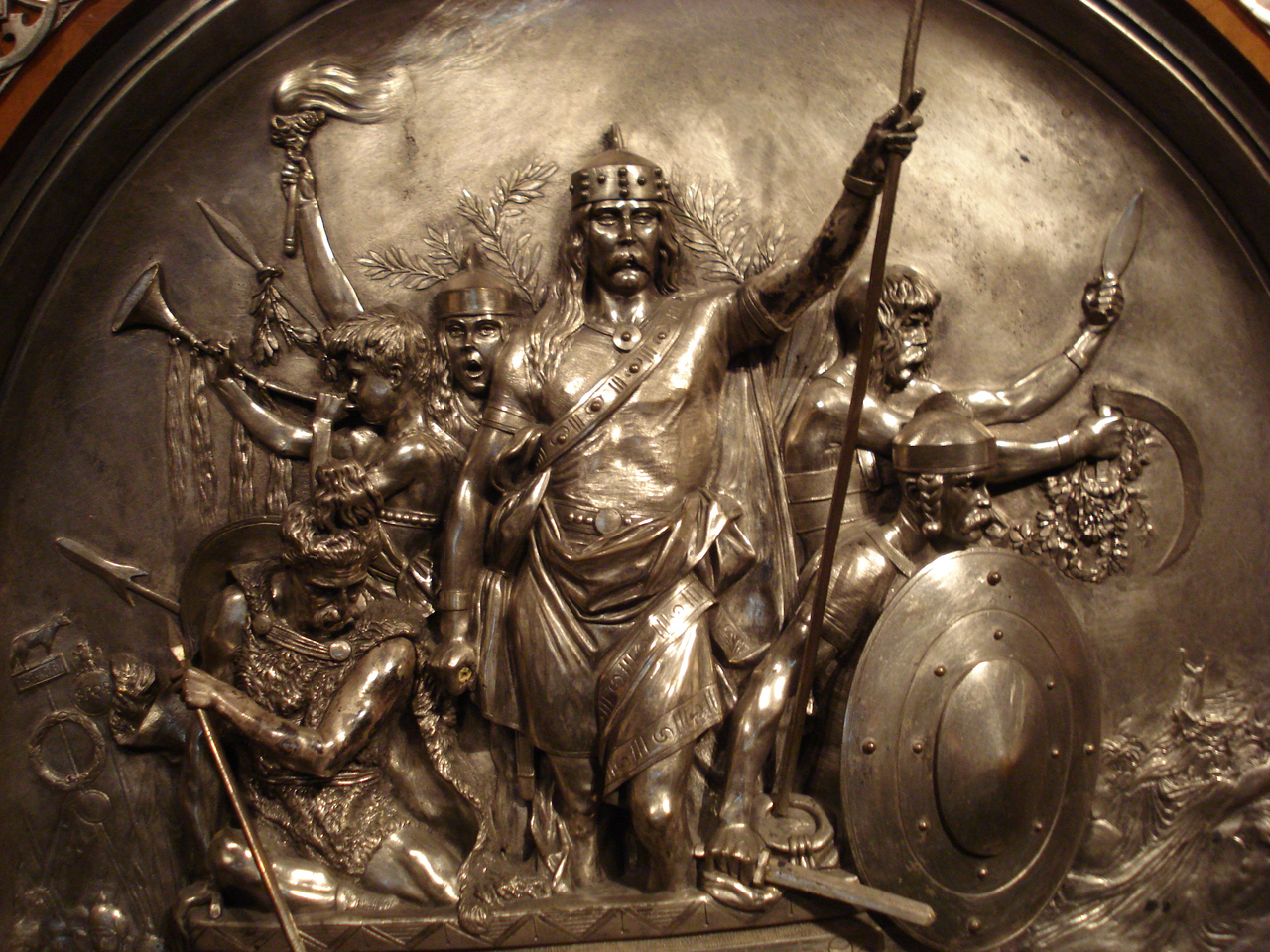
Close view of a circular silvered bronze relief showing a central warrior with a crown and raised spear, surrounded by soldiers with horns, torches, a shield, and a sickle-like blade, with figures in dynamic poses.Artifact

Secondary source

Merovech's Victory over Attila, Armoire Mount

Emmanuel Fremiet · 1867

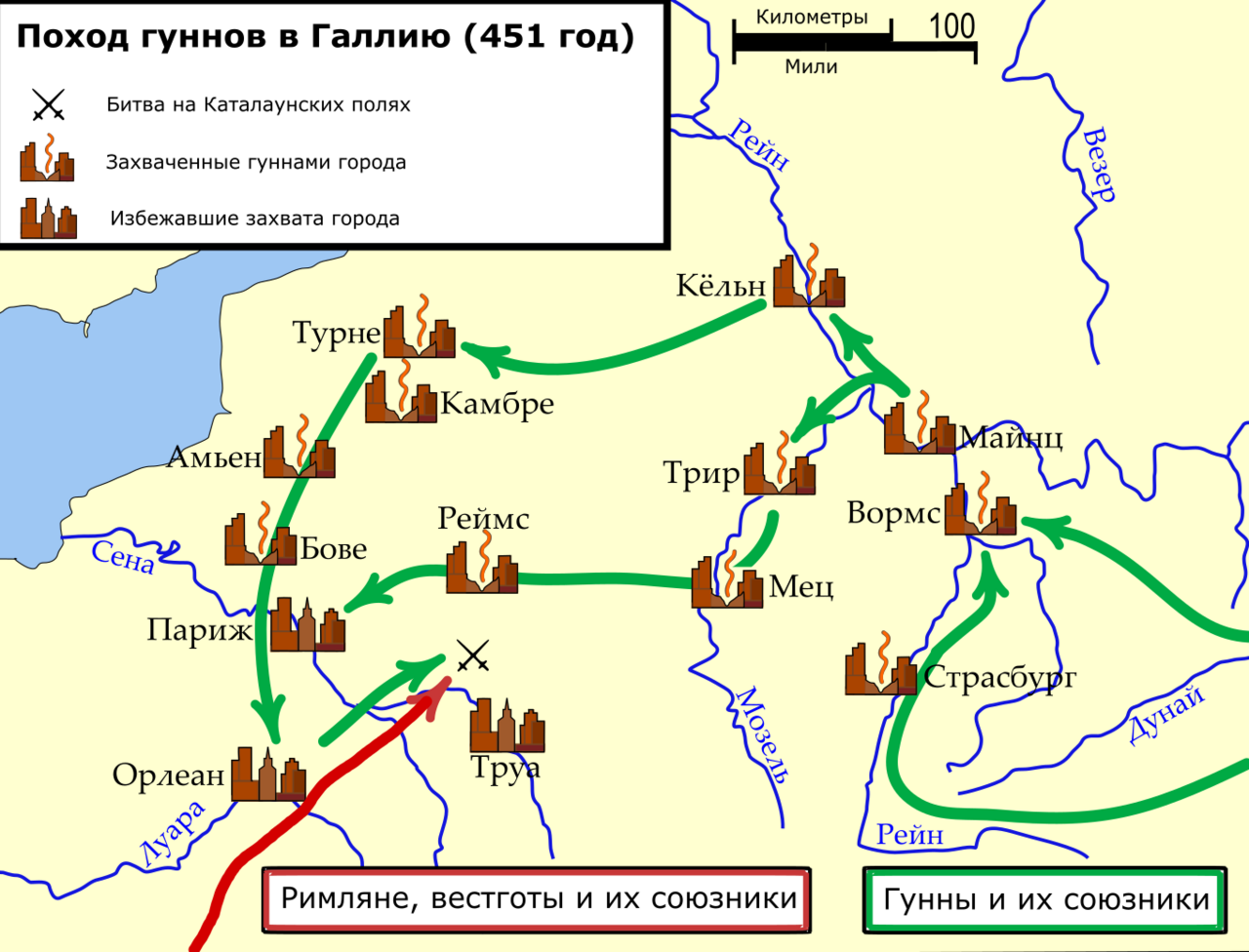
Russian-language map titled 'Поход гуннов в Галлию (451 год)' showing the Hun invasion of Gaul in 451. Green arrows trace the route from Strasbourg and the Rhine region west through Trier, Metz, Reims, Paris and toward Orléans, with Verdun-area and Tours, Amiens, Cambrai and Bove marked. Cities are marked as either captured by the Huns (smoking ruins icon) or spared (intact city icon). A red arrow marks the Roman, Visigoth and allied forces approaching from the southwest. A crossed-swords symbol marks the Battle of the Catalaunian Plains near Troyes. A legend box lists the three symbols; a scale bar shows 100 kilometres and miles. Rivers such as the Rhine, Seine, Loire, Danube, Moselle and Weser are labeled. Green box labels 'Гунны и их союзники' and red box labels 'Римляне, вестготы и их союзники'.Document

Secondary source

Hun Invasion of Gaul, 451

Игорь Васильев · 27 May 2019

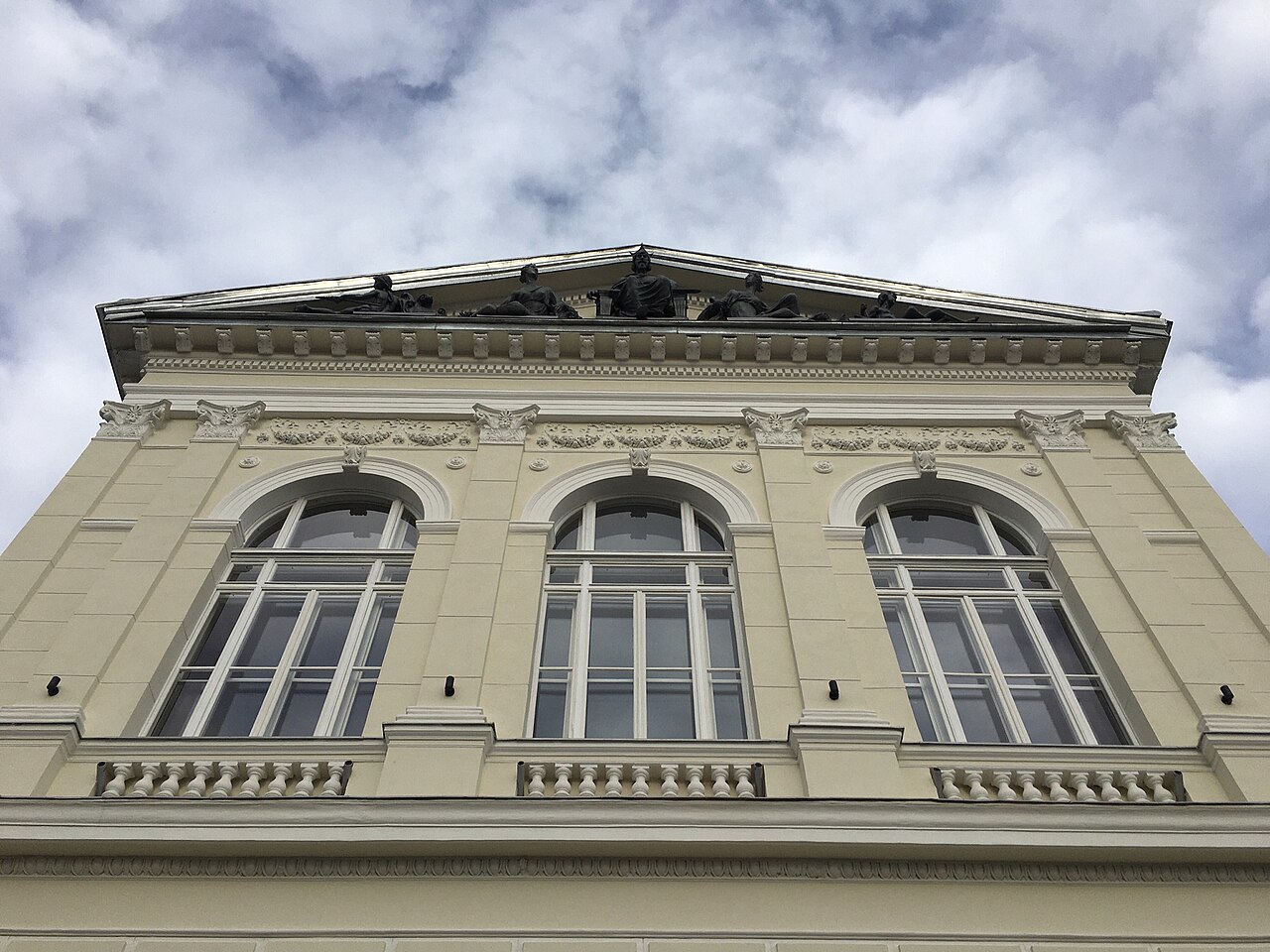
Upper facade of a cream-colored neoclassical building with arched windows, a triangular pediment, and a row of dark bronze statues seated along the roofline above the cornice, photographed from below against a cloudy sky.Sculpture

Secondary source

Attila Statue Group on the Marosvásárhely Museum Facade

József Róna · 1893

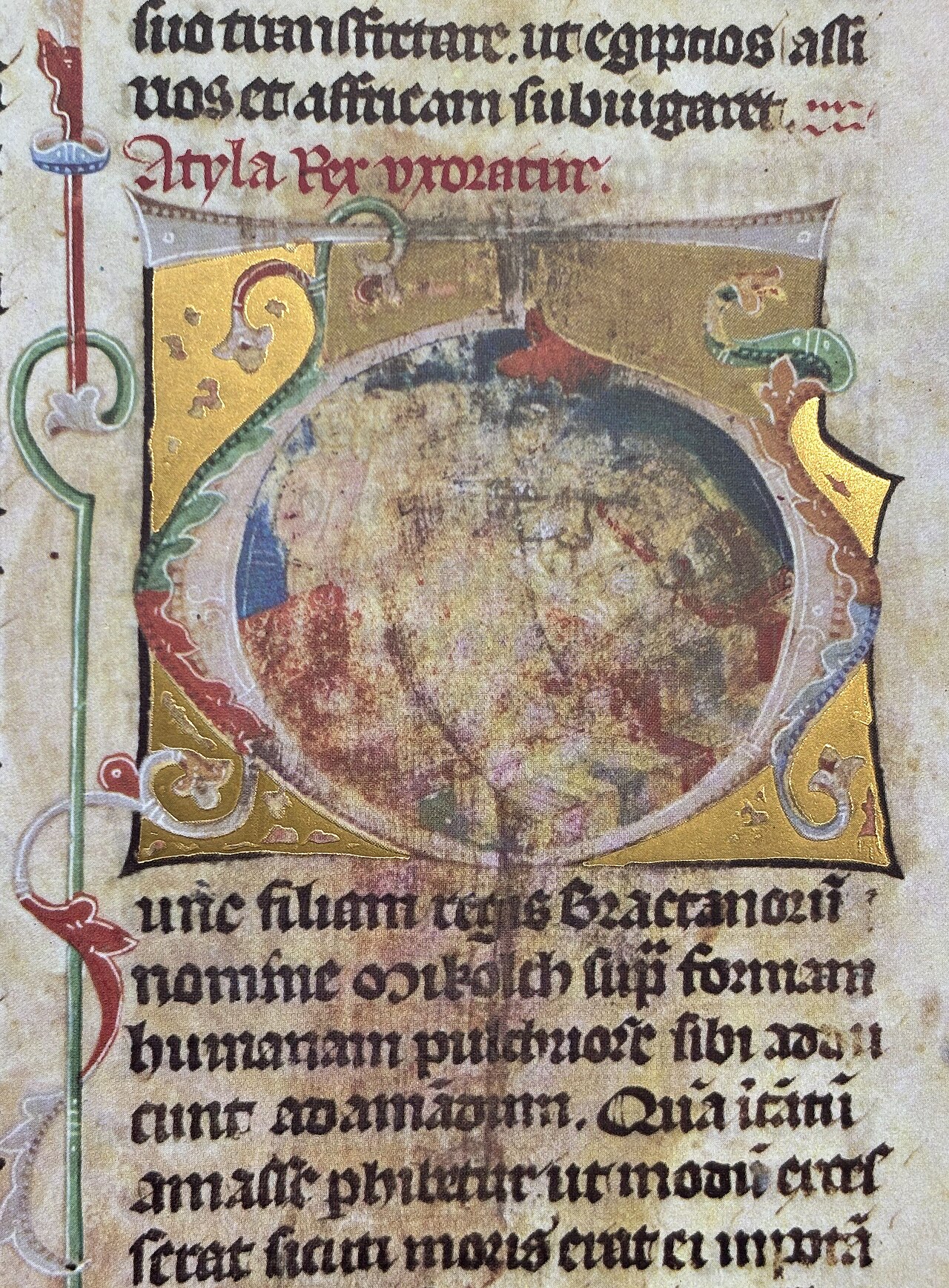
Medieval manuscript page with a faded, blurred painted miniature inside a gold-leaf framed circle, bordered by gold corners with red and blue accents. Latin text in black gothic script above and below. The miniature is barely legible.Book

Secondary source

Death of Attila, Illuminated Chronicle Miniature

Márk Kálti · circa 1360

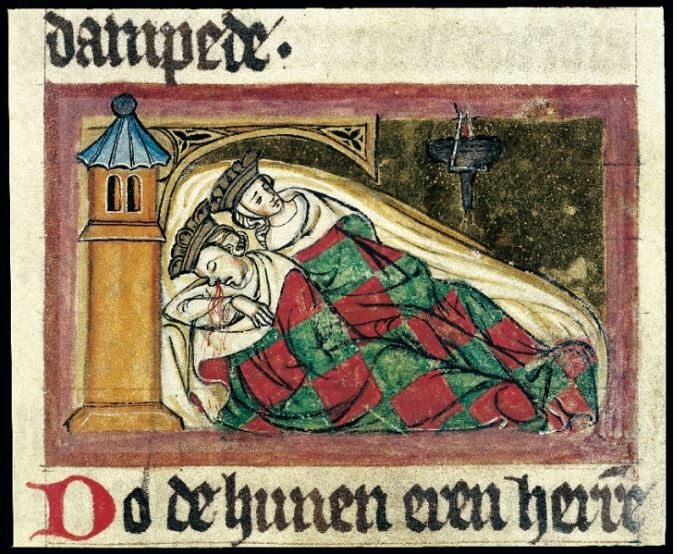
Medieval illuminated manuscript miniature with red and gold border showing a bed with a green and red checkered blanket. A man with a crown lies on his back with a bloody nose, bleeding onto the pillow, while another crowned figure lies beside him. A tall tower-like post stands at left and a lit candle stand at upper right. Gothic lettering in black ink appears above and below, reading 'dampede' and 'Do de hunen aen herte'.Artifact

Secondary source

Death of Attila the Hun, Saxon World Chronicle page

Eike von Repgow · 1st quarter 14th century

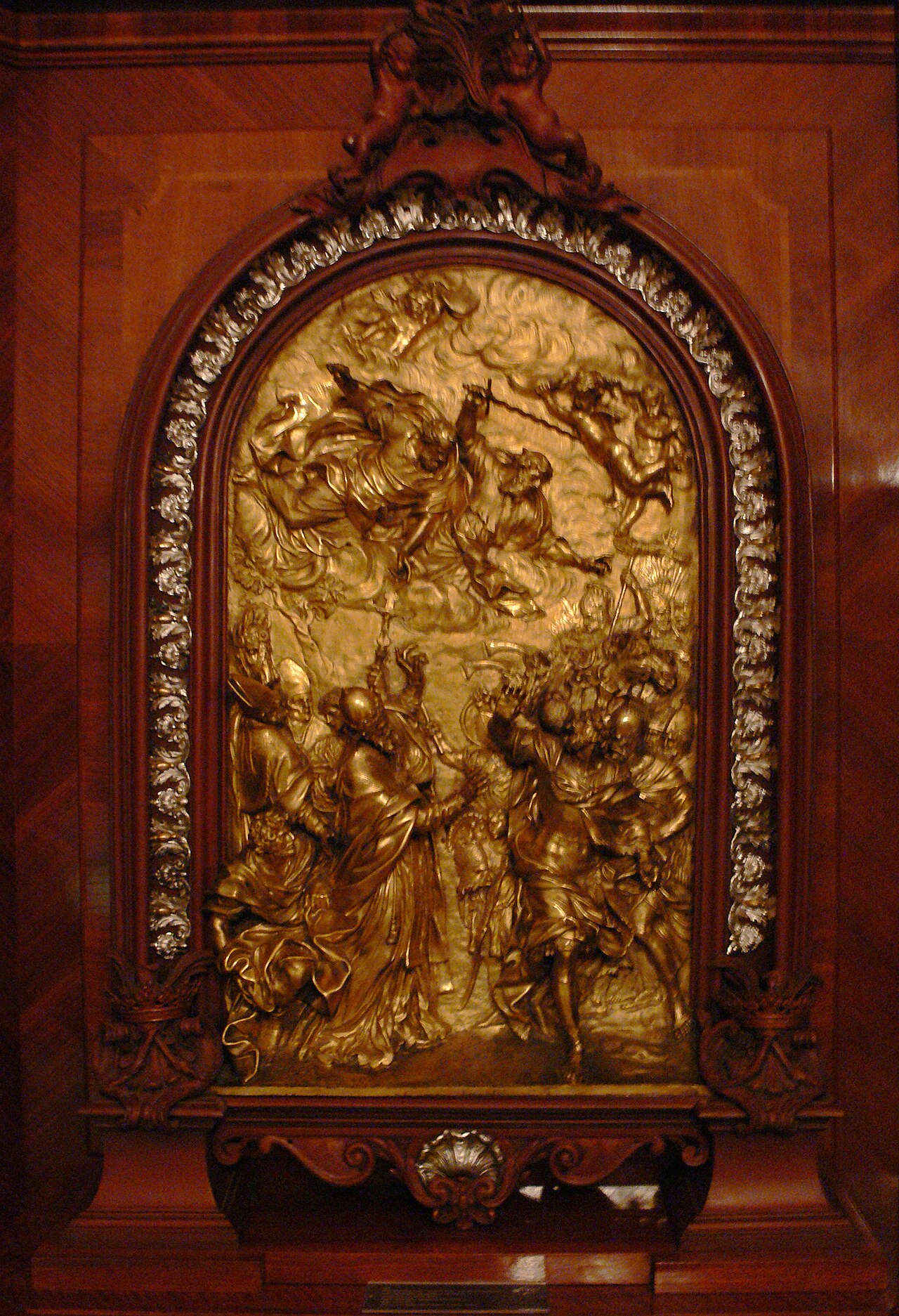
Gilt bronze relief in an arched wooden frame with silver-toned scrollwork. Upper area shows clouds with figures on horseback and a figure with raised arm. Lower area shows a group of robed figures, including a central bearded figure in a long robe, meeting a crowd of armored men and figures on the right.Sculpture

Secondary source

Leo the Great meets Attila, gilt bronze relief

Ercole Ferrata, after Alessandro Algardi · after 1657

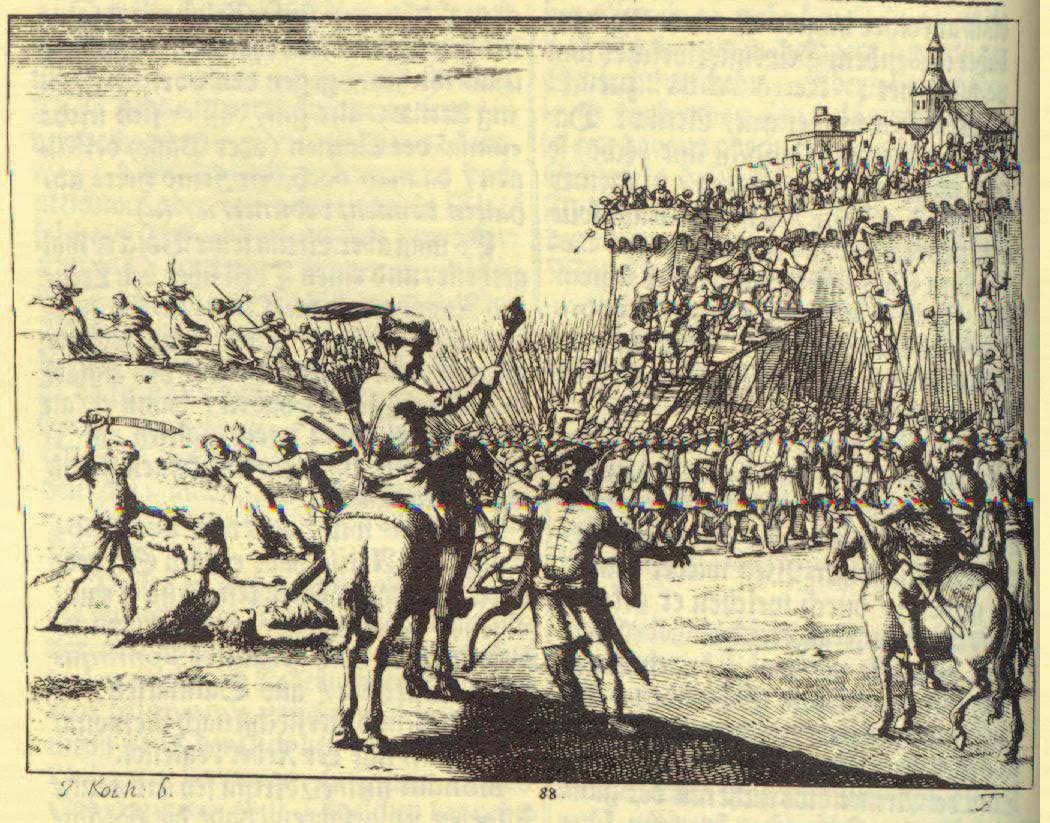
Engraving of a walled town under attack. Mounted warriors on horseback in the foreground, one raising a torch, while armed soldiers climb ladders and fight along the walls. Figures on a hill at left flee or fight with swords. A church tower rises behind the walls. Printed page number 88 and artist signature appear at the bottom.Painting

Secondary source

Attila's attack on Emona, engraving by Valvasor

Johann Weikhard von Valvasor · 1689

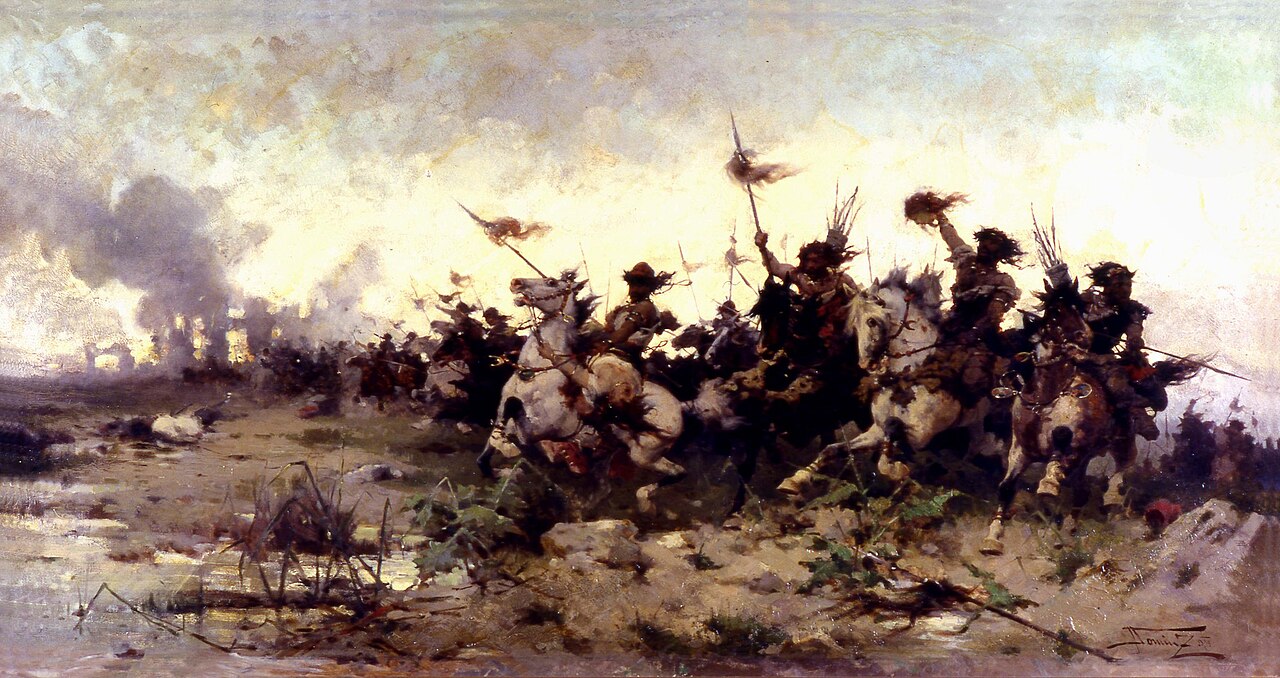
Painting of a chaotic cavalry battle at dusk. Horsemen with spears and feathered or plumed helmets ride toward the viewer over muddy ground, while smoke rises from a burning settlement on the left. Signature in lower right corner.Painting

Secondary source

Battle of Aquileia, 452

Alfredo Tominz · 1894

Painting of a violent scene in a garden courtyard beside a columned Roman-style building. Armored, mounted warriors with spears and shields ride in from the left. A warrior seizes a struggling woman near the steps, and a man lies dead in the foreground. Two women sit or stand nearby, one seated and one in a green dress, and a veiled figure stands at the right.Painting

Secondary source

The Huns

Georges Rochegrosse · 1910-01-01

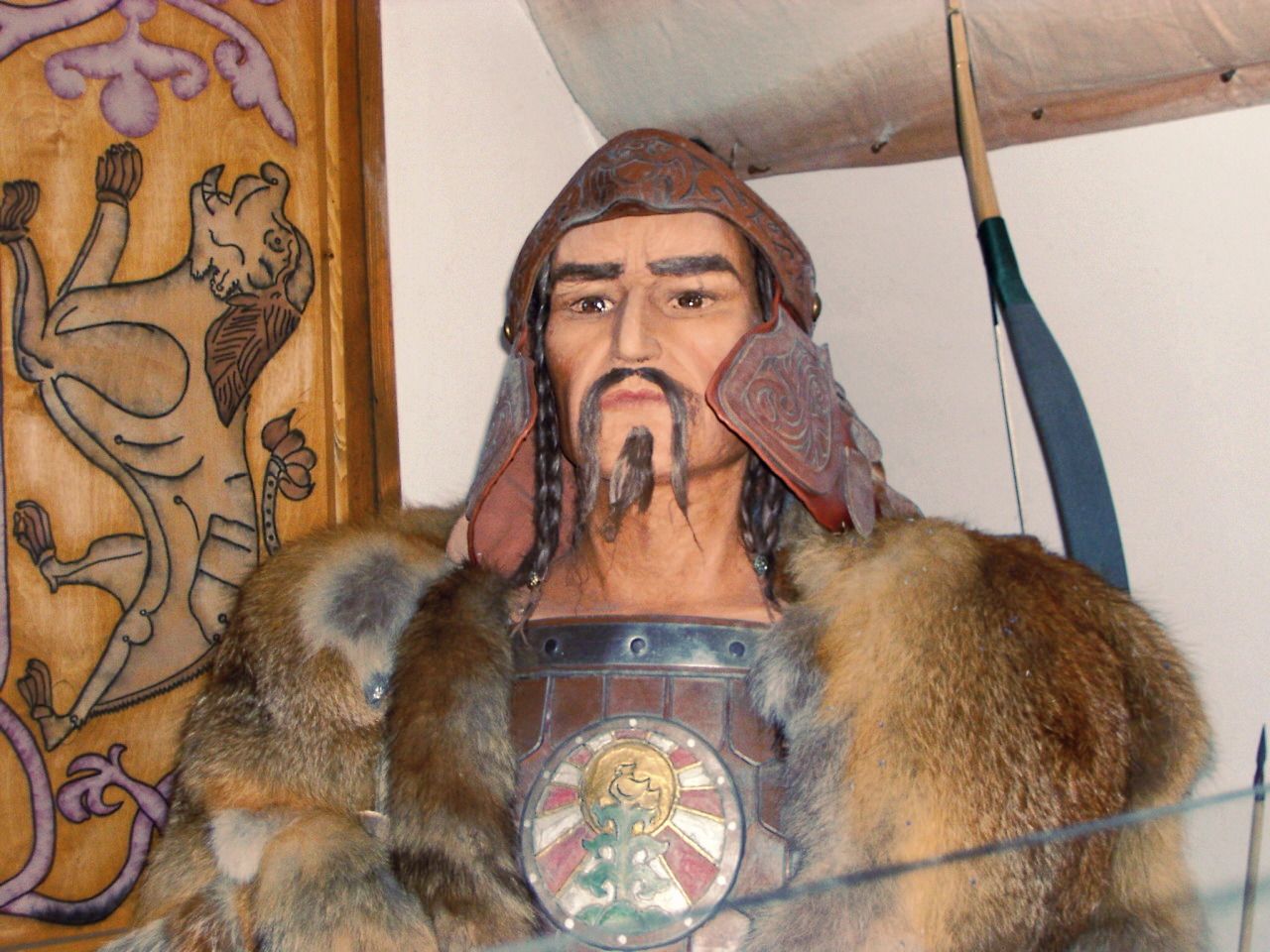
Life-size museum figure of a bearded man with braided hair wearing a leather helmet with metal cheek guards, a fur-trimmed coat, and a painted metal breastplate with a round emblem. A bow stands behind him and a painted wooden panel is on the left.Sculpture

Secondary source

Attila figure in a Hungarian museum

A. Berger · 2005

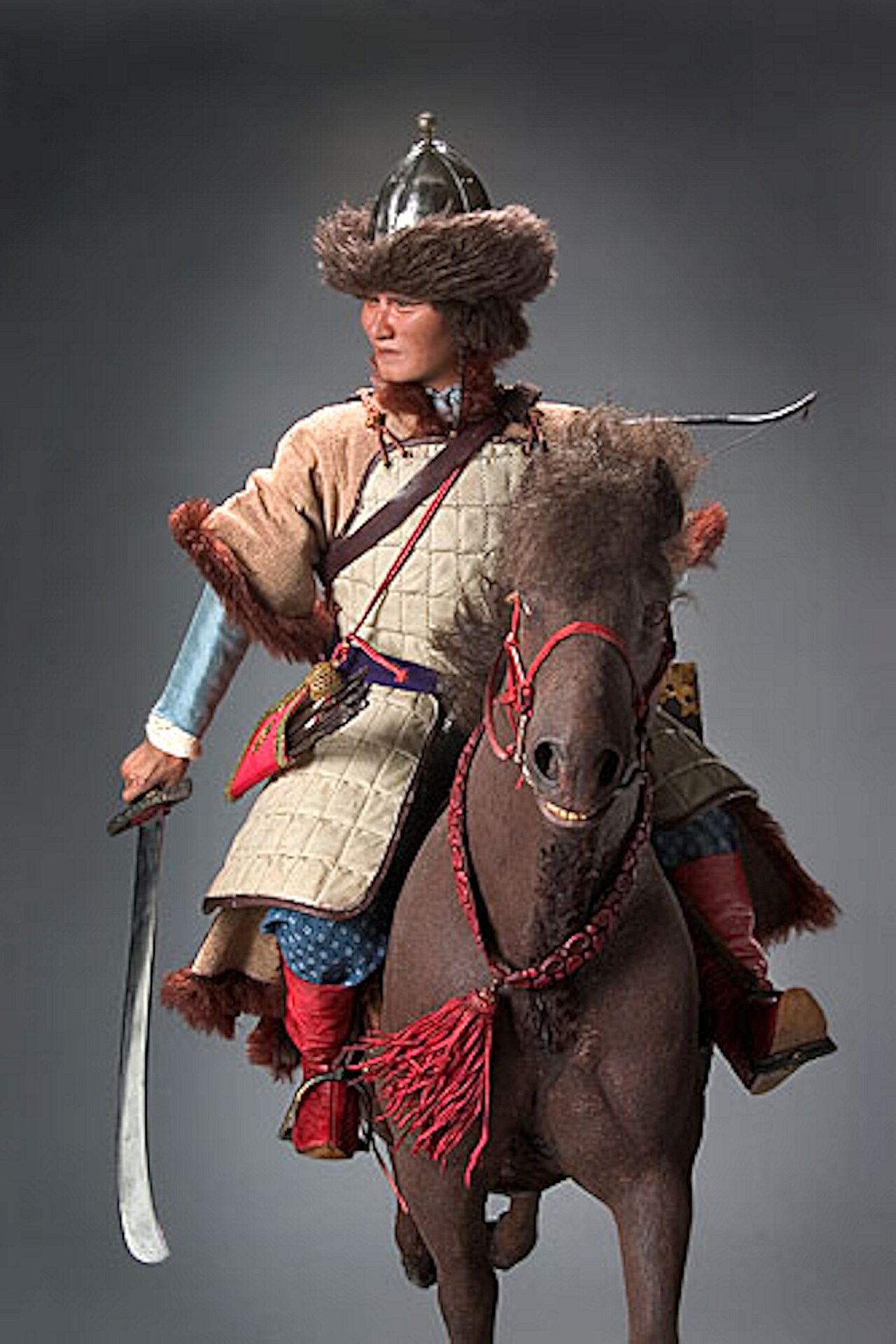
Photograph of a mixed-media figure of a mounted warrior on a brown horse with red bridle and tassels. The rider wears a metal helmet with fur brim, a quilted beige tunic with fur trim, blue trousers, and red boots, and holds a curved sword in his right hand against a grey background.Sculpture

Secondary source

Attila the Hun on horseback

George S. Stuart · 2010-01-10

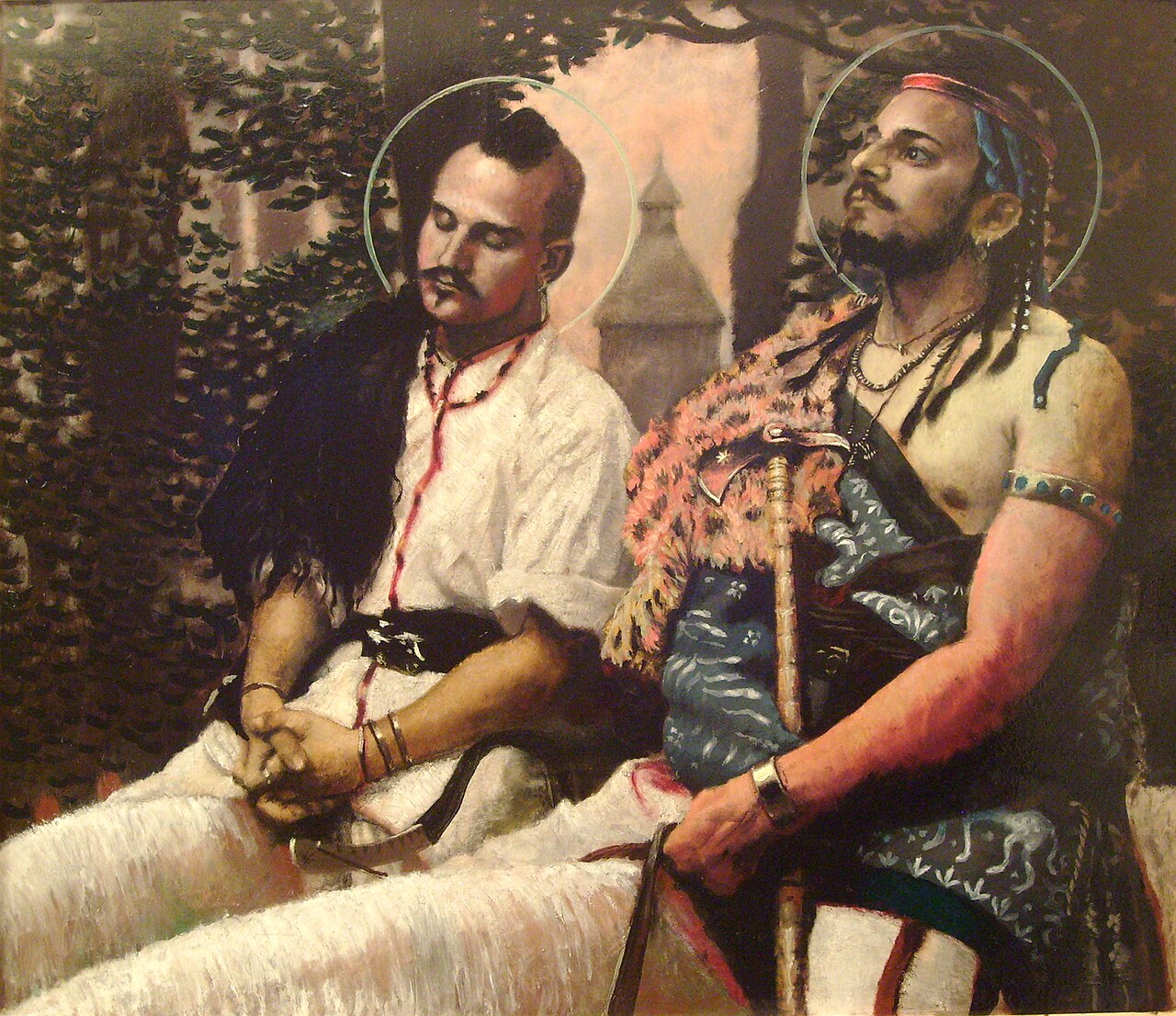
Painting of two seated men with gold halos against a dark, leafy background with a pale tower in the distance. The man on the left, in a white shirt with a red cord and dark fur-trimmed cloak, has closed eyes and his hands clasped. The man on the right, with a long braided hair, red headband, beard, bare upper body and a patterned blue cloak with a pink fur mantle, gazes upward and holds a staff.Painting

Secondary source

Buda and Attila (Praying Princes)

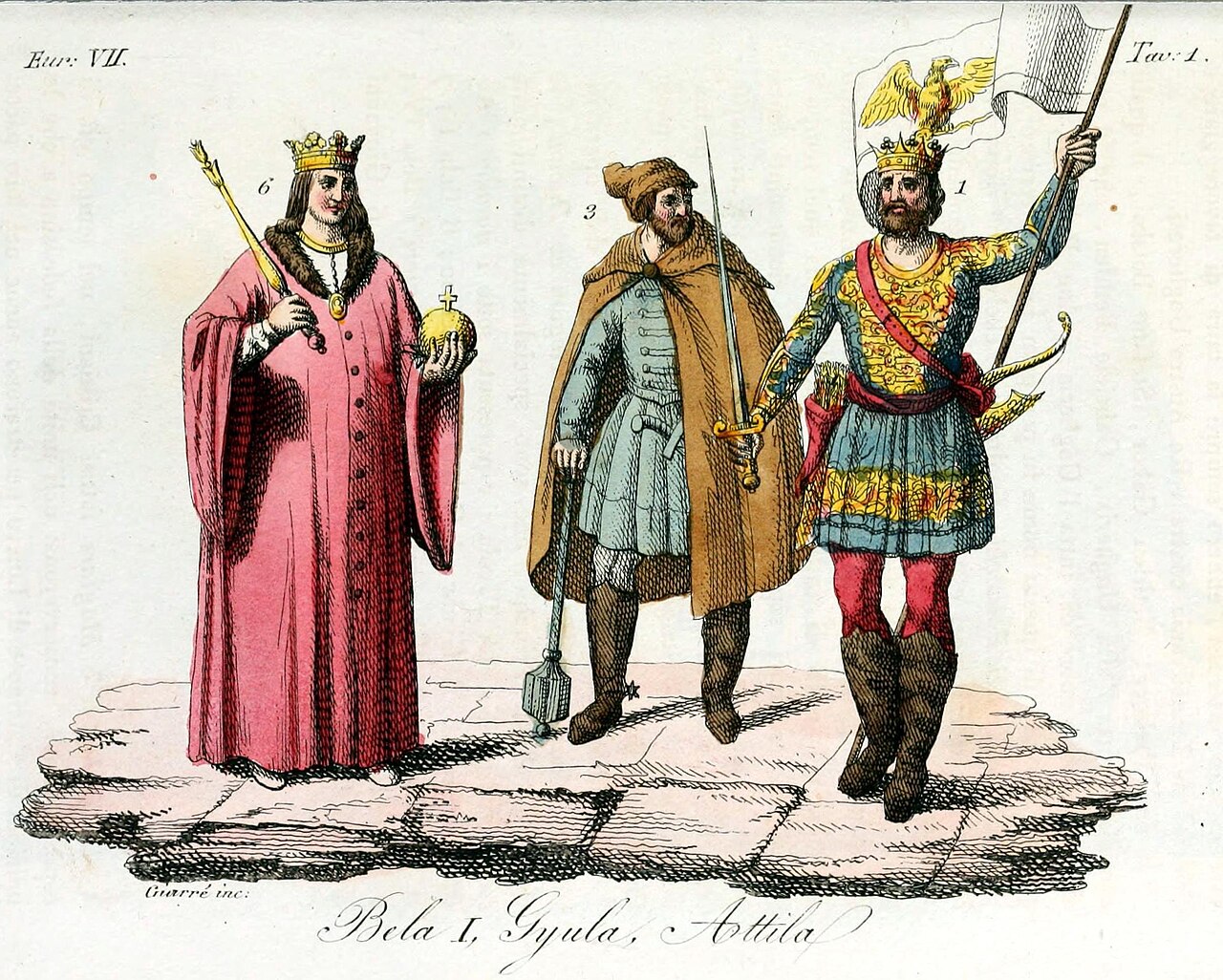
Tulipán Tamás · 2010-04-26

Hand-colored engraving of three medieval Hungarian figures on a stone pavement. On the left, a crowned figure in a long pink robe with fur collar holds a scepter and an orb with a cross. In the center, a bearded man in a brown cloak and blue tunic holds a sword. On the right, a bearded figure in a yellow and blue tunic and red sash holds a banner topped with a golden eagle and a bow. Italic caption at bottom reads Bela I, Gyula, Attila. Labels 6, 3, and 1 appear at the upper left of each figure.Painting

Secondary source

Monarchs of Hungary, Attila among them

Luigi Giarrè and Vincenzo Stanghi · 1831

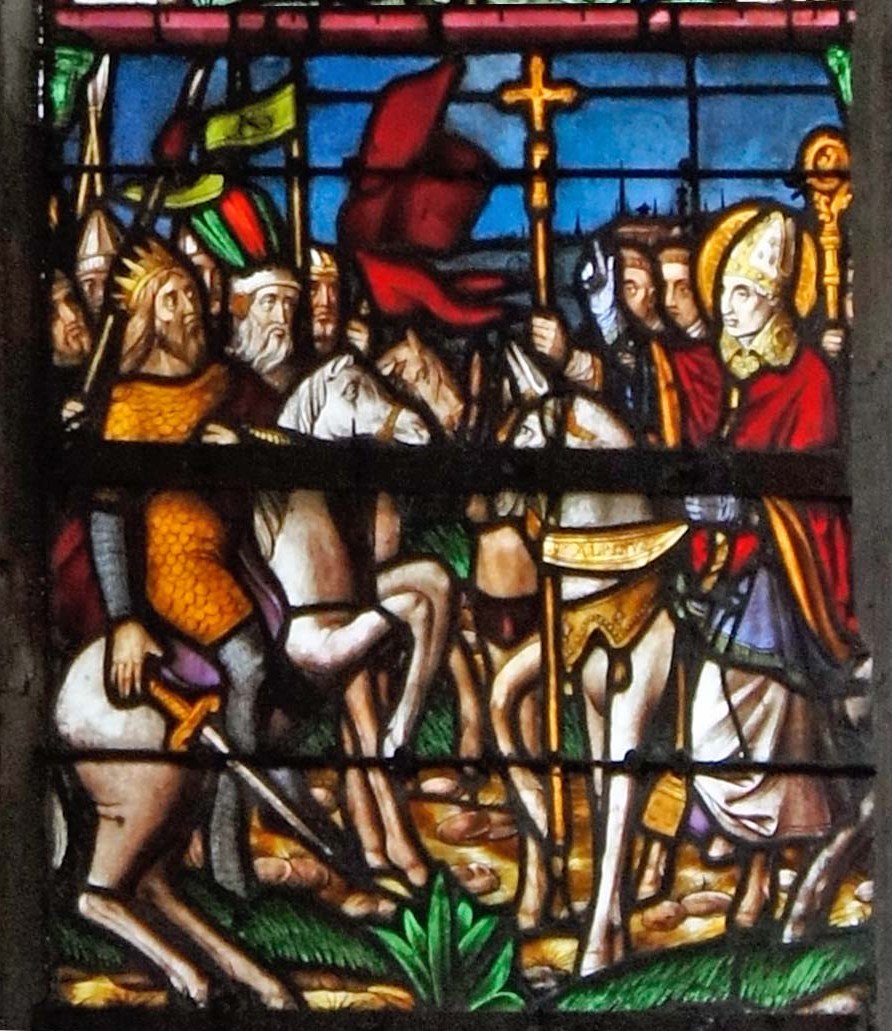
Stained glass window showing a bishop in red robes and a golden mitre on a white horse, holding a crozier and a large golden cross, facing a crowned king in gold scale armour on the left. Armoured warriors with banners and spears stand behind; green grass and a sword are at the bottom.Painting

Secondary source

Saint Alpin halts Attila, stained glass at Châlons

G. Garitan · 2012

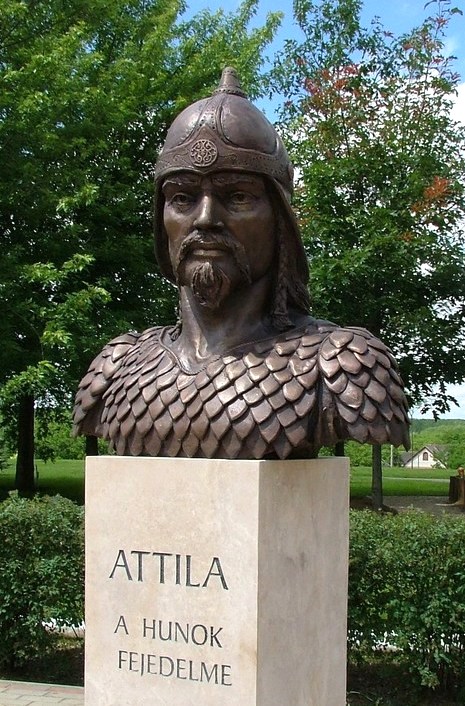
Bronze bust of a bearded man wearing a helmet with a central ornament and scale armor on the shoulders, mounted on a pale stone pedestal inscribed 'ATTILA' and 'A HUNOK FEJEDELME'. Green trees and grass are behind it.Sculpture

Secondary source

Attila bronze bust, Nyíradony

Richárd Juha · 2013

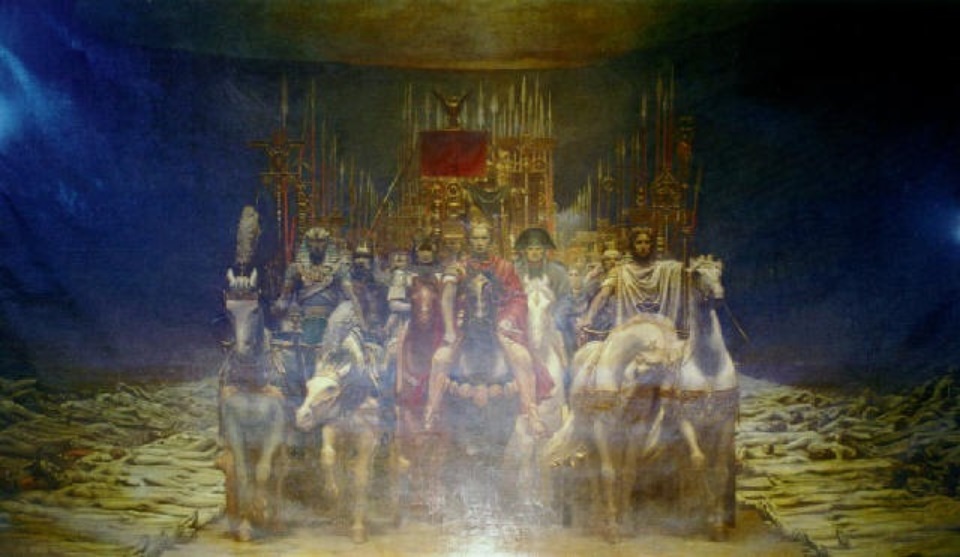
Painting showing a procession of armored historical conquerors on horseback and in chariots, with pale horses in the foreground, a golden throne and banners in the background, and a dark blue sky above a rocky ground.Painting

Secondary source

Les conquérants

Pierre Fritel · 1892–1894

Want the full shelf? Chat with Attila the Hun in the app and open the Sources panel — every quote links back to the original.

Use Attila the Hun in class

1 collection

A ready-made collection from the Humy team that features Attila the Hun. Preview it, then try it free.

Trusted by educators worldwide

Conversations
375,000+
Real exchanges between students and historical figures
Messages exchanged
4,142,000+
Across every figure, classroom and language
Historical figures
100,000+
Each informed by a curated biography and selected sources
Languages supported
50+
From English and Spanish to Arabic and Korean

Paying customers

Used by 98 schools and universities

Partner school logo
Tecnológico de Monterrey logo
Hyper Island logo
Partner school logo
Chambersburg Area School District logo
Broward County Public Schools logo
Nebo School District logo
National Louis University logo
South Florida PBS logo
Punahou School logo
University of Wisconsin–River Falls logo
Partner school logo
Partner school logo
Archbishop Mitty High School logo
Kingsburg High School logo
Norwalk Public Schools logo
Partner school logo
Connections logo
Partner school logo
Moore Public Schools logo
Partner school logo
Partner school logo
Partner school logo
Partner school logo
Robbinsville Public Schools logo
Partner school logo
Partner school logo
Partner school logo
Tecnológico de Monterrey logo
Hyper Island logo
Partner school logo
Chambersburg Area School District logo
Broward County Public Schools logo
Nebo School District logo
National Louis University logo
South Florida PBS logo
Punahou School logo
University of Wisconsin–River Falls logo
Partner school logo
Partner school logo
Archbishop Mitty High School logo
Kingsburg High School logo
Norwalk Public Schools logo
Partner school logo
Connections logo
Partner school logo
Moore Public Schools logo
Partner school logo
Partner school logo
Partner school logo
Partner school logo
Robbinsville Public Schools logo
Partner school logo
Partner school logo

What educators are saying

“We enjoyed the program last year and used it frequently.”
“My students say it’s a welcome change of pace. I’m not a fan of the “sage on the stage” model, so I try to incorporate research-oriented and self-paced activities. With Humy, students have to take charge of their learning. They’ve become more adept at critical thinking, forming better questions, and improving their reading comprehension. The interview feature has been my go-to tool. I create assignments where students must ask historical figures a set number of questions, then summarize the responses to ensure they’re truly absorbing the material. This approach lets them actively explore the past rather than passively consuming information.”
“Humy has helped me bring historical figures, sometimes long past, to life. When my students interact with these figures in real-time, it eliminates some of the perceived “ancient” characteristics of my curriculum. This has shifted my students’ thinking away from viewing history as abstract or irrelevant. Real-time interactions make historical figures relatable, even allowing students to ask off-topic questions that help put historical lives in a more relevant context for 13-year-olds. The feature I use the most is the interview feature. After teaching a topic, most recently Gandhi and Joan of Arc, I have the students ask pointed, focused questions. We practice good conversation techniques beforehand, teaching them to listen (or read) carefully and formulate thoughtful follow-up questions rather than just interrogating. It helps students practice effective conversation skills.”

FAQ

Frequently asked questions

Who is Attila the Hun?
Ruthless and feared ruler of the Huns who led devastating campaigns across Europe. On Humy.ai you can chat with an AI version of Attila the Hun that draws on a short biography and 92 historical sources during the conversation — by text or voice, in 42 languages.
Is Attila the Hun AI free?
Attila the Hun is part of Humy's full library of more than 100,000 figures, which comes with a paid plan. A free account (no credit card) includes 20 AI messages a month with the free library's figures, so you can try how the conversations work first. The free plan's 20 AI messages a month are shared by you and your students: enough to try Humy yourself; a whole class needs Plus.
What sources does the Attila the Hun AI use?
It draws on a short biography and 92 historical sources (paintings, books and artifacts), including “Getica”, “The Meeting of Leo the Great and Attila” and “Chronicon Paschale”. Each source has its own page on Humy.ai.
How historically accurate is the AI version of Attila the Hun?
Each figure uses a short biography and a small set of selected historical sources as context (retrieval-augmented generation), so answers stay closer to known material than the model's general knowledge alone. It isn't a citation-grade research tool — like any LLM, the AI can get details wrong or extrapolate. Treat it as a strong starting point for inquiry and cross-reference important claims.
Can I talk to Attila the Hun by voice?
Yes. In addition to text chat, you can call Attila the Hun and hear their voice respond in real time — useful for auditory learners, interview practice and Socratic dialogue.
Is Humy.ai safe and compliant for schools?
Yes. Humy.ai is used by more than 100 schools, universities and organisations. The platform is FERPA- and GDPR-aligned, supports SSO, and offers an IT-approval pack tailored for school procurement teams.

Ready when you are

Start chatting with Attila the Hun now.

20 messages free · No credit card · Available in 50+ languages.