


Secondary sourcePainting1493
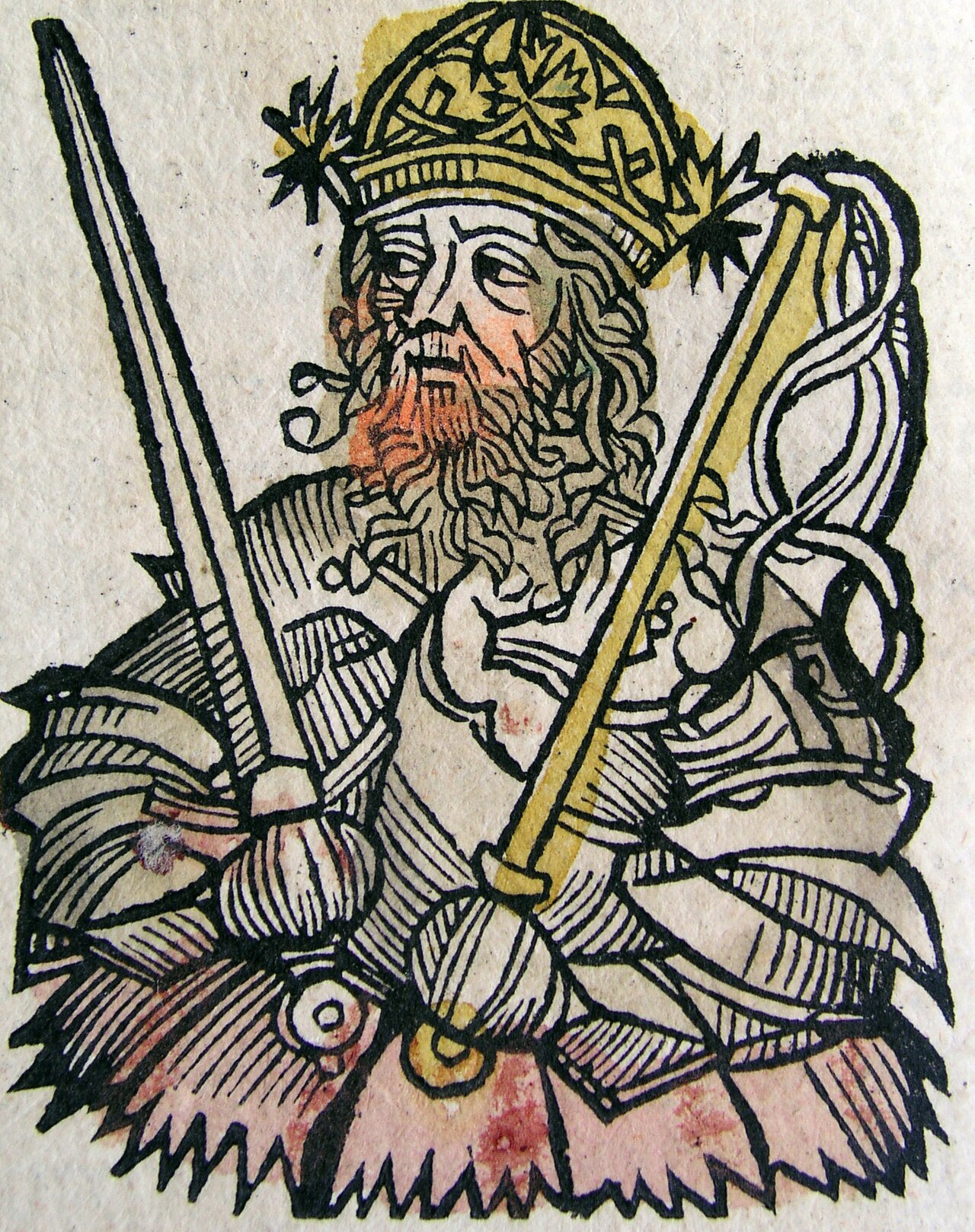
Nuremberg Chronicle, Attila, King of the Huns
1493
A hand-colored woodcut portrait of Attila made about a thousand years after his death, showing him as a crowned medieval king.
This woodcut imagines Attila as a crowned medieval king, showing how later Europeans remembered and reinvented him.
About this source
What it is
This is a hand-colored woodcut print from the Nuremberg Chronicle, a printed book made in 1493. It shows a bearded, crowned king holding a sword and scepter, dressed in a fur-trimmed robe.
Why it matters
The image was created about 1000 years after Attila lived, so it is not based on anyone who actually saw him. Instead it shows how people of the late medieval period imagined a famous ancient ruler, dressing him in the clothing and symbols of their own time. It tells us more about 15th-century ideas of kingship than about Attila himself.
Look closer
- What details in the picture come from medieval European fashion rather than from the 5th century?
- Why might an illustrator choose a crown, sword, and scepter to represent a ruler like Attila?
- What does this image leave out about who Attila really was and how he actually looked?
This painting is part of the curated material that grounds the AI version of Attila the Hun on Humy.ai — when students ask about related events, the AI can quote it and cite it.
More Attila the Hun sources
Meet the AI Attila the Hun →
Ready when you are
Start chatting with Attila the Hun now.
20 messages free · No credit card · Available in 50+ languages.