


Primary sourceArtifact408-450 AD
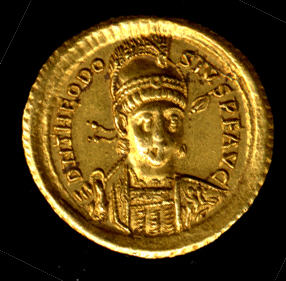
Gold Solidus of Theodosius II
408-450 AD
A Byzantine gold coin of the type Eastern Rome used to pay the huge tribute demanded by Attila under treaty.
This type of coin formed the gold tribute Eastern Rome paid to Attila under treaty.
About this source
What it is
This is a gold solidus coin bearing the image of Emperor Theodosius II, who reigned 408–450. It is held today at the Metropolitan Museum of Art. The coin shows the emperor in profile, armored and crowned, with a Latin inscription around the rim.
Why it matters
Coins like this one were used by the Eastern Roman Empire to pay the enormous gold tribute demanded by Attila after treaties such as those of Margus and Anatolius. The coin is a reminder that Attila's power over Rome was measured not only in battles but in gold — Theodosius II's government paid to keep peace with the Huns, showing how real and costly Attila's threat was.
Look closer
- What does a tribute payment like this tell you about the balance of power between Rome and the Huns?
- Why might an emperor choose to pay gold rather than fight?
- What can a coin tell us, and what can it not tell us, about a historical relationship?
This artifact is part of the curated material that grounds the AI version of Attila the Hun on Humy.ai — when students ask about related events, the AI can quote it and cite it.
More Attila the Hun sources
Meet the AI Attila the Hun →
Ready when you are
Start chatting with Attila the Hun now.
20 messages free · No credit card · Available in 50+ languages.